Elrond's Elvish: The Language of the Lord of Rivendell
Try It Yourself — Free Elvish Tools
Elrond Half-Elven occupies a unique position in the history of Middle-earth — and a unique position in its linguistic landscape. The son of Eärendil the Mariner and Elwing the White, he stood at the intersection of every great lineage of the Elder Days: Elvish blood from both the Noldor and the Sindar, human blood from the Three Houses of the Edain, and a descent that stretched back to Melian the Maia herself through Lúthien Tinúviel.
This extraordinary heritage made Elrond a polyglot of the first order. But it also shaped his relationship to language in a deeper way: as a Half-Elf who chose the Elvish life, Elrond used language to inhabit fully the identity he had chosen. Rivendell under his lordship became a house of preservation — of lore, of history, of language itself.
Understanding Elrond through the lens of Elvish linguistics opens a new dimension of the character and his world.
Quick Answer: Elrond (Sindarin) means "Star-Dome" or "Vault of Stars" (el = star/Elf, rond = vault). Rivendell's Sindarin name Imladris means "Deep Cleft Valley." Elrond's full title as translated into Quenya-style epithets includes Earendilion (son of Eärendil), Halfelven, and Gil-Estel associations (Star of Hope).
The Name Elrond: A Star-Vaulted Heritage
The name Elrond is Sindarin and it is a small masterpiece of Tolkien naming.
El- — This element connects to elen (star) in its Sindarin form el, but also to the Elvish concept itself. In names, el- often signals a connection to starlight, to the sky, to the Elvish people broadly. Its parallel in Quenya is elen- or el-.
Rond — In Sindarin, rond means a vaulted chamber, a dome, a great hall with a curved ceiling. It appears in Nargothrond (the great underground fortress, "Cavern-fortress of the River Narog") and in references to great underground or cavernous spaces.
Together: Elrond = "Star-Dome" or "Vault of Stars" — a hall of stars, a space vaulted like the sky at night.
The name is not accidental. Elrond was named by his parents with the memory of his father in mind — Eärendil the Mariner, who sailed into the sky carrying the Silmaril on his brow and became a star himself. Elrond's name is a home built of stars, a dwelling that evokes the heavens from which his father shines.
His twin brother Elros shares the same El- prefix: El- + ros (foam, spray, dew). "Star-Foam" — the sea-spray through which their father sailed to the heavens. The two names together describe their father's journey: from the sea (foam) to the sky (dome of stars).
Rivendell: Imladris in Sindarin
"Mae govannen" — want to actually speak Elvish?
Try It Free →Rivendell is an English translation — it means approximately "Cloven Dell" or "Riven Valley" in archaic English. Tolkien gave this as a rendering of the Sindarin name's meaning for the benefit of English readers.
The Sindarin name is Imladris.
Imlad — from im- (between, in the middle of) + lad (flat land, plain). Together: a valley that is between things, a dale cut into the surrounding terrain. The word conveys depth and enclosure — not a wide open valley but a narrow one, sunk between walls of rock.
Ris — from the root RIS meaning to slash or cut, giving Sindarin ris for a ravine, a rushing cleft, a place cut by water. This element is related to rist (a cleaving) and other words involving cutting and splitting.
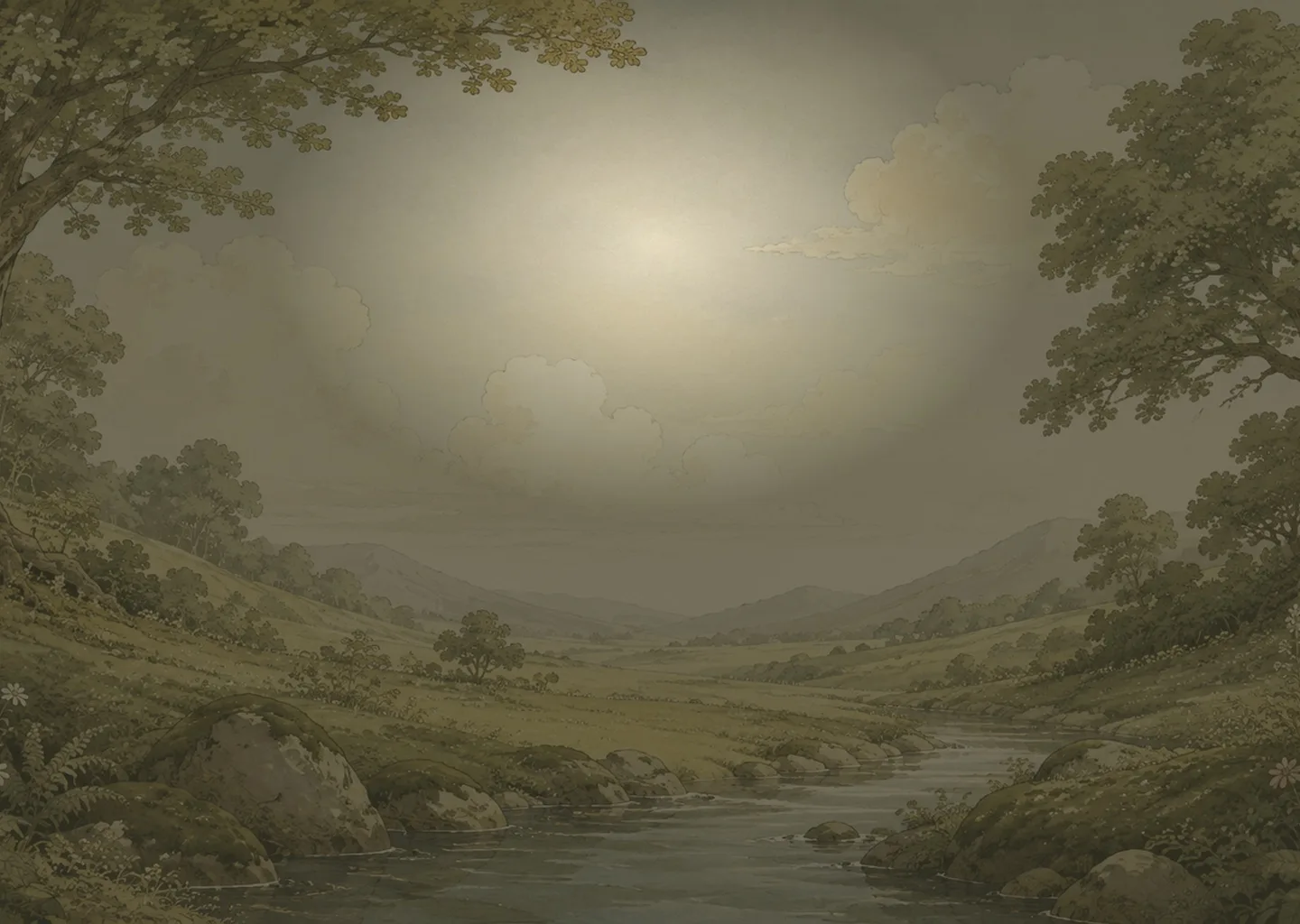
Together: Imladris = "Deep Valley of the Cleft" or "Cloven Vale" — a valley that has been cut by water through rock, hidden between steep walls. This describes Rivendell's geography perfectly: invisible from surrounding land, tucked into a gorge, with waterfalls and the river Bruinen rushing through it.
One correction worth making, because it circulates constantly: Karningul is not the Quenya name for Rivendell. It is the Westron name — the name in the Common Speech, which Tolkien then "translated" into English as Rivendell, exactly as he translated Kuduk into hobbit. In Elvish, the place is Imladris, in Quenya contexts as well as Sindarin.
Elrond's Titles and Epithets
Over more than six thousand years of life, Elrond accumulated several titles and epithets in both languages:
| Title | Language | Pronunciation | Meaning |
|---|---|---|---|
| Eärendilion | Quenya | eh-AH-ren-dil-ee-on | Son of Eärendil |
| Peredhel | Sindarin | per-ED-hel | Half-Elf (one peredhel, pl. peredhil) |
| Iarwain | (applied to others, not Elrond) | — | "Old Young" — a title of great age |
| Hîr Imladris | Sindarin | HEER im-LAD-ris | Lord of Rivendell |
| Master Elrond | Westron translation | — | Used by Men and Hobbits |
| Mithrellas-kin | — | — | Descendant of Mithrellas (through Nimrodel lineage, disputed) |
Peredhel (Sindarin, plural Peredhil) is the formal word for Half-Elf — from per (half) + edhel (elf). This is the name by which Elrond and Elros and their descendants were known: the Peredhil or Half-Elven. The word carries no derogatory meaning — it is simply descriptive, marking the extraordinary genealogy.
Eärendilion (Quenya) — "Son of Eärendil" — would be the formal Quenya designation of Elrond's lineage. The -ion suffix is the Quenya patronymic ending (son of). This construction is used in formal Quenya contexts to establish lineage.
The Languages of Rivendell
Under Elrond's lordship, Rivendell became a multilingual household. What languages would have been spoken in Imladris?
Sindarin — the everyday language of the Elves in the Third Age. Even the Noldor of Rivendell had largely adopted Sindarin for daily use by this period, though they retained Quenya for ceremony, scholarship, and song. Sindarin was the working language of the house.
Quenya — used in formal ceremony, in the recitation of ancient lore, in song and poetry. Elrond kept Quenya alive at Rivendell as a prestige language of learning, much as medieval European scholars maintained Latin. The Council of Elrond would have used Quenya for formal proclamations.
Westron — the Common Tongue, which Elrond spoke fluently and used with all mortal guests. When Bilbo, Frodo, and the Dwarves arrived, Elrond greeted them in Westron without hesitation.
Ancient Noldorin dialects — Elrond's age (born in the First Age) and his role as a lore-master meant he had knowledge of Beleriand-era Sindarin, early Quenya dialects, and potentially Primitive Elvish roots. He could read inscriptions and texts that would be incomprehensible to younger Elves.
Khuzdul (Dwarvish) — plausibly. Rivendell had relationships with the Dwarves of the Blue Mountains and later Erebor. Elrond's service as a herald in the Second Age would have brought him into contact with Dwarven settlements.
Adûnaic and its descendants — Elrond had deep connections to Númenórean history (Númenórean kings were of his lineage, through Elros). He would have known the Númenórean language Adûnaic and its descendant Westron in its older forms.
The Name-Meaning of the Council of Elrond Members
The Council of Elrond brought together representatives of major peoples, and their names in Elvish are a linguistic treasure:
| Character | Elvish Name | Language | Meaning |
|---|---|---|---|
| Elrond | Elrond | Sindarin | Vault of Stars |
| Gandalf | Mithrandir | Sindarin | Grey Wanderer |
| Glorfindel | Glorfindel | Sindarin | Golden-haired |
| Legolas | Legolas | Sindarin | Greenleaf |
| Gimli | Khuzdul (not translated by Tolkien) | — | — |
| Boromir | Gondorian (Sindarin-influenced) | Bor (endure) + mir (jewel) | Steadfast Jewel |
| Aragorn | Sindarin (his Elvish name Estel) | Estel | Hope |
| Bilbo | Westron | — | Not Elvish |
| Frodo | Westron (Maura in Westron) | — | Not Elvish |
Glorfindel — who appeared at the Council and whose horses bore Frodo to safety — has a name that means "Golden-haired" in Sindarin: glor- (golden radiance) + findel (a lock of hair, tresses). He is one of the most powerful Elvish beings in the Third Age, a veteran of the First Age who was reembodied and sent back by the Valar.
Mithrandir — Gandalf's Elvish name used by Rivendell Elves — means "Grey Wanderer" (mith = grey + randir = wanderer/pilgrim). This is the name Elrond would have used for him.
Elrond's Speech: Key Elvish Phrases
Several Elvish phrases and passages in Tolkien's work are associated with Elrond or with the setting of Rivendell:
"Elen síla lúmenn' omentielvo" (Quenya) — "A star shines on the hour of our meeting" — this phrase is spoken by Frodo to Gildor Inglorion when the hobbits meet his wandering company in the Shire (FotR I.3) — Gildor answers that Frodo speaks it well, which is the closest thing to a compliment on anyone's Quenya in the whole book. It is exactly the kind of Quenya greeting that would have been at home in Elrond's household.
"Mae govannen" (Sindarin) — "Well met" — the standard Sindarin greeting. Elrond would have greeted Elvish guests with this phrase.
"Hîr nín" (Sindarin) — "My lord" — how Rivendell Elves would have addressed Elrond formally.
"Hantanyel, Hîr Imladris" — "I thank you, Lord of Rivendell" — is a modern construction, and one that breaks a rule worth knowing: hantanyel is Quenya, hîr and Imladris are Sindarin. Tolkien's Elves did not mix the two tongues inside a sentence, and neither should you. In Sindarin throughout, a visitor would more properly say Le hannon, Hîr Imladris — though that le hannon is itself David Salo's film Sindarin, not Tolkien's.
Rivendell's Elvish Architecture in Name
The names associated with Rivendell's geography reveal the Elvish relationship to landscape:
- Imladris — "Deep Cleft Valley" — the vale itself
- Bruinen — the river (Sindarin brui = loud/roaring + nen = water = "Loudwater")
- Ford of Bruinen — where Frodo was pursued by the Nazgûl
- The Last Homely House — Tolkien's English phrase for the house itself, first used in The Hobbit
The Elvish tendency to name places descriptively — for their physical qualities, their sounds, their relationship to light and water — is on full display in the Rivendell-associated vocabulary. Bruinen ("Loud-water") describes a river by its sound. Imladris describes a valley by its shape. These are names given by people who lived attentively in the natural world.
Elrond as Lore-Master: Language as Preservation
Tolkien describes Rivendell as a place of memory. In the Hall of Fire, songs were sung in multiple languages. In the library, scrolls in ancient tongues were preserved. Elrond himself was described as knowing "all the lore of the Elves."
This makes Elrond not just a character who speaks Elvish but a character who is Elvish language in an important sense. His role in the mythology is partly to be the keeper of what would otherwise be lost — the lore of the First Age, the records of the Second Age, the linguistic heritage of peoples whose civilizations had fallen.
When Gandalf found in Rivendell's library the documents that revealed the nature of the One Ring, it was because Elrond had preserved them. Language preservation is power in Tolkien's world — the power to remember, and through remembering, to act.
For learners of Elvish, Elrond represents the ideal: someone for whom Elvish is not decorative but essential, the medium through which the deepest knowledge of the world is held and transmitted.
[RELATED]
People Also Ask
What does Elrond mean in Elvish? Elrond is Sindarin, composed of el (star/Elf) and rond (vaulted hall, dome, cave). The full meaning is 'Star-dome' or 'Vault of Stars,' reflecting his parentage — his father Eärendil sailed into the sky and became a star. His twin brother Elros has a parallel name meaning 'Star-foam,' referencing the sea their father sailed.
What is Rivendell called in Elvish? Rivendell's Sindarin name is Imladris — from imlad (deep valley, ravine) and ris (rushing stream, cleft). The full meaning is 'Deep Valley of the Cleft' or 'Cloven Dale.' The name perfectly describes the location: a hidden valley cut deep into the mountains with a river running through it. Karningul is sometimes offered as an alternative name, but it is not Quenya — it is the Westron (Common Speech) name for Rivendell, which Tolkien rendered into English as 'Rivendell'. The Elvish name is Imladris.
What language did Elrond speak? Elrond spoke multiple languages: Sindarin as the everyday tongue of Rivendell, Quenya in ceremony and scholarship, Westron (the Common Tongue) when speaking with Men and Hobbits, and almost certainly Khuzdul (Dwarvish), Adûnaic, and languages of the Second Age given his immense age and experience. As a scholar and lore-master, he had knowledge of ancient Elvish dialects as well.
What does 'Imladris' mean in Sindarin? Imladris breaks down as imlad (narrow valley, ravine — from im- meaning 'between' and lad meaning 'plain/flat land') plus ris (a rushing stream or cleft). Together: 'Deep Cloven Valley' or 'Valley of the Cleft Stream.' This describes Rivendell's geography precisely — a steep ravine with water at the bottom, hidden between mountain walls.
Related Reading
- our core Quenya & Sindarin vocabulary list
- Elvish words for every color
- Elvish Words for Death and Fate: How Tolkien's Languages Describe the End
- Elvish Greeting Etiquette in Lord of the Rings — Rivendell Customs Explained
Learn Elvish with Tengwar
Tengwar teaches Tolkien's Elvish — Quenya and Sindarin — through Duolingo-style lessons with an AI tutor (Mithrandir) that cites Tolkien sources for every answer. Plus Klingon and Dothraki on the same platform. Start free → — 5 lessons per language, no credit card required.
People Also Ask
What does Elrond mean in Elvish?
*Elrond* is Sindarin, composed of *el* (star/Elf) and *rond* (vaulted hall, dome, cave). The full meaning is 'Star-dome' or 'Vault of Stars,' reflecting his parentage — his father Eärendil sailed into the sky and became a star. His twin brother Elros has a parallel name meaning 'Star-foam,' referencing the sea their father sailed.
What is Rivendell called in Elvish?
Rivendell's Sindarin name is *Imladris* — from *imlad* (deep valley, ravine) and *ris* (rushing stream, cleft). The full meaning is 'Deep Valley of the Cleft' or 'Cloven Dale.' The name perfectly describes the location: a hidden valley cut deep into the mountains with a river running through it. *Karningul* is sometimes offered as an alternative name, but it is not Quenya — it is the Westron (Common Speech) name for Rivendell, which Tolkien then rendered into English as 'Rivendell'. The Elvish name, in both Quenya and Sindarin contexts, is *Imladris*.
What language did Elrond speak?
Elrond spoke multiple languages: Sindarin as the everyday tongue of Rivendell, Quenya in ceremony and scholarship, Westron (the Common Tongue) when speaking with Men and Hobbits, and almost certainly Khuzdul (Dwarvish), Adûnaic, and languages of the Second Age given his immense age and experience. As a scholar and lore-master, he had knowledge of ancient Elvish dialects as well.
What does 'Imladris' mean in Sindarin?
*Imladris* breaks down as *imlad* (narrow valley, ravine — from *im-* meaning 'between' and *lad* meaning 'plain/flat land') plus *ris* (a rushing stream or cleft). Together: 'Deep Cloven Valley' or 'Valley of the Cleft Stream.' This describes Rivendell's geography precisely — a steep ravine with water at the bottom, hidden between mountain walls.