
Dothraki Words for Food and Cooking — Vocabulary of the Horse Lords

Quick Answer: Dothraki food vocabulary is small but real: gavat (meat), lamekh (mare's milk, plain or fermented), havon (bread), jelli (cheese), zhif (salt), eveth (water), sewafikh (wine) and vorsa (fire). The most famous Dothraki food rite is the horse heart ceremony, where a pregnant khaleesi eats a raw stallion's heart. Below is every food, drink, taste and feast word the dictionary gives. Words that do not exist, such as a plain verb "to cook", are marked as missing.
The Dothraki are riders, but they still eat, drink and feast. The vocabulary that survives in David J. Peterson's published dictionary is not huge, yet it is more varied than most fan sites suggest: besides meat and mare's milk it records bread, cheese, eggs, fish, fruit, beans, honey, nuts and vegetables, plus words for taste, hunger, thirst, hunting and the feast itself. An earlier version of this page promised "30 essential food words" and listed some that were not about food at all. It now lists the real set, grouped by theme, and says clearly where the dictionary stops.
The basics — words you meet first
| Dothraki | English | Part of speech |
|---|---|---|
| hadaen | Food | Noun |
| gavat | Meat | Noun |
| lamekh | Mare's milk (plain or fermented) | Noun |
| lamekh ohazho | Fermented mare's milk | Noun |
| havon | Bread | Noun |
| jelli | Cheese | Noun |
| zhif | Salt | Noun |
| eveth | Water | Noun |
| sewafikh | Wine | Noun |
| vorsa | Fire | Noun |
Learn these ten first. Hadaen is the general word for food, gavat for meat, and lamekh for the milk of the mare. The phrase lamekh ohazho is the dictionary's own name for the fermented kind, so "plain or fermented" in the entry for lamekh is the dictionary's wording, not a guess.
Meat and animals
"M'athchomaroon" — want to actually speak Dothraki?
Try It Free →| Dothraki | English |
|---|---|
| gavat | Meat |
| vinte | Portion of meat |
| zhifikh | Dried salted meat |
| lashfak | Stew |
| mesina | Soup |
| ninthqoyi | Blood sausage |
| qifo | Boar, pig, pork |
| dalfe | Cow, beef |
| jiz | Chicken |
| tolorro | Bone |
| qoy | Blood |
Notice that the dictionary lists the words for pork (qifo) and beef (dalfe) as well as the general word for meat. A popular idea says the Dothraki have no words for pork or fish. The dictionary does not support that.
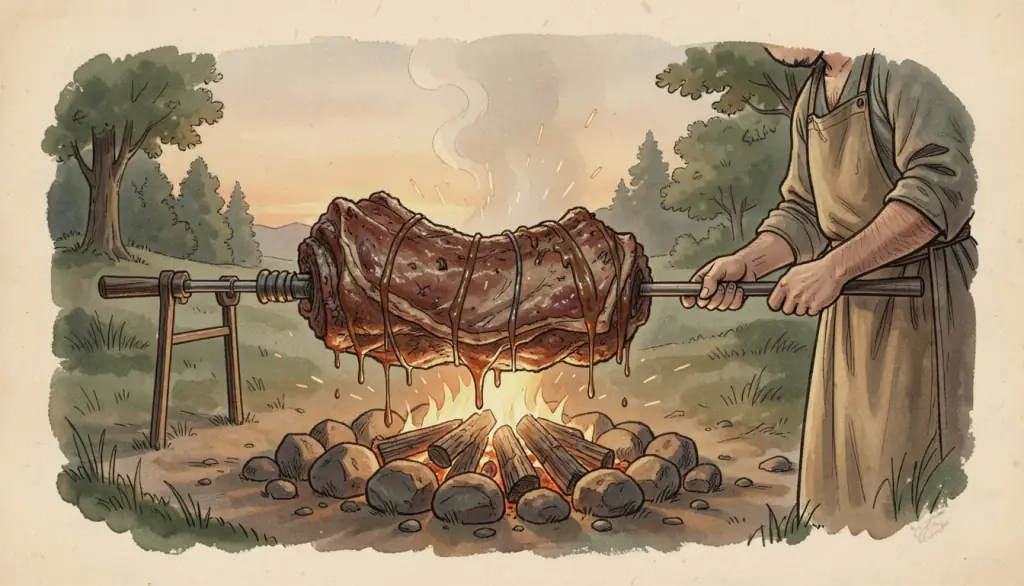
Animal words are a separate group. The dictionary lists them as animals, not as dishes, and does not say which are eaten, so treat the table below as animal vocabulary that happens to sit next to the kitchen.
| Dothraki | English |
|---|---|
| hrazef | Horse |
| vezh | Stallion |
| oqet | Sheep |
| vafi | Lamb (female) |
| dorvi | Goat |
| mafo | Young goat, kid |
| noah | Bull |
| mawizzi | Rabbit |
| qlaseh | Deer (archaic) |
| zir | Bird |
| eshina | Fish |
| zhaqe | Bass fish |
For the horse itself, see our guide to Dothraki horse vocabulary.
Hunting and slaughter
| Dothraki | English |
|---|---|
| fonat | To hunt |
| fonak | Hunter |
| fonakasar | Hunting party |
| idrik | Leader of the hunt, host |
| ogat | To slaughter an animal; to kill brutally, like slaughtering an animal |
| fonas chek | Said at parting, literally "hunt well" |
Idrik is worth noticing: the dictionary glosses it both as "leader of the hunt" and as "host", so the person who leads the hunt and the person who hosts the table share one word. Fonas chek is an attested parting phrase built from the verb fonat and the adverb chek ("well").
Drinks
| Dothraki | English |
|---|---|
| lamekh | Mare's milk (plain or fermented) |
| lamekh ohazho | Fermented mare's milk |
| thagwa | Yogurt made from mare's milk |
| dranekh | Mother's milk (human milk) |
| eveth | Water |
| evethiz | Poison water |
| sewafikh | Wine |
| virzetha | Red wine |
| indelat | To drink |
| iddelat | To welcome, to make someone drink |
Lamekh is the staple, and the dictionary distinguishes it from lamekh ohazho. A second milk word, dranekh, is human milk, which is a reminder that Dothraki has separate words for the milk of a mare and the milk of a mother. Evethiz is glossed only "poison water"; the ordinary word for the sea is havazh, and the dictionary does not say whether the two are connected. Iddelat is a hospitality verb: to welcome, literally to make someone drink.
Bread, dairy, fruit and vegetables
| Dothraki | English |
|---|---|
| havon | Bread |
| jelli | Cheese |
| thagwa | Yogurt made from mare's milk |
| thagwash | A dessert made from thagwa, eaten with dried fruit |
| gale | Egg |
| yot | Fruit |
| qazer | Apple |
| sewaf | Grape |
| kimikh | Date (fruit of a date palm) |
| zhorrof | Fig (fresh fruit of a fig tree) |
| tif | Nut (woody seed) |
| chal | Bean (general use) |
| challeya | Bean (when used as food) |
| jorok | Corn |
| ilme | Vegetable |
| ilmeser | Salad, greens, vegetables |
| gizikh | Honey |
| flas | A film on top of a soup, cream |
Two entries show how precise the dictionary is. Beans have two words, one for the plant or bean in general (chal) and one for the bean as food (challeya). And thagwash is a named dessert: yogurt eaten with dried fruit. The dictionary does not give a recipe or say when it is eaten, so this guide does not add one.
Taste, hunger and thirst
| Dothraki | English | Part of speech |
|---|---|---|
| lekhi | Taste | Noun |
| lekhilat | To taste | Verb |
| lanlekhi | An eating spree for a special taste | Noun |
| gizikhven | Sweet | Adjective |
| zhifven | Salty | Adjective |
| jelaven | Sour | Adjective |
| choakat | To be bitter | Verb |
| chosh | Fresh | Adjective |
| rikh | Rotten | Adjective |
| afazh | Hot | Adjective |
| fish | Cold | Adjective |
| oiro | Fat | Adjective |
| garvolat | To grow hungry; to hunger for | Verb |
| fevelat | To thirst; to thirst for | Verb |
Two taste adjectives are visibly built from food nouns: gizikhven ("sweet") from gizikh ("honey") and zhifven ("salty") from zhif ("salt"). That looks like a -ven ending that makes an adjective, but the dictionary entry itself does not state the rule, and jelaven ("sour") does not come from any food word we can match. So learn them as separate words rather than as a formula.
Note that fish in this table is a Dothraki word meaning "cold", not the English word. It looks like a mistake to an English reader, which is why it is flagged here. The dictionary word for the animal fish is eshina.
Fire and the kitchen
| Dothraki | English |
|---|---|
| vorsa | Fire |
| jolino | Cooking pot |
| jolinat | Prepared food |
| virsalat | To burn |
| avvirsalat | To burn something |
| shinat | To burn out, fizzle out |
| adakhat | To eat |
| adakhilat | To feed on, to feast on |
Verbs in the dictionary are listed in an infinitive that ends in -at, so you will see adakhat, indelat, lekhilat, fevelat and garvolat in this form. How these verbs change for person and tense is covered in Peterson's grammar material and in our Dothraki language basics guide, not in the word list.
The kitchen vocabulary stops here. The dictionary has the pot and the prepared food, but no plain verb for "to cook" and no words for knife, cup, bowl or plate. If you need those in a story or a game, you are inventing, and it is better to say so.
The horse heart ceremony
In Game of Thrones, a khaleesi who is pregnant with a khal's heir eats a raw stallion's heart in front of the dosh khaleen, the council of widowed khaleesis. In the show, the act is read as a sign of what kind of khal the child will be. Daenerys eats the heart in Vaes Dothrak during season 1.
| Dothraki | English |
|---|---|
| khalakka | Prince, son of a khal |
| dosh khaleen | Council of the crones, widows of khals |
| vezh | Stallion |
| qoy | Blood |
These four words are the attested vocabulary around the ceremony. The dictionary gives no word glossed as the heart organ (zhor is the emotional heart), no phrase for the rite itself and no lines that the characters speak over it, so this guide describes it only in English.
Hospitality and the feast
| Dothraki | English |
|---|---|
| vitteya | Feast, a gathering with a feast |
| vitteyqoyi | Feast day |
| nevak | Guest |
| nevakh | Sitting-spot |
| idrik | Leader of the hunt, host |
| iddelat | To welcome, to make someone drink |
| athchomar | Respect, reverence |
| athchomar chomakea | Respect to those who are respectful (a greeting to a group) |
| chomat | To be respectful; to respect |
| vichomer | Respectful, respectable |
Dothraki hospitality in the dictionary is built on respect, athchomar. The word for guest (nevak) and the word for a sitting-spot (nevakh) differ by one letter, which is a useful pair to remember. For the full set of greetings, see Dothraki greetings and phrases.
Poison also belongs in a feast vocabulary, since the dictionary has it: ize (poison), izat (to be poisonous, to be venomous) and izzat (to poison). They are listed without example sentences.
What is not attested, and why it matters
- A verb "to cook". Only the pot and prepared food are given.
- "Delicious". No dedicated word. You have lekhi (taste) and the sweet, salty and sour adjectives.
- Meals and mealtimes. No words for breakfast, dinner or supper, and no list of dishes by name beyond those above.
- Table talk. No attested toast, grace or "enjoy your meal", and no attested word for "thank you". Our how to say thank you in Dothraki guide covers that gap.
- Recipes and quantities. None.
For a learner, this means you can read and say single words with confidence but should not assemble menu sentences from patterns. For a game master or fan writer, it means the real vocabulary leans on meat, milk, salt, fire and the feast, which is itself a faithful picture of the language.
How to study these words
- Start with the ten basics at the top.
- Add the taste adjectives, because they are the only way to say anything about how food is.
- Learn the drinks and the hospitality verb iddelat.
- Keep the horse heart table for last: four words only, but they matter for the show.
Pair this list with the 100 essential Dothraki words and the Dothraki color words for more everyday vocabulary.
People Also Ask
What do the Dothraki eat? In the dictionary, the food words centre on meat and mare's milk. Peterson's dictionary records gavat (meat), lamekh (mare's milk, plain or fermented), zhifikh (dried salted meat), lashfak (stew) and ninthqoyi (blood sausage). It also lists bread, cheese, eggs, fish, fruit, beans, honey, nuts and vegetables, so the vocabulary is wider than meat alone.
What is the horse heart ceremony in Dothraki? In Game of Thrones, a khaleesi who is pregnant with a khal's heir eats a raw stallion's heart in front of the dosh khaleen; if she keeps it down, the child is expected to be a strong khal. Daenerys completes it in Vaes Dothrak in season 1. The words the dictionary attests for it are khalakka (prince, son of a khal), vezh (stallion) and dosh khaleen (the council of the crones).
How do you say "delicious" in Dothraki? The dictionary has no dedicated word for "delicious" or "tasty". It does list lekhi (taste), gizikhven (sweet), zhifven (salty), jelaven (sour), chosh (fresh) and vezhven (great, greatest). Anything beyond that would be invented, so this guide does not offer it.
What is the Dothraki word for fire? Fire is "vorsa", and the same root appears in "zhavorsa" (dragon). For cooking, the dictionary also lists "jolino" (cooking pot), "jolinat" (prepared food) and the verbs "virsalat" (to burn) and "avvirsalat" (to burn something).
Is there a Dothraki verb for cooking? Not as a clear entry. The dictionary lists the cooking pot (jolino) and prepared food (jolinat), plus verbs for eating, drinking, tasting, hunting and slaughtering an animal, but no verb that plainly means "to cook". This guide does not invent one.
Related Reading
- 100 Essential Dothraki Words to Learn First
- Dothraki Language Basics: Grammar, Vocabulary & Culture
- Dothraki Vocabulary for Horses: The Heart of the Khalasar
- Dothraki Greetings and Phrases from Game of Thrones
- What Does 'Khaleesi' Actually Mean in Dothraki?
- What Is Dothraki? The Language of the Horse Lords, Explained
- Dothraki Color Words: The Complete Visual Vocabulary of the Horse Lords
- Dothraki Body Parts and Anatomy Vocabulary — Complete Guide
Tengwar teaches Dothraki through structured lessons with an AI tutor grounded in David J. Peterson's attested vocabulary, plus Elvish and Klingon on the same platform. Try the free translator or start free: every lesson is free for signed-in members, no credit card required.
People Also Ask
What do the Dothraki eat?
In the dictionary, the food words centre on meat and mare's milk. Peterson's dictionary records gavat (meat), lamekh (mare's milk, plain or fermented), zhifikh (dried salted meat), lashfak (stew) and ninthqoyi (blood sausage). It also lists bread, cheese, eggs, fish, fruit, beans, honey, nuts and vegetables, so the vocabulary is wider than meat alone.
What is the horse heart ceremony in Dothraki?
In Game of Thrones, a khaleesi who is pregnant with a khal's heir eats a raw stallion's heart in front of the dosh khaleen; if she keeps it down, the child is expected to be a strong khal. Daenerys completes it in Vaes Dothrak in season 1. The words the dictionary attests for it are khalakka (prince, son of a khal), vezh (stallion) and dosh khaleen (the council of the crones).
How do you say "delicious" in Dothraki?
The dictionary has no dedicated word for "delicious" or "tasty". It does list lekhi (taste), gizikhven (sweet), zhifven (salty), jelaven (sour), chosh (fresh) and vezhven (great, greatest). Anything beyond that would be invented, so this guide does not offer it.
What is the Dothraki word for fire?
Fire is "vorsa", and the same root appears in "zhavorsa" (dragon). For cooking, the dictionary also lists "jolino" (cooking pot), "jolinat" (prepared food) and the verbs "virsalat" (to burn) and "avvirsalat" (to burn something).
Is there a Dothraki verb for cooking?
Not as a clear entry. The dictionary lists the cooking pot (jolino) and prepared food (jolinat), plus verbs for eating, drinking, tasting, hunting and slaughtering an animal, but no verb that plainly means "to cook". This guide does not invent one.
Related Tags
Learn Dothraki Free
21 free Dothraki lessons, an AI tutor, and spaced repetition review — no credit card required.
Start Learning Free