Adar in The Rings of Power: What His Elvish Name Means
Try It Yourself — Free Elvish Tools
Quick Answer: Adar is the Sindarin word for father. In Amazon's The Rings of Power, Adar is the title the Orcs give their leader, an Elf of the First Age whom Morgoth twisted into one of the first Orcs. The character is an invention of the show, not of Tolkien: he was played by Joseph Mawle in Season 1 and Sam Hazeldine in Season 2, and he was killed by his own Orcs in the Season 2 finale. The word, though, is genuine Tolkien, related to Quenya atar and to Ilúvatar, "Father of All".
Few characters in The Rings of Power sent viewers to a dictionary as quickly as Adar. His name sounds like a personal name, but it is an ordinary Elvish noun, and once you know what it means the whole character reads differently. A creature that was once an Elf is called "Father" by the Orcs who follow him, in the language of the people he was taken from.
This guide starts with the word itself, then gives a short, spoiler-light account of who Adar is in the show, then turns to the old Tolkien question the character puts on screen: where did the Orcs come from? It ends with the Elvish words for Orc and a linguistic note on why a Sindarin title is both fitting and, in one respect, a little surprising. Our complete guide to the Elvish of The Rings of Power covers the rest of the show's language.
What Does Adar Mean?
Adar means "father" in Sindarin, the Elvish language of Beleriand and, later, of most Elves in Middle-earth. It is a common noun, not a name, and it belongs to the same family as the Quenya words for father.
| Word | Language | Meaning | Source |
|---|---|---|---|
| adar | Sindarin | father | LOTR |
| atar, atarë | Quenya | father | The Silmarillion |
| atto | Quenya | daddy, father (familiar) | VT47, VT48 |
| atya | Quenya | daddy, my father | VT47, VT48, PE17 |
| atheg | Sindarin | little father; thumb | VT48 |
| Ilúvatar | Quenya | Father of All | The Silmarillion |
The Quenya and Sindarin words go back to the same ancient root, which Tolkien's Etymologies list as ATA, "father". The difference between atar and adar is a regular sound change: Sindarin often softens a t between vowels into a d, so the older shape survives in Quenya and shifts in Sindarin. You see the same pattern elsewhere, for example Quenya Atan beside Sindarin Adan, "Man".
Ilúvatar, "Father of All"
The grandest use of the word is in Quenya. Ilúvatar joins Ilúvë, "the whole, all of creation", with atar, "father". It is the name of the One, Eru, who brings the world into being at the start of The Silmarillion. That makes Adar's title quietly provocative in the show: the same Elvish word that Tolkien used for the creator of all things is now the honorific of an Orc captain.
Ada and the affectionate forms
Tolkien gave Elvish children familiar words for their parents. In Quenya those are atto and atya. In Sindarin, ada is the affectionate "dad". Many viewers know ada from Peter Jackson's films, where Arwen speaks to Elrond with it, and the line Ada nin "my father" appears there. That line is film Sindarin by David Salo, not a sentence Tolkien wrote, even though both words are attested on their own. If you want the full family of parent words, see our guide to the Elvish words for mother and father.
Adar inside a canon name
Adar also turns up in one of the strangest names in The Lord of the Rings. Elrond, at the Council, gives Tom Bombadil's Elvish name as Iarwain Ben-adar, "Oldest and Fatherless". Ben-adar is the part glossed "fatherless", and adar is plainly visible inside it. It is a neat mirror of the show's Adar: one figure has no father, the other has made himself one.
Who Is Adar in The Rings of Power?
"Mae govannen" — want to actually speak Elvish?
Try It Free →In the show, Adar is an Elf from the earliest days who was captured by Morgoth and transformed into one of the first Orcs. He survives into the Second Age as a leader of Orcs in the Southlands, the region that becomes Mordor. He is introduced in Season 1 as a scarred, soft-spoken figure who claims to have killed Sauron, a claim the season later undercuts. He speaks of the Orcs as his children and calls them by the name Uruk.
Two actors have played him:
- Joseph Mawle in Season 1.
- Sam Hazeldine in Season 2, after the role was recast.
Season 2 follows Adar's attempt to secure a future for his people without serving Sauron. In the Season 2 finale his own Orcs, led by Glûg, turn against him and kill him, and they return to Sauron. GamesRadar's coverage of episode 8 confirms that this is the end of the character. His story is therefore finished before Season 3 begins.
Everything in this section is the show's own invention. Tolkien never wrote a character like Adar, never named an Orc-leader "Father", and never told a story of Orcs trying to break free of Sauron in the Southlands. The show built the character from a real Tolkien idea, which is where the interesting part begins.
Where Did Orcs Come From in Tolkien?
Adar exists to dramatise a question Tolkien himself never closed: what are Orcs, and where did they come from? The show picks one answer and makes a person out of it. Tolkien's own writings give that answer, and then doubt it.
The Silmarillion: Elves corrupted by Melkor
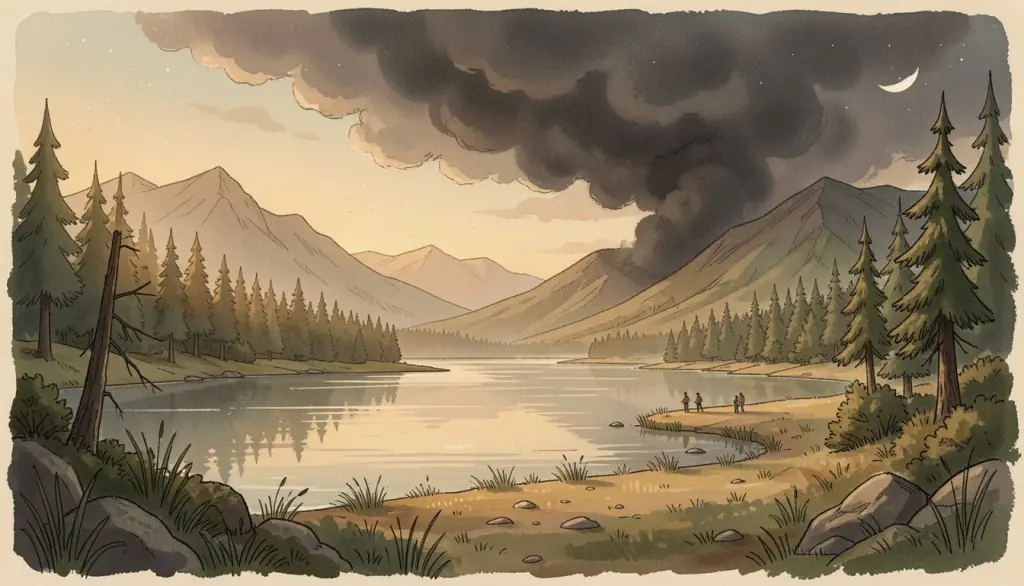
In the chapter "Of the Coming of the Elves and the Captivity of Melkor", The Silmarillion tells how the Elves awoke by the lake of Cuiviénen in the far east of Middle-earth, and how Melkor, the first Dark Lord, learned of them early. Some Elves who wandered from their people were taken and never returned. The text then reports that the wise among the Eldar believed these captives were bred, by slow arts of cruelty, into the race of Orcs, out of envy and mockery of the Elves.
Two details matter. First, the passage is framed as what the Eldar held to be true, not as a narrator's certainty. Second, the timing is extremely early: this happens before the Great Journey of the Elves to the West, long before the First Age and long before the languages of Beleriand existed.
Treebeard's remark
The Lord of the Rings echoes the same idea in one sentence. Treebeard tells Merry and Pippin that Trolls were made in mockery of Ents, as Orcs were of Elves (The Two Towers, "Treebeard"). Tolkien never expands on it there, but the remark shows that the Elf-origin idea was part of the world's lore at the time of the War of the Ring, at least among the old and the wise.
Morgoth's Ring: Tolkien's second thoughts
Later in life Tolkien grew uneasy with that answer, for reasons that were both theological and practical. If Orcs were Elves, they had Elvish spirits; would those spirits return to the Halls of Mandos at death, and what would that mean? In essays published in Morgoth's Ring, volume 10 of The History of Middle-earth, in the section Christopher Tolkien titled "Myths Transformed", he tried other possibilities:
- Orcs bred mainly from Men rather than Elves.
- Orcs as beasts given a mockery of speech and reason.
- Some Orc-captains as lesser spirits, Maiar, who had taken Orc-shape.
- Mixed origins, with more than one of these being true at once.
He never published a final answer, and the notes do not agree with each other. The honest summary is that Tolkien left the origin of the Orcs unsettled. The Rings of Power chose the version from The Silmarillion and gave it a face. That is a legitimate reading of one strand of Tolkien's work, not the only possible one. Our longer guide to Orcs and Goblins of Middle-earth walks through the debate in more detail.
Why "Father" carries weight
Seen against that background, the title Adar does a lot of work. If the first Orcs were once Elves, then an Elf who has lived through the change is, in a real sense, older than the race he leads. Calling him "Father" makes him the link between what Orcs were and what they became. Using the Elvish word, rather than an Orkish one, keeps the memory of that origin in every scene where he is addressed. It is the show's way of putting Treebeard's single sentence into dialogue.
Elvish Words for Orc
The Elves had several words for Orcs, and none of them is friendly. These are the forms attested in Tolkien's writings and listed in our vocabulary data.
| Word | Language | Meaning | Source |
|---|---|---|---|
| orch | Sindarin | Orc | The Silmarillion |
| yrch | Sindarin | Orcs (plural of orch) | The Fellowship of the Ring, Book II |
| orco | Quenya | Orc | WJ, MR, PE17 |
| urco | Quenya | bogey, orc | WJ |
| glamog | Sindarin | orc | WJ |
| Glamhoth | Sindarin | "yelling horde", a name for Orcs | Unfinished Tales, WJ |
| glam | Sindarin | din, uproar, the yelling of beasts | Etymologies, WJ |
| hoth | Sindarin | host, horde | The Silmarillion, Unfinished Tales |
Yrch is the one readers meet first. The Elves of Lothlórien use it as a warning cry in The Fellowship of the Ring. The plural follows the normal Sindarin pattern of an internal vowel change rather than an added ending: orch becomes yrch, just as adan becomes edain.
Glamhoth is the most vivid. It describes Orcs by their noise: a horde that comes yelling. Note that the word Adar's Orcs use for themselves in the show, Uruk, is not Elvish at all. It is a Black Speech word, recorded in Appendix F of The Lord of the Rings for the great soldier-orcs, the source of Uruk-hai. Our post on the Uruk-hai explained covers that breed, and Black Speech words and Orkish vocabulary collects the few genuine Black Speech forms Tolkien left.
So the show sets up a small linguistic contrast. The Orcs call themselves by a Black Speech name, but they call their leader by an Elvish one. Whether or not the writers intended it, the two words pull in opposite directions: one toward Sauron's tongue, the other toward the Elves.
Does a Sindarin Title Fit Adar?
On screen, The Rings of Power uses Sindarin for much of its Elvish dialogue, with Carl F. Hostetter as the show's Tolkien-language consultant. In that setting, a Sindarin title for an Elvish figure is the natural choice, and adar is a real, well-formed Sindarin word used in its ordinary sense. As naming goes, it is clean: no invented vocabulary, no mangled grammar.
There is one point worth noticing, as an observation rather than a complaint. In The Silmarillion, Melkor's first captives were taken at or near Cuiviénen, before the Great Journey. Sindarin did not exist yet. It grew up later, in Beleriand, among the Elves who stayed behind there, the Sindar. The earliest Orcs, if they were Elves taken at Cuiviénen, would have spoken an ancestral form of Elvish long before anything like adar was said.
The show softens this by placing Adar's capture in the First Age, which is the era when Sindarin was spoken in Beleriand. It is also possible to read the title as something his Orcs adopted later, in the language that had by then become the common Elvish of Middle-earth. Either way, the tension is small and the show does not claim to follow The Silmarillion's timeline exactly. For a reader interested in the languages, it is a good reminder that Tolkien's Elvish tongues have a history of their own, and that the Elves who first met Melkor would not have spoken the Sindarin we learn today.
If you want to compare the two main Elvish languages, our guide to Tolkien's Elvish languages explains how Quenya and Sindarin split, and Sindarin for beginners is the shortest route into the language Adar's title comes from.
Adar and the Rest of the Show's Second Age
Adar is one of several figures through whom The Rings of Power tells the Second Age story of the Rings. Celebrimbor, the smith of Eregion, is the Elf on the other side of Sauron's deception; our post on Celebrimbor in The Rings of Power covers his name and his history. For the Rings themselves, the Elven Three, the Dwarven Seven and the Nine of Men, see the Rings of Power explained.
Season 3 premieres on 11 November 2026. Adar will not be part of it, since his story ended in the Season 2 finale. Our Season 3 Elvish preview covers what is confirmed about the new season and the language it is likely to use.
People Also Ask
What does Adar mean in Elvish?
Adar is the Sindarin word for father. Its Quenya equivalent is atar (also atarë), which also appears inside Ilúvatar, "Father of All". In The Rings of Power the Orcs use the word as a title for their leader, so the name means "Father" rather than being a personal name.
Is Adar in Tolkien's books?
No. Adar is a character created for Amazon's The Rings of Power. Tolkien never wrote an Elf-turned-Orc leader called Adar. The word adar is Tolkien's, but the character, his history and his role in the Second Age belong to the show.
Who played Adar in The Rings of Power?
Joseph Mawle played Adar in Season 1. In Season 2 the role was recast and Sam Hazeldine took over.
Were Orcs made from Elves in Tolkien?
The Silmarillion reports the belief of the wise among the Eldar that Melkor bred the first Orcs from Elves he had captured and corrupted. Treebeard repeats the idea in The Two Towers. In later essays published in Morgoth's Ring, Tolkien tested other origins and never settled the question.
Learn the Language Behind the Name
Adar is a good example of how much a single Elvish word can carry once you know what it means. If you want to read names like this on your own, Learn Elvish on Tengwar starts with pronunciation and greetings and builds up attested Quenya and Sindarin vocabulary, with every word sourced. To try a short word or phrase of your own, use the English-to-Elvish translator, and check the result against the attested forms before you rely on it.
Related Reading
- The Rings of Power Explained: The Elven Three, the Dwarven Seven and the Nine
- The Elvish of The Rings of Power: A Language Guide
- Rings of Power Season 3: Elvish Preview
- Celebrimbor in The Rings of Power
- Orcs and Goblins of Middle-earth
- The Uruk-hai Explained
- Black Speech Words and Orkish Vocabulary
- The Elvish Words for Mother and Father
- Elves of Middle-earth
- Sindarin for Beginners
People Also Ask
What does Adar mean in Elvish?
Adar is the Sindarin word for father. Its Quenya equivalent is atar (also atarë), which also appears inside Ilúvatar, "Father of All". In The Rings of Power the Orcs use the word as a title for their leader, so the name means "Father" rather than being a personal name.
Is Adar in Tolkien's books?
No. Adar is a character created for Amazon's The Rings of Power. Tolkien never wrote an Elf-turned-Orc leader called Adar. The word adar is Tolkien's, but the character, his history and his role in the Second Age belong to the show.
Who played Adar in The Rings of Power?
Joseph Mawle played Adar in Season 1. In Season 2 the role was recast and Sam Hazeldine took over.
What happens to Adar in The Rings of Power?
Adar dies in the Season 2 finale. His own Orcs, led by Glûg, turn on him and return their allegiance to Sauron. His story ends there, before Season 3.
Were Orcs made from Elves in Tolkien?
The Silmarillion reports the belief of the wise among the Eldar that Melkor bred the first Orcs from Elves he had captured and corrupted. Treebeard repeats the idea in The Two Towers. In later essays published in Morgoth's Ring, Tolkien tested other origins and never settled the question.
What is the Elvish word for Orc?
In Sindarin an Orc is orch, plural yrch. In Quenya it is orco, and Quenya also has urco, "bogey, orc". The Elves also used Glamhoth, "yelling horde", built from glam "din, uproar" and hoth "host, horde".