Dream in Elvish: Olor, Lórë and the Root Behind Olórin
Try It Yourself — Free Elvish Tools
Quick Answer: The Quenya word for dream is olor, glossed "dream, vision" (Unfinished Tales, Etymologies). A second Quenya noun, lórë, is also glossed "dream" (Letters, Etymologies). The verb is óla-, "to dream" in an impersonal sense, and the adjective is olosta, "dreamy". The same root sits behind Olórin, Gandalf's name in Valinor, and behind Lórien, the gardens of the Vala of dreams. Tolkien wrote no everyday Sindarin word for dream that we can cite here, so for a safe single word, use Quenya.
The Elvish word for dream is worth getting right because it is one of the few words that links a common idea to a character people love. Say olor and you are also saying the root of Gandalf's oldest name and part of the name of the most beautiful forest in Middle-earth.
This page lays out what Tolkien actually wrote, which words are attested and which are not, and what that means if you want the word on a gift, a tattoo or a name.
Dream in Elvish: The Attested Words
Five Quenya forms carry the idea of dreaming. All five appear in our vocabulary data with a Tolkien source.
| Word | Language | Meaning | Source |
|---|---|---|---|
| olor | Quenya | dream, vision | Unfinished Tales, Etymologies |
| lórë | Quenya | dream | Letters, Etymologies |
| óla- | Quenya | to dream (impersonal) | Unfinished Tales |
| olosta | Quenya | dreamy | Unfinished Tales |
| indemma | Quenya | mind-picture (of an apparition in a dream) | Parma Eldalamberon 17 |
The glosses above follow Eldamo, the online lexicon of Tolkien's Elvish. The page numbers and dates of each note are Eldamo's to give, not ours.
Two points need care.
Olor and lórë are two words, not two spellings. Tolkien changed his Elvish constantly over sixty years. Different notes use different forms for the same idea, and both are real. If you only want one, olor is the one with the stronger link to the names below.
Olos is not "dream" in our data. Our word list glosses olos as "inflorescence, mass of flowers (on one plant)" from Parma Eldalamberon 17. The older Etymologies treat olos and olor as related forms of one root. So when you read that Lórien comes from olos, that means the root, not the modern gloss of the word olos itself. Keep the two apart and you will not mistranslate anything.
The adjective and the verb
Olosta, "dreamy", is attested in Unfinished Tales, in the same discussion of Olórin that gives olor. Óla- is a verb with an unusual shape: Eldamo glosses it "to dream (impersonal)". Impersonal here means the dreamer is not the grammatical subject, a little like English "it seems to me". Do not build your own sentences with it. Nothing Tolkien wrote shows how to conjugate it in a full sentence, and a guessed form would be Neo-Quenya at best.
Is There a Sindarin Word for Dream?
"Mae govannen" — want to actually speak Elvish?
Try It Free →Not one we can cite from our vocabulary data. Sindarin is the language of Lothlórien and Mirkwood, and the Elves of those woods would speak of dreams, but there is no everyday Sindarin noun for "dream" that we can point to with a source here. Some lexicons list a Sindarin form derived from the same root as olor. If you find one online, check Eldamo and the Etymologies entry before using it. A Sindarin form built by analogy with Quenya, with no source of its own, is a fan reconstruction, and it should be labelled that way.
What Sindarin does give us is names. Loth is Sindarin for flower or blossom (Silmarillion). It combines with Lórien in the name Lothlórien, which Eldamo glosses "Dreamflower, (lit.) Lórien of the Blossom". That name is covered in detail in Lothlórien Explained.
Practical result: if you need "dream" as one word that you can defend against a critic, take the Quenya.
Olórin: The Name That Means Dream
Before he was Gandalf, Mithrandir or the Grey Pilgrim, he was Olórin. The Silmarillion names Olórin among the Maiar, the lesser spirits who served the Valar. Unfinished Tales, in the essay on the Istari, tells of his journey into Middle-earth.
Tolkien points to the dream root as the source of the name. In the same note he also explains that the name can be read in another way, which is why the question is not settled in one line. The sensible reading is that Olórin is a name tied to dream, vision and the imagination, which suits what the Silmarillion says of him: he walked among the Elves unseen, and he gave them counsel and fair thoughts when they were sad.
Gandalf himself uses the name in The Lord of the Rings. The line is short enough to quote: "Olórin I was in my youth in the West that is forgotten." He is speaking of his youth in the West. All his names are set out in Gandalf's Elvish Name: Mithrandir. That page also explains why Mithrandir is Sindarin, Olórin is Quenya and Gandalf is neither.
Remember the language of each name. Olórin is Quenya, the learned language of Valinor, and fits the Maia's home. Mithrandir is Sindarin, the daily speech of the Elves of Middle-earth. Two names, two tongues, two countries.
Irmo, Lórien and the Gardens of Dreams
The Silmarillion's chapter on the Valar, the Valaquenta, describes Irmo, the Vala of visions and dreams. He is also called Lórien, after the place where he lives in Valinor. His gardens are said to be the fairest place in the world, full of spirits. His spouse is Estë the Gentle, Vala of healing and rest.
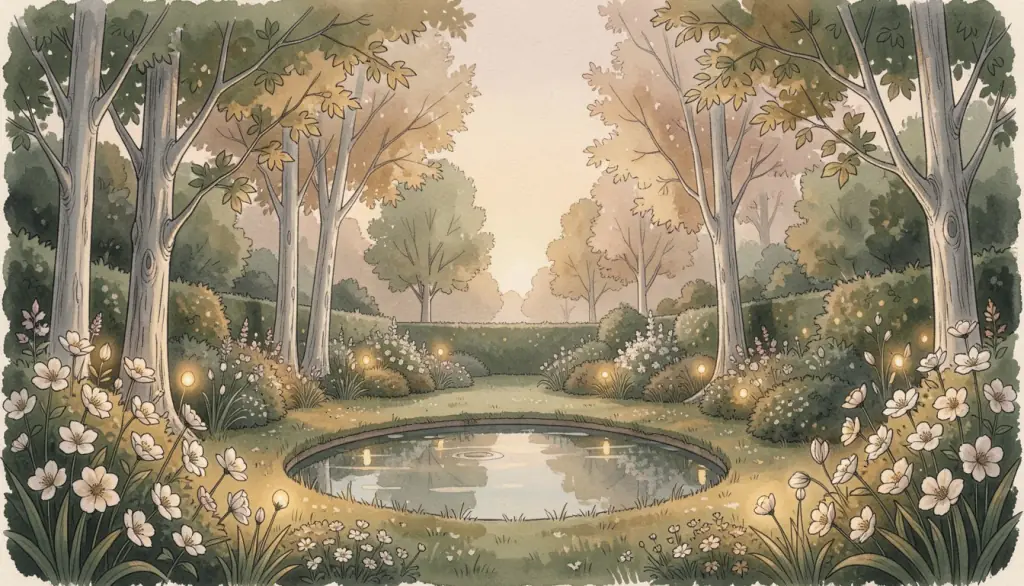
Olórin, we are told, lived in Lórien. Even when his work took him often to the house of Nienna, the mourner, his own home was in the gardens of dreams. So the Maia whose name means dream lived in the land of the Vala of dreams. That is a deliberate echo, not a coincidence.
This is why Middle-earth has two Lóriens. The first is in Valinor, a place of the Valar. The second is Lothlórien, the Elvish woodland where Galadriel and Celeborn rule, whose name reuses the Valinor name. Galadriel's Lórien is a mortal-world reflection of a Valar garden, a place where time seems to run slow. The idea that Lothlórien was named for the Valinor garden is a natural one, but Tolkien did not spell it out in the book itself.
For the forest and its names, see Lothlórien Explained. For the fuller story of the Elven queen who lives there, see Galadriel Explained.
Do Elves Dream? The Elvish Idea of Sleep
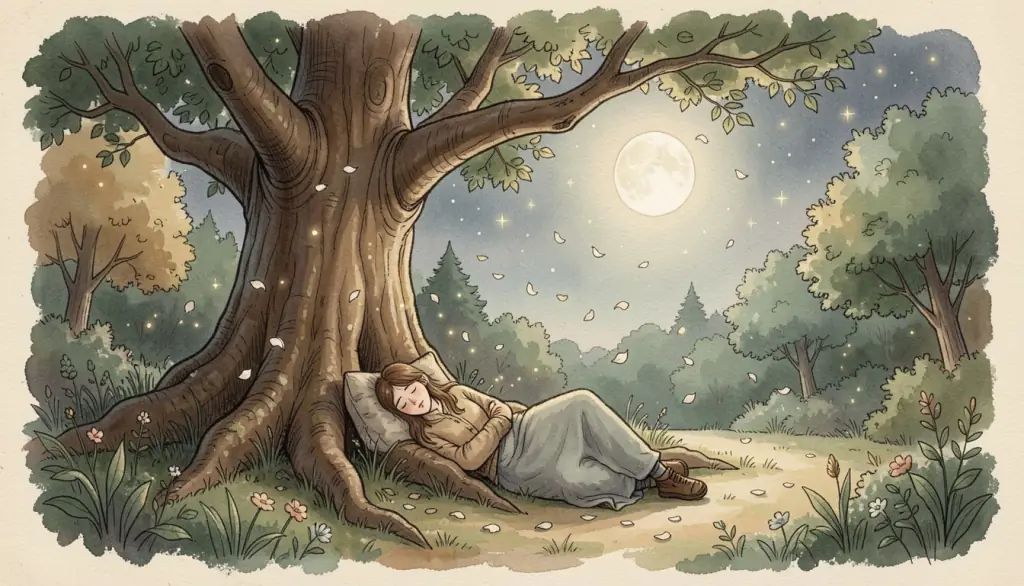
In The Two Towers, in "The Riders of Rohan", Legolas is described resting in the manner of his people, with his eyes open, while his mortal companions sleep. The text speaks of Elves walking in dreams. The passage is short.
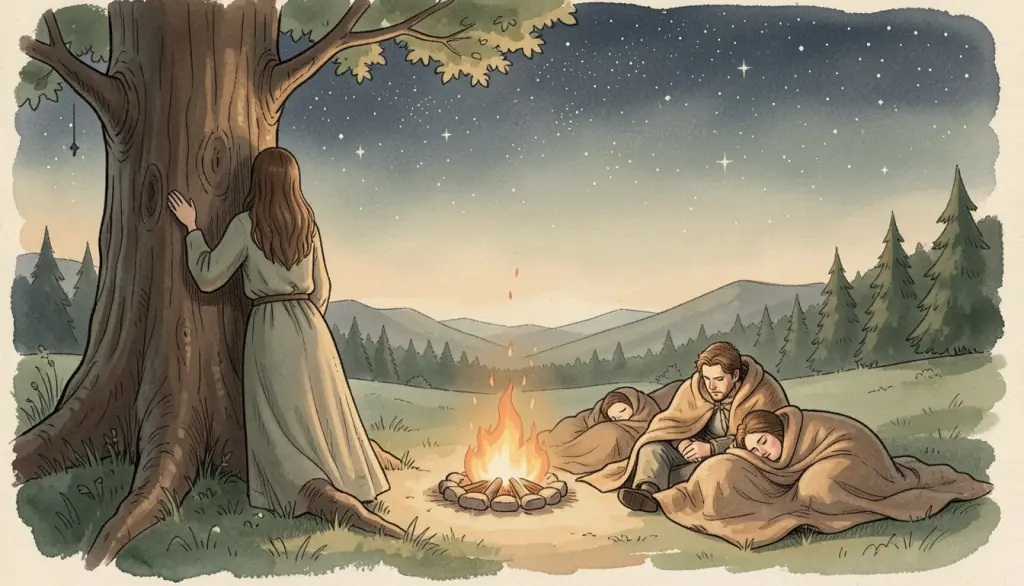
It suggests that for Elves the line between dreaming and waking is thinner than for Men. That is a hint from one scene, not a rule. The text does not give a full account of Elvish sleep, and we should not claim more than a short scene shows.
One word from our list fits this scene: indemma, "mind-picture (of an apparition in a dream)", from Parma Eldalamberon 17. It is attested as a noun, and the gloss describes an image seen in a dream. Use it for exactly that sense and no other.
How to Say Dream in Elvish: A Quick Guide
| You want to say | Best attested choice | Note |
|---|---|---|
| dream (noun) | olor (Quenya) | Also glossed "vision"; linked to Olórin |
| dream (second noun) | lórë (Quenya) | Attested in Letters and the Etymologies |
| dreamy | olosta (Quenya) | Adjective, Unfinished Tales |
| to dream | óla- (Quenya) | Impersonal; do not conjugate it yourself |
| dream in Sindarin | no everyday word cited here | Check Eldamo; label any form you find |
| dream-flower | Lothlórien (Sindarin place name) | A place name, not a general phrase |
| a vision seen in sleep | indemma (Quenya) | PE17 gloss: mind-picture of an apparition |
For pronunciation, read the guide at Elvish Pronunciation. In Quenya a two-syllable word is stressed on the first syllable, so olor is OH-lor. In Olórin the accented ó is long, which makes it the stressed syllable: oh-LOH-rin. The accent marks vowel length, not stress, but here the two coincide.
Tattoos, Gifts and What Is Not Attested
Dream is a popular tattoo and gift word, and it is easy to get wrong. A few honest limits.
What works:
- The single word olor or lórë, on its own, glossed "dream".
- The name Olórin, if you want a link to Gandalf's dream-root name.
- Lothlórien as a place name.
What is not attested:
- A Tolkien sentence for "sweet dreams" or "follow your dreams". Neither exists in anything he published. Phrases of this kind online are modern inventions. If you want one, ask for a Neo-Quenya version and make sure it is labelled as such.
- A Sindarin word for dream that we can source. See above.
- A genuine phrase "dream big" or "dreamer" with its own Tolkien word. There is no attested agent noun for a dreamer in our data. Building one from olor plus an ending would be a guess.
If you want a name, check Elvish Baby Names and Elvish Names Female for names with real sources. For tattoos, read Elvish Tattoo: The Complete Guide before you book. A single attested word on skin is safe. A sentence you made up is not.
You can also see how a word would look in Tengwar with the Tengwar name tool and test any other word you have found with the Elvish translator, which draws on attested vocabulary.
Why Dream Words Matter in Tolkien
Tolkien's mythology uses sleep and dream for more than comfort. Lórien is a place of rest and healing. Olórin carries the quiet counsel that reaches people in their sleep. Lothlórien is where the Fellowship finds rest. The dream words carry the idea of restoration. They are the opposite of the dark, noisy words in the Elvish for war and shadow.
If you are learning the language, it helps to put olor beside the light and night words, because they share the same world of imagery. See Elvish Words for Light and Dark for the night words, such as Quenya lómë and Sindarin dû. Note the trap in our data: Lórien is not from lómë, "night". It comes from the dream root. The similar sound is a coincidence in English eyes only.
If the sea is more your image, Elvish Word for Sea pairs well with this page.
People Also Ask
How do you say dream in Elvish? In Quenya, olor ("dream, vision") or lórë ("dream"). The verb is óla- and the adjective olosta.
What does Olórin mean? It is Gandalf's Quenya name in Valinor, tied by Tolkien to the dream root behind olor. The note in Unfinished Tales is more careful than a one-word gloss.
What does Lothlórien mean? Sindarin loth ("flower") plus Lórien. Eldamo glosses it "Dreamflower".
Who is the Vala of dreams? Irmo, called Lórien after his gardens. His spouse is Estë, Vala of healing and rest.
Do Elves sleep or dream? Legolas rests with open eyes in The Two Towers. The text gives a hint of a different kind of rest, not a full account.
Learn the Language Behind the Dream
Olor, lórë and Olórin are three words of Quenya you now know, and each has a source. Keep going with real vocabulary in the free lessons at Learn Elvish, and see how the sounds work in the grammar guide and the vocabulary guide.
Related Reading
People Also Ask
How do you say dream in Elvish?
In Quenya the noun is olor, glossed "dream, vision" from Unfinished Tales and the Etymologies. A second Quenya noun, lórë, is also glossed "dream" in Tolkien's letters and the Etymologies. Quenya also has a verb, óla-, "to dream" in an impersonal sense, and the adjective olosta, "dreamy".
What does Olórin mean?
Olórin is Gandalf's name in Valinor, before he came to Middle-earth. Tolkien links it to the Quenya dream root, the same one behind olor. He adds a caution in Unfinished Tales, so the link is Tolkien's own but not the whole story.
What does Lothlórien mean?
Lothlórien is Sindarin. Loth means flower or blossom, and Lórien is the name of a place in Valinor tied to the dream root. Eldamo glosses the whole name "Dreamflower", or literally "Lórien of the Blossom".
Who is the Vala of dreams in Tolkien?
Irmo, called Lórien after his gardens in Valinor, is the Vala of visions and dreams. His spouse Estë is the Vala of healing and rest. The Silmarillion places Olórin among the Maiar who lived in Lórien.
Do Elves sleep or dream?
In The Two Towers Legolas rests with his eyes open, in the manner of his people, while the Fellowship's mortal members sleep. Tolkien describes Elvish rest as walking in dreams rather than closing out the world. The scene is brief, so treat it as a hint, not a doctrine.