Elros and Elrond: The Half-elven Twins and Their Choice
Try It Yourself — Free Elvish Tools
Quick Answer: Elros and Elrond were twin sons of Eärendil the Mariner and Elwing, and both were Peredhil, "Half-elven". At the end of the First Age they were each allowed to choose a kindred. Elrond chose the Elves and became lord of Rivendell. Elros chose Men and became Tar-Minyatur, first King of Númenor, living about five hundred years and founding the line that leads to Isildur and Aragorn. Their names are Sindarin: Elros is read as "star-foam" and Elrond as "star-dome". Tar-Minyatur is Quenya, and later Númenórean kings gave up such Quenya names for Adûnaic ones.
Most readers know Elrond as the calm lord at the Council. His twin brother appears in the story only as a name in a long family tree. Yet Elros is the reason Aragorn exists. Without the choice made on a beach at the end of the First Age, there is no Númenor, no Dúnedain, and no King returning to Gondor.
This guide follows the twins from their birth to their parting, then looks at the language: what Elros, Elrond, Tar-Minyatur and Peredhel mean, who spoke which tongue in Númenor, and why the kings switched names. It ends with the way the same choice returns in Arwen. The main sources are The Silmarillion (including "Akallabêth"), The Lord of the Rings (Appendices A and B), and Unfinished Tales ("The Line of Elros"). Where Tolkien gives no gloss, we say so.
For the name Elrond in more depth, see Elrond Name Meaning. For his life and role, see Elrond Explained.
The Twins at a Glance
| Elrond | Elros | |
|---|---|---|
| Parents | Eärendil and Elwing | Eärendil and Elwing |
| Titles | Peredhel, Half-elven; Master of Rivendell | Peredhel, Half-elven; Tar-Minyatur |
| Choice | Counted among the Elves | Counted among Men |
| Home | Lindon, then Imladris (Rivendell) | Númenor, the island of the Edain |
| Fate | Sailed West in 3021 of the Third Age | Died in Númenor after about 500 years |
| Descendants | Elladan, Elrohir and Arwen | The Kings of Númenor, the Lords of Andúnië, Isildur, Aragorn |
Both brothers also carry the same ancestry through their parents. Their father Eärendil was a Man's son with Elvish blood on his mother's side, and their mother Elwing was a granddaughter of Lúthien. So the "half" in Half-elven is, strictly, a matter of kindred more than of arithmetic. Tolkien presents them as a people who stand between two worlds, and the story turns on which side each would take.
Who They Were: Sons of the Sea and the Star
"Mae govannen" — want to actually speak Elvish?
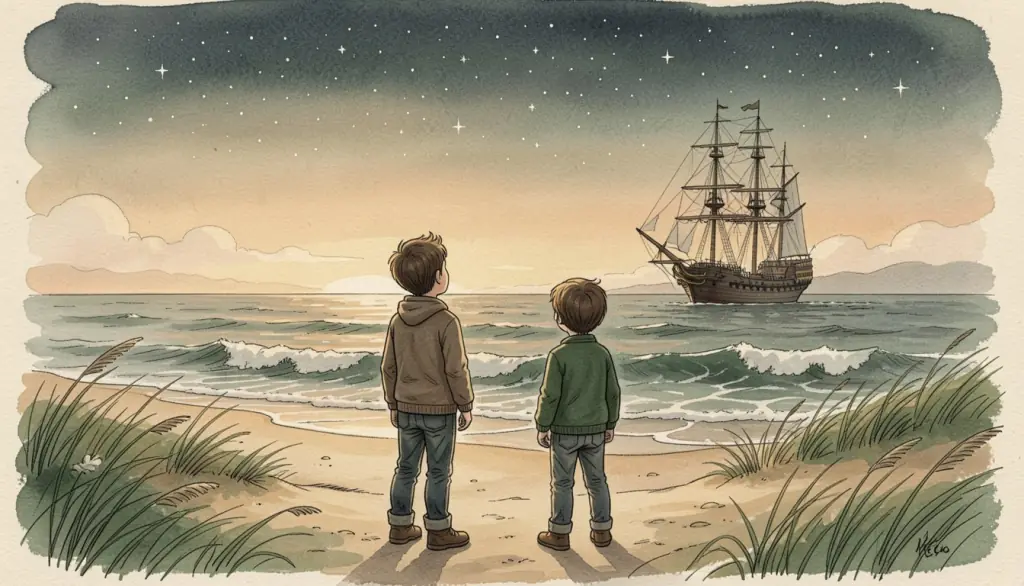
Try It Free →Eärendil and Elwing came from the last refuge of the Elves in Beleriand, the Havens of Sirion. When the sons of Fëanor attacked the Havens, the twin boys were taken captive. The Silmarillion says that Maglor, one of those sons, took pity and raised them. That is a strange start for the two who would later stand for peace and rule: they were brought up by a man under the Oath, who regretted what he had done.
Meanwhile Eärendil sailed West with a Silmaril to plead for help, and the Valar answered. The war of wrath ended Morgoth's power. At the close of that age the Valar gave Eärendil and Elwing a judgment about the kindred they would be counted with. They chose the Elves. The same judgment, extended to their sons, offered each of the twins a choice of his own.
This is the core of the story, and Tolkien tells it simply. Elrond chose to be reckoned among the Firstborn. Elros chose to be reckoned among Men. The brothers loved each other, and the choice parted them. The Silmarillion says that Elros was given a life many times the length of a common Man's, as the first of a kingly house, and that Elrond remained under the same Elvish gift of long years. They did not meet again as living brothers in the way they had known.
For their father's name, see Eärendil's name. Our vocabulary data glosses Eärendil as "sea-lover" (ëar + -ndil).
The Choice of the Half-elven
Tolkien keeps the idea of a choice for a few families only: Lúthien and Beren's line, and the children of Eärendil. It is one of the most unusual gifts in his world. An Elf is bound to the circles of Arda and lives as long as the world does. A Man dies and leaves it, and Tolkien calls this the Gift of Men. The Half-elven are the people who may pick.
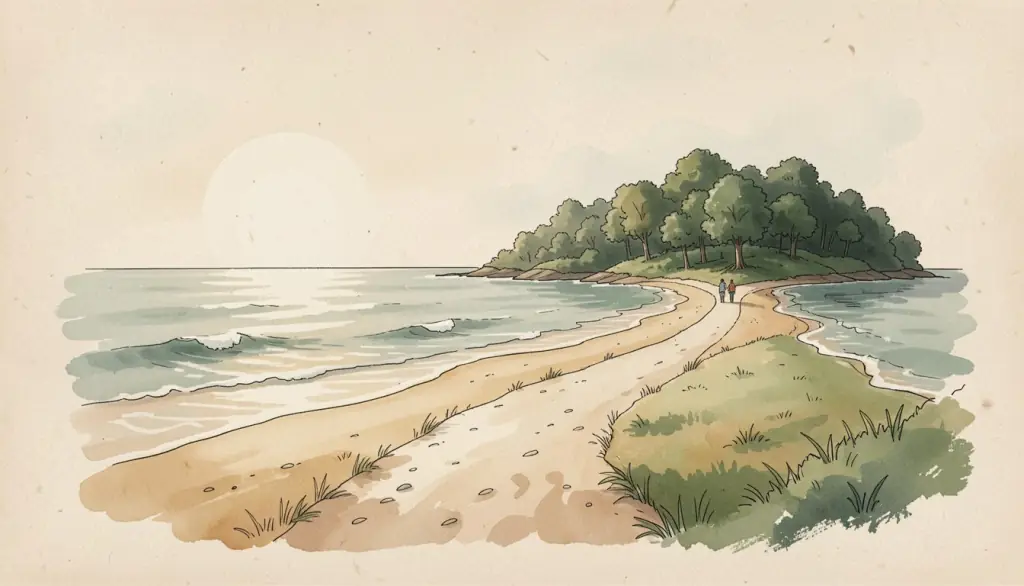
What each twin picked says something about him.
Elrond picked the longer view. He chose to remain, to see ages pass, and to carry the memory of the First Age into the Third. In The Lord of the Rings he is a keeper of lore and of healing. His ring, Vilya, is described in The Three Elven Rings.
Elros picked the shorter road. The Silmarillion ("Akallabêth") says he became the first King of the Dúnedain, who were given the island of Númenor as their home, lying in the sea between Middle-earth and the Blessed Realm. He was granted a lifespan far above that of other Men. According to The Lord of the Rings, Appendix A, he lived five hundred years and ruled for four hundred and ten of them. Appendix B places the founding of Númenor early in the Second Age and Elros's death in the year 442.
The text of Appendix A states the effect for later generations: the kings of Númenor lived far longer than other Men, and the length of life slowly shortened as the line grew proud. The first king set the pattern. The gift was a measure, not a promise.
For the wider picture of Men, Elves and Dwarves, see Races of Middle-earth.
Elros as Tar-Minyatur, First King of Númenor
Elros took a royal name in Quenya. Appendix A gives it as Tar-Minyatur, and calls him Elros Tar-Minyatur. Unfinished Tales ("The Line of Elros") lists the kings after him and gives the royal names in order.
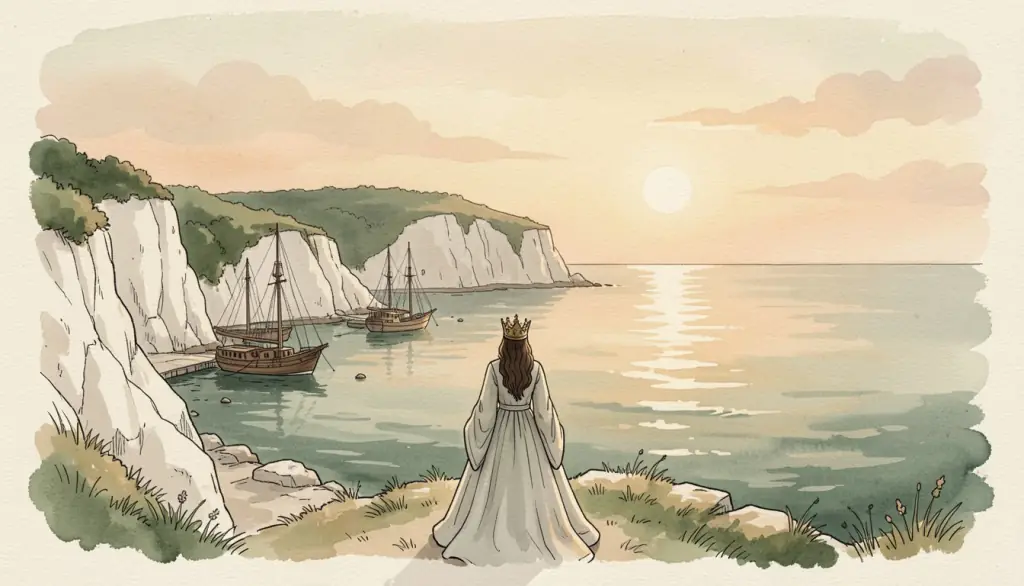
The Quenya of that list is the first thing worth noticing. Númenor was a kingdom of Men, not Elves, yet its first kings chose names in the high Elvish tongue, as a sign of their friendship with the Eldar. Elros himself was raised by Elves and spoke Sindarin with his own kin. The Edain who followed him had learned Sindarin from the Elves of Beleriand in the First Age. In Númenor the Elves of Tol Eressëa visited, and Quenya was the language of lore and of kingship. Sindarin remained in common use among the people for a long time.
Reading the name
| Element | Language | Meaning | Source |
|---|---|---|---|
| tar | Quenya | honorific: "sir, madam"; in king-names a title for a high one | PE17 (as an honorific); LotR, Appendix A (king-names) |
| tár | Quenya | king, "high one" (title element) | Our vocabulary data, citing Appendix A |
| tára | Quenya | lofty, tall, high | Silmarillion, Etymologies, PE17 |
| minya | Quenya | first; eminent, prominent | Silmarillion, PE23 |
| tur-, túrë | Quenya | to master, conquer; might, mastery | Etymologies, PE17 |
| Tar-Minyatur | Quenya | royal name of Elros | LotR, Appendix A |
Tar-Minyatur has a clear shape. Tar- is the royal title that begins every one of these names. Minya means "first". The ending looks like a form of the same root as tur-, "to master, rule", which gives an agent noun along the lines of "ruler". So the parts read as "High First-ruler". That is our reading of the parts. We have not found a gloss in Tolkien's own words for the whole, so hold it as a reasoned reading and not as a quotation.
It fits the story either way. Elros was the first of the line, and the name says so in its second element.
The Quenya royal names that follow
The kings after Elros kept the pattern for many generations. Unfinished Tales and Appendix A list names such as Tar-Amandil, Tar-Elendil, Tar-Aldarion, and, much later, Tar-Palantir. Tar-Palantir is the one with a clear Quenya sense: palantir is given in our data as "far-seeing", from the verb meaning "to watch, look afar". The name fits a king who, near the end, tried to turn his people back toward the Elves.
Many of the royal names in the list are Quenya compounds whose parts we cannot check word by word in our vocabulary data. We list only the ones we can read. The rest are names to admire, not to translate.
The Switch from Quenya to Adûnaic
Here is the part that most readers do not know. The line begins with Quenya names and ends with Adûnaic ones.
Appendix A says the twentieth king, who began as Tar-Herunúmen, "Lord of the West" in Quenya, took the Adûnaic form of that title, Ar-Adûnakhôr. In doing so he set aside the Elvish tongue for the royal name. From then on the kings are Ar-, not Tar-. The last king to rule, who tried to conquer the West, is Ar-Pharazôn.
| Quenya form | Adûnaic form | Meaning | Source |
|---|---|---|---|
| Tar-Herunúmen | Ar-Adûnakhôr | "Lord of the West" | LotR, Appendix A |
| Tar- (prefix) | Ar- (prefix) | royal title | LotR, Appendix A |
| Tar-Calion | Ar-Pharazôn | the Golden (Adûnaic Pharazôn) | Silmarillion, Appendix A |
The change is a statement of politics written in grammar. By choosing Adûnaic, the language of Men, over Quenya, the king signalled that his house no longer wished to lean on the friendship of the Eldar. It was a first step in the break with the Elves that later became open rebellion. The tale is told in "Akallabêth".
For the language itself, with its words and its link to the Common Speech, see Adûnaic: The Language of Númenor.
A note on the second row: the title Tar-Calion for the last king is reported in the Silmarillion tradition as the Quenya form that Ar-Pharazôn took at his coronation, and Adûnaic Pharazôn is glossed "the Golden". We keep this row short and do not build further on it.
Elros, Isildur and Aragorn
The line of Elros did not end with the fall of Númenor. A branch, the Lords of Andúnië, stayed faithful to the Valar and the Elves. Their heir Elendil escaped the drowning with his sons Isildur and Anárion and founded the realms in exile, Arnor and Gondor.
Anárion's name has a Quenya sense in our data: Anar is "sun", and the note in our database ties Anárion to "child of the sun". For Isildur's story, see Isildur Explained. Aragorn is the heir of Isildur in the long line that began with Elros. See Aragorn's Elvish Language Guide.
The family tree makes a nice reversal. Elrond, who stayed, raised Aragorn at Rivendell. Aragorn, who descends from the brother who left, was his foster-son. So the choice of two twins at the end of the First Age shaped the household where the last heir of Elros grew up. Elrond is also the kinsman who sets the price of Aragorn's marriage to his daughter, which brings us to the echo.
How the Choice Echoes in Arwen
Appendix A, "The Tale of Aragorn and Arwen", tells it. Arwen is Elrond's daughter. When she falls in love with Aragorn she is in the same position her father and her uncle once were: she is of the kindred who may choose.
Elrond's own children were given the Half-elven choice too. The books do not record a final choice for Elladan and Elrohir: when Elrond sailed they stayed behind, and Appendix B says Celeborn went to dwell with them in Rivendell. Arwen chose the life of a mortal. Her choice was the opposite of Elrond's. He had chosen the Elves, and she chose Men. In that she took the side her ancestor Elros had taken.
The cost is the same in each telling. Elros was parted from his twin. Arwen is parted from her father, who sails West and cannot return. Appendix A says she lived as Queen alongside Aragorn, and that when he died she went to Lórien and ended her life there. Tolkien gives that scene a quiet, sad dignity. The price of the Gift of Men is felt at every step.
Her name has the same weight. Arwen is read as "noble maiden", and her people called her Undómiel, "Evenstar". See Arwen Name Meaning and Arwen's Elvish Quotes, Translated.
The Names in Elvish
This is a table of the words in this post, with sources.
| Word | Language | Meaning | Source |
|---|---|---|---|
| Elros | Sindarin | "star-foam" | Silmarillion, index and appendix |
| Elrond | Sindarin | "star-dome" | Silmarillion, index |
| Peredhel (pl. Peredhil) | Sindarin | Half-elven | Silmarillion, index |
| êl | Sindarin | star | Silmarillion |
| ross | Sindarin | rain; spindrift, spray, foam | MR, PM (our data) |
| Adan (pl. Edain) | Sindarin | Man (mortal); the Men of the Three Houses | Silmarillion |
| Edhel | Sindarin | Elf | Silmarillion |
| Dûn | Sindarin | west | Silmarillion |
| Númen | Quenya | west | Silmarillion |
| Anar | Quenya | sun | Silmarillion |
| aran | Quenya and Sindarin | king | Silmarillion |
| Tar-Minyatur | Quenya | royal name of Elros | LotR, Appendix A |
Three notes.
- Elros and ross. Our data lists Sindarin ross as "rain; spindrift, spray, foam". The name uses the spelling ros, which the Silmarillion appendix glosses "foam, spray". The two are the same word in different forms.
- Númenor. The island's name is built on Quenya Númen, "west". Our data notes it as the "land of the West", the drowned kingdom of Men. The Sindarin side is the Dûn of Dúnedain, the "Men of the West".
- What we did not invent. We have not made up a Quenya word for "twin" or "choice". Tolkien's published texts give no phrase for the choice in Elvish form that we can verify, so the post leaves the idea in English.
Pronunciation. Under Appendix E, a name of two syllables is stressed on the first. So EL-ros and EL-rond. For the rules, see our pronunciation guide.
Why the Names Matter to Learners
The twins' names are a short lesson in how Tolkien builds a family. Both start with el, "star", the element also found in Elendil and Elbereth. That shared start tells you they are siblings before the text says so. The second parts, ros and rond, give each his own colour.
Likewise the royal names show the grammar of titles. Tar- in Quenya, Ar- in Adûnaic, both before a name. If you learn the pattern, every king in the list becomes readable at a glance.
If you want to practise real Quenya and Sindarin from this material, start with Quenya for Beginners and Sindarin for Beginners. Our grammar guide covers the endings, and the vocabulary page collects attested words.
What Tolkien Leaves Open
A few points are worth stating plainly, because online summaries often blur them.
- No word-for-word gloss of Tar-Minyatur. The parts are clear. The whole is our reading.
- The twins' age at the choice. Tolkien does not describe a ceremony with a date. The Silmarillion presents the choice as part of the judgment at the end of the First Age.
- The shape of the lifespan. Appendix A gives five hundred years for Elros. It does not give his exact age at the start of his reign beyond what Appendix B's dates imply, so we do not state one.
- Film and series. The films do not feature Elros. A television adaptation may treat the family differently. Keep the book's account separate from any screen version.
People Also Ask
Who was Elros in Lord of the Rings? Elrond's twin, a son of Eärendil and Elwing. He chose Men, became Tar-Minyatur, and was the first King of Númenor. Aragorn descends from him.
What does the name Elros mean? "Star-foam", from Sindarin el, "star", and ros, "foam, spray". His brother Elrond shares the star element and means "star-dome".
What does Tar-Minyatur mean? It is Quenya. Tar is a royal title and minya means "first". The ending belongs to the root for mastery, so the parts read as "high first ruler". That is our reading, not a quoted gloss.
What does Peredhel mean? "Half-elven" in Sindarin. The plural is Peredhil. It names Elrond, Elros and, in their turn, Elrond's children.
What choice did Elros and Elrond make? Elrond chose the Elves and stayed in Middle-earth until 3021. Elros chose Men, lived about five hundred years, and founded the kingdom of Númenor.
Learn the Language Behind the Names
Elros, Elrond, Peredhil and Tar- are a small, real part of Sindarin and Quenya. Try them in our Elvish translator, write your own name in the Tengwar with the name tool, or begin the free lessons at Learn Elvish.
Related Reading
People Also Ask
Who was Elros in Lord of the Rings?
Elros was Elrond's twin brother, a son of Eärendil and Elwing. At the end of the First Age he chose to be counted among Men and became Elros Tar-Minyatur, the first King of Númenor. Aragorn and the Kings of Gondor descend from him.
What does the name Elros mean?
Elros is Sindarin and is read as el, "star", plus ros, "foam, spray", so "star-foam". The Silmarillion's index and appendix give the parts. His twin's name Elrond shares the star element and means "star-dome".
What does Tar-Minyatur mean?
It is Elros's Quenya royal name. Tar is a title for a high one or king, and minya means "first". The ending belongs to the same family as the Quenya words for mastery and ruling. Read together, the parts point to "high first ruler", which is our reading of the parts, not a gloss we can quote.
What does Peredhel mean?
Peredhel is Sindarin for "Half-elven", the title of Elrond and Elros. The plural is Peredhil. It names people who descend from both Elves and Men and who were given a choice between the two kindreds.
What choice did Elros and Elrond make?
Elrond chose to be counted among the Elves and stayed in Middle-earth until he sailed West after the War of the Ring. Elros chose to be counted among Men. He was given a very long life, died after about five hundred years, and left a line of kings.