Gondolin: The Hidden City of Turgon, Its Rise and Its Fall
Try It Yourself — Free Elvish Tools
Quick Answer: Gondolin is the hidden city of Turgon, king of a host of the Noldor, in the First Age of Tolkien's legendarium. It stood in a secret valley ringed by mountains and stayed unknown to Morgoth for centuries, until Turgon's nephew Maeglin betrayed it. Its fall, told in The Silmarillion, is one of the great disasters of the Elves. The Sindarin name means "Hidden Rock", and was originally understood as "Singing Stone".
Gondolin is the city Tolkien wrote about first. Long before hobbits, before The Hobbit, before Middle-earth even had that name, a young officer recovering from the trenches wrote a story called "The Fall of Gondolin". He went on revising it for more than fifty years. The city that appears in The Silmarillion is the result of all that work: a white city of the Noldor, built in secret, loved too well, and destroyed in a single night of fire.
This guide covers what the books actually say. We look at where the city was, why Turgon built it, who lived there, how it fell, what happened to the survivors, the Elvish names connected with it, and how little of it has reached the screen. It is part of our series on the Elves of Middle-earth.
What Was Gondolin?
Gondolin was a fortified city of the Noldor in Beleriand, the north-western land of Middle-earth where most of the First Age takes place. It was ruled by Turgon, the second son of Fingolfin, and it was home to the Elves who had followed him out of Valinor across the Grinding Ice.
Three things made it different from every other realm of the Elves in Beleriand.
- It was hidden. The other great Elvish kingdoms were known places with borders, roads and allies. Gondolin was a secret. Very few outsiders ever found it, and fewer still were allowed to leave.
- It was closed. Turgon's law was that no one who entered the city could go out again. Only a handful of exceptions were ever made.
- It lasted. Because it was hidden, Gondolin survived long after the open kingdoms had been broken. It was the last great Elvish stronghold of the Noldor to fall, apart from the coastal refuges.
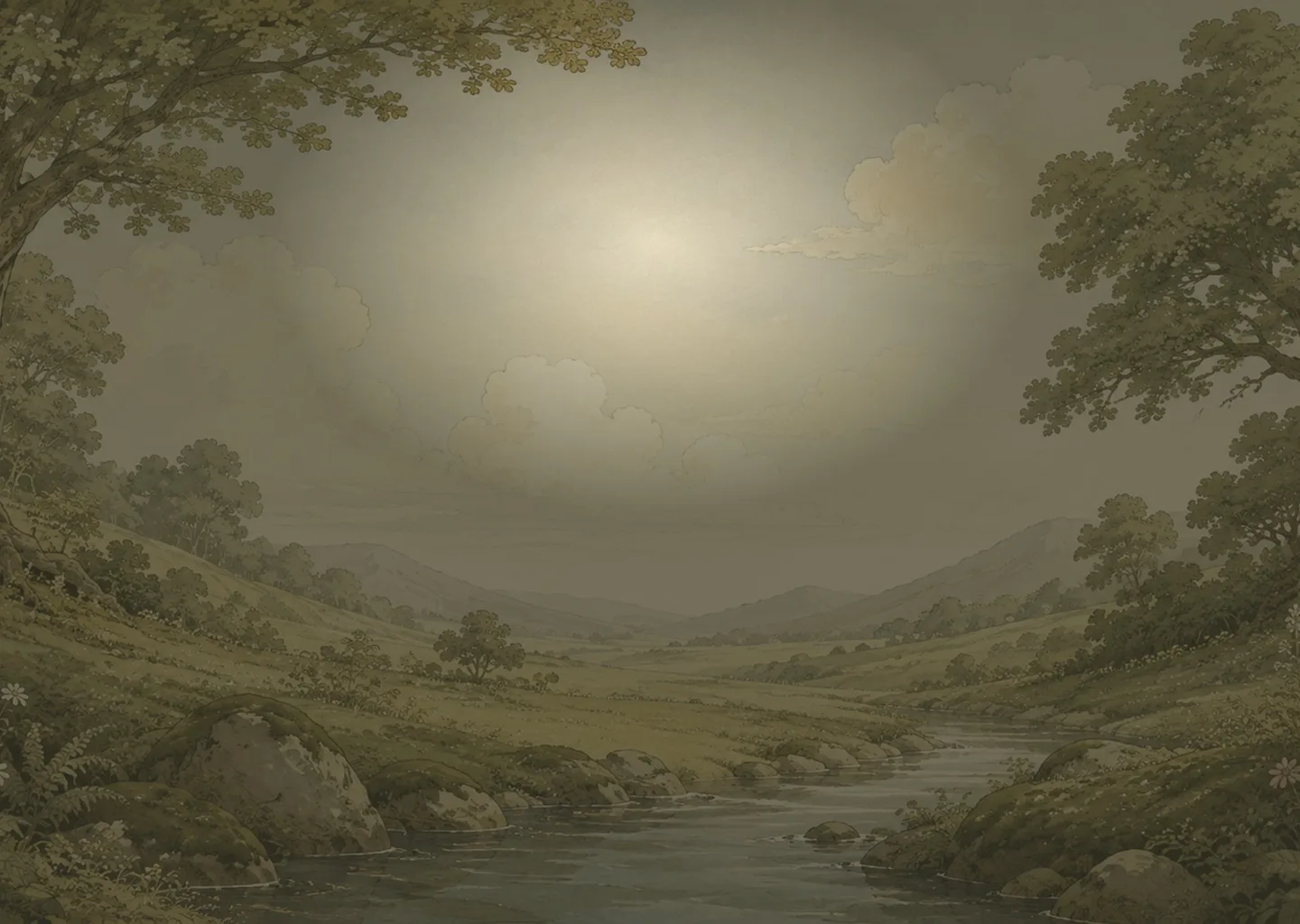
The city stood on a hill called Amon Gwareth in the middle of a wide, round plain, Tumladen. All around the plain rose a ring of steep mountains, the Echoriath, the Encircling Mountains. There was only one way in: a hidden ravine and a tunnel guarded by gates.
| Feature | What it was | Source |
|---|---|---|
| Amon Gwareth | the hill on which the city was built | The Silmarillion, "Of Turgon and the Building of Gondolin" |
| Tumladen | the green plain inside the mountains | same chapter |
| Echoriath | the Encircling Mountains | same chapter |
| The Hidden Way | the secret entry, a ravine and tunnel with guarded gates | The Silmarillion; expanded in Unfinished Tales, "Of Tuor and his Coming to Gondolin" |
Turgon Finds the Hidden Valley
"Mae govannen" — want to actually speak Elvish?
Try It Free →The story begins with a dream. In The Silmarillion, chapter "Of the Coming of the Elves", Turgon and his cousin Finrod are troubled by dreams sent by Ulmo, the Vala of waters, the one power of the West who never stopped caring for the Elves in exile. Each is moved to look for a hidden place where a stronghold could be built against the day of disaster.
Finrod found the caves by the river Narog and built Nargothrond. Turgon, guided by Ulmo, walked alone into the hills and came upon the round valley of Tumladen. He kept it secret and went back to his realm on the coast at Nevrast.
Building in secret
The chapter "Of Turgon and the Building of Gondolin" tells how he sent the most skilful of his people to the valley in secret, and how they laboured there for many years. Turgon wanted a city that would recall Tirion, the city of the Elves on its green hill in Valinor, which he had loved and left behind.
When the work was done, Turgon moved his whole people out of Nevrast by stealth, in small companies, so that no spy could follow. He then closed the ways and shut the gates. For a long time the other Elves of Beleriand had no idea where he had gone.
Ulmo's warning
Ulmo came to Turgon in Nevrast before he left and gave him a warning that hangs over the rest of the story. He told Turgon not to love the work of his hands too much, because the hope of the Noldor lay in the West, not in a city. He also said that a messenger would one day come from Nevrast, and that Turgon should leave arms there for him. Turgon left a helm, a mail-coat and a sword in the halls of Vinyamar.
Readers who know the story know where this goes. Turgon did come to love his city more than anything. When the messenger finally arrived, the king would not listen.
The People of Gondolin
The city was not just a fortress. Tolkien describes it as the fairest city of the Elves east of the sea, full of fountains and towers, with the images of the Two Trees of Valinor made in its royal court. Its people were mostly Noldor who had come with Fingolfin, with a share of Sindar who joined them.
Several figures matter for the story.
Turgon
The king, son of Fingolfin, brother of Fingon. Wise and proud. He kept his people safe for centuries, and he is also the one whose refusal to change course, at the end, brought the disaster on.
Idril
Turgon's only child, a daughter called Idril Celebrindal, "Silver-foot", because she always walked barefoot. Idril is the most clear-sighted person in Gondolin. She mistrusts Maeglin, she foresees danger, and she has a secret way dug out of the city in case it is ever needed. That tunnel saves everyone who survives.
Aredhel and Maeglin
Turgon's sister Aredhel grew tired of being shut in and asked to leave. Turgon let her go with an escort, against his own judgement. She was lost in the forest of Nan Elmoth, where the Dark Elf Eöl took her as his wife. Their son was Maeglin.
In the chapter "Of Maeglin", mother and son flee back to Gondolin. Eöl follows them and is let in under Turgon's law: once inside, he may not leave. Eöl refuses to stay and tries to kill his son with a poisoned javelin. Aredhel shields Maeglin and is struck instead. She dies, and Turgon has Eöl cast down from the cliff of the city. Before he falls, Eöl foretells that his son will die the same death.
Maeglin grows into a great man of the city, a master of mines and smithcraft. He also falls in love with Idril, his first cousin, which the Eldar forbade. Idril does not return his love. That resentment is the seed of the fall.
Ecthelion and Glorfindel
Two captains of Gondolin are remembered above the rest. Ecthelion of the Fountain and Glorfindel of the House of the Golden Flower both die heroically in the fall, and both kill a Balrog as they die. You can read more about those duels in our guide to the Balrogs of Middle-earth.
Gondolin Through the Wars of Beleriand
For most of the First Age, Gondolin stayed out of the wars. That changed only twice.
Húrin and Huor
In the chapter "Of the Ruin of Beleriand and the Fall of Fingolfin", two young brothers of the House of Hador, Húrin and Huor, are lost in battle and carried to Gondolin by the Eagles of Thorondor. Turgon is fond of them and lets them stay. When they want to go home, he breaks his own law and lets them leave, on the condition that they keep his secret. They swear to do so, and they keep that oath.
The Battle of Unnumbered Tears
In the great battle the Elves called the Nirnaeth Arnoediad, Turgon finally led his army out of the hidden city to join the alliance against Morgoth. The battle was a catastrophe. Fingon, Turgon's brother, was killed. Turgon's army escaped only because Húrin, Huor and the Men of Dor-lómin held the rear so that he could retreat. Huor told Turgon that from him and Turgon a new star would arise; this is fulfilled in Eärendil, who is born of Huor's son Tuor and Turgon's daughter Idril.
After the battle Turgon became the last High King of the Noldor in Middle-earth, and he drew the hidden city even more tightly closed.
Tuor's Coming
The messenger Ulmo had promised was Tuor, son of Huor, a Man raised among the Grey-elves and then enslaved by Easterlings. Ulmo appeared to him on the coast at Vinyamar, where Tuor found the armour Turgon had left long before, and sent him to the hidden city with a guide, Voronwë, an Elf of Gondolin who had survived a shipwreck.
The fuller account of this journey is one of the most finished pieces of prose Tolkien ever wrote. It was published in Unfinished Tales as "Of Tuor and his Coming to Gondolin", and it describes the Hidden Way in detail: the dry river-bed, the dark tunnel, and the series of guarded gates of different metals that led up to the valley. Tolkien's later version breaks off just as Tuor first sees the city.
In The Silmarillion, Tuor delivers Ulmo's message. Gondolin will fall; Turgon should abandon it and lead his people down the river Sirion to the sea. Turgon refuses. Maeglin speaks against the message. The city stays.
Tuor stays too. He becomes a great man in Gondolin and marries Idril, one of the very few unions of Elves and Men in the First Age. Their son is Eärendil.
The Fall of Gondolin
The end comes through Maeglin. In the chapter "Of Tuor and the Fall of Gondolin", he goes out of the valley, against the king's law, to search for metals in the mountains. Orcs capture him and take him to Angband. Under threat of torment he reveals the location of the city and the best way to attack it. Morgoth promises him lordship in Gondolin and Idril as his own when the city falls, and sends him back so no one will suspect anything.
Morgoth then prepares a new kind of army. It includes Orcs, wolves, Balrogs, and dragons of fire, together with monsters made of iron that could carry soldiers over the walls. They came over the northern mountains where no one expected an attack.
The assault fell on a festival day. The battle that followed is told briefly in The Silmarillion, but the outlines are clear:
- Ecthelion fights Gothmog, Lord of Balrogs, in the square of the king's fountain. Both drown in the basin.
- Turgon stays in his tower, which is thrown down, and he dies in its ruin.
- Maeglin tries to seize Idril and her son in the chaos. Tuor fights him and throws him from the walls, so that Eöl's curse comes true.
- Idril leads the survivors out through her secret tunnel, while the enemy thinks they are fleeing toward the main gate.
The escape over the mountains
The refugees climbed toward a high, narrow pass in the mountains. There an Orc ambush struck, led by a Balrog. Glorfindel fought the Balrog on a pinnacle of rock and both fell into the abyss. The Eagles of Thorondor came to the aid of the fugitives and drove off the Orcs, and Thorondor later carried Glorfindel's body up from the chasm so it could be buried. You can read more about the eagles in our guide to the Great Eagles of Middle-earth.
The survivors went south and came at last to the Mouths of Sirion, where they joined the remnant of Doriath. There Eärendil grew up, and his voyage to Valinor eventually brought the War of Wrath that ended Morgoth's power.
What Survived of Gondolin
Very little of the city itself survived, but a few things did, and some of them turn up in books most readers know well.
- The swords. In The Hobbit, chapter "A Short Rest", Elrond reads the runes on the swords from the trolls' hoard and says they were made in Gondolin for the Goblin-wars. Gandalf's sword, Glamdring, had belonged to the king of Gondolin. Thorin's sword, Orcrist, was another. The Orcs of the Misty Mountains still remembered and hated them.
- The line of kings. Through Eärendil and Elwing, the blood of Turgon's house runs to Elrond, Elros and the kings of Númenor, and so to Aragorn.
- Glorfindel. Tolkien concluded in late notes (published in The History of Middle-earth, vol. XII, The Peoples of Middle-earth) that the Glorfindel who meets Frodo near Rivendell is the same Elf who fell at Gondolin, returned from the Halls of Mandos.
Gondolin and the Elvish Language
The name
Gondolin is a Sindarin name. The Eldamo-based entries in our vocabulary database gloss it as "Hidden Rock", adding that it was originally "Singing Stone". The first element is gond, "stone, rock", the same word that gives Gondor, "Land of Stone". The Quenya word for stone, ondo, is its relative.
There are a few other Sindarin words connected with the city whose meanings we can give from attested glosses:
| Word | Meaning | Where you see it | Source |
|---|---|---|---|
| gond | stone, rock | Gondolin, Gondor | LotR; Eldamo |
| ondo (Quenya) | stone, rock | related to gond | The Silmarillion |
| echor | outer circle; encircling | Echoriath, the Encircling Mountains | The Silmarillion; Eldamo |
| Angband | Iron Prison | Morgoth's fortress, from which the attack came | The Silmarillion; Eldamo |
| nirnaeth | tears | Nirnaeth Arnoediad, the battle Turgon survived | The Silmarillion; Eldamo |
| dagor | battle | the battles of Beleriand | The Silmarillion; Eldamo |
Other names connected with Gondolin, like Tumladen, Amon Gwareth and Celebrindal, also have Elvish meanings. Where our database does not carry a checked gloss for a name we leave it untranslated here rather than guess.
Which language did they speak?
Turgon's people came from Valinor speaking Quenya, the language of the Noldor. In Beleriand the common tongue was Sindarin, the speech of the Grey-elves. The Silmarillion says that after King Thingol of Doriath banned Quenya in his realm, the Noldor took up Sindarin for daily use, and Quenya became a language of lore. Gondolin's own names, like the city name itself, are Sindarin.
Tolkien's later notes suggest that Quenya was kept up more in Gondolin than in other realms, but the details shifted over the years, so we will not claim more than that. If you want to understand the difference between the two languages, our Tolkien's Elvish languages guide covers both. To see what a Sindarin or Quenya name looks like in the Elvish script, try the Tengwar name generator.
Gondolin in the Films and The Rings of Power
Gondolin does not appear on screen.
- Peter Jackson's films tell stories of the Third Age. Gondolin is mentioned only through its swords. In An Unexpected Journey, Elrond identifies Glamdring and Orcrist and their origin, as he does in the book.
- The Rings of Power is set in the Second Age, after Gondolin has been gone for hundreds of years. The show's rights cover The Lord of the Rings and its appendices, not The Silmarillion, so the story of Gondolin is not available to it. Its brief First Age scenes are the show's own invention and should not be read as an adaptation of Gondolin.
Everything in this guide about the city itself comes from the books.
Where to Read the Story
There are four places to find Gondolin in Tolkien's published works.
- The Silmarillion (1977): chapters "Of Turgon and the Building of Gondolin", "Of Maeglin", and "Of Tuor and the Fall of Gondolin". This is the shortest and most widely read version.
- Unfinished Tales (1980): "Of Tuor and his Coming to Gondolin", Tolkien's late, unfinished and much fuller retelling of Tuor's journey.
- The Book of Lost Tales, Part Two (1984): the original "The Fall of Gondolin", written around 1917. It is longer, stranger, and full of details Tolkien later dropped.
- The Fall of Gondolin (2018), edited by Christopher Tolkien, which gathers every version in order so you can follow how the tale changed.
Why Gondolin Matters
Gondolin is the clearest picture in Tolkien of a theme that runs through all his work: the wish to stop time and keep something beautiful exactly as it is. Turgon builds a copy of Tirion and closes the doors. It works for centuries. But the safety of the city depends on the world outside staying the same, and it does not. The warning he ignored was not "do not build"; it was "do not love the building more than the hope it was built to serve".
The same idea comes back in the Third Age with the Elven-rings, which Tolkien describes as an attempt by the Elves to preserve their realms unchanged. Lothlórien and Rivendell are, in a sense, small Gondolins. And the hope that survives the fall of the city is not a place at all but a child, Eärendil, whose voyage saves both Elves and Men.
People Also Ask
What is Gondolin in Tolkien?
Gondolin is the hidden city of the Noldorin king Turgon in the First Age. It stood on a hill in a round valley ringed by the Encircling Mountains, and for most of its history no enemy knew where it was.
What does the name Gondolin mean?
It is Sindarin for "Hidden Rock", originally understood as "Singing Stone". The first element is gond, the same word for stone found in Gondor.
How did Gondolin fall?
Maeglin, Turgon's nephew, was captured by Morgoth and revealed the city's secret. Morgoth sent Orcs, Balrogs and dragons over the mountains, and the city was taken and burned.
Who survived the fall of Gondolin?
Tuor, Idril and their son Eärendil led the survivors out through a secret tunnel. Glorfindel died defending them on a mountain pass, and the refugees reached the Mouths of Sirion.
Related Reading
- Elves of Middle-earth: Kindreds, Immortality and Languages Explained
- Doriath and the Girdle of Melian: Thingol's Hidden Kingdom Explained
- Beren and Lúthien: The Tale of the Silmaril, Told from the Books
- Fëanor and the Silmarils: The Jewels That Doomed the Elves
- Rivendell Explained: Imladris, the Last Homely House of Elrond
- Balrogs of Middle-earth — Valaraukar, Durin's Bane and Gothmog
- The Great Eagles of Middle-earth: Thorondor, Gwaihir and the Messengers of Manwë
- Tolkien's Elvish Languages: The Complete Guide to All Six
Learn Elvish free. The names of Gondolin are Sindarin, and you can start learning Sindarin and Quenya today. All of Tengwar's Elvish lessons are free with an account. Start learning Elvish.
People Also Ask
What is Gondolin in Tolkien?
Gondolin is the hidden city of the Noldorin king Turgon in the First Age. It stood on a hill in the middle of a round valley ringed by the Encircling Mountains, and for most of its history no enemy knew where it was. Its story is told in The Silmarillion, chapters "Of Maeglin" and "Of Tuor and the Fall of Gondolin".
What does the name Gondolin mean?
Gondolin is Sindarin and is glossed "Hidden Rock". Tolkien's notes record that it was originally understood as "Singing Stone". The first element is gond, the same word for stone that appears in Gondor.
How did Gondolin fall?
Maeglin, Turgon's nephew, was captured by Morgoth and revealed the secret of the city to win his life and a promise of Idril. Morgoth then sent an army of Orcs, Balrogs and dragons over the mountains. The city was taken and burned, Turgon died in his tower, and only a remnant escaped through Idril's secret tunnel.
Who survived the fall of Gondolin?
Tuor, Idril and their young son Eärendil led the survivors out through a secret way. Glorfindel died defending their retreat on a mountain pass, and the Eagles of Thorondor helped them escape. The refugees went south to the Mouths of Sirion.
Is Glamdring from Gondolin?
Yes. In The Hobbit Elrond reads the runes on the swords found in the trolls' cave and says they were made in Gondolin. Glamdring had belonged to the king of Gondolin, and Gandalf carries it through The Lord of the Rings.
Is the Glorfindel of Gondolin the same as the one in Rivendell?
Tolkien decided late in life that they are the same person. Glorfindel died fighting a Balrog during the escape from Gondolin and was later sent back to Middle-earth. His notes on this were published in The Peoples of Middle-earth.