Glaurung Explained: The Father of Dragons, Túrin and the Fall of Nargothrond
Try It Yourself — Free Elvish Tools
Quick Answer: Glaurung is the first of Tolkien's dragons, the "father of dragons" in The Silmarillion, a wingless fire-drake bred by Morgoth in Angband. He helped break the Siege of Angband in the Dagor Bragollach, fought at the Nirnaeth Arnoediad, destroyed the Elvish city of Nargothrond, and ruined Túrin Turambar and his sister Nienor with spells of his eyes and voice. Túrin killed him at Cabed-en-Aras with the sword Gurthang.
Smaug is the dragon everyone knows, but he is a latecomer. Long before the Third Age, in the First Age of the world, one dragon decided the fate of kingdoms and families: Glaurung. He is the central monster of The Children of Húrin, one of the darkest stories Tolkien ever wrote, and he is also the answer to a question that readers of The Hobbit eventually ask: where did dragons come from?
This guide follows Glaurung through every appearance, from his first reckless sortie to his death in a ravine, and then compares him with the other great dragons of Middle-earth. It is a companion to our guide to the dragons of Middle-earth, which covers the whole family; here we stay with the first of them. Everything below comes from Tolkien's published books, and we name the book each time.
Who Is Glaurung?
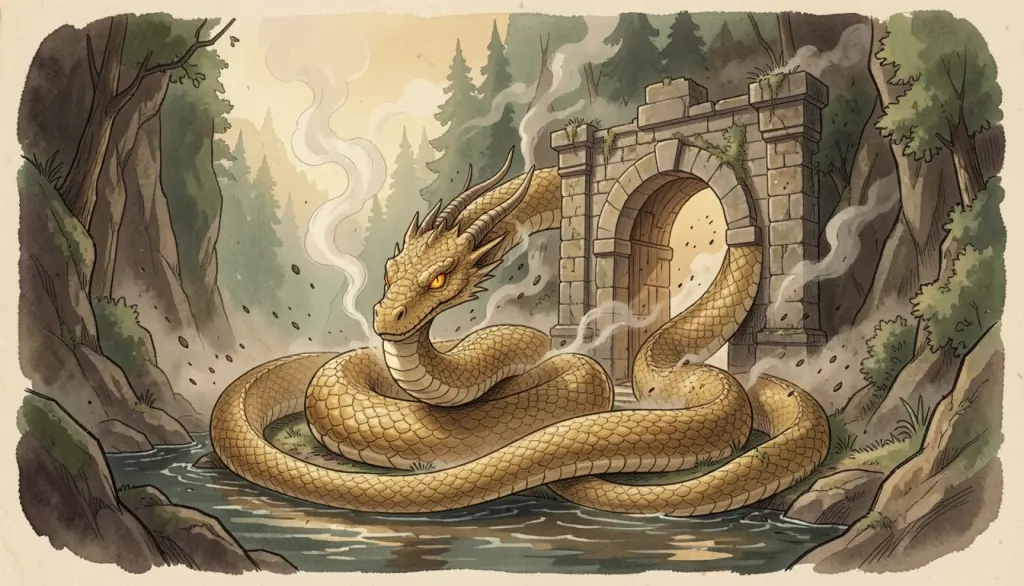
Glaurung is a dragon of the First Age, made by Morgoth, the first Dark Lord, in the fortress of Angband ("Iron Prison") in the far north. The Silmarillion gives him two titles that matter: he is the father of dragons, and he is the first of the Urulóki, the fire-drakes of the North. The word Urulóki is the name The Silmarillion gives; our vocabulary data lists the Quenya singular urulócë, glossed "fire-serpent, fire-drake" (Silmarillion, Etymologies, Eldamo).
Three features define him:
- He has no wings. Glaurung crawls. Winged dragons only appear at the very end of the First Age, in the War of Wrath. See the section on Ancalagon below.
- He breathes fire. Fire-drakes burn what they cross. When Glaurung comes out of Angband, the land he passes over is scorched.
- He speaks, and his gaze binds. This is what makes him different from a mere beast. In The Silmarillion and The Children of Húrin, his eyes can hold a person motionless and his voice can lie so skilfully that his victims do what he wants. He never needs to win by force when words and stares will do.
Tolkien never describes Glaurung's birth. We are told only that Morgoth bred or made him, and the text does not explain from what. We should not fill that gap with fan lore.
Glaurung in the Wars of Beleriand
"Mae govannen" — want to actually speak Elvish?
Try It Free →Glaurung's career has four public stages before the great tragedy. Together they show how Morgoth used him: first as a test, then as a weapon, and finally as a general.
The first sortie
The Silmarillion says Glaurung first came out of Angband while he was still young and not fully grown. He crossed the plain of Ard-galen, but Fingon, the Noldorin prince, and his mounted archers drove him back. Morgoth was angry that his creature had shown itself too soon, and for a long age the dragon stayed hidden. It is a small scene, but it matters: the Elves learned that dragons existed, and Morgoth learned that they were not yet ready.
The Dagor Bragollach
Centuries later Morgoth struck. In the Dagor Bragollach, the Battle of Sudden Flame, rivers of fire poured out of the north, and the siege that the Noldor had kept around Angband was broken. Glaurung, now grown, came forth in that onslaught together with the Balrogs and a great host of Orcs. The plain of Ard-galen, once green, was burned to a barren waste. You can read about the Balrogs in our guide to the Balrogs of Middle-earth and about the Orc armies in Orcs and Goblins of Middle-earth.
The Nirnaeth Arnoediad
At the Battle of Unnumbered Tears, Glaurung came again with his brood, and The Silmarillion says no army could withstand them. One company did stand: the Dwarves of Belegost, who wore masks that turned aside the dragon-fire. Their lord Azaghâl drove a knife up into Glaurung's belly and the dragon fled the field, though in his flight Glaurung's weight crushed Azaghâl. The Dwarves carried their lord away. It is one of the few moments where Tolkien's dragons are beaten by plain courage, and it was Dwarves who did it. More about their people is in our guide to the Dwarves of Middle-earth.
The unnamed brood of Glaurung who fought alongside him are mentioned and never described. Everything we know about dragons of that age beyond Glaurung himself is, for that reason, thin.
Nargothrond and the Spell on Túrin
The central story of Glaurung is told at length in The Children of Húrin (and in shorter form in The Silmarillion and Unfinished Tales). To follow it you need a little background.
Túrin Turambar is the son of Húrin, who had defied Morgoth at the Nirnaeth Arnoediad. Morgoth cursed Húrin's family, and the rest of the tale is that curse working itself out. Túrin, a wandering outlaw after many misfortunes, came to Nargothrond, the hidden Elvish stronghold under the hills of Narog, founded by Finrod Felagund. It is a city that, like Doriath and Gondolin, survived by secrecy. The Sindarin name is attested in our data as "Underground Fortress of Narog" (Eldamo, a gloss inferred by the lexicon).
The end of hiding
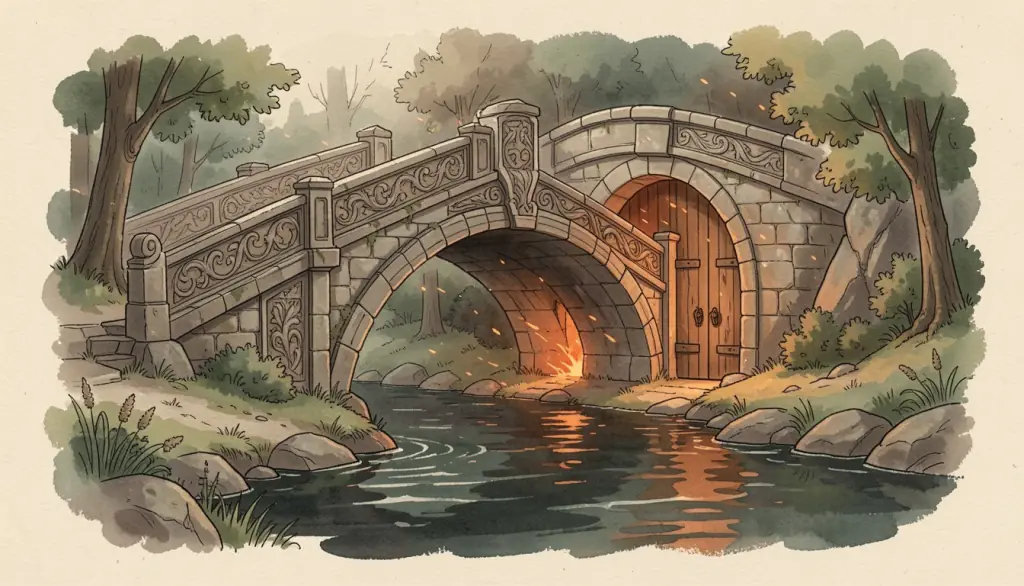
Túrin became a great captain in Nargothrond and persuaded its lord to give up the secrecy that had protected it. A bridge was built over the river Narog, and the Elves went to open war against Morgoth's servants. This worked, for a while. It also gave Glaurung a road.
The sack
When Glaurung came, he crossed the new bridge. The army of Nargothrond was lured away and lost, and the dragon reached the gates of the city. There he met Túrin. According to The Children of Húrin, Glaurung held Túrin with his gaze, so that he stood unable to move while the Orcs plundered the halls and drove away the captives. Among the captives was Finduilas, the Elvish woman who loved Túrin.
Glaurung then turned the knife with words. He told Túrin that his mother and sister were suffering in Dor-lómin and that Túrin had abandoned them. Túrin believed him, left to seek them, and so left Finduilas to the Orcs. She died on the road. Glaurung had destroyed a city and, with a speech, sent its last defender in the wrong direction. This is the same pattern as Smaug's conversation with Bilbo, only far more cruel: in Tolkien, a dragon's tongue is as dangerous as his fire. Our post on the Hobbit riddle game looks at how Tolkien writes dangerous speech.
Glaurung took the treasure of Nargothrond for his bed and stayed in the ruined halls.
Nienor and the Dragon's Second Spell
Túrin's sister Nienor had not forgotten her brother, and she set out with an escort to find him. Glaurung met her too. Where he had bound Túrin's body, he now took Nienor's mind: his eyes stripped away her memory of who she was. She wandered the wild, nameless, and was found by Túrin in the woodland of Brethil. He named her Níniel and, not knowing she was his sister, married her.
This is the cruelty at the heart of the story. Glaurung did not need to be near Túrin to destroy him. A spell placed on Nienor was enough to bring the family curse to its end, and it would not have worked without Túrin's pride and his misfortunes up to that point. For that reason, many readers see Glaurung less as a monster than as the weapon Morgoth used against one family.
The Death of Glaurung at Cabed-en-Aras
After a time, Glaurung left Nargothrond and came toward Brethil, and the people there had to deal with him. Túrin offered to kill him.
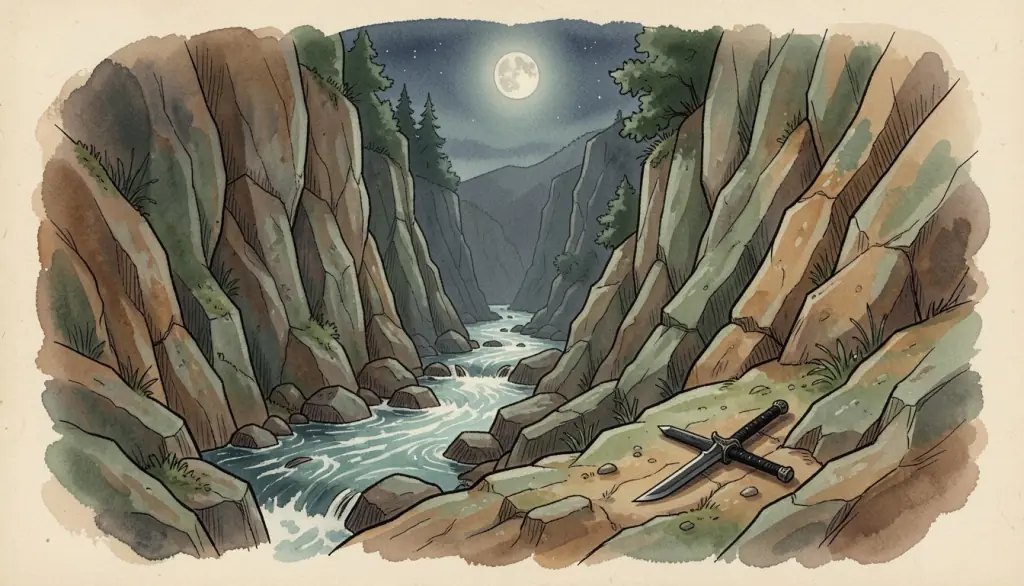
The ravine the dragon would cross was Cabed-en-Aras. The name is Sindarin, and both elements are in our vocabulary data: cabed means "leap" and aras means "deer" (Eldamo, from The Silmarillion and Unfinished Tales). It is usually rendered "Deer's Leap," the place where a hunted deer once jumped the gorge. After the events below it was renamed Cabed Naeramarth, "Leap of Dreadful Doom," in memory of Nienor (The Silmarillion).
The plan was to wait beneath the crossing. Túrin and a small company went to the cliffs; some lost courage, and a companion was killed by a falling stone, so that Túrin climbed down the ravine alone. When Glaurung crossed above him, Túrin thrust his sword Gurthang into the dragon's soft underbelly, and the blade went in to the hilt. The Silmarillion explains that Gurthang's name means "Iron of Death." Our data lists the Sindarin word gurth as "death" (Silmarillion, Eldamo). The sword had been given to Túrin earlier in the tale (it was first called Anglachel), and the name Gurthang was the one he took for it later.
The dragon's death was not clean. Glaurung's blood burned and poisoned Túrin, who fainted. When Nienor came to look, Glaurung, lying dying, lifted the spell on her memory and told her the truth about her husband: that he was her own brother. Nienor leapt into the gorge in grief. When Túrin woke and learned what had happened, he killed himself on his own sword. The tale ends in ruin even though the dragon is dead; Glaurung's last words did more harm than his fire.
This shape of death, a dragon struck from below who speaks to his slayer, is the same as Fáfnir's death at Sigurd's hands in Norse myth. Tolkien knew those stories intimately, and his own dragons are built from them and from Beowulf, as our Dragons of Middle-earth guide explains.
What Does Glaurung's Name Mean?
Be careful with this one. Many sites state a confident meaning. We can only confirm part of the picture.
- The Sindarin word glaur is attested with the gloss "gold [light or colour]" (Unfinished Tales, Etymologies, PE17; Eldamo). The name Glaurung begins with the same letters, and readers have long linked the two. That is why you will see "golden" in some discussions.
- We cannot cite a statement from Tolkien explaining the whole name, including the ending -ung. So we do not give it a meaning. If you read an "official" definition of the ending, check which source it cites.
- Angband, the place where he was made, is attested: Sindarin ang "iron" and Angband "Iron Prison" (Silmarillion, Etymologies, Eldamo).
- The Sindarin general word for dragon is lhûg "serpent, dragon" (Etymologies, root LOK), and the Quenya relative hlócë is "reptile, snake, serpent." Do not confuse it with Quenya lócë, which means "curl of hair" and is not a dragon word.
If you want to check any other Elvish word before putting it in a story or a tattoo, our Elvish dictionary of common words and the post on Elvish words for wolf and dragon list what Tolkien actually attested.
Glaurung Compared With Smaug and Ancalagon
Tolkien gives no dragon a size in numbers, and the numbers you see online (Ancalagon as miles long, and so on) come from fan debate. What the books do give lets us compare the three famous dragons by role.
| Glaurung | Ancalagon the Black | Smaug | |
|---|---|---|---|
| Age | First Age | End of the First Age | Third Age |
| Wings | No | Yes | Yes |
| Breathes fire | Yes | Yes | Yes |
| Role | Morgoth's general and spell-caster | Morgoth's last weapon, in the War of Wrath | A lone thief of Erebor's gold |
| Killed by | Túrin Turambar, at Cabed-en-Aras | Eärendil, in the sky | Bard, at Lake-town |
| Weak point | Soft belly | Not stated | Bare patch on the left breast |
| Speaks | Yes, with deadly skill | No speech recorded | Yes, vain and sly |
What stands out is that Glaurung is more active than either of the others. Ancalagon appears in one battle. Smaug sleeps on a hoard for almost two hundred years and acts when his gold is touched. Glaurung campaigns for centuries, takes part in three of the great battles of the First Age and destroys a kingdom with his own presence. He is also the only one of the three who does his worst harm by speaking.
For the others, see the sections on Ancalagon and Smaug in the dragons guide. Both of them are, in Tolkien's setup, descendants or imitators of what Glaurung began: Ancalagon part of the winged horde of the War of Wrath, and Smaug the Third Age dragon whose greed echoes Glaurung's lair at Nargothrond. We should be careful, though, to say that Tolkien never writes Smaug as being related to Glaurung; it is a thematic echo, not a family tree.
Why Glaurung Matters
Glaurung is how Tolkien shows that evil works through corruption and deceit as much as through force. The Orcs are the soldiers; the Balrogs are the generals in fire. But Glaurung is the one who actually breaks Túrin, and he does it with a lie told at the right moment. That is why the story is so painful, and why The Children of Húrin is a very different book from The Hobbit, even though both feature a dragon. Smaug is a threat to a village and a party of dwarves. Glaurung is a threat to a whole people, and to a single family.
For readers coming from The Lord of the Rings, it is also a useful reminder that the dragons of the Third Age are the weaker descendants of something much older. When Gandalf says no living dragon could unmake the One Ring, he is measuring modern dragons against a past in which Glaurung burned a whole plain. If you want the wider context of languages and peoples behind these stories, see our complete guide to Tolkien's Elvish languages and the languages of Middle-earth.
People Also Ask
Who killed Glaurung?
Túrin Turambar, son of Húrin. He struck from below while the dragon crossed the ravine of Cabed-en-Aras, thrusting the sword Gurthang into Glaurung's belly (The Silmarillion, The Children of Húrin).
Did Glaurung have wings?
No. Glaurung crawled. Winged dragons first appear in the War of Wrath, at the end of the First Age, and Ancalagon the Black was the greatest of them.
What did Glaurung do to Túrin and Nienor?
He held Túrin motionless with his gaze at Nargothrond and lied to him about his family, which led Túrin away from Finduilas. He later took Nienor's memory with a spell, which led her to marry her own brother without knowing him.
Is Glaurung in The Lord of the Rings or The Hobbit?
No. He appears only in the First Age stories: The Silmarillion, Unfinished Tales and The Children of Húrin. Smaug in The Hobbit is a later dragon.
Learn the Language of the First Age
Almost every place in Glaurung's story has a Sindarin name you can read: Angband, Nargothrond, Cabed-en-Aras. You do not need to take our word for the meanings; you can learn the language that Tolkien built them from. Learn Elvish on Tengwar covers pronunciation, greetings and attested Quenya and Sindarin vocabulary, and our Sindarin for beginners guide is the shortest route into the language of Beleriand. To try a short phrase of your own, use the English-to-Elvish translator.
Related Reading
People Also Ask
Who is Glaurung in Tolkien's legendarium?
Glaurung is the first of the Urulóki, the fire-drakes bred by Morgoth in Angband, and The Silmarillion calls him the father of dragons. He had no wings. He is best known for the sack of Nargothrond and for the curses he laid on Túrin Turambar and his sister Nienor in The Children of Húrin.
How did Glaurung die?
Túrin Turambar killed him at Cabed-en-Aras, a ravine in the forest of Brethil. Túrin climbed down beneath the dragon as he crossed the gorge and drove his black sword Gurthang into the soft belly. Glaurung lived long enough to speak, and his last words revealed to Nienor who her husband really was.
Is Glaurung bigger than Smaug?
Tolkien gives no measurements for either, so any comparison in numbers is invented. What the books do show is that Glaurung was the elder and the father of dragons, that he led armies, and that his spells could bind the will. Smaug is a winged dragon of the Third Age who hoards gold; Glaurung is a wingless war-engine of Morgoth with far more history.
Did Glaurung have wings?
No. Glaurung crawled, and The Silmarillion says winged dragons were only seen at the very end of the First Age, in the War of Wrath. Ancalagon the Black was the greatest of those. Glaurung's power was fire, size, cunning and the paralysing, deceiving power of his eyes and voice.
What does the name Glaurung mean?
Tolkien's own explanation of the full name is not something we can cite. The Sindarin word glaur, "gold light or colour," is attested, and the first part of the name looks like it, but this is a likely connection, not a stated definition. We do not claim a meaning for the ending.
Why did Glaurung curse Túrin?
In The Children of Húrin, Morgoth hated Húrin, Túrin's father, and sought to ruin his family. Glaurung was the instrument. After the fall of Nargothrond he used his gaze and his lies to turn Túrin from rescuing Finduilas, and later he stripped the memory from Nienor, which led to the tragedy at the end of the tale.