The Stranger Is Gandalf: One Wizard, Five Names and What They Mean
Try It Yourself — Free Elvish Tools
Quick Answer: The Stranger in The Rings of Power is named as Gandalf at the end of Season 2. Tolkien never wrote that character, so the show is building on a figure who, in the books, reaches Middle-earth about 3,000 years later. What the books do give us is a list of names: Olórin (Quenya, in Valinor), Mithrandir (Sindarin, among the Elves), Gandalf (Mannish, in the North), Incánus (in the South) and Tharkûn (Dwarvish). Tolkien says Gandalf means "Elf of the wand". The show's own explanation of the name is different.
A single wizard goes by five names in Tolkien, and each name belongs to a people and a language. That is the whole reason the Stranger's naming is interesting to a language reader. The moment the show says "Gandalf", it picks one of those five, and it leaves the other four unsaid.
This guide is about the names. It does not recap episodes. It takes each name in turn, says which language it comes from and what it means, shows where Tolkien gives it, and then compares the show's account with Tolkien's own. For the full study of the Sindarin name, see Mithrandir Meaning: Gandalf's Elvish Name Explained. For the order of wizards as a whole, see The Istari: The Wizards of Middle-earth.
What the Show Does, in Brief
The Stranger is a character in Amazon's The Rings of Power. He first appears in Season 1 and for most of the series he does not know who he is. The Season 2 finale (2024) names him as Gandalf. That much is the show's public premise and is widely reported, so it is safe to state. Beyond that, this article does not describe scenes or quote dialogue.
What matters for us is where the show and the books part company:
- The name's meaning. The show gives its own reading of "Gandalf". Tolkien gives a different one, covered below.
- The date. In the show the Stranger is in the Second Age. In Tolkien the five Istari arrive in the Third Age.
- The character. The Stranger is the show's creation. Tolkien's Gandalf has a long, documented history before Middle-earth: he was the Maia Olórin in Valinor.
Treat the series as its own adaptation. It has the right to reorder Tolkien's timeline. It is still useful to know exactly what the books say, because the names are the part of the legend Tolkien worked out most carefully.
Where Tolkien Gives the Five Names
"Mae govannen" — want to actually speak Elvish?
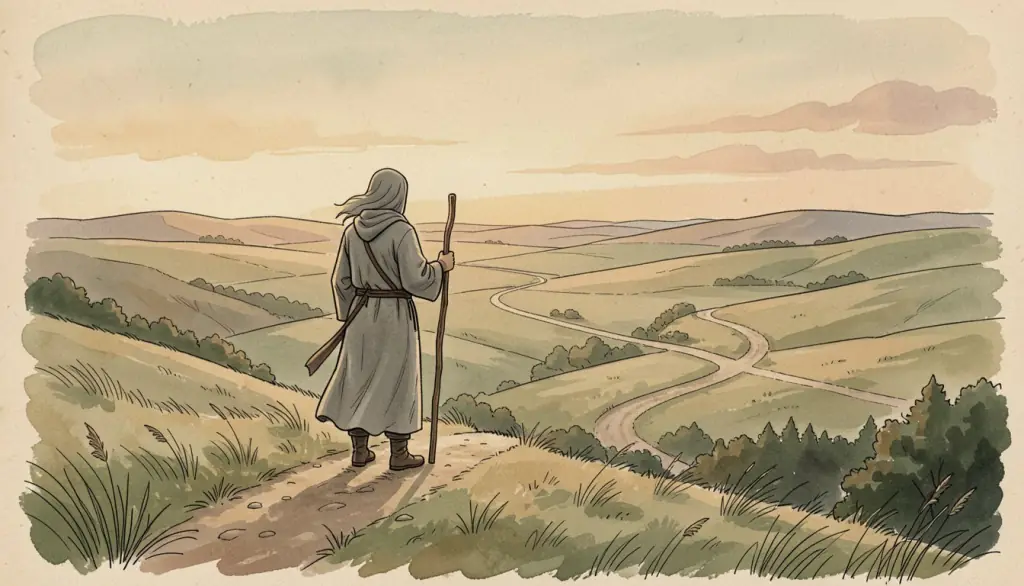
Try It Free →The best-known list is not narrated by the narrator. It is quoted. In The Two Towers, Book IV, Chapter 5, "The Window on the West", Faramir tells Frodo and Sam about Gandalf's visits to Gondor. Faramir says the people there called him Mithrandir "in Elvish fashion", and that he accepted it. Faramir then repeats what the wizard told him: "Many are my names in many countries." The names that follow are Mithrandir among the Elves, Tharkûn to the Dwarves, Olórin in his youth in the West, Incánus in the South, and Gandalf in the North. He adds that he goes not to the East.
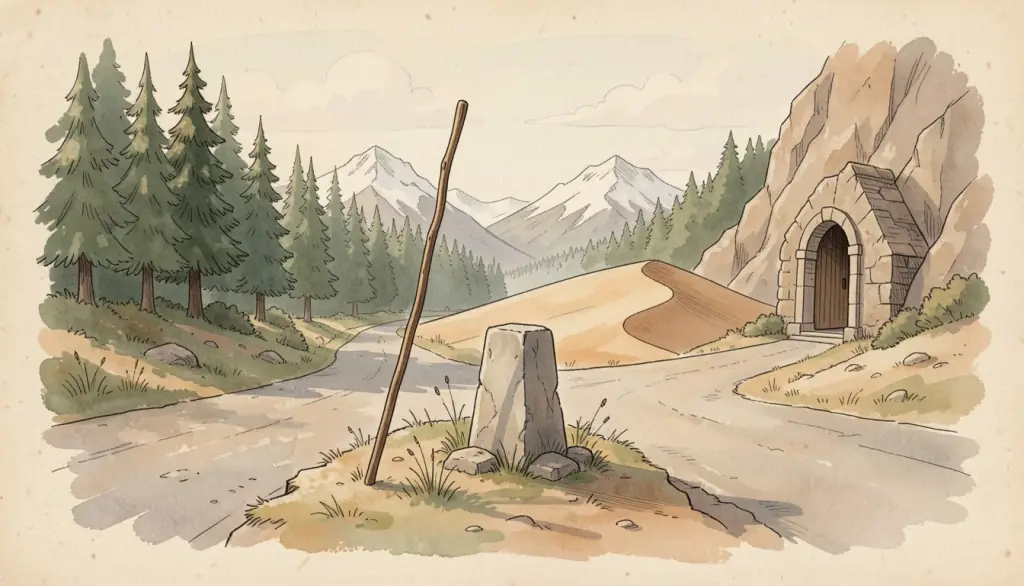
The same naming appears in Unfinished Tales, in the essay "The Istari", where Tolkien sets the names beside the story of the Wizards' coming. So there are two primary sources for the list: Faramir's recollection in The Two Towers, and Tolkien's own commentary in Unfinished Tales.
Here is the list as a table.
| Name | Language | Used by | Meaning | Source |
|---|---|---|---|---|
| Olórin | Quenya | The Valar, in Valinor | Usually connected with Quenya olor, "dream, vision" | The Silmarillion (Valaquenta); Unfinished Tales |
| Mithrandir | Sindarin | The Elves | "Grey Pilgrim" (mith + randir) | The Lord of the Rings; Appendix F |
| Gandalf | Old Norse, as used by Men of the North | The Men of the North | "Elf of the wand" (Tolkien's gloss) | Unfinished Tales; The Two Towers |
| Incánus | Quenya-looking, a Southron form | The people of the South | Tolkien's notes tie it to mind-mastery | The Two Towers; PE17 |
| Tharkûn | Khuzdul (Dwarvish) | The Dwarves | Commonly glossed "staff-man" | The Two Towers; Tolkien's notes |
| Greyhame | Old English, standing for Rohirric | The Rohirrim | "Grey cloak" | The Two Towers |
The sections below take each in turn and say where the meaning is firm and where it is only the best reading.
Olórin: The Name in Valinor
Olórin is the name Gandalf had before he came to Middle-earth. The Silmarillion lists him in the Valaquenta among the Maiar, the lesser spirits who serve the Valar, and says he was the wisest of them. He dwelt in Lórien, the gardens of the Vala Irmo, and he often walked with Nienna, the Vala of mercy and sorrow, from whom he learned pity and patience.
The language. Olórin is Quenya, the high language of the Elves of Valinor. That is the right language for the name: it was a name used in Valinor, among beings who spoke the tongue of the Blessed Realm.
The meaning. Tolkien does not translate the name directly in the main text. The usual reading connects it with the Quenya root behind olor, "dream, fantasy, vision", which fits his dwelling among the gardens of Lórien, the place of dreams and visions. Treat that as the standard reading rather than a quoted gloss. If you meet the claim that Olórin simply "means" a single word, check where it comes from.
The pronunciation. By the stress rule in The Lord of the Rings, Appendix E, a three-syllable word is stressed on the next-to-last syllable if it contains a long vowel there, and Olórin has the long ó in the middle: o-LÓ-rin. This is why the accent is written: it marks vowel length, and here it also falls on the stressed syllable.
Why it matters for the show. The Stranger's amnesia is the show's way of keeping a secret. Olórin is, in Tolkien, a being who knows exactly who he is and what he was sent to do, and who is told to take on a body that will limit his memory and power. The idea that he arrives as a Stranger with a half-remembered past is the show's. The idea that his true name belongs to Valinor and not to Middle-earth is Tolkien's.
Mithrandir: The Elves' Name
Mithrandir is Sindarin, the everyday tongue of the Elves of Beleriand and, later, of nearly all Elves who stayed in Middle-earth. The Elves of Lothlórien and Rivendell use it. Galadriel and Elrond use it. The Elves of Lórien sing their laments for him under this name.
The meaning. Mith is "grey", and randir is "wanderer, pilgrim". The combined sense is "Grey Pilgrim", which is Tolkien's own translation in the text. "Grey Wanderer" is also a fair rendering of the parts. Appendix F of The Lord of the Rings is Tolkien's note on languages, and it confirms the Elves' name for him.
A common mistake. Mithrandir is not Quenya, and it is not a form of Olórin. Quenya has a different word for grey. The name Olórin and the name Mithrandir are not related by a language pattern. They are two names for one being in two languages.
This post is deliberately short on Mithrandir because another article owns the full etymology.
Gandalf: The Name from Norse Poetry
Gandalf is the least Elvish of the five names. It is an Old Norse name, Gandalfr, found in the Dvergatal, the catalogue of dwarf names in the Völuspá of the Poetic Edda. Tolkien took it for his wizard when he wrote The Hobbit, and he kept it all the way through The Lord of the Rings.
Inside the story, Gandalf is the name used by the Men of the North, the people of the northern lands around the Shire, Dale and Eriador. It is a Mannish name, not an Elvish one. Tolkien presents these names as translations. He treats the Northern human languages of Middle-earth as the equivalent of Old Norse and Old English, so he renders them with Northern names. The wizard's name in the speech of those Men was in effect Gandalf.
The meaning. Unfinished Tales gives Tolkien's own reading: the name means "Elf of the wand". Old Norse gandr is a staff or magical wand, and álfr is an elf. The meaning is in line with how the Old Norse name was understood in Tolkien's own reading.
This is also where the show's account differs. In the show, as the finale presents it, the name is explained as "Grand Elf", a reading that does not match Tolkien's gloss. This article does not quote the scene. The point is the comparison: the books say the name refers to a staff, and the show says it refers to rank. Tolkien never wrote the second reading.
Two small points keep the picture honest:
- The name does not come from any Elvish language. Elves do not call him Gandalf in the books. They call him Mithrandir.
- Tolkien used the Norse list of dwarf names for his dwarves too. The thirteen dwarves of The Hobbit and Gandalf share the same source, which is why the wizard's name sits oddly beside the Elvish ones.
Incánus: The Name in the South
Incánus is the name Gandalf says he had in the South, the lands of Harad and the people beyond Gondor. It is the least documented of the five.
Tolkien's later notes, published in Parma Eldalamberon 17 (PE17), give a Quenya noun incánussë, "mind mastership", from which Incánus appears to be formed. That agrees with the idea of a wise counsellor who masters knowledge and hearts. It does not prove how the Southrons would have spoken the word. The name is best understood as an epithet of Southron origin, whose form Tolkien gives in a Quenya-like shape.
What we can say with confidence is narrow. Gandalf gives it as his name in the South. It is recorded in The Two Towers and in Unfinished Tales. The commonly repeated gloss "spy of the North" is sometimes linked to this name, but this post leaves it out because we cannot point to a firm source for it in the published text.
Tharkûn: The Dwarves' Name
Tharkûn belongs to the Dwarves. Their language is Khuzdul, the tongue Tolkien kept secret from outsiders. Tharkûn is one of the very few Khuzdul words that appear in the story outside Moria and the Ring-verse.
Tolkien's notes gloss the name as meaning something like "staff-man". That fits the wizard's habit of carrying a staff everywhere. Khuzdul is a language of which very little is attested, so the name carries the full weight of a one-word glimpse. For the language as a whole, see Khuzdul: The Dwarven Language.
Other Names the Rohirrim Used
Two more names are worth a line, because they show how the same translation habit works.
- Greyhame. The Rohirrim, whose speech Tolkien renders as Old English, call him by a name close to Greyhame. In the book, Éomer and Théoden refer to him by it, and the sense is "grey cloak".
- Stormcrow. In The Two Towers, Théoden greets Gandalf as "Stormcrow", and Gríma adds Láthspell, "ill-news", which is Old English. These are names given in anger or suspicion, not true names.
Why the Names Differ: One Being, Many Peoples
Put the five names side by side and a pattern appears. They are named by who is speaking:
| Speaker | Name | Tongue |
|---|---|---|
| The Valar and Maiar | Olórin | Quenya |
| The Elves of Middle-earth | Mithrandir | Sindarin |
| The Men of the North | Gandalf | Mannish, rendered by Tolkien as Old Norse |
| The people of the South | Incánus | Southron |
| The Dwarves | Tharkûn | Khuzdul |
That table is a map of Middle-earth. Each people names the wizard by what it noticed. The Elves noticed a grey pilgrim. The Dwarves noticed a staff. The Men of the North noticed a wand-bearer. The Valar knew him by what he truly was.
Tolkien built the names on purpose. In the Third Age, no single people knew all of them. Only the wizard himself, speaking to Faramir, lists them in one breath. That is why the passage in "The Window on the West" is such a rich page for anyone who loves the languages: it is a rare place where five tongues of Middle-earth are named in one short sentence.
For a wider tour of the languages involved, see The Languages of Middle-earth, and for how Westron stands behind the translations, see Westron: The Common Speech.
Tolkien's Timeline Against the Show's
This is the biggest difference between the books and the series, and it is easy to state exactly.
In Tolkien. The Istari arrive in Middle-earth about the year 1000 of the Third Age. The Tale of Years in Appendix B of The Lord of the Rings gives the date, and Unfinished Tales ("The Istari") adds the circumstances. They come by sea to the Grey Havens, where Círdan receives them. He judges the grey-clad one the greatest and gives him Narya, one of the Three Rings. The Rings of Power were forged in the Second Age, thousands of years earlier. So in Tolkien, Gandalf has nothing to do with the making of the Rings. He is present only for the long aftermath. See The Three Elven Rings for that later handing-on.
In the show. The series places its Stranger in the Second Age, during the events leading to the making of the rings. It is a compression of Tolkien's timeline for dramatic reasons, and the show makes no secret that it adapts rather than transcribes.
For a language reader, the useful point is this: nothing in the Tolkien texts supports a wizard named Gandalf in the Second Age. If you want to know what the books say about the Istari, the Istari guide is the place to start. For the show's use of Tolkien's languages in earlier seasons, see Rings of Power Season 2 Elvish.
Pronouncing the Names
A quick guide, using the stress rule from Appendix E.
| Name | Say it | Note |
|---|---|---|
| Olórin | o-LÓ-rin | Stress falls on the long vowel. |
| Mithrandir | mith-RAN-dir | Stress on the next-to-last syllable. |
| Gandalf | GAN-dalf | Norse stress, first syllable. |
| Incánus | in-CÁ-nus | Long vowel in the middle carries the stress. |
| Tharkûn | thar-KÛN | The circumflex marks a long vowel. |
The accents in these names are vowel length marks, not stress marks in general. They happen to sit on the stressed syllable in several of these, which is why they are easy to misread.
To hear and practise Elvish sounds from the start, see our pronunciation guide.
What Is Not Attested
A reminder of the limits, since this is a topic where speculation travels fast.
- Tolkien never wrote a character called the Stranger. The name and the role are the show's.
- No Tolkien text puts Gandalf, or any Istar, in the Second Age.
- Tharkûn is one of very few Khuzdul words in print, and "staff-man" is a gloss from Tolkien's notes, not a full grammar of the language.
- The meaning of Incánus is the least firm of the five, and this post gives only what the published notes support.
- We have not built any new Elvish phrase for the wizard. Tolkien did not write one, and an invented one would be ours, not his.
If you want to see how a real Elvish name is built from attested parts, type one into our Tengwar name tool, or look up the words in the Elvish translator.
People Also Ask
Is the Stranger in The Rings of Power Gandalf? Yes. The Season 2 finale names him as Gandalf. Tolkien never wrote the Stranger, so the character is the show's invention.
What does Gandalf mean? It is an Old Norse name from the Dvergatal. Tolkien glossed it in Unfinished Tales as "Elf of the wand". It is a name of the Men of the North, not an Elvish word.
What are all of Gandalf's names? Olórin (Quenya), Mithrandir (Sindarin), Gandalf (Men of the North), Incánus (the South) and Tharkûn (Dwarvish). He lists them to Faramir in The Two Towers.
Was Gandalf in the Second Age? Not in Tolkien. The Istari arrive about 1000 of the Third Age. The show moves its Stranger to the Second Age.
Is Mithrandir the same as Gandalf? Yes. Mithrandir is the Elves' Sindarin name for him, "Grey Pilgrim". Gandalf is the Northern human name. Both are the Maia Olórin.
Learn the Language Behind the Names
Two of the five names are Elvish: Olórin in Quenya and Mithrandir in Sindarin. You can learn the sounds, the stress and the grammar that make them work, and read Tolkien's own words with confidence. Start the free lessons at Learn Elvish, or see how the two languages differ in Quenya for Beginners and Sindarin for Beginners. For the sounds themselves, the pronunciation guide is a good first stop.
Related Reading
- Mithrandir Meaning: Gandalf's Elvish Name Explained
- The Istari: The Wizards of Middle-earth
- The Three Elven Rings: Nenya, Narya and Vilya Explained
- Círdan the Shipwright Explained
- Rings of Power Season 2 Elvish
- Rings of Power Season 3 Elvish Preview
- Khuzdul: The Dwarven Language
- The Languages of Middle-earth
People Also Ask
Is the Stranger in The Rings of Power Gandalf?
Yes. The Season 2 finale names the Stranger as Gandalf, which is how the series closes the question it opened in Season 1. Tolkien never wrote a Stranger. The character is the show's own invention, built on the wizard who arrives in Middle-earth much later in Tolkien's timeline.
What does Gandalf mean?
Gandalf is an Old Norse name from the Dvergatal, the list of dwarf names in the Völuspá. Tolkien took it for his wizard and explained it in Unfinished Tales as meaning "Elf of the wand". It is a Mannish name, used by the Men of the North, not an Elvish one.
What are all of Gandalf's names?
Olórin in the West (Quenya), Mithrandir among the Elves (Sindarin), Tharkûn to the Dwarves, Incánus in the South and Gandalf in the North. Gandalf lists them himself in The Two Towers, as Faramir remembers it. The Rohirrim also called him Greyhame and Stormcrow.
Was Gandalf in the Second Age?
Not in Tolkien's account. The Istari arrived in Middle-earth around the year 1000 of the Third Age, more than three thousand years after the forging of the Rings. The show compresses that timeline and places its Stranger in the Second Age, which is a deliberate departure from the books.
Is Mithrandir the same as Gandalf?
Yes. Mithrandir is the Sindarin name the Elves gave him, usually glossed "Grey Pilgrim". Gandalf is the name used by Men of the North. Both are the same being: the Maia Olórin, sent from Valinor as one of the five Istari.