Celebrían Explained: Galadriel's Daughter, Elrond's Wife, Arwen's Mother
Try It Yourself — Free Elvish Tools
Quick Answer: Celebrían is the only child of Galadriel and Celeborn, the wife of Elrond and the mother of Elladan, Elrohir and Arwen. Elrond married her in the year 109 of the Third Age. In 2509, travelling from Rivendell to Lórien, she was captured by Orcs in the Redhorn Pass and given a poisoned wound. Her sons rescued her and Elrond healed her body, but she had lost her joy in Middle-earth, and in 2510 she sailed into the West. She never appears on the page of The Lord of the Rings and is absent from the films and The Rings of Power.
Celebrían is one of the most important people in The Lord of the Rings who never speaks a word in it. She joins the two greatest Elven houses left in Middle-earth, the house of Galadriel in Lórien and the house of Elrond in Rivendell. She is the mother of Arwen, whose marriage to Aragorn closes the story. Her sons ride with the Grey Company, and the reason they ride at all is what happened to her. Yet Tolkien gives her only a handful of lines, almost all of them in the appendices, and by the time Frodo reaches Rivendell she has been gone for five centuries.
That makes Celebrían a hard subject for a character page. There is very little to summarise. What there is, though, is precise: a wedding date, the birth years of her children, a place, a wound, a voyage. And because she stands at the centre of a family the books describe in detail, her absence can be read in the people around her. This post sets out everything Tolkien actually wrote about her, marks clearly what he did not write, and then looks at what her short story changes in the larger one.
Celebrían at a Glance
| People | Elf; daughter of a Noldorin mother and, in most of Tolkien's accounts, a Sindarin father |
| Name | Celebrían, Sindarin; begins with celeb, "silver" |
| Pronunciation | ke-le-BREE-an |
| Parents | Galadriel and Celeborn, Lady and Lord of Lothlórien |
| Spouse | Elrond Half-elven, Lord of Imladris (Rivendell) |
| Married | Third Age 109 (Appendix B) |
| Children | Elladan and Elrohir, twins (born Third Age 130); Arwen Undómiel (born Third Age 241) |
| Homes | Lórien and Rivendell; earlier places uncertain (Unfinished Tales) |
| Captured | Third Age 2509, by Orcs in the Redhorn Pass, while journeying to Lórien (Appendix B) |
| Departed | Third Age 2510, over Sea from the Havens (Appendix A and B) |
| On-page appearances in The Lord of the Rings | None; named by Galadriel in "Farewell to Lórien" and in the appendices |
| Film appearances | None |
| The Rings of Power | None to date |
Celebrían Timeline
"Mae govannen" — want to actually speak Elvish?
Try It Free →Every Third Age date below comes from Appendix B, "The Tale of Years", or Appendix A of The Lord of the Rings. Tolkien gives no year for Celebrían's birth.
| Age and year | Event |
|---|---|
| Second Age, date unknown | Born to Galadriel and Celeborn. Unfinished Tales records conflicting drafts about where and when |
| Second Age 3441 | Sauron overthrown by the Last Alliance, in which Elrond fought; the Third Age begins |
| Third Age 109 | Elrond weds Celebrían, daughter of Celeborn |
| Third Age 130 | Birth of the twins Elladan and Elrohir |
| Third Age 241 | Birth of Arwen Undómiel |
| Third Age c. 2480 | Orcs begin to build secret strongholds in the Misty Mountains to bar the passes into Eriador |
| Third Age 2509 | Journeying to Lórien, Celebrían is waylaid in the Redhorn Pass and receives a poisoned wound |
| Third Age 2510 | Celebrían departs over Sea. In the same year Eorl rides to the Field of Celebrant |
| Third Age 2933 | Aragorn's father Arathorn is killed by an Orc-arrow while riding against Orcs with the sons of Elrond (Appendix A) |
| Third Age 2980 | Arwen and Aragorn plight their troth on Cerin Amroth in Lórien |
| Third Age 3019 | The Fellowship tries and fails to cross the Redhorn Gate; Galadriel gives Aragorn the stone that had passed through Celebrían's hands |
| Third Age 3021, 29 September | Elrond and Galadriel sail West from the Grey Havens, following her |
Two numbers are worth pausing on. From the wedding in 109 to the voyage in 2510 is about 2,400 years of marriage in Middle-earth. From her departure to Elrond's is 511 years of separation. Both figures are simple arithmetic on Tolkien's dates, and both are larger than most of the human histories in the book.
What Tolkien Actually Tells Us
Because so much about Celebrían circulates online without a source, it helps to set the record out plainly. The left column is in Tolkien's published text. The right column is not.
| Stated by Tolkien | Not stated anywhere in the published books |
|---|---|
| She is the daughter of Celeborn and Galadriel (Appendix A and B; The Fellowship of the Ring, book II, chapter 8) | Her birth year, or what she looked like |
| Elrond wedded her in Third Age 109 (Appendix B) | How she and Elrond met |
| Her children are Elladan, Elrohir and Arwen (Appendix A and B) | Anything she ever said |
| In 2509, journeying to Lórien, she was waylaid in the Redhorn Pass and received a poisoned wound (Appendix B) | Who was travelling with her, or why she went |
| Her sons rescued her; Elrond healed her body; she lost all delight in Middle-earth (Appendix A) | What exactly the Orcs did to her beyond capture and torment |
| She passed over Sea in 2510 (Appendix A and B) | Her life in the West, or her reunion with Elrond |
| Galadriel gave her a green stone, which she passed to her own daughter (The Fellowship of the Ring, book II, chapter 8) | Whether she held any title or rule of her own |
We have kept to this line throughout the post. Where we offer a reading of the evidence we say so, in sections labelled as our reading or in Our Take. Fan fiction and games have filled the right-hand column many times over, and some of those inventions are now repeated as if they were canon. They are not.
Family and Relationships
Celebrían sits exactly where the two great Elven households of the Third Age meet. The table lists her closest relations, with links to our posts on them.
| Person | Relation | Read more |
|---|---|---|
| Galadriel | Mother; Noldorin princess, Lady of Lórien, keeper of Nenya | Galadriel Explained |
| Celeborn | Father; Lord of Lórien, kinsman of Thingol | Celeborn Explained |
| Finarfin | Grandfather on her mother's side | |
| Elrond | Husband; Half-elven Lord of Rivendell, keeper of Vilya | Elrond Explained |
| Eärendil and Elwing | Parents-in-law | Elros and Elrond |
| Elladan and Elrohir | Twin sons, born Third Age 130 | Rivendell Explained |
| Arwen Undómiel | Daughter, born Third Age 241; later Queen of Gondor and Arnor | Arwen Explained |
| Aragorn | Son-in-law, though the marriage came after she had left | Aragorn's Elvish names |
| Eldarion | Grandson, son of Arwen and Aragorn |
Read the table one way and Celebrían looks like a link in a chain. Read it another and she is the hinge between two lines that carry the whole history of the Elves: through Galadriel back to Finwë and the Two Trees of Valinor, and through Elrond back to Eärendil, Lúthien, Melian and the Silmarils. Arwen and her brothers inherit both, and they inherit them through her.
Daughter of Lórien
Celebrían's mother is Galadriel, who left Valinor with the rebel Noldor and was still in Middle-earth thousands of years later. Her father is Celeborn, whom most of Tolkien's accounts make a Sinda of Doriath and a kinsman of King Thingol. The two met in Doriath in the First Age (The Silmarillion, chapter 13). Celebrían is their only child.
That is almost all the published books say about her early life, and the gap is not an accident of editing. Tolkien rewrote the Second Age history of Galadriel and Celeborn several times without finishing it. The essay "The History of Galadriel and Celeborn" in Unfinished Tales gathers those drafts, and they disagree about where the family lived, when they crossed the mountains, and when their daughter was born. Christopher Tolkien presents the versions side by side without choosing between them. Our Galadriel and Celeborn pages walk through the disagreements; for Celebrían the result is simple. We do not know her birth year or her birthplace, and anyone who gives one is choosing a draft, not reporting a fact.
What we can say is what kind of world she grew up in. Her parents were among the great of the Eldar who stayed in Middle-earth through the Second Age, the age in which Sauron, as Annatar, taught the smiths of Eregion and the Rings of Power were made. Her mother received Nenya from Celebrimbor. By the Third Age her parents were ruling Lothlórien, the golden wood on the eastern side of the Misty Mountains, a realm preserved from decay by the power of that ring. For the setting itself, see Lothlórien Explained, and for the rings, Nenya, Narya and Vilya.
Our reading. Celebrían is the child of two exiles of very different kinds. Her mother came from the Blessed Realm and could not, for most of her life, go back. Her father had never seen it. A daughter of that marriage belongs fully to neither the light of Aman nor the woods of Beleriand, and it is striking that her story ends with her doing the thing her mother was forbidden to do for so long: sailing West. Tolkien draws no line between those facts. We think the echo is there to be noticed.
Marriage to Elrond and the House of Imladris
Appendix B states the marriage in one line: in the year 109 of the Third Age, Elrond wedded Celebrían, daughter of Celeborn. No text tells us how they met, how long they knew each other, or where the wedding was held. Tolkien does not dramatise it.
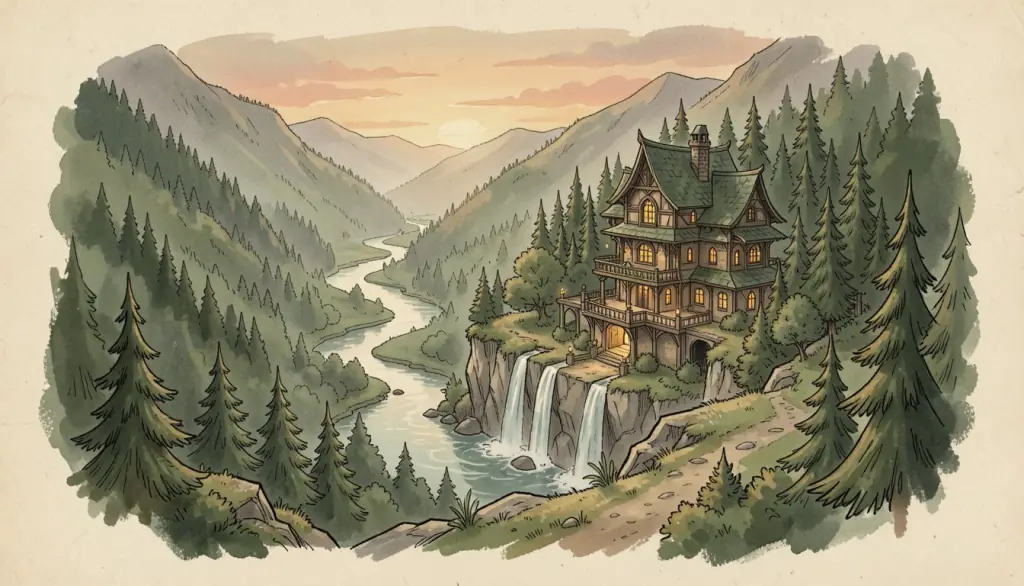
The date itself is telling. The Third Age had begun barely a century before, with the overthrow of Sauron at the end of the Last Alliance. Elrond had been Gil-galad's herald and had fought in that war; Gil-galad was dead, and Elrond's house at Imladris, founded in the Second Age as a refuge during the War of the Elves and Sauron, was one of the chief strongholds of the Eldar left in the west of Middle-earth. A marriage between its lord and the daughter of the rulers of Lórien bound the two most important Elven realms near the Misty Mountains together, one on each side of the range.
Elrond is not simply an Elf-lord, either. He is the son of Eärendil and Elwing and the twin of Elros, the first King of Númenor. At the end of the First Age the twins were given a choice between the fates of Elves and Men; Elros chose mortality and Elrond chose to be counted among the Elves. Celebrían married into the line of the Half-elven, and her children would face the same choice in their turn. Our post on Elros and Elrond explains how that choice works.
For Rivendell itself, its founding and the people who lived there, see Rivendell Explained. For Elrond's own life, see Elrond Explained.
The Long Peace of Rivendell
After the wedding the record goes quiet in the way peaceful centuries do. Appendix B gives the twins Elladan and Elrohir a birth year of 130, and Arwen a birth year of 241. Then nothing about Celebrían appears for more than two thousand years.
It helps to remember what those years held for everyone else. In the same period the North-kingdom of Arnor split into three, the Witch-king founded Angmar, Gondor suffered the Kin-strife and the Great Plague, and the line of the Northern kings came to an end. Appendix A records all of this in detail. Rivendell stands at the edge of much of it; Elrond's house sheltered the heirs of Isildur after the fall of the North-kingdom, and the sceptre of Annúminas was kept there. A wife and mother in that house lived through the whole decline of Arnor from a refuge at its edge.
The appendices also show the family moving between the two realms. Appendix A says that Arwen, when Aragorn first met her, had been dwelling for a time with the kin of her mother in Lórien. The journey between Imladris and Lothlórien was evidently part of family life, made over centuries by Celebrían and by her daughter after her. That ordinary fact is what makes the year 2509 so terrible: the road on which it happened was a family road.
Our reading. Tolkien's silence about these two thousand years is sometimes read as neglect of his female characters, and there is something to that complaint. But it is also how the appendices treat almost every Elf. Elrond himself has only a few entries across the whole Third Age. The Elves of the appendices are present mostly when the history of Men or the war with Sauron touches them. Celebrían enters the record only when the Shadow does, which is exactly the point of her story.
The Road Between Two Elven Realms
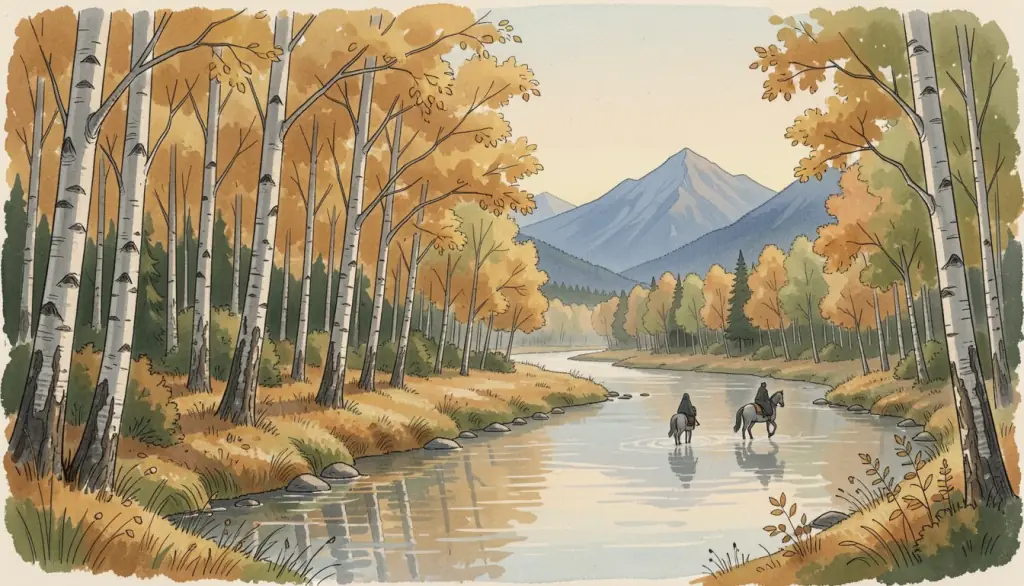
To understand what happened to Celebrían, it helps to look at the map. Rivendell lies on the western side of the Misty Mountains, in a hidden valley of the Bruinen. Lothlórien lies on the eastern side, between the mountains and the Anduin. To go from one to the other you must cross the range.

There were three ways to do that in the south of the mountains. One was the High Pass to the north, the road Thorin's company took in The Hobbit, which leads east toward the Anduin far above Lórien. One was the road under the mountains through Khazad-dûm, the Dwarf-city of Moria, closed and haunted for centuries before 2509. The third was the Redhorn Pass, also called the Redhorn Gate: a high road over the shoulder of Caradhras, one of the three great mountains above Moria, which comes down on the eastern side into the Dimrill Dale. From the Dimrill Dale the way runs south-east along the Silverlode, the river Celebrant, straight into Lórien.
The Redhorn Pass was therefore the natural road from Celebrían's husband's house to her parents' house. It is also the road the Fellowship attempted in January 3019 (Appendix B; The Fellowship of the Ring, book II, chapter 3, "The Ring Goes South"). They planned to cross it and come down into the Dimrill Dale, and they were beaten back by snow. Gimli tells the company that Caradhras had long been called the Cruel and had an ill name. On the mountain Gandalf kindles fire with the Sindarin cry Naur an edraith ammen, "Fire be for saving of us". The Sindarin name of the mountain itself is Caradhras, "Red Peak" or "Redhorn", from caran, "red".
Five hundred years earlier, on that same pass, Celebrían was taken.
The Redhorn Pass, 2509
Appendix B gives the event in a single sentence: in 2509, Celebrían, journeying to Lórien, is waylaid in the Redhorn Pass and receives a poisoned wound. Appendix A adds the rest, in a passage about the sons of Elrond: she was taken captive by Orcs and tormented, and was rescued by Elladan and Elrohir.
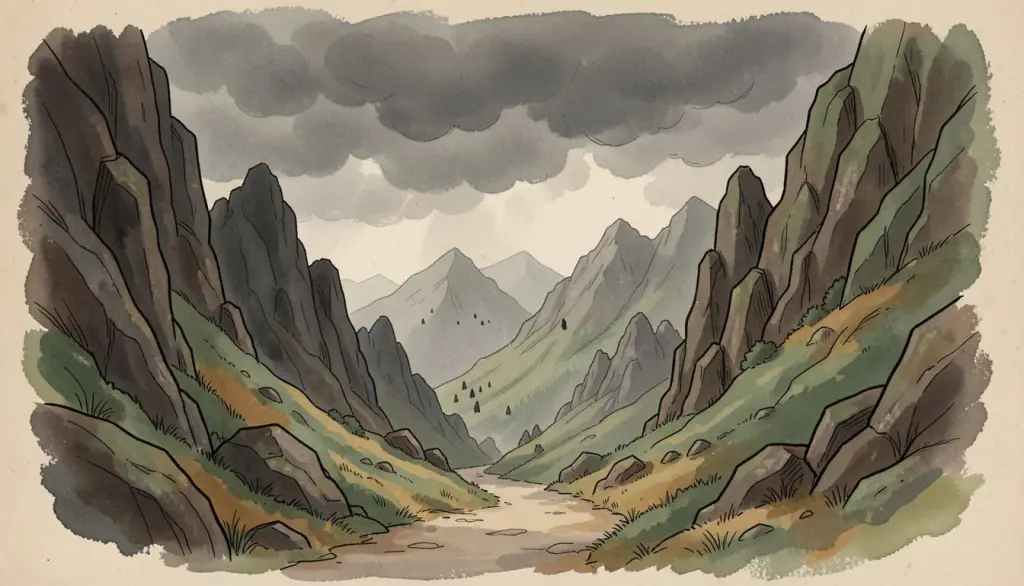
That is the whole of Tolkien's account, and it is enough to establish three things.
First, it was an ambush, not a battle. "Waylaid" means caught on the road by an enemy lying in wait. Tolkien does not say how many travelled with her or what became of them. He does not say how she was taken from her escort, if she had one.
Second, it was not an isolated raid. About thirty years earlier, around 2480, Appendix B records that Orcs began to make secret strongholds in the Misty Mountains, so as to bar all the passes into Eriador. The same entry ties this to Sauron, recording that he began at that time to people Moria with his creatures. Celebrían's capture is the first event in the Tale of Years in which that strategy strikes the Elves directly. She was travelling between two Elven realms on one of the very passes the Orcs had been placed to close.
Third, the wound was poisoned. The poison is Appendix B's own word. Tolkien does not identify it, and it would be invention to link it to any specific weapon. The Orc-arrows and Orc-blades in the main narrative are often poisoned or foul, and the companions fear them for it, so the detail fits the world. But the source says only that the wound was poisoned.
We do not reproduce or imagine what "tormented" means. Tolkien chose a short word and left it there, and so do we. What matters for the story is its effect, which Appendix A states: after she was brought home and healed, she lost all delight in Middle-earth.
Our reading. The location matters more than its brevity suggests. The Redhorn Pass is not deep in enemy country. It is the road between two Elven havens, a few days' ride from Rivendell, overlooked by a mountain whose malice Gimli still remembers in 3019. Tolkien sets the worst thing that happens to an Elf of the Third Age not on a battlefield but on a family journey, in what should have been the safe middle of the Elven world. That is precisely the threat the Orc strongholds of 2480 represented, and Celebrían is the person through whom Tolkien makes it real.
Rescue, Healing and the Wound That Would Not Close
Elladan and Elrohir rescued their mother (Appendix A). The twins were nearly 2,400 years old by then and had grown up in the house of the greatest healer and loremaster left in Middle-earth. Tolkien does not tell us how they found her or how long she was held. He records only that they brought her back.
Elrond healed her. In The Lord of the Rings Elrond's skill as a healer is shown at length, above all in his treatment of Frodo after Weathertop, when he draws out a splinter of the Morgul-knife that was working its way toward Frodo's heart (The Fellowship of the Ring, book II, chapter 1, "Many Meetings"). Appendix A says plainly that he healed Celebrían's body. It says just as plainly that this was not enough: she had lost all delight in Middle-earth.
This is one of Tolkien's most consistent ideas about the Elves. Their bodies and spirits are bound together more closely than those of Men, and grief or horror can weaken an Elf as surely as a wound. The Silmarillion gives the classic example in Míriel, the mother of Fëanor, whose spirit was so spent in bearing her son that she went to the gardens of Lórien in Valinor and her body lay unchanged while she departed. Celebrían's case is different, and much less extreme. She does not die; she leaves. But the principle is the same: healing the flesh does not heal the Elf.
For the Elves, the cure for that kind of hurt lies in the West. The Undying Lands are not a place where nothing bad is remembered, but they are a place where the marring of Middle-earth does not reach in the same way, and where the Valar and the Elves of Aman can do what no healer on this side of the Sea can. That is why Celebrían's choice is not a desertion of her family. It is the remedy available to her people. See Valinor and the Undying Lands for what the Elves believed lay across the Sea.
Sailing West in 2510
In 2510, a year after the attack, Celebrían went to the Havens and passed over Sea (Appendix A and B). The Havens of the Third Age are Mithlond, the Grey Havens at the mouth of the Lune, where Círdan the Shipwright kept the ships that bore the Elves west. Our post on the Grey Havens explains how the ships and the Straight Road worked.
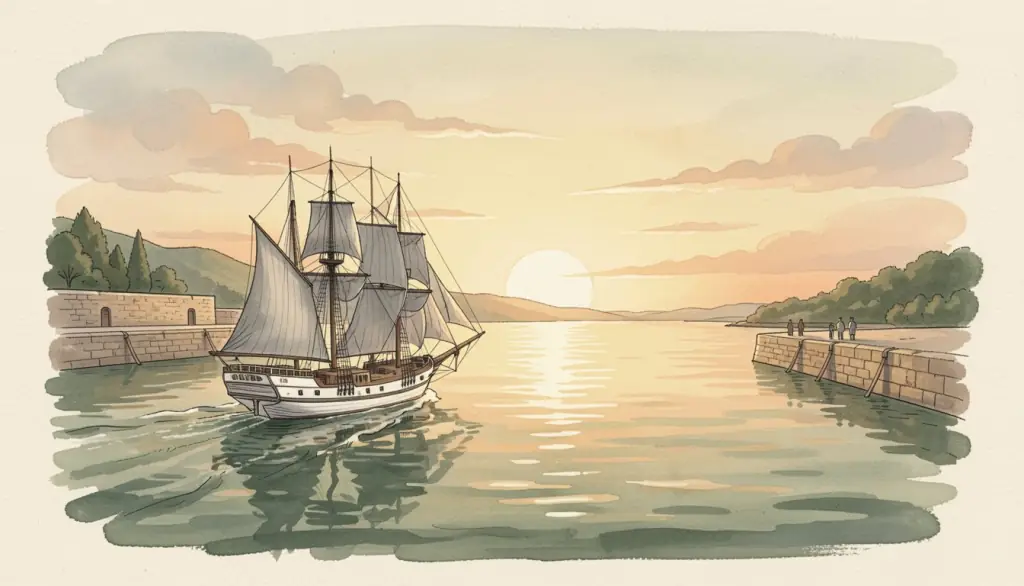
Tolkien records no farewell scene. We are not told whether Elrond rode with her to the Havens, whether her parents came from Lórien, or whether Arwen went with her for part of the road. All of that is the right-hand column of the table above.
There is one detail in the dates that is easy to miss. 2510 is also the year of the Battle of the Field of Celebrant, when Eorl the Young rode out of the north and saved Gondor, and the Steward Cirion gave his people the land that became Rohan (Appendix A). Celebrant is the Silverlode, the river of Lórien, named with the same Sindarin word for silver, celeb, that begins Celebrían's name. In the year the lady of the silver name left Middle-earth, the plain of the Silverlode became the birthplace of a new kingdom of Men. Tolkien never connects the two, and we would not claim he meant anything by it. But it is a fair picture of the Third Age: the Elves going, the Men arriving, and the same rivers watching both.
Our reading. Her departure is the first great Elven loss of the Third Age in the family at the centre of The Lord of the Rings, and it comes five hundred years before the story. By the time the hobbits arrive, Rivendell is a house without its lady. Elrond's sternness, his reluctance to let Arwen go, and his deep weariness at the Council are easier to understand once you know he had already lost one of the people he loved most to the West, and could not follow her while the Shadow remained.
The Twins' Vengeance: Elladan and Elrohir
The most lasting consequence of the Redhorn Pass is what it did to Celebrían's sons. Appendix A says that Elladan and Elrohir rode often with the Rangers of the North, the Dúnedain of the lost kingdom of Arnor, and that they did not forget their mother's torment in the dens of the Orcs. Their war against the Orcs, in other words, is personal.
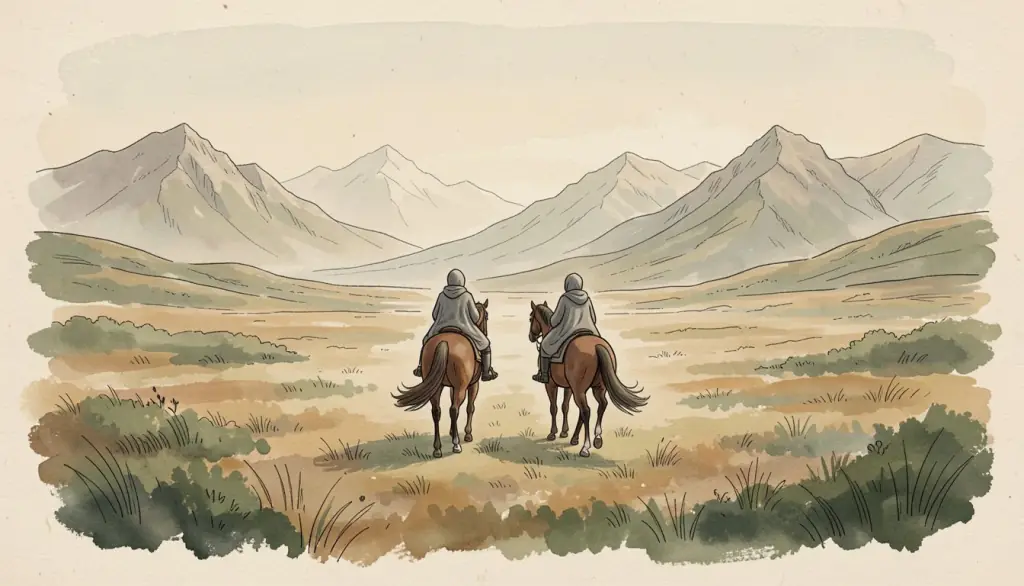
The appendix gives one example of where it led. In 2933, Aragorn's father Arathorn, Chieftain of the Dúnedain, rode against the Orcs with the sons of Elrond and was killed by an Orc-arrow that pierced his eye (Appendix A). His son was two years old. Aragorn's mother Gilraen took the boy to Rivendell, where Elrond fostered him under the name Estel, "hope". So the chain runs directly: the attack on Celebrían made her sons Orc-hunters; their hunting took them alongside Arathorn; Arathorn's death brought Aragorn to Rivendell; and in Rivendell Aragorn met Celebrían's daughter.
In The Lord of the Rings the twins appear in person. They ride south with Halbarad and the Grey Company in March 3019, bringing Aragorn a message from their father: the days are short, and if he is in haste he should remember the Paths of the Dead (The Return of the King, book V, chapter 2, "The Passing of the Grey Company"). They go with Aragorn through the Paths of the Dead, fight at the Pelennor Fields, and march to the Black Gate.
After the war, the record says only that Celeborn, when Galadriel had sailed, eventually went to dwell in Rivendell with the sons of Elrond. Tolkien does not record whether the twins later chose the fate of the Elves and sailed, or the fate of Men and stayed. Like their mother's life in the West, their end is left open.
Our reading. Elladan and Elrohir are often treated as a matched pair of minor characters, decorative in their sameness. Their mother's story changes that. They are the only Elves in The Lord of the Rings whose whole adult purpose is defined by a private grief, and they spent five hundred years on it without, as far as we are told, ever leaving the war to follow her. If the twins are the most Mannish of the Elves we meet, riding with mortals and fighting in mortal battles, the Redhorn Pass is the reason.
The Elfstone: Celebrían's One Trace in the Story
Celebrían is named in the main narrative of The Lord of the Rings exactly once, and it is a moving moment. In "Farewell to Lórien" (The Fellowship of the Ring, book II, chapter 8), Galadriel gives Aragorn a great green stone set in a silver brooch shaped like an eagle with outspread wings. She tells him that she gave this stone to Celebrían her daughter, who gave it to her own daughter, and that it now comes to him as a token of hope. Then she names him Elessar, the Elfstone of the house of Elendil.
That single sentence places Celebrían inside the most important gift-giving in the book. The stone passes from grandmother to mother to daughter, and from the daughter, in effect, to the man she will marry. Celebrían is the middle link. Galadriel does not say what the stone meant to Celebrían or when she passed it on; the narrative moves on at once to Aragorn.
Unfinished Tales includes a short essay, "The Elessar", that gives more than one account of the stone's history, including its making in Gondolin and a second stone made for Galadriel by Celebrimbor. Those accounts are late, partly contradictory, and were never fitted to the published text, so we note them without following any of them. For the published book, the line in "Farewell to Lórien" is the authority, and in it Celebrían is one of the hands through which the hope of the West is passed to the King.
Celebrían and Frodo: Two Wounds, One Road
There is a parallel in The Lord of the Rings that readers who know Celebrían's story rarely miss, though Tolkien never states it.
Frodo is wounded on Weathertop by the Morgul-knife of the Witch-king. Elrond heals him, as he healed Celebrían, and Frodo recovers enough to carry the Ring to Mordor. But the wound never fully closes. In the last chapters Frodo is ill on the anniversary of the stabbing, and tells Gandalf that there are some wounds that cannot be wholly cured (book VI, chapter 7, "Homeward Bound"). In 3021 he goes to the Grey Havens and sails into the West with Elrond, Galadriel, Gandalf and Bilbo (The Return of the King, book VI, chapter 9, "The Grey Havens"). Arwen, in an earlier scene, had told him he might go in her place if his hurts still grieved him (book VI, chapter 6, "Many Partings").
Set the two stories side by side and the shape is the same. A wound given by the servants of Sauron. Healing by Elrond that mends the body but not the spirit. Loss of joy in Middle-earth. A voyage West for the healing that cannot be found on this side of the Sea. Tolkien's letters describe Frodo's voyage as, in part, a journey for healing, and Celebrían's story, written into the appendices of the same book, shows that this was a road the Elves knew well before a hobbit took it.
Our reading. We think the parallel gives Elrond's part in the ending a weight it otherwise lacks. When he rides with Frodo to the Havens in 3021, he is accompanying the second person he has healed of a Shadow-wound only for the healing to fail, and he is sailing at last toward the first. That is speculation about Elrond's feelings, which Tolkien does not record. But the facts of the two stories are both in the book, and they rhyme.
Celebrían's Name and Language
Celebrían's name is Sindarin, the language of the Grey-elves of Middle-earth and the everyday tongue of the Elves of Rivendell and the rulers of Lórien.
The first element is celeb, "silver". It is one of the best-attested Sindarin words: Tolkien's Etymologies derive it from the root KYELEP, and its Quenya cognate is telpë, which gives the name of Telperion, the White Tree of Valinor. The same word appears in a whole family of names around her:
| Name | What it is | Element |
|---|---|---|
| Celeborn | Her father | celeb, silver |
| Celebrían | Herself | celeb, silver |
| Celebrant | The Silverlode, river of Lórien | celeb, silver |
| Celebrimbor | Maker of the Three Rings, including her mother's Nenya | celeb, silver |
| Celebdil | The Silvertine, one of the three mountains above Moria | celeb, silver |
The second element of her name is less certain. The name is commonly glossed "silver queen", connecting -rían with the name Rían, borne by the mother of Tuor in the First Age, and with Tolkien's root for "crown". But Tolkien never published a translation of Celebrían itself, and we have not found the full gloss in any text he finished. Treat "silver queen" as a reasonable reconstruction rather than Tolkien's stated meaning.
Pronunciation. Sindarin c is always hard, like English k. The acute accent on the í marks a long vowel, and under the stress rules of Appendix E a long vowel in the second-to-last syllable takes the stress. So: ke-le-BREE-an, four syllables, with the stress on the third. Saying "SELL-eb-ree-an", with a soft c, is the most common mistake. Our Sindarin pronunciation guide covers the rules in full, and if you want to see the name written in Tengwar, our Tengwar name converter will draw it.
Our reading of the name. Celebrían is the only one of the three generations whose name ties her to her father rather than to the light of Valinor. Galadriel's names speak of the radiance of the Trees in her hair; Arwen's name means "noble maiden" and she is called Undómiel, Evenstar. Celebrían's name puts her squarely in the silver line of Lórien and Celeborn's kin. It is a name of Middle-earth. We find it fitting that she is the one who was so badly wounded by Middle-earth that she had to leave it.
Books vs Films vs The Rings of Power
The books. Celebrían is named in "Farewell to Lórien" and in Appendices A and B. Everything we know about her comes from those places, with conflicting drafts about her early life in Unfinished Tales. She never speaks and never appears in a scene.
Peter Jackson's films (2001 to 2003, and The Hobbit, 2012 to 2014). Celebrían does not appear and, as far as we can find, is never named. The films leave Elrond's marriage out entirely, and Elrond's sons are cut as well, so the whole chain of consequences described above, from the Redhorn Pass to the Grey Company, is absent. The films' Elrond is given other reasons for his weariness: his memory of Isildur's failure, and the fear of losing Arwen to mortality. The brooch Galadriel gives Aragorn in the book becomes, in the film, Arwen's Evenstar pendant, a new object invented for the screen, and the stone's descent through Celebrían goes with it.
The Rings of Power (Amazon, 2022 onwards). The series is set in the Second Age, the period in which Celebrían was born, but she has not appeared in Seasons 1 or 2. The show kept Celeborn absent and presumed lost through its first two seasons; in Season 3, which premiered on 11 November 2026, Galadriel finds him alive. We have found no confirmed casting or announcement of a Celebrían character for Season 3. If one is announced, it would be the series' own invention in its detail, since Tolkien left her Second Age life almost completely blank. Our Rings of Power Season 3 preview tracks what has been confirmed.
What the adaptations lose. Leaving out a character who never speaks is an obvious cut for a film. The cost is that Celebrían is the explanation for several things the films then have to explain differently: why Elrond is alone, why his sons hate Orcs, how Aragorn came to be raised in Rivendell, and what Galadriel means when she gives a stone to the man who will marry her granddaughter. The book manages all of that with five or six sentences about a woman we never meet.
How Tolkien Built Celebrían
It is worth asking why Tolkien gave her so little and still made her matter.
She is a structural character. Celebrían's main job in the history is genealogical: she is how the line of Galadriel and the line of Elrond become one family, so that Arwen is heir to both the Noldor of Valinor and the Half-elven. Tolkien cared intensely about such connections, and the appendices are built around them.
She is the appendices' proof of the Shadow's reach. The Tale of Years for the middle of the Third Age is mostly about Men: plagues, wars, the failing of kings. The Orc strongholds of 2480 are recorded as a strategy. Celebrían's capture in 2509 is the entry that shows what that strategy cost, in a household the reader knows. Without her, the danger of the Misty Mountains between Rivendell and Lórien is geography. With her, it is a wound.
She explains the twins. Elladan and Elrohir are given almost no lines in the main narrative, but because of their mother they have a motive, a history and a reason to be riding with the Dúnedain when Aragorn needs them.
She anticipates the ending. The story Tolkien tells about Celebrían in the appendices, the wound, the failed healing, the voyage West, is the story he tells about Frodo in the main text. Whether or not he designed the parallel, the book holds both.
She shows how little the appendices say about Elven women. It would be dishonest not to note this. Celebrían, Arwen, Galadriel and Nimrodel are given far less space than the Elf-lords around them. Galadriel is the exception that has her own chapter. Our post on female Elvish names lists every named Elf-woman in the books, and the list is short. Celebrían's near-silence is partly a choice of story and partly a pattern.
Why Celebrían Matters
Celebrían matters because the major relationships of the Elves in The Lord of the Rings run through her absence.
Elrond is a widower in all but name, waiting five hundred years to follow his wife. Galadriel, at the Mirror and in her refusal of the Ring, is a mother whose only daughter has already been driven out of Middle-earth by Sauron's servants. Celeborn, who stays behind when Galadriel sails, ends his days in Rivendell with the grandsons who rescued his daughter. Arwen, choosing mortality, chooses to remain in the world that wounded her mother, and to be parted from both her parents for ever. And the twins spend their lives on the war that took her.
None of these people mentions Celebrían in the main story except Galadriel, once. But once you know what happened in the Redhorn Pass, you can see her in every one of them. She is a reminder that Tolkien's history is not only made of battles and kings. It is also made of family losses that the chronicles record in one line.
Our Take
Our view, stated plainly: Celebrían is the clearest case in Tolkien of a character whose importance is out of all proportion to her text, and the films were wrong to drop her completely. A director cannot give her scenes Tolkien never wrote. But one line of dialogue, a mention in the prologue, or the book's version of the Elfstone would have told audiences why Elrond is alone and why his house feels like a place of waiting. Instead the films invent new reasons for things the book had already explained.
We also think readers should resist the urge to fill in her story with invention. The internet is full of Celebrían fan fiction, some of it lovely, and much of it now repeated as fact: dates of birth, descriptions, meetings with Elrond, details of her captivity. None of it is in Tolkien. What he did write is spare, but it is exact, and it is enough. A daughter of Lórien, married to the lord of Rivendell for two and a half thousand years; a family road; an ambush; a wound that healed and a heart that did not; a ship. Read the appendices with that sequence in mind and the five centuries between 2510 and 3021 become the quiet background to everything Elrond does in The Lord of the Rings. That is not a gap in the story. It is one of its best-hidden griefs.
People Also Ask
Who is Celebrían in Lord of the Rings?
Celebrían is the only child of Galadriel and Celeborn and the wife of Elrond of Rivendell. She is the mother of the twins Elladan and Elrohir and of Arwen. She never appears on the page of The Lord of the Rings: by the time of the War of the Ring she had already sailed into the West, in the year 2510 of the Third Age.
Who is Elrond's wife?
Elrond's wife is Celebrían, daughter of Galadriel and Celeborn. Appendix B records that Elrond wedded her in the year 109 of the Third Age. They had three children: Elladan and Elrohir, born in 130, and Arwen, born in 241.
What happened to Celebrían?
In 2509 of the Third Age, while travelling from Rivendell to Lórien, she was waylaid by Orcs in the Redhorn Pass and received a poisoned wound. Her sons rescued her and Elrond healed her body, but she lost all delight in Middle-earth. In 2510 she went to the Grey Havens and sailed into the West.
Is Celebrían dead?
No. Tolkien never says she died. She sailed over the Sea to the Undying Lands in 2510 of the Third Age, the road taken by Elves who are weary of Middle-earth or in need of healing. She was still living in the West when Elrond and Galadriel followed her in 3021.
Why did Celebrían leave Middle-earth?
She was captured and tormented by Orcs in the Redhorn Pass in 2509. Elrond healed her bodily wounds, but Appendix A says she lost all delight in Middle-earth afterwards. The next year she passed over Sea to the West, where the Elves believed hurt that Middle-earth could not mend might be healed.
Does Elrond see Celebrían again?
Tolkien implies it but never shows it. Elrond sailed West from the Grey Havens in 3021 of the Third Age, more than five hundred years after Celebrían went before him, and the Elves who sail go to the same Undying Lands. No published text describes their meeting.
Is Celebrían in the Lord of the Rings movies?
No. Celebrían does not appear in Peter Jackson's Lord of the Rings or Hobbit films, and they do not mention her by name. The films give Elrond no wife at all on screen, and Arwen's grandmother Galadriel is never shown with a daughter.
Is Celebrían in The Rings of Power?
She has not appeared in Amazon's The Rings of Power. No character named Celebrían was cast in Seasons 1 or 2, and we have found no confirmed announcement of her for Season 3, which began airing on 11 November 2026.
What does the name Celebrían mean?
The name is Sindarin. Its first element is celeb, "silver", the same word that begins her father's name Celeborn and the river Celebrant, the Silverlode of Lórien. It is commonly glossed "silver queen", but Tolkien never published a full translation of the name, so that gloss is a reconstruction.
How do you pronounce Celebrían?
Say it ke-le-BREE-an. The c is always hard in Sindarin, like a k. The accent on the í marks a long vowel, and under the stress rules in Appendix E a long vowel in the second-to-last syllable takes the stress.
Learn the Language of Lórien and Imladris
Celebrían's name, her father's, the Silverlode and Caradhras are all Sindarin, the language spoken in Rivendell and by the rulers of Lórien. Our free Elvish course teaches Sindarin and Quenya from the first lesson, using words Tolkien actually wrote, so you can read names like hers and understand what they are made of.
Related Reading
- Characters of Middle-earth: Who's Who in Tolkien's World
- Galadriel Explained: The Lady of Lórien Through Three Ages
- Celeborn Explained: Galadriel's Husband, Lord of Lothlórien
- Elrond Explained: The Half-elven Lord of Rivendell
- Arwen Explained
- Elros and Elrond: The Half-elven Choice
- Rivendell Explained: Imladris, the Last Homely House
- Lothlórien Explained: The Golden Wood of Galadriel and Celeborn
- The Grey Havens: Mithlond and the Ships Into the West
- Orcs and Goblins of Middle-earth
- Female Elvish Names by Book: Every Named Elf-Woman in Tolkien
People Also Ask
Who is Celebrían in Lord of the Rings?
Celebrían is the only child of Galadriel and Celeborn and the wife of Elrond of Rivendell. She is the mother of the twins Elladan and Elrohir and of Arwen. She never appears on the page of The Lord of the Rings: by the time of the War of the Ring she had already sailed into the West, in the year 2510 of the Third Age.
Who is Elrond's wife?
Elrond's wife is Celebrían, daughter of Galadriel and Celeborn. Appendix B of The Lord of the Rings records that Elrond wedded her in the year 109 of the Third Age. They had three children: Elladan and Elrohir, born in 130, and Arwen, born in 241.
What happened to Celebrían?
In 2509 of the Third Age, while travelling from Rivendell to Lórien, she was waylaid by Orcs in the Redhorn Pass and received a poisoned wound. Her sons rescued her and Elrond healed her body, but she lost all delight in Middle-earth. In 2510 she went to the Grey Havens and sailed into the West.
Is Celebrían dead?
No. Tolkien never says she died. She sailed over the Sea to the Undying Lands in 2510 of the Third Age, the road taken by Elves who are weary of Middle-earth or in need of healing. She was still living in the West when Elrond and Galadriel followed her in 3021.
Why did Celebrían leave Middle-earth?
She was captured and tormented by Orcs in the Redhorn Pass in 2509. Elrond healed her bodily wounds, but Appendix A says she lost all delight in Middle-earth afterwards. The next year she passed over Sea to the West, where the Elves believed hurt that Middle-earth could not mend might be healed.
Does Elrond see Celebrían again?
Tolkien implies it but never shows it. Elrond sailed West from the Grey Havens in 3021 of the Third Age, more than five hundred years after Celebrían went before him, and the Elves who sail go to the same Undying Lands. No published text describes their meeting.
Is Celebrían in the Lord of the Rings movies?
No. Celebrían does not appear in Peter Jackson's Lord of the Rings or Hobbit films, and they do not mention her by name. The films give Elrond no wife at all on screen, and Arwen's grandmother Galadriel is never shown with a daughter.
Is Celebrían in The Rings of Power?
She has not appeared in Amazon's The Rings of Power. No character named Celebrían was cast in Seasons 1 or 2, and we have found no confirmed announcement of her for Season 3, which began airing on 11 November 2026.
What does the name Celebrían mean?
The name is Sindarin. Its first element is celeb, silver, the same word that begins her father's name Celeborn and the river Celebrant, the Silverlode of Lórien. It is commonly glossed silver queen, but Tolkien never published a full translation of the name, so that gloss is a reconstruction.
How do you pronounce Celebrían?
Say it ke-le-BREE-an. The c is always hard in Sindarin, like a k. The accent on the í marks a long vowel, and under the stress rules in Appendix E a long vowel in the second-to-last syllable takes the stress.