Characters of Middle-earth: Who's Who in Tolkien's World
Try It Yourself — Free Elvish Tools
Quick Answer: The central characters of The Lord of the Rings are the nine members of the Fellowship (Frodo, Sam, Merry, Pippin, Gandalf, Aragorn, Boromir, Legolas and Gimli), the Elves who shelter them (Elrond, Galadriel, Celeborn), the rulers of Gondor and Rohan, and the Enemy: Sauron, the Nazgûl, Saruman and Gollum. Behind them stands an older cast from The Silmarillion, such as Fëanor, Lúthien and Gil-galad, whose choices created the world the Fellowship walks through. This guide maps them all by people and by Age, with a link to our full page on each.
Most character lists for Middle-earth are alphabetical, and that hides the one thing that makes Tolkien's cast unusual: almost everyone in The Lord of the Rings is somebody's descendant, heir or survivor. Aragorn carries a sword broken three thousand years before he was born. Elrond remembers the battle where it broke. Galadriel saw the light of the Two Trees in Valinor before the Sun existed. The Hobbits are the only ones who arrive with no history at all, and Tolkien built the book around that contrast.
So this page groups the characters by the people they belong to and the Age they act in. Each group gets a short reading of what it does in the story, then a table with who each character is, when they are active, and where to read more. Pages marked "Coming soon" are on our schedule and will be linked here as they go live. If you are after the meaning of the Elvish names rather than the people themselves, our separate guide to Elvish character names and their meanings covers that.
A note on dates: Tolkien counts time in Ages. The First Age ends with the overthrow of Morgoth, the Second with the first defeat of Sauron, and the Third with the destruction of the One Ring in 3019 and the departure of the Ring-bearers in 3021. Dates below come from The Lord of the Rings Appendix B unless stated. Where a date is uncertain or not given, we leave it out.
The Fellowship of the Ring
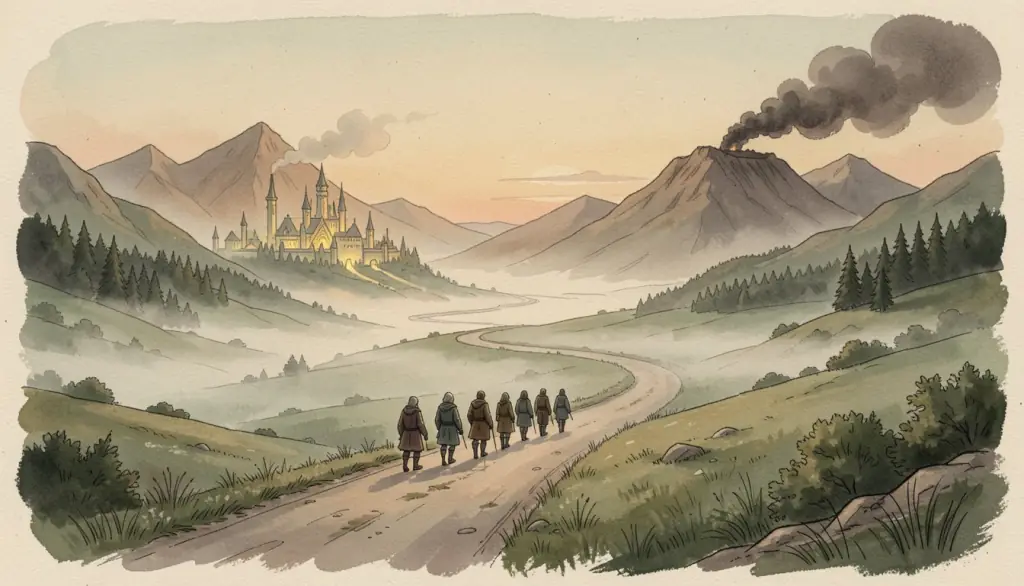
The Fellowship is a deliberate cross-section. Elrond chooses nine walkers to match the nine Ringwraiths, and the company ends up containing one representative of almost every free people: four Hobbits, a Wizard, two Men, an Elf and a Dwarf. That composition is the book's argument in miniature. No single people can defeat Sauron, and the alliance that does it is held together by friendship more than by politics. Legolas and Gimli begin as members of two peoples with an old grudge and end as the closest pair in the story.
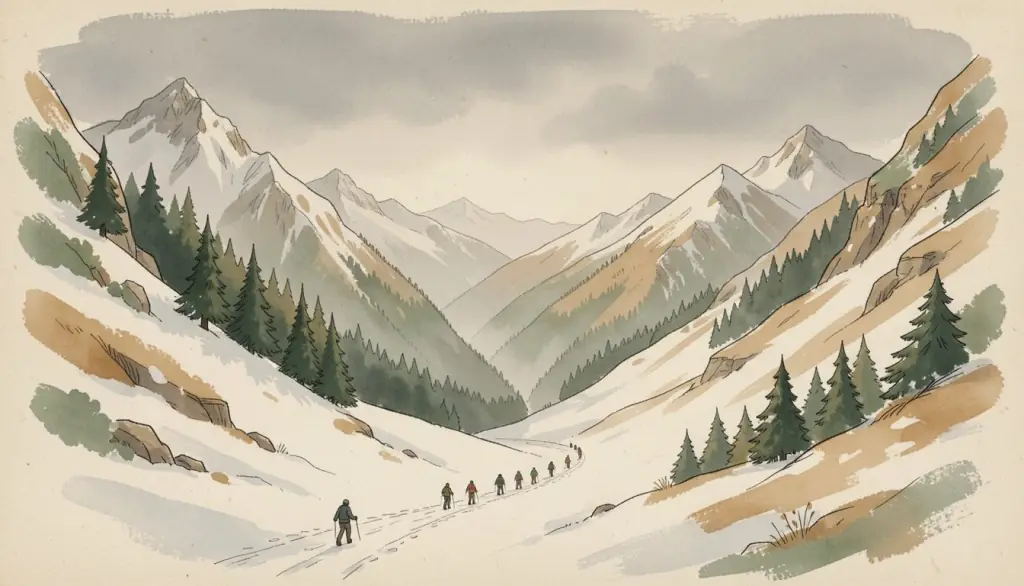
Our reading: the Fellowship breaks at the end of the first volume, and that is the point. Tolkien does not let a war council carry the Ring. He splits the company so that the great events, Helm's Deep and the Pelennor, become a vast diversion that lets two Hobbits walk unseen into Mordor. The Fellowship succeeds by coming apart.
| Character | Who they are | Ages active | Read more |
|---|---|---|---|
| Frodo Baggins | Hobbit of Bag End who inherits the Ring from Bilbo and carries it to Mount Doom | Third Age, born 2968, sails West 3021 | Frodo explained |
| Samwise Gamgee | Frodo's gardener and companion; carries Frodo up the mountain and briefly bears the Ring | Third Age into Fourth; later Mayor of the Shire | Samwise explained |
| Meriadoc Brandybuck | Merry; enters Rohan's service and helps Éowyn strike down the Witch-king | Third Age into Fourth | Coming soon |
| Peregrin Took | Pippin; looks into the palantír, serves as a Guard of Gondor and saves Faramir | Third Age into Fourth | Coming soon |
| Gandalf | A Maia sent West to oppose Sauron; leader of the company until Moria | Arrives about 1000 of the Third Age, sails 3021 | Gandalf explained |
| Aragorn | Heir of Isildur, Chieftain of the Dúnedain of the North, crowned King Elessar | Born 2931, dies 120 of the Fourth Age | Aragorn explained |
| Boromir | Elder son of Denethor, Steward of Gondor; falls defending Merry and Pippin | Third Age, dies 3019 | Boromir explained |
| Legolas | Elf of the Woodland Realm, son of Thranduil | Third Age; sails West after Aragorn's death | Legolas explained |
| Gimli | Dwarf of Erebor, son of Glóin; later lord of the Glittering Caves | Born 2879; said to have sailed West with Legolas | Gimli explained |
Bilbo Baggins belongs here in spirit even though he is not one of the nine. He finds the Ring in The Hobbit, gives it up of his own free will at his farewell party, and sails West with Frodo. That voluntary surrender is something no one else in the story achieves without help, and Gandalf treats it as remarkable. Our page on Bilbo is coming soon; for the riddle contest where he wins the Ring, see The Hobbit's riddle game explained.
Elves of the Third Age
"Mae govannen" — want to actually speak Elvish?
Try It Free →By the time of The Lord of the Rings, the Elves are leaving. Every Elf the Fellowship meets is either preparing to sail or guarding something that will fade when the One Ring is destroyed. Rivendell and Lothlórien are both preserved by Elven rings, and both depend on a victory that will end them. This gives the Elves of the Third Age their particular tone: they fight for an outcome that costs them their own world.
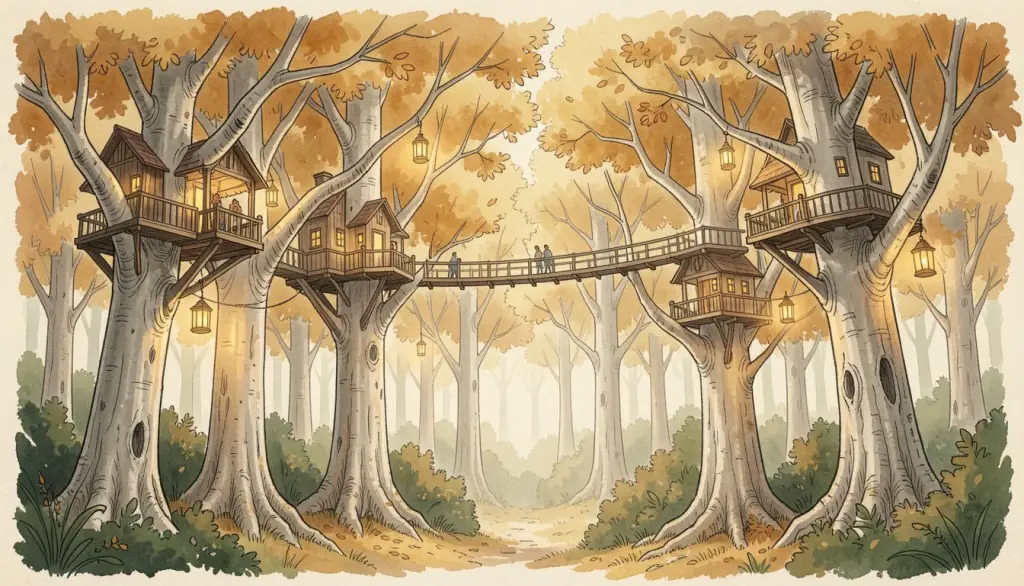
Our reading: Tolkien uses the Elves as a measure of time. Through them the reader feels how much has already been lost, in a book where the Hobbits keep discovering that the old songs are real. Galadriel's refusal of the Ring is the clearest example. She chooses to fade rather than become a queen of terror, and the choice is only meaningful because we know how long she has waited.
| Character | Who they are | Ages active | Read more |
|---|---|---|---|
| Elrond | Half-elven Lord of Rivendell, keeper of Vilya, host of the Council | First Age to the end of the Third | Elrond explained |
| Galadriel | Noldorin princess, Lady of Lórien, keeper of Nenya | Born in Valinor before the Sun; sails 3021 | Galadriel explained |
| Celeborn | Sinda of Doriath, kinsman of Thingol, Galadriel's husband | First Age into the Fourth | Celeborn explained |
| Arwen | Elrond's daughter, called Undómiel; chooses mortality to marry Aragorn | Born 241 of the Third Age; dies early Fourth Age | Arwen explained |
| Thranduil | Elvenking of the Woodland Realm in northern Mirkwood, father of Legolas | Second and Third Ages | Thranduil explained |
| Círdan | The Shipwright, lord of the Grey Havens; gave Narya to Gandalf | From the Elder Days to the last ship | Círdan explained |
| Glorfindel | Elf-lord of Rivendell who carries Frodo to the Ford of Bruinen | Third Age (and, in Tolkien's later view, First Age Gondolin) | Glorfindel explained |
| Haldir | Elf of Lórien who guides the Fellowship to Caras Galadhon | Third Age | Coming soon |
| Elladan and Elrohir | Elrond's twin sons, who ride with the Grey Company | Third Age | Coming soon |
Two of these appear differently on screen. In Peter Jackson's films Arwen takes Glorfindel's ride to the Ford, and Haldir arrives at Helm's Deep with an Elvish army and dies there, which does not happen in the book. Thranduil's role in The Hobbit films is much larger than in Tolkien's novel, where he is simply "the Elvenking" and never named.
Elves of the First and Second Ages
The older Elves are the ones whose decisions shape everything after. Fëanor makes the Silmarils and swears the Oath that drives his people into exile. Lúthien wins a Silmaril back from Morgoth's crown. Celebrimbor forges the Rings of Power and is deceived by Sauron. Gil-galad holds the Elves together through the Second Age and dies overthrowing Sauron. Each of them leaves something behind, a jewel, a ring or a bloodline, that the Third Age inherits.
Our reading: the First and Second Ages are where Tolkien explores pride. Fëanor and Celebrimbor are both master craftsmen whose love of their own work becomes the opening the Enemy uses. Read side by side, they are the same story told twice, and the One Ring is the second telling's answer to the Silmarils: a made thing that its maker cannot let go.
| Character | Who they are | Ages active | Read more |
|---|---|---|---|
| Fëanor | Eldest son of Finwë, maker of the Silmarils, leader of the Noldor's rebellion | Years of the Trees; dies early in the First Age | Fëanor and the Silmarils |
| Lúthien | Daughter of Thingol and Melian, who with Beren takes a Silmaril from Morgoth | First Age | Lúthien and Beren |
| Celebrimbor | Grandson of Fëanor, lord of the smiths of Eregion, maker of the Three Rings | Second Age, dies 1697 | Celebrimbor |
| Gil-galad | Last High King of the Noldor in Middle-earth, ruler of Lindon | Second Age, dies 3441 | Gil-galad |
| Elros and Elrond | Twin sons of Eärendil and Elwing who choose different kindreds | End of the First Age onward | The Half-elven choice |
| Fingolfin | High King of the Noldor who duels Morgoth alone | First Age | Coming soon |
| Finrod Felagund | Galadriel's brother, founder of Nargothrond, who dies saving Beren | First Age | Coming soon |
| Thingol and Melian | King of Doriath and his Maia queen, Lúthien's parents | Years of the Trees and First Age | Coming soon |
| Turgon and Idril | King of Gondolin and his daughter, Eärendil's mother | First Age | Coming soon |
| Eärendil and Elwing | The mariner who sails to Valinor with a Silmaril, and his wife | End of the First Age | Coming soon |
For a fuller picture of these kindreds, our Elves of Middle-earth guide explains who the Noldor, Sindar and Silvan Elves are, which matters for nearly every name in this section.
The Line of the Half-elven: A Family Tree
The single most important family in Tolkien's legendarium is the line that runs from Beren and Lúthien to Aragorn and Arwen. It joins Men and Elves three times, and each marriage costs one partner something irreplaceable. Here is the descent in order.
Beren, a mortal Man, marries Lúthien, daughter of the Elf-king Thingol and the Maia Melian. Their son is Dior, and Dior's daughter is Elwing. On the other side, Tuor, another mortal Man, marries Idril, daughter of Turgon of Gondolin. Their son is Eärendil. Eärendil and Elwing marry and have twin sons, Elrond and Elros. At the end of the First Age the twins are allowed to choose which kindred they belong to. Elros chooses to be counted among Men and becomes the first King of Númenor. Elrond chooses the Elves. That is why the pair, and those who descend from Eärendil and Elwing, are called the Half-elven, Peredhil in Sindarin (The Silmarillion, LOTR Appendix A).
Thousands of years later the two branches meet again. Elrond marries Celebrían, daughter of Galadriel and Celeborn, and their daughter is Arwen. Aragorn descends from Elros through the kings of Númenor, the lords of Andúnië, Elendil and Isildur, and the kings and chieftains of the North. When Aragorn and Arwen marry in 3019, Arwen makes the same choice as Lúthien and becomes mortal.
| Generation | Mortal side | Elven side | What the marriage costs |
|---|---|---|---|
| First Age | Beren | Lúthien | Lúthien gives up her immortality |
| First Age | Tuor | Idril | Tuor is said to have been counted among the Elves, a unique exception |
| End of the First Age | Eärendil | Elwing | Both are given the choice of kindred; both choose the Elves |
| End of the First Age | Elros (chooses Men) | Elrond (chooses the Elves) | The twins are parted for ever |
| Third Age, 3019 | Aragorn, descendant of Elros | Arwen, daughter of Elrond | Arwen gives up her immortality and is parted from her father |
Our reading: this family is Tolkien's way of making mortality the central theme without a single lecture. Every generation, someone faces the same choice, and the story never pretends that either answer is free. Arwen's choice also quietly answers Elros's: after six thousand years, the two halves of Eärendil's house are joined again in Aragorn's children.
The House of Finwë: From Valinor to the Rings
The second great family is the royal house of the Noldor, and it connects the Silmarils to the Rings of Power. Finwë, first King of the Noldor, has three sons: Fëanor by his first wife Míriel, and Fingolfin and Finarfin by his second wife Indis. The rivalry between the half-brothers starts the war of the First Age.
Fëanor has seven sons; one of them, Curufin, is the father of Celebrimbor, who forges the Three Rings in the Second Age. Fingolfin's sons are Fingon and Turgon; Turgon's daughter Idril links this house to the Half-elven above. Finarfin's children are Finrod, Orodreth, Angrod, Aegnor and Galadriel, the youngest and the only daughter.
| Branch | Children | Grandchildren who matter later |
|---|---|---|
| Fëanor | Seven sons, including Maedhros, Maglor and Curufin | Celebrimbor, son of Curufin |
| Fingolfin | Fingon, Turgon | Idril, daughter of Turgon; Gil-galad in the published Silmarillion |
| Finarfin | Finrod, Orodreth, Angrod, Aegnor, Galadriel | Gil-galad in Tolkien's later notes; Celebrían, daughter of Galadriel |
Gil-galad's place in this tree is genuinely unsettled. The published Silmarillion makes him the son of Fingon. Tolkien's later writings change this and make him the son of Orodreth, which moves him to Finarfin's branch and makes him Galadriel's nephew. Christopher Tolkien discussed the change after the Silmarillion was published, and both versions are now in print. Our page on Gil-galad sets out the two accounts.
Our reading: with Celebrimbor and Galadriel both grandchildren of Finwë, the Rings of Power are a family matter. The descendant of Fëanor makes the Three; the descendant of Finarfin keeps one of them and refuses the One. It is hard not to see Galadriel's refusal as the house finally declining the temptation that ruined Fëanor.
Men of Númenor, Gondor and Rohan
Men are the people of the future in Tolkien's world, and their story is about inheritance and decline. Númenor is given to the Edain as a reward and destroyed when its last king tries to take immortality by force. Gondor is founded by the survivors and slowly fades. Rohan is younger, rougher and still vigorous. In The Lord of the Rings the question is whether the old line of kings can return, and Aragorn's long road is the answer.
Our reading: the Men of the book come in pairs of father and son, and almost every pair is under strain. Denethor favours Boromir over Faramir; Théoden has lost his son and leans on his nephew; Isildur's refusal to destroy the Ring hangs over his whole line. Tolkien seems to be asking what a son owes to an inheritance that is partly a curse.
| Character | Who they are | Ages active | Read more |
|---|---|---|---|
| Elros | First King of Númenor, brother of Elrond | Second Age | The Half-elven choice |
| Elendil | Leader of the Faithful who escape Númenor; founds Arnor and Gondor | Second Age, dies 3441 | Elendil explained |
| Isildur | Elendil's son, who cuts the Ring from Sauron's hand and keeps it | Second Age, dies early in the Third | Isildur explained |
| Tar-Míriel and Ar-Pharazôn | The rightful queen of Númenor and the usurper king who invades Valinor | Late Second Age | Tar-Míriel, Ar-Pharazôn |
| Aragorn | Heir of Isildur, restored King of Gondor and Arnor | Third Age into the Fourth | Aragorn explained |
| Denethor | Steward of Gondor, father of Boromir and Faramir | Third Age, dies 3019 | Denethor explained |
| Faramir | Younger son of Denethor, captain of Ithilien, who refuses the Ring | Third Age into the Fourth | Faramir explained |
| Théoden | King of Rohan, healed by Gandalf, killed on the Pelennor | Third Age, dies 3019 | Théoden explained |
| Éowyn | Théoden's niece, who slays the Witch-king with Merry's help | Third Age into the Fourth | Éowyn explained |
| Éomer | Théoden's nephew and heir, later King of Rohan | Third Age into the Fourth | Éomer explained |
Faramir and Isildur make an instructive pair. Isildur had the Ring in his hand at the moment of victory and kept it. Faramir has it within reach, in the person of a captured Hobbit, and lets it go. Tolkien draws the comparison himself through Faramir's knowledge of Gondor's lore, and it is one reason readers rank Faramir among the wisest characters in the book. For the language of Númenor's kings, see our guide to Adûnaic.
Dwarves and Hobbits
Dwarves and Hobbits are the two peoples most concerned with home. The Dwarves of Durin's line spend the Third Age trying to win back the halls they lost, Moria to a Balrog and Erebor to a dragon. The Hobbits barely know the wider world exists. Both peoples are underestimated, and both prove harder to corrupt than the great: the Seven Rings never made a Dwarf into a wraith, and Hobbits survive the One Ring for years where a Man would fall quickly.
Our reading: The Hobbit is a Dwarf story seen through Hobbit eyes, and The Lord of the Rings reverses the proportion. Thorin's dragon-sickness over the Arkenstone is a small rehearsal for the Ring's hold over Frodo, and Bilbo's act of giving away the Arkenstone foreshadows his later giving up of the Ring.
| Character | Who they are | Ages active | Read more |
|---|---|---|---|
| Durin | Eldest of the Fathers of the Dwarves; his line rules Khazad-dûm | From the awakening of the Dwarves | Durin and his line |
| Thorin Oakenshield | Heir of Durin's line who leads the quest to Erebor | Third Age, dies 2941 at the Battle of Five Armies | Coming soon |
| Gimli | Fellowship member, son of Glóin | Third Age | Gimli explained |
| Bilbo Baggins | Hobbit who finds the One Ring and later gives it up | Born 2890, sails 3021 | Bilbo explained |
| Gollum (Sméagol) | Stoor-Hobbit corrupted by five centuries with the Ring | Third Age, dies 3019 at Mount Doom | Gollum explained |
| Frodo, Sam, Merry, Pippin | The four Hobbits of the Fellowship | Third Age into the Fourth | See the Fellowship table above |
For the peoples themselves, see our guides to the Dwarves of Middle-earth and the Hobbits of Middle-earth, and for the Dwarves' own secret tongue, our Khuzdul guide.
Wizards, Maiar and the Old Ones
The Wizards, Istari in Quenya ("wise ones"), are Maiar, spirits of the same order as Sauron, sent from the West around the year 1000 of the Third Age in the shape of old men. They were forbidden to match Sauron's power with power or to dominate the peoples they came to help. That rule is the key to the Wizards as characters: Saruman breaks it and becomes a small copy of the Enemy, Gandalf keeps it and works by encouragement.
Alongside them stand figures who fit no category. Tom Bombadil is unaffected by the Ring. Treebeard is the oldest of the Ents. Neither explains what he is, and Tolkien preferred to leave it that way.
Our reading: Gandalf is the book's model of power used rightly. He holds one of the Three, Narya, the Ring of Fire, given to him by Círdan, and uses it to kindle courage in others, never to rule them. Saruman, by contrast, studies the Rings until he wants one. The two Wizards are a debate about what the wise should do with knowledge.
| Character | Who they are | Ages active | Read more |
|---|---|---|---|
| Gandalf | Olórin in Valinor, Mithrandir ("Grey Pilgrim") to the Elves | About 1000 to 3021 of the Third Age | Gandalf explained |
| Saruman | Head of the order, lord of Isengard, who turns traitor | About 1000 of the Third Age to 3019 | Saruman explained |
| Radagast | The Brown Wizard, friend of beasts and birds | Third Age | Radagast the Brown explained |
| Alatar and Pallando | The two Blue Wizards who went into the East | Tolkien's notes vary on when they came | The Blue Wizards |
| Tom Bombadil | Master of the Old Forest, untouched by the Ring | Calls himself Eldest | Coming soon |
| Treebeard | Fangorn, eldest of the Ents | From the Elder Days | Entish and Treebeard |
The whole order is covered in our Wizards of Middle-earth guide, and the Ents in Ents and Huorns.
The Enemy
Tolkien's villains form a chain of corruption. Morgoth is the original rebel among the Valar. Sauron is his greatest servant, who outlasts him. The Nazgûl are Men who took Sauron's rings and became his slaves. The dragons and Balrogs are Morgoth's creatures who survive into later Ages, and Ungoliant is something older still, a spirit of hunger that even Morgoth feared. Each step down the chain is smaller and more pitiable than the last, which ends with Gollum.
Our reading: the Enemy in Tolkien never creates, only spoils. Orcs are twisted from something else, dragons are bred, wraiths are made by rings. That is why the most frightening servants in the book are the Nazgûl: they were once kings, and the Ring left them nothing but will. Sauron himself is never seen, and that absence is a choice. Evil in this book is felt through what it has done to others.
| Character | Who they are | Ages active | Read more |
|---|---|---|---|
| Morgoth (Melkor) | The rebel Vala, first Dark Lord, thief of the Silmarils | Before the world to the end of the First Age | Morgoth explained |
| Sauron | Morgoth's lieutenant, maker of the One Ring, Dark Lord of Mordor | All Ages until 3019 | Sauron explained |
| Witch-king of Angmar | Lord of the Nazgûl, destroyer of Arnor | Second Age to 3019 | The Witch-king |
| Khamûl | The Black Easterling, second of the Nazgûl | Second Age to 3019 | Khamûl explained |
| The Nine Nazgûl | Kings of Men enslaved by the Nine Rings | Second Age to 3019 | Nazgûl and Ringwraiths |
| Saruman | The fallen Wizard, ally and then rival of Sauron | Third Age | Saruman explained |
| Mouth of Sauron | Sauron's herald at the Black Gate | Third Age | Coming soon |
| Glaurung | Father of dragons, bane of Túrin | First Age | Glaurung explained |
| Ancalagon the Black | Greatest of the winged dragons, slain by Eärendil | End of the First Age | Ancalagon explained |
| Smaug | The dragon of Erebor, killed by Bard | Third Age, takes Erebor 2770, dies 2941 | Dragons of Middle-earth |
| Ungoliant | Spider-shaped spirit who destroys the Two Trees with Morgoth | Years of the Trees | Ungoliant explained |
| Shelob | Ungoliant's last child, guardian of Cirith Ungol | From before Sauron's return to the end of the Third Age | Giant spiders of Middle-earth |
| Durin's Bane | The Balrog of Moria, defeated by Gandalf | First Age to 3019 | Balrogs of Middle-earth |
The rank and file are covered in Orcs and goblins of Middle-earth and the Uruk-hai explained.
Characters Created for The Rings of Power
Amazon's The Rings of Power is set in the Second Age, a period Tolkien covered mostly in appendices, chronologies and short accounts. The show had the rights to The Lord of the Rings and its appendices but not to The Silmarillion or Unfinished Tales, so it fills large gaps with new people. Those characters are not in Tolkien's books. The table below separates the inventions from the Tolkien characters the show adapts.
| Character | Who they are in the show | In Tolkien? | Read more |
|---|---|---|---|
| Adar | An Elf twisted into one of the first Orcs, who leads the Orcs and calls them his children | No, invented | Adar explained |
| Arondir | A Silvan Elf soldier posted in the Southlands | No, invented | Coming soon |
| Bronwyn and Theo | A healer of the Southlands and her son | No, invented | Coming soon |
| Nori Brandyfoot and the Harfoots | Wandering ancestors of the Hobbits | No; Harfoots are a Tolkien Hobbit strain, these individuals are new | Coming soon |
| Disa | Wife of Prince Durin in Khazad-dûm | No, invented | Coming soon |
| Halbrand | A guise of Sauron invented for the show | Sauron yes; this disguise no | Coming soon |
| The Stranger | A Wizard who falls from the sky, named Gandalf in Season 2 | Gandalf yes; this arrival in the Second Age no | The Stranger is Gandalf |
| Galadriel, Elrond, Gil-galad, Celebrimbor, Círdan | The Elven lords of the Second Age | Yes, with altered stories | See the Elves tables above |
| Elendil, Isildur, Míriel, Pharazôn | The Men of Númenor | Yes, with altered stories | See the Men table above |
In Tolkien's account, Sauron comes to the Elves of Eregion as Annatar, the "Lord of Gifts", a fair form that wins Celebrimbor's trust. The show keeps that idea but routes it through the Halbrand storyline first. For how the show handles the Rings themselves, see the Rings of Power explained.
How the Books, Peter Jackson's Films and The Rings of Power Differ
The three versions of Middle-earth treat the same characters in different ways, and the differences are not random. Each one reflects what the medium needs.
The books are built on depth of time. Characters are defined by what they remember and what they inherit, and many key figures, such as Gil-galad or Fëanor, never appear on the page in The Lord of the Rings at all. Tolkien is willing to let important people stay off-stage: Sauron, Arwen and Glorfindel have very little dialogue.
Peter Jackson's films compress and personalise. They give Arwen a visible role by merging her with Glorfindel, turn Faramir's refusal of the Ring into a slower struggle, bring Haldir to Helm's Deep, and give Aragorn more doubt about his kingship than the book's Aragorn shows. In The Hobbit films, Tauriel is invented and Legolas and Thranduil are greatly expanded. The aim is clear: a film needs characters who change on screen, so inner choices become outward arcs. For the films' Elvish, see The Hobbit films' Elvish: Thranduil and Tauriel.
The Rings of Power has the hardest job, because Tolkien's Second Age spans thousands of years and is written as history, not drama. The show compresses that time into a single generation, makes Galadriel a warrior protagonist, gives Elrond and Durin a friendship that Tolkien only hints at, and invents new mortals to give viewers a ground-level view. It has to build a cast where Tolkien left a chronicle.
Our view (interpretation): the films change characters to serve drama but mostly keep the moral structure of the book: Frodo's mercy to Gollum, Galadriel's refusal, Sam's loyalty. The Rings of Power changes more of the structure, especially by making the Second Age's long decline happen quickly and by bringing Gandalf in early. Neither approach is wrong for its medium, but readers coming from the show should expect the book characters to be older, slower and more defined by loss than the screen versions. The best way to check any single character is to compare the show against the appendices, which is what our individual pages do.
Our Take
The usual way to describe Tolkien's cast is "huge", and it is, but size is not what makes it work. What makes it work is that the characters are linked through time. Aragorn's sword, Arwen's choice, Galadriel's ring and Gollum's ring all point back to earlier stories, and the reader of The Lord of the Rings feels that weight even without having read The Silmarillion.
If you are new to Middle-earth, start with the Fellowship and the Third Age Elves, then follow one family backwards: Arwen to Elrond to Eärendil to Lúthien, or Galadriel to Finarfin to Finwë. You will find that the old stories explain the new ones better than any summary can. And because the Elves named most of the world, learning a little Sindarin or Quenya turns those names from labels into meanings. Galadriel holds galad, "radiance"; Celebrimbor holds celeb, "silver"; Gil-galad is "star of radiance". The names are where the history is kept.
People Also Ask
Who is the main character in The Lord of the Rings? Frodo Baggins is the Ring-bearer and the centre of the main plot. Many readers argue that Samwise Gamgee is the true hero, and Tolkien himself called Sam the chief hero in one of his letters. Aragorn carries the public storyline of war and kingship.
How many characters are in The Lord of the Rings? There is no official count. The book names well over a hundred characters, and Tolkien's wider legendarium names several hundred. This guide covers the ones who matter most to the story.
Who are the Elves in The Lord of the Rings? Legolas, Elrond and his children, Galadriel and Celeborn, Glorfindel, Haldir, Gildor Inglorion and Círdan. Thranduil appears in The Hobbit and is mentioned in The Lord of the Rings.
Who are the nine members of the Fellowship of the Ring? Frodo, Sam, Merry, Pippin, Gandalf, Aragorn, Boromir, Legolas and Gimli, chosen by Elrond to match the nine Black Riders.
Who is the strongest character in Lord of the Rings? Sauron is the most powerful being in the book. Among the free peoples, Gandalf the White is usually ranked highest, having defeated a Balrog. Morgoth is mightier than Sauron across the whole legendarium. Beyond that, rankings are interpretation.
Who is the oldest character in Lord of the Rings? Tom Bombadil calls himself Eldest. Gandalf describes Treebeard as the oldest living thing that still walks under the Sun. Of the Elves, Círdan and Galadriel are the oldest still in Middle-earth.
Who is the villain in The Lord of the Rings? Sauron, the Dark Lord of Mordor, who acts through the Nazgûl and his armies. Saruman becomes a second enemy, and Gollum is the most personal antagonist of the quest.
How are Elrond and Aragorn related? Elrond's twin brother Elros was the first King of Númenor, and Aragorn descends from Elros. Aragorn's marriage to Arwen reunites the two branches of the Half-elven.
Which Rings of Power characters are not in Tolkien's books? Adar, Arondir, Bronwyn, Theo, Nori and the Harfoots, Disa, Estrid, Kemen and Marnûkh are inventions of the series. Halbrand is a disguise invented for Sauron, and the Stranger is a new route for a Tolkien Wizard.
Is Galadriel in The Lord of the Rings? Yes. She rules Lothlórien with Celeborn, receives the Fellowship after Moria, refuses the One Ring and gives the company her gifts before sailing West at the end of the Third Age.
Related Reading
People Also Ask
Who is the main character in The Lord of the Rings?
Frodo Baggins is the Ring-bearer and the centre of the main plot, and the story begins and ends with him. Many readers argue that Samwise Gamgee is the true hero, because the final stretch of the quest depends on him, and Tolkien himself called Sam the chief hero in one of his letters. Aragorn carries the second, public storyline of war and kingship.
How many characters are in The Lord of the Rings?
There is no official count. The Lord of the Rings names well over a hundred characters, and once The Hobbit, The Silmarillion and Unfinished Tales are added, Tolkien's legendarium names several hundred people, plus many more places and creatures with personal names. This guide covers the characters who matter most to the story.
Who are the Elves in The Lord of the Rings?
The Elves who appear in The Lord of the Rings are Legolas of the Woodland Realm, Elrond and his children Arwen, Elladan and Elrohir in Rivendell, Galadriel and Celeborn in Lothlórien, Glorfindel, Haldir, Gildor Inglorion and Círdan at the Grey Havens. Thranduil, Legolas's father, appears in The Hobbit and is mentioned in The Lord of the Rings.
Who are the nine members of the Fellowship of the Ring?
Frodo Baggins, Samwise Gamgee, Meriadoc Brandybuck, Peregrin Took, Gandalf, Aragorn, Boromir, Legolas and Gimli. Elrond chose nine walkers to match the nine Black Riders: four Hobbits, a Wizard, two Men, an Elf and a Dwarf.
Who is the strongest character in Lord of the Rings?
In The Lord of the Rings itself, Sauron is the most powerful being, a Maia who has poured much of his strength into the One Ring. Among the free peoples, Gandalf after his return as the White is usually ranked highest, since he faced a Balrog, another Maia, and defeated it. Across the whole legendarium, Morgoth is mightier than Sauron. Rankings beyond that are interpretation.
Who is the oldest character in Lord of the Rings?
Tom Bombadil calls himself Eldest and says he was there before the river and the trees. Among beings with a known history, Treebeard is described by Gandalf as the oldest living thing that still walks under the Sun. Of the Elves, Círdan and Galadriel are the oldest still in Middle-earth; both had lived through the First Age.
Who is the villain in The Lord of the Rings?
Sauron, the Dark Lord of Mordor, who forged the One Ring in the Second Age. He never appears in person on the page; the story meets him through his servants, chiefly the Nine Nazgûl led by the Witch-king of Angmar. Saruman becomes a second enemy when he turns traitor, and Gollum is the most personal antagonist of the quest.
How are Elrond and Aragorn related?
They are very distant cousins. Elrond's twin brother Elros became the first King of Númenor, and Aragorn descends from Elros through the kings of Númenor, Elendil and the kings of Arnor. When Aragorn marries Elrond's daughter Arwen, the two lines of the Half-elven join again after more than six thousand years.
Which Rings of Power characters are not in Tolkien's books?
Adar, Arondir, Bronwyn, Theo, Nori Brandyfoot and the other Harfoots, Disa, Estrid, Kemen and the Orc Marnûkh are inventions of the series. Halbrand is a disguise the show invents for Sauron, and the Stranger is a new route for a Tolkien Wizard. Galadriel, Elrond, Gil-galad, Celebrimbor, Círdan, Elendil, Isildur, Míriel and Pharazôn are Tolkien characters, though the show changes their stories.
Is Galadriel in The Lord of the Rings?
Yes. She rules Lothlórien with Celeborn, receives the Fellowship after Moria, refuses the One Ring when Frodo offers it, and gives the company gifts, including the Phial for Frodo. She is one of the oldest Elves left in Middle-earth and sails West at the end of the Third Age.