Arwen Explained: The Evenstar Who Chose a Mortal Life
Try It Yourself — Free Elvish Tools
Quick Answer: Arwen Undómiel is the daughter of Elrond and Celebrían, born in Rivendell in 241 of the Third Age and called the Evenstar of her people. In 2980 she pledged herself to Aragorn on the hill of Cerin Amroth in Lórien, choosing a mortal life over the immortality of the Elves. She married him at Midsummer 3019, reigned beside him as Queen, and after his death in Fourth Age 120 went alone to Lórien and died on Cerin Amroth.
Arwen is one of the strangest presences in The Lord of the Rings. She is the reward Aragorn has worked for across his whole adult life, the reason he must become king and not merely win a war, and yet she speaks only a few lines in the main narrative and is absent from almost every chapter. Most of her story is not in the story at all. It sits in Appendix A, in a few pages headed "The Tale of Aragorn and Arwen", which many first-time readers never open.
That placement is not a weakness. Tolkien kept the romance out of the main text so the war could be told through Hobbit eyes, then gave it an ending that runs more than a century past the book's. Arwen's tale is the only part of The Lord of the Rings that shows what the victory costs afterwards. It is a love story, and also Tolkien's clearest picture of death.
This page is the character guide: who she is, where she comes from, what happens to her in the books, and what the films change. Her name has its own page, Arwen Name Meaning, and the Elvish lines she speaks on screen are translated in Arwen's Elvish Quotes, so here we keep those topics short.
Arwen at a Glance
| People | Half-elven by descent, counted among the Elves until her choice; mortal afterwards |
| Titles | Undómiel, the Evenstar of her people (The Fellowship of the Ring, book II, chapter 1); Queen of the reunited kingdom |
| Name: Arwen | Sindarin, "noble maiden" (see Arwen name meaning) |
| Name: Undómiel | Quenya, "Evenstar", from undómë "evening twilight" and el "star" |
| Parents | Elrond Half-elven and Celebrían |
| Siblings | The twins Elladan and Elrohir, born TA 130 |
| Grandparents | Eärendil and Elwing (father's side); Galadriel and Celeborn (mother's side) |
| Spouse | Aragorn II Elessar, King of Gondor and Arnor |
| Children | Eldarion, and daughters who are not named (Appendix A) |
| Homes | Rivendell; Lothlórien; Minas Tirith |
| First appearance | The Fellowship of the Ring, book II, chapter 1, "Many Meetings" |
| Born | Third Age 241 (Appendix B) |
| Died | On Cerin Amroth, in the winter after Aragorn's death in Fourth Age 120 (Appendix A) |
| Film actor | Liv Tyler (The Lord of the Rings, 2001 to 2003) |
Arwen Timeline
"Mae govannen" — want to actually speak Elvish?
Try It Free →Dates come from Appendix B ("The Tale of Years") unless another source is given.
| Age and year | Event |
|---|---|
| Third Age 109 | Elrond weds Celebrían, daughter of Galadriel and Celeborn |
| TA 130 | Birth of Elladan and Elrohir |
| TA 241 | Birth of Arwen Undómiel |
| TA 2509 | Celebrían, travelling to Lórien, is waylaid in the Redhorn Pass and receives a poisoned wound |
| TA 2510 | Celebrían departs over the Sea |
| TA 2931 | Birth of Aragorn, son of Arathorn |
| TA 2933 | Arathorn is slain; Aragorn is taken to Rivendell and named Estel |
| TA 2951 | Elrond reveals Aragorn's name and lineage; Aragorn meets Arwen in the woods of Rivendell (Appendix A) |
| TA 2980 | Aragorn enters Lórien and meets Arwen again; he gives her the ring of Barahir and they plight their troth on Cerin Amroth |
| TA 3018 to 3019 | War of the Ring; Arwen is in Rivendell when the Fellowship sets out |
| TA 3019, March | Halbarad brings Aragorn the standard Arwen made; it is unfurled at the Pelennor |
| TA 3019, Midsummer | Wedding of Aragorn and Arwen in Minas Tirith |
| TA 3021, 29 September | Elrond sails West from the Grey Havens; Arwen's choice becomes final |
| Fourth Age 120 | Death of King Elessar |
| Winter after FO 120 | Arwen goes to Lórien and dies on Cerin Amroth (Appendix A gives no separate year) |
Who Arwen Is
Arwen is the youngest child of Elrond and, in the narrator's phrase, the Evenstar of her people: born late, when the Elves of Middle-earth are already in decline, and destined to be among the last of them seen in the mortal lands.
Her importance is dynastic and personal at once. Aragorn descends from Elros, Elrond's twin, who chose mortality and became the first King of Númenor; Arwen descends from Elrond, who chose the Elves. Appendix A notes that in their marriage the two long-sundered branches of the Half-elven were reunited. But the books never let symbolism carry the whole weight. As Elrond's child Arwen could sail West and live as long as the world lasts. She chooses instead to marry a mortal, to grow old and to die, and everything readers remember about her follows from that decision.
Family and Lineage
Arwen's ancestry reads like a summary of The Silmarillion. Almost every great house of Elves and Men that survived the First Age flows into her.
| Relation | Name | Who they are |
|---|---|---|
| Father | Elrond | Half-elven Lord of Rivendell, keeper of Vilya (Elrond explained) |
| Mother | Celebrían | Daughter of Galadriel and Celeborn; sailed West in TA 2510 (Celebrían explained) |
| Brothers | Elladan and Elrohir | Twin sons of Elrond, riders with the Dúnedain |
| Paternal grandparents | Eärendil and Elwing | The Mariner who bears a Silmaril in the sky, and Dior's daughter |
| Maternal grandparents | Galadriel and Celeborn | The Lady and Lord of Lothlórien (Galadriel explained) |
| Ancestors | Lúthien and Beren | Through Dior and Elwing; Lúthien was the daughter of Thingol and the Maia Melian |
| Ancestors | Idril and Tuor | Through Eärendil; Idril was the daughter of Turgon of Gondolin |
| Uncle | Elros Tar-Minyatur | Elrond's twin, first King of Númenor, ancestor of Aragorn |
| Husband | Aragorn II Elessar | Heir of Isildur, descended from Elros |
| Son | Eldarion | Succeeds Aragorn as king |
Arwen carries mortal blood from Beren and Tuor, the royal line of Thingol, the Noldor through both Turgon and Galadriel, and a Maia through Melian: less a single kind of being than a meeting-point of all of them. Aragorn shares much of that descent through Elros, so the marriage closes a family circle that opened when the twins chose different fates. The twins' choice is told in Elros and Elrond: The Half-elven Choice.
Born in the Third Age: Rivendell and Lórien
Arwen was born in 241 of the Third Age, more than a century after her brothers, in a time of relative peace. Her life was spent between Rivendell, Elrond's house of lore and refuge, and Lothlórien, where her grandparents ruled and the Elder Days still seemed to linger.
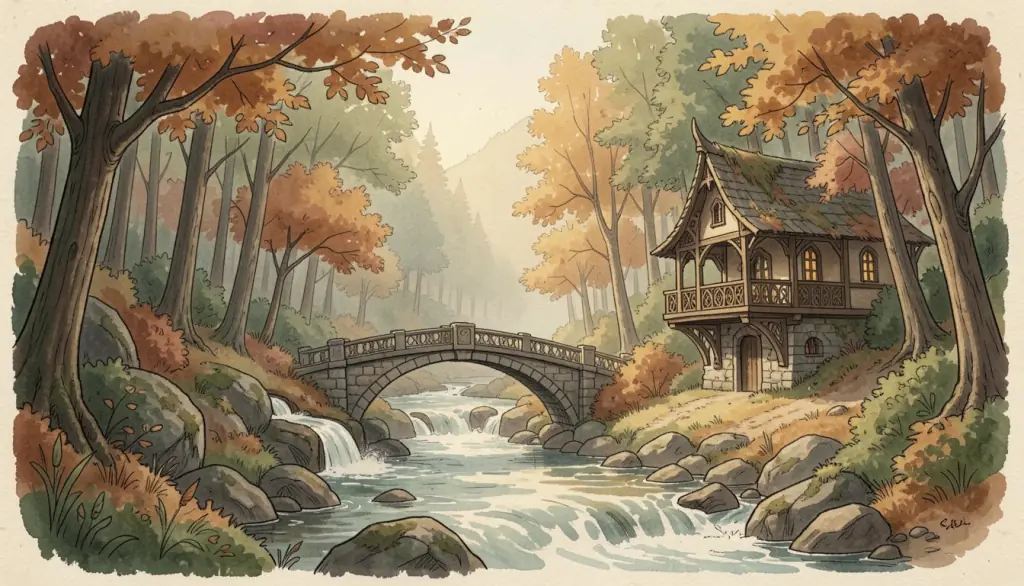
Of her first two thousand years almost nothing is recorded, and we think the silence is deliberate: the Elves of the Third Age live in a long afternoon in which little changes. The first event that touches her is a disaster. In 2509 her mother Celebrían, travelling to Lórien, was ambushed by Orcs in the Redhorn Pass, tormented and given a poisoned wound. Elladan and Elrohir rescued her and Elrond healed her body, but Appendix A says she lost all delight in Middle-earth, and in 2510 she sailed West. Her sons turned to hunting Orcs with the Dúnedain.
Arwen spent long stretches with her mother's kin in Lórien; when Aragorn first meets her, Appendix A says she had lately returned from there. The family is already scattered: a mother over the Sea, brothers on the road, a daughter in the Golden Wood. The Elves are leaving one by one, and Arwen grows up inside that departure.
The First Meeting: "Tinúviel" in the Woods of Rivendell
The Tale of Aragorn and Arwen opens with Aragorn rather than with her. He arrived in Rivendell at the age of two, after his father Arathorn was slain in 2933, and Elrond raised him in secret under the name Estel, "hope", to hide the heir of Isildur from the Enemy. In 2951, when Aragorn was twenty, Elrond told him his true name and lineage and gave him the heirlooms of his house: the ring of Barahir and the shards of Narsil (Appendix A, "The Tale of Aragorn and Arwen").
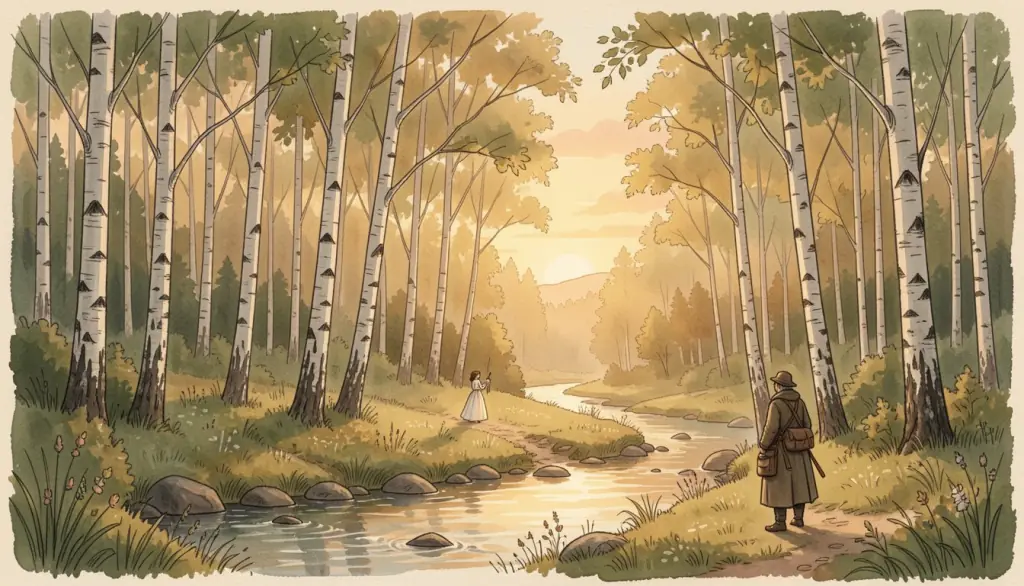
The next day, at sunset, Aragorn walked alone in the woods singing part of the Lay of Lúthien, and as he sang he saw a maiden walking among the white stems of the birches. He called out "Tinúviel", the name Beren gave Lúthien when he first saw her dancing in Doriath. She laughed and asked him why he called her by that name. When he explained that he had taken her for Lúthien herself, she answered that many had said she looked like her ancestor, but that the name was not hers, though her fate might not be unlike Lúthien's.
Aragorn is reenacting, without meaning to, the meeting of Lúthien and Beren, and Arwen sees the parallel more clearly than he does. Her reply is a prophecy disguised as a joke: Lúthien gave up her immortality for a mortal, and Arwen is telling him, in their first conversation, that she may do the same.
The gap in their ages is part of the scene's weight. Aragorn is twenty and has just learned who he is; Arwen is about 2,710 years old. Tolkien does not play this for comedy. It is the first statement of the gulf between Elves and Men that the whole tale is about.
Elrond's Condition and Thirty Years Apart
Elrond noticed the change in Aragorn at once. He spoke to him gently but plainly: Arwen was far above him, and her life and his were set on different paths. Then he named his condition. Arwen, he said, would not be the bride of any Man less than the King of both Gondor and Arnor (Appendix A). In 2951 neither kingdom had a king. Arnor had been gone for a thousand years, and Gondor was ruled by its Stewards.
Readers often hear this as an impossible task set to protect a daughter. Elrond's reasoning is subtler. If Arwen marries a mortal she must become mortal, and when he sails West they will be parted forever, beyond the circles of the world. He is making sure that if he must lose her, it is to a man whose life is worth the price. The condition also turns the romance into the engine of the plot: Aragorn's private love now requires the public victory.
Aragorn's mother Gilraen also saw the danger. She warned him that he was aiming too high. Aragorn left Rivendell soon after, and for nearly thirty years he laboured in the wild and in the service of Rohan and Gondor, under other names, against the growing power of Sauron. The famous Sindarin line often attributed to Arwen, about giving hope to the Dúnedain and keeping none, is in fact Gilraen's, spoken to Aragorn shortly before her death in 3007; we explain the confusion in Arwen's Elvish Quotes.
Cerin Amroth: The Choice Is Made
In 2980, when he was forty-nine, Aragorn came to Lothlórien weary from his journeys. Galadriel received him and, Appendix A says, clothed him in silver and white with a cloak of elven-grey and a bright gem on his brow, so that he seemed more like an Elf-lord of the West than a Ranger. Arwen was in Lórien with her grandmother, and she saw him in that likeness. Appendix A says that then her choice was made and her doom appointed.
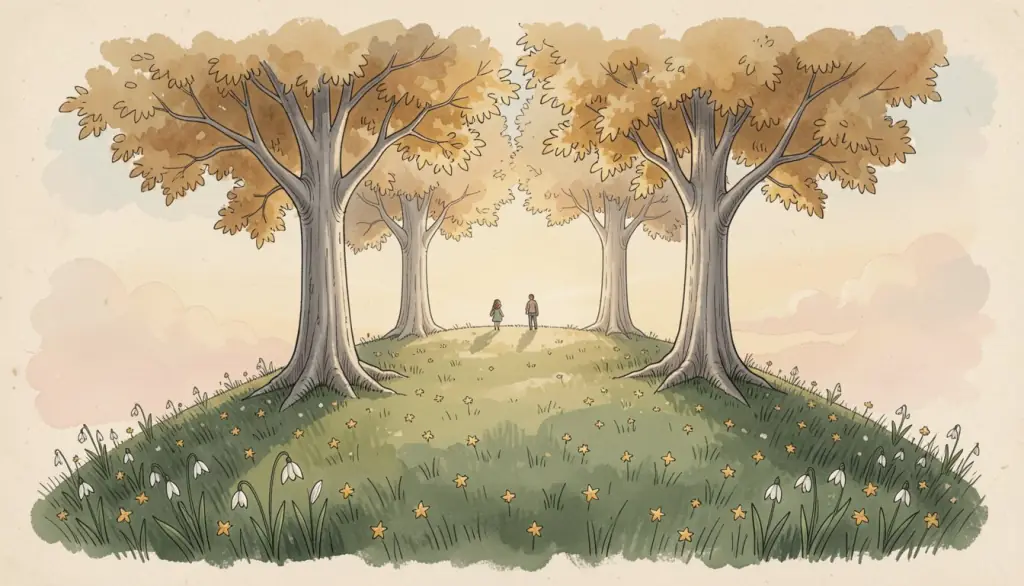
They walked together in the glades of Lórien for a season. Then, on the hill of Cerin Amroth at the heart of the wood, where the golden elanor and the pale niphredil grew in the grass, they plighted their troth. Aragorn gave her the ring of Barahir, the heirloom of his house, which Finrod Felagund had given to Barahir in the First Age (The Silmarillion, chapter 18; the betrothal itself is in Appendix B under 2980). Arwen's words, as Appendix A reports them, put the choice in one line: she would cleave to him, Dúnadan, "and turn from the Twilight".
When the Fellowship passes through Lórien in 3019, Frodo watches Aragorn stand on the same hill holding a small golden flower, lost in a memory. The narrator says he was seeing things as they once were, and that he spoke a farewell in Elvish to Arwen (The Fellowship of the Ring, book II, chapter 6, "Lothlórien"). A reader who has opened Appendix A knows that he is standing on the place of his betrothal, and that the same hill will hold Arwen's grave. The place is described in more detail in our Lothlórien guide.
Elrond, when he learned of the betrothal, did not forbid it. Appendix A says he was grieved, and that he held to his condition. The choice, though, was Arwen's to make, and the Half-elven choice applied to her as it had to her father: when Elrond left Middle-earth, his children would either go with him or remain and become mortal. On Cerin Amroth Arwen decided which.
Arwen in The Lord of the Rings: Rivendell and the Banner
In the main narrative Arwen appears only briefly, and the first appearance is through Frodo's eyes. At the feast in Rivendell after Frodo's recovery, he sees a lady seated beside Elrond under a canopy, so like him in face that she must be close kin. The narrator tells us that Frodo had never seen or imagined such loveliness in a living thing, and that she was called Undómiel because she was the Evenstar of her people (The Fellowship of the Ring, book II, chapter 1, "Many Meetings"). Later that evening Frodo sees her standing with Aragorn in the Hall of Fire.
That is almost all the first volume gives. Her next act is carried out at a distance and has to be decoded.
After the battle of Helm's Deep, the Grey Company of the Dúnedain catches up with Aragorn, led by his kinsman Halbarad and accompanied by Elladan and Elrohir. Halbarad brings a gift from the Lady of Rivendell, a staff wrapped in black cloth, with a message that the days are short and hope must come now or not at all (The Return of the King, book V, chapter 2, "The Passing of the Grey Company"). Aragorn does not unwrap it until the Battle of the Pelennor Fields. When he does, on the black ships coming up the Anduin, it is a royal standard: the White Tree of Gondor, surrounded by seven stars and crowned, its stars wrought of gems by Arwen and its crown of mithril and gold, the banner of Elendil's heir (book V, chapter 6, "The Battle of the Pelennor Fields").
This is Arwen's contribution to the war, and it is easy to underrate. She does not fight; she makes the visible sign of the kingship that is the condition of her marriage. The private bargain struck in Rivendell in 2951 becomes the public turning point of the war at the moment the standard breaks open in the wind.
The Wedding and the Queen
After his coronation Aragorn still waited. Gandalf led him up Mount Mindolluin, where he found a sapling of the White Tree, a descendant of Nimloth of Númenor, and planted it in the Court of the Fountain (The Return of the King, book VI, chapter 5, "The Steward and the King"). Soon afterwards, on the eve of Midsummer, a company came to the city out of the North: Elrond and Arwen, with Galadriel and Celeborn and the Elves of Rivendell and Lórien.
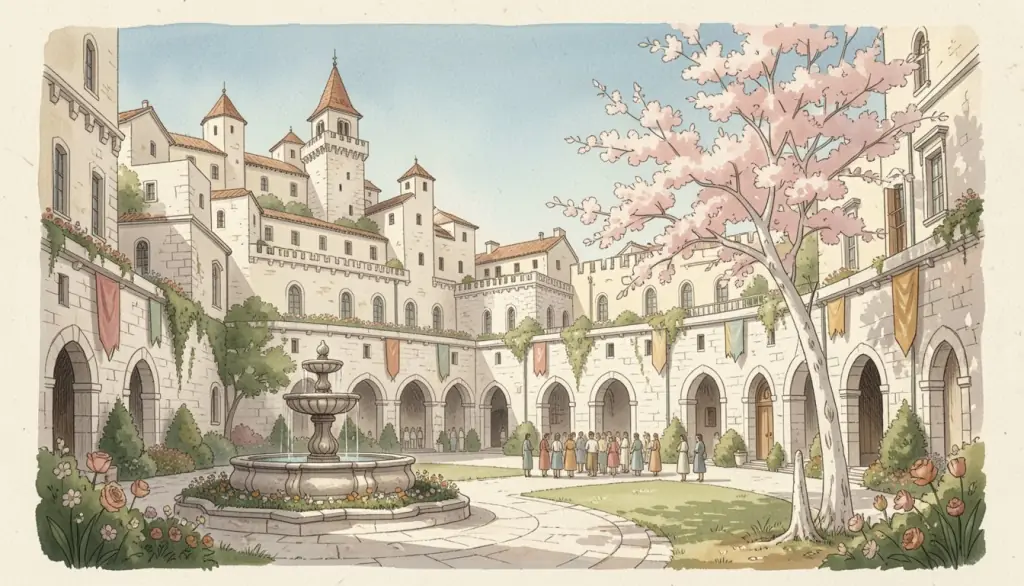
Elrond had kept the sceptre of Annúminas, the token of the northern kingship, since the end of Arnor. He surrendered it to Aragorn, and laid the hand of his daughter in the hand of the King. Aragorn and Arwen were married on Midsummer's Day 3019 (Appendix B). Elrond's condition had been fulfilled to the letter: Aragorn was now king of both realms.
Appendix A records that Arwen lived with Aragorn as queen for six-score years, and says little else about the reign. Tolkien gives us only the end, where the meaning of the marriage is tested.
The Gift to Frodo
Before the hobbits leave for home, Arwen does one more thing that changes the end of the book. In "Many Partings" (The Return of the King, book VI, chapter 6) she sees that Frodo is not well and offers him a gift. She tells him that she will not go with her father when he departs to the Havens, because hers is the choice of Lúthien, and that in her place Frodo may go into the West when the time comes, if he still wishes it, so that his wounds may be healed. She also takes from her neck a white gem like a star, hanging on a silver chain, and gives it to him to wear when memories of fear and darkness trouble him.
Both gifts matter later. In "The Grey Havens" Frodo, ill on an anniversary of his wounds, is found clutching a white gem on a chain, and in 3021 he sails West. Readers have long asked whether Arwen could really hand over her place on a ship. Tolkien took up the question in a letter written in 1963 (Letter 246 in The Letters of J.R.R. Tolkien), where he explained that it was not a ticket she could simply transfer; the idea was hers, but the permission to pass into the West came from the Valar, presumably sought with Gandalf's help.
Elrond and Arwen also part in this chapter. The narrator says only that they went up into the hills and spoke long together, and that their parting would endure beyond the ends of the world. Elrond sailed from the Grey Havens on 29 September 3021; from that moment Arwen's choice could not be undone. The Havens themselves are described in our post on the Grey Havens.
The Death of Aragorn and the Gift of Men
The last pages of the Tale are the reason it exists. Aragorn lived to the age of 210, a lifespan granted to the heirs of Númenor. In Fourth Age 120, feeling the approach of old age, he chose to give up his life before his strength and wits failed, as the early kings of Númenor had done (Appendix A). He gave the crown and sceptre to his son Eldarion and lay down in the House of the Kings in the Silent Street.
Arwen begged him to stay a little longer, and for the first time the Elf who chose mortality confronts what she chose. She tells Aragorn that only now does she understand the tale of his people and their fall: she had thought of mortality as a gift, as the Elves say it is, and now that she must receive it, she finds it bitter to receive. Aragorn answers her not with consolation but with a claim. He reminds her of the choice she made and of what lies beyond death for Men, which no one knows, and he tells her: "In sorrow we must go, but not in despair." He adds that they are not bound forever to the circles of the world, and that beyond them is more than memory. Then he dies, and his face takes on a great beauty, so that those who see him wonder (Appendix A).
This passage only works because Arwen is the one listening. The Elves call death the Gift of Ilúvatar to Men; the kings of Númenor came to see it as a curse, and that envy destroyed them (The Silmarillion, "Akallabêth"). Arwen is the only character who has lived on both sides of the question. She stands where the Númenóreans stood, at the point of fear, and Aragorn asks her to stand where the faithful stood instead, at the point of trust. The site's post on Elvish words for death and fate covers the vocabulary Tolkien built around these ideas.
The Last Journey: Arwen's Death at Cerin Amroth
Aragorn's last words do not save Arwen from grief. Appendix A says the light of her eyes was quenched, and that she seemed to her people to have become cold and grey like nightfall in winter that comes without a star. She bade farewell to Eldarion and to her daughters and to all she had loved, and went out from Minas Tirith to the land of Lórien.
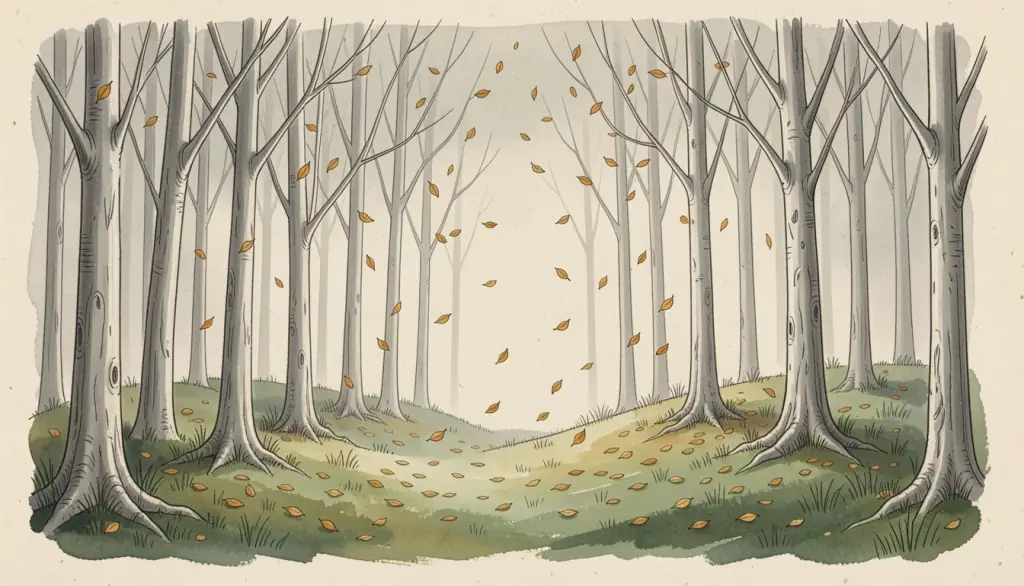
Lórien by then was empty. Galadriel had sailed in 3021; Celeborn had grown weary of his realm and gone to live in Rivendell with Elrond's sons. Arwen dwelt alone under the fading trees until winter came. When the mallorn leaves were falling, but spring had not yet come, she laid herself to rest on Cerin Amroth, the hill where she had plighted her troth. Appendix A ends her life with an image of permanence and forgetting at once: there is her green grave, "until the world is changed", and all the days of her life will be forgotten by Men who come after, and elanor and niphredil will bloom no more east of the Sea.
The narrator then closes the Tale: with the passing of Evenstar, no more is said in this book of the days of old. In the order of events it records, The Lord of the Rings ends not with Frodo's ship but with Arwen alone on a hill. The Elder Days are not over when Sauron falls or when the Elves sail. They end when the last person who remembered them from the inside dies, and that person is a woman who chose to stop being an Elf.
Arwen's Names and Languages
Arwen is Sindarin, "noble maiden", with -wen "maiden" as in Eärwen and Morwen. Undómiel is Quenya, from undómë, "evening twilight", and el, "star", given in the book as Evenstar. Arwen Name Meaning goes through both word by word.
Rivendell spoke Sindarin, and the Noldorin lore of Elrond's house would have given Arwen Quenya as well. Yet Tolkien gives her almost no Elvish in the books: her few recorded words are reported in English. Nearly all the Elvish people associate with Arwen was written by David Salo for the films, as our Arwen quotes guide explains.
Two flower-names belong to her story. Elanor is the small golden star-shaped flower of Cerin Amroth, and niphredil the pale flower like a snowdrop beside it. The Silmarillion (chapter 10, "Of the Sindar") says the white flowers of niphredil came out to greet Lúthien at her birth, which makes their presence at Arwen's betrothal and grave one more quiet echo. For Aragorn's names, including Estel, see Aragorn's Elvish Names and Andúril.
How Tolkien Built Arwen
Arwen is a late arrival in Tolkien's writing, and the way she was added explains a great deal about how she reads.
She came after the story was planned. The drafts in The Treason of Isengard (The History of Middle-earth, volume VII) show Tolkien at one stage considering a romance between Aragorn and Éowyn. Arwen and her Tale took shape later, which is why she can be absent from the main narrative without breaking it.
She is a deliberate echo, not a copy. Tolkien modelled Arwen's story on the tale of Beren and Lúthien, the love story closest to his own heart, and he makes the parallel explicit: the song in the woods, the name Tinúviel, the Elf who becomes mortal for a Man, the father who sets a condition. But the conditions are mirror images. Thingol asked Beren for a Silmaril because he expected him to fail; Elrond asks Aragorn for a kingdom because he expects him to succeed. Lúthien's choice is a single dramatic act in a story of quests and enchantments. Arwen's choice is lived out slowly over a hundred and twenty years, and its cost arrives at the very end. The First Age version is heroic. The Third Age version is domestic, and in our view more frightening.
The Tale is framed as a record. The Prologue's "Note on the Shire Records" says that the abbreviated version of the Tale of Aragorn and Arwen in the Appendices is derived from Barahir, grandson of the Steward Faramir, written some time after the passing of the King. Appendix A introduces it as a part of the Tale rather than the whole. Tolkien is telling us that what we read is a summary preserved in Gondor, not an eyewitness account. That framing explains the Tale's distance: we see Arwen through the eyes of a later chronicler, who knew how the story ended before he began it.
She is defined by restraint. Every one of her few appearances is a decision: her answer to "Tinúviel", her choice on Cerin Amroth, her gift to Frodo, her words at Aragorn's death. That economy is why she seems thin on a first reading and enormous on a second.
Books vs Films vs The Rings of Power
Peter Jackson's films
Liv Tyler played Arwen in all three of Peter Jackson's films, which greatly expand her role. Most of what is new is invented:
- The flight to the Ford. In the film Arwen carries Frodo to the Ford of Bruinen and seems to raise the flood. In the book the rescuer is Glorfindel, the horse is his, and the flood is Elrond's command, with Gandalf adding the white horses (The Fellowship of the Ring, book I, chapter 12, "Flight to the Ford"). See our page on Glorfindel.
- The Evenstar pendant. The films give Arwen a jewel she offers to Aragorn as a token of her choice. In the book the white gem goes to Frodo, as a comfort in his pain. The films keep the idea of a jewel tied to her choice and move it to the romance.
- The departure and return. The films show Arwen setting out for the Havens at Elrond's urging and turning back after a vision of the son she might have. In the book her choice is made decades before the war and never wavers.
- Her life bound to the Ring. In The Return of the King film, Elrond says Arwen's life is now tied to the fate of the Ring and that she is fading. Tolkien has nothing like this; her mortality comes from her choice, not from Sauron.
- Andúril. In the film Elrond brings the reforged sword to Aragorn at Dunharrow; in the book it is reforged in Rivendell before the Fellowship sets out.
- The Elvish dialogue. Arwen's Sindarin lines on screen were written for the films by David Salo; Tolkien gave her none of them.
The films keep the core: her love, her choice, Elrond's grief and her arrival in Minas Tirith. Aragorn's death and her last journey to Lórien reach the screen only as a brief vision Elrond shows her in The Two Towers.
The Rings of Power
Arwen is born in 241 of the Third Age, so she does not exist in the Second Age that The Rings of Power dramatizes. Season 3, which premiered on Prime Video on 11 November 2026, continues there with the forging of the Rings (see our Season 3 Elvish preview). Nothing confirmed about the season includes Arwen. The show's Elrond and Galadriel are her future father and grandmother, centuries before she is born.
What each version gets right
| Element | Books | Jackson films | The Rings of Power |
|---|---|---|---|
| Arwen's parentage and Evenstar title | Yes | Yes | Not present |
| First meeting in Rivendell, Tinúviel scene | Appendix A | Not shown | Not present |
| Betrothal on Cerin Amroth | 2980, Appendix A | Not shown | Not present |
| Rescue of Frodo at the Ford | Glorfindel, not Arwen | Arwen | Not present |
| The standard of the King | Made by Arwen, carried by Halbarad | Not shown | Not present |
| Jewel given away | White gem to Frodo | Evenstar pendant to Aragorn | Not present |
| Life tied to the Ring | No | Yes, invented | Not present |
| Death of Aragorn and Arwen's end in Lórien | Appendix A | Brief vision only | Not present |
Our Take
We think Arwen is the most misread major character in The Lord of the Rings, and the misreading runs in two directions at once.
The first misreading is that she is passive: a prize who waits in Rivendell while men fight. The films felt the need to correct that by giving her a horse and a river. But in the book Arwen is not waiting for anything. She decides her fate in 2980, nearly forty years before the war, and everything after that is her keeping a promise. Waiting implies uncertainty about the outcome. Arwen is not uncertain. She is the one character in the story who has already chosen, and her stillness is the stillness of someone who has.
The second misreading is that her story is a romance with a sad epilogue. We read it the other way round: the epilogue is the point, and the romance is the setup. The Tale exists to put an Elf at a mortal's deathbed and to show that the Elves' serene talk of death as a gift is easy to say from outside. Arwen's honesty in that scene, her admission that the gift is bitter, is what gives Aragorn's answer its force. He does not deny the bitterness. He says that sorrow and despair are different things.
That is also why we think Tolkien was right to end with her and not with Frodo. Frodo's departure is a release; he sails out of his pain. Arwen chooses the opposite. She refuses the ship, accepts the pain, and dies in a forgotten wood in winter. Tolkien gives the last image of the Elder Days not to the one who escapes the world but to the one who stays in it, and we find that the bravest choice in the book.
People Also Ask
Who is Arwen in Lord of the Rings?
Arwen Undómiel is the daughter of Elrond of Rivendell and Celebrían, born in 241 of the Third Age. She loves Aragorn, pledges herself to him on Cerin Amroth in 2980, gives up the life of the Elves to become mortal, marries him at Midsummer 3019 and becomes Queen of the reunited kingdom of Gondor and Arnor.
Who are Arwen's parents?
Her father is Elrond Half-elven, Lord of Rivendell, and her mother is Celebrían, daughter of Galadriel and Celeborn. Her older brothers are the twins Elladan and Elrohir. Through her father she descends from Lúthien, Beren, Eärendil and Elwing.
How old is Arwen when she meets Aragorn?
Arwen was born in Third Age 241 and first met Aragorn in 2951, when he was twenty. That makes her about 2,710 years old at their first meeting. When they married in 3019 she was about 2,778 and he was 88.
Why did Arwen choose to become mortal?
As a child of Elrond she had the choice of the Half-elven: to sail West with her father or to stay and share the fate of Men. She loved Aragorn, and on Cerin Amroth in 2980 she chose him. Her choice took effect when Elrond left Middle-earth, and she called it the choice of Lúthien.
How does Arwen die?
After Aragorn died in Fourth Age 120, Arwen left Minas Tirith and went to the empty land of Lórien, where she lived alone among the fading trees. When the leaves were falling, before spring came, she lay down on the hill of Cerin Amroth and died there. Appendix A says her green grave lies there until the world is changed.
Did Arwen save Frodo at the Ford in the book?
No. In The Fellowship of the Ring Frodo is carried to the Ford of Bruinen on the horse of Glorfindel, an Elf-lord of Rivendell, and the flood is Elrond's work. Peter Jackson's film gives the ride, and the flood, to Arwen.
What is Arwen's Evenstar?
Evenstar is the English for her Quenya title Undómiel: her people called her that because she was the Evenstar of the Elves. In the book Arwen also gives Frodo a white gem on a silver chain. In the films that idea becomes the Evenstar pendant, which she gives to Aragorn instead.
Is Arwen related to Galadriel?
Yes. Arwen's mother Celebrían was the only child of Galadriel and Celeborn, so Galadriel is Arwen's grandmother. Arwen spent long periods in Lothlórien with her mother's kin, and it was there that she and Aragorn pledged themselves to each other.
Did Arwen and Aragorn have children?
Yes. Their son Eldarion succeeded Aragorn as king. Appendix A also mentions that Arwen had daughters, whom she bade farewell before leaving for Lórien, but it does not name them.
Who plays Arwen?
Liv Tyler plays Arwen in Peter Jackson's Lord of the Rings films, released from 2001 to 2003. Arwen is not born until the Third Age, so she does not appear in Amazon's The Rings of Power, which is set in the Second Age.
Learn the Language of the Evenstar
Arwen's names, Arwen and Undómiel, come from two real languages Tolkien built in detail: Sindarin, the speech of Rivendell, and Quenya, the old tongue of lore. Our free Elvish course teaches both with words Tolkien actually wrote, and the Tengwar name generator will write any name, including hers, in the Elvish script.
Related Reading
- Characters of Middle-earth: Who's Who by People and Age
- Arwen Name Meaning: "Noble Maiden" and the Evenstar Undómiel
- Arwen's Elvish Quotes: Every Line Translated and Explained
- Elrond Explained: The Half-elven Lord of Rivendell
- Galadriel Explained: The Lady of Lórien Through Three Ages
- Celebrían Explained: Elrond's Wife and Arwen's Mother
- Glorfindel Explained: The Elf-lord Who Rode to the Ford
- Elros and Elrond: The Half-elven Twins and Their Choice
- Lúthien and Beren: The Love Story Behind Arwen's
- Lothlórien Explained: The Golden Wood of Galadriel and Celeborn
- How Does Aragorn Know Elvish? The Boy Raised in Rivendell
People Also Ask
Who is Arwen in Lord of the Rings?
Arwen Undómiel is the daughter of Elrond of Rivendell and Celebrían, born in 241 of the Third Age. She loves Aragorn, pledges herself to him on Cerin Amroth in 2980, gives up the life of the Elves to become mortal, marries him at Midsummer 3019 and becomes Queen of the reunited kingdom of Gondor and Arnor.
Who are Arwen's parents?
Her father is Elrond Half-elven, Lord of Rivendell, and her mother is Celebrían, daughter of Galadriel and Celeborn. Her older brothers are the twins Elladan and Elrohir. Through her father she descends from Lúthien, Beren, Eärendil and Elwing.
How old is Arwen when she meets Aragorn?
Arwen was born in Third Age 241 and first met Aragorn in 2951, when he was twenty. That makes her about 2,710 years old at their first meeting. When they married in 3019 she was about 2,778 and he was 88.
Why did Arwen choose to become mortal?
As a child of Elrond she had the choice of the Half-elven: to sail West with her father or to stay and share the fate of Men. She loved Aragorn, and on Cerin Amroth in 2980 she chose him. Her choice took effect when Elrond left Middle-earth, and she called it the choice of Lúthien.
How does Arwen die?
After Aragorn died in Fourth Age 120, Arwen left Minas Tirith and went to the empty land of Lórien, where she lived alone among the fading trees. When the leaves were falling, before spring came, she lay down on the hill of Cerin Amroth and died there. Appendix A says her green grave lies there until the world is changed.
Did Arwen save Frodo at the Ford in the book?
No. In The Fellowship of the Ring Frodo is carried to the Ford of Bruinen on the horse of Glorfindel, an Elf-lord of Rivendell, and the flood is Elrond's work. Peter Jackson's film gives the ride, and the flood, to Arwen.
What is Arwen's Evenstar?
Evenstar is the English for her Quenya title Undómiel: her people called her that because she was the Evenstar of the Elves. In the book Arwen also gives Frodo a white gem on a silver chain. In the films that idea becomes the Evenstar pendant, which she gives to Aragorn instead.
Is Arwen related to Galadriel?
Yes. Arwen's mother Celebrían was the only child of Galadriel and Celeborn, so Galadriel is Arwen's grandmother. Arwen spent long periods in Lothlórien with her mother's kin, and it was there that she and Aragorn pledged themselves to each other.
Did Arwen and Aragorn have children?
Yes. Their son Eldarion succeeded Aragorn as king. Appendix A also mentions that Arwen had daughters, whom she bade farewell before leaving for Lórien, but it does not name them.
Who plays Arwen?
Liv Tyler plays Arwen in Peter Jackson's Lord of the Rings films, released from 2001 to 2003. Arwen is not born until the Third Age, so she does not appear in Amazon's The Rings of Power, which is set in the Second Age.