Éowyn Explained: Shieldmaiden of Rohan, Dernhelm and the Fall of the Witch-king
Try It Yourself — Free Elvish Tools
Quick Answer: Éowyn is the niece of King Théoden of Rohan, daughter of Éomund and Théodwyn and sister of Éomer, born in Third Age 2995. Left to govern her people while the men rode to war, she rode out in disguise as the rider Dernhelm, carrying the hobbit Merry. On the Pelennor Fields on 15 March 3019 she stood over her fallen uncle and, with Merry's help, destroyed the Witch-king of Angmar, the Lord of the Nazgûl. Healed by Aragorn in the Houses of Healing, she met Faramir there, gave up the life of a shieldmaiden and married him, living afterwards in Ithilien.
Éowyn is the most famous woman of the Third Age and, for many readers, the most memorable fighter in The Lord of the Rings. Her moment on the Pelennor Fields is the one scene from The Return of the King that almost everyone remembers. But Tolkien gives her far more than one battle. She is a woman who has watched her family wither in a hall darkened by a traitor, who wants to die well because she has stopped hoping to live well, and who is brought back from that wish by a slow, quiet recovery in a city of strangers.
This guide follows Éowyn through the books, from her childhood in Meduseld to her life as the Lady of Ithilien, with dates from the appendices. It keeps the Peter Jackson films and the 2024 animated film in a separate section, says plainly what they invented, and ends with our own argument about why her story is better than its reputation. For her people as a whole, see Men of Middle-earth; for everyone around her, start with Characters of Middle-earth.
Éowyn at a Glance
| People | Woman of Rohan, of the House of Eorl through her mother; part-Gondorian through her grandmother Morwen of Lossarnach (LotR, Appendix A) |
| Titles and names | Lady of Rohan; Dernhelm (her disguise); later Lady of Ithilien as wife of its Prince; popularly called the White Lady of Rohan |
| Father | Éomund of Eastfold, chief Marshal of the Mark |
| Mother | Théodwyn, sister of King Théoden |
| Brother | Éomer, born Third Age 2991, later King of Rohan |
| Uncle and guardian | Théoden, King of Rohan, who raised her after her parents died |
| Born | Third Age 2995 (Appendix B) |
| Great deed | Destroyed the Witch-king of Angmar with Merry, 15 March 3019 (The Return of the King, book V, ch. 6) |
| Healed | By Aragorn with athelas in the Houses of Healing (book V, ch. 8) |
| Husband | Faramir, Prince of Ithilien and Steward of Gondor (book VI, ch. 5) |
| Home after the war | Emyn Arnen in Ithilien |
| First appearance | The Two Towers, book III, ch. 6, "The King of the Golden Hall" |
| Film actor | Miranda Otto (The Two Towers, 2002; The Return of the King, 2003; narrator of The War of the Rohirrim, 2024) |
| Rings of Power | Not in the show; she lives at the end of the Third Age |
Éowyn Timeline
"Mae govannen" — want to actually speak Elvish?
Try It Free →Dates come from Appendices A and B of The Lord of the Rings. Tolkien gives no birthday for Éowyn, so her age is approximate.
| Age and year | Event |
|---|---|
| Third Age 2948 | Birth of Théoden, son of Thengel and Morwen |
| Third Age 2978 | Birth of Théodred, Théoden's only son |
| Third Age 2980 | Théoden becomes King of Rohan |
| Third Age 2991 | Birth of Éomer, son of Éomund and Théodwyn |
| Third Age 2995 | Birth of Éowyn |
| Her childhood | Éomund is slain by Orcs; Théodwyn dies soon after; Théoden takes both children into his house (Appendix A) |
| 3019, 25 February | Théodred is slain at the First Battle of the Fords of Isen |
| 3019, 2 March | Gandalf comes to Edoras and frees Théoden from Gríma's counsel; Éowyn is left to lead the people to Dunharrow |
| 3019, 8 March | Aragorn leaves Dunharrow for the Paths of the Dead; Éowyn asks to ride with him and is refused |
| 3019, 10 March | The Dawnless Day; the host of Rohan rides from Dunharrow, with Dernhelm and Merry among them |
| 3019, 15 March | Battle of the Pelennor Fields; death of Théoden; Éowyn and Merry destroy the Witch-king; Aragorn heals her that night |
| 3019, 25 March | The One Ring is destroyed; Éowyn and Faramir stand together on the walls of Minas Tirith |
| 3019, 1 May | Coronation of King Elessar |
| 3019, August | Théoden is buried at Edoras; at the funeral feast Éomer announces the betrothal of Éowyn and Faramir |
| Fourth Age | Éowyn lives with Faramir in Emyn Arnen in Ithilien |
Who Éowyn Is
Éowyn is a woman of the royal house of Rohan who is never meant to be at the centre of anything: the king's niece, not his daughter, with her brother the heir after Théodred. When the men of her house ride to war, she is the one left behind to keep the people safe, and she is good at it. The tragedy Tolkien builds around her is that she is capable of much more than the role her world offers her, and she knows it.
Three facts define her:
- She grew up in a house under a shadow. By the time we meet her, Théoden has grown old and bent under the whispered counsel of Gríma Wormtongue, the servant of Saruman. Éowyn has spent years tending an uncle who seemed to be dying by inches.
- She is a trained rider and a skilled fighter. On the Pelennor she fights the most dangerous servant of Sauron on foot and wins.
- She wants glory because she has stopped expecting anything else. She seeks not battle for its own sake but a death that will mean something, because she sees no life ahead that will.
Family and the House of Eorl
Éowyn belongs to the line of the Kings of the Mark, which Appendix A traces from Eorl the Young, who led the Éothéod south to the aid of Gondor and was given the land that became Rohan. Her family is set out in "The House of Eorl" in Appendix A.
| Person | Relation | Read more |
|---|---|---|
| Thengel | Grandfather; King of Rohan, who lived many years in Gondor before he came to the throne | Appendix A |
| Morwen of Lossarnach | Grandmother; a woman of Gondor, called Steelsheen | Appendix A |
| Théoden | Uncle and foster-father; King of Rohan, dies 15 March 3019 | Théoden Explained |
| Théodwyn | Mother; Théoden's sister, who died young | Appendix A |
| Éomund | Father; chief Marshal of the Mark, slain by Orcs | Appendix A |
| Éomer | Brother; Third Marshal of the Mark, then King of Rohan | Éomer Explained |
| Théodred | Cousin; Théoden's son and heir, slain at the Fords of Isen | Appendix B |
| Faramir | Husband; Prince of Ithilien and Steward of Gondor | Faramir Explained |
| Denethor II | Father-in-law; Ruling Steward of Gondor | Denethor Explained |
Two things about this family are easy to miss.
First, Éowyn is partly of Gondor. Her grandmother Morwen came from Lossarnach in the south, and Thengel had lived in Gondor in his youth. When Éowyn later marries the Steward's son and makes her home in Ithilien, she is not crossing into a wholly foreign people. Tolkien has quietly prepared the bridge two generations earlier.
Second, Éowyn is an orphan raised by an uncle who loses his own son. Her father fell fighting Orcs and her mother died soon after, and Théoden brought the two children up in his own house beside Théodred (Appendix A). By the spring of 3019 her father, mother and cousin are all dead.
The Shieldmaiden in Meduseld
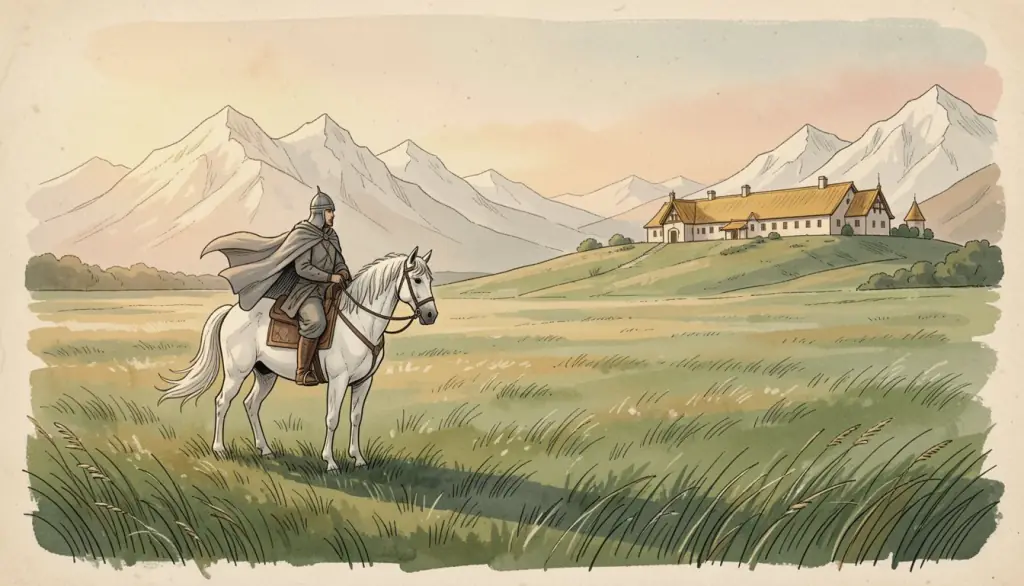
Éowyn first appears in The Two Towers, book III, ch. 6, "The King of the Golden Hall", when Gandalf, Aragorn, Legolas and Gimli come to Edoras. She stands behind Théoden's chair in Meduseld, a tall woman clad in white, with long golden hair, grave and thoughtful in her look. Tolkien likens her to a pale, cold morning of spring. When Théoden rises from his chair at Gandalf's word and goes out into the light, she goes back into the hall, and as she passes she looks at Aragorn. From that moment, Tolkien tells us, she has seen something in him she does not understand.
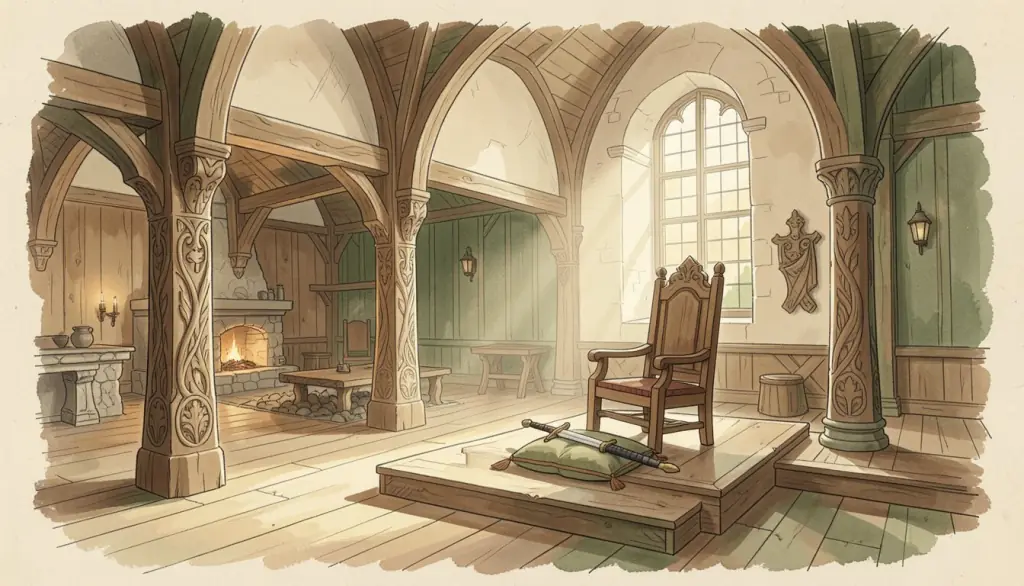
Gríma's desire. When Gandalf unmasks Gríma Wormtongue before the king, he names what the traitor was promised for his service: a share of the treasure, and the woman he desires. Gandalf tells Gríma that he has watched her too long under his eyelids and haunted her steps (The Two Towers, book III, ch. 6). Éowyn had lived for years in the same hall as a man who wanted her as a prize. For Gríma's master and the corruption of Rohan's court, see Saruman Explained.
Her charge. When Théoden decides to ride west to the Fords of Isen, someone must lead the people of Edoras to safety in the hills. The king asks who should rule in his place. Háma, his doorward, answers that there is Éowyn, daughter of Éomund, who is fearless and high-hearted and loved by all. Théoden gives her the rule of the people, and she kneels and receives a sword and a fair corslet from him (The Two Towers, book III, ch. 6). In the king's absence she is, in effect, the government of Rohan.
While Théoden and Éomer fight at the Hornburg, Éowyn leads the folk of Edoras up the winding road to Dunharrow, the ancient refuge of the Rohirrim in the White Mountains. The one person in Rohan who wants to fight is the one ordered to stay away from it.
Aragorn and the Cage at Dunharrow
When Aragorn reaches Dunharrow on the evening of 7 March, Éowyn welcomes him as lady of the house. Aragorn has decided to take the Paths of the Dead, the haunted road under the mountain, and when Éowyn learns this she begs him not to go, and then asks to go with him. (The Return of the King, book V, ch. 2, "The Passing of the Grey Company").
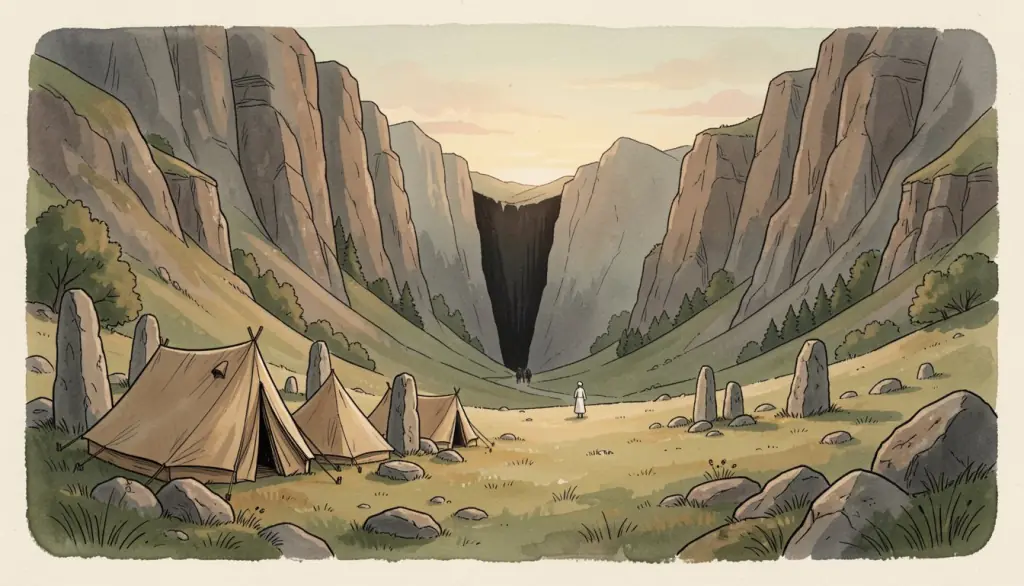
Aragorn tells her that her duty lies with her people. She answers that she has always been told her duty, that she is of the House of Eorl and not a serving-woman, and that she can ride and wield a blade and does not fear pain or death. Aragorn asks her what she does fear. Her answer is one word: "A cage." She explains that she fears to stay behind bars until use and old age accept them, and all chance of doing great deeds has gone beyond recall or desire.
Aragorn refuses her. He does it gently. At dawn on 8 March he rides into the Dimholt with the Grey Company, and Éowyn stands still as a figure carved in stone, watching him go, until he is out of sight. Then she stumbles, and goes back to her lodging alone.
Read carefully, the scene is not really about Aragorn. Éowyn asks to ride with him, not to marry him. What she wants is the life he has: a road, a purpose, a death that would be remembered. For Aragorn's side of the story and his road through the mountain, see Aragorn Explained.
Dernhelm and the Ride of the Rohirrim
When Théoden arrives at Dunharrow after the Hornburg, he gathers the host of Rohan to answer Gondor's call for aid. Éowyn is ordered to stay behind once more, to govern the people as before. The hobbit Merry, who has sworn himself to Théoden's service, is also told to stay: the king says he cannot carry a hobbit to war, and none of his riders can bear the burden of a passenger on a ride so long and fast (The Return of the King, book V, ch. 3, "The Muster of Rohan").
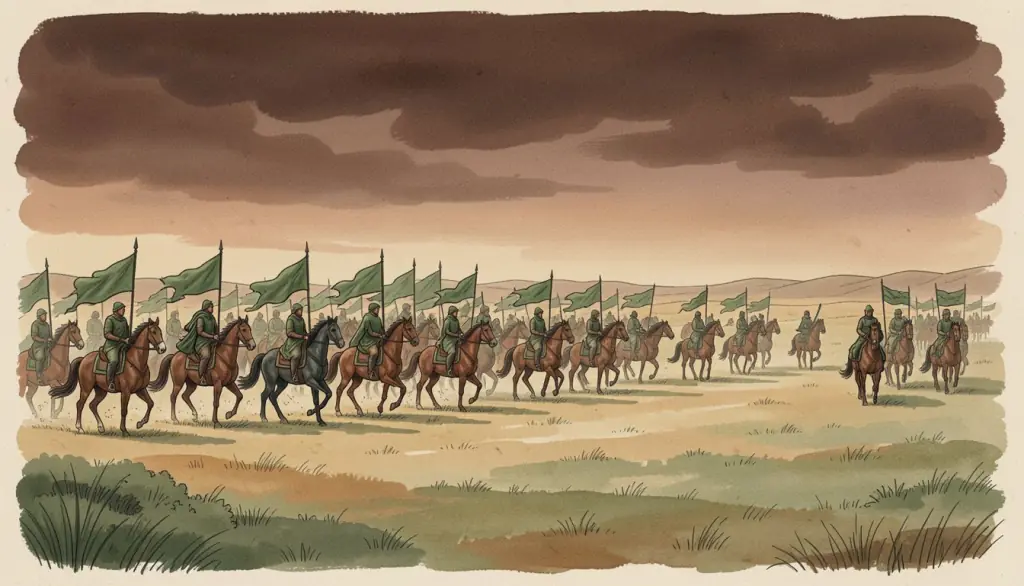
Then a young rider speaks to Merry quietly in the dark before the host sets out. He is less tall and broad than most of the Riders, Tolkien notes, and he has the grim face of someone without hope. He offers to carry Merry on the saddle before him under his cloak, and tells Merry that where the will is not lacking, a way opens, so the Riders say. The rider gives his name as Dernhelm.
The disguise is not a trick Tolkien springs on the reader with no warning. He plants clues all through the ride:
- The name itself. In Old English, dierne means secret and helm means helmet, so Dernhelm is roughly secret-helm. Any reader who knew Old English, as Tolkien's colleagues did, could guess the truth from the name alone. See Rohirric: The Language of Rohan for the full Old English name list.
- The description. Dernhelm is slighter than the other Riders, speaks little and seems to seek death.
On 10 March, the Dawnless Day, the host rides out of Dunharrow under a darkness sent out of Mordor. Merry rides hidden in front of Dernhelm all the way across the plains, through the Drúadan Forest with the help of the Wild Men, and down onto the Pelennor at dawn on 15 March, when the wind changes and the light breaks through. Dernhelm is somewhere in that charge (book V, ch. 5, "The Ride of the Rohirrim"), carrying the smallest warrior on the field.
The Battle of the Pelennor Fields
The fight with the Witch-king is told in The Return of the King, book V, ch. 6, "The Battle of the Pelennor Fields". We give the outline here and leave the full account of the Lord of the Nazgûl to our guide on the Witch-king of Angmar.
After the Rohirrim break the besiegers, the Witch-king comes down out of the sky on his winged beast. Théoden's horse Snowmane, struck by a dart and maddened, falls and crushes the king, and the knights of his house are scattered.
One rider does not flee. Dernhelm stands over Théoden, weeping, sword in hand, with Merry crawling on the ground nearby, too afraid to move.
The Witch-king threatens Dernhelm: come not between the Nazgûl and his prey, or be carried to the houses of lamentation beyond all darkness. Dernhelm answers with defiance: "Begone, foul dwimmerlaik, lord of carrion!"
The Witch-king boasts that no living man may hinder him. And then Dernhelm laughs, and the voice is like the ring of steel: "But no living man am I!" She tells him he looks upon a woman, Éowyn, daughter of Éomund, and that she will smite him if he touches her lord and kinsman.
Then, in order, as the book tells it:
- The Witch-king hesitates. He seems suddenly to doubt, and makes no answer.
- Éowyn kills the beast. The winged creature strikes at her, and she cuts off its head with one stroke. It falls with its wings spread.
- The mace falls. The Witch-king rises from the carcass and brings his great mace down on her. Her shield is shattered and her arm is broken, and she is beaten to her knees.
- Merry strikes. Forgotten by the Witch-king, Merry stabs the Witch-king from behind, through the cloak, under the hauberk, into the sinew behind his knee, with the sword he took from the Barrow-downs.
- Éowyn's last blow. As the Witch-king stumbles forward with a cry of pain, Éowyn, half-fallen, drives her sword between his crown and his mantle. The sword breaks into many shards. The crown rolls away. The mantle and hauberk fall empty to the ground, and a thin wailing cry rises and fades on the wind.
Merry's blade, made long ago in the North-kingdom against Angmar, broke the spell that held the Witch-king together; Éowyn's sword finished it.
Both paid for it: her shield-arm broken, her sword-arm and Merry's numbed, both near death from the Black Breath that comes of touching the Nazgûl.
The Prophecy That Came True
After the Battle of Fornost in Third Age 1975, Glorfindel foretold that the Witch-king's doom was far off, and that not by the hand of man would he fall (LotR, Appendix A). On the Pelennor the Witch-king treats this as a guarantee, and his boast is true: no man hinders him. A woman and a hobbit destroy him. Tolkien is not playing with a loophole. The prophecy and the Witch-king's pride both assume that only men of power matter in war, and the two people the great powers discounted are exactly the two who end him. For the full history of the prophecy, see Nazgûl and the Ringwraiths.
The Death of Théoden
Théoden, crushed under Snowmane, wakes briefly after the Witch-king is gone. He speaks first not to Éowyn but to Merry, who is kneeling beside him. He says his body is broken and he goes to his fathers, and that in their company he will not now be ashamed. When Éomer reaches him, Théoden hails him as King of the Mark and asks him to bid Éowyn farewell. Then he dies, and the book says plainly that he never knew Éowyn lay near him (The Return of the King, book V, ch. 6).
Only then does Éomer see her. He finds his sister lying pale and cold among the dead, and believes she too has fallen. In a fury of grief he leads the Riders back into battle, seeking his own end. It is Prince Imrahil of Dol Amroth, coming to her afterwards, who notices that she still breathes, a faint mist on the bright metal he holds to her lips, and has her carried to the city.
The arrangement is deliberate. Éowyn wanted to die beside her king. Instead she survives him unseen, and her brother mourns her while she still lives. Tolkien denies her every heroic ending she imagined, and that makes room for the second half of her story. For more of the king she served, see Théoden Explained.
The Houses of Healing
On the night of the battle, Aragorn enters Minas Tirith in secret and goes to the Houses of Healing, where Faramir, Éowyn and Merry all lie under the Black Breath (The Return of the King, book V, ch. 8, "The Houses of Healing"). He asks for athelas, a herb the healers of Gondor know only as kingsfoil, and with it he calls each of them back.
The chapter matters for Éowyn because it is where the other characters finally explain her.
Gandalf speaks to Éomer about the years in Meduseld. He tells him that Éowyn had a spirit and courage at least the match of his own, and that she had to sit in a darkening house and watch the king she loved as a father sink into dishonour, her own place seeming lower than the staff he leaned on. Éomer had deeds of arms; she had only waiting.
Aragorn speaks about her love for him. He says that few griefs are more bitter than to see the love of a lady so fair and brave that cannot be returned, and that she loved in him a shadow and a thought, a hope of glory and great deeds, and lands far from the fields of Rohan.
Then Aragorn calls her by name, and she wakes. Her first words are to her brother, whom she had dreamed was slain, and her first question is about the king. She is alive, but she does not yet want to be.
Faramir and the Walls of Minas Tirith
The last part of Éowyn's story is told in The Return of the King, book VI, ch. 5, "The Steward and the King".
When the armies of the West march to the Black Gate, Éowyn is left in the Houses of Healing, and she hates it. She asks the Warden to release her so that she can ride after the host and die in battle. He will not, and she is brought to Faramir, now Steward of Gondor and himself recovering.
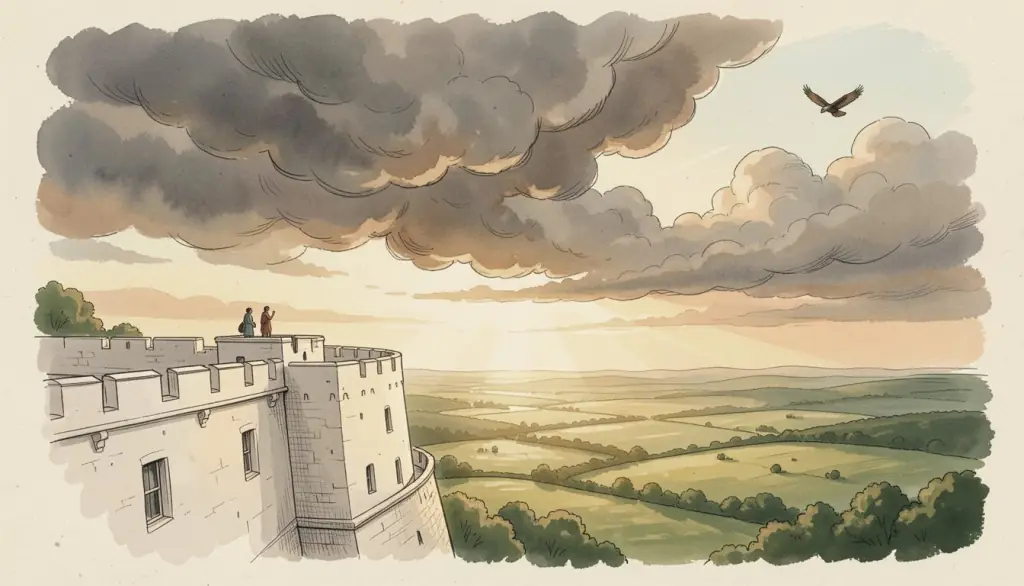
Faramir does not release her either. He asks her to walk with him. Over several days they walk together on the walls, looking east toward Mordor. He tells her he loves her, and that he knows she loved Aragorn, and that her grief is not shameful.
On 25 March, the day the Ring is destroyed, Faramir and Éowyn stand together on the wall. A great wind rises, the darkness is rolled away, and an eagle comes with news of victory. Tolkien says that her heart changed then, or at last she understood it.
Her answer to Faramir is the turning point of her character. "I will be a shieldmaiden no longer," she says (The Return of the King, book VI, ch. 5). She will not vie with the great Riders or take joy only in songs of slaying; she will be a healer and love all things that grow. And she no longer desires to be a queen.
Faramir laughs, glad, and says that he will wed her, the White Lady of Rohan, if it be her will, and that in happier days they will dwell in Ithilien and make a garden there.
Lady of Ithilien
After the coronation of Aragorn as King Elessar on 1 May 3019, Faramir is confirmed as Steward of Gondor and made Prince of Ithilien, with his home in the hills of Emyn Arnen (The Return of the King, book VI, ch. 5). Éomer, learning what has passed, gives his consent gladly.
In summer the funeral escort of King Théoden goes north to Edoras, and in August Théoden is laid in his mound among the kings of the Mark. At the funeral feast in Meduseld, Éomer announces before the assembled guests that Faramir and Éowyn are betrothed (The Return of the King, book VI, ch. 6, "Many Partings").
Before the company parts, Éowyn and Éomer give Merry a parting gift: an ancient horn of silver, wrought by the Dwarves and taken from the hoard of Scatha the Worm. Merry carries it home to the Shire, and later blows it in the Scouring of the Shire to rouse the hobbits against Saruman's ruffians (book VI, ch. 8). For more on the hobbit who rode with her, see Hobbits of Middle-earth.
Of her later life Tolkien says little. Once she has chosen a life rather than a death, he lets her have it in peace, off the page.
Éowyn's Names and Language
The Rohirrim speak Rohirric, a language of Men that Tolkien almost never shows directly. Because he presents the Common Speech of Middle-earth as modern English, he presents Rohirric, an older relative of the Common Speech, as Old English (LotR, Appendix F). That is why every name in Éowyn's family is an Old English word or compound. Our guide to Rohirric, the Language of Rohan explains the system in full.
| Name | Old English source | Meaning | Who |
|---|---|---|---|
| Éowyn | eoh + wynn | horse + joy | Herself |
| Éomer | eoh + mǣre | horse + famous | Her brother |
| Théoden | þēoden | lord, prince, king | Her uncle |
| Dernhelm | dierne + helm | secret + helmet | Her disguise |
| Meduseld | medu + seld | mead + hall | The hall where she grew up |
Notice the pattern in her own family. Her brother is Éo-mer, her father Éo-mund, and she is Éo-wyn: the shared element eoh, horse, marks the children of the Riders of the Mark. Her mother Théodwyn and her uncle Théoden share the element þēod, people, the root of þēoden, lord. The names are a family tree in miniature.
The Elvish names around her
Rohan's own names are Old English, but Éowyn's later life is spent in a land with a Sindarin name. Ithilien is Sindarin for Land of the Moon, from Ithil, Moon, the same word found in Minas Ithil, Tower of the Moon. Her husband's family, like Gondor's nobility generally, carries Sindarin names: Denethor, Boromir, Faramir.
For how the Common Speech, Rohirric and the Elvish languages fit together, see Westron, the Common Speech and our Languages of Middle-earth guide. To see Éowyn's name, or your own, written in Elvish letters, try our Tengwar name tool.
Books vs Films vs The Rings of Power
The films keep Éowyn's place in the story and her great deed, but they change a good deal of how she gets there. Here is what is the book's and what was invented.
| Element | Book | Peter Jackson's films |
|---|---|---|
| First scene | In Meduseld, behind the king's chair, when Gandalf arrives | Introduced earlier, when the wounded Théodred is brought home to Edoras and dies there |
| Théodred | Slain at the Fords of Isen and buried there | Dies in Edoras; Éowyn grieves over him and sings a dirge at his funeral (extended edition) |
| Helm's Deep | Éowyn leads the people to Dunharrow; she is not at the Hornburg | The people go to Helm's Deep, and Éowyn shelters with the women and children in the caves |
| Aragorn | Distant admiration, her plea at Dunharrow, his refusal | Added scenes: sword practice, the stew she cooks for him, her talk with him about Arwen |
| Dernhelm | A named disguise, with clues in the text | No Dernhelm name; she simply rides in armour and takes Merry up on her horse |
| Her words to the Witch-king | "But no living man am I!" and her full name | The shorter "I am no man!" |
| Théoden's death | He speaks with Merry and Éomer; he does not see Éowyn | Éowyn kneels by him and he dies speaking to her |
| Faramir | A full chapter of courtship in the Houses of Healing and on the walls | A short Houses of Healing scene in the extended edition; side by side at the coronation |
What the films keep and lose
The films keep what matters most on screen: her grief in a failing house, her refusal to stay behind and the Pelennor, which Miranda Otto plays with real ferocity. What they lose is the second half. The book's Éowyn is someone who has been trying to die, and her recovery in the Houses of Healing and on the walls with Faramir is reduced to a glance. A viewer could conclude her story ends with the Witch-king. In the book it only turns there.
The War of the Rohirrim
The Lord of the Rings: The War of the Rohirrim (2024), an animated film, tells the story of Helm Hammerhand, King of Rohan in Third Age 2758 to 2759, about two and a half centuries before Éowyn's birth. Miranda Otto returns as Éowyn, but only as the narrator who introduces and closes the tale. Éowyn takes no part in the events, and the film's lead character, Helm's daughter Héra, was invented for the film; Appendix A mentions a daughter of Helm but gives her no name or story.
The Rings of Power
The Rings of Power is set in the Second Age, thousands of years before Éowyn was born, and before Rohan existed. Éowyn has not appeared in Seasons 1 to 3, and no casting for her has been announced. For the current season, see our Season 3 preview. Any claim that Éowyn is in the show is not supported by anything Prime Video has announced.
How Tolkien Built Éowyn
Three of Tolkien's choices explain why she feels so different from the book's other heroes.
He changed his mind about her. Christopher Tolkien's The History of Middle-earth, which prints his father's drafts, shows that in early outlines Tolkien considered a romance between Éowyn and Aragorn, and also considered letting her die in battle avenging or protecting Théoden. He kept neither. The published Éowyn loves Aragorn without being loved in return, and survives the battle she meant to die in.
He told her inner life through other people. We rarely see inside Éowyn's head. We learn what she felt in Meduseld from Gandalf, what she felt for Aragorn from Aragorn, and what she feels about her future from her own words to Faramir. That distance makes her final change of heart land with more force.
He tied her recovery to the fall of Sauron. Éowyn's heart changes on the same day and almost the same hour as the Ring goes into the fire. The private healing and the public victory happen together.
Why Éowyn Matters
Beyond the Pelennor, Éowyn matters to The Lord of the Rings in two further ways.
She shows what despair does to the brave. Boromir is broken by desire for the Ring. Denethor is broken by despair and pride. Éowyn's despair is about her own life, not the war: she would rather die gloriously than live small. The book treats this as a wound, not a virtue, and heals it. Her father-in-law, at the same moment, dies of the same sickness in its darker form. For his story, see Denethor Explained.
She joins Rohan and Gondor. Her marriage to Faramir binds the two realms that fought side by side on the Pelennor, just as her brother's later marriage to Lothíriel, daughter of Imrahil of Dol Amroth, binds them again (Appendix A). The oath of Eorl and Cirion that founded Rohan (Unfinished Tales, "Cirion and Eorl") is renewed in her generation by marriage.
Our Take
Our view, stated plainly: Éowyn's real victory is not over the Witch-king. It is over the wish to die.
The Pelennor scene is famous for good reason, but it is only the first half of an arc that Tolkien works hard to complete. Éowyn rides to Gondor because she has given up on any life worth living. Her great deed comes out of despair, not confidence. Ended on the battlefield, hers would be a beautiful tragedy about a woman who found purpose only in dying.
Tolkien refuses that ending. He keeps her alive, puts her in a sickroom she hates, and gives her a long, undramatic convalescence in which nothing happens except talk, walks on a wall and a slow change of heart. Some read her choice to become a healer as Tolkien putting a fighting woman back in her place. We think that misses what the book is doing. The healer is not a lesser role in Tolkien's world: Aragorn proves himself king by healing, not by fighting, and the book's final turn is from war to the rebuilding of the land. When Éowyn chooses to be a healer, she chooses the same thing the King chooses.
Nor does the book take back her courage. She remains the woman who stood alone over her king when his knights had fled. What changes is not her bravery but her reason for living. She stops wanting to be remembered and starts wanting to be alive. That is a harder victory than the one on the Pelennor, and it is the one Tolkien thought worth a whole chapter.
People Also Ask
Who is Éowyn in Lord of the Rings?
Éowyn is a noblewoman of Rohan, the daughter of Éomund and of Théodwyn, sister of King Théoden. She was born in Third Age 2995 and raised in Théoden's house with her brother Éomer. She rode to war in disguise as Dernhelm, destroyed the Witch-king of Angmar with Merry's help at the Battle of the Pelennor Fields on 15 March 3019, and later married Faramir and lived in Ithilien.
How did Éowyn kill the Witch-king?
On the Pelennor Fields the Witch-king's winged beast struck down Théoden. Éowyn, disguised as the rider Dernhelm, stood over her uncle, revealed herself and cut off the beast's head. The Witch-king broke her shield and arm with his mace, but Merry stabbed him behind the knee with a blade made in Arnor, and Éowyn drove her sword between his crown and his mantle. He vanished with a wailing cry.
What is the prophecy about the Witch-king and Éowyn?
After the Battle of Fornost in Third Age 1975, Glorfindel foretold that the Witch-king's doom was far off and that he would not fall by the hand of man (LotR, Appendix A). The Witch-king boasted on the Pelennor that no living man could hinder him. He fell to a woman, Éowyn, and a hobbit, Merry.
Who is Dernhelm?
Dernhelm is the name Éowyn used when she rode in disguise with the host of Rohan to Gondor. The name is Old English for something like secret helmet. Dernhelm carried Merry on the saddle in front of her, after Théoden had ordered the hobbit to stay behind.
Was Éowyn in love with Aragorn?
Yes, in her way. She loved Aragorn from their meeting in Meduseld and asked to ride with him on the Paths of the Dead, but he refused her gently. In the Houses of Healing Aragorn tells Éomer that she loved a shadow and a thought, a hope of glory far from the walls of Edoras, rather than the man himself.
Who did Éowyn marry?
She married Faramir, younger son of Denethor, Steward of Gondor. They met in the Houses of Healing in Minas Tirith after the Battle of the Pelennor Fields. Their betrothal was announced at Théoden's funeral feast at Edoras, and Faramir, made Prince of Ithilien by King Elessar, took her to live in Emyn Arnen.
How old was Éowyn when she fought the Witch-king?
Appendix B gives her birth as Third Age 2995, and the battle was fought on 15 March 3019, so she was about twenty-four. Tolkien gives no birthday for her, so the exact age is not recorded.
What does the name Éowyn mean?
Tolkien rendered the language of Rohan as Old English. In Old English Éowyn is built from eoh, horse, and wynn, joy, so the name means roughly horse-joy. It is a fitting name for a daughter of the Riders of the Mark, and it is one of the names Tolkien took straight from his own field of scholarship.
Does Éowyn say "I am no man" in the book?
No. That is the film line. In The Return of the King she laughs and says that no living man is she, and then tells the Witch-king that he looks upon a woman, Éowyn, daughter of Éomund. The film keeps the idea but shortens and rephrases it.
Is Éowyn in The Rings of Power or The War of the Rohirrim?
She is not a character in The Rings of Power, which is set in the Second Age, thousands of years before her birth. In the 2024 animated film The War of the Rohirrim, set more than two centuries before her time, Miranda Otto returns as Éowyn, but only as the narrator of the story.
Learn the Language Behind Her New Home
Éowyn's own names are Old English, but the land she chose to live in, Ithilien, and the city where she was healed, Minas Tirith, carry Sindarin names, the Elvish of Gondor's nobility. To learn the language behind those names, start with our free Elvish course, which teaches Sindarin and Quenya using words Tolkien actually wrote.
Related Reading
- Characters of Middle-earth: Who's Who in Tolkien's World
- The Witch-king of Angmar Explained
- Rohirric: The Language of Rohan and Old English
- Faramir Explained
- Théoden Explained
- Éomer Explained
- Denethor Explained
- Aragorn Explained
- Boromir Explained
- Nazgûl and the Ringwraiths Explained
- Men of Middle-earth
- Hobbits of Middle-earth
People Also Ask
Who is Éowyn in Lord of the Rings?
Éowyn is a noblewoman of Rohan, the daughter of Éomund and of Théodwyn, sister of King Théoden. She was born in Third Age 2995 and raised in Théoden's house with her brother Éomer. She rode to war in disguise as Dernhelm, destroyed the Witch-king of Angmar with Merry's help at the Battle of the Pelennor Fields on 15 March 3019, and later married Faramir and lived in Ithilien.
How did Éowyn kill the Witch-king?
On the Pelennor Fields the Witch-king's winged beast struck down Théoden. Éowyn, disguised as the rider Dernhelm, stood over her uncle, revealed herself and cut off the beast's head. The Witch-king broke her shield and arm with his mace, but Merry stabbed him behind the knee with a blade made in Arnor, and Éowyn drove her sword between his crown and his mantle. He vanished with a wailing cry.
What is the prophecy about the Witch-king and Éowyn?
After the Battle of Fornost in Third Age 1975, Glorfindel foretold that the Witch-king's doom was far off and that he would not fall by the hand of man (LotR, Appendix A). The Witch-king boasted on the Pelennor that no living man could hinder him. He fell to a woman, Éowyn, and a hobbit, Merry.
Who is Dernhelm?
Dernhelm is the name Éowyn used when she rode in disguise with the host of Rohan to Gondor. The name is Old English for something like secret helmet. Dernhelm carried Merry on the saddle in front of her, after Théoden had ordered the hobbit to stay behind.
Was Éowyn in love with Aragorn?
Yes, in her way. She loved Aragorn from their meeting in Meduseld and asked to ride with him on the Paths of the Dead, but he refused her gently. In the Houses of Healing Aragorn tells Éomer that she loved a shadow and a thought, a hope of glory far from the walls of Edoras, rather than the man himself.
Who did Éowyn marry?
She married Faramir, younger son of Denethor, Steward of Gondor. They met in the Houses of Healing in Minas Tirith after the Battle of the Pelennor Fields. Their betrothal was announced at Théoden's funeral feast at Edoras, and Faramir, made Prince of Ithilien by King Elessar, took her to live in Emyn Arnen.
How old was Éowyn when she fought the Witch-king?
Appendix B gives her birth as Third Age 2995, and the battle was fought on 15 March 3019, so she was about twenty-four. Tolkien gives no birthday for her, so the exact age is not recorded.
What does the name Éowyn mean?
Tolkien rendered the language of Rohan as Old English. In Old English Éowyn is built from eoh, horse, and wynn, joy, so the name means roughly horse-joy. It is a fitting name for a daughter of the Riders of the Mark, and it is one of the names Tolkien took straight from his own field of scholarship.
Does Éowyn say "I am no man" in the book?
No. That is the film line. In The Return of the King she laughs and says that no living man is she, and then tells the Witch-king that he looks upon a woman, Éowyn, daughter of Éomund. The film keeps the idea but shortens and rephrases it.
Is Éowyn in The Rings of Power or The War of the Rohirrim?
She is not a character in The Rings of Power, which is set in the Second Age, thousands of years before her birth. In the 2024 animated film The War of the Rohirrim, set more than two centuries before her time, Miranda Otto returns as Éowyn, but only as the narrator of the story.