Éomer Explained: Third Marshal of the Riddermark and King of Rohan
Try It Yourself — Free Elvish Tools
Quick Answer: Éomer son of Éomund is the nephew and foster-son of King Théoden and the Third Marshal of the Riddermark of Rohan. He meets Aragorn on the plains, fights at Helm's Deep and the Pelennor Fields, and becomes King of the Mark when Théoden dies on 15 March 3019. Born in Third Age 2991, he married Lothíriel of Dol Amroth, reigned sixty-five years as Éomer Éadig and died in Fourth Age 63, Aragorn's friend to the end.
Éomer is the man who first meets the three hunters on the grass of Rohan and decides, against his king's orders and his country's law, to trust them. Almost everything that follows for the West, the alliance of Rohan and Gondor, the ride to the Pelennor and the crown of a renewed kingdom of the Mark, runs through that decision. He is not the most famous Rider; that is his sister. He is the most representative one, and this guide explains why.
Éomer at a Glance
| People | Man of Rohan, one of the Rohirrim descended from the Éothéod |
| Titles | Third Marshal of the Riddermark; heir of Théoden after 3019; eighteenth King of the Mark, first of the Third Line (Appendix A) |
| Born | Third Age 2991 (Appendix A and B) |
| Died | Fourth Age 63, Shire Reckoning 1484, in the autumn (Appendix B) |
| Father | Éomund of Eastfold, chief Marshal of the Mark |
| Mother | Théodwyn, youngest sister of King Théoden |
| Foster-father | Théoden, King of the Mark |
| Sister | Éowyn, born 2995 |
| Spouse | Lothíriel, daughter of Prince Imrahil of Dol Amroth |
| Child | Elfwine the Fair, his successor |
| Sword | Gúthwinë (The Two Towers, book III, ch. 7, "Helm's Deep") |
| Byname | Éomer Éadig, "the Blessed" (Appendix A, list of the Kings of the Mark) |
| First appearance | The Two Towers, book III, ch. 2, "The Riders of Rohan" |
| Film actor | Karl Urban (Peter Jackson's The Two Towers and The Return of the King) |
| Rings of Power | Does not appear; Rohan did not exist in the Second Age |
Éomer Timeline
"Mae govannen" — want to actually speak Elvish?
Try It Free →Dates come from Appendix B of The Lord of the Rings, whose Great Years use Shire months of thirty days, which is why February has a 30th. Where the date rests on Appendix A instead, the row says so.
| Age and year | Event |
|---|---|
| Third Age 2510 | Eorl the Young rides to the Field of Celebrant; his people are given Calenardhon, which becomes Rohan (Appendix A) |
| Third Age 2991 | Éomer son of Éomund is born |
| Third Age 2995 | His sister Éowyn is born |
| Third Age 3002 (Appendix A) | Éomund is killed by Orcs; Théodwyn dies soon after; Théoden takes both children into his house |
| Third Age 3019, 25 February | Théodred, Théoden's only son, falls at the first battle of the Fords of Isen |
| Third Age 3019, 29 February | Éomer's riders destroy the Orc-band that carried off Merry and Pippin, at the eaves of Fangorn |
| Third Age 3019, 30 February | Returning to Edoras, Éomer meets Aragorn, Legolas and Gimli |
| Third Age 3019, 2 March | Gandalf heals Théoden; Éomer is released and the Riders ride west |
| Third Age 3019, 3 to 4 March | Battle of the Hornburg (Helm's Deep) |
| Third Age 3019, 10 March | The Dawnless Day; the Muster of Rohan rides from Harrowdale |
| Third Age 3019, 15 March | Battle of the Pelennor Fields; Théoden dies and Éomer becomes king |
| Third Age 3019, 18 March | The host of the West, with Éomer, marches from Minas Tirith |
| Third Age 3019, 25 March | Battle before the Black Gate; the Ring is destroyed |
| Third Age 3019, 1 May | Coronation of King Elessar |
| Third Age 3019, 10 August | Funeral of King Théoden at Edoras |
| After the war (Appendix A, no year) | Éomer marries Lothíriel of Dol Amroth |
| Fourth Age 63 (Shire Reckoning 1484) | Éomer sends for Merry in the spring and dies in the autumn |
Our arithmetic from these dates: he is twenty-seven when he meets Aragorn, and he reigns from 3019 to Fourth Age 63, which Appendix A counts as sixty-five years.
Who Éomer Is
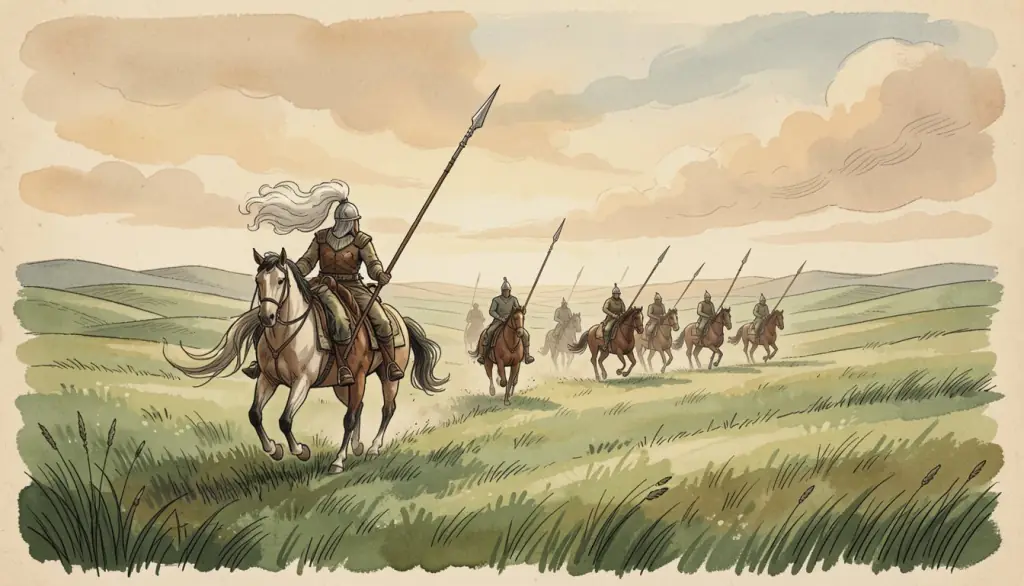
Éomer is introduced through a single physical detail: a tall rider at the head of a company, his helm crested with a white horse-tail, coming down on three strangers in the grass (The Two Towers, book III, ch. 2). Three things define him in the books.
- He is a soldier first. As Third Marshal he commands the East-mark's riders. His world is cavalry, pursuit, the borders and the law of the Mark, and he is very good at it.
- He is the heir no one planned. Until 25 February 3019 the heir of Rohan is Théodred. Éomer becomes the king's only remaining male kin in the middle of a war, and he becomes king himself less than three weeks later.
- He judges. His great gift is not strength but the ability to decide quickly, on incomplete evidence, whom to trust. His first scene is built around that test, and he passes it.
He is also hot-tempered, proud and blunt, and Tolkien does not hide it. He nearly comes to blows with Gimli in his first conversation, and he threatens Wormtongue in the king's own hall. Those flaws are part of why he is believable. The Mark does not produce courtiers.
Family and the House of Eorl
Éomer's family is short and full of early deaths, which explains a great deal about him.
| Person | Relation | Read more |
|---|---|---|
| Eorl the Young | Founder of Rohan and his remote ancestor | Men of Middle-earth |
| Thengel and Morwen of Lossarnach | Grandparents; Théoden's parents | |
| Éomund of Eastfold | Father, chief Marshal of the Mark, killed by Orcs | This post, "An Orphan of the Eastfold" |
| Théodwyn | Mother, Théoden's youngest sister | |
| Théoden | Uncle and foster-father, King of the Mark | Théoden Explained |
| Théodred | Cousin, Théoden's only son, killed at the Fords of Isen | |
| Éowyn | Younger sister, the slayer of the Witch-king | Éowyn Explained |
| Faramir | Brother-in-law, Prince of Ithilien | Faramir Explained |
| Imrahil of Dol Amroth | Father-in-law and comrade at the Pelennor | |
| Lothíriel | Wife, daughter of Imrahil | |
| Elfwine the Fair | Son, nineteenth King of the Mark |
The table hides a striking fact: Éomer's grandmother Morwen came from Lossarnach in Gondor, and his wife came from Dol Amroth in Gondor. The royal house of Rohan was bound to its southern ally by marriage on both sides of his life. Thengel himself had lived long in Gondor before he became king (Appendix A).
The fuller tree of the house of Eorl, and how it links to the Stewards and the Dúnedain, is in our Characters of Middle-earth hub.
An Orphan of the Eastfold
Appendix A, in "The House of Eorl", gives the whole of Éomer's childhood in a few lines. Théodwyn, Théoden's youngest sister, married Éomund of Eastfold, the chief Marshal of the Mark. Éomer was born in 2991 and Éowyn in 2995. Éomund was a fierce hater of Orcs, and in 3002 he pursued a band of them with too few men and was ambushed and killed. Théodwyn sickened and died not long after, and Théoden took the two children into his own house and called them son and daughter.
So Éomer was about eleven when he lost both parents. He grew up in Meduseld beside his cousin Théodred, in a hall that was slowly going grey as the king aged and Gríma's counsel took hold.
Two things follow from this. First, Éomer inherits his father's office and his father's temper. Éomund died because he rode out in anger with too few men; Éomer's first act in the book is to ride out after Orcs without leave. The pattern is there, and part of his story is learning when that temper serves and when it does not.
Second, he is not a prince by birth. He is a sister's son, a marshal, the second man in line only by accident. That matters for the kind of king he becomes.
The Riders of Rohan
Éomer enters the story on 30 February 3019, on the plains below the Emyn Muil (The Two Towers, book III, ch. 2, "The Riders of Rohan"). Aragorn, Legolas and Gimli have been running for days after the Orcs who carried off Merry and Pippin. A company of Riders sweeps around them, spears levelled, and their leader demands to know who they are.
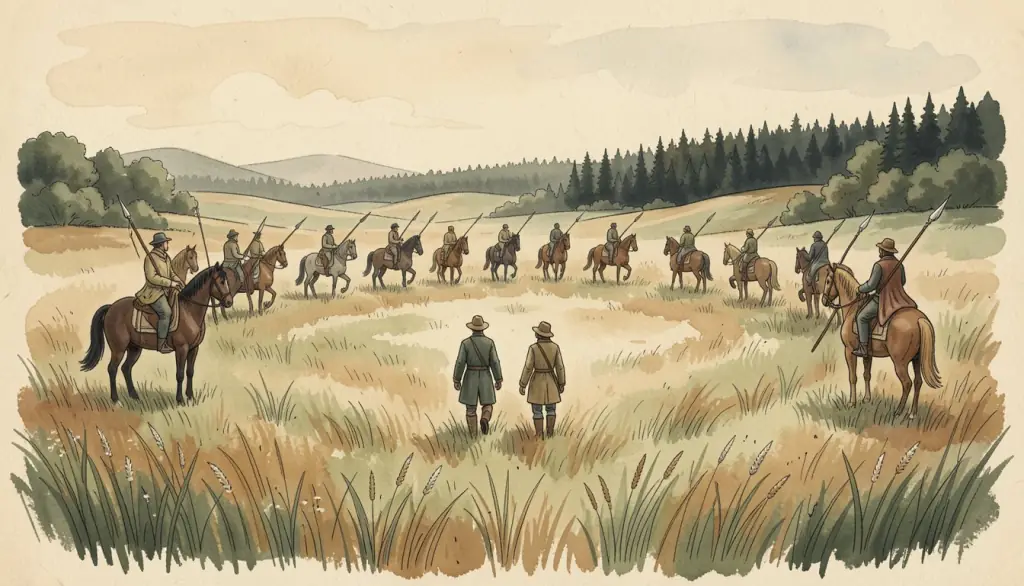
The conversation that follows is one of the best-written scenes in the book, and it is entirely about judgment.
- Éomer is suspicious. Strangers in the Mark are forbidden to wander without the king's leave, and he has been told to watch for spies of Saruman.
- He insults Galadriel, calling her a sorceress of the Golden Wood, and Gimli nearly attacks him. Only Aragorn's intervention calms them.
- Aragorn then throws back his cloak, draws Andúril and names himself as Isildur's heir. Éomer is shaken.
He asks the question that the whole book is built to answer: "How shall a man judge what to do in such times?" Aragorn replies that a man judges as he always has, because good and evil have not changed (book III, ch. 2).
Then Éomer does something remarkable. He tells them that his riders have already destroyed the Orc-band at the edge of Fangorn, and that they saw no Hobbits. He lends the hunters two horses, Hasufel and Arod, though doing so breaks his own king's law and puts his life at risk, and asks only that they bring the horses back to Meduseld. He calls Aragorn Wingfoot for his running.
Why this scene matters
It is easy to read Éomer here as a soldier who is merely impressed by a magic sword. The text is more careful than that. He has three reasons to distrust them and one to trust them: the sword, the name, and his own sense of the man in front of him. He goes with the last. Rohan's whole part in the war begins with a marshal choosing a person over a rule, and taking the punishment for it later.
Prisoner in Meduseld
When the hunters, now with Gandalf, ride to Edoras on 2 March, Éomer is not there to greet them. He is held prisoner (The Two Towers, book III, ch. 6, "The King of the Golden Hall").
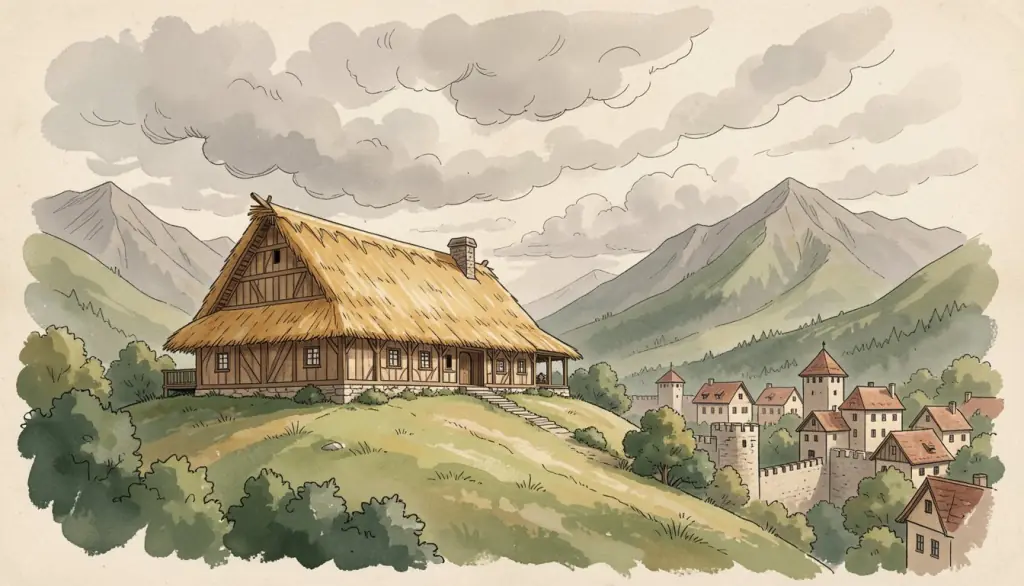
The charges, as Théoden gives them once Gandalf has broken Gríma's hold on him, are three: Éomer rode out against the Orcs without the king's command; he let strangers go free and armed; and he threatened Gríma with death in the king's hall. All three are true. Gríma used them to remove the one commander in Rohan still willing to say out loud what was happening.
Gandalf's healing of Théoden changes everything at once. Éomer is released and his sword returned, and Théoden gives him back his place. When Gríma is unmasked, it is Théoden, newly himself, who offers Wormtongue a choice and lets him go, at Gandalf's urging. The contrast is useful: Éomer has courage and honesty in full measure, while mercy is a lesson the older men teach here.
For the wizard who held Rohan's king in thrall through Gríma, see Saruman Explained. For the healing itself, see Gandalf Explained.
Helm's Deep
The Riders ride west that same day, and on the night of 3 to 4 March 3019 they are besieged in the Hornburg and the Deep behind it (The Two Towers, book III, ch. 7, "Helm's Deep").
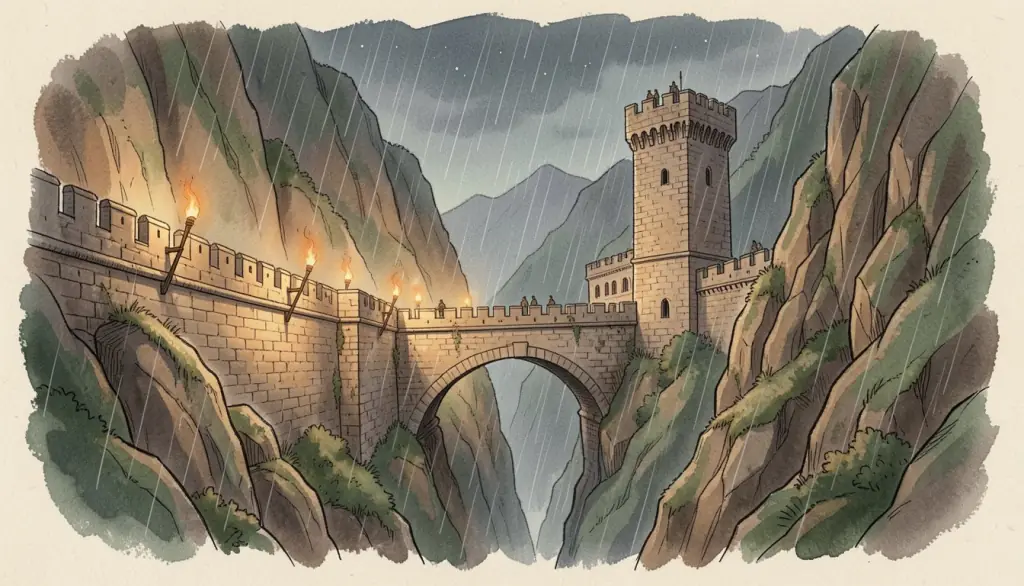
Éomer's role in the book's battle is much larger than in the film. Early in the night he and Aragorn lead a sortie from a postern to drive back the Orcs battering the great gates. In that fight two Orcs spring at Éomer from the shadows, and Gimli, who has slipped out behind them, cuts them down and saves him. Éomer thanks him, and the quarrel over Galadriel is quietly put aside. The two men who nearly fought on the grass have now saved each other's lives in turn.
His battle-cry in the chapter names his sword: Gúthwinë for the Mark. Later in the night the defenders are split. Aragorn holds the Hornburg; Éomer is cut off in the Deep, with Gimli at his side, fighting among the caves and the dike while the walls are breached.
At dawn Théoden and Aragorn ride out, Gandalf arrives with Erkenbrand of Westfold and his men, and the Huorns, the moving trees of Fangorn, swallow the fleeing Orcs. Éomer reappears in the morning with Gimli, both alive. The battle is told mostly through Aragorn and the king; Éomer is the commander in the dark, doing the hard work where nobody is watching.
The Muster and the Ride
After Isengard, the war shifts east. On 10 March, the Dawnless Day, the Muster of Rohan rides from Harrowdale under a sky darkened from Mordor (The Return of the King, book V, ch. 3, "The Muster of Rohan"). Éomer rides beside the king. He does not know that one of the Riders is his sister in disguise, carrying Merry before her.
The ride to Gondor is a long, nervous one. The Rohirrim are guided through the Stonewain Valley by Ghân-buri-Ghân and the Woses, men of the woods, and come out near the Pelennor before dawn on 15 March (book V, ch. 5, "The Ride of the Rohirrim"). Éomer is the king's second in command as the host charges down onto the fields below Minas Tirith.
The Pelennor Fields
The Battle of the Pelennor Fields is where Éomer stops being a marshal and becomes a king, in the space of a few minutes (The Return of the King, book V, ch. 6, "The Battle of the Pelennor Fields").
The charge of the Rohirrim breaks the besiegers. Then the Witch-king falls on Théoden; the king's horse Snowmane is struck down and crushes him. Dernhelm stands against the Nazgûl and, with Merry's help, destroys him; that story belongs to Éowyn Explained and the Witch-king of Angmar, and we will not retell it at length here.
What matters for Éomer is what he finds when he reaches the place. Théoden is dying. Before he dies he greets Éomer as King of the Mark and bids him take the banner. Then Éomer sees his sister lying among the dead, and he believes she is dead too.
Tolkien's description of what happens next is the most vivid portrait of grief in the book. Éomer goes white, then into a cold fury, and cries out to his men: "Death! Ride, ride to ruin and the world's ending!" He leads the remaining Riders headlong into the enemy, far ahead of the main host, with no thought of return.
The laugh on the hill
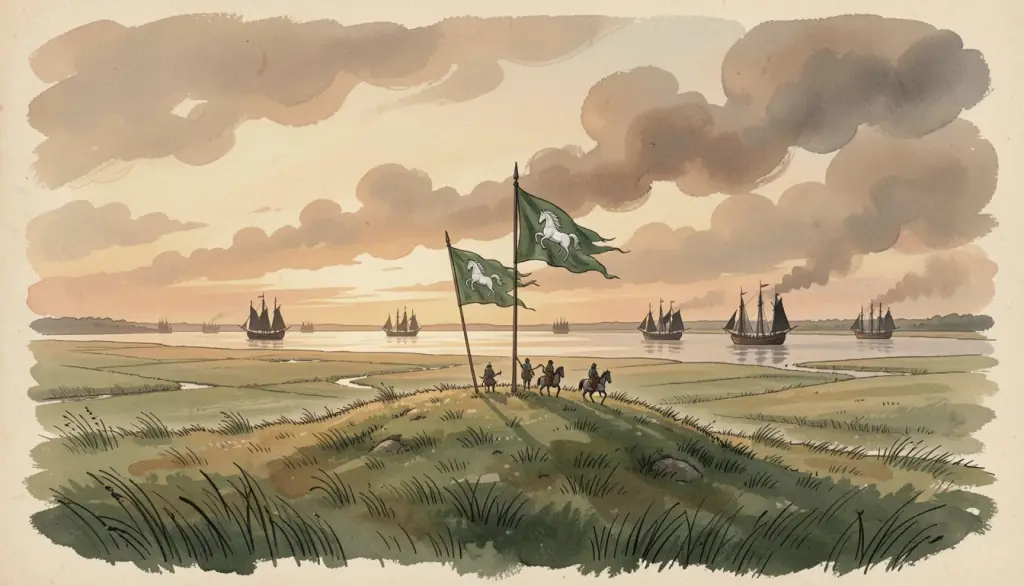
That charge takes him deep into the field, and when he looks to the river he sees a fleet of black ships coming up the Anduin. He takes them for the Corsairs of Umbar, the enemy's reinforcement. He believes the battle is lost.
What Éomer does then is the heart of his character. He does not flee. He sets his men on a hillock, plants his banner and resolves to fight there to the end. Tolkien says he laughed as he did so, and he speaks a verse of defiance that begins "Out of doubt, out of dark, to the day's rising". It is a Rider's last stand, deliberately chosen.
Then the standard breaks from the leading ship: the White Tree and the Seven Stars of Elendil. The fleet is Aragorn's. The battle turns, and Tolkien says that Éomer and Aragorn met in the midst of the battle, leaning on their swords and looking at each other, and were glad.
What Gandalf told him afterwards
That night, in the Houses of Healing, Éomer learns that his sister lives. He also hears from Gandalf something he did not want to hear (The Return of the King, book V, ch. 8, "The Houses of Healing"). Gandalf tells him, in effect, that he had horses, deeds of arms and the open fields, while she, born to a spirit no less than his, was left to tend an old man in a darkening house and to watch Gríma. Éomer had loved her and had not seen it.
He takes the rebuke without protest. It is one of the most honest moments any character in the book receives: the brave, loyal brother learning that loyalty was not the same as understanding.
Before the Black Gate
Éomer has been king for a few days when the captains of the West meet in the Last Debate (The Return of the King, book V, ch. 9). He has every reason to stay. His uncle is dead, his sister is wounded, his riders are thinned, and his own kingdom lies undefended. Gandalf's plan, to march a small host to the Black Gate as a feint for Frodo, is openly described as a road to ruin.
Éomer's answer is short. He says he knows little of such deep matters, but he does not need to. Aragorn helped him in his need; he will help Aragorn in his. He goes.
The host marches on 18 March, about seven thousand strong, and fights on the slag-hills before the Morannon until the Ring is destroyed on 25 March. Éomer and Imrahil command beside Aragorn. In our reading this is the clearest statement of the kind of king he means to be: one whose loyalty to an ally does not depend on understanding the whole plan.
King of the Mark
After the coronation of Aragorn on 1 May, Éomer returns to his own kingdom, and in July he comes back to Minas Tirith to bring Théoden home (The Return of the King, book VI, ch. 6, "Many Partings").
The funeral escort reaches Edoras, and on 10 August 3019 Théoden is laid in his mound beside the kings before him. A song is made for him by his minstrel Gléowine. At the funeral feast Éomer drinks to the memory of his uncle and is hailed as King of the Mark. There too he gives his consent to the betrothal of Éowyn and Faramir, which joins his house to the Stewards' as well as to Dol Amroth's.
Two gestures from these weeks show his character.
- Merry. Éomer makes Merry a Knight of the Riddermark, and he and Éowyn give him an ancient horn of the Mark. Appendix B later calls Merry by his Rohan name, Holdwine. The king remembers the Hobbit who stood beside Théoden when the Riders fled.
- Gimli. The old quarrel about Galadriel is settled in the same chapter. Éomer, who has now seen Galadriel, concedes her beauty but holds that Queen Arwen is fairer, and Gimli lets him have his choice with good grace. The argument that almost drew blood on the grass ends as a joke between friends; see Gimli Explained: The Dwarf of the Fellowship.
The Reign of Éomer Éadig
Appendix A gives the rest of his life in a handful of lines, and they say a great deal.
- Marriage and heir. Éomer married Lothíriel, daughter of Imrahil, and their son Elfwine the Fair succeeded him.
- A long reign. Because he came to the throne young, he reigned sixty-five years, longer than any King of the Mark before him except Aldor the Old.
- War in the far lands. Appendix A records that Éomer rode with King Elessar to war in distant lands of the East and South. The friendship that began on the grass outlasted the war.
- The Third Line. The list of the Kings of the Mark marks Éomer as the first king of the Third Line, and gives him his byname, Éadig.
The last scene comes from Appendix B's "Later Events". In Shire Reckoning 1484, Fourth Age 63, a message reached Buckland that King Éomer wished to see Master Holdwine once more. Merry, by then over a hundred, rode with Pippin to Rohan, and they were with Éomer before he died that autumn.
That is a very Rohirric ending. The great king's last wish is to see an old comrade from one morning of battle, and the comrade comes.
Éomer's Name and Language
The Rohirrim speak their own tongue, but Tolkien never shows it. He renders it with Old English, the way he renders the Common Speech with modern English; see The Rohirric Language of Rohan for the full explanation. So Éomer's names are real Old English words, not invented ones.
| Name | Language | Meaning | Where it comes from |
|---|---|---|---|
| Éomer | Old English for Rohirric | eoh "horse" + mǣre "famous" | His personal name |
| Éomund | Old English for Rohirric | eoh "horse" + mund "protection" | His father |
| Éadig | Old English for Rohirric | Blessed, fortunate | His byname in the list of kings (Appendix A) |
| Gúthwinë | Old English for Rohirric | Battle-friend, a poetic word for a sword | His sword (The Two Towers, III, 7) |
| Éored | Old English for Rohirric | eoh "horse" + rād "riding": a company of Riders | The unit he commands |
| Holdwine | Old English for Rohirric | Loyal friend | Merry's name in Rohan (Appendix B) |
| Elfwine | Old English for Rohirric | Elf-friend | His son |
| Rohan | Sindarin | Gondor's name for the land, built on roch "horse" | The kingdom he rules |
A few notes on the table.
- Gúthwinë is a word Tolkien knew from Beowulf, where the poet uses guðwine, "battle-friend", as a name for a sword. Giving Éomer a sword called that is a scholar's joke and a warrior's compliment at once.
- Elfwine has a double echo. Old English Ælfwine, "elf-friend", is the name of the English mariner Tolkien long imagined as the man who carried Elvish legends into English. And Lothíriel's house of Dol Amroth was held to have Elvish blood; Legolas recognises it in Imrahil (The Return of the King, book V, ch. 9). Éomer's son is the grandson of a prince of that house, and he is named Elf-friend.
- Rohan is not a Rohirric word. It is what Gondor calls the land, in Sindarin, from roch, "horse"; the Riders call their country the Mark. Appendix F glosses Rohirrim as "horse-lords".
The Riders also use the Common Speech with outsiders, which is why Éomer can question Aragorn on the plain. The relationship between the two tongues is covered in Westron, the Common Speech.
Books vs Films vs The Rings of Power
Karl Urban plays Éomer in Peter Jackson's The Two Towers (2002) and The Return of the King (2003). The performance catches his directness and his loyalty well, but the films rebuild his story in several places. These are film choices, not Tolkien:
- Banished, not imprisoned. In the film Gríma has Éomer banished from Edoras, and he leaves with his riders. In the book he is imprisoned in the city and released by Gandalf.
- Théodred's death. The film has Éomer find his wounded cousin and bring him back to Edoras, where he dies. In the book Théodred falls at the Fords of Isen, and Éomer does not bring him home.
- Helm's Deep. In the film Éomer is absent from the battle and arrives at dawn with Gandalf and a host of Riders. In the book he fights all night inside the defences, is saved by Gimli at the postern, and it is Erkenbrand of Westfold who comes with Gandalf.
- The quarrel with Gimli. The film keeps a flash of tension on the plain but drops the long arc, from insult to saved life to the friendly argument over Galadriel and Arwen.
- The oliphaunt. Éomer bringing down a charging Mûmak with a thrown spear on the Pelennor is a film invention.
- The laugh on the hill. The film keeps Éomer's anguished cry over Éowyn but not his last stand on the hillock or his defiant verse, so the moment when he believes all is lost and chooses to fight anyway is missing.
- His reign. Lothíriel, Elfwine, the long reign and Merry's last visit come from the Appendices and do not appear on screen.
What the films get right, in our view: his bluntness, his loyalty to Aragorn, and his grief on the Pelennor. What they lose: the book's Éomer is defined by choices, starting with lending the horses, and the films keep the action but cut several of the choices.
The War of the Rohirrim
The animated film The Lord of the Rings: The War of the Rohirrim (2024) is set in the days of Helm Hammerhand, about two and a half centuries before Éomer's birth. Éomer does not appear. Miranda Otto, who played Éowyn in the live-action trilogy, voices Éowyn as the film's narrator; she is the only link to his generation.
The Rings of Power
The Rings of Power is set in the Second Age. Rohan was founded only in Third Age 2510, by Eorl the Young (Appendix A), so Éomer, his house and his kingdom cannot appear in the show. Season 3 premiered on Prime Video on 11 November 2026, with the finale due on 25 November; see our Season 3 preview. Any claim that Éomer is in the series is confusion with another character.
How Tolkien Built Éomer
Tolkien spent his working life on Old English poetry, and Rohan is where he put it to use. Éomer is built out of that tradition, and also built to argue with it.
The first source is obvious. The Riders are a Northern heroic society: a lord in a mead-hall, companions bound to him, oaths, gifts, horses and a death in battle that is its own glory. Éomer is a young thane of that world. His cry over Éowyn and his charge "to ruin and the world's ending" come straight from its emotional register, the warrior who no longer cares whether he lives.
The second source is less obvious and more interesting. In 1953 Tolkien published The Homecoming of Beorhtnoth Beorhthelm's Son, a verse play with an essay attached about the Old English poem The Battle of Maldon. In the essay he criticises the English leader Byrhtnoth for the pride, the ofermod, that led him to give the Vikings fair ground and lose the battle and his men. Tolkien admired heroic courage and distrusted heroic vanity.
Our reading is that Éomer is written with both halves of that view in mind. His father Éomund is the cautionary case, a brave marshal who rode out with too few men and died for it. Éomer inherits the temper, and on the Pelennor he nearly repeats the mistake, charging far ahead of the host in grief. But when he does make his stand on the hill, he does it believing the battle is already lost and the ground no worse than any other; it is not pride but endurance. And the rest of his life, the long reign, the alliance, the care for old friends, is the opposite of ofermod.
The third thing Tolkien gives him is a function. Éomer is the hinge between Rohan and the larger story. He is the first Rider the reader meets, the first man of Rohan to see Andúril, and the young king who commits Rohan to the march on the Black Gate after the old king is gone. Without him the Mark would be a place the story passes through; with him it becomes a partner.
Why Éomer Matters
Éomer matters because he is the book's model of an ordinary good ruler.
Consider the other leaders of Men in the war. Aragorn is the heir of Elendil, raised by Elves and touched by prophecy. Denethor is a great and proud lord undone by his seeing-stone; see Denethor Explained. Boromir is valiant and was undone by the Ring; see Boromir Explained. Théoden is restored from a long darkness to die gloriously. Each is exceptional in some way, for good or ill.
Éomer is none of these things. He has no palantír, no prophecy, no Elvish upbringing and no wizard's plan. He has the virtues of a good officer: courage, honesty, quick judgment and loyalty. He makes mistakes; he insults Galadriel, loses his temper with Gríma and fails to see his sister's despair. He learns from each. And he ends up ruling for sixty-five years in peace and in alliance with his friend.
He also gives us a picture of how the two great kingdoms of Men actually cooperate. The Oath of Eorl, sworn when Gondor gave Calenardhon to the Éothéod (Unfinished Tales, "Cirion and Eorl and the Friendship of Gondor and Rohan"), is honoured in this war because individual men choose to honour it. Éomer's decisions on the plain, at Edoras and at the Last Debate are what that oath looks like when it is real.
Our Take
Our view, stated plainly: Éomer's most important moment in the book is not a battle. It is the conversation on the plain, when he decides to lend two horses to strangers his king would have arrested.
Look at what that decision costs and what it buys. It costs him his freedom; he is in prison when Gandalf reaches Edoras. It buys the West three companions and two horses at exactly the moment they are needed, and it buys Rohan an ally whose name Éomer does not yet fully understand. Every later scene, the healing of Théoden, the ride to Helm's Deep, the meeting of the two captains on the Pelennor, the march to the Black Gate, follows from the trust he extended on the grass.
That is also why we think the films miss something when they turn his story mainly into action: banishment, a rescue at dawn, a spear thrown at an oliphaunt. The book's Éomer is braver than that, because his courage is moral before it is physical. He asks how a man should judge in such times, and then he judges, and he lives with the consequences.
And his flaw is the one an honest book gives a good man. He did not see Éowyn. The brother who could read a stranger's heart in a few minutes could not read his own sister's over years, because she was always there. Gandalf tells him so, and he accepts it. We read Éomer as Tolkien's quiet answer to the heroic code he loved: the best Rider is not the one who rides to ruin, but the one who survives the ride, learns, and keeps faith with his friends for sixty-five years.
People Also Ask
Who is Éomer in Lord of the Rings?
Éomer son of Éomund is Théoden's nephew and foster-son and the Third Marshal of the Riddermark. He meets Aragorn, Legolas and Gimli on the plains of Rohan, fights at Helm's Deep and the Pelennor Fields, and becomes King of the Mark when Théoden dies there on 15 March 3019.
How old is Éomer in The Lord of the Rings?
He was born in Third Age 2991, so he is 27 or 28 during the War of the Ring, one of the youngest commanders in it.
How is Éomer related to Théoden and Éowyn?
Éowyn is his younger sister. Their mother Théodwyn was Théoden's youngest sister, and after both parents died Théoden raised them as his own son and daughter.
Why was Éomer arrested in The Two Towers?
On Gríma's counsel, for riding out against Orcs without leave, letting Aragorn's company go free and armed, and threatening Gríma in the king's hall. Gandalf's healing of Théoden frees him. In the film he is banished instead.
Was Éomer at Helm's Deep?
Yes, in the book he fights all night, beside Aragorn at the gates and then in the Deep with Gimli, who saves his life. In the film he arrives at dawn with Gandalf, in the place the book gives Erkenbrand.
How does Éomer become king?
Théoden is mortally wounded on the Pelennor when the Witch-king strikes down his horse, and names Éomer king as he dies. Théodred had already fallen, so Éomer was the heir. He became Éomer Éadig, first king of the Third Line.
Who did Éomer marry?
Lothíriel, daughter of Prince Imrahil of Dol Amroth. Their son Elfwine the Fair succeeded him.
When did Éomer die?
In Fourth Age 63 (Shire Reckoning 1484), after a sixty-five-year reign. Merry and Pippin rode to Rohan to see him that year and were with him before he died in the autumn.
What does the name Éomer mean?
It is Old English standing in for Rohirric: eoh, "horse", and mǣre, "famous". His byname Éadig means "blessed".
Is Éomer in The War of the Rohirrim or The Rings of Power?
No. The War of the Rohirrim is set some two and a half centuries before his birth, with Éowyn only as narrator, and The Rings of Power is set in the Second Age, before Rohan existed.
Learn the Languages Behind Middle-earth's Names
Rohan's names are Old English, but the land's own name, Rohan, and the word Rohirrim, "horse-lords", come from Sindarin, the Elvish tongue Gondor used for its places and titles. To learn the Elvish languages Tolkien actually wrote, start our free Elvish course, which teaches Sindarin and Quenya with sourced words, or try writing a name in Elvish letters with the Tengwar name tool.
Related Reading
- Characters of Middle-earth: Who's Who in Tolkien's World
- Théoden Explained
- Éowyn Explained
- Faramir Explained
- Denethor Explained
- The Language of Rohan: Rohirric and Old English
- Aragorn Explained: Strider, Thorongil and King Elessar
- Gimli Explained: The Dwarf of the Fellowship
- Boromir Explained: Son of Denethor and the Horn of Gondor
- The Witch-king of Angmar Explained: Lord of the Nazgûl
- Men of Middle-earth: Edain, Númenóreans, Gondor, Rohan and More
- Westron: The Real Common Speech of Middle-earth
People Also Ask
Who is Éomer in Lord of the Rings?
Éomer son of Éomund is the nephew and foster-son of King Théoden of Rohan and the Third Marshal of the Riddermark. He meets Aragorn, Legolas and Gimli on the plains of Rohan, fights at Helm's Deep and the Battle of the Pelennor Fields, and becomes King of the Mark when Théoden dies there on 15 March 3019 of the Third Age.
How old is Éomer in The Lord of the Rings?
Éomer was born in Third Age 2991 (Appendix A and B), so he is 27 or 28 during the War of the Ring in 3018 to 3019. He was one of the younger commanders of the war, and the youngest of the kings and lords who led the host to the Black Gate.
How is Éomer related to Théoden and Éowyn?
Éowyn is his younger sister, born in 2995. Their mother Théodwyn was Théoden's youngest sister, so Théoden is their uncle. After their father Éomund was killed by Orcs and their mother died soon after, Théoden took both children into his house and called them son and daughter (Appendix A, "The House of Eorl").
Why was Éomer arrested in The Two Towers?
In the book Éomer is held in prison at Edoras on the counsel of Gríma Wormtongue, because he had ridden out against Orcs without the king's leave, let Aragorn and his companions go free and armed, and had threatened Gríma in the king's hall. Gandalf's healing of Théoden frees him (The Two Towers, "The King of the Golden Hall"). In Peter Jackson's film he is banished instead.
Was Éomer at Helm's Deep?
Yes, in the book. Éomer fights through the night of 3 to 4 March 3019, first at the gates beside Aragorn and then cut off in the Deep with Gimli, who saves his life at the postern. In the film he is absent from the battle and arrives at dawn with Gandalf, taking the place the book gives to Erkenbrand of Westfold.
How does Éomer become king?
Théoden is mortally hurt on the Pelennor Fields on 15 March 3019 when his horse is struck down by the Witch-king. Dying, he names Éomer king. Théodred, Théoden's only son, had already fallen at the Fords of Isen, so Éomer was the heir. He was later known as Éomer Éadig and was the first king of the Third Line of the Kings of the Mark (Appendix A).
Who did Éomer marry?
Éomer married Lothíriel, daughter of Prince Imrahil of Dol Amroth, after the War of the Ring (Appendix A). Their son was Elfwine the Fair, who succeeded him as King of Rohan.
When did Éomer die?
Éomer died in Fourth Age 63, which is Shire Reckoning 1484, after a reign of sixty-five years. Appendix B records that he sent for Merry that spring, and that Merry and Pippin were with him before he died in the autumn.
What does the name Éomer mean?
Like most Rohan names, Éomer is Old English, which Tolkien used to stand for the real language of the Rohirrim. It joins eoh, "horse", with mǣre, "famous", so a fair reading is "horse-famous" or "famous for horses". His royal byname Éadig is Old English for "blessed".
Is Éomer in The War of the Rohirrim or The Rings of Power?
No. The War of the Rohirrim (2024) is set about two and a half centuries before his birth, in the days of Helm Hammerhand; Miranda Otto returns only as the voice of Éowyn, who narrates. The Rings of Power is set in the Second Age, long before Rohan existed.