The Witch-king of Angmar Explained: Lord of the Nazgûl in the Books and Films
Try It Yourself — Free Elvish Tools
Quick Answer: The Witch-king of Angmar is the chief of the nine Ringwraiths, the Lord of the Nazgûl. In the Third Age he founded the realm of Angmar and spent nearly seven centuries destroying the northern Dúnedain kingdoms that had grown out of Arnor. Defeated at Fornost in 1975, he took Minas Ithil and made it Minas Morgul, ended the line of Gondor's kings by luring Eärnur to his death, stabbed Frodo on Weathertop, and broke the gate of Minas Tirith. Éowyn and Merry destroyed him on the Pelennor Fields on 15 March 3019, fulfilling Glorfindel's prophecy that he would not fall by the hand of man. His mortal name is never given.
The Witch-king is the closest thing The Lord of the Rings has to a villain you can see. Sauron stays behind his walls; the tall Rider with a crown on no visible head walks into the story, stabs the Ring-bearer, breaks the gate of the last great city of Men and kills a king on the field. He also has a long history that most readers only meet in the appendices: a dark kingdom in the North, a war of nearly seven hundred years, a challenge that ended a royal line. This page is about him as an individual, from Angmar to the Pelennor. For the Nine as a group, their rings and their powers, see The Nazgûl Explained. For his master, see Sauron Explained, and for the only other Ringwraith Tolkien named, Khamûl the Easterling Explained.
The Witch-king at a Glance
| Kind | A mortal Man who took one of the Nine Rings and became a Ringwraith (The Silmarillion, "Of the Rings of Power and the Third Age") |
| Rank | Chief of the Nine, the Lord of the Nazgûl; Khamûl is second (Unfinished Tales, "The Hunt for the Ring") |
| Titles | Witch-king of Angmar; Lord of the Nazgûl; Lord of the Nine Riders; the Morgul-lord; the Black Captain (The Return of the King, book V) |
| Mortal name | Never recorded by Tolkien |
| Origin | Not stated. Three of the Nine were Númenórean lords (The Silmarillion, "Akallabêth"), but Tolkien does not say which |
| Realm | Angmar, north of the Ettenmoors, c. Third Age 1300 to 1975 (Appendix A) |
| Chief city | Carn Dûm in Angmar (Appendix A) |
| Later seat | Minas Morgul, formerly Minas Ithil, from Third Age 2002 (Appendix B) |
| Master | Sauron, who holds the Nine Rings in the Third Age (The Fellowship of the Ring, book II, ch. 2) |
| Mounts | A black horse in 3018; a winged steed in 3019 |
| Weapons named in the text | A long sword and a Morgul-knife at Weathertop; a great mace on the Pelennor |
| First appearance | As the leader of the five Riders at Weathertop, The Fellowship of the Ring, book I, ch. 11, "A Knife in the Dark" |
| Death | 15 March 3019, Battle of the Pelennor Fields, by Éowyn with Merry's help (The Return of the King, book V, ch. 6) |
| Films | Peter Jackson's The Lord of the Rings (2001, 2003); referred to and shown at Dol Guldur in The Hobbit trilogy (2012 to 2014) |
| The Rings of Power | Not named on screen as of mid-November 2026 |
Witch-king Timeline
"Mae govannen" — want to actually speak Elvish?
Try It Free →Dates come from Appendices A and B of The Lord of the Rings unless marked. Appendix B gives no year for Sauron's gift of the Nine, so the first row shows order, not a date. Rows about the Nazgûl as a group are included because the Witch-king led them.
| Age and year | Event |
|---|---|
| Second Age, after the fall of Eregion | Sauron gives nine rings to mortal Men (The Silmarillion, "Of the Rings of Power") |
| Second Age c. 2251 | The Nazgûl first appear |
| Second Age 3441 | Sauron is overthrown; the Nine pass into the shadows |
| Third Age c. 1300 | The Nazgûl reappear; their chief comes north to Angmar |
| Third Age 1356 | King Argeleb I of Arthedain is slain in battle with Rhudaur, which has fallen under Angmar's sway |
| Third Age 1409 | The Witch-king invades Arnor; King Arveleg I is slain; the tower on Amon Sûl (Weathertop) is destroyed |
| After Third Age 1636 | After the Great Plague, evil spirits from Angmar and Rhudaur enter the barrows of Tyrn Gorthad (Appendix A) |
| Third Age 1974 | The Witch-king overruns Arthedain and takes Fornost; end of the North-kingdom |
| Third Age 1975 | Arvedui drowns in the Ice Bay of Forochel; Battle of Fornost; the Witch-king flees and vanishes from the North; Glorfindel's prophecy |
| Third Age 1980 | The Witch-king comes to Mordor and gathers the Nazgûl |
| Third Age 2000 | The Nazgûl besiege Minas Ithil |
| Third Age 2002 | Minas Ithil falls and becomes Minas Morgul; its palantír is captured |
| Third Age 2043 | Eärnur becomes King of Gondor and is challenged by the Witch-king |
| Third Age 2050 | The challenge is renewed; Eärnur rides to Minas Morgul and is never seen again; the Stewards rule |
| Third Age 2951 | Sauron declares himself; three Nazgûl are sent to reoccupy Dol Guldur |
| Third Age 3018, 3 October | Gandalf is attacked at night on Weathertop |
| Third Age 3018, 6 October | The camp below Weathertop is attacked; Frodo is wounded |
| Third Age 3018, 20 October | Escape across the Ford of Bruinen; the Riders are swept away |
| Third Age 3019, 10 March | The Dawnless Day; the host of Minas Morgul marches out |
| Third Age 3019, 15 March | The gate of Minas Tirith is broken; the Witch-king is destroyed on the Pelennor Fields |
| Third Age 3019, 25 March | The One Ring is destroyed; the remaining Nazgûl perish |
Who the Witch-king Was
In the main story the Witch-king is almost pure presence: a shape, a cold voice, a crown, a terror. In the appendices he is a historical actor with a capital, armies and a strategy that unfolds over centuries. What joins the two is the Ring he once took. The Silmarillion ("Of the Rings of Power and the Third Age") says the Men who received the Nine became mighty kings, sorcerers and warriors who did not die, until each faded into a Ringwraith under the dominion of the One. For how the Nine Rings worked and what they did to their bearers, see The Nazgûl Explained; for the forging itself, How Was the One Ring Made?.
He stands apart from the other eight in two ways: he alone has a realm and dated deeds in the appendices, and he alone has his own narrated end, foretold more than a thousand years earlier. The others perish together, offstage, when the Ring is unmade.
Just as important is what Tolkien leaves out: where he was born, which people he came from, what he was called as a living man. The Silmarillion, in the "Akallabêth", says three of the Nine were great lords of Númenórean race. Readers often assume the Witch-king was one of them, and the idea fits his hatred of the Dúnedain, but no published text says it. On this page we treat it as a possibility, not a fact.
Relationships and Enemies
| Person | Relation | Read more |
|---|---|---|
| Sauron | His master; holds the Nine Rings in the Third Age | Sauron Explained |
| Khamûl | Second of the Nine, his lieutenant, commander at Dol Guldur | Khamûl the Easterling Explained |
| The other seven Nazgûl | His followers; never named by Tolkien | The Nazgûl Explained |
| Arvedui | Last king of Arthedain, driven out of Fornost in 1974 | This post, "Angmar" |
| Eärnur | Captain at Fornost, later King of Gondor, lost at Minas Morgul in 2050 | This post, "Minas Morgul" |
| Glorfindel | Elf-lord of Rivendell; utters the prophecy of his doom | Rivendell Explained |
| Círdan | Lord of Lindon, whose forces fought at Fornost | Círdan the Shipwright Explained |
| Elrond | Commands the flood at the Ford; removes the Morgul splinter | Elrond Explained |
| Gandalf | Fights the Nine on Weathertop; faces him at the broken gate | Gandalf and Mithrandir |
| Théoden | King of Rohan, killed under his horse when the Witch-king attacks | Men of Middle-earth |
| Éowyn | Théoden's niece; destroys him | Men of Middle-earth |
| Merry | Hobbit of the Shire; wounds him with a blade of Arnor | Hobbits of Middle-earth |
| Aragorn | Heir of Arnor; heals those struck by his Black Breath | Aragorn's Elvish Names |
Nearly every enemy in that table is an heir of the Númenórean kingdoms in exile or someone helping them. His war is aimed at one people, the Dúnedain of Elendil's line, whose story we tell in Elendil Explained and Isildur Explained.
Angmar and the Fall of Arnor
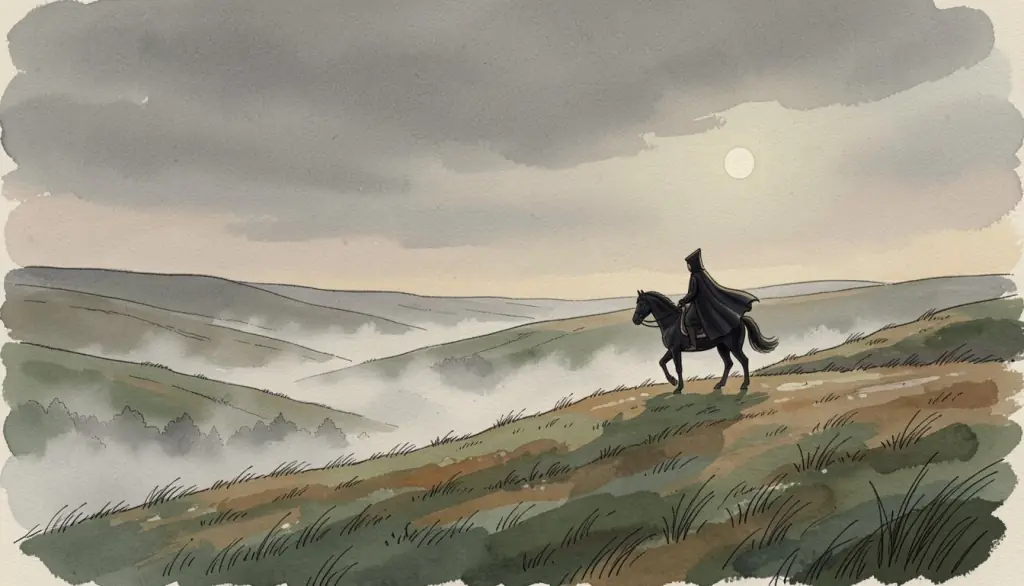
A divided kingdom. Arnor, the northern realm founded by Elendil, had split in the ninth century of the Third Age into three lesser kingdoms: Arthedain, Cardolan and Rhudaur. They quarrelled among themselves, especially over the hill of Amon Sûl, whose tower held the chief palantír of the North.
The rise of Angmar. In the days of King Malvegil of Arthedain, a new realm appeared north of the Ettenmoors, on both sides of the northern end of the Misty Mountains. Its people were evil Men, Orcs and other fell creatures, and its lord was known as the Witch-king. Appendix A adds a detail that changes how we read everything after: it was not known until later that he was in fact the chief of the Ringwraiths, who had come north with the purpose of destroying the Dúnedain of Arnor. His capital was Carn Dûm.
The long war. What followed was not one invasion but a slow strangling:
- Rhudaur fell first, under Hill-men allied with Angmar; in 1356 King Argeleb I of Arthedain was killed fighting it.
- Amon Sûl fell in 1409, when a host from Angmar invaded and King Arveleg I was slain. The palantír was saved and carried to Fornost.
- Cardolan was wasted. After the Great Plague of 1636 its Dúnedain came to an end, and evil spirits from Angmar and Rhudaur entered the empty mounds of Tyrn Gorthad. The Barrow-wights who capture Frodo are the Witch-king's legacy.
- Arthedain held on alone until 1974, when the Witch-king took Fornost and drove King Arvedui into the far north, where he drowned the next year.
From the rise of Angmar to the fall of Fornost is roughly seven hundred years. The Witch-king is not a raider but a patient strategist who outlasts generations of kings, using allies, plague and division as much as armies. In our view that patience is the most underrated part of the character.
The Battle of Fornost and Glorfindel's Prophecy
Help came too late for Arvedui but not too late to break Angmar. In 1975 a fleet from Gondor under Eärnur landed at the Grey Havens and, with Círdan's forces from Lindon and Elves from Rivendell under Glorfindel, marched on the Witch-king at Fornost (Appendix A). His army was destroyed, and he fled. Tolkien then gives two short scenes that matter for the rest of the history.
In the first, Eärnur rides after him, but his horse cannot bear the Witch-king's presence and bolts. The Witch-king laughs, and Eärnur never forgets it.
In the second, Glorfindel rides up, and the Witch-king flees into the shadows rather than face him. Eärnur wants to pursue. Glorfindel stops him, saying the Witch-king will not return to the North, that his doom is far off, and that "not by the hand of man will he fall" (Appendix A).
The prophecy is precise and modest: it does not say how he will die or when, only who will not kill him. Readers who reach the appendices after the novel suddenly see why the Pelennor scene feels inevitable as well as surprising.
Angmar did not rise again. The Witch-king vanished from the North, and five years later Appendix B places him in Mordor.
Minas Morgul and the End of Gondor's Kings
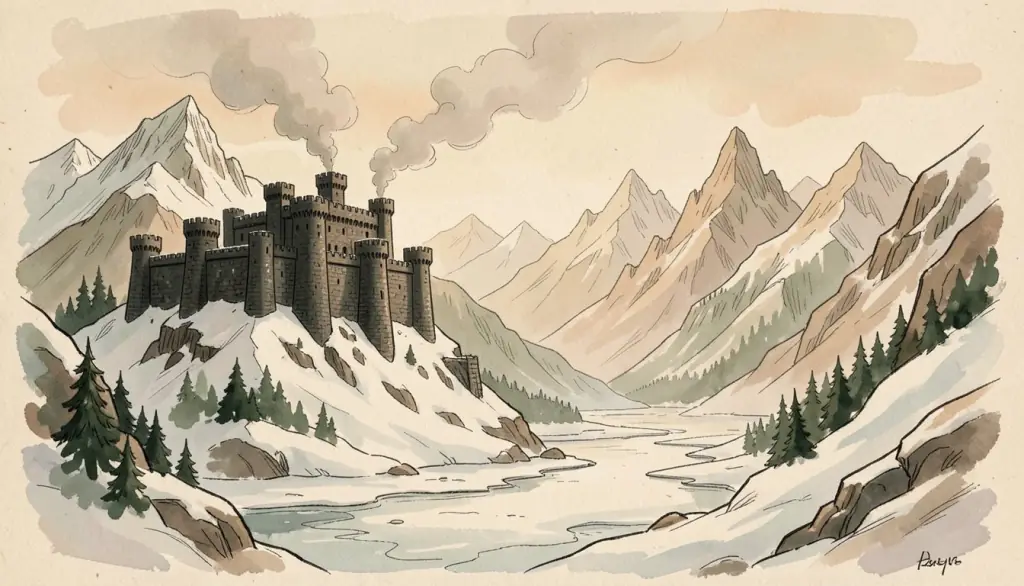
In 1980 the Witch-king came to Mordor and gathered the other Nazgûl to him (Appendix B). In 2000 they came out of Mordor and laid siege to Minas Ithil, the Tower of the Moon, the fortress Isildur had built in the Ephel Dúath on the border of Mordor. In 2002 it fell. Its palantír was captured, which later let Sauron reach Denethor and Saruman. From then on the city was Minas Morgul, the Tower of Sorcery, and its lord was the Morgul-lord.
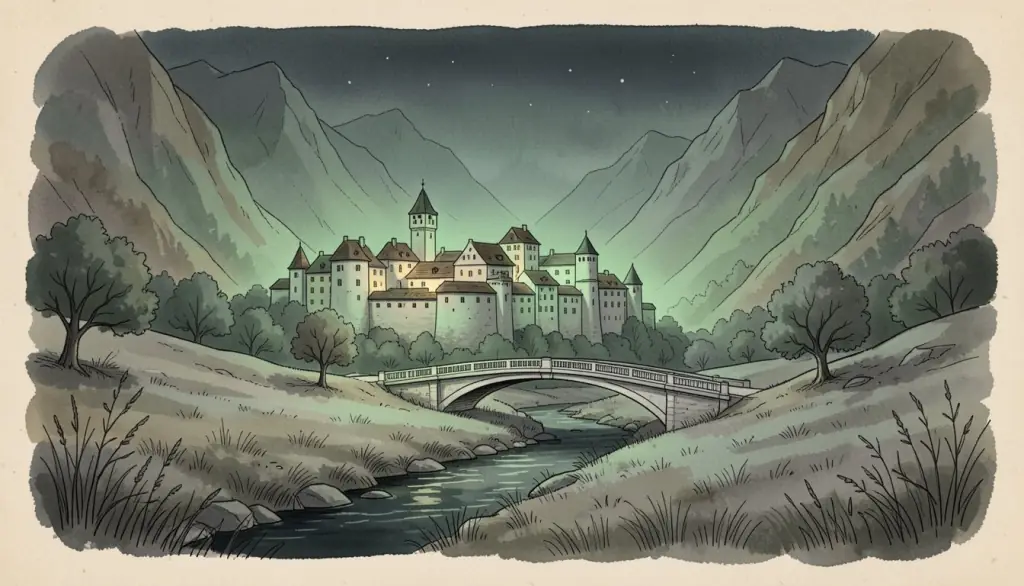
Minas Ithil had once matched Minas Anor, the Tower of the Sun, later Minas Tirith. The Witch-king now sat in its twin, turned into its opposite.
In 2043 Eärnur became King of Gondor, and the Witch-king challenged him to single combat, mocking him for not having dared to face him in the North (Appendix A). Mardil the Steward restrained the king. In 2050 the challenge came again, and Eärnur rode with a small company to Minas Morgul and was never seen again. He left no heir, and Mardil's line ruled as Stewards for almost a thousand years.
That makes the Witch-king the author of the political situation Frodo walks into. Gondor has a Steward and Arnor has no kingdom because of him. Aragorn's whole claim, as the heir of both lines, is a claim to restore what the Witch-king destroyed. When Aragorn is crowned in 3019, he is undoing the Witch-king's life's work.
The Black Riders: Weathertop and the Ford
In 3018 Sauron sent the Nine out of Minas Morgul as riders in black to find the Ring. Their detailed route is worked out in the drafts of "The Hunt for the Ring" in Unfinished Tales, which differ in detail; what follows keeps to the novel and its appendices.
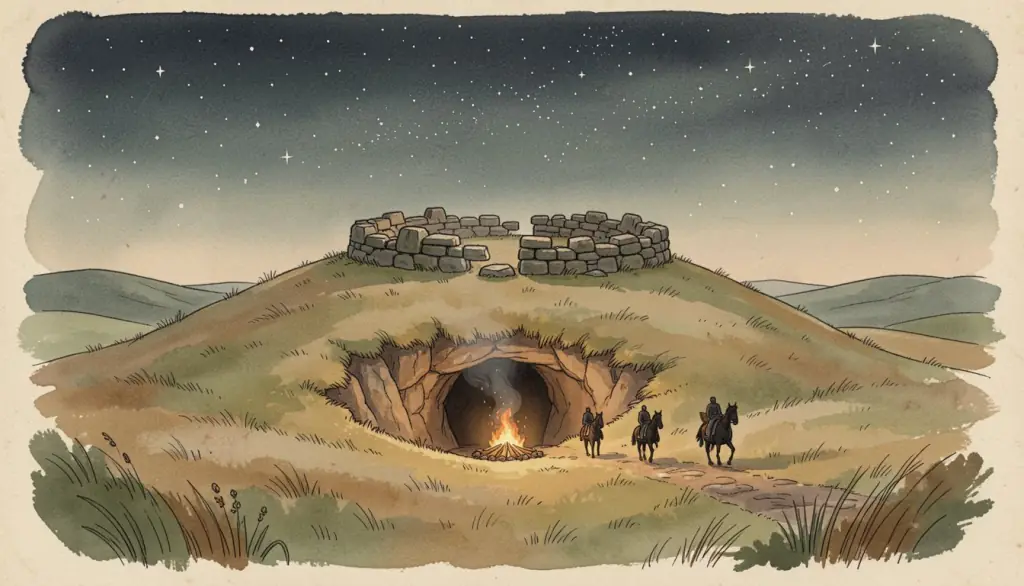
Weathertop. On the night of 3 October Gandalf was attacked by the Riders on Weathertop and fought them off before riding away to draw some of them after him (Appendix B; The Fellowship of the Ring, book II, ch. 2). Three nights later, on 6 October, Strider and the hobbits camped in a dell below the hill. Five Riders came up out of the dark ("A Knife in the Dark", book I, ch. 11). Frodo put on the Ring and saw them as they were; the tallest wore a crown and held a long sword and a knife, both glowing with a pale light. Frodo struck at the leader's feet and cried out the name of Elbereth; the leader stabbed him in the left shoulder. Strider drove the Riders back with burning brands.
The weapon was a Morgul-knife. A splinter of its blade remained in the wound and worked inward. At Rivendell Gandalf told Frodo that had it reached his heart he would have become a wraith himself, though weaker than the Nine and under the dominion of the Dark Lord ("Many Meetings", book II, ch. 1). For the cry that helped save him, see Elbereth: Meaning and Origin.
The Ford of Bruinen. Glorfindel found the party on the road and set Frodo on his white horse Asfaloth. On 20 October, at the Ford, the Nine closed in. Their leader rose in his stirrups and raised his hand, and Frodo's sword broke ("Flight to the Ford", book I, ch. 12). Then the river rose. Gandalf later explained that it was under Elrond's command, and that he added the shapes of great white horses to the waves. The Riders' horses were drowned, and the Nine had to return to Mordor without mounts.
Notice that he fails each time because of something older than himself: the name of Varda, an Elf-lord of the Blessed Realm, and a river of Rivendell. The North he once ruined still has powers in it.
The wound never fully healed. A year later Frodo was in pain on the anniversary, and Gandalf said some wounds cannot be wholly cured ("Homeward Bound", The Return of the King, book VI, ch. 7), one reason Frodo finally sails from the Grey Havens.
The Morgul Host and the Siege of Gondor
The Witch-king returned in March 3019, on a winged steed, at the head of the army Sauron sent against Gondor. On 10 March, the Dawnless Day, Frodo and Sam saw that army leave Minas Morgul ("The Stairs of Cirith Ungol", The Two Towers, book IV, ch. 8). The Lord of the Nine rode at its head. At the bridge he halted and seemed to search the valley, and Frodo felt the Ring pull at him; instead, his hand found the phial of Galadriel, and the Witch-king rode on.
The host took Osgiliath and the outer wall of the Pelennor and drove Faramir's men back to the city. During the siege, Gandalf told Denethor that the Black Captain was a king of old, the Lord of the Nazgûl, and that if words spoken long ago were true he would not fall by the hand of man ("The Siege of Gondor", book V, ch. 4). Asked whether he was a match for the Morgul-lord, Gandalf answered that it might be so, but their trial of strength had not yet come.
Before dawn on 15 March the great ram Grond broke the gate of Minas Tirith. The Witch-king rode under the arch alone, and Gandalf on Shadowfax waited for him. The Witch-king threw back his hood, and he had a kingly crown but no visible head beneath it. He mocked Gandalf as an old fool and told him this was his hour. Then a cock crowed somewhere in the city, and far off the horns of Rohan answered. The Witch-king turned away.
It is one of the most carefully staged non-fights in literature. Tolkien sets up a duel between the two greatest powers on the field and refuses to resolve it. What we learn is that the hour is not the Witch-king's after all.
The Pelennor Fields: Éowyn and Merry
The scene that follows is in "The Battle of the Pelennor Fields" (The Return of the King, book V, ch. 6), and it is the reason most people know the Witch-king's name.
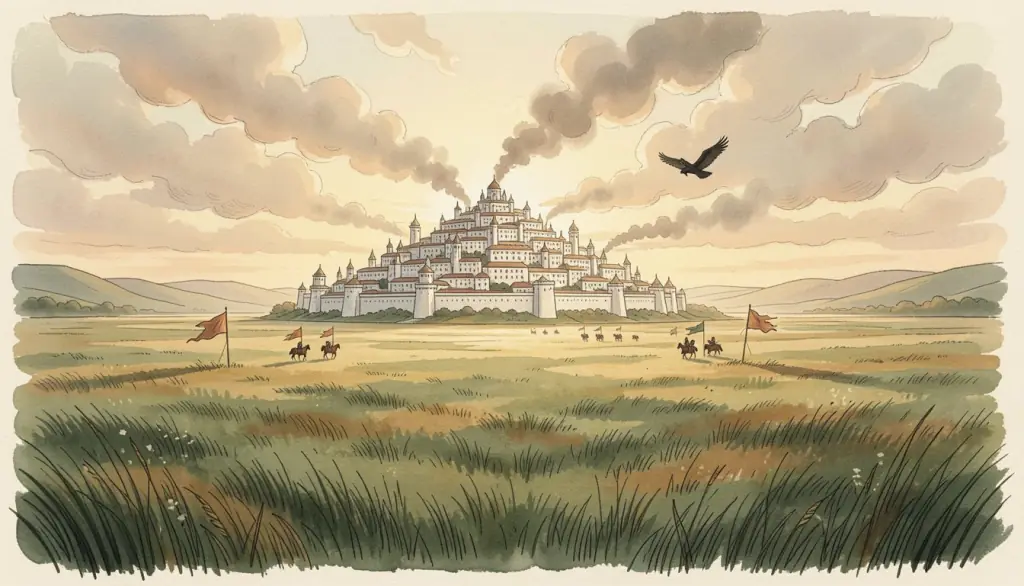
The Rohirrim broke the besiegers' lines, and Théoden rode down the chieftain of the Haradrim. Then the Witch-king came down out of the sky on his winged beast. Théoden's horse Snowmane, maddened with terror, fell and crushed the king. All the knights of the king's house fled or were thrown, except one young rider called Dernhelm, and the hobbit Merry, who had ridden behind Dernhelm into battle.
The Witch-king spoke to Dernhelm with a threat: "Come not between the Nazgûl and his prey!" He threatened to carry the rider off to the houses of lamentation beyond all darkness. Dernhelm answered with defiance, and then laughed, and revealed herself. "But no living man am I! You look upon a woman." Dernhelm was Éowyn, Théoden's sister-daughter, who had ridden to war in disguise.
The Witch-king seemed to hesitate. Éowyn struck off the head of his winged beast; he rose and smashed her shield and arm with his mace. As he raised it again, Merry, who had crept close unseen, stabbed him from behind in the sinew behind his knee. The Witch-king stumbled forward, and Éowyn drove her sword between his crown and his mantle. The sword shattered, the crown rolled away, and the mantle and hauberk fell empty. A thin wailing cry passed away on the wind.
Both of them paid for it. Éowyn's arm and Merry's were numbed by the touch of the Black Breath, and both lay near death until Aragorn healed them with athelas in the Houses of Healing (book V, ch. 8).
Why it works. The prophecy said not by the hand of man. Tolkien fulfils it through the two people on the field who were not supposed to be there: a woman forbidden to ride to war and a hobbit left behind as too small to matter. Readers often compare it with Macbeth; Tolkien's letters link his dislike of Shakespeare's Birnam Wood trick to the Ents (Letters, no. 163), but the Witch-king comparison is the readers', not his. Either way, Éowyn and Merry are not loopholes. They are exactly the people the Witch-king and everything he served had dismissed.
The Blade of Arnor
The most important detail of the Witch-king's death is easy to read past: Merry's sword. He took it from a barrow on the Barrow-downs, where Tom Bombadil gave the hobbits blades after rescuing them from the Barrow-wight ("Fog on the Barrow-Downs", The Fellowship of the Ring, book I, ch. 8). Bombadil tells them the blades were made by Men of Westernesse, foes of the Dark Lord, who were overcome by the evil king of Carn Dûm in the land of Angmar. On the Pelennor, Tolkien comes back to it. The blade was made long ago in the North-kingdom, when the Dúnedain were young and their chief enemy was the dread realm of Angmar and its sorcerer king. No other blade, Tolkien says, even in mightier hands, would have dealt that foe so bitter a wound, breaking the spell that knit his unseen sinews to his will. Then it smoked and withered away, its work done.
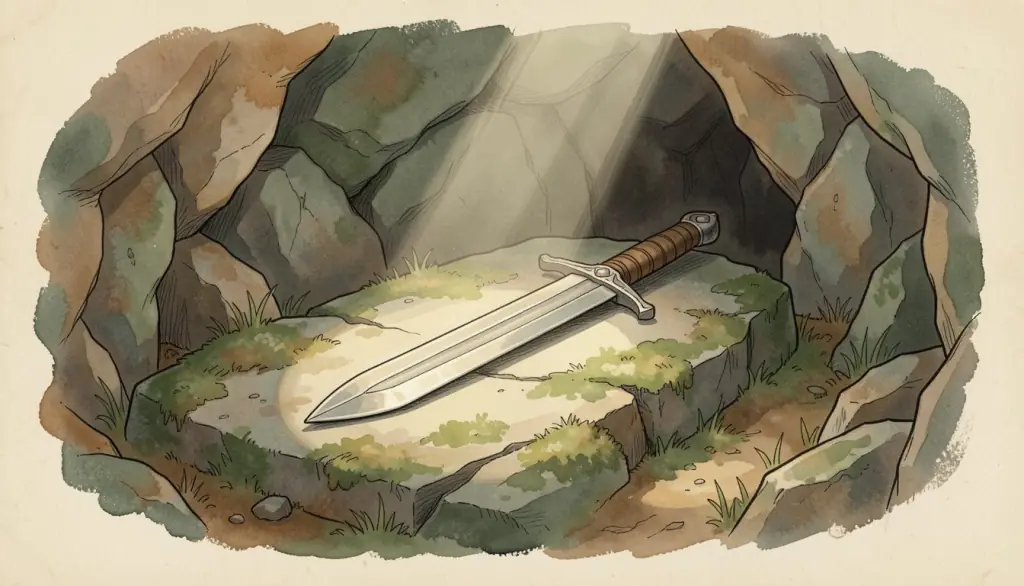
This turns the death into the last act of the war of the North. Men of Arnor forged that blade against this one enemy, and it waited in a grave in a land he himself had emptied for well over a thousand years, until a hobbit of the Shire carried it to the one moment it was made for.
Read this way, the Witch-king is not killed by luck but by the history he tried to end. Tolkien never says this in one sentence, but every piece of it is in the text.
The Name and the Language
The Witch-king has no personal name in Tolkien's published writings, and that silence is part of the character. Everything we call him is a title or a place.
"Witch-king." An English title, rendered like most of the book from Westron. Here "witch" means sorcerer, and the Elvish word for his kind of power is in the name of his later city.
Angmar. A Sindarin name. Its first element is ang, "iron", the same element as in Angband, Morgoth's "iron-prison" in the First Age. The name is widely translated "Iron-home"; we give only the element we can source directly here.
Morgul. The key Elvish word of his story. Morgul is Sindarin for black arts, sorcery or necromancy, built from mor- "black, dark" and gûl "sorcery, evil knowledge". It is in Minas Morgul, the Morgul-knife, the Morgul Vale and his title, the Morgul-lord.
Nazgûl. Not Elvish but Black Speech: nazg "ring" plus gûl, glossed "wraith". See Black Speech Words: the Orkish Vocabulary Tolkien Wrote and The One Ring Inscription Explained. The Quenya name for the Ringwraiths in The Silmarillion is Úlairi, which we give as a name without a word-for-word gloss, because its analysis is not settled.
The places of his life, read in Sindarin:
| Name | Parts | Meaning | Source |
|---|---|---|---|
| Arnor | royal + land | Royal Land, the North-kingdom he destroyed | The Silmarillion; Tolkien's letters |
| Fornost | forn "north" + ost "fortress" | Northern Fortress, capital of Arthedain | LotR; Etymologies |
| Amon Sûl | amon "hill" + sûl "wind" | Hill of Wind, Weathertop | LotR |
| Bruinen | brui "loud" + nen "water" | Loudwater, the river that swept away the Nine | LotR |
| Minas Ithil | minas "tower" + Ithil "Moon" | Tower of the Moon | LotR |
| Minas Morgul | minas + morgul | Tower of Sorcery | LotR |
| Minas Anor | minas + Anor "Sun" | Tower of the Sun, later Minas Tirith | LotR |
Much of his history is written in Elvish names of places he took or ruined, and the one name he made his own, Minas Morgul, replaced the Moon with sorcery. For the stress rules, see our Sindarin pronunciation guide; Tolkien's languages for Men are covered in Adûnaic, the Númenórean Language and Rohirric, the Language of Rohan.
Books vs Films vs The Rings of Power
The Witch-king is one of the characters adaptations have changed most, mostly by adding scenes the books never contain. Here is what is Tolkien and what is not.
Peter Jackson's The Lord of the Rings
| Moment | Tolkien's books | Jackson's films |
|---|---|---|
| Weathertop | Five Riders attack a camp in a dell below the hill; the leader stabs Frodo | The hobbits shelter in the ruins on the hilltop; the Witch-king stabs Frodo |
| The Ford | Glorfindel puts Frodo on Asfaloth; Elrond's flood, shaped by Gandalf | Arwen carries Frodo and calls the flood herself (film invention) |
| The hobbits' blades | Taken from a barrow on the Barrow-downs, made in Arnor against Angmar | The Barrow-downs are cut; Aragorn gives the hobbits swords on Weathertop |
| The gate of Minas Tirith | A standoff; horns of Rohan call the Witch-king away | Extended edition: the Witch-king shatters Gandalf's staff (film invention) |
| The challenge | "Come not between the Nazgûl and his prey!" and Éowyn's reply | The lines are shortened and rephrased |
| His death | Merry stabs behind the knee; Éowyn strikes between crown and mantle | Broadly the same staging |
| His army | He commands; Gothmog, lieutenant of Morgul, takes over only after he falls | Gothmog becomes an Orc general with a much larger role |
The cut that matters most is the barrow-blade. Without the Barrow-downs, Merry's sword has no history: on screen it is a brave stab, while in the book it is the end of a war that began around 1300.
The extended-edition staff scene answers the question Tolkien left open, in the Witch-king's favour. It is a film choice, not hidden lore.
The Hobbit films
The book of The Hobbit never mentions the Witch-king. The films bring him in by reference, and all of the following is film invention:
- A Morgul-blade brought from Dol Guldur in An Unexpected Journey, said to have been buried with the Witch-king.
- Empty tombs in the High Fells of Rhudaur in The Desolation of Smaug, where the films say the Nine were sealed.
- The Nine at Dol Guldur in The Battle of the Five Armies, fighting Elrond, Saruman and Galadriel.
None of this is in Tolkien. In the books the Witch-king was never killed and buried before the War of the Ring; he was at Minas Morgul from 2002 onward. The White Council's attack on Dol Guldur in 2941 is in Appendix B, but no Nazgûl are recorded there; Nazgûl return to Dol Guldur only in 2951. The tomb idea also misreads the Ringwraiths: they have no graves because they never died. For the Elvish lines in those films, see Elvish in The Hobbit Films.
The Rings of Power
The Rings of Power is set in the Second Age, when the Nine Rings were given out and the Nazgûl first appeared, so the Witch-king's origin falls inside the show's period. Season 2 showed the forging of the Seven and the Nine (see The Rings of Power Explained).
Season 3 premiered on Prime Video on 11 November 2026 with four episodes; episodes 5 and 6 follow on 18 November and 7 and 8 on 25 November. Its announced cast (see our Season 3 Elvish preview) includes Zubin Varla as Khamûl, and first-episode recaps report Khamûl receiving one of the Nine from Sauron. As of mid-November 2026 we found no announcement or reliable report naming any character as the Witch-king or casting the part, so anything online about him in the show is speculation.
If the show introduces him, Tolkien gives it no name, no people and no story before the Ring, so whatever it invents will be new work.
How Tolkien Built the Witch-king
The Witch-king was built in layers, and the layers explain why he feels both mythic and historical.
- The Black Rider. In the opening book of The Lord of the Rings the Riders are a menace on the road, and their leader is defined only by that role: the tallest Rider, the one with the crown, the one who stabs. He has no title yet beyond the fear he causes.
- The Lord of the Nine. In the war in the South the same figure returns as Sauron's captain, the one who can break Gondor's gate and face Gandalf, with the title of the Morgul-lord and the city of Minas Morgul.
- The history of the North. In the appendices, prepared as the book went to press, Tolkien gave him a past: Angmar, Carn Dûm, the war with Arnor, the challenge to Eärnur, the prophecy. That history explains his hatred of the Dúnedain and his nearness to the Shire, and it loads the Pelennor scene with meaning backwards.
- The chronology. Later notes, published as "The Hunt for the Ring" in Unfinished Tales, track his movements in 3018 almost day by day, and give him a lieutenant, Khamûl.
The result is a scene that works on a first reading as drama and on a second as the end of a long history. The empty helmet at the gate and the empty hauberk on the field are the same image: the Ring took everything from him except the power.
Our Take
Our view, stated plainly: the Witch-king is Tolkien's best villain because he is the only one whose defeat is earned by history rather than by heroism alone. Every famous element of the Pelennor scene, the prophecy, the barrow-blade, the woman and the hobbit, depends on something that happened centuries earlier in the North. Take away Appendix A and the scene is still thrilling. Put Appendix A back and it becomes the close of a war that lasted seventeen hundred years, fought against a single enemy by a people who refused to stop remembering.
That is why we think the most damaging change any adaptation has made is not the staff-breaking scene but the loss of the barrow-blade. The films keep the twist and drop the reason for it. If you want to see the character Tolkien built, read "Fog on the Barrow-Downs", then Appendix A's history of Arnor, then "The Battle of the Pelennor Fields", in that order. Watch for Carn Dûm in Bombadil's mouth. By the time Merry's blade burns away, you will see that the Witch-king was beaten long before he rode through the gate.
People Also Ask
Who is the Witch-king of Angmar?
He is the chief of the nine Ringwraiths, the Lord of the Nazgûl. He ruled Angmar and destroyed what was left of Arnor, then took Minas Ithil and made it Minas Morgul. He led the Black Riders, stabbed Frodo on Weathertop, broke the gate of Minas Tirith and was destroyed on the Pelennor Fields on 15 March 3019.
What is the Witch-king's real name?
Tolkien never gives it. He is known only by titles such as the Witch-king of Angmar, the Lord of the Nazgûl, the Morgul-lord and the Black Captain. Names found online come from games and adaptations.
Was the Witch-king Númenórean?
The books do not say. The Silmarillion states that three of the Nine were great lords of Númenórean race, and many readers assume he was one of them, but Tolkien never names which three.
Who killed the Witch-king?
Éowyn of Rohan, with Merry Brandybuck's help. Merry stabbed him behind the knee with a blade made in Arnor, and Éowyn drove her sword between his crown and his mantle.
What was Glorfindel's prophecy about the Witch-king?
After the Battle of Fornost in 1975, Glorfindel told Eärnur not to pursue him: his doom was far off, and he would not fall by the hand of man (Appendix A). A woman and a hobbit fulfilled it.
Why could Merry's sword hurt the Witch-king?
The blade came from a barrow on the Barrow-downs and was made in the North-kingdom by Men at war with Angmar. Its stroke broke the spell that knit his unseen sinews to his will; Tolkien says no other blade would have dealt that foe so bitter a wound.
Did the Witch-king stab Frodo?
Yes. On 6 October 3018, below Weathertop, he wounded Frodo in the shoulder with a Morgul-knife. Elrond removed the splinter at Rivendell, but the wound never wholly healed.
Could Gandalf have beaten the Witch-king?
The books never settle it. Gandalf tells Denethor their trial of strength has not yet come, and at the broken gate Rohan's horns call the Witch-king away. The staff-breaking scene is in the extended film only.
Is the Witch-king in The Rings of Power?
Not by name. As of mid-November 2026, no character had been identified as the Witch-king and no casting announced. Season 3 recaps report Khamûl receiving one of the Nine.
Is the Witch-king in The Hobbit?
Not in Tolkien's book. The films add a Morgul-blade said to be his, an empty tomb in the High Fells and the Nine at Dol Guldur, all of it invention.
Learn the Language Behind the Names
The Witch-king's story is written across a map of Sindarin names: Arnor, Fornost, Amon Sûl, Bruinen, Minas Ithil, Minas Morgul. Learn a handful of word-parts, minas, amon, forn, ost, mor, gûl, and the history reads itself. Start with our free Elvish course, which teaches Sindarin and Quenya using words Tolkien actually wrote, or see any of these names written in Elvish letters with the Tengwar name tool.
Related Reading
- Characters of Middle-earth: Who's Who in Tolkien's World
- Glorfindel Explained
- The Nazgûl Explained: The Nine Ringwraiths, the Witch-king and Their Rings
- Khamûl the Easterling Explained: The Second of the Nine Ringwraiths
- Sauron Explained
- How Was the One Ring Made? Sauron, Eregion and the Fires of Mount Doom
- The Rings of Power Explained: Elven, Dwarven and the Nine
- Elendil Explained
- Men of Middle-earth
- Rivendell Explained
- Black Speech Words: the Orkish Vocabulary Tolkien Wrote
- Lord of the Rings Appendices Guide
People Also Ask
Who is the Witch-king of Angmar?
He is the chief of the nine Ringwraiths, the Lord of the Nazgûl. In the Third Age he ruled the northern realm of Angmar and destroyed what was left of Arnor, then took Minas Ithil, which became Minas Morgul. He led the Black Riders who hunted Frodo, stabbed Frodo on Weathertop, broke the gate of Minas Tirith and was destroyed on the Pelennor Fields on 15 March 3019.
What is the Witch-king's real name?
Tolkien never gives it. The Witch-king was once a mortal Man and presumably had a name, but no published text records it. He is known only by titles such as the Witch-king of Angmar, the Lord of the Nazgûl, the Morgul-lord and the Black Captain. Names found online come from games and other adaptations.
Was the Witch-king Númenórean?
The books do not say. The Silmarillion states that three of the nine Ring-bearers were great lords of Númenórean race, and many readers assume the Witch-king was one of them, but Tolkien never names which three. It is a reasonable guess, not a stated fact.
Who killed the Witch-king?
Éowyn of Rohan, with the help of the hobbit Merry Brandybuck. Merry stabbed him behind the knee with a blade made in Arnor, breaking the spell that held his unseen body together, and Éowyn drove her sword between his crown and his mantle. Nothing was left but an empty cloak and hauberk.
What was Glorfindel's prophecy about the Witch-king?
After the Battle of Fornost in Third Age 1975, Glorfindel told Eärnur not to pursue the fleeing Witch-king, because his doom was far off and he would not fall by the hand of man. Appendix A records the words. They came true more than a thousand years later, when a woman and a hobbit brought him down.
Why could Merry's sword hurt the Witch-king?
Merry's blade came from a barrow on the Barrow-downs. The Return of the King says it was made long ago in the North-kingdom, when Angmar and its sorcerer king were the Dúnedain's chief foe. Its stroke broke the spell that knit his unseen sinews to his will, and Tolkien says no other blade, even in mightier hands, would have dealt that foe so bitter a wound.
Did the Witch-king stab Frodo?
Yes. On the night of 6 October 3018 five Riders attacked the camp below Weathertop, and their leader, the Witch-king, wounded Frodo in the shoulder with a Morgul-knife. A splinter of the blade worked toward his heart until Elrond removed it at Rivendell, and the wound troubled Frodo for the rest of his life in Middle-earth.
Could Gandalf have beaten the Witch-king?
The books never settle it. When Denethor asks whether he is a match for the Morgul-lord, Gandalf answers that it may be so but their trial of strength has not yet come. At the broken gate the horns of Rohan call the Witch-king away before they fight. The scene where the Witch-king shatters Gandalf's staff is in the extended edition of the film only.
Is the Witch-king in The Rings of Power?
Not by name. As of mid-November 2026, with Season 3's first four episodes aired, the show had not identified any character as the Witch-king and no casting for him had been announced. Season 3 recaps report that Khamûl the Easterling receives one of the Nine Rings, so the Ringwraiths' story has begun.
Is the Witch-king in The Hobbit?
Not in Tolkien's book. The Hobbit films add him by reference: a Morgul-blade said to be his, an empty tomb in the High Fells of Rhudaur, and the Nine at Dol Guldur. All of that is film invention. In Tolkien the Witch-king spends the years of The Hobbit as lord of Minas Morgul.
Related Tags
Learn Elvish Free
39 free Elvish lessons, an AI tutor, and spaced repetition review — no credit card required.
Start Learning Free