Faramir Explained: Captain of Ithilien, the Refusal of the Ring and the Steward Who Healed
Try It Yourself — Free Elvish Tools
Quick Answer: Faramir is the younger son of Denethor II, Steward of Gondor, and Captain of the Rangers of Ithilien. Born in Third Age 2983, he captures Frodo and Sam in Ithilien, learns at Henneth Annûn that Frodo carries the One Ring, and refuses it without a struggle (The Two Towers, book IV, ch. 5). Wounded and nearly burned alive by his despairing father, he is saved by Gandalf and healed by Aragorn, marries Éowyn of Rohan, and becomes Steward of Gondor and Prince of Ithilien. Peter Jackson's films changed his refusal into a temptation that drags the hobbits to Osgiliath.
Faramir at a Glance
| People | Man of Gondor, of Númenórean descent, of the House of Húrin, the line of the Stewards (LotR, Appendix A) |
| Position | Younger son of the Ruling Steward; Captain of the Rangers of Ithilien; later Steward of Gondor and Prince of Ithilien |
| Father | Denethor II, Ruling Steward of Gondor from Third Age 2984 |
| Mother | Finduilas, daughter of Adrahil, Prince of Dol Amroth; died 2988, when Faramir was five (Appendix A and B) |
| Brother | Boromir, five years older |
| Born | Third Age 2983 (Appendix B) |
| Wife | Éowyn of Rohan, sister of Éomer |
| Home after the war | Emyn Arnen in Ithilien, the ancestral hills of the House of Húrin (The Return of the King, book VI, ch. 5) |
| Teacher he chose | Gandalf, whom Gondor called Mithrandir |
| First appearance | The Two Towers, book IV, ch. 4, "Of Herbs and Stewed Rabbit" |
| Famous act | Refusing the One Ring at Henneth Annûn |
| Film actor | David Wenham (The Two Towers and The Return of the King, 2002 and 2003) |
| Rings of Power | Not in the show; he belongs to the end of the Third Age |
Faramir Timeline
"Mae govannen" — want to actually speak Elvish?
Try It Free →Dates come from Appendix B of The Lord of the Rings, except where another source is named. Tolkien gives no birthday for Faramir.
| Age and year | Event |
|---|---|
| Third Age 2050 | King Eärnur is lost; Mardil Voronwë becomes the first Ruling Steward (Appendix A) |
| Third Age 2978 | Birth of Boromir |
| Third Age 2983 | Birth of Faramir, son of Denethor |
| Third Age 2984 | Death of Ecthelion II; Denethor II becomes Steward |
| Third Age 2988 | Finduilas, Faramir's mother, dies young |
| 3018, 20 June | Sauron attacks Osgiliath; the brothers fight in its defence |
| 3018, before the assault | The dream of the Broken Sword comes to Faramir, again to him, and once to Boromir |
| 3018, 4 July | Boromir leaves Minas Tirith for Rivendell |
| 3019, 26 February | Boromir dies at Parth Galen; his horn is heard in Minas Tirith |
| 3019, 7 March | Frodo is taken by Faramir to Henneth Annûn |
| 3019, 8 March | Frodo and Sam leave Henneth Annûn |
| 3019, 10 March | The Dawnless Day; Gandalf rescues Faramir outside the gates of Minas Tirith |
| 3019, 12 to 13 March | Faramir retreats from Osgiliath and the Causeway Forts and is wounded |
| 3019, 15 March | Battle of the Pelennor Fields; Denethor dies on the pyre; Aragorn heals Faramir that night |
| 3019, 1 May | Coronation of King Elessar; Faramir hands him the crown |
| 3019, August | After Théoden's funeral at Edoras, Faramir and Éowyn are betrothed (The Return of the King, book VI, ch. 6) |
Who Faramir Is
Faramir is the younger son of the last Ruling Steward of Gondor, and he is the character in The Lord of the Rings most often described as the book's answer to its own hardest question: can a man of power refuse the Ring?
Appendix A gives the clearest portrait of him, and it is built as a contrast with his brother. Faramir resembles Boromir in looks but not in mind. He reads the hearts of men as shrewdly as his father does, but what he reads moves him to pity rather than scorn. He is gentle in bearing and loves lore and music, and for that reason many in Gondor judged his courage less than Boromir's. Appendix A says flatly that this was a mistake: Faramir simply did not seek glory in danger without a purpose (LotR, Appendix A, "The Stewards").
Two facts define him:
- He is a captain, not a duellist. He commands the Rangers of Ithilien, the hidden companies that harry the roads of the lost province east of the Anduin. His war is ambush, scouting and holding ground.
- He is Gandalf's pupil. Appendix A says he welcomed Gandalf whenever the wizard came to the City and learned what he could from him, and that this displeased Denethor. His father's sharpest insult to him, during the siege, is that he is a wizard's pupil (The Return of the King, book V, ch. 4).
Family and the House of the Stewards
| Person | Relation | Read more |
|---|---|---|
| Denethor II | Father; Ruling Steward of Gondor, dies 15 March 3019 | Denethor Explained |
| Finduilas | Mother; daughter of Adrahil of Dol Amroth, died 2988 | Appendix A |
| Boromir | Elder brother; member of the Fellowship, died 26 February 3019 | Boromir Explained |
| Imrahil | Uncle; Prince of Dol Amroth, brother of Finduilas | Appendix A |
| Éowyn | Wife; sister of Éomer, niece of Théoden | Éowyn Explained |
| Éomer | Brother-in-law; King of Rohan after Théoden | Éomer Explained |
| Théoden | Éowyn's uncle; King of Rohan, dies on the Pelennor | Théoden Explained |
| Barahir | Grandson; author of The Tale of Aragorn and Arwen | Prologue, "Note on the Shire Records" |
| Aragorn | The king to whom he hands the crown | Aragorn Explained |
The family's tragedy is set out in a few lines of Appendix A. Finduilas, a woman of the coast, withered in the stone city of Minas Tirith and died when Faramir was five. Denethor grew grimmer and more silent afterwards. He loved Boromir more than Faramir, and Appendix A says it plainly. Yet between the brothers there was great love and no jealousy, and Boromir had been Faramir's helper and protector since childhood.
Faramir grows up as the son whose gifts his father does not value, sheltered by a brother who never competes with him. When Boromir dies, he loses that shield.
The Dream of the Broken Sword
On the eve of the sudden assault on Osgiliath in June 3018, Faramir dreamed that the eastern sky darkened and a pale light lingered in the west, and a voice cried a riddling verse about the Sword that was broken, Imladris, Isildur's Bane and a Halfling (The Fellowship of the Ring, book II, ch. 2, "The Council of Elrond"). The dream came to him again, and once to Boromir.
Faramir wanted to seek out its meaning. Boromir took the errand from him, because the road was dangerous and doubtful and he would not let his younger brother face it. Faramir tells this to Frodo himself, and adds that their father let Boromir go (The Two Towers, book IV, ch. 5).
We think the casting of the dream matters. The dream is given to the brother who loves lore and listens to wizards, and it is acted on by the brother who loves arms. Tolkien never comments on it, but the outcome is plain: the man whom the dream was meant for stays in Gondor, where the Ring will eventually be brought to him, and he refuses it.
Captain of the Rangers of Ithilien
Faramir enters the story in Ithilien, the green province between the Anduin and the Mountains of Shadow that Gondor had lost to Mordor.
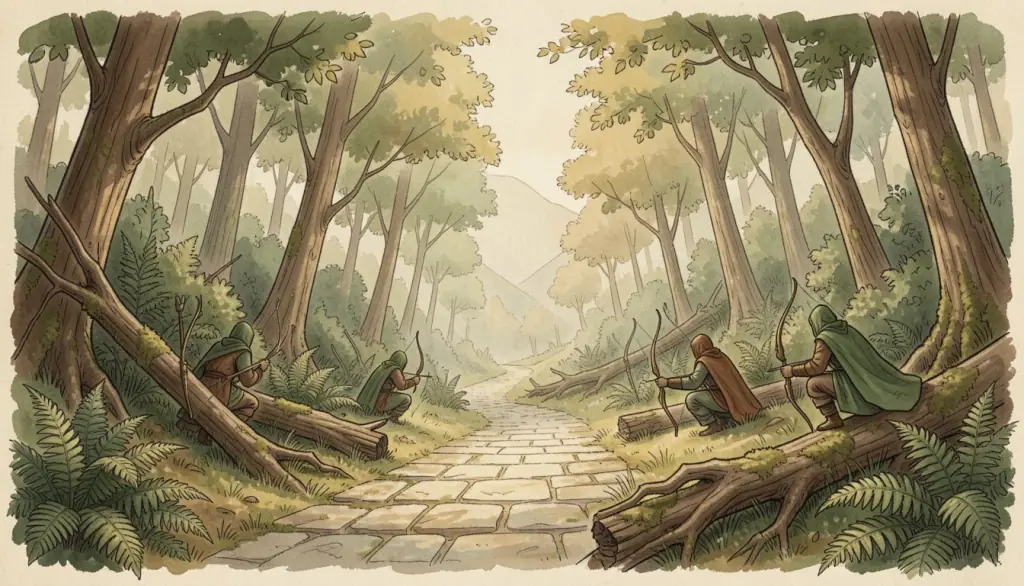
Frodo and Sam, guided by Gollum, have come down from the Black Gate toward the south. Sam has just cooked a brace of rabbits with herbs when Men in green and brown, hooded and masked, surround them (The Two Towers, book IV, ch. 4, "Of Herbs and Stewed Rabbit"). Their leader questions the hobbits closely. He is tall and grave, and Frodo sees in him a likeness to Boromir.
Faramir does not take them prisoner at once. He has an ambush to lay. A force of Southrons, Men of Harad marching to join Sauron, is passing along the road, and the Rangers fall on them. The hobbits stay hidden under guard and hear the battle. A dead Southron falls near Sam, who wonders what the man's name was. Then a mûmak, one of the great beasts of Harad, crashes through the trees and off into the wild, and Sam at last sees an oliphaunt.
After the fight Faramir questions Frodo closely about Isildur's Bane, which he knows of from the dream, and about Boromir. Then he tells Frodo that his brother is dead: he heard Boromir's horn faintly from the north, and some nights later saw a grey boat drift down the Anduin with Boromir lying in it (The Two Towers, book IV, ch. 5). He suspects Frodo, says so, and does not accuse him.
Henneth Annûn: The Window of the Sunset
Faramir takes the hobbits, blindfolded, to Henneth Annûn, the most secret refuge of the Rangers. The name is Sindarin: henneth, "window," and Annûn, "sunset, the west." Faramir calls it the Window of the Sunset, and Tolkien titles the chapter "The Window on the West" (The Two Towers, book IV, ch. 5).
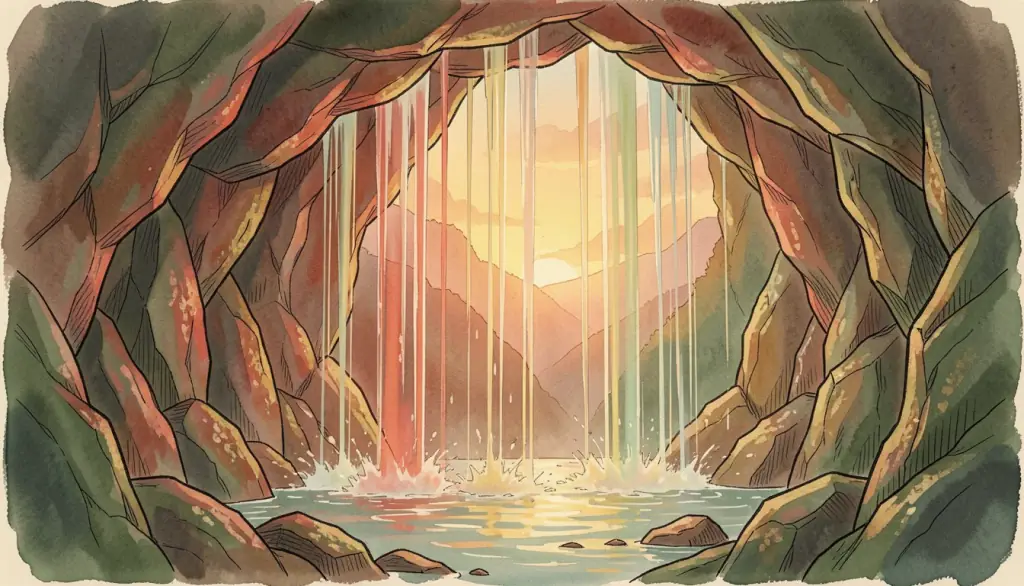
It is a cave behind a curtain of falling water, facing west. At sunset the light shines through the waterfall, and the Rangers watch it like a glass of many colours. Faramir tells Frodo that few strangers have ever seen it.
Before the evening meal, the Men of Gondor stand and face west in silence for a moment. Faramir explains that they look toward Númenor that was, beyond it to Elvenhome, and beyond that to what lies beyond Elvenhome. Faramir's Gondor still remembers what it is for.
Over the meal Faramir talks of Gondor's history, and he is unsparing about it. The kings, he says, built tombs more splendid than the houses of the living, and counted old names in their genealogies dearer than the names of their sons. Gondor, he says, has come to love war and valour for their own sake.
He also sorts Men into the High, the Middle Peoples or Men of the Twilight, among whom he counts the Rohirrim, and the Wild. For the people of Rohan and their language, see Rohirric, the Language of Rohan; for the wider picture, Men of Middle-earth.
The Refusal of the Ring
The first refusal. While questioning Frodo, before he knows what Isildur's Bane is, Faramir already guesses that it is a thing of power, perhaps a weapon of the Enemy, that his brother desired. He tells Frodo to fear no more. "I would not take this thing, if it lay by the highway," he says (The Two Towers, book IV, ch. 5). He would not take it, he adds, even if Minas Tirith were falling and he alone could save her with it.
The slip. Later that evening, Sam, defending his master and angry on Boromir's account, blurts out that Boromir wanted the Enemy's Ring. Faramir rises, tall and stern, and says softly that here is a chance for Faramir, Captain of Gondor, to show his quality: he speaks of himself in the third person.
The vow. Then he sits down. He reminds them that he already said he would not take it if he found it on the highway. Even if he were the kind of man who desired such a thing, and even though he did not know clearly what it was when he spoke, he holds those words as a vow and is bound by them. The men of Gondor, he says, are truth-speakers who boast seldom.
That is the whole temptation, and it is over in a page. Sam, delighted, tells him he has shown his quality: the very highest.
Two things about this scene matter.
- The refusal comes before the knowledge. Faramir does not resist the Ring by an effort of will at the moment of decision. He resists it because he had already decided, as a matter of principle, that he would not use the Enemy's weapons, whatever they turned out to be. The Ring's argument never gets a hearing.
- He is not indifferent to Gondor. Faramir loves his city as much as Boromir did. His own creed is put in one sentence: he does not love the sword or the warrior's glory, "I love only that which they defend" (The Two Towers, book IV, ch. 5). Because he loves Gondor rather than its power, the Ring has nothing to offer him.
For what the Ring is and why it corrupts, see How Was the One Ring Made? and Sauron Explained.
The Forbidden Pool and Gollum
The next chapter tests Faramir in a different way (The Two Towers, book IV, ch. 6, "The Forbidden Pool").
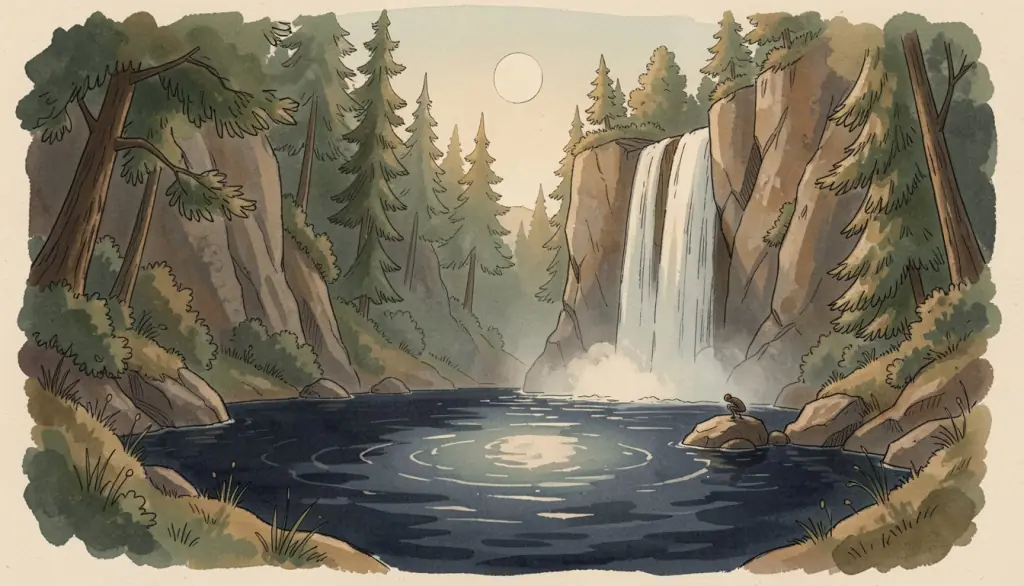
In the night Faramir wakes Frodo and shows him a creature fishing in the pool below the waterfall. It is Gollum. By the law of Gondor, anyone who finds the way to Henneth Annûn without leave must die, and Faramir's archers have Gollum in their sights. Frodo asks Faramir to spare him, saying the creature is his guide and bound to him.
Faramir lets Frodo go down and coax Gollum into the open. Gollum is seized and brought in, believing Frodo has betrayed him, a moment that matters bitterly later in the story. Faramir questions him and judges him wicked, but he yields to Frodo. He gives Gollum into Frodo's charge and declares the hobbits free in the realm of Gondor.
When Faramir learns that Gollum is leading Frodo toward Cirith Ungol, he grows grave and warns Frodo that something dark dwells there, though he does not know what.
When the hobbits leave, Faramir gives them food for the road and two staves to walk with, and sends them on with his blessing (The Two Towers, book IV, ch. 7, "Journey to the Cross-roads"). For the creature he spared, see Gollum and Sméagol Explained.
Return to Minas Tirith and Denethor
Faramir's next appearance is told through Pippin's eyes, in The Return of the King, book V, ch. 4, "The Siege of Gondor."
On 10 March, the Dawnless Day, a small company of riders flees toward the gates of Minas Tirith across the Pelennor, hunted by the Nazgûl on their winged steeds. Pippin, on the walls, sees one rider still keeping his men together. Then a white light rides out from the city: Gandalf, raising his hand, drives the Nazgûl back, and the riders reach the gate. The man at their head is Faramir.
Faramir reports to his father and to Gandalf, who hears the name Cirith Ungol with fear. Denethor hears the rest with anger. He tells Faramir that he should have brought the thing to Minas Tirith, to be kept hidden and used only at the uttermost end. Faramir asks whether his father wishes their places had been exchanged, so that Boromir had lived and he had died. Denethor says yes: Boromir was loyal to him, and no wizard's pupil. Boromir, he says, would have brought him a mighty gift.
Gandalf answers that Boromir would not have brought the Ring but kept it, and that Denethor would not have known his son when he returned. We think this is the hinge of the whole family story. Denethor wanted a son who would bring him the Ring. The one son who could have resisted it is the one he despises for resisting it.
Denethor then sends Faramir back to Osgiliath, to hold the river crossings against an attack he knows is hopeless. Faramir goes. He asks his father to think better of him if he returns; Denethor answers that it depends on how he returns.
Wounded on the Pelennor
The defence of the river fails. On 12 March Faramir is driven back from Osgiliath to the Causeway Forts on the Rammas Echor, the great wall around the Pelennor. On 13 March the wall is breached and the retreat becomes a rout (Appendix B; The Return of the King, book V, ch. 4).
Faramir holds the rearguard. He is wounded in the retreat and falls, and Prince Imrahil of Dol Amroth, his uncle, carries him back to the city across his saddle. He lies in fever, stricken by the Black Breath that comes from the Nazgûl, and does not wake.
Denethor sits by his bed and breaks, driven by grief and by what the palantír, showing only what Sauron wishes, has let him see. For the Nazgûl who lead the assault, see The Witch-king of Angmar and Nazgûl Explained.
The Pyre of Denethor
On 15 March, while the Battle of the Pelennor Fields rages outside, Denethor orders his servants to carry Faramir to Rath Dínen, the Silent Street, and into the House of the Stewards among the tombs. He has a pyre built there and means to burn himself and his son together, as the heathen kings did before ships ever came from the West (The Return of the King, book V, ch. 4 and ch. 7, "The Pyre of Denethor").
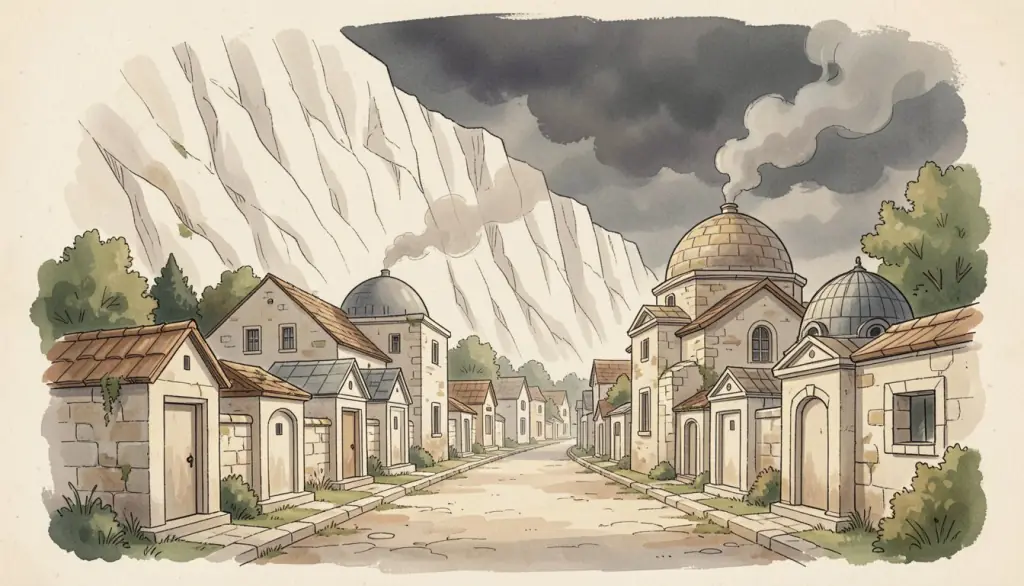
Pippin, released from his service, runs for help. He finds Beregond, a man of the Guard of the Citadel, who leaves his post, which is a grave offence in Gondor, and goes down to Rath Dínen to stop the burning. Beregond holds the door of the house against Denethor's servants and kills some of those who try to carry out the order. Pippin goes on to find Gandalf, who turns from the battle at the gate and comes.
Gandalf enters the House of the Stewards, takes Faramir from the pyre and bears him out. Denethor, at the last, reveals the palantír he has used, says that the West is lost, and lays himself on the pyre with the stone in his hands. The house burns with him in it. Faramir, unconscious throughout, does not see his father die.
For the full account of Denethor's fall, see Denethor Explained.
The Houses of Healing
That night Aragorn comes into the city in secret, under a grey Ranger's cloak, to the Houses of Healing (The Return of the King, book V, ch. 8, "The Houses of Healing"). Three of his friends lie there under the Black Breath: Faramir, Éowyn and Merry.
The healers do not know the herb Aragorn asks for. Athelas, kingsfoil, is to them a sweet-smelling weed with an old rhyme attached. Aragorn crushes its leaves into steaming water, and the scent fills the room. He calls Faramir by name.
Faramir wakes, looks at Aragorn and knows him at once. His first words are among the most quoted in the book: "My lord, you called me. I come. What does the king command?" (The Return of the King, book V, ch. 8). Aragorn tells him to rest, eat and be ready.
The old wise-woman Ioreth remembers a saying of Gondor, that the hands of the king are the hands of a healer, and the rumour goes through the city that the king has come. In the book, then, Faramir is one of the first in Gondor to name Aragorn king, and he does it before any crown or proclamation. The Steward's son recognises the king by his deed. For the herb and the rest of that night, see Aragorn Explained.
Faramir and Éowyn
While the Host of the West marches to the Black Gate, Faramir and Éowyn are both kept in the Houses of Healing, and Tolkien gives their story a whole chapter (The Return of the King, book VI, ch. 5, "The Steward and the King").
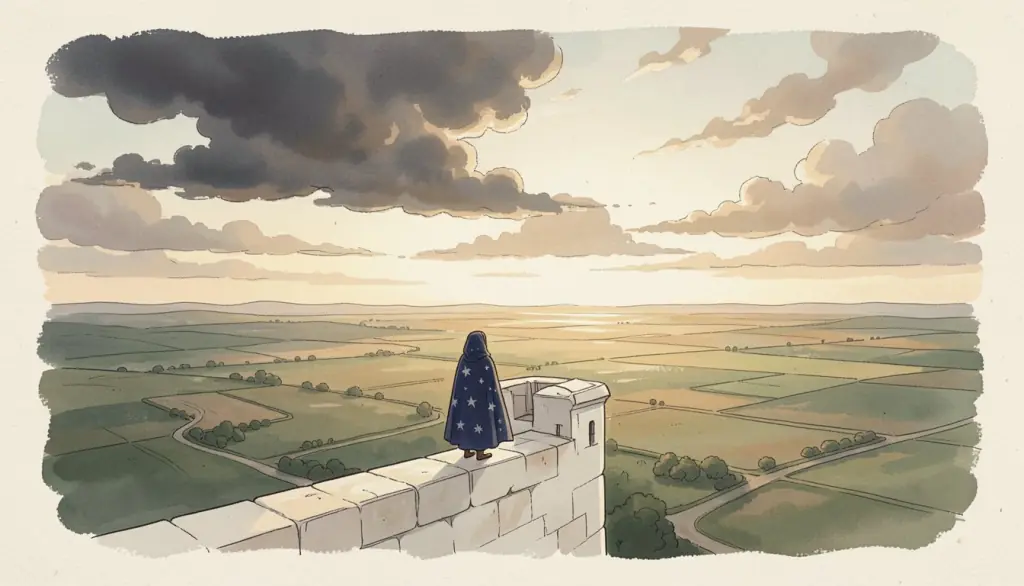
Éowyn asks the Warden of the Houses to let her ride to war, and he sends her to Faramir, who is now Steward. Faramir sees her grief and pride and does not argue with them. He asks her to walk with him in the garden, so that he may look at her and so be less troubled while they wait. She agrees.
They walk on the walls in the days that follow. The air is cold, and Faramir gives her a deep blue mantle set with silver stars that had belonged to his mother Finduilas. They stand together looking east, toward the Black Gate where the Host has gone.
When the end comes, a great eagle flies to the city with the news that Sauron's realm has fallen and the king will come. Faramir tells Éowyn that the moment reminds him of Númenor and of the great dark wave that drowned it, which comes to him in dreams. Yet he does not believe, he says, that any darkness will endure.
Éowyn's heart changes. She lays aside her wish to die in battle and says she will be a healer and love all things that grow. Faramir tells her that he loves her and will wed with the White Lady of Rohan.
Two people judged less than they are by the men they served meet in a house of recovery, and choose life. For Éowyn's side of it, and her deed on the Pelennor, see Éowyn Explained.
Steward and Prince of Ithilien
On 1 May 3019 Aragorn is crowned before the gates of Minas Tirith, and Faramir conducts the ceremony (The Return of the King, book VI, ch. 5).
As Steward, Faramir goes out to meet the king and offers him the white rod of his office. Aragorn gives it back, saying that the office is not ended and shall be Faramir's and his heirs' as long as Aragorn's line lasts. Faramir then presents Aragorn to the people as the heir of Isildur. The crown of Eärnur is brought from the tomb, and Aragorn asks that Frodo should bring it to him and Gandalf set it on his head.
Afterwards Aragorn names Faramir Prince of Ithilien, with his dwelling in the hills of Emyn Arnen. The choice has history in it: Appendix A records that the House of the Stewards descended from Húrin of Emyn Arnen. The Stewards return to their ancestral hills, in the province Faramir once defended as a hidden captain.
Beregond, whose life was forfeit by law for leaving his post and shedding blood in the Hallows, is sent out of the City to be captain of Faramir's guard, the White Company, in Ithilien: a punishment that is also a reward.
In August, after Théoden's funeral at Edoras, Éomer betroths his sister to Faramir, and Faramir and Éowyn make their home in Ithilien (The Return of the King, book VI, ch. 6, "Many Partings"). The Prologue's "Note on the Shire Records" adds one more detail of the family's future: The Tale of Aragorn and Arwen was written by Barahir, grandson of the Steward Faramir.
Faramir's Name and Language
Faramir spoke the Common Speech of Gondor in daily life, but like the rest of his house he bore a Sindarin name, a mark of descent from the Númenóreans who were Elf-friends. His Rangers use Sindarin place-names for everything around them. Our guide to Westron, the Common Speech explains how the two languages divide the labour in Gondor.
What the name means. Tolkien printed no meaning for Faramir in The Lord of the Rings. One part is certain: the ending -mir is Sindarin mîr, "jewel, precious thing, treasure" (The Etymologies), the same ending as in Boromir. The first part is not settled. A common suggestion connects it to the Elvish hunting root seen in Quenya fara-, "to hunt," and Sindarin faroth, "hunting," which would make a name like "jewel of the hunt," apt for a Ranger. That is a modern reconstruction from Tolkien's vocabulary, not his gloss, and we flag it as such because name sites often print it as fact.
A second Faramir. The name did not stay in Gondor. Pippin, who served Denethor and stood by Faramir's pyre, named his own son Faramir, and Faramir Took married Goldilocks, daughter of Samwise Gamgee (LotR, Appendix C, family trees). A Steward's name entered the Shire through friendship.
How to say it. By the stress rule in Appendix E, a name whose second-to-last syllable is short and open takes the stress on the syllable before. Faramir is stressed on the first syllable: FA-ra-mir, as Boromir is BO-ro-mir.
Words from Faramir's world, with sources:
| Word or name | Meaning | Source |
|---|---|---|
| Henneth Annûn | Window of the Sunset | LotR |
| henneth | window | LotR |
| Annûn | sunset, the west | LotR; Etymologies |
| Ithilien | Land of the Moon, from Ithil "moon" | LotR |
| Minas Tirith | Tower of Guard | LotR |
| Minas Anor | Tower of the Sun, the city's older name | LotR |
| Osgiliath | Citadel of the Stars | LotR |
| Rath Dínen | the Silent Street | LotR |
| athelas | kingsfoil, a healing herb | LotR |
| mîr | jewel, treasure | Etymologies |
| arandur | steward, literally king's servant (Quenya) | Unfinished Tales; Letters |
To see any of these names in Elvish letters, try our Tengwar name tool.
Books vs Films vs The Rings of Power
David Wenham plays Faramir in Peter Jackson's The Two Towers (2002) and The Return of the King (2003). Wenham's quiet, wounded performance captures a great deal of the book's character, especially his relationship with his father. But the films change the central fact of his story, and that change should not be mistaken for Tolkien.
How the films changed his refusal of the Ring:
- In the book, Faramir says he would not take the Ring before he knows what it is, and once he learns it, he keeps that word at once. The hobbits leave Henneth Annûn free the next morning with food and his blessing. There is no struggle.
- In the film, Faramir learns that Frodo carries the Ring and decides that it will go to Gondor, to his father. He takes Frodo, Sam and Gollum as prisoners across the river to Osgiliath. None of that journey is in the book.
- The Nazgûl at Osgiliath. In the film a Nazgûl on a winged steed attacks Osgiliath while Frodo is there, and Frodo, nearly overcome, almost offers the Ring to it before Sam pulls him away. Sam then gives a speech about the stories that matter. The scene is invented; in the book Frodo never comes near Osgiliath.
- The release. Only after this does film Faramir let the hobbits go, accepting that he will answer to his father for it. In the book he never considers taking them to Denethor at all.
Our reading of the change: the film needed the Ring to remain an active threat in the middle film, and it gave the role to the only new Man available. The cost is large. Book Faramir proves that the Ring can be refused by someone who simply decided in advance not to deal in the Enemy's tools. Film Faramir is tempted, struggles and repents, which makes him a second Boromir. The book uses the two brothers to show opposite choices; the film shows the same choice twice with different endings.
Other film changes: the extended Two Towers adds an Osgiliath flashback in which Denethor openly favours Boromir and sends him north, where in the book Boromir claims the errand himself; The Return of the King turns Faramir's fighting retreat into a doomed cavalry charge on Osgiliath; Denethor runs burning from the pyre and falls from the citadel, where in the book he lies down on it with the palantír; and Aragorn's healing of Faramir with athelas, with his first words naming the king, is not shown. The extended edition gives Faramir and Éowyn a brief scene in the Houses of Healing, but the courtship of "The Steward and the King" is not told.
The Rings of Power and The War of the Rohirrim
The Rings of Power is set in the Second Age, thousands of years before Faramir's birth in Third Age 2983. Faramir, Boromir and Denethor have not appeared in Seasons 1 to 3, and no casting for any of them has been announced. Season 3 premiered on Prime Video on 11 November 2026, with episodes running to a finale on 25 November; see our Season 3 preview.
The Lord of the Rings: The War of the Rohirrim (2024) is set in the time of Helm Hammerhand, more than two centuries before Faramir's birth, so he cannot appear in it either.
How Tolkien Built Faramir
Faramir was not part of Tolkien's plan. In a letter to his son Christopher in May 1944, Tolkien wrote that a new character had come on the scene whom he had not invented or even wanted, though he liked him: "there he came walking into the woods of Ithilien" (Letters, no. 66).
Later Tolkien went further. In a draft letter of 1956 he wrote that, as far as any character is like him, it is Faramir, except that he himself lacked what all his characters possess, courage (Letters, no. 180). He also gave Faramir his own recurring dream of the great wave (Letters).
1. He is Boromir's answer. Same father, same city, same war, same Ring. Tolkien places the two brothers on either side of the volume break and lets one reach and the other refuse.
2. His virtue is honesty, not strength. Faramir does not out-will the Ring. He has made a rule about what kind of man he will be, said it aloud, and kept it.
3. He is judged by the wrong father. Denethor values exactly what Faramir lacks and despises exactly what Faramir has. The man who might have kept the Ring at the end is preferred over the man who refused it. Tolkien gives the Steward's despair a specific shape: it is a failure to see which of his sons was the stronger.
Why Faramir Matters
Faramir matters because he is the strongest evidence in The Lord of the Rings that the Ring is not irresistible.
The book's other refusals belong to the great, like Gandalf and Galadriel, or the humble, like Sam. Faramir is neither: he is an ordinary mortal captain with real power, a city in danger and a father who would reward him for bringing it home. He has every motive Boromir had, and he says no.
He also matters to the plot. By letting Frodo go, Faramir allows the quest to continue; by sparing Gollum, he keeps alive the creature without whom the Ring would never have been destroyed. His mercy at the Forbidden Pool echoes Bilbo's pity in the Misty Mountains, and like it, it pays off at Mount Doom.
Our Take
Our view, stated plainly: the film's change to Faramir is the most consequential change in Jackson's trilogy, and it is a loss, not just an alteration.
Tolkien built the brothers as a controlled experiment: same blood, same pressures, opposite choices. The point of the experiment is that the outcome was not fixed. Boromir's fall was his own, and so was Faramir's refusal. When the film makes Faramir struggle and relent, it turns that into a law: every Man is drawn in, and the only question is whether he recovers in time. That is a darker and less interesting book than the one Tolkien wrote.
We also think readers overlook what Faramir's refusal is made of. It is not heroism in the moment. It is a decision made earlier, in calm, about what he would never do, and then kept when keeping it was costly. Most people will never face a Balrog, but everyone eventually meets a promise made in ignorance that turns out to be expensive. Faramir says, in effect, that the promise still counts. We find that more admirable than any charge on Osgiliath.
People Also Ask
Who is Faramir in Lord of the Rings?
Faramir is the younger son of Denethor II, Steward of Gondor, and Boromir's brother. He commands the Rangers of Ithilien, refuses the One Ring at Henneth Annûn, is healed by Aragorn after the siege, marries Éowyn and becomes Steward and Prince of Ithilien.
How old is Faramir in The Lord of the Rings?
He was born in Third Age 2983, so he is about thirty-five or thirty-six when he meets Frodo and Sam in March 3019. He is five years younger than Boromir.
Does Faramir try to take the Ring in the book?
No. He says he would not take it if it lay by the highway, before he knows it is the Ring, and when Sam reveals the truth he keeps that word as a vow and lets Frodo go free.
Why did the movie change Faramir?
In the 2002 film he decides to take the Ring to his father and brings the hobbits to Osgiliath before releasing them. That journey and the Nazgûl attack there are not in the book, and the change removes the point that Faramir refuses at once.
What is Henneth Annûn?
The Window of the Sunset: a hidden Ranger refuge in a cave behind a westward-facing waterfall in Ithilien. Faramir brings Frodo and Sam there on 7 March 3019 and refuses the Ring there.
How did Faramir survive Denethor's pyre?
Pippin ran for help, Beregond held the door of the House of the Stewards against Denethor's servants, and Gandalf lifted Faramir from the pyre. Denethor burned himself alone.
Who does Faramir marry?
Éowyn of Rohan, sister of Éomer and niece of Théoden. They meet in the Houses of Healing after the Battle of the Pelennor Fields and settle in Ithilien.
What happens to Faramir after the War of the Ring?
He hands the crown to Aragorn on 1 May 3019, is confirmed as hereditary Steward, is made Prince of Ithilien with his seat in Emyn Arnen, and marries Éowyn. A grandson, Barahir, later writes The Tale of Aragorn and Arwen.
What does the name Faramir mean?
Tolkien printed no meaning. The ending -mir is Sindarin for jewel. A link of the first part to the hunting root (Quenya fara-, Sindarin faroth) is a common reconstruction, not Tolkien's gloss.
Is Faramir in The Rings of Power?
No. The show is set in the Second Age, long before his birth, and he has not appeared in Seasons 1 to 3. No casting for him has been announced.
Learn the Language of Ithilien
Faramir spoke the Common Speech, but the places of his life are Sindarin: Ithilien, Henneth Annûn, Osgiliath, Rath Dínen, Minas Tirith. To learn the language behind those names, start with our free Elvish course, which teaches Sindarin and Quenya using words Tolkien actually wrote.
Related Reading
- Characters of Middle-earth: Who's Who in Tolkien's World
- Boromir Explained: Son of Denethor and the Horn of Gondor
- Denethor Explained
- Éowyn Explained
- Aragorn Explained: Strider, Thorongil and King Elessar
- Gandalf's Elvish Name: Mithrandir
- Frodo Baggins Explained
- Samwise Gamgee Explained
- Gollum and Sméagol Explained
- Men of Middle-earth
- Nazgûl Explained
People Also Ask
Who is Faramir in Lord of the Rings?
Faramir is the younger son of Denethor II, the Ruling Steward of Gondor, and the brother of Boromir. He commands the Rangers of Ithilien, captures Frodo and Sam in March 3019, refuses the One Ring at the hidden refuge of Henneth Annûn, is gravely wounded in the defence of Minas Tirith, is healed by Aragorn, marries Éowyn of Rohan and becomes Steward of Gondor and Prince of Ithilien.
How old is Faramir in The Lord of the Rings?
Faramir was born in Third Age 2983 (Appendix B), so he is about thirty-five or thirty-six when he meets Frodo and Sam in Ithilien in March 3019. He is five years younger than his brother Boromir, who was born in 2978.
Does Faramir try to take the Ring in the book?
No. In The Two Towers, book IV, chapter 5, Faramir says he would not take the thing Frodo carries even if it lay by the highway, and he says it before he knows it is the Ring. When Sam lets slip the truth, Faramir treats his earlier words as a vow and lets Frodo go free with it.
Why did the movie change Faramir?
In Peter Jackson's The Two Towers (2002), Faramir decides to take the Ring to his father and drags Frodo, Sam and Gollum to Osgiliath before letting them go. That journey and the Nazgûl attack there are not in the book. The change gives the film another scene of the Ring's pull, but it removes the book's point that Faramir refuses it at once.
What is Henneth Annûn?
Henneth Annûn, Sindarin for the Window of the Sunset, is a hidden refuge of the Rangers of Ithilien: a cave behind a waterfall facing west. Faramir takes Frodo and Sam there on 7 March 3019, and it is there that he learns of the Ring and refuses it (The Two Towers, book IV, chapter 5).
How did Faramir survive Denethor's pyre?
Denethor carried his fevered son to the House of the Stewards in Rath Dínen to burn them both. Pippin ran for help, Beregond of the Guard held the door against Denethor's servants, and Gandalf arrived and lifted Faramir from the pyre. Denethor then burned himself alone (The Return of the King, book V, chapter 7).
Who does Faramir marry?
Faramir marries Éowyn, sister of Éomer and niece of King Théoden of Rohan. They meet in the Houses of Healing in Minas Tirith after the Battle of the Pelennor Fields, and Éomer gives his consent at Edoras after Théoden's funeral. They live in Ithilien, in the hills of Emyn Arnen.
What happens to Faramir after the War of the Ring?
At the coronation on 1 May 3019 Faramir, as Steward, hands the crown to Aragorn. Aragorn confirms the stewardship as hereditary in his house and makes him Prince of Ithilien, with his seat in Emyn Arnen. He marries Éowyn, and the Prologue names a grandson, Barahir, who wrote The Tale of Aragorn and Arwen.
What does the name Faramir mean?
Tolkien printed no meaning for Faramir in The Lord of the Rings. The ending -mir is Sindarin for jewel or treasure. The first element is uncertain; one common suggestion links it to the Elvish hunting root seen in Quenya fara-, to hunt, and Sindarin faroth, hunting, but that reading is a reconstruction, not a gloss Tolkien gave.
Is Faramir in The Rings of Power?
No. The Rings of Power is set in the Second Age, thousands of years before Faramir's birth in Third Age 2983. He has not appeared in Seasons 1 to 3, and no casting for him has been announced.