Aragorn Explained: Strider, Thorongil and King Elessar in the Books and Films
Try It Yourself — Free Elvish Tools
Quick Answer: Aragorn II, son of Arathorn, is the heir of Isildur and the last Chieftain of the Dúnedain of the North. Born in Third Age 2931, he was raised in Rivendell under the name Estel, served Rohan and Gondor in disguise as Thorongil, walked the wild as the Ranger the Bree-folk called Strider, and guided the Fellowship of the Ring. After the War of the Ring he was crowned King Elessar of Gondor and Arnor in 3019, married Arwen, and reigned until his death in Fourth Age 120 (The Lord of the Rings, Appendices A and B).
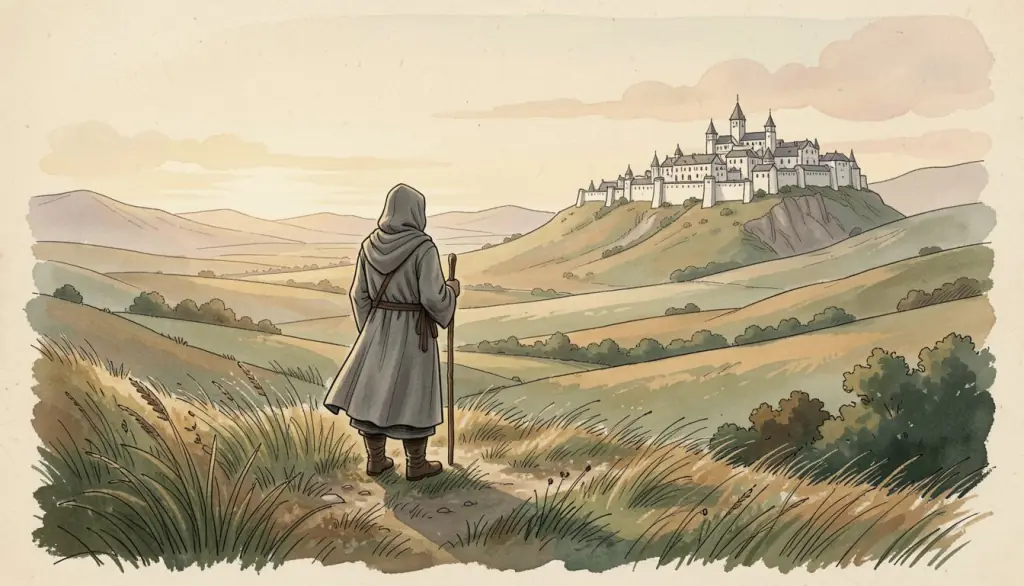
Most readers meet Aragorn as a weather-beaten stranger in the corner of an inn, hood pulled down. The man in the corner of The Prancing Pony is the heir of the kings of Númenor, nearly ninety, foster-son of Elrond and betrothed to an Elf-princess, and nobody in the room knows it. His whole story is the slow, deliberate removal of that hood.
This guide follows the books from his birth to his death in the Fourth Age, with dates from Appendix B and the private history in Appendix A's "Tale of Aragorn and Arwen". Screen material has its own section, and our own reading is marked as interpretation.
Some subjects have their own pages, so this one stays short on them. For his names and their etymology, see Aragorn's Elvish Names and Andúril. For his Elvish, see Aragorn's Elvish: The Languages of the Dúnedain King and How Does Aragorn Know Elvish?. His sword has its own guide.
Aragorn at a Glance
| People | Man of the Dúnedain, the Men of the West descended from Númenor |
| Titles | Chieftain of the Dúnedain of the North; Heir of Isildur; King Elessar of Gondor and Arnor (Appendix A) |
| Born | 1 March, Third Age 2931 (Appendix B) |
| Died | 1 March, Fourth Age 120, at about 210 years of age (Appendix B) |
| Father | Arathorn II, fifteenth Chieftain of the Dúnedain, killed in 2933 |
| Mother | Gilraen the Fair, daughter of Dírhael and Ivorwen |
| Foster-father | Elrond Half-elven of Rivendell |
| Spouse | Arwen Undómiel, daughter of Elrond, married at Midsummer 3019 |
| Children | Eldarion, his heir, and unnamed daughters (Appendix A) |
| Heirlooms | The shards of Narsil, reforged as Andúril; the ring of Barahir; the green Elfstone given by Galadriel |
| Appearance | Tall, lean and dark-haired, with grey eyes; looked weathered and shabby as a Ranger, kingly when revealed (The Fellowship of the Ring, book I, ch. 9 to 10) |
| First appearance | The Fellowship of the Ring, book I, ch. 9, "At the Sign of the Prancing Pony" |
| Film actor | Viggo Mortensen (Peter Jackson's trilogy, 2001 to 2003) |
| Rings of Power | Does not appear; the show is set in the Second Age, before his birth |
Aragorn Timeline
"Mae govannen" — want to actually speak Elvish?
Try It Free →All Third Age and Fourth Age dates below come from Appendix B of The Lord of the Rings. Where Appendix A tells a story without a year, the row says so.
| Age and year | Event |
|---|---|
| Third Age 2931, 1 March | Aragorn son of Arathorn II is born |
| Third Age 2933 | Arathorn is killed; Gilraen takes the two-year-old Aragorn to Rivendell, where Elrond names him Estel |
| Third Age 2951 | At 20, Aragorn learns his name and lineage from Elrond and receives the shards of Narsil and the ring of Barahir. The next day he meets Arwen. He goes into the Wild |
| Third Age 2956 | Aragorn meets Gandalf, and their friendship begins |
| Third Age 2957 to 2980 | His great journeys and errantries; as Thorongil he serves Thengel of Rohan and Ecthelion II of Gondor |
| Before 2980 (Appendix A, no year) | Thorongil leads a small fleet against Umbar and burns many of the Corsairs' ships, then leaves Gondor's service |
| Third Age 2980 | Aragorn comes to Lórien, meets Arwen again and gives her the ring of Barahir; they plight their troth on Cerin Amroth |
| Third Age 3007 | Gilraen dies |
| Third Age 3017 | Aragorn catches Gollum in the Dead Marshes and brings him to Thranduil in Mirkwood |
| Third Age 3018, 29 September | Frodo meets Strider at Bree |
| Third Age 3018, 25 October | Council of Elrond; Narsil is reforged as Andúril before the Company leaves on 25 December |
| Third Age 3019, 3 to 4 March | Battle of the Hornburg (Helm's Deep) |
| Third Age 3019, 8 March | Aragorn takes the Paths of the Dead |
| Third Age 3019, 13 March | Aragorn captures the Corsair fleet at Pelargir |
| Third Age 3019, 15 March | Battle of the Pelennor Fields; that night he heals Faramir, Éowyn and Merry |
| Third Age 3019, 25 March | Battle before the Black Gate; the Ring is destroyed |
| Third Age 3019, 1 May | Coronation of King Elessar |
| Third Age 3019, Mid-year's Day | Wedding of Elessar and Arwen |
| Fourth Age 6 (Shire Reckoning 1427) | The King's edict forbids Men to enter the Shire |
| Fourth Age 15 (Shire Reckoning 1436) | The King comes north and greets his Hobbit friends at the Brandywine Bridge |
| Fourth Age 120, 1 March | Passing of King Elessar; Eldarion succeeds him |
The age at death is our arithmetic from Appendix B: 90 years to the end of the Third Age, plus 120.
Who Aragorn Is
Aragorn is the man for whom the third volume of The Lord of the Rings is named. Three facts define him in the books.
- He is the rightful king of both Númenórean kingdoms. Arnor fell more than a thousand years before his birth, and its heirs lived on as Chieftains of a scattered people. Gondor had been ruled by Stewards since its last king vanished in Third Age 2050.
- He was raised by Elves. From two to twenty he lived in Elrond's house, which makes him a bridge between Men and Elves in a way no other mortal in the book is.
- He waits. He is 87 when the story begins, and almost everything he does was prepared by seventy years of hidden work. His defining virtue is patience more than daring.
The Dúnedain lived far longer than other Men, so at 87 he is in his prime.
Family and Lineage
Aragorn is the last link in a family chain that runs back to the First Age.
| Person | Relation | Read more |
|---|---|---|
| Elros Tar-Minyatur | First King of Númenor, Elrond's twin; Aragorn's remote ancestor | Elros and Elrond |
| Elendil | Founder of Arnor and Gondor after the Downfall | Elendil Explained |
| Isildur | Elendil's elder son, who cut the Ring from Sauron's hand | Isildur Explained |
| Arathorn II | Father; killed by an orc-arrow in 2933 | |
| Gilraen the Fair | Mother; died in 3007 | This post, "Childhood in Rivendell" |
| Elrond | Foster-father, and his remote kinsman through Elros | Elrond Explained |
| Elladan and Elrohir | Elrond's sons, his foster-brothers, who ride with the Grey Company | |
| Arwen Undómiel | Wife and Queen | Arwen Explained |
| Eldarion | Son and successor | |
| Halbarad | Kinsman and Ranger who brings the Grey Company south and dies on the Pelennor |
Two details carry most of the story: Elrond is raising his own brother's descendant, and by marrying Arwen, Aragorn rejoins the two halves of the house of Eärendil after more than six thousand years. The full tree is in our Characters of Middle-earth hub.
The Heir of Isildur
When Isildur was killed at the Gladden Fields in Third Age 2, the shards of Narsil were carried to Rivendell, where his youngest son Valandil was living (Unfinished Tales, "The Disaster of the Gladden Fields"). Valandil became King of Arnor, and the heirlooms passed down his line.
Arnor later split into three kingdoms, and only Arthedain kept the line of Isildur. Appendix A tells how its last king, Arvedui, married Fíriel, daughter of King Ondoher of Gondor, and claimed Gondor's crown in 1944 when Ondoher and his sons fell. Gondor refused. Arthedain itself fell to the Witch-king of Angmar in 1974, and Arvedui drowned in the ice of the far north.
His son Aranarth took the title of Chieftain instead of king, and his people became the Rangers of the North. Appendix A lists sixteen Chieftains from Aranarth to Aragorn II, nearly all with names beginning Ara-, the royal prefix of the house. Their heirs were fostered in Rivendell, where Elrond kept the shards.
So Aragorn's claim is stronger than it first looks. Through Isildur he is heir to the North; through Fíriel, Aranarth's mother, he also descends from the house of Anárion that ruled Gondor. Coming to Minas Tirith, he renews the very claim Gondor rejected a thousand years earlier.
Childhood in Rivendell: Estel
The story of his birth comes from "The Tale of Aragorn and Arwen" in Appendix A. Arathorn wished to marry Gilraen, daughter of Dírhael. Her father opposed it, foreseeing that Arathorn would die early. Her mother Ivorwen, who had foresight, argued the other way: the shorter the time, the greater the need for haste, because from this marriage hope might be born for their people.
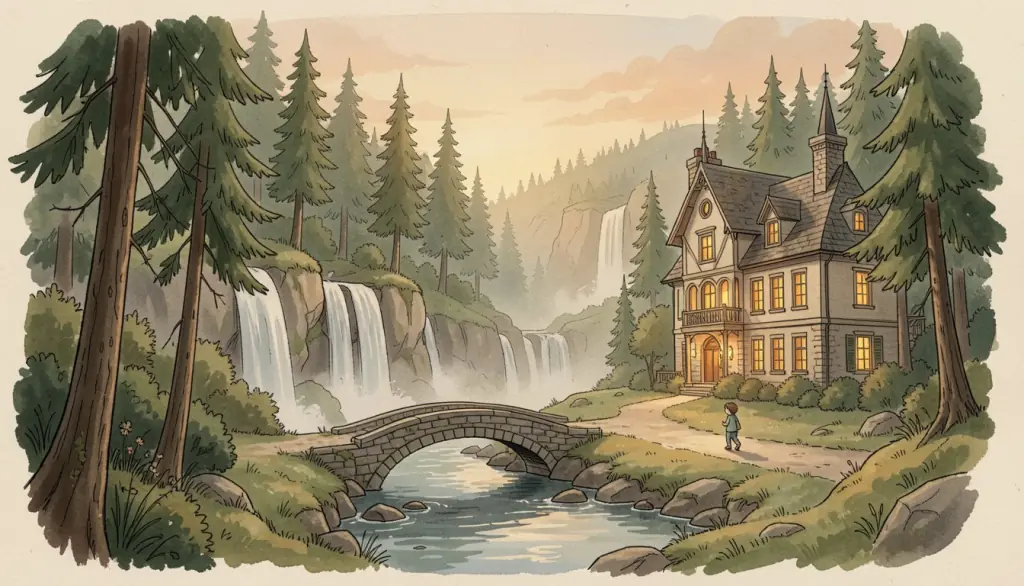
Both were right. Arathorn was killed in 2933, riding with Elladan and Elrohir against orcs, when an orc-arrow pierced his eye. Aragorn was two. Gilraen took him to Rivendell, and Elrond took him in as a foster-son, named him Estel, "Hope", and hid his real name and lineage, because the Enemy was seeking the heir of Isildur.
Those eighteen years gave him the lore and tongues of the Eldar; see How Does Aragorn Know Elvish?.
In 2951, when he was twenty and had returned from his first deeds with Elrond's sons, Elrond told him his true name and lineage and gave him the shards of Narsil and the ring of Barahir, which Finrod Felagund had given to Beren's father in the First Age. The sceptre of Annúminas Elrond kept back until Aragorn had earned it.
Arwen and Elrond's Condition
The next evening Aragorn was walking in the woods of Rivendell, singing the Lay of Lúthien, when he saw a maiden among the birches and called out "Tinúviel", Beren's name for Lúthien. She was Arwen, Elrond's daughter, just returned from her mother's kin in Lórien, and he fell in love with her on the spot.
Elrond saw it at once and told him that Arwen was far above him in lineage and years, and that a mortal choice would part her from her kin for ever. Later he set the condition that shapes the rest of Aragorn's life: his daughter would marry no Man less than the King of both Gondor and Arnor (Appendix A).
Read with care, this is not a father's cruelty but a statement of what Arwen would be giving up; if she lost immortality, it would not be for a landless wanderer. It also fuses Aragorn's private love with his public duty: he can only marry her by restoring the kingdoms. Arwen's side of the story is in Arwen Explained.
The Errantry Years: Thorongil
After meeting Arwen, Aragorn went into the wild and Gilraen returned to her own people. Appendix B dates his friendship with Gandalf to 2956 and his "great journeys and errantries" to 2957 to 2980.
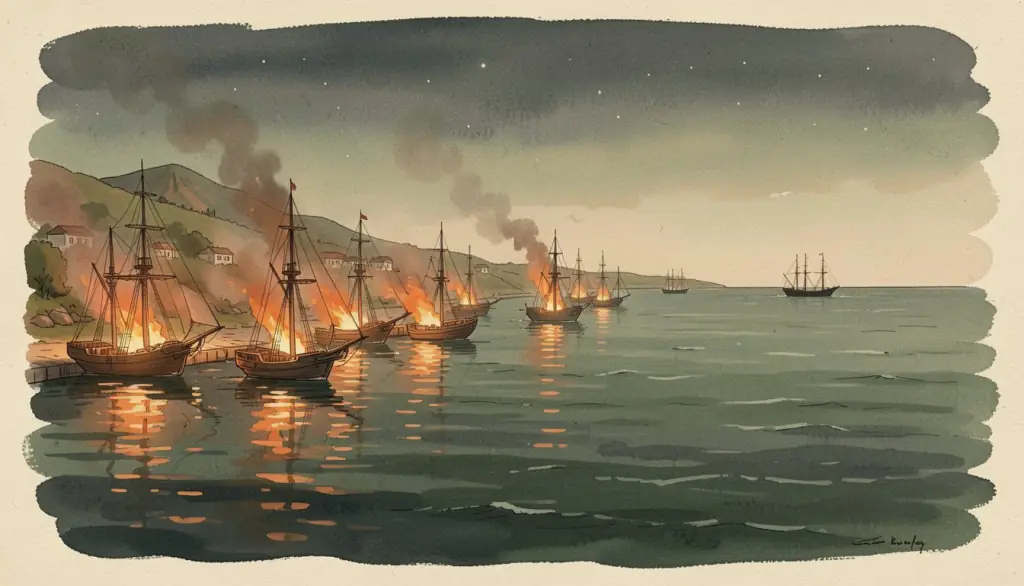
The best-known episode is told in Appendix A's section on the Stewards. A stranger served King Thengel of Rohan, then the Steward Ecthelion II of Gondor. He was called Thorongil, "Eagle of the Star", because he was swift and keen-eyed and wore a silver star on his cloak. He became a great captain, warned Ecthelion about the Corsairs of Umbar, and at last led a small fleet south, burned a great part of their ships and overthrew the captain of the haven. At the moment of victory he sent word that other tasks called him, and did not come back.
Two details matter later. Thorongil counselled Ecthelion to trust Gandalf rather than Saruman, long before anyone suspected Saruman. And Ecthelion's son Denethor disliked him: the people praised the stranger above the Steward's heir, and Denethor suspected he was more than a mercenary. That rivalry shadows their later story.
Aragorn then went alone far into the East and deep into the South, exploring the hearts of Men. Only after that, in 2980, did he come to Lórien.
Cerin Amroth
In Lórien Galadriel clad the weary traveller in silver and white, with an elven-grey cloak and a bright gem on his brow. On Midsummer Eve he and Arwen went up the hill of Cerin Amroth and plighted their troth, and he gave her the ring of Barahir (Appendix A).
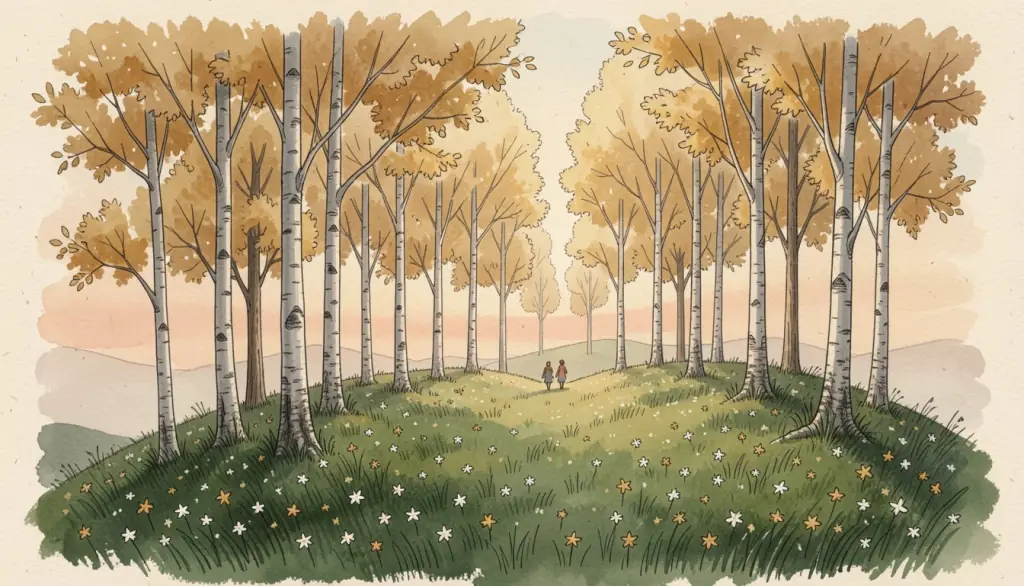
The scene sits invisibly behind The Fellowship of the Ring (book II, ch. 6, "Lothlórien"). When the Company reaches Cerin Amroth, Frodo sees Aragorn standing lost in a memory with a flower in his hand and hears him speak Arwen's name. Only a reader who has gone to the Appendices knows what he remembers.
The Ranger of the North
Between 2980 and 3018 Aragorn led the Rangers of the North. Their work was hidden: they guarded the Shire and Bree from things that crept out of the wild, and the people they protected despised them for it.
In 3007 Gilraen died. Before her death she spoke a linnod, a single line of Sindarin verse, to her son (Appendix A):
Ónen i-Estel Edain, ú-chebin estel anim.
Tolkien's translation: "I gave Hope to the Dúnedain, I have kept no hope for myself." The line plays on Estel, her son's Rivendell name and the ordinary word for hope, and it says plainly what his upbringing cost her.
The other great task of these years was Gollum. Gandalf and Aragorn renewed the hunt in 3009, and in 3017 Aragorn caught him in the Dead Marshes and brought him to Thranduil's halls (Appendix B). In "The Shadow of the Past" Gandalf calls him the greatest traveller and huntsman of the age. That hunt is the subject of the film in our Hunt for Gollum preview.
Strider, Bree and the Council of Elrond
When Frodo reaches The Prancing Pony on 29 September 3018, the landlord says the stranger in the corner is one of the Rangers, whose real name he has never heard; the Bree-folk call him Strider. A whole chapter, "Strider" (book I, ch. 10), turns on whether the Hobbits should trust him, and shows the key thing about him: he will not force his help on anyone. Gandalf's letter vouches for him, with Bilbo's poem "All that is gold does not glitter", which Bilbo later admits he wrote about him.
On Weathertop, after Frodo is stabbed with the Morgul-knife, Aragorn finds athelas, "kingsfoil", and bathes the wound with it. The reader does not yet know why the herb works in his hands.
At the Council of Elrond (book II, ch. 2) Boromir tells of a dream bidding him seek the Sword that was Broken. Aragorn lays the shards on the table, and Elrond names him before the Council as a descendant of Isildur. The smiths of Rivendell then reforge the blade with seven stars between the crescent Moon and the rayed Sun, and Aragorn names it Andúril, Flame of the West (book II, ch. 3). In the book he carries it from the start of the journey; see Andúril Meaning. He goes south as one of the nine Walkers, meaning to reach Minas Tirith, and the tension of the first volume is where his road and Frodo's will part.
From Moria to Helm's Deep
After Gandalf falls in Moria, Aragorn leads the Company. In Lórien Galadriel gives him a green stone in a silver eagle-brooch, which she had given to her daughter Celebrían and Celebrían to hers, and bids him take the name foretold for him: Elessar, the Elfstone of the house of Elendil (book II, ch. 8, "Farewell to Lórien"). Passing the Argonath, the stone figures of Isildur and Anárion, he stands in the boat and names himself their heir, and Frodo sees a king returning from exile.
Then the plan falls apart. At Parth Galen Frodo flees, Boromir dies defending Merry and Pippin, and Aragorn arrives too late. He says that everything he has done that day has gone amiss (The Two Towers, book III, ch. 1). It is one of the few times he openly doubts himself, and it is a doubt about a choice, not about who he is. He decides that Frodo's road is no longer his and hunts for the captured Hobbits instead; for Boromir's side, see Boromir Explained.
After the run across Rohan with Legolas and Gimli, he meets Éomer, draws Andúril and names himself, and Éomer calls him Wingfoot (book III, ch. 2). He fights at the Hornburg through the night of 3 to 4 March, meets Éowyn, whose love he cannot return, and receives the palantír of Orthanc from Gandalf as its rightful master.
The Palantír and the Paths of the Dead
At the Hornburg in early March 3019 Aragorn does what no one else dares. He looks into the palantír, wrests it from Sauron's control to his own will, and shows Sauron the reforged sword (The Return of the King, book V, ch. 2, "The Passing of the Grey Company"). It is deliberate: a Sauron who believes Isildur's heir has risen with the Ring will strike early, before his plans are ready.
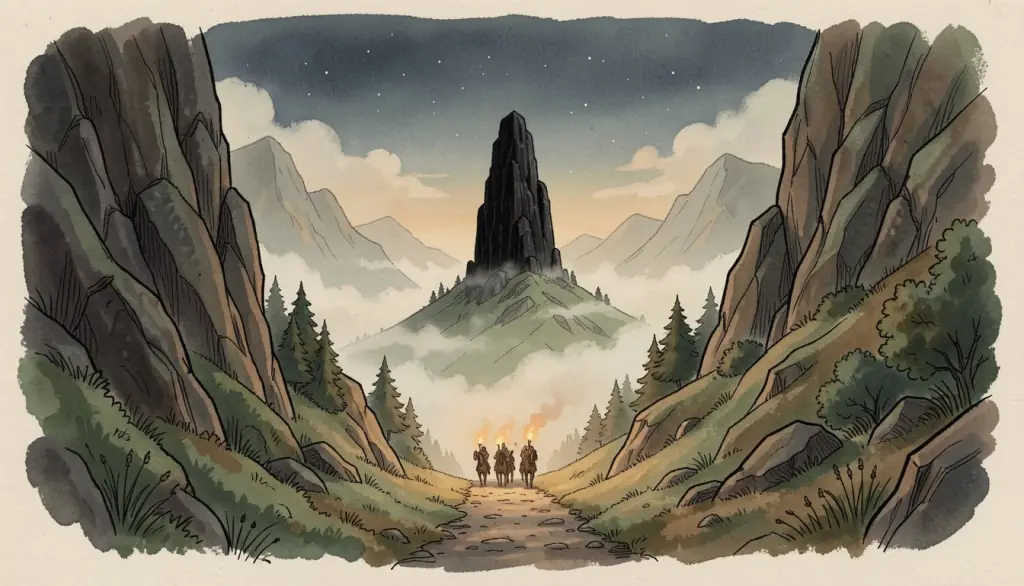
The same chapter brings the Grey Company, about thirty Rangers under his kinsman Halbarad, with Elladan and Elrohir. Halbarad carries a furled standard made by Arwen and word from Elrond that the days are now short.
In the Stone Aragorn has seen the Corsair fleet coming up the Anduin. To reach the coast in time he takes the Paths of the Dead on 8 March. The Dead are the Oathbreakers, Men of the Mountains who swore allegiance to Isildur at the Stone of Erech, failed him, and were cursed to have no rest until the oath was kept. Only Isildur's heir can summon them. At Pelargir on 13 March they overwhelm the Corsairs, Aragorn takes the ships and releases the Dead, and he sails up the Anduin with the men of southern Gondor. In the book the Dead never reach Minas Tirith.
The Pelennor and the Houses of Healing
On 15 March, at the turn of the Battle of the Pelennor Fields, the black ships reach the Harlond. The city expects enemies, until Arwen's standard breaks from the leading ship: the White Tree, the Seven Stars and the crown of Elendil, wrought in gems, mithril and gold (book V, ch. 6). The battle turns.
What Aragorn does next is the most revealing act of his life. He does not enter the city as king. He camps outside the walls and comes in that night under a grey Ranger's cloak, to heal (book V, ch. 8, "The Houses of Healing"). Faramir, Éowyn and Merry are dying of the Black Breath. He asks for athelas, which the herb-master knows only as a sweet-smelling weed with a rhyme nobody understands, and in his hands it brings each of them back. The old wise-woman Ioreth remembers a saying of Gondor: "The hands of the king are the hands of a healer."
There too he names his house. Hearing the Hobbits call him Strider, he declares it the name of his line, rendered in the high tongue as Telcontar, and gives his royal names as Elessar, the Elfstone, and Envinyatar, the Renewer.
The Black Gate
At the Last Debate (book V, ch. 9) Gandalf argues that the West cannot win by arms and proposes a feint, and Aragorn backs it: an army of about seven thousand marching openly to the Black Gate, to keep Sauron's eye away from his own land, where two Hobbits are walking with the Ring. Gandalf conducts the parley with the Mouth of Sauron, who shows them Frodo's mithril-coat; Aragorn masters the herald with a look but does not strike him. The host fights on hopeless ground until, on 25 March, the Ring is destroyed.
This is what we would call Aragorn's real war, a war of attention. The palantír, the Paths of the Dead and the march to the Gate all make Sauron look the wrong way, and every one is aimed at helping Frodo, whom he cannot see or reach.
King Elessar
On 1 May 3019 Aragorn is crowned before the gates of Minas Tirith (book VI, ch. 5, "The Steward and the King"). Faramir surrenders the Steward's white rod, and Aragorn gives it back. He asks that Frodo bring him the crown and Gandalf set it on his head. Before that, he speaks in Quenya the words Elendil spoke when he came out of the sea after the Downfall:
Et Eärello Endorenna utúlien.
"Out of the Great Sea to Middle-earth I am come." The rest promises that he and his heirs will remain until the world's end. He presents his kingship as Elendil's return, not a new reign.
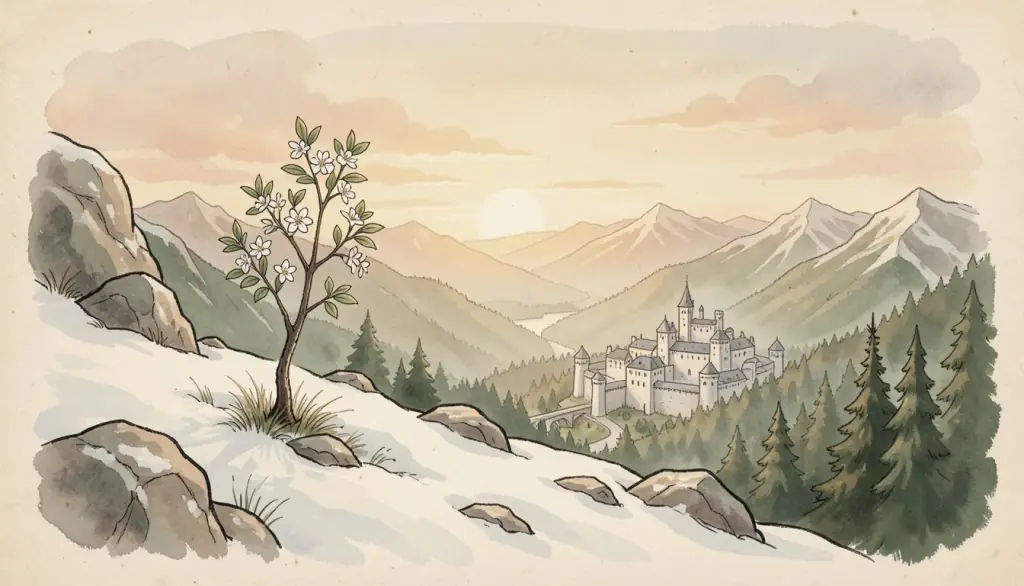
His first acts are pardon and restoration: he frees the slaves of Mordor, makes peace with the Easterlings and Haradrim who surrender, makes Faramir Prince of Ithilien, and sends Beregond, who broke the city's law to save Faramir, to Faramir's guard instead of punishing him. With Gandalf he finds a sapling of the White Tree on Mount Mindolluin. On Mid-year's Day he marries Arwen. Elrond's condition has been met, and the two halves of the house of Eärendil are joined.
The Reign and the Passing
Appendix B records that in Fourth Age 6 the King forbade Men to enter the Shire, and that in Fourth Age 15 he met his old friends at the Brandywine Bridge, giving Sam the Star of the Dúnedain. Appendix A has Éomer riding to war beside him in the far East and South, so the reign was not one long peace.
In Fourth Age 120, feeling old age coming, Aragorn chose not to wait for it (Appendix A). He gave the crown and sceptre to his son Eldarion, said farewell to Arwen and lay down in the House of the Kings. When she begged him to stay, he told her they were not bound for ever to the circles of the world, and that beyond them is more than memory: "In sorrow we must go, but not in despair." Arwen went to Lórien and died on Cerin Amroth that winter, and Legolas built a grey ship and sailed West with Gimli (Appendix B).
At the end Arwen calls him Estel. The boy's name, given to hide a king, is the name he dies with.
Aragorn's Names and Language
Each of Aragorn's names belongs to a stage of his life. The detailed guide is Aragorn's Elvish Names and Andúril; here is the short version.
| Name | Language | Meaning | Where it comes from |
|---|---|---|---|
| Aragorn | Sindarin | First element ara- "noble, royal", as in Arnor and Aranarth; Tolkien's late notes explain -gorn in more than one way | His birth name (Appendix A) |
| Estel | Sindarin | Hope | Given by Elrond in Rivendell (Appendix A) |
| Thorongil | Sindarin | Eagle of the Star (thoron eagle + gil star) | His name in Rohan and Gondor (Appendix A) |
| Strider | English (Westron in the story) | A wanderer with long legs | Given by the Bree-folk |
| Elessar | Quenya | Elfstone | Foretold; given by Galadriel with the green stone (Fellowship, II, 8) |
| Envinyatar | Quenya | The Renewer | Royal title he takes in "The Houses of Healing" |
| Telcontar | Quenya | Strider | The name of his royal house |
| Edhelharn | Sindarin | Elfstone | Sindarin form, in the King's Letter (Sauron Defeated) |
One caution: in the name Aragorn, the ara- element is secure but the second is not. Tolkien's late notes, published long after his death in Parma Eldalamberon 17, analyse it more than one way, and confident online translations simply pick one. See also The Elvish Word for King.
The Dúnedain kept Sindarin as a language of lore and names; Aragorn, raised in Rivendell, speaks it like a native. His Elvish lines are collected in Aragorn's Elvish Quotes.
Books vs Films vs The Rings of Power
Viggo Mortensen plays Aragorn in Peter Jackson's trilogy (2001 to 2003), having replaced Stuart Townsend shortly after filming began; earlier, John Hurt voiced him in Ralph Bakshi's animated film (1978). Much of the book's Aragorn survives in Mortensen's performance, but several changes should not be mistaken for Tolkien.
Invented or changed by the Jackson films:
- Reluctance to be king. The films give Aragorn a fear of Isildur's weakness and a reluctance to claim the throne. The book's Aragorn never doubts that he should be king; he waits for the right time, and he doubts particular choices, as at Parth Galen.
- Andúril. In the films Narsil stays broken in Rivendell until Elrond brings the reforged blade to Dunharrow. In the book it is reforged before the Fellowship leaves and Aragorn carries it all the way.
- Arwen at the Ford. Arwen rides with Frodo to the Ford of Bruinen in the films. In the book it is Glorfindel, and Arwen is not on the road at all.
- The fall from the cliff in a warg fight, and the vision of Arwen that wakes him, are invented.
- Arwen's fading. The films tie Arwen's life to the fate of the Ring. The book has no such link; her mortality is a matter of her own choice.
- The Army of the Dead at the Pelennor. In the films the Dead sweep the Pelennor. In the book they are released at Pelargir and never come near Minas Tirith; the men of southern Gondor are what turn the battle.
- The Mouth of Sauron. In the extended Return of the King, Aragorn kills the herald at the Black Gate. In the book the herald flees.
- Healing. The films drop almost all of the Houses of Healing, so the meaning of athelas and of Ioreth's saying is lost, and with it the way the book reveals the king.
What the films keep well, in our view: his weariness and authority, his kindness to Éowyn, and a coronation that honours the Hobbits. The added doubt suits a film trilogy that needs a hero who changes on screen; it just is not the book's Aragorn.
The Rings of Power. Amazon's series is set in the Second Age, thousands of years before Aragorn's birth, so he cannot appear in it. What it does show is his ancestry: Elendil and Isildur are major characters, and Season 3, which premiered on Prime Video on 11 November 2026 with episodes running to a finale on 25 November, adds Isildur's brother Anárion, played by Andrew Richardson. Its Númenor differs heavily from Tolkien's; see Isildur Explained and our Season 3 preview. Anything online about Aragorn in The Rings of Power is speculation or confusion with his ancestors.
Other projects. The Hunt for Gollum, directed by Andy Serkis and scheduled for December 2027, covers the years when Aragorn tracked Gollum; check official announcements for his role and casting.
How Tolkien Built Aragorn
Aragorn is Tolkien's best-known example of a character who grew into his importance while being written. The drafts in Christopher Tolkien's The Return of the Shadow show that the stranger at Bree began as a Hobbit called Trotter, who wore wooden shoes. Only as the story darkened did Trotter become a Man, a Ranger and finally the heir of Isildur, with the sword, kingship and love story built around him afterwards.
That history leaves marks. The man at the inn is shabbier than his destiny needs, because the scene was written before the destiny existed, and Arwen, the reason for everything he does, barely appears in the main narrative.
In our reading, putting their story in Appendix A was the right call. The main narrative is told through Hobbit eyes, and Hobbits know nothing of Cerin Amroth. The love story is the secret of the book as Aragorn is the secret of the inn, and the reader who finds it in the Appendices discovers it as the Hobbits discover him: late, with the sense it was there all along.
Why Aragorn Matters
Aragorn is Tolkien's answer to a question the whole legendarium keeps asking: can anything lost be restored? Elves fade, Númenor drowned, Arnor fell, Gondor's line of kings ended. Most of Tolkien's history is decline.
Aragorn is the exception: he restores a kingdom, a city, a tree, a sword and a marriage between Elves and Men. Tolkien is careful about the price. It needs Frodo's sacrifice, which Aragorn cannot share, Arwen's, which he cannot spare her, and his own: seventy years of anonymity and a death he chooses rather than cling to life. He is the Númenórean who does what Ar-Pharazôn would not, and lays his life down when its time is done.
He also contrasts with every other claimant of power in the book. Isildur kept the Ring, Boromir wanted it, Denethor was mastered by his palantír, Saruman reached for rule by force. Aragorn has the strongest claim of anyone and never reaches for what is not his by right; even the seeing-stone he uses is his, and he uses it to draw danger onto himself.
Our Take
Our view, stated plainly: Aragorn is not, at heart, the warrior-king of the films and the cover art. He is Tolkien's portrait of patience, and the book's real test of his kingship is the night he refuses to enter Minas Tirith as king.
Consider what he could have done. He arrives in the hour of victory, under a royal banner, at the gates of a city with no living Steward in charge. Any ambitious claimant takes the throne that night. Aragorn camps on the field and goes in disguised to heal the sick, and waits to be crowned by consent, with Faramir's rod handed over openly. The city recognises its king by his hands before it sees his crown.
That is why we think the films' reluctant Aragorn gets him backwards. The book's Aragorn is certain of what he is; the drama is what it costs to wait. His fear is never that he will fail like Isildur, but that Arwen will lose everything for him and that the Ring-bearer will die where he cannot follow. Read the main text and then "The Tale of Aragorn and Arwen" in Appendix A, and the man in the corner of the inn becomes one of the most quietly tragic figures in the book: a king who spends most of his life refusing to be one too soon.
People Also Ask
Who is Aragorn in Lord of the Rings?
Aragorn son of Arathorn is the heir of Isildur and Chieftain of the Dúnedain of the North. Known in Bree as Strider, he joins the Fellowship, leads the war in the West while Frodo goes to Mordor, and is crowned King Elessar of Gondor and Arnor in 3019.
How old is Aragorn in The Lord of the Rings?
He was born on 1 March 2931 of the Third Age, so he is 87 when he meets the Hobbits at Bree and 88 when he is crowned. The Dúnedain lived far longer than other Men.
Why is Aragorn called Strider?
Strider is the nickname the Bree-folk gave the long-legged Ranger. As king he made it the name of his royal house, Telcontar, its Quenya form.
Is Aragorn an Elf or a Man?
A Man, one of the Dúnedain descended from Númenor. He was raised by Elves and descends from Elros, Elrond's brother, but he was mortal and died in Fourth Age 120 at about 210.
How is Aragorn related to Isildur?
He is Isildur's heir in direct line through Isildur's youngest son Valandil, the kings of Arnor and Arthedain, and sixteen Chieftains of the Dúnedain.
Who are Aragorn's parents?
Arathorn II, Chieftain of the Dúnedain, killed when Aragorn was two, and Gilraen the Fair, daughter of Dírhael. Elrond raised him as a foster-son.
How long did Aragorn live?
From Third Age 2931 to Fourth Age 120, about 210 years. He chose the time of his death and gave the crown to his son Eldarion.
What did Aragorn do before The Lord of the Rings?
As Thorongil he served Thengel of Rohan and Ecthelion II of Gondor and burned the Corsair fleet at Umbar; he travelled far into the East and South, guarded the Shire with the Rangers and caught Gollum in 3017.
Did Aragorn have children?
Yes: a son, Eldarion, who succeeded him, and daughters whose names Tolkien never gave.
Is Aragorn in The Rings of Power?
No. The show is set in the Second Age, before his birth. It features his ancestors Elendil and Isildur, and Season 3 adds Isildur's brother Anárion.
Learn the Language of the Dúnedain
Aragorn's names, his mother's last words and the herb that revealed him as king are all Elvish, mostly Sindarin with Quenya for the royal style. To learn the languages behind them, start our free Elvish course, which teaches Sindarin and Quenya using words Tolkien actually wrote, or see how your own name looks in Elvish letters with the Tengwar name tool.
Related Reading
- Characters of Middle-earth: Who's Who in Tolkien's World
- Gandalf Explained: Olórin, the Grey Pilgrim and the White Rider
- Gollum Explained: Sméagol, the One Ring and the Road to Mount Doom
- Aragorn's Four Elvish Names and Andúril: Complete Guide
- Aragorn's Elvish: The Languages of the Dúnedain King
- How Does Aragorn Know Elvish? The Boy Raised in Rivendell
- Aragorn's Elvish Quotes: Every Sindarin Phrase He Speaks
- Arwen Explained: The Evenstar Who Chose a Mortal Life
- Elrond Explained: The Half-elven Lord of Rivendell
- Isildur Explained: The Man Who Took the One Ring
- Elendil Explained: The Tall King Who Escaped the Fall of Númenor
- Andúril Meaning: Aragorn's Sword, the Flame of the West
- Elros and Elrond: The Choice of the Half-elven
People Also Ask
Who is Aragorn in Lord of the Rings?
Aragorn son of Arathorn is the heir of Isildur and Chieftain of the Dúnedain of the North, the hidden royal line of Arnor. He is known in Bree as Strider, joins the Fellowship of the Ring, leads the war in the West while Frodo goes to Mordor, and is crowned King Elessar of the reunited kingdoms of Gondor and Arnor in 3019 of the Third Age.
How old is Aragorn in The Lord of the Rings?
Aragorn was born on 1 March 2931 of the Third Age (Appendix B). When he meets the Hobbits at Bree in September 3018 he is 87, and he is crowned at 88. The Dúnedain lived far longer than ordinary Men, and Aragorn still looked like a man in his prime.
Why is Aragorn called Strider?
Strider is the name the people of Bree gave him, a slightly contemptuous nickname for a wandering Ranger with long legs. Aragorn later made it the name of his royal house, Telcontar, which is the Quenya rendering of Strider (The Return of the King, "The Houses of Healing").
Is Aragorn an Elf or a Man?
Aragorn is a Man, one of the Dúnedain, descendants of the Men of Númenor. He was raised by the Elves of Rivendell and spoke Elvish from childhood, and he descends from Elros, Elrond's brother, but he was mortal. He lived about 210 years and died of his own choosing in Fourth Age 120.
How is Aragorn related to Isildur?
Aragorn is Isildur's heir in direct male line, many generations later. Isildur's youngest son Valandil carried on the line in Arnor, and after the North Kingdom fell its heirs became the Chieftains of the Dúnedain. Aragorn was the sixteenth Chieftain after the last king, Arvedui (Appendix A).
Who are Aragorn's parents?
His father was Arathorn II, Chieftain of the Dúnedain, who was killed by an orc-arrow when Aragorn was two. His mother was Gilraen the Fair, daughter of Dírhael, who brought him to Rivendell and later returned to her own people in Eriador. Elrond raised him as a foster-son.
How long did Aragorn live?
He was born in Third Age 2931 and died on 1 March in Fourth Age 120, which by the dates of Appendix B makes him about 210 years old. Appendix A tells how he chose the time of his death, gave the crown to his son Eldarion and said farewell to Arwen.
What did Aragorn do before The Lord of the Rings?
After learning his lineage at 20 he spent decades in the wild. Under the name Thorongil he served King Thengel of Rohan and Ecthelion II, Steward of Gondor, and led a raid that burned the Corsairs' fleet at Umbar. He travelled far into the East and South, became Gandalf's friend, guarded the Shire with the Rangers and caught Gollum in the Dead Marshes in 3017.
Did Aragorn have children?
Yes. Appendix A says Arwen bore him a son, Eldarion, who succeeded him as king, and daughters whose names Tolkien never gave. Eldarion inherited the crown when Aragorn died in Fourth Age 120.
Is Aragorn in The Rings of Power?
No. The Rings of Power is set in the Second Age, thousands of years before Aragorn was born. The show features his ancestors Elendil and Isildur instead, and Season 3, which premiered on 11 November 2026, adds Isildur's brother Anárion.