
Saruman Explained: Curumo, Curunír and the Fall of the White Wizard
Try It Yourself — Free Elvish Tools
Quick Answer: Saruman the White is the head of the Wizards and of the White Council, a Maia of Aulë's people called Curumo in Valinor and Curunír by the Elves, who came to Middle-earth about Third Age 1000. He settles in Orthanc at Isengard, studies the Rings until he wants the One Ring, is ensnared by Sauron through the palantír, betrays the Council and makes war on Rohan. The Ents break Isengard, Gandalf breaks his staff, and he ends as "Sharkey", the petty tyrant of the Shire, killed by Gríma at the door of Bag End.
Saruman is Tolkien's portrait of a good person going wrong slowly. Sauron is evil before The Lord of the Rings begins and never wavers. Gollum is a wretch from the first page. Saruman is different: he arrives as the leader of the West's best hope, spends nearly two thousand years doing real service, and then talks himself, one reasonable step at a time, into becoming a small copy of the thing he was sent to oppose.
That makes him one of the most modern characters in the book. He is not seduced by lust or rage. He is seduced by competence, by the belief that someone as able as he is ought to be in charge. This guide follows him from the halls of Aulë to the door of Bag End, separates the books from Peter Jackson's films, and ends with our own argument about why his story is the sharpest moral in Tolkien.
For the order he led, see the Wizards of Middle-earth. For his languages, and the contrast between Elvish and Black Speech in his world, see Saruman, Isengard and the Elvish Language. This page is the character study.
Saruman at a Glance
| Nature | A Maia, one of the lesser Ainur, sent to Middle-earth in the body of an old man (Unfinished Tales, "The Istari") |
| Patron | Aulë the Smith, who chose him for the mission (Unfinished Tales, "The Istari") |
| Name in Valinor | Curumo (Quenya) |
| Elvish name | Curunír (Sindarin), "the man of skill" |
| Name among Men | Saruman, from the speech of the Northmen, rendered by Tolkien through Old English searu, "skill, cunning" |
| Name in the Shire | Sharkey, probably from Orkish sharkû, "old man" (The Return of the King, book VI, ch. 8, note) |
| Order | Head of the Istari; "Saruman the White", later self-styled "of Many Colours" |
| Office | Chief of the White Council (The Silmarillion, "Of the Rings of Power and the Third Age") |
| Seat | Orthanc, the tower in the Ring of Isengard, from Third Age 2759 (Appendix A and B) |
| Emblem | A white hand on black; an S-rune on his soldiers' helms (The Two Towers, book III, ch. 1) |
| Chief servant | Gríma, son of Gálmód, called Wormtongue |
| Great weapon | His voice (The Two Towers, book III, ch. 10, "The Voice of Saruman") |
| First appearance | Reported by Gandalf in "The Council of Elrond" (The Fellowship of the Ring, book II, ch. 2); in person in "The Voice of Saruman" |
| Fate | Killed by Gríma at Bag End on 3 November 3019; his spirit is not received in the West |
| Film actor | Christopher Lee (The Lord of the Rings, 2001 to 2003; The Hobbit, 2012 to 2014) |
| Rings of Power | Has not appeared |
Saruman Timeline
"Mae govannen" — want to actually speak Elvish?
Try It Free →Dates are from the Tale of Years in Appendix B of The Lord of the Rings unless another source is named.
| Age and year | Event |
|---|---|
| Before the Sun | Curumo dwells in Valinor among the Maiar of Aulë (Unfinished Tales, "The Istari") |
| Third Age c. 1000 | The Istari arrive at the Grey Havens; Curunír comes first and is counted their chief |
| Third Age, after c. 1000 | He travels far, including into the East, and returns; he studies the lore of the Rings (Unfinished Tales) |
| Third Age 2463 | About this time the White Council is formed; Saruman is chosen as its head (The Silmarillion, "Of the Rings of Power and the Third Age") |
| Third Age 2759 | After the Long Winter, Saruman takes up his abode in Isengard; the Steward Beren gives him the keys of Orthanc (Appendix A) |
| Third Age 2851 | The Council meets; Gandalf urges an attack on Dol Guldur and Saruman overrules him. Saruman begins to search near the Gladden Fields |
| Third Age 2941 | Saruman agrees to an attack; the Council drives Sauron from Dol Guldur |
| Third Age 2953 | Last meeting of the White Council. Saruman says the Ring has gone down the Anduin to the Sea, then withdraws to Isengard and fortifies it |
| Third Age c. 3000 | Saruman dares to use the palantír of Orthanc and is ensnared by Sauron; he becomes a traitor to the Council |
| Third Age 3018, July | Gandalf comes to Orthanc and is imprisoned on its pinnacle |
| Third Age 3018, 18 September | Gandalf escapes from Orthanc on Gwaihir the eagle |
| Third Age 3019, 25 February | First Battle of the Fords of Isen; Théodred son of Théoden is killed |
| Third Age 3019, 2 to 3 March | The Ents march on Isengard and break it; the Battle of the Hornburg begins |
| Third Age 3019, 5 March | Parley at Orthanc: Gandalf casts Saruman from the order and breaks his staff |
| Third Age 3019, summer | Treebeard lets Saruman go; he meets the returning company on the road and heads for the Shire |
| Third Age 3019, 3 November | Battle of Bywater and the passing of Saruman |
Who Saruman Is
Saruman is three things at once, and the story only makes sense if all three stay in view.
- A Maia. He is not a man, an Elf or a sorcerer in the ordinary sense. He is a spirit of the same order as Sauron, Gandalf, Melian and the Balrogs, clothed in a real body that can tire, age and be killed (Unfinished Tales, "The Istari").
- An envoy with rules. The Wizards were sent by the Valar to rouse the free peoples against Sauron. They were forbidden to meet his power with power, or to dominate Elves and Men by force or fear. Every step of Saruman's fall is a step across that line.
- A scholar. Of all the Wise, he knew the most about the Rings of Power. The Silmarillion says he was made chief of the White Council because he had studied Sauron's devices longest. His expertise is the source of his authority and the root of his ruin.
The first description Tolkien gives of him is not the white-bearded figure of the films. In Unfinished Tales the first of the Istari to land is of noble bearing, with raven hair and a fair voice, clad in white, with great skill in works of hand, and the Eldar regarded him as the head of the order. He came looking like what he was, the most impressive person in the room.
Family and Relationships
As a Maia, Saruman has no family in the usual sense. His relationships are allegiances, rivalries and betrayals.
| Person | Relation | Read more |
|---|---|---|
| Aulë | The Vala who chose him; the craftsman of the Valar | Sauron Explained |
| Sauron | Fellow Maia of Aulë's people; enemy, then master through the palantír, then rival | Sauron Explained |
| Gandalf | Fellow Wizard, rival from the day they landed, prisoner, and finally his judge | Gandalf Explained |
| Radagast | Fellow Wizard he brought with him; later used as an unwitting decoy | Wizards of Middle-earth |
| The Blue Wizards | Companions on his journey into the East, in the earlier account | The Blue Wizards |
| Círdan | Received the Wizards at the Havens and gave Narya to Gandalf, not to him | Círdan the Shipwright |
| Galadriel | Member of the White Council who wanted Gandalf as its head | Galadriel Explained |
| Gríma Wormtongue | His agent at Edoras and his last servant; also his killer | This post, "The Scouring of the Shire" |
| Théoden | King of Rohan, weakened by Saruman's agent and then his enemy in war | Men of Middle-earth |
| Treebeard | A neighbour who once welcomed him, then broke Isengard, then let him go | Ents and Huorns |
| Frodo | The hobbit who spares his life at Bag End | Frodo Baggins Explained |
Curumo in Valinor: Chosen by Aulë
The fullest account of how the Wizards came to be sent is a late, hurried note printed in Unfinished Tales ("The Istari"). Christopher Tolkien presents it as a sketch rather than a finished text, so it should be read as Tolkien thinking aloud, not as settled canon. Still, it is the only scene we have of Saruman before Middle-earth, and it is revealing.
The Valar hold a council and ask who will go. Curumo, chosen by Aulë, is one of those who come forward. Olórin, the future Gandalf, is reluctant and says he fears Sauron. Varda insists that Olórin go, and says he will not go as the third. The note adds that Curumo remembered this. It is a single clause, but it plants the whole rivalry in Valinor before either Wizard has set foot in Middle-earth: the confident volunteer is told that the hesitant one is the more trusted.
The same note says Curumo took Aiwendil, the future Radagast, only because Yavanna begged him to. That explains the contempt Saruman later shows Radagast, calling him a fool and using him as a lure. Radagast was a companion he never wanted.
Aulë's patronage matters most of all. The Silmarillion ("Valaquenta") tells us that Sauron, too, began as a Maia of Aulë. Aulë is the Vala of craft and making, and his household produced the two great fallen craftsmen of the later Ages. We return to that parallel below. For Sauron's side of it, read Sauron Explained.
The Coming of the Istari
Appendix B places the arrival of the Istari about the year 1000 of the Third Age, roughly when a shadow first fell on Greenwood the Great. They came by sea to the Grey Havens.
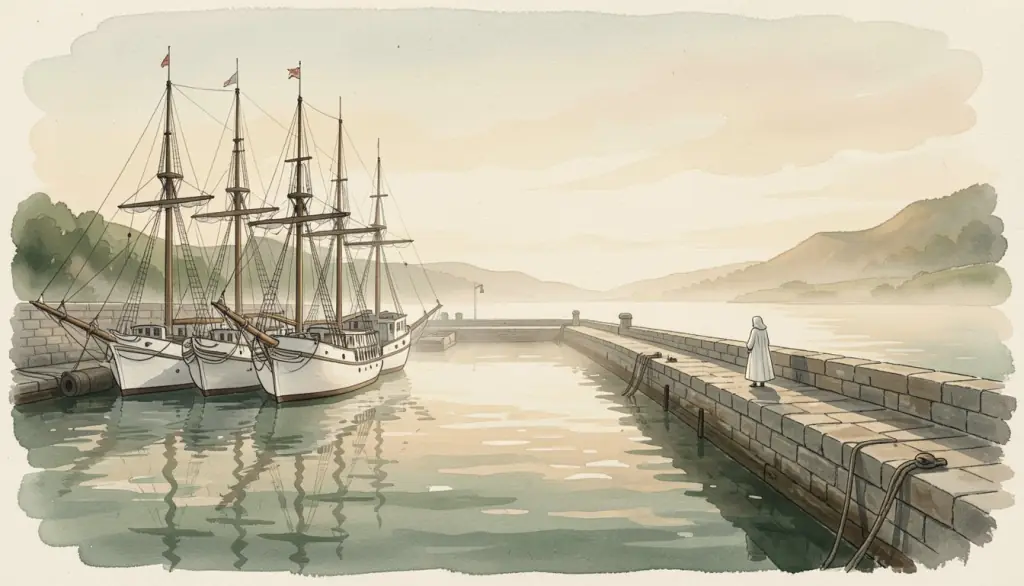
Curunír came first. The Elves counted him the chief of the order. But Círdan, who met them, looked longer at the grey one who came last, judged him the greatest, and gave him Narya, the Ring of Fire, to support him in his labours. Unfinished Tales says Saruman learned of the gift much later, and resented it. We cover the ring itself in Nenya, Narya and Vilya and the giver in Círdan the Shipwright.
Read together, Valinor and the Havens tell the same story twice. In both places Saruman is outwardly first and inwardly second. Tolkien does not make him evil here; he makes him wounded, with a grievance waiting for a reason.
The long service
For most of the Third Age, Saruman did what he was sent to do. Unfinished Tales says he travelled widely, went into the East and returned, and in the first version of the story the two Blue Wizards went east with him and did not come back; see The Blue Wizards, Alatar and Pallando. He studied the lore of the Elves, especially the making of the Rings, and nobody in the West knew more about them.
Head of the White Council
The White Council was the meeting of the Wise: the Wizards and the great Elves of the West, Elrond, Galadriel, Círdan and others. Appendix B says it was formed about Third Age 2463. The Silmarillion ("Of the Rings of Power and the Third Age") says Curunír was chosen as its chief because he had most studied the devices of Sauron, and adds that Galadriel had wished Mithrandir to lead it. Mithrandir refused, wanting no ties and no allegiance except to those who sent him. Saruman resented the preference anyway.
Overruling Gandalf
In Third Age 2850 Gandalf entered Dol Guldur in secret and learned that its master was Sauron. In 2851 the Council met and Gandalf urged an attack. Appendix B records the result in three plain words: Saruman overrules him. The same entry says that Saruman began to search near the Gladden Fields, where Isildur had died and the One Ring had been lost.
The attack of 2941
Ninety years later, in 2941, Saruman agreed to attack. Appendix B explains why: he had learned that Sauron's servants were searching the Anduin near the Gladden Fields, and he wished to keep Sauron away from the river. The Council drove Sauron out of Dol Guldur in the same year that Bilbo found the Ring in the goblin-caves and Smaug died. Sauron had only feigned to flee, and he declared himself in Mordor ten years later.
The last Council, 2953
The White Council met for the last time in 2953 to debate the Rings. Appendix B says Saruman feigned that he had discovered the One Ring had passed down the Anduin to the Sea. In other words, the Council's foremost expert on the Rings used his authority to tell the Wise to stop looking. Then he withdrew to Isengard, fortified it, and set spies to watch Gandalf, having noticed Gandalf's interest in the Shire.
That last detail is quietly brilliant plotting: Saruman watches the Shire only because Gandalf does, and his envy leads him to the one place that matters most.
Orthanc and the Palantír
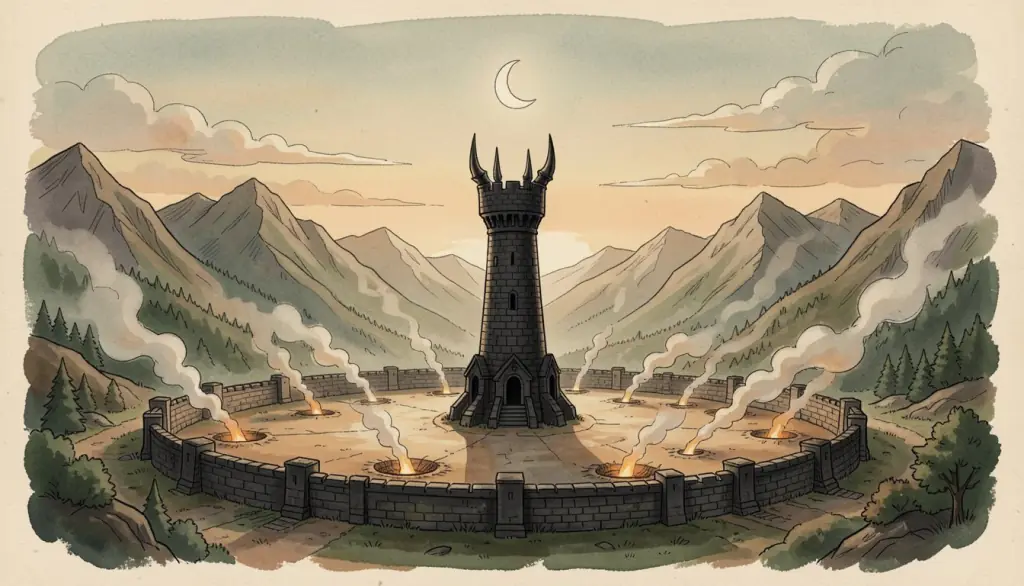
Isengard was a fortress of Gondor, built in the days of its strength, with the tower of Orthanc at its centre. By the late Third Age Gondor could no longer man it. Appendix A tells how, after the Long Winter of 2758 to 2759 and Rohan's war with the Dunlendings, Saruman came to Isengard, and Beren the Steward of Gondor gave him the keys of Orthanc, glad to have a strong ally on the border. Appendix B dates his taking up residence to 2759.
The name Orthanc carries a double meaning that Tolkien points out in The Two Towers ("The Road to Isengard"): in Elvish it meant "Mount Fang", but in the old language of the Mark it meant "Cunning Mind". The tower names its future owner. For the place-names around it, including the Sindarin name of Isengard itself, see Saruman, Isengard and the Elvish Language.
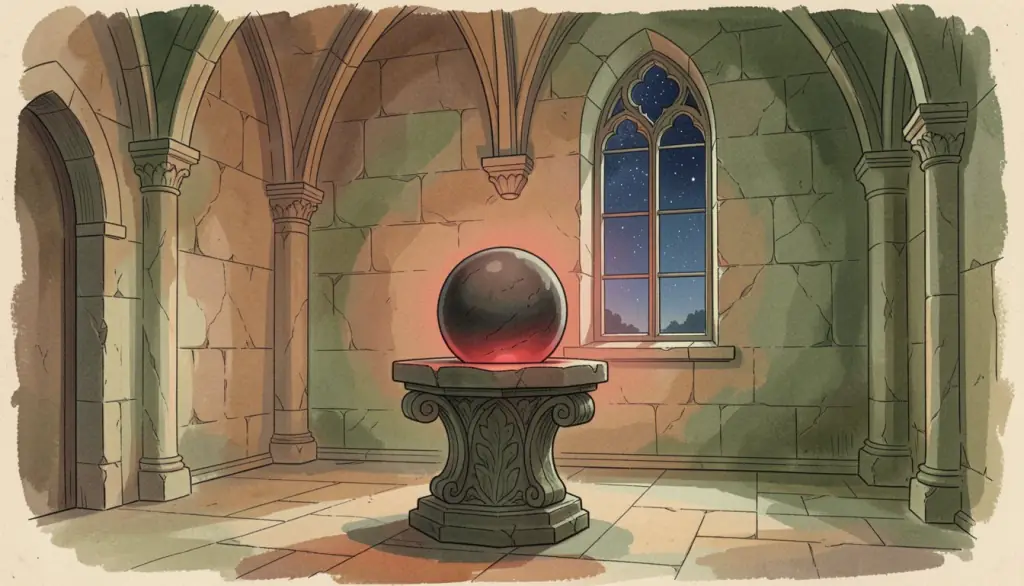
Inside Orthanc was one of the palantíri, the seeing-stones that the Númenóreans had brought from the West. Appendix B dates the decisive step to about Third Age 3000: Saruman dared to use the stone of Orthanc and was ensnared by Sauron, who held the stone of Minas Ithil. From then on, the entry says, he was a traitor to the Council.
The essay "The Palantíri" in Unfinished Tales and the chapter "The Palantír" in The Two Towers explain the mechanism: the stones are linked, and a stronger will at one stone can lead a weaker one at another. Sauron did not need to argue with Saruman. He only had to show him what he wished him to see.
Our reading: the palantír is the perfect tool for this particular fall. He fell through information: he looked for knowledge, as he always had, and his enemy curated it.
The Treason of Saruman
By the time of The Fellowship of the Ring, Saruman wants the One Ring for himself, while still half-believing he is Sauron's ally. His position is unstable on purpose. He serves Sauron with the stone and works against him with the search.
Gandalf at Orthanc
The best account of Saruman's mind comes from Gandalf's own report at "The Council of Elrond" (The Fellowship of the Ring, book II, ch. 2). Summoned by Radagast in good faith, Gandalf rides to Isengard. Saruman meets him wearing not white but robes that shimmer with every colour, and calls himself Saruman the Wise, Saruman Ring-maker, Saruman of Many Colours.
Gandalf's reply is the moral centre of the scene: he says he liked white better. He adds that breaking a thing to learn what it is means leaving the path of wisdom. The robe is the argument in miniature: white light broken into colours is no longer white.
Then Saruman makes his offer. A new power is rising, he says, and the old allies will not stand against it. The Wise can join it, wait, keep their counsel, and in time direct it toward Knowledge, Rule and Order, the things good people have desired but been unable to achieve because of the weakness of their friends. When Gandalf refuses, Saruman drops the pretence and asks plainly for the Ring.
The prisoner on the pinnacle
Gandalf refuses again and is imprisoned on the pinnacle of Orthanc. Appendix B dates this to July 3018. From the top he sees Isengard's transformation: pits, forges, smoke and an army. On 18 September, Gwaihir the Windlord, sent by Radagast's earlier request, carries him off. Saruman's choice of Radagast as an unwitting lure is what undoes him, because Radagast's message to the eagles was honest. For the eagles, see the Great Eagles of Middle-earth.
The White Hand Against Rohan
Saruman's war on Rohan is his most open act. He needed Rohan weak because it stood between Isengard and everything else, and because a strong Rohan could reinforce Gondor.
Wormtongue. His agent at Edoras was Gríma son of Gálmód, counsellor to King Théoden. In "The King of the Golden Hall" (The Two Towers, book III, ch. 6) Gandalf exposes him and restores the king. In the book Théoden is aged and despondent from Gríma's counsel, not possessed by a spell; his recovery is a man remembering himself once he hears a better voice.
The Dunlendings. Saruman stirred the hill-men of Dunland, Rohan's old enemies, with tales of stolen land, and armed them for his war (The Two Towers, book III, ch. 7, "Helm's Deep").
The Uruk-hai. His soldiers were Orcs and above all Uruk-hai of a breed he improved at Isengard, strong enough to march by day. They carried his White Hand and the S-rune. The ones who seize Merry and Pippin at Parth Galen are his, and they quarrel with the Orcs of Mordor about whose master is greater (The Two Towers, book III, ch. 3, "The Uruk-hai"). For their origins see Uruk-hai Explained and the wider Orcs and Goblins of Middle-earth.
The Fords of Isen. On 25 February 3019 his forces met the Riders at the Fords of Isen, and Théodred, Théoden's son, was killed. A second battle there on 2 March went against Rohan as well. Then came the assault on the Hornburg at Helm's Deep, on the night of 3 to 4 March, where the Rohirrim and Gandalf's returning reinforcements, with a forest of Huorns, destroyed his army.
That forest is the clue to how badly Saruman had misjudged his own neighbourhood. He had treated Fangorn as a supply of fuel. Treebeard tells Merry and Pippin that Saruman has "a mind of metal and wheels" and cares for growing things only when they are useful to him (The Two Towers, book III, ch. 4, "Treebeard"). The Ents had once allowed him to walk in their woods and ask questions. Now they had found the stumps.
The Fall of Isengard
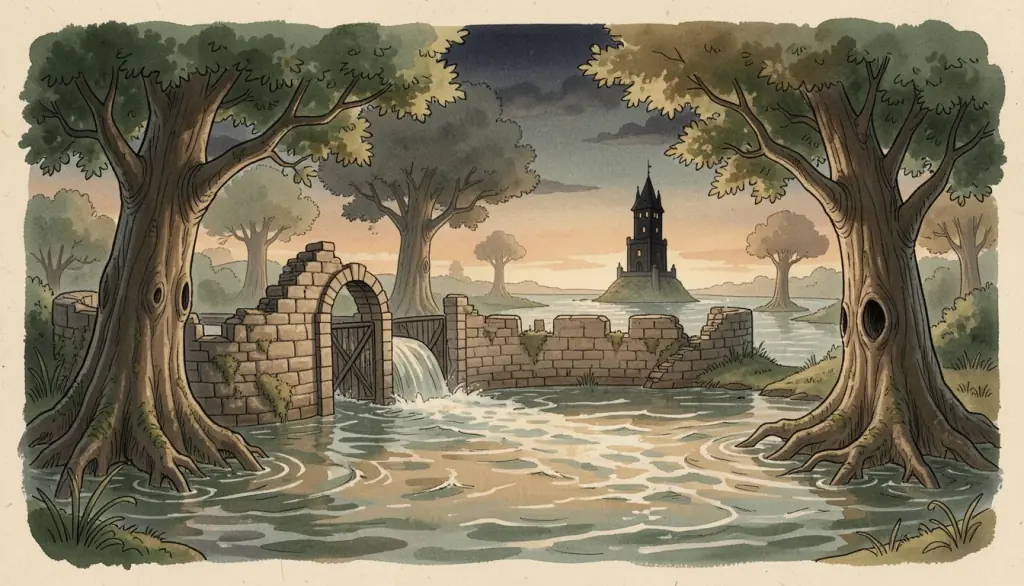
While Saruman's army was at Helm's Deep, the Ents marched. On the night of 2 to 3 March they reached Isengard, broke its walls, wrecked the works, and turned the river Isen into the ring, drowning the pits and furnaces until only Orthanc stood above the water. Merry and Pippin, at the gates, watched it happen. The story belongs to the Ents; we tell it in Ents and Huorns, and the language of the Ents in Entish and Treebeard's Language.
Tolkien adds a comic and pointed detail in "Flotsam and Jetsam". Among the wreckage the two hobbits find stores of Longbottom Leaf, pipe-weed from the Shire, in barrels marked with Hobbiton's own trade. The great Wizard of Isengard has been importing hobbit tobacco. It is a laugh, and it is also a clue: Saruman's trade with the Shire has been going on for years, and it will matter in the last chapters.
The Voice of Saruman
On 5 March, Théoden, Gandalf and their companions rode to Isengard to parley. The chapter "The Voice of Saruman" (The Two Towers, book III, ch. 10) is the only scene in which we meet Saruman in person at length, and it is one of the best things Tolkien wrote.
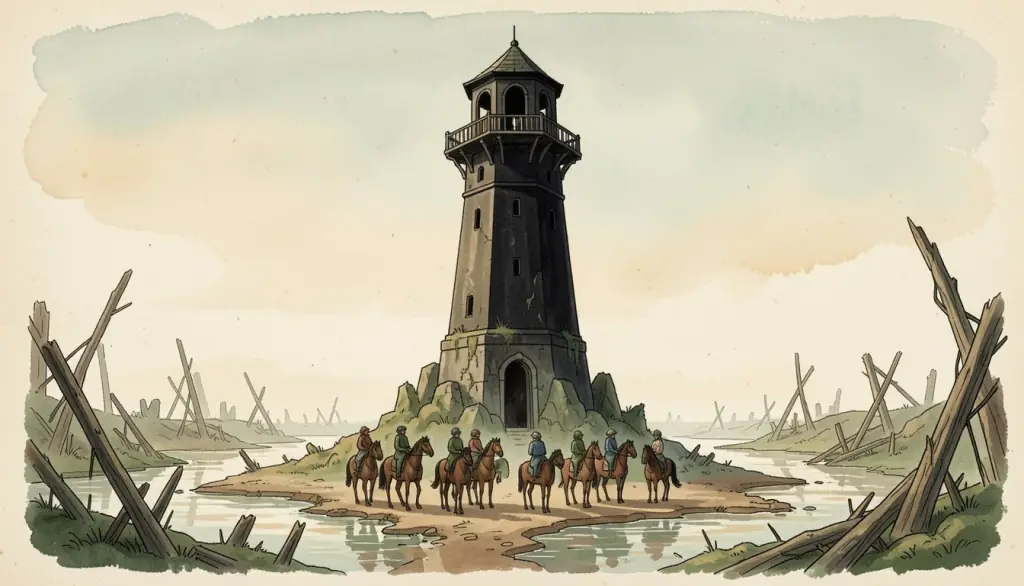
His weapon is his voice. Tolkien describes how it sounded low and melodious, how those who heard it felt that every word was wise and reasonable, and how even those who resisted it found it hard to remember afterwards what had actually been said. He addresses each listener in turn. He flatters Théoden, offers peace, reproaches Gandalf like a disappointed friend, and for a while it almost works. Gimli is the first to break the spell, by noticing that the words are just words.
The voice suits him because it is a craft: his specialty, making things sound reasonable, in pure form. When it stops working, nothing is left.
Then Gandalf offers him a genuine choice: surrender the key of Orthanc and his staff, and go free, to whatever place he chooses. Saruman hesitates, and Tolkien says for a moment there was something like a struggle in his face. Then he refuses, out of pride and fear together. Gandalf calls him back, declares that he is cast from the order and the Council, and his staff splits in his hand. Moments later Gríma throws down a heavy globe from a window, which turns out to be the palantír. It is the Orthanc-stone, and Pippin's theft of a look into it is the next chapter.
Sharkey and the Scouring of the Shire
Most readers who know Saruman only from the films think his story ends at Orthanc. In the book it ends in a hobbit village.
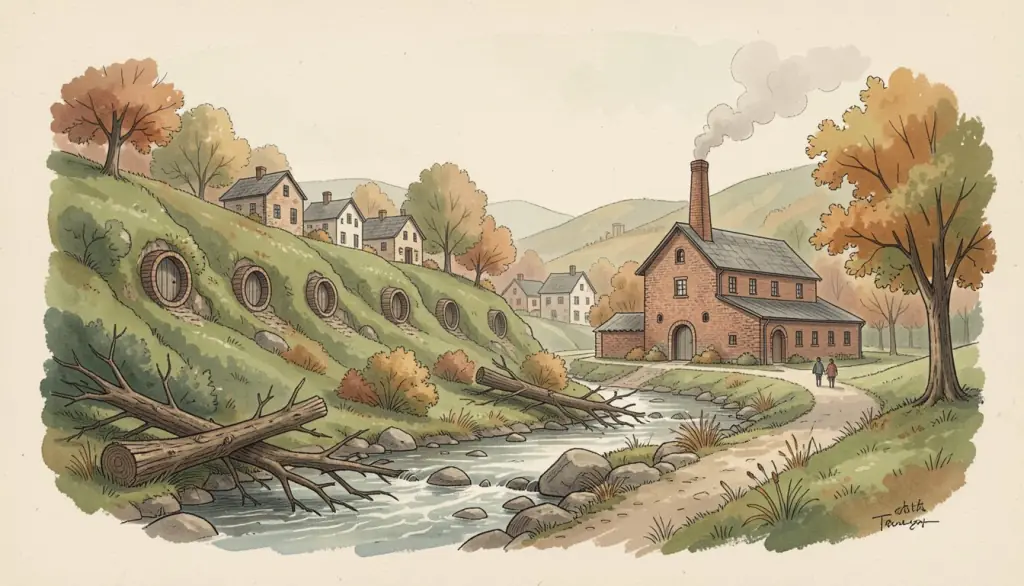
Release. In the summer of 3019 Treebeard let him go. Saruman talked to him, and Treebeard, who hates caging any living thing, freed him on his word that he would leave. Gandalf is not pleased. In "Many Partings" (The Return of the King, book VI, ch. 6) the returning company meets Saruman and Gríma on the road, ragged and bitter. Gandalf offers help once more, Saruman sneers at him and at Galadriel and Celeborn, and goes on.
Sharkey. He reaches the Shire before the hobbits. In "The Scouring of the Shire" (The Return of the King, book VI, ch. 8) Merry, Pippin, Sam and Frodo come home to find ruffians, rules, felled trees, and a new mill pouring filth into the river. The "Chief" is Lotho Sackville-Baggins, whose ambitions Saruman had been feeding for years. Behind Lotho is someone the ruffians call Sharkey. Tolkien's note to the chapter says the name was probably of Orkish origin, sharkû meaning "old man". On the site's word lists for that tongue, see Black Speech and Orkish Vocabulary.
The meaning of the Scouring. Saruman's Shire is a miniature Isengard: industry for its own sake, ugliness without purpose, and petty control. It is also revenge. He cannot harm Gandalf, so he harms the place Gandalf loved. The hobbits rise, the ruffians are beaten at the Battle of Bywater on 3 November, and the hobbits march to Bag End.
Mercy, again. At Bag End, Saruman tries to stab Frodo, and the knife breaks on his hidden mail. The hobbits want to kill him. Frodo forbids it. He says Saruman was once great and of a noble kind, and lets him go. Saruman, astonished, tells Frodo he has grown. It is the last time in the book that someone offers Saruman mercy, and the only time he is forced to see that a hobbit has outgrown him.
The end. He orders Gríma to follow, kicks him, and taunts him by revealing that Gríma killed Lotho. Gríma snaps, cuts Saruman's throat, and is shot dead by hobbit archers. A grey mist rises from the body, as Tolkien describes it, like smoke from a fire, and for a moment looms over the hill and looks toward the West. Then a cold wind blows from the West and it dissolves into nothing. The body shrinks, its skin turning as if long dead. Appendix B records the date as the end of the War of the Ring.
Saruman's Names and Their Languages
Saruman has more names than most characters, and each one marks a different audience. This section is a short version; the full linguistic treatment, including the Black Speech contrast and the names of Isengard, is in Saruman, Isengard and the Elvish Language.
| Name | Language | Meaning | Source |
|---|---|---|---|
| Curumo | Quenya | from curu, "skill" | Unfinished Tales, "The Istari" |
| Curunír | Sindarin | "man of skill"; in the Etymologies curunír is also a common word, "wizard" | Unfinished Tales; Appendix B; Etymologies |
| curu | Sindarin | skill (of the hand), craft, magic | The Silmarillion; Etymologies |
| Saruman | Speech of the Northmen, rendered through Old English | built on searu, "skill, cunning, device" | Tolkien's naming practice, Appendix F |
| Sharkey | Orkish, Anglicised | probably from sharkû, "old man" | The Return of the King, book VI, ch. 8, note |
| Istar, plural Istari | Quenya | wise one, wizard | Unfinished Tales; LotR |
| Ithron, plural Ithryn | Sindarin | wizard | Unfinished Tales |
| Orthanc | Sindarin, with a Rohirric double meaning | "Mount Fang"; in the Mark's tongue "Cunning Mind" | The Two Towers, book III, ch. 8 |
| palantír | Quenya | "far-seer", that which looks far away | LotR; Unfinished Tales, "The Palantíri" |
Two observations.
First, every name for Saruman except the Orkish one says the same thing: skill. Quenya Curumo, Sindarin Curunír and the English-shaped Saruman from searu are three translations of one idea. Tolkien rarely names a character so insistently. With Gandalf the names wander (Olórin, Mithrandir, Incánus, Tharkûn; see Gandalf's Elvish Name, Mithrandir). With Saruman they converge.
Second, searu in Old English is morally double. It can mean skill and ingenuity, and it can mean trickery and treachery. Tolkien the philologist chose a root that already contains the fall. How the language of Rohan is represented by Old English in the book is explained in Rohirric, the Language of Rohan.
Books vs Films vs The Rings of Power
The Lord of the Rings films (2001 to 2003)
Christopher Lee plays Saruman, and the films keep his main arc: the betrayal at Orthanc, Gríma at Edoras, the Uruk-hai, the fall of Isengard. Much is added or changed.
- The wizards' duel. The fight at Orthanc between Gandalf and Saruman, with each flinging the other across the room by force, is the film's invention. In the book Gandalf simply refuses and is imprisoned.
- The voice on Caradhras. In the film Saruman chants from Orthanc to bring down the snow. In the book Saruman is not shown there, and the source of the storm is left open. His chanted lines were written for the film, not by Tolkien.
- Possession of Théoden. The film makes Théoden literally possessed, with Saruman's spirit driven out by Gandalf. In the book Théoden is weakened by Gríma's counsel and restored by hope.
- Making the Uruk-hai. The birthing pits and the named Uruk Lurtz are film inventions; Tolkien leaves the breeding of the Uruk-hai mysterious.
- His death. The extended edition of The Return of the King has Gríma stab him on top of Orthanc, and he falls onto a spiked wheel. The cinema version cuts the scene. The Scouring of the Shire is omitted entirely, so Sharkey never appears.
The Hobbit films (2012 to 2014)
The Hobbit trilogy brings Saruman into a story whose book does not name him. An Unexpected Journey gives a meeting of the White Council at Rivendell, and The Battle of the Five Armies has Saruman, Elrond and Galadriel confront Sauron and the Nazgûl at Dol Guldur. The attack on Dol Guldur in 2941 is genuine Appendix B material, but the staging, the fight with the Ringwraiths and the dialogue are the films' own.
The Rings of Power
Saruman has not appeared in The Rings of Power. The show is set in the Second Age, and in Tolkien's chronology the Istari do not arrive until about Third Age 1000. The Stranger of Seasons 1 and 2 was revealed as Gandalf, as we explain in The Stranger Is Gandalf. Season 2 introduced a figure credited as the Dark Wizard, played by Ciarán Hinds, who has not been identified as Saruman. Recaps of Season 3, which premiered on 11 November 2026, connect that figure to the Blue Wizards instead; with the last episodes still to air, we do not go further than that. For the season itself, see the Rings of Power Season 3 preview.
How Tolkien Built Saruman
Saruman grew during the writing of The Lord of the Rings. He is not in The Hobbit, and the White Council is only a background phrase there. In the drafts of the sequel, published in The History of Middle-earth, Gandalf's delay in reaching the Shire needed an explanation, and a treacherous fellow wizard was the answer that became one of the book's main threads. Much of his backstory, the arrival at the Havens, Aulë's choice, the companions, the palantír mechanics, was worked out afterwards and appeared only in Unfinished Tales, after Tolkien's death.
That history explains a feature of the character: he is mostly seen from outside. We get Gandalf's report of him at the Council, Treebeard's verdict, the Uruks' boasts, the hobbits' view of Sharkey. We hear him at length in his own voice only a few times, at the parley, on the road home and at Bag End. Tolkien builds him like a rumour that becomes solid, and when we finally meet him, his charm is the most frightening thing about him, because we already know what he has done.
Tolkien also built him as a deliberate pair with Gandalf. The two arrive together, receive opposite trust, take opposite paths, and exchange colours: Gandalf comes back from death as the White, taking the place Saruman forfeited. The book even gives them parallel scenes of offering mercy. Gandalf offers Saruman freedom at Orthanc; Frodo offers him life at Bag End. Both times he refuses the gift and keeps his resentment.
Finally, Tolkien built him as Sauron's echo: two Maiar of Aulë's household who fall into wanting to rule others for their own good, one on a world scale, the other ending as the master of a ruined farming district. The repetition is the argument. The same temptation works at every size, and the Scouring of the Shire is where Tolkien brings it home, small, local and bureaucratic, for the hobbits to deal with themselves.
Our Take
Our argument is that Saruman is the most important villain in The Lord of the Rings for readers today, more than Sauron, and that the Scouring of the Shire is the chapter that proves it.
Sauron is too large to recognise in ordinary life. Nobody reading the book will be tempted to forge a Ring or raise Barad-dûr. Saruman's temptation is available to anyone with a little expertise and a little authority: the belief that knowing more entitles you to decide for others. Tolkien gives that belief its most sympathetic advocate, a genuine scholar, a real servant of the West for nearly two thousand years, and then lets us watch it hollow him out. His robe of many colours is the perfect symbol. He did not reject the light. He analysed it until it was no longer light.
We would also push back on a common reading, that Saruman fell because Sauron overpowered him through the palantír. The stone is the mechanism, not the cause. Appendix B puts his secret search for the Ring at 2851, a century and a half before he used the stone. By the time he looked into it, he already wanted what Sauron wanted. Sauron did not corrupt Saruman so much as recognise him.
That is why the mercy scenes are the true climax of his story. At Orthanc and again at Bag End, Saruman is offered a way out by someone who has every reason not to offer it. Both times he could have taken it. Tolkien's point is not that Saruman was doomed but that he chose, twice, with full knowledge. The grey mist that looks West and is blown away is not a punishment imposed from outside. It is the end of a road he kept walking.
Finally, cutting the Scouring is understandable filmmaking and costly interpretation. The films' Saruman dies dramatically on a tower. Tolkien's dies as a nuisance at a hobbit's front door, killed by his own abused servant, pitied by the hobbit he tried to stab. That smaller, harder ending is the one that says what Tolkien meant.
People Also Ask
Who is Saruman in Lord of the Rings?
Saruman the White is the head of the Wizards and of the White Council, a Maia of the people of Aulë called Curumo in Valinor, who came to Middle-earth about Third Age 1000. He settles in Orthanc, is ensnared by Sauron through a palantír, betrays the Council and tries to win the One Ring for himself.
Is Saruman a Maia?
Yes. Unfinished Tales ("The Istari") says the Wizards were Maiar in the shape of old men, and that Curumo was chosen by Aulë. Sauron had also been a Maia of Aulë's people.
What are Saruman's other names?
Curumo in Quenya, Curunír in Sindarin, Saruman among the Men of the North (from Old English searu, skill), and Sharkey in the Shire, probably from Orkish sharkû, "old man".
Why did Saruman turn evil?
Through pride, envy of Gandalf and long study of the Rings. He wanted the One Ring for himself well before about Third Age 3000, when he used the palantír of Orthanc and was ensnared by Sauron.
How does Saruman die in the books?
On 3 November 3019, after Frodo spares him at Bag End, Gríma Wormtongue cuts his throat. A grey mist rises, looks West, and is blown away by a cold wind.
How does Saruman die in the films?
In the extended edition of The Return of the King, Gríma stabs him on Orthanc and he falls onto a spiked wheel. The Scouring of the Shire is cut.
Who was more powerful, Saruman or Gandalf?
Saruman was the head of the order at first, though Círdan judged Gandalf the greatest. After Gandalf returns as the White, he casts Saruman out and breaks his staff with a word.
What is the white hand of Saruman?
His emblem. His Uruk-hai bear a white hand on their shields and an S-rune on their helms, marking them as his own forces rather than Sauron's.
Is Saruman in The Hobbit book?
Not by name. The book only mentions the White Council driving out the Necromancer; the films add him at Rivendell and Dol Guldur.
Is Saruman in The Rings of Power?
No. The show is set in the Second Age, long before the Wizards arrive. Its Dark Wizard, played by Ciarán Hinds, has not been identified as Saruman.
Learn the Language of the Wise
Saruman's Elvish names, Curumo and Curunír, and the names of his world, Orthanc, palantír, Istari, are Quenya and Sindarin. If you want to read them as Tolkien built them, start our free Elvish course, which teaches both languages with words Tolkien actually wrote, or try writing Curunír in Tengwar with the Tengwar name tool.
Related Reading
- Characters of Middle-earth: Who's Who in Tolkien's World
- Radagast the Brown Explained: Aiwendil, Rhosgobel and the Wizard of Beasts and Birds
- Aragorn Explained: Strider, Thorongil and King Elessar in the Books and Films
- Wizards of Middle-earth: The Istari Explained
- Gandalf Explained
- Saruman, Isengard and the Elvish Language: Black Speech vs Sindarin
- The Blue Wizards: Alatar and Pallando
- Sauron Explained
- The Nazgûl Explained
- Uruk-hai Explained
- Ents and Huorns
- Rohirric: The Language of Rohan
People Also Ask
Who is Saruman in Lord of the Rings?
Saruman the White is the head of the order of Wizards, the Istari, and of the White Council. He is a Maia of the people of Aulë, called Curumo in Valinor, who came to Middle-earth about the year 1000 of the Third Age. He settles in the tower of Orthanc at Isengard, is ensnared by Sauron through a palantír, betrays the Council and tries to win the One Ring for himself.
Is Saruman a Maia?
Yes. Unfinished Tales ("The Istari") says the Wizards were Maiar sent by the Valar in the shape of old men, and that Saruman, whose name in Valinor was Curumo, was chosen by Aulë the Smith. Sauron had also been a Maia of Aulë's people, which makes Saruman's fall an echo of Sauron's.
What are Saruman's other names?
Curumo is his Quenya name in Valinor, Curunír his Sindarin name among the Elves, and Saruman the name used by Men of the North, which Tolkien renders through Old English searu, skill or cunning. In the Shire he is called Sharkey, which Tolkien says probably comes from the Orkish sharkû, old man.
Why did Saruman turn evil?
Through pride, envy of Gandalf and long study of the Rings of Power. He came to desire the One Ring for himself, and when he used the palantír of Orthanc, around Third Age 3000 according to Appendix B, Sauron ensnared him. He convinced himself that the Wise should rule for everyone's good, which is exactly the domination the Wizards were forbidden.
How does Saruman die in the books?
In the Shire, on 3 November 3019, the day of the Battle of Bywater. Frodo spares his life and lets him go, but Saruman kicks Gríma Wormtongue, who cuts his throat at the door of Bag End. A grey mist rises from the body, looks to the West, and is blown away by a cold wind.
How does Saruman die in the films?
In the extended edition of The Return of the King, Gríma stabs him on top of Orthanc and he falls onto a spiked wheel below. The cinema cut leaves his fate open. The films drop the Scouring of the Shire, so Saruman never becomes Sharkey on screen.
Who was more powerful, Saruman or Gandalf?
At the start Saruman was counted the greatest of the order and was its head, though Círdan judged Gandalf the greatest when they landed. After Gandalf returns as the White, he is plainly stronger: at Orthanc he casts Saruman from the order and breaks his staff with a word.
What is the white hand of Saruman?
It is Saruman's emblem. His Uruk-hai carry a small white hand on a black field on their shields and an S-rune of white metal on their helmets, and a white hand is set on a pillar beside the road to Isengard. It marks his forces as his own and not Sauron's, which is the whole point of his rebellion.
Is Saruman in The Hobbit book?
Not by name. The Hobbit only mentions the White Council driving out the Necromancer. The Hobbit films add Saruman at Rivendell and at Dol Guldur, using material from Appendix B and Unfinished Tales. Christopher Lee plays him in both trilogies.
Is Saruman in The Rings of Power?
No. The Rings of Power is set in the Second Age, more than a thousand years before the Wizards arrive in Tolkien's chronology. The show's Dark Wizard, played by Ciarán Hinds, has not been identified as Saruman, and Season 3 recaps link that figure to the Blue Wizards instead.
Related Tags
Learn Elvish Free
39 free Elvish lessons, an AI tutor, and spaced repetition review — no credit card required.
Start Learning Free