Boromir Explained: Son of Denethor, the Horn of Gondor and the Fall at Parth Galen
Try It Yourself — Free Elvish Tools
Quick Answer: Boromir is the elder son of Denethor II, Steward of Gondor, and the Man of Gondor in the Fellowship of the Ring. A prophetic dream of the Sword that was broken sent him north to Rivendell, where he joined the Company at the Council of Elrond. Drawn by the Ring as a weapon for his besieged city, he tried to take it from Frodo at Parth Galen on 26 February 3019, repented within the hour, and died defending Merry and Pippin from Orcs. His great horn, cloven in two, was heard as far away as Gondor.
Boromir is the member of the Fellowship most readers argue about. He is brave, generous with his strength and loyal to his people, and he is also the one who breaks the Company apart by trying to seize the Ring. Tolkien gives him a fall and a redemption inside a single morning, and then tells the redemption first: when The Two Towers opens, Boromir is already dying, and we learn what he did to Frodo only from his own confession.
This guide sets out what the books say about him, from his birth in Minas Tirith to his funeral boat on the Great River. It keeps the Peter Jackson film material in its own section, says plainly what is invented, and ends with our own reading of why Boromir is one of Tolkien's most carefully built characters. For the people he came from, see Men of Middle-earth; for the full cast around him, start with Characters of Middle-earth.
Boromir at a Glance
| People | Man of Gondor, of Númenórean descent through the House of Húrin, the line of the Stewards (LotR, Appendix A) |
| Position | Elder son and heir of the Ruling Steward of Gondor; a captain of Gondor's armies |
| Father | Denethor II, Ruling Steward of Gondor from Third Age 2984 |
| Mother | Finduilas, daughter of Adrahil, Prince of Dol Amroth; died 2988 (Appendix A and B) |
| Brother | Faramir, five years younger |
| Born | Third Age 2978 (Appendix B) |
| Died | 26 February 3019, at Parth Galen below Amon Hen (Appendix B; The Two Towers, book III, ch. 1) |
| Age at death | About forty |
| Appearance | Tall, with a fair and noble face, dark-haired and grey-eyed, proud and stern (The Fellowship of the Ring, book II, ch. 2) |
| Gear | Sword, round shield and the great horn of the Stewards; a belt of gold from Galadriel |
| First appearance | The Fellowship of the Ring, book II, ch. 2, "The Council of Elrond" |
| Burial | Laid in an Elven-boat and sent over the falls of Rauros toward the Sea |
| Film actor | Sean Bean (The Lord of the Rings trilogy, 2001 to 2003) |
| Rings of Power | Not in the show; he belongs to the end of the Third Age |
Boromir Timeline
"Mae govannen" — want to actually speak Elvish?
Try It Free →Dates come from Appendix B of The Lord of the Rings, except where another source is named. Tolkien gives no birthday for Boromir, so his age is approximate.
| Age and year | Event |
|---|---|
| Third Age 2050 | King Eärnur is lost in Minas Morgul; Mardil Voronwë becomes the first Ruling Steward (Appendix A) |
| Third Age 2978 | Birth of Boromir, son of Denethor |
| Third Age 2983 | Birth of Faramir |
| Third Age 2984 | Death of Ecthelion II; Denethor II becomes Steward |
| Third Age 2988 | Finduilas, Boromir's mother, dies young |
| Third Age 3018, 20 June | Sauron attacks Osgiliath; the brothers fight in its defence |
| 3018, before the assault | The dream of the Broken Sword comes to Faramir, again to him, and once to Boromir |
| 3018, 4 July | Boromir sets out from Minas Tirith |
| 3018, 25 October | The Council of Elrond |
| 3018, 25 December | The Company of the Ring leaves Rivendell |
| 3019, January | Caradhras defeats the Company; they pass through Moria; Gandalf falls at the Bridge of Khazad-dûm |
| 3019, 16 February | The Company leaves Lothlórien by boat |
| 3019, 26 February | Breaking of the Fellowship. Death of Boromir; his horn is heard in Minas Tirith |
| 3019, March | Pippin offers his service to Denethor in payment for Boromir's death (The Return of the King, book V, ch. 1) |
| 3019, 15 March | Denethor dies in Minas Tirith during the Battle of the Pelennor Fields |
Who Boromir Is
Boromir is the heir of the Ruling Steward of Gondor, the realm that has stood for three thousand years on the borders of Mordor. He is not a prince of the royal line. The kings of Gondor ended in Third Age 2050, when Eärnur rode into Minas Morgul and never came back, and since then the realm has been ruled by Stewards of the House of Húrin, who govern "until the King shall return" while no king ever does (Appendix A).
Three facts define him:
- He is a defender, not a ruler. Appendix A describes him as a man who delighted chiefly in arms, fearless and strong but caring little for lore, apart from tales of old battles. He took no wife, and Appendix A compares him to King Eärnur of old, the warrior king who never married.
- He is his father's favourite. Appendix A says Denethor loved Boromir more than Faramir, and that the two brothers loved each other without rivalry despite it.
- He measures everything by Gondor. At the Council of Elrond, on the river and on the lawn of Parth Galen, every argument Boromir makes comes back to the safety of Minas Tirith. That is his strength, and it is the opening through which the Ring reaches him.
Family and the House of the Stewards
Boromir's family is unusually well documented, because Appendix A tracks the Stewards of Gondor generation by generation.
| Person | Relation | Read more |
|---|---|---|
| Denethor II | Father; Ruling Steward of Gondor, dies 15 March 3019 | This post, "After His Death" |
| Finduilas | Mother; daughter of Adrahil of Dol Amroth, died 2988 | Appendix A |
| Faramir | Younger brother; Captain of the Rangers of Ithilien, later Prince of Ithilien | This post, "After His Death" |
| Ecthelion II | Grandfather; Steward before Denethor | Appendix A |
| Imrahil | Uncle; Prince of Dol Amroth, brother of Finduilas | Appendix A |
| Mardil Voronwë | Ancestor; first Ruling Steward | This post, "Boromir's Name and Language" |
| Elendil and Isildur | The royal line the Stewards serve in name | Elendil Explained; Isildur Explained |
| Aragorn | Heir of Isildur, whose claim Boromir must accept | Aragorn's Elvish Names |
The Stewards held their office from Mardil Voronwë onward. They wore no crown, and in the hall of Minas Tirith the Steward sat on a plain black chair of stone at the foot of the steps below the empty throne (The Return of the King, book V, ch. 1). Boromir grew up looking at that empty throne every day.
Faramir tells Frodo that Boromir once asked their father how many hundreds of years it would take before a Steward could become king, if the king did not return. Denethor answered that in Gondor ten thousand years would not suffice (The Two Towers, book IV, ch. 5). Boromir had thought about the gap between holding power and owning it long before he heard of the Ring.
The Dream of the Broken Sword
Boromir's journey begins with a dream that was not his. At the Council of Elrond he explains that on the eve of the sudden assault on Osgiliath, his brother Faramir dreamed that the eastern sky grew dark while a pale light lingered in the west, and out of it a voice cried a riddling verse. Its opening line is "Seek for the Sword that was broken" (The Fellowship of the Ring, book II, ch. 2). The verse goes on to name Imladris, a doom near at hand, Isildur's Bane and a Halfling.
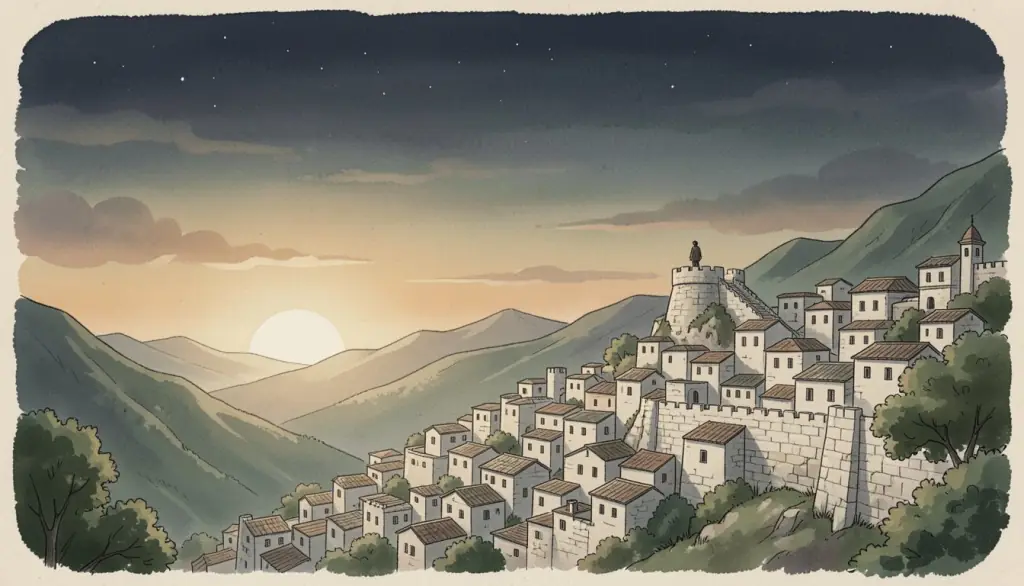
The dream came to Faramir again, and once to Boromir. Neither brother understood it. Denethor, who was learned in the old lore of Gondor, could only tell them that Imladris was the ancient Elvish name of a far northern dale where Elrond the Half-elven dwelt. Faramir wanted to go. Boromir took the errand himself, because, as Faramir later tells Frodo, the road was doubtful and dangerous and Boromir would not let his brother face it (The Two Towers, book IV, ch. 5).
Two things about the dream deserve attention.
First, it was meant for Faramir, who dreamed it repeatedly; Boromir dreamed it once. Tolkien never comments on this, but the choice of messenger matters: the brother who later refuses the Ring stays home, and the brother who is tempted by it goes.
Second, "the Sword that was broken" is Narsil, the sword of Elendil, whose shards were kept in Rivendell by the heirs of Isildur. Boromir rides north looking for a weapon and finds a king. For the sword itself, see Andúril Meaning; for why the Ring is called Isildur's Bane, see Isildur Explained.
Boromir at the Council of Elrond
Boromir's first scene is the Council of Elrond, and he speaks more in it than almost anyone except Gandalf and Elrond.
Gondor's report. He tells the Council that Gondor's strength is waning. In the summer Sauron's forces took eastern Osgiliath, led by a dreadful Black Captain; the defenders were driven back and the bridge was broken behind them, and Boromir was among the last to hold out. Gondor fights alone, and it cannot fight forever.
The Sword. When Aragorn shows the broken sword and is revealed as Isildur's Heir, Boromir is wary rather than glad, and Bilbo answers his doubt with the verse that begins "All that is gold does not glitter." Boromir says Gondor would welcome the sword of Elendil in its need, and leaves the question of kingship open.
The Ring as a weapon. The central moment comes later. When the Council discusses what to do with the Ring, Boromir asks why they speak only of hiding it or destroying it. Why not use it? In the hands of the free lords of the West, he argues, it could defend them against Sauron. Elrond answers that the Ring cannot be used: anyone strong enough to wield it would set himself on Sauron's throne. Boromir accepts this, or seems to.
When Elrond chooses the Company, he names Boromir as one of the nine. Boromir is going back to Minas Tirith anyway, and his way runs south with the Ring for a long stretch. Nine Walkers are set against the Nine Riders, and Boromir is one of two Men among them, beside four hobbits led by Frodo, the Elf Legolas and the Dwarf Gimli. For the making of the thing he is drawn to, see How Was the One Ring Made?
The Road South: Caradhras, Moria and Lórien
Between Rivendell and the Great River, Boromir is one of the Company's most useful members, and Tolkien goes out of his way to show it.
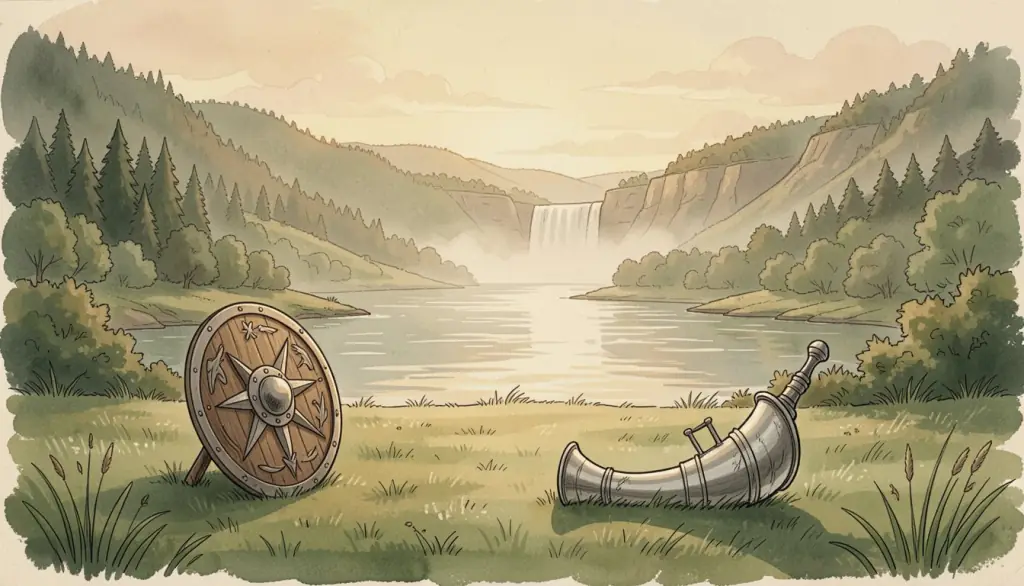
The horn at the gate. As the Company leaves Rivendell, Boromir blows a blast on his horn, and it echoes through the valley. Elrond rebukes him gently: "Slow should you be to blow that horn again" until he is in great need (The Fellowship of the Ring, book II, ch. 3). Boromir answers that he has always let his horn cry at setting forth, and that he will not go into the dark like a thief in the night.
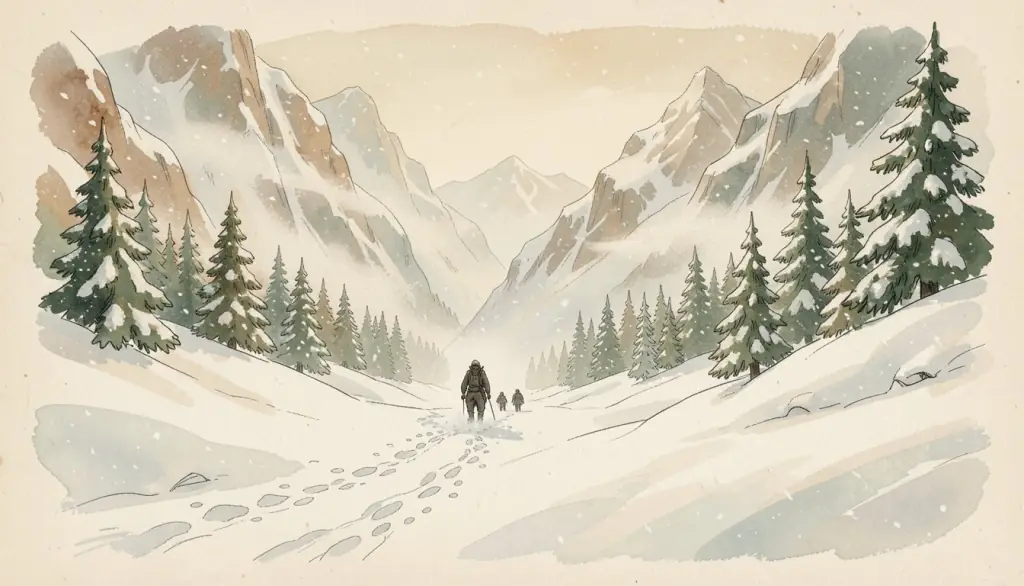
Caradhras. When the snow of Caradhras traps the Company, Boromir and Aragorn force a path down through the drifts, the two tallest of the Company breaking a way for the hobbits, and they carry the smaller members through the deepest snow. (The Fellowship of the Ring, book II, ch. 3).
Moria. In the Mines of Moria Boromir fights at the door of the Chamber of Mazarbul, and at the Bridge of Khazad-dûm he lifts his horn and blows it, and the sound echoes through the halls and makes the Orcs pause for a moment (The Fellowship of the Ring, book II, ch. 5).
Lothlórien. Boromir did not want to enter the Golden Wood, having heard in Gondor that few who go in come out unscathed. After Galadriel tests each of the Company with her gaze, he tells Aragorn he would not be too sure of the Lady and her purposes (The Fellowship of the Ring, book II, ch. 7). He never says what she offered him, and Tolkien leaves it unspoken.
At the parting Galadriel gives each of the Company a gift. To Boromir she gives a belt of gold (The Fellowship of the Ring, book II, ch. 8).
For the places on this road, see Rivendell and Imladris Explained, Balrogs of Middle-earth and Lothlórien Explained.
The River and Amon Hen
The ten days on the Anduin are where Boromir begins to come apart, and Tolkien shows it in small signs.
On the river, Frodo sees a dark shape following them in the water, which we later learn is Gollum, and the Company is attacked by Orc-archers at Sarn Gebir. Aragorn insists they keep to the west bank and land at Parth Galen, the green lawn at the foot of Amon Hen, the Hill of Sight.
There, on 26 February 3019, the Company must decide: east toward Mordor, or west and south toward Minas Tirith. Aragorn leaves the choice to Frodo, who asks for an hour alone. He walks up into the woods on the slopes of Amon Hen.
Boromir follows him.
Boromir begins gently. He says he has come to help, and he talks reasonably about Gondor's need and the folly of walking into Mordor. Then he begins to argue for the Ring itself. The Ring is a gift, he says; it could be used; it is madness to throw it away. He asks Frodo to lend it to him, only to take it to Minas Tirith. As Frodo refuses, Boromir's face changes, and his argument turns into accusation: the Elves and the wizard have deceived Frodo, and the Ring is his by chance only. Finally he springs at Frodo to take it by force.
Frodo slips the Ring onto his finger and vanishes, the same escape Bilbo once used under the Misty Mountains. Boromir, grasping at empty air, trips over a stone and falls on his face. And then, Tolkien writes, he lies still, as if his own curse had struck him down, and suddenly he weeps. The madness has passed. He calls out to Frodo to come back, but Frodo has gone.
Nothing Boromir says on Amon Hen is new. The Council speech and the plea to Frodo are the same idea in two tones, reasoned and desperate. The Ring has not changed his mind; it has only removed his restraint. For the larger question of what the Ring does to the people who carry or desire it, see Sauron Explained.
The Death of Boromir at Parth Galen
Boromir's death is not shown in The Fellowship of the Ring. Tolkien ends that volume with Frodo and Sam crossing the river alone, and opens The Two Towers with "The Departure of Boromir" (book III, ch. 1). The order matters, and we come back to it below.
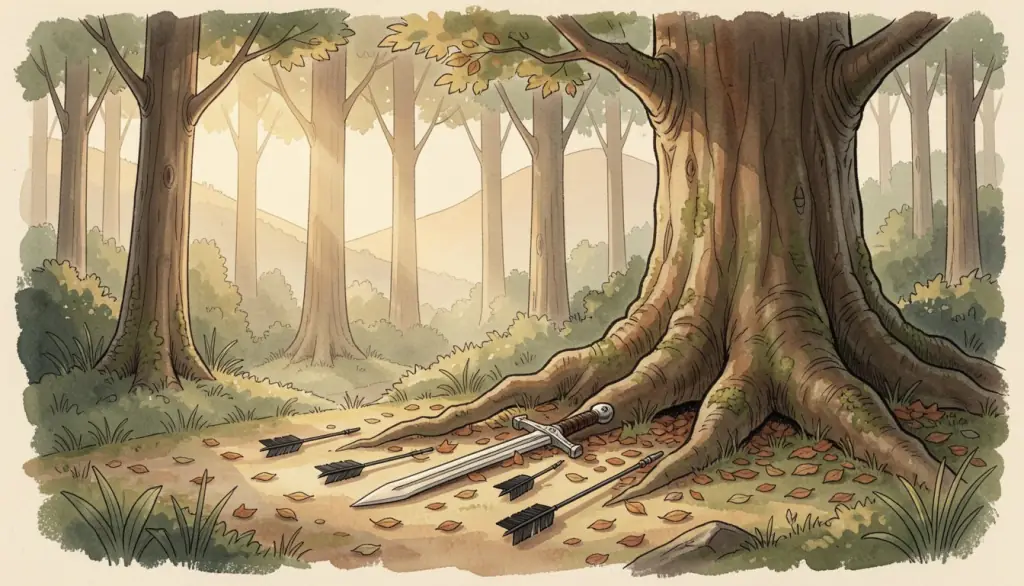
Aragorn, hunting for Frodo on Amon Hen, hears a horn in the woods below. It is Boromir's horn, blown in great need. Aragorn runs down, but by the time he arrives the fighting is over. He finds Boromir sitting with his back to a great tree, pierced with many black-feathered arrows, his sword still in his hand but broken near the hilt, his horn cloven in two at his side. Many Orcs lie slain around him and at his feet.
Boromir is still alive, barely. He tells Aragorn what happened: the Orcs have taken the Halflings, and he does not think they are dead. Then he makes his confession: "I tried to take the Ring from Frodo" (The Two Towers, book III, ch. 1). He says he is sorry and that he has paid. He asks Aragorn to go to Minas Tirith and save his people, because he himself has failed.
Aragorn does not let that stand. He tells Boromir that he has not failed but conquered, and that few have gained such a victory. He promises that Minas Tirith shall not fall. Boromir smiles, and dies.
Several details in the book matter and are often lost:
- No named killer. The book names no Orc who fires the arrows. The Orcs at Parth Galen are a mixed band: Saruman's Uruk-hai under Uglúk together with Orcs of Mordor and of the Misty Mountains. Boromir is simply overwhelmed. See Uruk-hai Explained.
- He fought for the hobbits. Aragorn had sent Boromir after Merry and Pippin, who ran off searching for Frodo. He dies protecting the two smallest members of the Company.
The Horn of Gondor
Boromir's horn is one of the most memorable objects in The Lord of the Rings, and the book gives it a history.
Where it came from. In The Two Towers (book IV, ch. 5) Faramir tells Frodo that the horn was the great horn of their house. It came down from Vorondil, father of Mardil, who hunted the wild kine of Araw in the far fields of Rhûn. Araw is the Sindarin form of the name of Oromë, the Vala of hunting, and the white kine near the Sea of Rhûn were said to descend from his herds. The horn is therefore an heirloom from the very beginning of the House of the Stewards, older than their rule.
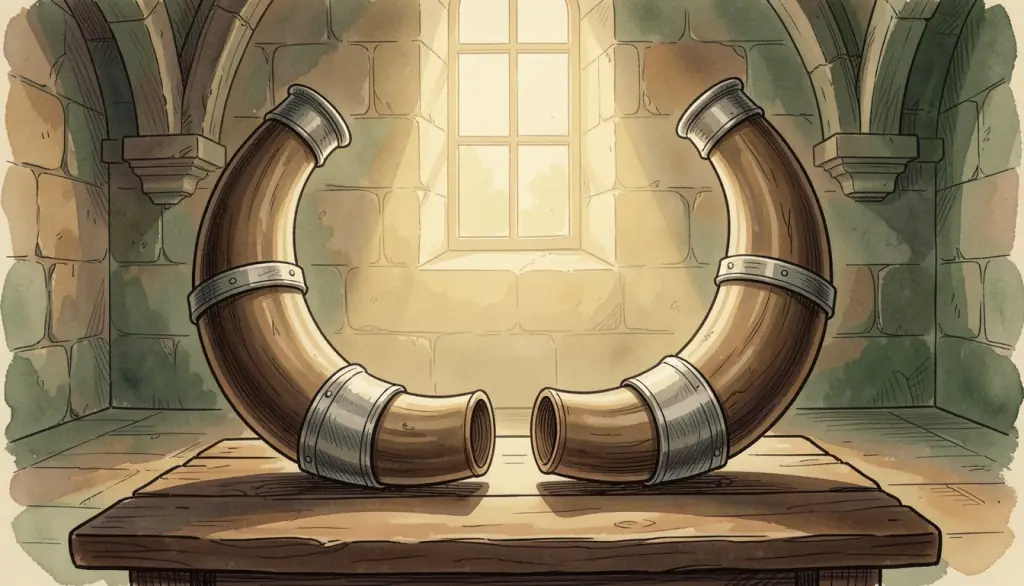
What it could do. Faramir also says that, according to the lore of his house, if the horn were blown at need anywhere within the old bounds of Gondor, its voice would not go unheeded. In the book we hear it three times: at the gate of Rivendell, at the Bridge of Khazad-dûm, and at Parth Galen in his last fight.
The horn heard far away. Appendix B records, under 26 February 3019, that Boromir's horn was heard in Minas Tirith. Faramir tells Frodo that he heard it himself, faintly, blowing from the North, and that he feared it. Parth Galen lay far beyond the river frontier of Gondor in those days, so the horn reached further than its lore promised.
The cloven horn. The horn was broken in two in the last fight, and it went over Rauros with Boromir's boat. It did not stay lost: the two halves were afterwards found along the Anduin and brought to Denethor. In The Return of the King (book V, ch. 1), when Pippin first comes before the Steward, Denethor holds the cloven horn and asks him about it.
The Funeral Boat and the Lament
Aragorn, Legolas and Gimli do not have time to build a grave. They lay Boromir in one of the Elven-boats from Lórien, with his helm beside him and his cloven horn and the hilt and shards of his sword across his lap, and they set the swords of his enemies beneath his feet. Then they push the boat out into the current and let the Anduin carry it over the falls of Rauros (The Two Towers, book III, ch. 1).
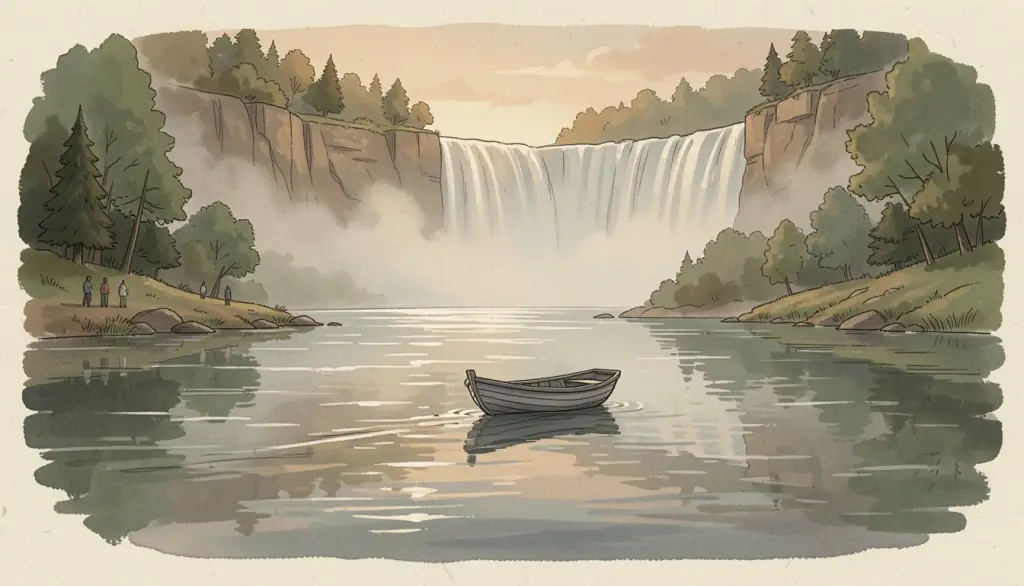
As the boat goes, Aragorn and Legolas sing a lament built on the winds, West, South and North, each asked for news of Boromir and each answering with loss. Its refrain is a city waiting at the White Tower for a man who will not come.
Faramir later tells Frodo that, some nights after he heard the horn, he saw a grey boat drift past on the Anduin in the dark, with his brother lying dead in it (The Two Towers, book IV, ch. 5). Whether he saw it truly or in a vision, Tolkien leaves open.
For Elvish phrases used for remembrance, see our guide to Elvish Funeral and Memorial Phrases.
After His Death: Faramir, Denethor and Pippin
Boromir dies at the start of The Two Towers, but he is present in almost every Gondor chapter that follows. His absence becomes a force in the story.
Faramir. In Ithilien, Faramir meets Frodo and Sam, learns that Boromir travelled with them, and slowly works out that his brother was tempted by something Frodo carries. When Sam lets slip that it is the Ring, Faramir does not try to take it. He says he would not take it if he found it lying by the highway (The Two Towers, book IV, ch. 5). Faramir speaks of his brother with love but without illusion: proud and warlike, honest, and devoted to Gondor. Appendix A adds that the brothers were close, and that Boromir had been Faramir's helper and protector since childhood.
Pippin. In Minas Tirith Pippin tells Denethor that Boromir died defending him, and offers his sword and service to the Steward in payment of that debt (The Return of the King, book V, ch. 1). A hobbit becomes a soldier of Gondor because of Boromir.
Denethor. For Denethor, Boromir's death is a wound that never closes. He holds the cloven horn and questions Pippin closely about the end. During the siege he says, in bitterness, that Boromir would have brought him the Ring rather than let it go into Mordor. Gandalf answers that Boromir would not have brought it but kept it, and that Denethor would not have known his own son (The Return of the King, book V, ch. 4). Denethor wanted Boromir back and could not see that the Boromir he imagined was the one the Ring had nearly made. That grief, together with what he saw in the palantír, drives him to despair and to his death on 15 March 3019.
Boromir's Name and Language
Boromir lived among Westron speakers. The everyday language of Gondor was the Common Speech, and that is what he spoke with hobbits and Men alike. But the noble houses of Gondor gave their children Sindarin names, as a mark of descent from the Númenóreans who were Elf-friends. That is why the whole family has Elvish-looking names in an English-speaking text: Denethor, Boromir, Faramir, Finduilas. Our guide to Westron, the Common Speech explains how this works across Gondor and Rohan.
What Tolkien did and did not say. Tolkien printed no meaning for the name Boromir in The Lord of the Rings. Two things can be said with sources:
- The ending -mir is Sindarin mîr, "jewel, precious thing, treasure" (The Etymologies). It appears in many names of the Edain and of Gondor.
- Tolkien's root for endurance and loyalty gives Quenya voronda, "faithful, steadfast," and voronwë, "steadfastness, loyalty" (Unfinished Tales). The first Ruling Steward, Boromir's ancestor Mardil, bore the title Voronwë, "the Steadfast" (Appendix A). Readers usually connect the bor- of Boromir to the same root.
Read that way, the name suggests something like "steadfast jewel." It is a reasonable reconstruction from Tolkien's own vocabulary, and it fits the house, but it is ours, not Tolkien's. We say so because many name sites print it as if it came from the book.
Older Boromirs. Boromir was not the first of the name. Appendix A records that in the days of the Steward Denethor I, his son Boromir drove the Uruks of Mordor out of Ithilien after Osgiliath was taken, and that Boromir of the Nine Walkers was later named after him. The Silmarillion also has a Boromir among the House of Bëor in the First Age. The name runs through the oldest families of Men, which is part of why Denethor chose it.
How to say it. By the stress rule in Appendix E, a name whose second-last syllable is short and open takes the stress one syllable earlier. Boromir is therefore stressed on the first syllable: BO-ro-mir. The same rule gives FA-ra-mir and DE-ne-thor.
Words from Boromir's world, with sources:
| Word or name | Meaning | Source |
|---|---|---|
| Gondor | Land of Stone (gond + dor) | LotR |
| Minas Tirith | Tower of Guard (minas + tirith) | LotR |
| Osgiliath | Citadel of the Stars | LotR |
| Ithilien | Land of the Moon, from Ithil "moon" | LotR |
| Anduin | Great River, from and "long" + duin "river" | LotR; Etymologies |
| Amon Hen | Hill of Sight, from amon "hill" + hen "eye" | LotR |
| Parth Galen | Green Sward, from parth "field, lawn" + calen "green" | LotR; Unfinished Tales |
| Imladris | Sindarin name of Rivendell | LotR |
| mîr | jewel, treasure | Etymologies |
| arandur | steward, literally king's servant (Quenya) | Unfinished Tales; Letters |
| voronwë | steadfastness, loyalty (Quenya) | Unfinished Tales |
The Quenya word arandur, "king's servant," is the formal title behind the English "Steward." It describes the whole of Boromir's house in one word: servants of a king who has not come back. To see any of these names written in Elvish letters, try our Tengwar name tool.
Books vs Films vs The Rings of Power
Sean Bean's Boromir in Peter Jackson's The Fellowship of the Ring (2001) is one of the most admired performances in the trilogy, and much of it is faithful to the book's spirit. A good deal of the film material, though, is invented. These are film choices, not book lore:
- "One does not simply walk into Mordor." The line, now a famous internet meme, was written for the film's Council scene. Book Boromir argues for using the Ring but never says it.
- The Ring on Caradhras. In the film, Boromir picks up the Ring from the snow when Frodo drops it and holds it a moment too long. This scene is not in the book.
- Sword lessons. The film shows Boromir teaching Merry and Pippin swordplay on the road south, a warm scene that the book does not contain, though it fits the book's portrait of him as their protector.
- Lurtz. The Uruk-hai who shoots Boromir with three arrows and is killed by Aragorn is a film-only character. In the book no named Orc kills him, and Aragorn arrives after the fight is over.
- Where the death falls. The film puts Boromir's death at the end of The Fellowship of the Ring, shown in full. The book places it at the start of The Two Towers and tells it after the fact, through Aragorn's discovery and Boromir's confession.
- "My brother, my captain, my king." Boromir's last words to Aragorn in the film are a film invention. In the book he never calls Aragorn king. He asks him to save Minas Tirith.
- The Osgiliath flashback. The extended edition of The Two Towers adds a flashback in which Boromir and Faramir retake Osgiliath and Denethor sends Boromir to Rivendell. In the book the brothers do defend Osgiliath in June 3018, but there is no scene of Denethor choosing Boromir over Faramir for the errand; Boromir claims it himself.
What the films get right, in our view: his warmth, his love for his city and the pull of the Ring as a weapon. What they change: the film makes his redemption a battle scene; the book makes it a confession. Boromir always fought well. His victory is that he tells the truth about what he did.
The Rings of Power
The Rings of Power is set in the Second Age, thousands of years before Boromir's birth. Gondor itself is founded only at the end of that Age, by Elendil and his sons; Elendil and Isildur do appear in the show. Boromir, Denethor and Faramir have not appeared in Seasons 1 to 3, and no casting for any of them has been announced. Season 3 premiered on Prime Video on 11 November 2026, with episodes 5 and 6 due on 18 November and the finale on 25 November; see our Season 3 preview. Any claim online that Boromir is in the show is not supported by anything Prime Video has announced.
How Tolkien Built Boromir
Boromir is built around three structural choices, and seeing them explains why he works.
1. He is the reasonable voice. At the Council, Boromir says what a sensible general would say: use the weapon you have. Tolkien gives that argument to an honourable man so that the reader feels its force. Boromir is the proof that the Ring's danger is aimed at good intentions.
2. His fall and his redemption are split across the volumes. The attempt on Frodo closes The Fellowship of the Ring; the confession opens The Two Towers. Between them, Tolkien moves the point of view from Frodo to Aragorn. So we see the crime through the victim's eyes and the repentance through a friend's eyes. We are never inside Boromir's head at either moment. That is a deliberate restraint: Tolkien refuses to explain Boromir from the inside, and leaves us to judge him by what he does.
3. He is paired with Faramir. Faramir is written as Boromir's answer. Both brothers are offered the Ring; both have the same father, the same city and the same war. Boromir reaches for it, and Faramir says he would not pick it up from the road. Faramir himself makes the comparison in Ithilien, and the reader cannot avoid it. The pair shows that the Ring's power is real but not absolute: the same situation produces opposite choices in two men of the same blood.
Why Boromir Matters
Boromir matters because he is the only member of the Fellowship who falls to the Ring and the only one whose fall the book forgives completely.
Gollum is consumed by the Ring; Saruman and Denethor are ruined by desire for its kind of power. Boromir fails openly, in a moment of madness, and within the hour he has repented, confessed and died for others. Aragorn's verdict, that he has conquered, is the book's verdict too.
His story also drives the plot. The breaking of the Fellowship sends Merry and Pippin to Fangorn, Aragorn into Rohan and Frodo east alone. His failure is part of the plan that works. For the hobbits whose path his death redirects, see Hobbits of Middle-earth.
Our Take
Our view, stated plainly: Boromir is the moral centre of The Fellowship of the Ring, not its weak link. The book is built to test whether the Ring can be resisted, and every other member of the Company is either too great, too humble or too far from it to be tempted in the ordinary way. Boromir is the control case. He shows that a brave, loyal and honest man, wanting only good things for his people, will reach for the Ring if he is near it long enough. Without him, the Ring's danger would be something we are told about. With him, it is something we watch happen.
We also think readers underrate how clearly Tolkien forgives him. Boromir names the act, takes the blame and asks nothing for himself except that Aragorn save the city. In Tolkien's world repentance often comes too late or not at all; Boromir turns back in time, and his death does not undo that but seals it. And Aragorn keeps the promise: Minas Tirith does not fall, saved by the heir whose claim Boromir once doubted.
People Also Ask
Who is Boromir in Lord of the Rings?
Boromir is the elder son of Denethor II, Steward of Gondor, and one of the nine members of the Fellowship. He came north because of a prophetic dream, tried to take the Ring from Frodo at Parth Galen, repented, and died defending Merry and Pippin on 26 February 3019.
Why did Boromir go to Rivendell?
A dream told Faramir, again and again, and once Boromir, to seek the Sword that was broken in Imladris. Boromir claimed the dangerous errand, left Minas Tirith on 4 July 3018 and reached Rivendell in time for the Council of Elrond.
How does Boromir die in the book?
Orcs including Saruman's Uruk-hai attack at Parth Galen. Boromir defends Merry and Pippin, blows his horn and is shot with many black-feathered arrows. Aragorn finds him dying with slain Orcs around him, and hears his confession.
Why did Boromir try to take the Ring?
He wanted it as a weapon to save Gondor. The Ring fed that wish until, alone with Frodo on Amon Hen, he tried to seize it. Frodo escaped by putting it on, and Boromir immediately repented.
What is the horn of Gondor?
The great horn of the House of the Stewards, which Faramir says came from Vorondil, who hunted the wild kine of Araw in Rhûn. Boromir blew it at Parth Galen, it was heard in Gondor, and its cloven halves came to Denethor.
Who were Boromir's parents and brother?
His father was Denethor II, Ruling Steward of Gondor; his mother was Finduilas of Dol Amroth, who died in 2988. His younger brother was Faramir, and Prince Imrahil was his uncle.
How old was Boromir when he died?
He was born in Third Age 2978 and died on 26 February 3019, so he was about forty or forty-one. Tolkien gives no birthday.
Does Boromir say "One does not simply walk into Mordor" in the book?
No. The line was written for the 2001 film. Book Boromir argues for using the Ring at the Council but never says that sentence.
What does the name Boromir mean?
Tolkien printed no meaning. The ending -mir is Sindarin for jewel, and bor- is usually linked to the root of Quenya voronda, faithful. "Steadfast jewel" is a reasonable reconstruction, not Tolkien's gloss.
Is Boromir in The Rings of Power?
No. He lived at the end of the Third Age, long after the show's Second Age setting, and has not appeared in Seasons 1 to 3. No casting for him has been announced.
Learn the Language of Gondor's Names
Boromir spoke the Common Speech, but every name around him, from Minas Tirith and Osgiliath to Amon Hen and Parth Galen, is Sindarin. To learn the language behind those names, start with our free Elvish course, which teaches Sindarin and Quenya using words Tolkien actually wrote.
Related Reading
- Characters of Middle-earth: Who's Who in Tolkien's World
- Men of Middle-earth
- Frodo Baggins Explained: The Ring-bearer in the Books and Films
- Samwise Gamgee Explained
- Gimli Explained: The Dwarf of the Fellowship
- Bilbo Baggins Explained
- Isildur Explained
- Elendil Explained
- How Was the One Ring Made?
- Hobbits of Middle-earth
- Uruk-hai Explained
People Also Ask
Who is Boromir in Lord of the Rings?
Boromir is the elder son of Denethor II, the Steward of Gondor, and one of the nine members of the Fellowship of the Ring. He travelled north to Rivendell because of a prophetic dream, joined the Company, tried to take the Ring from Frodo at Parth Galen, repented, and died defending Merry and Pippin from Orcs on 26 February 3019 of the Third Age.
Why did Boromir go to Rivendell?
Because of a dream. Before the assault on Osgiliath in 3018, his brother Faramir dreamed of a voice telling him to seek the Sword that was broken in Imladris. The dream came to Faramir again and once to Boromir. Boromir claimed the dangerous errand for himself and left Minas Tirith on 4 July 3018, reaching Rivendell in time for the Council of Elrond.
How does Boromir die in the book?
At Parth Galen, below Amon Hen, a band of Orcs including Saruman's Uruk-hai attacks the scattered Company. Boromir defends Merry and Pippin, blows his horn for help and is shot with many black-feathered arrows. Aragorn finds him sitting against a tree with slain Orcs heaped around him. The scene is told at the start of The Two Towers, after the fact.
Why did Boromir try to take the Ring?
He wanted to use it to defend Gondor. From the Council of Elrond onward he argued that the Ring could be a weapon in the right hands, and the Ring worked on that wish. At Parth Galen he begged Frodo to lend it to him and then tried to seize it. Frodo escaped by putting it on, and Boromir at once grieved over what he had done.
What is the horn of Gondor?
It is the great horn of the House of the Stewards, which Boromir carried as heir. Faramir says it came down from Vorondil, father of Mardil, who hunted the wild kine of Araw in the far fields of Rhûn. Boromir blew it at Parth Galen; it was heard far away in Gondor, and its two cloven halves later came to Denethor.
Who were Boromir's parents and brother?
His father was Denethor II, the twenty-sixth Ruling Steward of Gondor, and his mother was Finduilas, daughter of Adrahil of Dol Amroth, who died young in 2988. His younger brother was Faramir, born in 2983. Prince Imrahil of Dol Amroth was his uncle on his mother's side.
How old was Boromir when he died?
Appendix B gives his birth as Third Age 2978 and his death as 26 February 3019, so he was about forty or forty-one. Tolkien gives no birthday, so the exact age is not recorded.
Does Boromir say "One does not simply walk into Mordor" in the book?
No. That line was written for Peter Jackson's 2001 film, where Sean Bean's Boromir says it at the Council. In the book Boromir argues at the Council for using the Ring as a weapon, but he never speaks that sentence.
What does the name Boromir mean?
Tolkien did not print a meaning for it in The Lord of the Rings. The ending -mir is the Sindarin word for jewel, and readers usually link bor- to Tolkien's root for steadfastness, the root of Quenya voronda faithful. Read that way the name suggests something like steadfast jewel, but that is a reconstruction, not Tolkien's gloss.
Is Boromir in The Rings of Power?
No. Boromir lived at the very end of the Third Age, thousands of years after the Second Age setting of The Rings of Power. He has not appeared in Seasons 1 to 3, and no casting for him has been announced. The show does feature Elendil and Isildur, founders of the Gondor his house later served.