The Lord of the Rings Appendices: A Reader's Guide to A to F
Try It Yourself — Free Elvish Tools
Quick Answer: The Appendices are six sections at the end of The Return of the King, lettered A to F. A gives the histories of the kings, including the Tale of Aragorn and Arwen. B is a timeline called the Tale of Years. C holds the Hobbit family trees. D explains the calendars. E covers pronunciation and the two scripts, Tengwar and Cirth. F describes the languages and peoples of the Third Age and ends with a note on translation. You can skip them and still follow the story. If you care about Elvish, do not skip E and F: they are Tolkien's own account of how his words are pronounced, stressed and written, and most of what a learner knows about those things comes from them.
Many readers close The Return of the King at the Grey Havens and never turn the page. That is a loss. The last hundred pages are not a bonus feature. They are where Tolkien explains the world behind the story, and for a language learner they hold the only first-hand rules for saying and writing his Elvish names.
This guide goes through all six Appendices in order. It tells you what each one contains and who is likely to enjoy it. Then it spends more time on E and F, because those two are the foundation under every Elvish guide on this site, including ours.
The Six Appendices at a Glance
| Appendix | Title | What it contains | Who should read it |
|---|---|---|---|
| A | Annals of the Kings and Rulers | Histories of the Númenórean kings, Arnor and Gondor, the House of Eorl in Rohan, Durin's Folk, and a part of the Tale of Aragorn and Arwen | Anyone who wants the history behind Aragorn, Gondor and Rohan |
| B | The Tale of Years | A dated timeline of the Second and Third Ages, with a short note on the Fourth | Readers who like exact dates and a clear sequence of events |
| C | Family Trees | Genealogies of Hobbit families such as the Baggins, Took, Brandybuck and Gamgee lines | Hobbit fans and anyone confused by Took cousins |
| D | Calendars | The Shire Reckoning and how it relates to the older Elvish and Númenórean systems | Readers curious about months, weeks and how the story dates its days |
| E | Writing and Spelling | Part I: pronunciation of words and names. Part II: the Tengwar and the Cirth | Every language learner. Start here |
| F | The Languages and Peoples of the Third Age | Who spoke what, plus the note On Translation | Language learners and anyone curious why Hobbits speak English |
The rest of the post takes them one at a time.
Appendix A: Annals of the Kings and Rulers
"Mae govannen" — want to actually speak Elvish?
Try It Free →Appendix A is the longest. It is a set of short histories, written like chronicles, and it has three parts.
Part I, The Númenórean Kings. This covers the founding of Númenor, the kingdoms in exile that the survivors made in Middle-earth, and the two lines of heirs: the northern realm of Arnor, ending with Isildur's descendants who become the Chieftains of the Dúnedain, and the southern realm of Gondor. If you have wondered why Aragorn's claim matters, this is the answer. Arnor is a Sindarin name, glossed in our database as "Royal Land", and Gondor is Sindarin "Stone-land", from gond "stone".
The Tale of Aragorn and Arwen. Inside Part I, Tolkien gives a part of a longer story. It tells how Aragorn, raised in Rivendell under the name Estel, came to love Arwen Undómiel, and what her choice cost her. It is the emotional heart of the Appendices and the only place where the love story is told in full. Many readers who skip the rest still read this section.
It also holds one of the few Sindarin sentences in the whole book that is clearly attributed to a speaker. Aragorn grew up in Elrond's house, where his mother Gilraen had brought him. Years later, on his last visit to her in Eriador, she spoke her linnod, a short verse: Ónen i-Estel Edain, ú-chebin estel anim. The usual rendering is "I gave Hope to the Dúnedain, I have kept no hope for myself." Estel was also the name Elrond gave the boy in Rivendell, so the first half carries both meanings: hope, and her son. See Aragorn's Elvish names and Andúril for more.
Part II, The House of Eorl. The history of Rohan, from the first Riders to Helm Hammerhand and the events in the story. Rohan's own language is a theme in Appendix F, as we will see.
Part III, Durin's Folk. The Dwarves of Durin's line, from Khazad-dûm to the return to Erebor. This is the best source for Thorin, Balin and the Dwarves of The Hobbit in relation to the larger story.
Who should read it: if you only read one appendix, make it this one. It reads like history, and the Aragorn and Arwen section is the single best reason to keep going past the Grey Havens.
Appendix B: The Tale of Years
Appendix B is a timeline. It is organised by Age: the Second Age, the Third Age, and a short closing note on the Fourth. Each entry gives a year and a sentence or two. Nothing is argued and nothing is explained at length.
That plain format is its value. If you want to know when Sauron forged the One Ring, when Isildur fell, when Gandalf met the Elves at the Havens, or how many years passed between two events, this is where you look. It also dates the main story day by day through the years 3018 and 3019 of the Third Age, so you can place each chapter of the quest against the calendar.
Appendix B is also where the ring-lore is dated. For the Second Age, the age of the Elven-smiths and the forging of the Rings, it is the most compact source in the book. Our posts on Celebrimbor and the Rings of Power and the Rings of Power explained lean on it, together with The Silmarillion.
Who should read it: readers who like clear dates. It is easy to read in short bursts and works as a reference.
Appendix C: Family Trees
Appendix C is a set of genealogies for Hobbit families: Baggins, Took, Brandybuck, Gamgee and others. It is short and mostly names, and it is not meant to be read straight through.
Its real use is practical. Hobbit families in the Shire are large and interlinked, and the story mentions cousins and uncles in passing. If you ever lose track of how Merry or Pippin relates to Frodo, the chart answers it in seconds.
Who should read it: keep it open as a reference. Everyone else can skip it.
Appendix D: Calendars
Appendix D explains how the Shire counted time and how that system relates to older ones. Hobbits kept the Shire Reckoning, with fixed months and a weekly rhythm, and Tolkien shows how it was derived from the Númenórean calendar, which in turn came from the Elves.
Language readers will find one useful detail. The Elves had their own way of counting time, with a week of six days. Our database lists the Quenya word enquië, "the Elvish six-day week" (source: The Lord of the Rings, Parma Eldalamberon 17). That is worth remembering when a website offers you a seven-day Elvish week: the six-day week is the one the Appendix actually describes.
Appendix D also helps with odd dates in the story. If a date in the main text seems strange, the explanation is often a Shire Reckoning rule, such as how holidays sit outside the months.
Who should read it: calendar fans and anyone who wants to date events correctly. Most readers will do fine with a skim.
Appendix E: Writing and Spelling
This is the appendix that matters most for learners of Tolkien's languages. It has two parts.
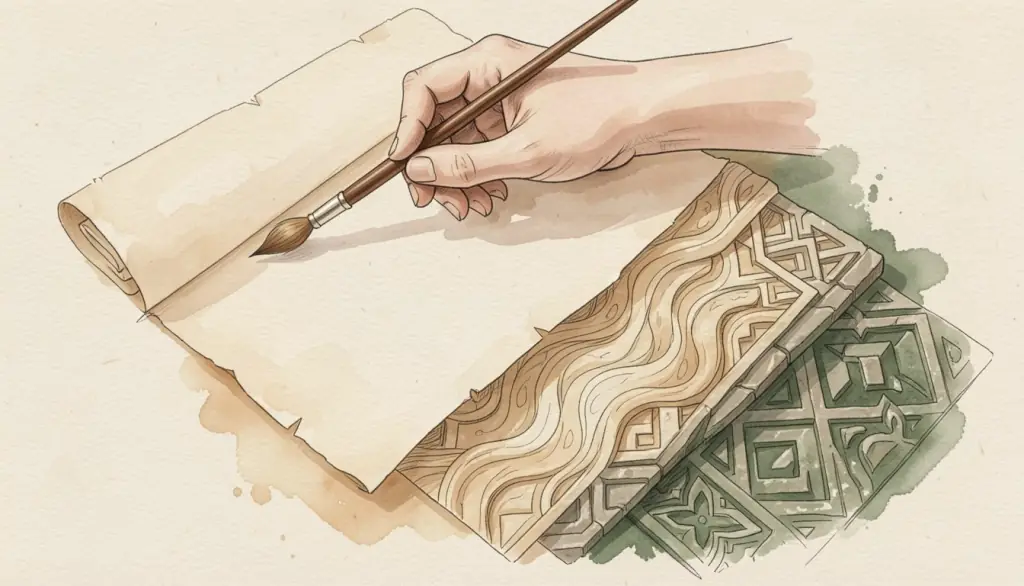
Part I: Pronunciation of Words and Names
Part I is Tolkien telling you how to say what he wrote. It covers consonants, vowels and stress, and it is the standard reference for Elvish pronunciation. Everything on this site about pronunciation traces back to it. The main points:
- Consonants. c is always the hard sound of k, never s. ch is the sound in Scottish loch or German Bach, not the English church. th is as in thin, and dh is the voiced sound in then. r is lightly trilled, and g is always hard.
- Vowels. The acute accent marks a long vowel, as in Namárië. In Sindarin a circumflex marks an especially long vowel in stressed single-syllable words, as in Dûn. The diaeresis in ë tells you the final e is pronounced, so the last vowel of Namárië and the ë of Eärendil are not silent.
- Stress. Two-syllable words are stressed on the first syllable: EL-rond, NAR-ya. In longer words the penultimate syllable takes the stress if it is long, contains a diphthong, or is followed by two consonants. Otherwise stress moves back to the antepenult: LEG-o-las, CA-radh-ras, Na-MÁ-ri-ë.
The stress rule is the one most often broken in films, fan sites and apps, so it is worth learning once and getting right. For a full walkthrough, see our Sindarin Pronunciation Guide, the Quenya pronunciation guide, and the pronunciation page in our course.
Part II: Writing
Part II describes the two scripts of Middle-earth.
The Tengwar. These are the letters devised by Fëanor, "Fëanorian letters" in Tolkien's phrase. Appendix E sets out the system: letters in rows, each built from a stem and a bow, with vowels written as small marks above the consonants. The Quenya word for these marks is tehta, "(written) mark, sign" (Etymologies, Parma Eldalamberon 17), and the word for a letter is tengwa (The Lord of the Rings, Letters, Etymologies). The plural is tengwar, which is why the script has its name. The Quenya word tengwassë means "alphabet" (Parma Eldalamberon 22).
The key idea in Appendix E is that the Tengwar are not a single alphabet for one language. They are a flexible system. The same letters can be assigned different sounds in different modes, and Tolkien shows how they were used for Quenya, for Sindarin and for the Common Speech. That is why you will see several "modes" mentioned in guides, and why one Tengwar text can look different from another. For the details of each, see our guide to the Tengwar modes.
The Cirth. The second script is the runic one. The Cirth began with the Elves of Beleriand as a way of carving names and inscriptions, and the Dwarves later took it up and extended it. Appendix E presents the angular forms used by the Dwarves of Moria and, later, of Erebor. The Sindarin word certh means "rune" and angerthas means "long rune-rows", the name of the arrangement of runes in order (both in The Lord of the Rings and The Silmarillion). For the full story, read our guide to the Cirth runes.
If you want to try writing, our Reading and Writing guide walks through the basics, and the Tengwar Alphabet Guide shows the letters one by one.
Who should read it: everyone who wants to pronounce or write Tolkien's names. If you read only one appendix for the language, this is it.
Appendix F: The Languages and Peoples of the Third Age
Appendix F is the second language appendix, and it has two parts.
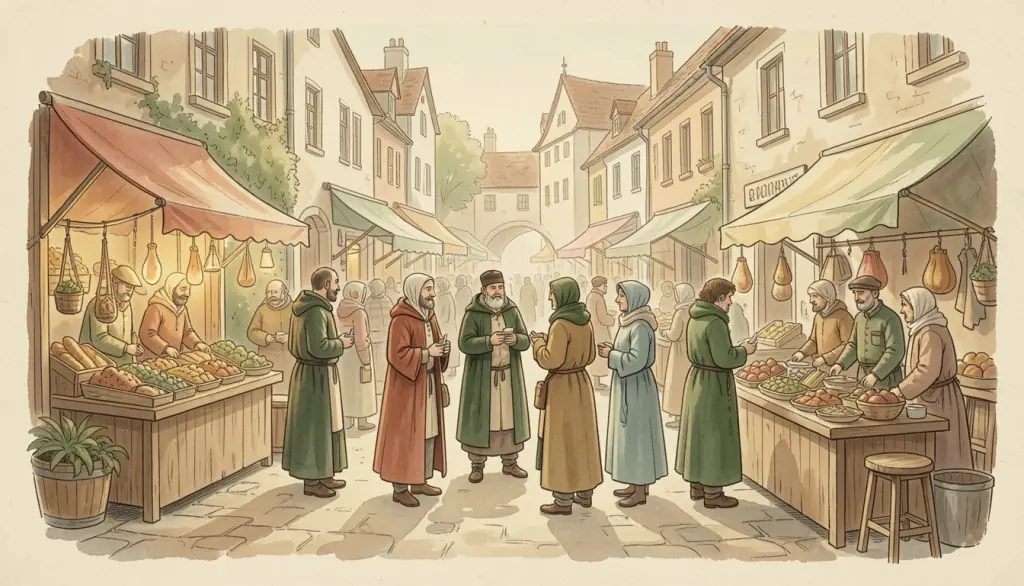
Part I: The Languages and Peoples
Part I is a survey. It describes the main peoples of the Third Age and says what each one spoke.
- The Elves. The Eldar spoke two related tongues, Quenya (the High Elven speech, used for lore and ceremony) and Sindarin (the everyday tongue of Middle-earth). Appendix F places them in their world and explains why Sindarin names are so common in the text.
- Men. The Common Speech of the West, which Tolkien calls Westron, was the shared language of Men, Hobbits and Dwarves in the Third Age, and Appendix F explains how it spread.
- Hobbits. They took up the Common Speech and kept some words and names of their own.
- Ents, Dwarves, Orcs and Trolls. Appendix F says a little about each. It notes that the Dwarves kept their own language, which we call Khuzdul, as a private tongue and used outward names in other languages. It also describes the Black Speech, which Sauron devised, and the corrupted forms used by Orcs.
This part is the best short map of the languages of the Third Age. It is also the source of the idea that the Elvish tongues form a family with a long history. For the whole picture across all of Tolkien's work, see our Languages of Middle-earth guide and the complete guide to Tolkien's Elvish languages.
Part II: On Translation
The second part is short and very clever. Tolkien tells the reader that the book is, in the story, a translation of a Hobbit manuscript. The language the Hobbits wrote in was Westron. The English of the book is therefore standing in for Westron.
This has real consequences:
- Hobbit names in English. The names of Hobbits are rendered in English-sounding forms so that they feel natural to a reader. Appendix F says this is deliberate, and it gives examples where the "original" Westron name differs from the English rendering. For instance, it explains that Meriadoc is the translator's choice standing for an older Westron name.
- Rohan as Old English. The language of the Riders of Rohan is rendered in forms like Old English, because Tolkien wanted the relationship between Rohirric and Westron to feel like the relationship between Old English and modern English. That is why Rohan's names sound different from Gondor's.
- Dwarf names in Norse. Tolkien used Old Norse names for the Dwarves, to distinguish their outer names from their secret ones.
- Elvish left alone. The Elvish languages are not translated. They are left as they are, which is why Quenya and Sindarin appear as real, unglossed text in the book.
For learners, this is the most important idea in Appendix F. It tells you which words in the book are "real" Elvish and which are English standing in for another tongue. It also shows how carefully Tolkien thought about languages, and explains why he treated Elvish as a language with its own history rather than decoration. For more on Westron and how it works in the story, see Westron: the Common Speech.
Who should read it: language learners and curious readers. It is short and rewards a slow read.
Why E and F Matter Most for Elvish
Most of what you see online about Elvish pronunciation, stress, the Tengwar and the "translation conceit" can be traced to these two appendices. They are first-hand and written by Tolkien himself. That makes them a better guide than any site that repeats them second-hand, and also a good test of one: if a source contradicts Appendix E on stress or on the sound of c and ch, trust Appendix E.
A rough map from appendix to topic:
| If you want to learn about | Go to | Our guide |
|---|---|---|
| How to say names like Elrond and Legolas | Appendix E, Part I | Sindarin pronunciation |
| How to write Elvish names in Tengwar | Appendix E, Part II | Tengwar alphabet |
| Dwarvish and Elvish runes | Appendix E, Part II | Cirth runes |
| Which peoples speak which tongue | Appendix F, Part I | Languages of Middle-earth |
| Why Hobbits and Riders seem to speak English | Appendix F, Part II | Westron |
| The tale of Aragorn, Gilraen and Arwen | Appendix A | Aragorn's Elvish names |
What the Films and The Rings of Power Take from the Appendices
The Appendices matter beyond the page. The films of The Lord of the Rings drew on them. The best-known case is the love story of Aragorn and Arwen, which the films expanded and rearranged from the material in Appendix A. The film Elvish, written by the linguist David Salo, followed Tolkien's pronunciation and spelling rules from Appendix E. It is not Tolkien's own text, and we label it "film Sindarin (Salo)" wherever it appears on this site.
The Rings of Power is a different case. Press reports on Amazon's 2017 rights deal said that it covers The Lord of the Rings and its Appendices, but not The Silmarillion. Appendix B is the section that covers the Second Age, so it is the obvious source for the show's timeline, though the series is its own adaptation and rearranges events. The series' Tolkien-language consultant is Carl F. Hostetter. If you are watching and want to separate Tolkien's words from the show's, the Appendices are the best starting point. For the languages heard in the series, see our Season 3 Elvish preview.
How to Read the Appendices
You do not need to read them in order, and you do not need to read them all.
- If you read for story: start with the Tale of Aragorn and Arwen in Appendix A, then dip into B when you want a date.
- If you read for language: read Appendix E, Part I, then Appendix F, then E Part II. Keep a pronunciation guide open while you do.
- If you read for reference: treat C and D as lookup tables.
Reading slowly is fine. Tolkien wrote the Appendices in a dry, compressed style, and a page can hold a surprising amount of information.
People Also Ask
What are the Lord of the Rings appendices? Six sections after the story in The Return of the King: A (Annals of the Kings and Rulers), B (The Tale of Years), C (Family Trees), D (Calendars), E (Writing and Spelling) and F (Languages and Peoples of the Third Age, with a note On Translation).
Do you have to read the appendices to understand The Lord of the Rings? No. The story stands on its own. The appendices add background, dates and language. Appendix A is the most rewarding for story readers, and E and F are essential for Elvish learners.
What is in Appendix E? Part I explains how to pronounce the names and words in the book, including the stress rule. Part II describes the two scripts, Tengwar and Cirth, and how they were used.
What is in Appendix F? A survey of the languages and peoples of the Third Age, followed by On Translation, which explains why Westron appears as English in the book.
Which appendices does The Rings of Power use? Press reports on the 2017 rights deal say Amazon's rights cover the Appendices, with Appendix B covering the Second Age. The show is its own adaptation.
Learn the Language the Appendices Describe
Appendices E and F tell you how Tolkien's languages are pronounced, written and arranged. The fastest way to use that knowledge is to practice it. Start the free lessons at Learn Elvish, try the Elvish translator, or write your own name with the Tengwar name tool.
Related Reading
People Also Ask
What are the Lord of the Rings appendices?
They are six sections printed after the story in The Return of the King. A covers the Annals of the Kings and Rulers, B the Tale of Years, C the family trees, D the calendars, E writing and spelling, and F the languages and peoples of the Third Age, with a note on translation.
Do you have to read the appendices to understand The Lord of the Rings?
No. The story stands on its own. The appendices add background, dates and language. Appendix A, with the Tale of Aragorn and Arwen, is the most rewarding for story readers, and Appendices E and F are the essential ones for anyone interested in Elvish.
What is in Appendix E of The Lord of the Rings?
Appendix E, Writing and Spelling, has two parts. The first explains how to pronounce the names and words in the book, including the stress rule. The second describes the two scripts, the Tengwar letters and the Cirth runes, and how they were used for different languages.
What is in Appendix F of The Lord of the Rings?
Appendix F describes the languages and peoples of the Third Age: Elves, Men, Hobbits, Ents, Dwarves, Orcs and Trolls. Its second part, On Translation, explains that Tolkien presents the book as a translation of Westron, which is why the Common Speech appears as English.
Which appendices does The Rings of Power use?
Press reports on the 2017 rights deal said Amazon's rights cover The Lord of the Rings and its Appendices, but not The Silmarillion. Appendix B, the Tale of Years, is the part that covers the Second Age, so it is the natural source for the show's timeline. The show is its own adaptation.
Related Tags
Learn Elvish Free
39 free Elvish lessons, an AI tutor, and spaced repetition review — no credit card required.
Start Learning Free