Morgoth Explained: Melkor, the Silmarils and the First Dark Lord
Try It Yourself — Free Elvish Tools
Quick Answer: Morgoth is the first Dark Lord of Tolkien's legendarium and the master whom Sauron served. Originally Melkor, "He who arises in Might", he was the mightiest of the Ainur, the spirits who sang the world into being, and he rebelled in the Music itself. He overthrew the Lamps, built Utumno and Angband, killed the Two Trees with Ungoliant, murdered Finwë and stole the Silmarils, which is when Fëanor named him Morgoth, the Black Foe of the World. He ruled the north of Middle-earth from Angband and Thangorodrim through the First Age until the Valar overthrew him in the War of Wrath and thrust him into the Void. Almost all of this is told in The Silmarillion; The Lord of the Rings mentions him only in passing, and The Rings of Power barely touches him.
Morgoth is the villain behind every other villain in Tolkien. The Balrogs are his, the dragons are his, the Orcs are his, and Sauron himself began as his servant. When Aragorn tells the hobbits the story of Beren and Lúthien on Weathertop, he describes Sauron as a mere servant of the Great Enemy (The Fellowship of the Ring, book I, ch. 11), and readers who have only read The Lord of the Rings meet in that line a power large enough to make the Dark Lord of Mordor look like a lieutenant.
He is also hard to see clearly: a cosmic rebel in a creation myth, a thief in Valinor, a fortress-bound emperor in a war story, and, in essays Tolkien never finished, a spirit poured so completely into the world that he cannot get out. This guide follows him through each stage, keeps the adaptations in their own section, explains his names, and ends with our own reading, marked as interpretation.
For the jewels at the heart of his story, see Fëanor and the Silmarils. For the servant who outlived him, start with Sauron Explained.
Morgoth at a Glance
| Order of being | One of the Ainur; in his beginning the mightiest of them (The Silmarillion, "Ainulindalë") |
| Rank | Counted among the Valar in origin, but the Valaquenta sets his name last, among the Enemies, and says he forfeited it |
| Original name | Melkor, Quenya, "He who arises in Might" (The Silmarillion, Valaquenta and index) |
| Name given by Fëanor | Morgoth, "the Black Foe of the World" (The Silmarillion, "Of the Flight of the Noldor"); index: "the Black Enemy" |
| Other names | Bauglir, "the Constrainer"; Belegurth, "Great Death"; the Dark Lord; the Enemy; the Great Enemy |
| Brother in thought | Manwë, King of Arda: the two were brothers in the thought of Ilúvatar (Valaquenta) |
| Strongholds | Utumno (Sindarin Udûn) in the far north; Angband, with the triple peaks of Thangorodrim above it |
| Weapon | Grond, the Hammer of the Underworld (The Silmarillion, "Of the Ruin of Beleriand") |
| Treasure | The three Silmarils, set in his iron crown |
| Chief servants | Sauron; the Balrogs, led by Gothmog; the dragons Glaurung and Ancalagon; the wolf Carcharoth |
| Wounds | Hands burned black by the Silmarils; lamed in one foot by Fingolfin; face scarred by Thorondor |
| Fate | Bound with the chain Angainor and thrust through the Door of Night into the Timeless Void (The Silmarillion, "Of the Voyage of Eärendil") |
| In The Lord of the Rings | Named or alluded to only a handful of times |
| Film or series actor | None |
Morgoth Timeline
"Mae govannen" — want to actually speak Elvish?
Try It Free →The earliest ages were counted by the Lamps and the Trees, not the Sun. First Age years below are Years of the Sun from Tolkien's annals in The War of the Jewels ("The Tale of Years"); earlier rows give the order of events only.
| Age and year | Event |
|---|---|
| Before Time | Ilúvatar propounds the Music; Melkor brings discord into it (The Silmarillion, "Ainulindalë") |
| Before Time | Melkor seeks the Imperishable Flame in the Void and does not find it |
| Shaping of Arda | The Valar enter the world; Melkor contends with them for Arda in the first war, until Tulkas comes and he flees |
| Years of the Lamps | Melkor builds Utumno in the north, overthrows the Lamps Illuin and Ormal, and ruins Almaren; the Valar withdraw to Aman ("Of the Beginning of Days") |
| Years of the Trees | Yavanna makes the Two Trees in Valinor; Melkor rules Middle-earth in darkness; Angband is built as an outpost, with Sauron in command |
| Years of the Trees | The Elves awake at Cuiviénen; the Valar make war for their sake, break Utumno and bind Melkor with Angainor ("Of the Coming of the Elves") |
| Years of the Trees | After three ages in the Halls of Mandos he is released, sues for pardon and is pardoned by Manwë ("Of Fëanor and the Unchaining of Melkor") |
| Years of the Trees | With Ungoliant he kills the Two Trees, kills Finwë at Formenos and steals the Silmarils; Fëanor names him Morgoth ("Of the Darkening of Valinor") |
| Years of the Trees | The Balrogs save him from Ungoliant at Lammoth; he raises Thangorodrim and crowns himself with the Silmarils |
| Years of the Trees, end | Dagor-nuin-Giliath, the Battle-under-Stars; Fëanor dies after fighting Balrogs |
| First Age, Year of the Sun 60 | Dagor Aglareb, the Glorious Battle; the Siege of Angband begins |
| First Age 455 | Dagor Bragollach, the Battle of Sudden Flame; the Siege is broken |
| First Age 456 | Fingolfin challenges Morgoth at the gates of Angband and dies after wounding him seven times |
| First Age, after 456 | Beren and Lúthien enter Angband and cut a Silmaril from the iron crown |
| First Age 472 | Nirnaeth Arnoediad, the Battle of Unnumbered Tears; Húrin is captured and cursed |
| First Age 510 | Gondolin falls to his armies |
| First Age, end | War of Wrath: the Host of Valinor breaks Thangorodrim; Morgoth is thrust into the Void (LotR, Appendix B; The Silmarillion, ch. 24) |
| Second Age | Sauron revives the worship of Melkor in Númenor ("Akallabêth") |
Who Morgoth Is
Morgoth is neither a medieval demon nor a classical god. He is one of the Ainur (Quenya Ainu, "holy one, spirit"), the spirits Eru Ilúvatar made from his thought before the world existed. Those who entered the world became the Valar, the greater, and the Maiar, the lesser. Melkor was among the greater.
Four facts define him:
- He was the mightiest of all. The Ainulindalë says Ilúvatar gave him the greatest gifts of power and knowledge, and a share in all the gifts of his brethren. No other created being in Tolkien begins with more.
- He was the first to fall. Every other evil in the legendarium descends from his.
- He wanted to make, then to own, then to unmake. His fall is a slide from wanting to create on his own terms, to wanting to rule what others had made, to hating everything he could not possess.
- He spent his power. Sauron poured his strength into one ring; Morgoth spread his into his servants, his armies and, Tolkien later suggested, the substance of Arda itself.
The Valaquenta puts the arc in a single sentence: from splendour he fell through arrogance into contempt for all things save himself. Everything else in his story is the working out of that line.
Melkor in the Music of the Ainur
The Ainulindalë, the creation story that opens The Silmarillion, begins with music. Ilúvatar gives the Ainur themes, and they sing, each alone or in small groups, until he calls them together for a Great Music in which they will develop a single theme in harmony.
Before the singing began, the Ainulindalë says, Melkor often went alone into the void seeking the Imperishable Flame, desiring to bring into Being things of his own. He never found it, for the Flame is with Ilúvatar, but in his solitude he began to conceive thoughts unlike those of his brethren.
When the Great Music begins, he weaves those thoughts into it. The result is discord; some Ainur near him falter, and some attune their music to his. Ilúvatar raises a second theme, which Melkor overwhelms, then a third, deep and sorrowful, that slowly takes his most triumphant notes into its own pattern, and ends the Music with a single chord.
He tells Melkor that no theme can be played that does not have its uttermost source in him, and that anyone who tries will only prove his instrument. Melkor is ashamed, and the shame turns to secret anger.
When Ilúvatar gives the Music Being as Eä, the World that Is, Melkor goes down into it with the other Valar and claims Arda as his own kingdom. In the first war of the Valar he mars whatever they build, until Tulkas the Strong comes into Arda laughing and Melkor flees, though not for long.
Two consequences of this scene run through every later story:
- Evil in Tolkien cannot create, only distort. Every creature Melkor later brings forth is a corruption or mockery of something already made.
- The world is marred from the start. Tolkien's name for it is Arda Marred.
The Lamps, Utumno and the Spring of Arda
The early history of Arda in The Silmarillion ("Of the Beginning of Days") is a sequence of things the Valar build and Melkor destroys.
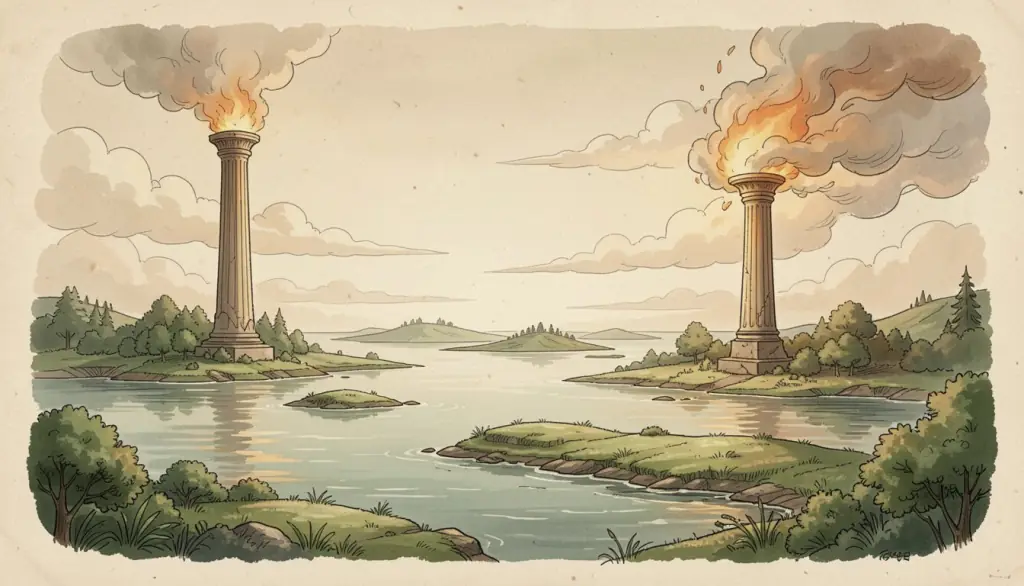
Aulë made two great Lamps to light the young world, Illuin in the north and Ormal in the south, and the Valar dwelt between them on the isle of Almaren in the Spring of Arda. Melkor returned with servants drawn from the Maiar and, in the dim north, delved a vast fortress under the mountains: Utumno.
When he was ready he threw down the Lamps. Their fall marred the shape of the world and destroyed Almaren, and the Valar withdrew to Aman in the far west, raised the Pelóri and founded Valinor. There Yavanna sang into being the Two Trees, Telperion and Laurelin.
Middle-earth was left in darkness, and Melkor ruled it. Near the north-western coast he built a lesser fortress against assault from the West and gave its command to Sauron: Angband, Sindarin "Iron Prison", from ang "iron" and band "prison, duress". That outpost would become the centre of the First Age.
Utumno's Sindarin name is Udûn (The Silmarillion, index), which is why Gandalf calls the Balrog of Khazad-dûm the flame of Udûn (The Fellowship of the Ring, book II, ch. 5): he names the hell it came from. For the creatures themselves, see Balrogs of Middle-earth.
The Coming of the Elves and the Chaining of Melkor
The Elves awoke by the lake of Cuiviénen under the stars while Melkor held the north. The Silmarillion ("Of the Coming of the Elves") says his spies found them first, and some who wandered out were never seen again. The wise of Eressëa, the text says, hold that those Elves were taken to Utumno, corrupted and enslaved by slow arts of cruelty, and that Melkor bred the Orcs from them. The Silmarillion frames this as a belief of the wise rather than as narrated fact, and Tolkien later reopened the question in essays published in Morgoth's Ring, never settling it. Treebeard repeats a related idea about trolls: they are counterfeits, made by the Enemy in mockery of Ents (The Two Towers, book III, ch. 4). For the full debate, see Orcs and Goblins of Middle-earth and Trolls of Middle-earth.
When Oromë brought word of the Elves to Valinor, the Valar went to war for their sake. Utumno was besieged and broken, Tulkas wrestled Melkor and cast him on his face, and he was bound with the chain Angainor, made by Aulë, and imprisoned in the Halls of Mandos for three ages. But the Valar did not search out all the deep places of Angband and Utumno. Sauron was not found, and neither were the Balrogs.
Pardon, Lies and the Darkening of Valinor
After three ages in Mandos, The Silmarillion says ("Of Fëanor and the Unchaining of Melkor"), Melkor humbled himself and sued for pardon, and Manwë, who was free from evil and could not comprehend it, granted it; Nienna aided the plea, while Ulmo and Tulkas were not deceived.
His target was the Noldor, and above all Fëanor, maker of the Silmarils, which kindled lust in Melkor's heart from the first. Unable to win Fëanor, who hated him, he whispered that the Valar had brought the Elves to Aman out of jealousy, and set Fëanor and his half-brother Fingolfin against each other. The Noldor began to forge weapons, Fëanor drew his sword on Fingolfin, and he was banished to the northern fortress of Formenos.
When Melkor came to the gates of Formenos and offered friendship, Fëanor saw through him and shut the door in his face, calling him the "jail-crow of Mandos" ("Of the Silmarils and the Unrest of the Noldor"). Melkor fled, and the Valar, warned too late, could not find him.
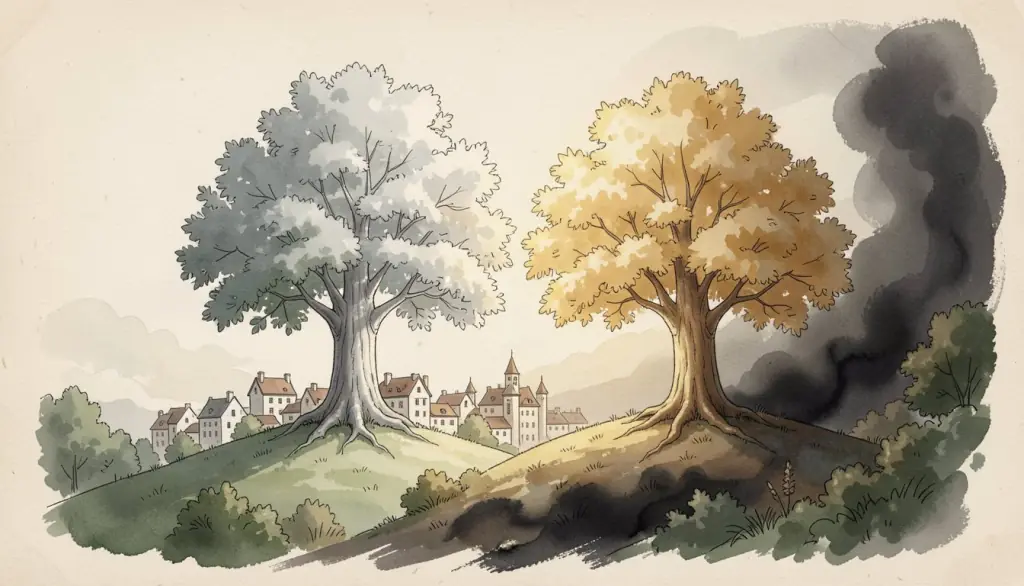
He went to the dark land of Avathar and won the help of Ungoliant, a spirit in spider form who devoured light. Wrapped in her Unlight, they came into Valinor during a festival. Melkor struck each Tree to its core with a spear, and Ungoliant drank their sap and poisoned them, and the light of Valinor went out ("Of the Darkening of Valinor"). The full story of the spider's part is in Ungoliant Explained.
Then he went to Formenos, where Fëanor's father Finwë, King of the Noldor, had stayed behind. Melkor killed him at the doors and took the Silmarils with all the jewels of the Noldor.
When the news reached Fëanor, he cursed Melkor and named him Morgoth, the Black Foe of the World ("Of the Flight of the Noldor"), and The Silmarillion says that by that name only was he known to the Eldar ever after. The theft started everything that follows: the Oath of Fëanor, the Kinslaying, the flight of the Noldor and five centuries of war.
Angband, Thangorodrim and the Iron Crown
Morgoth and Ungoliant fled north across the Grinding Ice into Middle-earth. In the land of Lammoth, The Silmarillion tells, Ungoliant demanded the jewels as her reward. When he refused, she wrapped him in her webs, and his great cry echoed through the land, which was called Lammoth, the Great Echo, ever after. The Balrogs who still lurked in the ruins of Angband heard it and came like a tempest of fire, and with whips of flame drove her away.
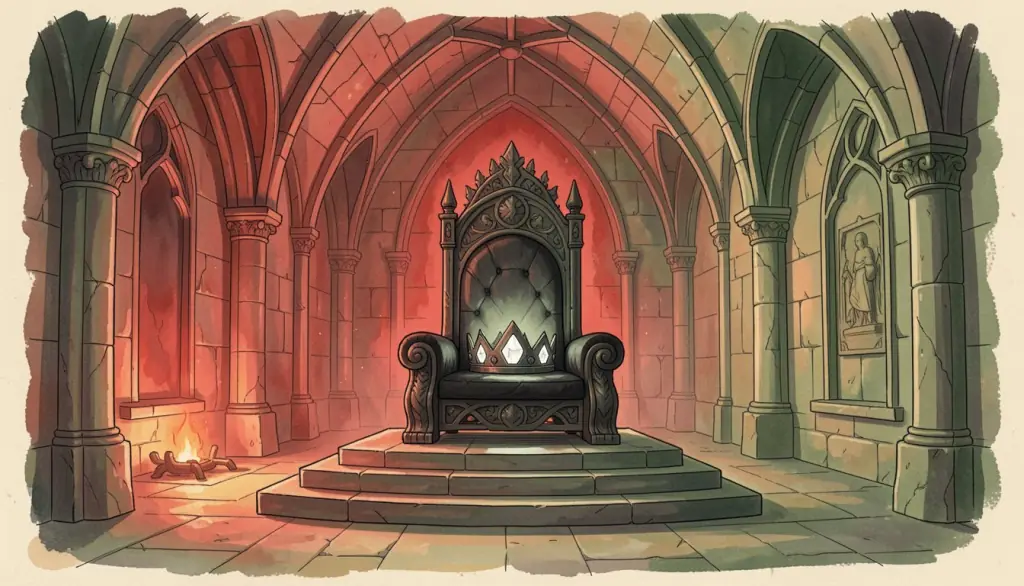
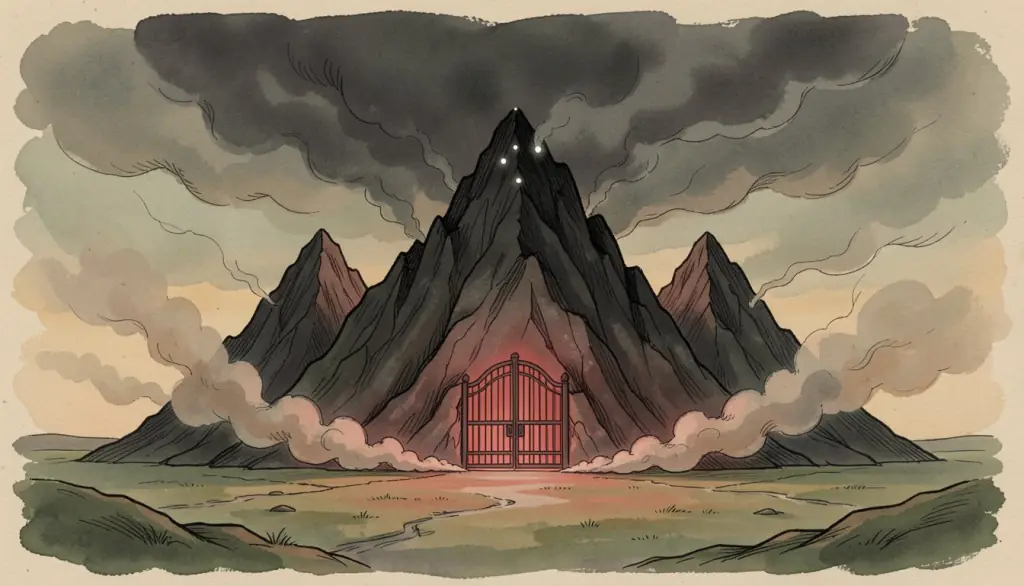
Morgoth rebuilt Angband and raised above its gates the three reeking peaks of Thangorodrim, piled from the slag of his delving. The name is Sindarin: thang "oppression", orod "mountain" and rim "host, great number", so roughly the host of mountains of oppression.
He forged a great crown of iron, set the three Silmarils in it and called himself King of the World. But the jewels had been hallowed by Varda so that no evil hand could touch them without pain. The Silmarillion says his hands were burned black by them, and black they remained ever after, and he was never free from the pain of the burning, nor from the anger of that pain ("Of the Flight of the Noldor").
It is one of Tolkien's most precise images of possessiveness: the jewels hurt him every moment, and he never takes them off.
From here on Morgoth acts through others: Balrogs, Orcs, dragons, Sauron and his lies. In the Music and in Valinor, Melkor acted in person; in Beleriand, Morgoth is a throne at the centre of a web.
The War of the Jewels
The first battles. Morgoth's armies were defeated in Dagor-nuin-Giliath, the Battle-under-Stars, but Fëanor pursued too far and was struck down by Gothmog, Lord of Balrogs. Morgoth then took Fëanor's son Maedhros by treachery and hung him from Thangorodrim by one wrist, until Fingon rescued him with the eagle Thorondor ("Of the Return of the Noldor"). For the eagles' part in his story, see Great Eagles of Middle-earth.
The Siege of Angband. After the Dagor Aglareb the Noldor ringed Angband for centuries without taking it. Morgoth tested them with the young dragon Glaurung, who came out too soon; see Glaurung Explained.
The Battle of Sudden Flame. In the Dagor Bragollach rivers of flame crossed the plain of Ard-galen, with Glaurung, Balrogs and Orcs behind, and the Siege was broken.
Doriath, Nargothrond and Gondolin. The rest of the war is the fall of the hidden kingdoms one by one: Nargothrond through Glaurung and the tragedy of Túrin, Doriath through the curse on the Silmaril and the Dwarves' greed, and Gondolin through the treason of Maeglin, whom Morgoth captured and turned with promises. The stories are told in Gondolin, the Hidden City and Doriath and the Girdle of Melian.
Morgoth wins less by open battle than by finding the crack in a people, a grudge, a fear, a love, and widening it, as he did in Valinor.
Fingolfin's Challenge at the Gates of Angband
After the Dagor Bragollach, Fingolfin, High King of the Noldor, rode alone to the gates of Angband and challenged Morgoth to single combat. The scene in "Of the Ruin of Beleriand" is one of the few that show Morgoth in his own body.
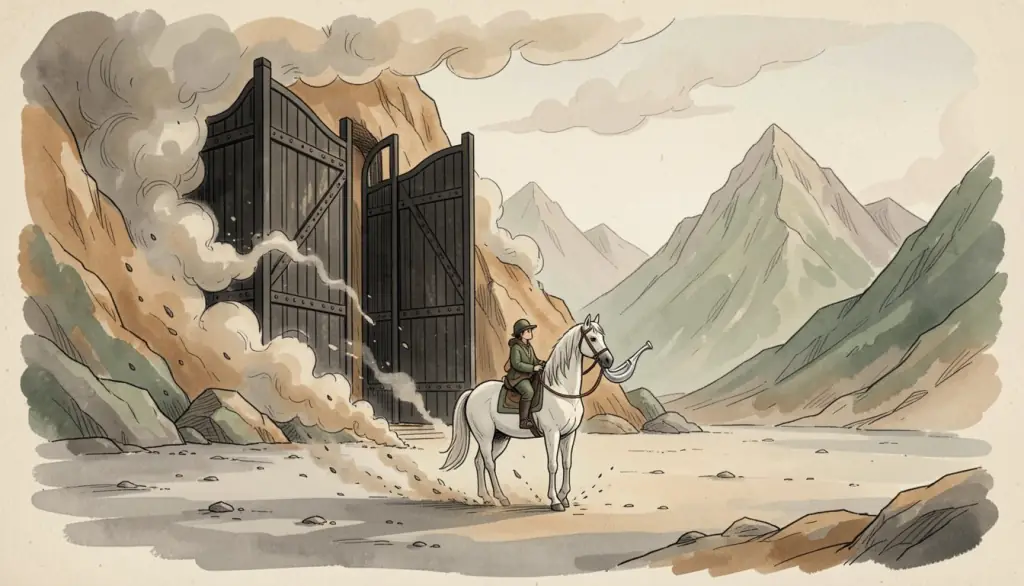
The Silmarillion says Morgoth did not take up the challenge willingly: for though his might was the greatest in the world, "alone of the Valar he knew fear." But he could not refuse before his captains. He came out in black armour, towering over the king, with a vast black shield and the mace Grond, the Hammer of the Underworld. Fingolfin fought him with the sword Ringil, which glittered like ice, and wounded him seven times. Each time Morgoth cried out, and the armies of Angband fell on their faces.
At last the king grew weary and stumbled, and Morgoth set his foot on his neck. Dying, Fingolfin hewed at the foot, and black blood gushed out. Morgoth broke the king's body and would have thrown it to the wolves, but Thorondor came down from the mountains, marred Morgoth's face with his talons and carried the body away. The Silmarillion records that Morgoth went ever halt of one foot after that day, and the pain of his wounds could not be healed, and that his face bore the scar of Thorondor.
Two details matter: the mightiest being in the world was afraid of one Elf on a horse, and the wounds stay. A Vala who once shaped mountains cannot heal a cut foot, an idea Tolkien developed much later.
The name of his mace survived the Age. In The Return of the King the great battering ram brought against Minas Tirith is named Grond, in memory of the Hammer of the Underworld of old (book V, ch. 4). The site's Elvish data glosses the Sindarin adjective grond as "weighty, ponderous".
Beren, Lúthien and the Silmaril
The only time anyone takes something back from Morgoth is the quest of Beren and Lúthien, told in "Of Beren and Lúthien".
Thingol set the price of his daughter's hand at a Silmaril from Morgoth's crown. Beren and Lúthien entered Angband disguised as a werewolf and a bat-winged creature. Before the throne Lúthien cast off her disguise, and her song cast the whole court into sleep, Morgoth last of all, who fell from his throne. The iron crown rolled to the floor. Beren cut one Silmaril free with the knife Angrist, and when he tried for a second the blade snapped and a shard struck Morgoth's cheek, so that he stirred.
At the gates the wolf Carcharoth, reared by Morgoth on living flesh, bit off Beren's hand with the jewel in it; read the rest in Beren and Lúthien and Wargs and Wolves of Middle-earth. For Morgoth it is a humiliation that reveals his nature: he is undone by a song and by the thing that first ruined him, wanting what is not his.
Húrin and the Curse on His Children
After the Nirnaeth Arnoediad, the Battle of Unnumbered Tears, the worst defeat the Elves and Men of Beleriand ever suffered, Morgoth's soldiers captured Húrin of Dor-lómin alive. The Silmarillion ("Of the Fifth Battle" and "Of Túrin Turambar") tells that Morgoth wanted from him the location of Gondolin, and when Húrin defied him, Morgoth set a curse on him and on all his kin.
He bound Húrin in a stone chair on Thangorodrim, so that for nearly thirty years he saw, through Morgoth's malice, everything that befell Túrin and Nienor. It is the most intimate cruelty in the book: Morgoth wants a witness to his power over fate, not only a victory.
The War of Wrath and the Door of Night
The First Age ends with the voyage of Eärendil, who reached Valinor bearing the Silmaril Beren and Lúthien had won and pleaded for Elves and Men. The Valar answered.
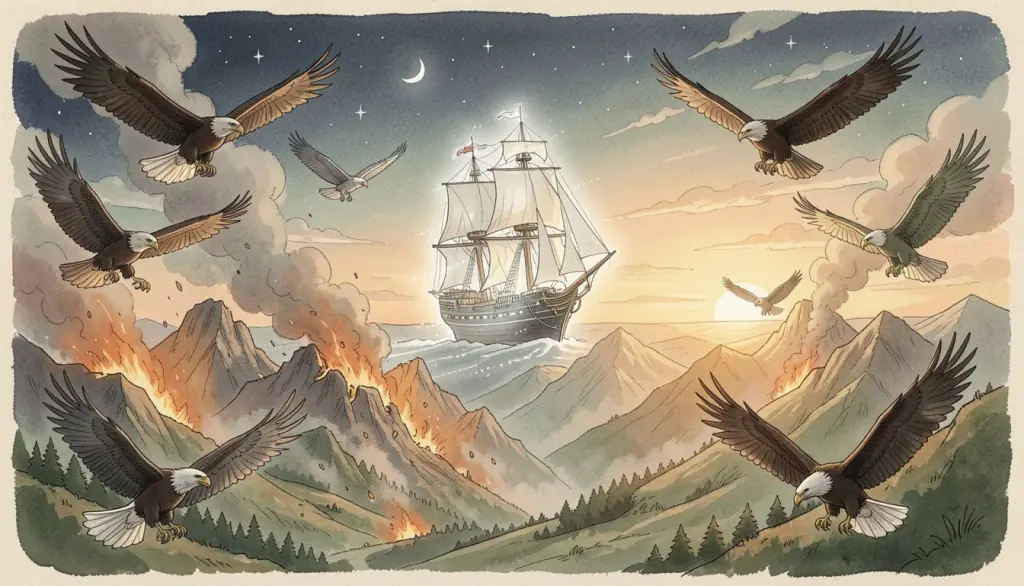
The Silmarillion ("Of the Voyage of Eärendil and the War of Wrath") says the Host of the Valar came out of the West and destroyed Morgoth's Orcs and Balrogs, save a few who fled. In desperation he loosed the winged dragons, never seen before, until Eärendil came in his ship Vingilot with Thorondor and the eagles, and before dawn slew Ancalagon the Black, who fell on Thangorodrim and broke it. See Ancalagon the Black Explained and Dragons of Middle-earth.
Morgoth fled to the deepest of his mines and sued for peace and pardon, and it was not granted. His feet were hewn from under him, he was hurled on his face, and he was bound again with the chain Angainor. His iron crown was beaten into a collar for his neck, and the two Silmarils that remained in it were taken. The two sons of Fëanor still living stole them, and both jewels were lost, one in the earth and one in the sea.
Then the Valar thrust Morgoth through the Door of Night beyond the Walls of the World into the Timeless Void and set a guard there. But the lies he had sown, the book adds, did not die. Appendix B of The Lord of the Rings compresses all of this into one line: the First Age ended with the Great Battle, in which the Host of Valinor broke Thangorodrim and overthrew Morgoth.
Note what does not happen. Morgoth is not killed, because a Vala cannot be killed. He is removed. In Tolkien's early drafts, published in The Shaping of Middle-earth, a prophecy foretells that he will one day return through the Door of Night for a Last Battle. Christopher Tolkien did not include that prophecy in the published Silmarillion, and it should be read as one of several abandoned endings, not as settled canon.
Morgoth After Morgoth: Númenor and the Third Age
Even outside the world, Morgoth keeps shaping it, through those who remember him.
In Númenor. The "Akallabêth" tells how Sauron, as counsellor of Ar-Pharazôn, taught the worship of Melkor, Lord of the Darkness, and men were sacrificed to him in a great temple in Armenelos. Sauron made his old master into a god. See Ar-Pharazôn Explained.
In The Lord of the Rings. Morgoth is almost absent from the book, but his traces are everywhere if you know the earlier stories. Aragorn's tale on Weathertop calls him the Great Enemy. At the Council of Elrond, Elrond recalls the hosts gathered when Thangorodrim was broken (The Fellowship of the Ring, book II, ch. 2). On the stairs of Cirith Ungol, Sam reflects that the light in Frodo's phial comes from the Silmaril Beren took from the Iron Crown (The Two Towers, book IV, ch. 8). The Balrog of Moria is the flame of Udûn. Shelob is the last child of Ungoliant. In the Appendices, the Númenóreans are the descendants of the Edain who fought Morgoth.
The Lord of the Rings is a story about the last surviving pieces of a much older war, and Morgoth is the absence they all point back to.
Morgoth's Names and Their Languages
Morgoth's names are almost all given by enemies, and that is the point: The Silmarillion says the Noldor would not speak his first name.
| Name | Language | Meaning | Source |
|---|---|---|---|
| Melkor | Quenya | He who arises in Might | The Silmarillion, Valaquenta and index |
| Morgoth | Sindarin | the Black Foe; the Dark Enemy of the World | "Of the Flight of the Noldor"; Valaquenta; index |
| Bauglir | Sindarin | the Constrainer | The Silmarillion, index; Eldamo gives "constrainer; tyrant, oppressor" |
| Belegûr | Sindarin | the true Sindarin form of Melkor, never used | The Silmarillion, index |
| Belegurth | Sindarin | Great Death; a deliberate distortion of Belegûr | The Silmarillion, index |
| the Dark Lord | English | his title before it passed to Sauron | The Silmarillion |
| the Great Enemy | English | as Aragorn calls him | The Fellowship of the Ring, book I, ch. 11 |
A few notes:
- Melkor. Tolkien connected the name to a root meaning "mighty", and the site's word list notes it is unrelated to the mel- of melme, "love", despite the resemblance. It is a name of praise, which is why the Elves stopped using it.
- Morgoth. The first element is the familiar Elvish word for black or dark, Sindarin morn as in Mordor, "Black Land", and Moria, "Black Chasm". The index of The Silmarillion translates the whole name as "the Black Enemy". Fëanor coined it in grief and rage, and it stuck.
- Belegûr and Belegurth. Beleg is Sindarin for "mighty", and Belegûr is the straight Sindarin equivalent of Melkor. The Sindar would not say it; they twisted it into Belegurth, with gurth, "death", so the name praised nothing.
The places of his realm are equally readable: Angband, "Iron Prison" (ang "iron" + band "prison"); Thangorodrim, the mountains of oppression (thang + orod + rim); Udûn, the Sindarin name for Utumno; Lammoth, the Great Echo; and the battles named after his works, Dagor Bragollach, Nirnaeth Arnoediad, using dagor "battle" and nirnaeth "tears". To see any of these names written in Elvish letters, try our Tengwar name tool, and for the vocabulary of light and shadow that runs through his story, see Elvish Words for Light and Dark.
Morgoth's Servants and Enemies
Morgoth's story is crowded. This table lists the figures who matter most to his, with where to read more on our site.
| Figure | Relation | Read more |
|---|---|---|
| Manwë | His brother in the thought of Ilúvatar, who pardoned him | Valinor, the Undying Lands |
| Varda | The Vala he hated and feared above all others (Valaquenta) | Elvish Words for Light and Dark |
| Sauron | His greatest servant, commander of Angband | Sauron Explained |
| Gothmog and the Balrogs | Maiar who joined him; his captains | Balrogs of Middle-earth |
| Ungoliant | Ally in the killing of the Trees, then enemy | Ungoliant Explained |
| Glaurung | Father of Dragons | Glaurung Explained |
| Ancalagon | Greatest of his winged dragons | Ancalagon the Black |
| Fëanor | Maker of the Silmarils, who named him Morgoth | Fëanor and the Silmarils |
| Beren and Lúthien | Took a Silmaril from his crown | Beren and Lúthien |
| Eärendil | Brought about his defeat | Elros and Elrond: The Half-elven Choice |
Books vs Films vs The Rings of Power
Morgoth is one of the few major Tolkien characters who has never been put on screen in a live-action adaptation. The reason is partly rights and partly time: almost all of his story is in The Silmarillion, and the adaptations so far are set in the Second and Third Ages, after he was cast out.
Peter Jackson's Lord of the Rings and Hobbit films (2001 to 2014)
Neither trilogy puts Morgoth on screen, and his history plays no part in their plots. Echoes such as the Balrog in Moria and the ram Grond remain, unexplained.
The Rings of Power (2022 to 2026)
The Rings of Power is set in the Second Age, after the War of Wrath, so Morgoth is already gone. He matters to the show as history rather than as a character: the war against him is part of the backstory given in the first season's opening narration, and the Orc leader Adar is presented as an Elf whom Morgoth corrupted long ago. Adar is an invention of the show; Tolkien wrote no such figure. See What Does Adar Mean?.
No actor has played Morgoth in the series. Amazon's adaptation is widely reported to be based on the rights to The Lord of the Rings and its appendices, not The Silmarillion, which limits how much of his story it could tell even if it wanted to. In short, the show barely touches him.
Season 3 (premiered 11 November 2026)
Only what is confirmed: the first four episodes arrived on 11 November 2026, with episodes 5 and 6 due on 18 November and 7 and 8 on 25 November. The season's announced arc is Sauron's forging of the One Ring. Nothing announced gives Morgoth a role, and we will not guess whether he is mentioned in the episodes still to air. Our Season 3 Elvish preview lists the confirmed cast.
How Tolkien Built Morgoth
Morgoth is one of Tolkien's oldest characters, and he changed more than almost any other, because the whole cosmology changed around him.
- 1910s and 1920s, The Book of Lost Tales. The rebel is Melko; the basic shape is already there: discord in the music, the destruction of the lamps and the trees, the theft of the jewels.
- 1930s, the "Quenta" texts. The war in Beleriand takes its published shape, and the drafts in The Shaping of Middle-earth contain the prophecy of his return.
- 1950s, the later Silmarillion. After The Lord of the Rings, Tolkien rewrote the Ainulindalë and the Valaquenta and tied the Balrogs, Orcs and Sauron more firmly to him.
- The late 1950s and 1960s, "Myths Transformed". In essays published in Morgoth's Ring, Tolkien rethought Morgoth's nature. He suggested that Morgoth had dispersed his native power into the substance of Arda itself, so that the whole of Middle-earth was, in effect, Morgoth's Ring: the matter of the world was the vessel of his power, as the One Ring was of Sauron's. He also described Morgoth as having become bound to a bodily form he could no longer leave, which is why he could be wounded and why he feared. And he contrasted the two Dark Lords: Sauron wanted to dominate and order the world, while Morgoth's will became nihilistic, wanting to destroy what he could not own.
These essays are exploratory and unpublished in his lifetime, so they are his thinking, not settled text. But they explain the puzzles of the published story: why the mightiest of the Ainur hides in a fortress, cannot heal, and fears Fingolfin. By then he had spent himself.
Our Take
Our view, stated plainly: Morgoth is the most important character in Tolkien whom almost nobody reads closely, and the key to him is not his power but his loneliness.
The first thing the Ainulindalë tells us is that he went alone into the void: a gifted being who would not wait, share or sing with others. Everything later grows from that. In Valinor he cannot win Fëanor's friendship, so he poisons Fëanor's family. In Angband he will not take off a crown that burns him. With Ungoliant he makes the one alliance of equals in his whole history, and it ends with her trying to eat him. Every relationship he has is either ownership or war.
That is why we think the late "Myths Transformed" idea is so powerful, even though it was never published in Tolkien's lifetime. A spirit who wanted to own the world ends up dispersed into it, everywhere and nowhere, unable to gather himself back. He gets exactly what he asked for, and it destroys him. By the time Fingolfin rides to his gates, the mightiest of the Ainur is a lame, scarred, frightened tyrant who has not left his house in centuries.
We also push back on the reading of Morgoth as motiveless evil. His motives change in a way any reader can recognise: impatience becomes resentment, resentment becomes envy, and envy becomes the wish that if he cannot have something, nobody should. That is a very human corruption written at the scale of a god.
If you want to meet him properly, read the Ainulindalë, then "Of the Darkening of Valinor", then Fingolfin's duel in "Of the Ruin of Beleriand", in that order. You will see a singer, a thief and a cripple, and you will understand why Tolkien's world is so full of lost light.
People Also Ask
Who is Morgoth in Lord of the Rings? The first Dark Lord of Tolkien's world and Sauron's master. Originally Melkor, mightiest of the Ainur, he destroyed the Two Trees, stole the Silmarils and ruled from Angband until the Valar overthrew him at the end of the First Age.
Is Morgoth the same as Melkor? Yes. Melkor, "He who arises in Might", is his original Quenya name. Fëanor named him Morgoth, the Black Foe of the World, after he killed Finwë and stole the Silmarils, and the Elves used that name from then on.
What does the name Morgoth mean? "Black Enemy" or "Dark Enemy", as the index of The Silmarillion translates it. His other titles include Bauglir, "the Constrainer", and Belegurth, "Great Death", a deliberate distortion of the Sindarin Belegûr.
Is Morgoth stronger than Sauron? Yes. Morgoth was a Vala, in his beginning the mightiest of the Ainur; Sauron was a Maia and his greatest servant. Sauron became the main enemy of later Ages only because Morgoth had been cast out.
What did Morgoth want? At first to create things of his own and rule the world. Tolkien's late essays in Morgoth's Ring describe his will as becoming nihilistic: where Sauron wanted to order the world, Morgoth came to want to destroy whatever he could not possess.
Why did Morgoth steal the Silmarils? He lusted for them because they held the light of the Two Trees. After killing the Trees, he killed Finwë at Formenos and set the jewels in his iron crown.
How was Morgoth defeated? In the War of Wrath: the Host of the Valar came from the West, Eärendil killed Ancalagon, and Morgoth was bound and thrust through the Door of Night.
Is Morgoth dead or will he return? Not dead; a Vala cannot die. He is in the Timeless Void. An early-draft prophecy of his return was left out of the published book.
Is Morgoth in The Rings of Power? Only in backstory. The show is set after he was cast out, so he has no actor, and nothing confirmed for Season 3 gives him a role.
Is Morgoth mentioned in The Lord of the Rings? Barely. Aragorn calls him the Great Enemy, Elrond remembers the breaking of Thangorodrim, Sam mentions the Iron Crown, and Treebeard says the Enemy made trolls.
Read the Names of the First Age Yourself
Almost every name in Morgoth's story, from Angband and Thangorodrim to Belegurth and Nirnaeth Arnoediad, is built from Sindarin or Quenya words Tolkien published. To learn the languages behind them, start with our free Elvish course, which teaches Sindarin and Quenya using words Tolkien actually wrote.
Related Reading
- Characters of Middle-earth: Who's Who in Tolkien's World
- Sauron Explained
- Fëanor and the Silmarils
- Balrogs of Middle-earth
- Beren and Lúthien
- Ungoliant Explained
- Glaurung Explained
- Ancalagon the Black Explained
- Dragons of Middle-earth
- Orcs and Goblins of Middle-earth
- Valinor, the Undying Lands
- Gondolin, the Hidden City
People Also Ask
Who is Morgoth in Lord of the Rings?
Morgoth is the first Dark Lord of Tolkien's world and the master Sauron served. He began as Melkor, the mightiest of the Ainur, rebelled against Ilúvatar in the Music that made the world, destroyed the Two Trees of Valinor and stole the Silmarils. He ruled from Angband in the north until the Valar overthrew him at the end of the First Age. In The Lord of the Rings he is the "Great Enemy" of the old tales, of whom Sauron was only a servant.
Is Morgoth the same as Melkor?
Yes. Melkor is his original Quenya name, which the Silmarillion translates as "He who arises in Might". Fëanor named him Morgoth, the Black Foe of the World, after he killed Finwë and stole the Silmarils, and the Elves called him by that name from then on. The Valaquenta says he forfeited the name Melkor through his deeds.
What does the name Morgoth mean?
Morgoth means "Black Enemy" or "Dark Enemy", as the index of The Silmarillion translates it. The first element is the Elvish word for black or dark that also appears in Mordor and Moria. He had other titles too: Bauglir, "the Constrainer", and the Sindarin Belegurth, "Great Death", a deliberate distortion of his true Sindarin name Belegûr.
Is Morgoth stronger than Sauron?
Yes, by a wide margin. Morgoth was a Vala, in his beginning the mightiest of all the Ainur, while Sauron was a Maia, one of the lesser spirits, and his servant. The Silmarillion calls Sauron the greatest of Morgoth's servants. Sauron became the main enemy of the Second and Third Ages only because Morgoth had been thrust out of the world.
What did Morgoth want?
At first he wanted to create things of his own and to be lord of the world. In the Ainulindalë he seeks the Imperishable Flame in the Void and claims Arda as his kingdom. In late essays published in Morgoth's Ring, Tolkien described his motive as becoming nihilistic: where Sauron wanted to rule and order the world, Morgoth came to want to destroy or reduce everything that he could not possess.
Why did Morgoth steal the Silmarils?
He lusted for them from the moment he saw them. The Silmarils held the light of the Two Trees, and The Silmarillion says the mere rumour of them kindled desire in his heart. After killing the Trees with Ungoliant he went to Formenos, killed Fëanor's father Finwë and took the jewels, then set them in his iron crown in Angband.
How was Morgoth defeated?
In the War of Wrath at the end of the First Age. After Eärendil reached Valinor, the Host of the Valar came from the West, destroyed his armies, and Eärendil killed the dragon Ancalagon, whose fall broke Thangorodrim. Morgoth was dragged from the pits of Angband, bound with the chain Angainor, and thrust through the Door of Night into the Void.
Is Morgoth dead or will he return?
He is not dead, because a Vala cannot die. The Silmarillion ends with him beyond the Walls of the World, in the Timeless Void, under guard. Early drafts published in The History of Middle-earth sketch a prophecy that he will one day return for a Last Battle, but Christopher Tolkien left that prophecy out of the published Silmarillion.
Is Morgoth in The Rings of Power?
Only in backstory. The show is set in the Second Age, long after Morgoth was cast out, so he does not appear as a character and no actor has been cast. His war is referred to in the show's narration and history, and Adar is presented as an Elf he corrupted. Nothing confirmed for Season 3, which premiered on 11 November 2026, gives him a role.
Is Morgoth mentioned in The Lord of the Rings?
Barely, and mostly through his works. Aragorn calls him the Great Enemy in the tale of Beren and Lúthien, Elrond remembers the host that broke Thangorodrim, Sam speaks of the Silmaril taken from the Iron Crown, and Treebeard says trolls were made by the Enemy in mockery of Ents. The Balrog Gandalf faces is called the flame of Udûn, Morgoth's ancient fortress.