Ar-Pharazôn Explained: The Golden King Who Drowned Númenor
Try It Yourself — Free Elvish Tools
Quick Answer: Ar-Pharazôn the Golden is the last King of Númenor. A famous captain in Middle-earth, he seized the sceptre in Second Age 3255 by forcing his cousin Tar-Míriel, the rightful queen, to marry him. In 3261 he landed at Umbar with such might that Sauron surrendered, and he carried Sauron to Númenor as a hostage, where Sauron became his counsellor. Driven by fear of death, he broke the Ban of the Valar and in 3319 led a fleet against Valinor. The world was changed, his host was buried in Aman, and Númenor sank. His story is told in the "Akallabêth" in The Silmarillion.
Ar-Pharazôn is the king who drowned his own kingdom. In a legendarium full of dark lords, fallen Elves and corrupted kings, he is the one who takes a whole civilisation down with him in a single act, and he does it not out of malice but out of fear. He does not want to rule the world so much as escape the one thing every Man must face. The Rings of Power has now put a version of him on screen, which has sent many viewers looking for the original.
Ar-Pharazôn at a Glance
| People | Man of Númenor, of the royal line of Elros (The Silmarillion, "Akallabêth") |
| Titles | King of Númenor; called "the Golden" (Appendix B) |
| Adûnaic name | Ar-Pharazôn, "the Golden" (Ar- royal prefix, pharaz gold) |
| Quenya name | Tar-Calion, recorded in the "Akallabêth" but not used by him |
| Father | Gimilkhâd, younger son of King Ar-Gimilzôr and leader of the King's Men |
| Wife | Tar-Míriel, renamed Ar-Zimraphel, his first cousin, married against her will |
| Children | None recorded |
| Reign | Second Age 3255 to 3319 (Appendix B) |
| Capital | Armenelos, the City of the Kings |
| Great deeds | Humbled Sauron at Umbar; built the greatest fleet Númenor ever launched |
| Great crimes | Usurped the throne; let Sauron build a temple to Melkor; burned the White Tree; persecuted the Faithful; assailed Valinor |
| Fate | Buried with his warriors under falling hills in Aman; said to lie in the Caves of the Forgotten until the Last Battle |
| Main source | "Akallabêth" in The Silmarillion; Appendix A and B of The Lord of the Rings; Unfinished Tales, Part Two |
| Screen | Not in Peter Jackson's films. Played by Trystan Gravelle in The Rings of Power |
Ar-Pharazôn Timeline
"Mae govannen" — want to actually speak Elvish?
Try It Free →Dates are from Appendix B of The Lord of the Rings, "The Tale of Years", which gives the key events of his reign. The "Akallabêth" tells the same story in narrative form but gives few exact years. Rows without a year show the order of events.
| Age and year | Event |
|---|---|
| Second Age 32 | The Edain reach Númenor; Elros becomes its first king (Appendix B) |
| Second Age 2899 | Ar-Adûnakhôr takes the sceptre, the first king to take his royal name in Adûnaic |
| Later Second Age | Under Ar-Gimilzôr the Elvish tongues are forbidden and the Faithful persecuted ("Akallabêth") |
| Before 3255 | Pharazôn, son of Gimilkhâd, wins renown as a captain in the wars of the Númenóreans in Middle-earth |
| Second Age 3255 | Tar-Palantir dies. Ar-Pharazôn the Golden seizes the sceptre, forcing Míriel to marry him (Appendix B) |
| Second Age 3261 | Ar-Pharazôn sets sail and lands at Umbar (Appendix B) |
| Second Age 3262 | Sauron is taken as a prisoner to Númenor (Appendix B) |
| Second Age 3262 to 3310 | Sauron seduces the king and corrupts the Númenóreans (Appendix B) |
| Within this period | The temple to Melkor is built in Armenelos; Nimloth the White Tree is felled and burned; Isildur saves a fruit of it ("Akallabêth") |
| Second Age 3310 | Ar-Pharazôn begins the building of a great armament (Appendix B) |
| Shortly before 3319 | Amandil sails West to plead with the Valar and is not heard of again ("Akallabêth") |
| Second Age 3319 | Ar-Pharazôn assails Valinor. Downfall of Númenor. Elendil and his sons escape (Appendix B) |
Who Ar-Pharazôn Was
Ar-Pharazôn was the last ruler of Númenor, the island kingdom given to the Edain, the faithful Men of the First Age, as a reward for their part in the war against Morgoth. He was of the royal house descended from Elros, brother of Elrond, which means that a thread of Elvish and Maiarin blood ran in him, as it did in all the kings.
Three facts define him in the "Akallabêth":
- He was a usurper. The sceptre should have passed to Míriel, daughter of Tar-Palantir. Pharazôn took it by marrying her against her will and against the law.
- He was genuinely great. Tolkien does not make him a weakling. He was a famous captain by land and sea, generous with the wealth he won, and the strongest king Númenor ever had. His fleet was so large that Sauron himself would not fight it.
- He was afraid. Beneath the pride is fear of death. That fear is the lever Sauron pulls, and it is the reason the story ends where it does.
Family and Lineage
Ar-Pharazôn's family is small and tightly knotted. The key relationships come from the "Akallabêth" and the genealogy "The Line of Elros" in Unfinished Tales.
| Person | Relation | Read more |
|---|---|---|
| Elros Tar-Minyatur | Founder of the royal line, first King of Númenor | Elros and Elrond: The Half-elven Choice |
| Ar-Gimilzôr | Grandfather; the king who banned the Elvish tongues | Adûnaic: The Lost Language of Númenor |
| Gimilkhâd | Father; younger son of Ar-Gimilzôr, leader of the King's Men | This post |
| Tar-Palantir | Uncle; the repentant king who returned to Elvish names | This post |
| Tar-Míriel (Ar-Zimraphel) | Wife and first cousin; daughter of Tar-Palantir and rightful heir | This post |
| Amandil | Lord of Andúnië, leader of the Faithful, a friend of Pharazôn in youth | Isildur Explained |
| Elendil | Son of Amandil; escapes the Downfall and founds Arnor and Gondor | Men of Middle-earth |
| Isildur | Grandson of Amandil; saves a fruit of the White Tree | Isildur Explained |
| Sauron (Zigûr) | Captive, then counsellor and master of the king | How Was the One Ring Made? |
| Kemen | Son in The Rings of Power only; not a Tolkien character | This post, "Books vs Films vs The Rings of Power" |
Two details in this table matter more than they look. First, Ar-Pharazôn and Míriel were children of brothers. The "Akallabêth" says plainly that the laws of Númenor did not allow marriage between kin so close, even in the royal house, so the wedding was a crime twice over: against her will and against the law. Second, Amandil, the leader of the Faithful, had been dear to Pharazôn in his youth. The man who would later sail West to beg the Valar for mercy on Númenor began as the king's friend. Tolkien built the final tragedy partly out of old affection gone cold.
Númenor Before Ar-Pharazôn: The Long Decline
To understand Ar-Pharazôn you need the shape of the history he inherited. The "Akallabêth" and Appendix A tell it in broad strokes.
The first kings of Númenor were friends of the Elves. The Eldar of Tol Eressëa sailed to the island bearing gifts, and the Númenóreans learned Sindarin and kept Quenya for lore and royal names. Their one restriction was the Ban of the Valar: they could not sail so far west that the coasts of Númenor were lost from sight, and they could never set foot on the Undying Lands.
Over the centuries the Númenóreans came to resent the Ban. They called death a doom rather than a gift. The kings began to cling to life, giving up the sceptre only at death instead of laying it down while still in health.
The split became political. A party called the King's Men turned away from the Elves and the Valar. The Elendili, the Elf-friends or Faithful, kept the old loyalties and gathered under the Lords of Andúnië. Royal names changed with the times. Ar-Adûnakhôr in 2899 was the first king to take his title in Adûnaic, and his title, "Lord of the West", belonged by right to the Valar. Ar-Gimilzôr later forbade the Elvish tongues entirely and drove the Faithful east to Rómenna. For the language side of this story, read our guide to Adûnaic, the language of Númenor.
Then came a pause. Tar-Palantir, Ar-Gimilzôr's elder son, repented. He took a Quenya name again, tended the White Tree and observed the old rites. But his brother Gimilkhâd led the King's Men against him, and when Tar-Palantir died without a son, Gimilkhâd's son Pharazôn was waiting.
The Captain of the Coastlands
Before he was a king, Pharazôn was a soldier. The "Akallabêth" says he had often left Númenor to make war in the coastlands of Middle-earth, seeking to extend the rule of the Númenóreans over Men there, and that he won great renown as a captain both by land and by sea.
Two things about this early career shape everything after it.
He was popular. He came home with great wealth and gave it freely, and the people's hearts turned to him. Tolkien is clear that the usurpation was not a palace coup by a hated man. Pharazôn had a following, and many Númenóreans were glad to see him take the throne. That is part of the horror of the story: the kingdom goes along with him.
He learned the habits of empire. By the late Second Age, Númenórean expeditions in Middle-earth were no longer the gift-giving voyages of the early kings. They were wars of dominion. Pharazôn was trained in that world. When he later hears that Sauron calls himself King of Men, he takes it as a personal insult to his own claim, because he already thinks of the Men of Middle-earth as his.
Seizing the Sceptre: The Marriage to Tar-Míriel
When Tar-Palantir died in Second Age 3255, the law of Númenor was clear. Since the time of Tar-Aldarion, a king's eldest child could inherit the throne whether son or daughter, and Míriel was Tar-Palantir's only child. She should have ruled as Tar-Míriel, the fourth ruling queen of the island.
Pharazôn did not let that happen. The "Akallabêth" says he took her to wife against her will, which was evil in itself, and evil again because the law did not permit marriage between cousins so near in kin. He then seized the sceptre in his own name and took the royal title Ar-Pharazôn. Míriel's name was changed to its Adûnaic form, Ar-Zimraphel.
The renaming is a detail worth pausing on. Tar-Palantir had tried to bring Elvish names back. His daughter's Quenya name was the visible sign of that return. Changing it to Adûnaic was a statement that the repentance was over and the King's Men had won. Our Adûnaic guide sets out how names worked as political signals in Númenor; this is perhaps the bluntest example of it.
Tolkien tells us almost nothing about Míriel's own thoughts in this period, which is itself a choice. She is silent in the text from the wedding until the end, when she reappears briefly as the wave comes. A reader is left to imagine sixty-four years of being queen in name in a palace run by her husband and, later, by Sauron. The silence is not neutral; it marks her as the kingdom's first victim.
The Humbling of Sauron at Umbar
The great turning point of the reign begins with a report. While Ar-Pharazôn sat in Armenelos, news came that Sauron had named himself King of Men and meant to drive the Númenóreans out of Middle-earth and, if he could, destroy Númenor itself.
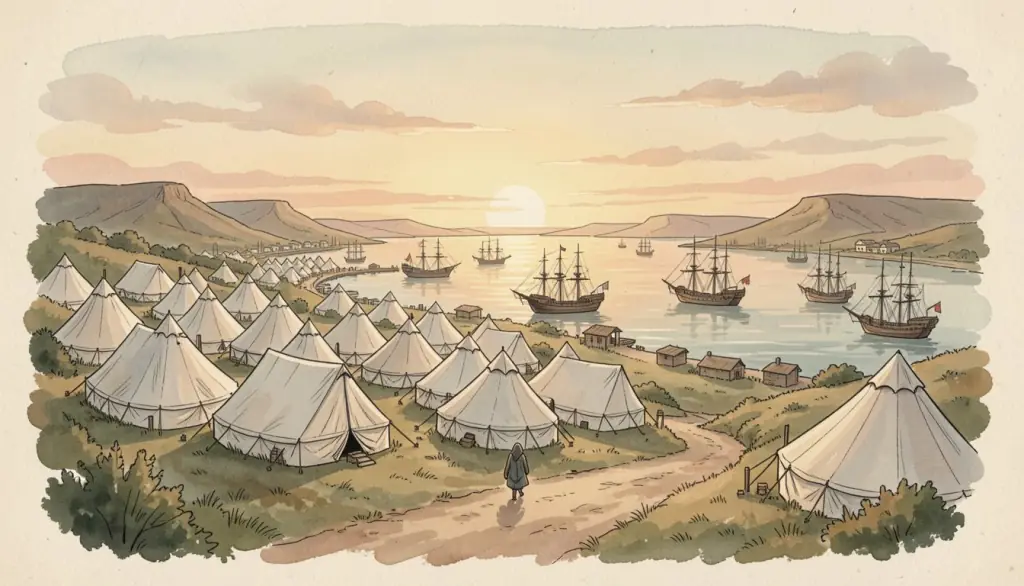
Ar-Pharazôn's answer was to prepare an enormous host. Appendix B dates his sailing to 3261. He landed at Umbar, the great Númenórean haven in the south, and marched inland. The "Akallabêth" describes his strength as so overwhelming that Sauron's own servants abandoned their master. From his camp Ar-Pharazôn sent heralds commanding Sauron to come and swear fealty.
Sauron came. He humbled himself before the king and spoke fair words. Tolkien is careful about his motives: Sauron judged that he could not overcome the Númenóreans by force, and that he could do more harm from inside their kingdom than outside it. Ar-Pharazôn, distrusting him, decided to take him back to Númenor as a hostage for the good behaviour of his servants. Appendix B records Sauron's arrival on the island in 3262.
This scene is often summarised as "Ar-Pharazôn captured Sauron", and that is true in the literal sense. But read the "Akallabêth" closely and the irony is total. Sauron had wanted to reach Númenor. The king who believed he had brought the Dark Lord to heel had in fact given him free passage to the heart of the only kingdom strong enough to defeat him.
For the parallel story of how Sauron worked on the Elves of Eregion a millennium earlier, in a fair disguise instead of a humble one, see How Was the One Ring Made?.
The King's Counsellor: Temple, Tree and Fear of Death
Sauron's rise inside Númenor was fast. The "Akallabêth" says that within three years he had become the king's closest counsellor, and that all the councillors except Amandil turned to flatter him. Amandil, the old friend, withdrew from the council and from the court.
What Sauron taught was carefully chosen. He told the king that the world was not as the Valar had said, that beyond the Darkness lay other lands, and that the true lord of all was Melkor, the Lord of the Darkness, who could deliver his servants from the Void and give them more than the Valar ever had. He mocked the Ban as a trick of the Valar to keep Men small. Above all he worked on Ar-Pharazôn's fear of death.
Three acts follow in the "Akallabêth", each worse than the last.
The Meneltarma is abandoned. The holy mountain at the centre of the island, where the kings had once offered praise to Eru Ilúvatar three times a year, was left empty and forbidden.
The White Tree is destroyed. Nimloth, the White Tree of the king's court, descended from the Trees of Valinor, was a living symbol of the line's friendship with the Eldar. Sauron urged the king to cut it down. Ar-Pharazôn hesitated at first, because Tar-Palantir had prophesied that the line of kings would end when the Tree failed. Isildur, Amandil's grandson, went in disguise into the king's court at great risk and stole a fruit of it. The king then gave in, the Tree was felled, and it was burned on the altar of Sauron's new temple. Our Isildur post tells that rescue from the Faithful's side.
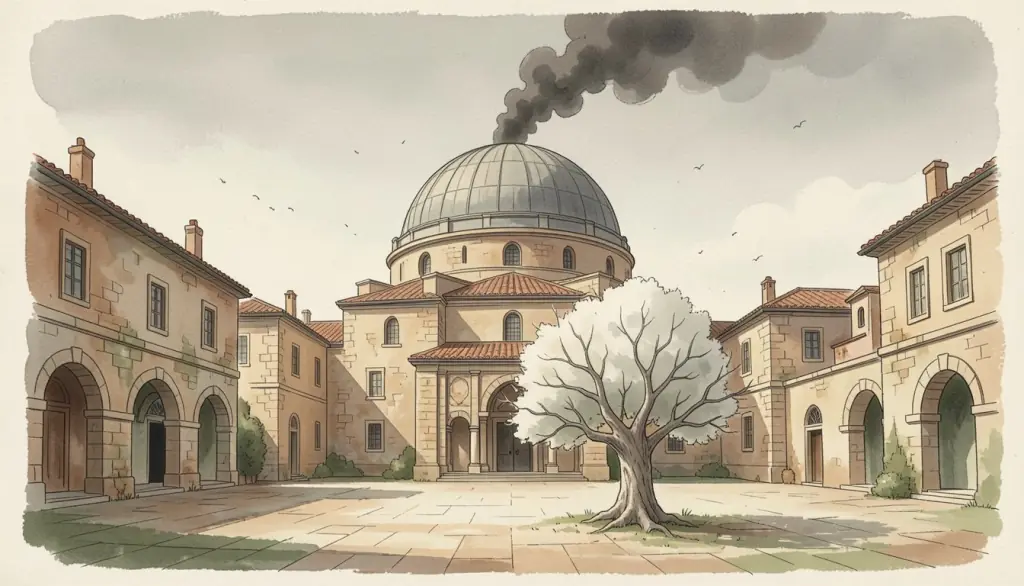
The temple and the sacrifices. Sauron built a great domed temple in Armenelos, and in it Men were sacrificed to Melkor, chosen above all from among the Faithful. Smoke rose from the dome day after day. The "Akallabêth" says the Númenóreans grew no happier for all this. They feared death more, not less, and their lives grew shorter.
The Great Armament
Ar-Pharazôn grew old. The "Akallabêth" says he felt the shadow of death approaching and was filled with fear and anger. Sauron saw his chance. He told the king that he was mighty enough to rival the Valar themselves, and that they were withholding everlasting life out of jealousy. A great king, he said, takes what is his right.
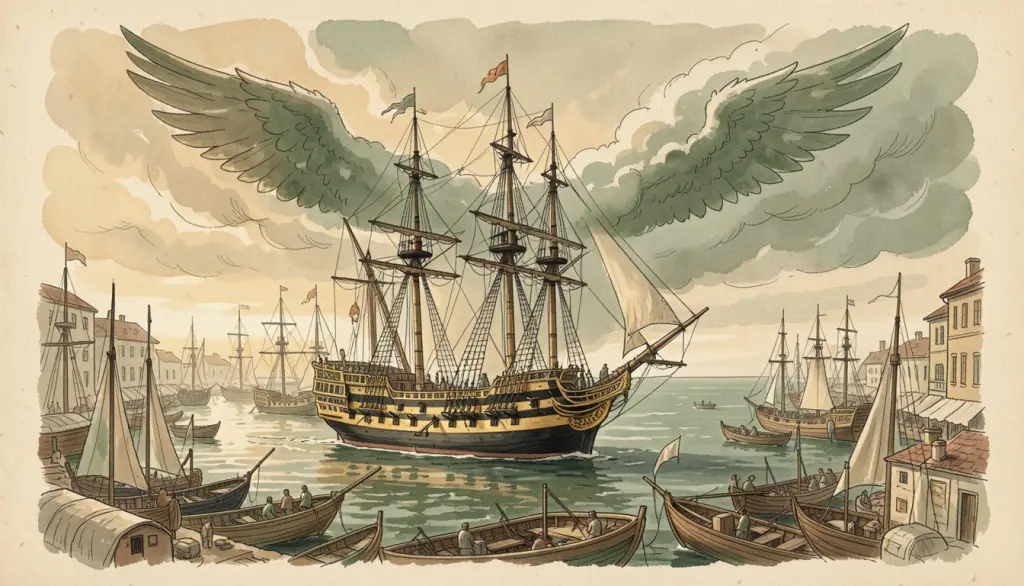
Ar-Pharazôn listened. Appendix B records that in 3310 he began building a great armament.
The Valar did not stay silent. The "Akallabêth" describes signs sent from the West: clouds in the shape of great eagles darkening the island, lightning that struck men down in the fields and on the hills, and a bolt that hit the dome of the temple, where Sauron stood unharmed on the pinnacle. The people took these as threats rather than warnings, and the king hardened. For the eagles of Manwë in their usual role, see our guide to the Great Eagles of Middle-earth.
At this point Amandil made his last choice. He resolved to do what Eärendil had done in the First Age: sail West against the Ban, and plead with the Valar for mercy before it was too late. Before he went he told his son Elendil to gather the Faithful, ready ships in secret and hold themselves apart from the king's war. Amandil sailed into the night and was never heard of again.
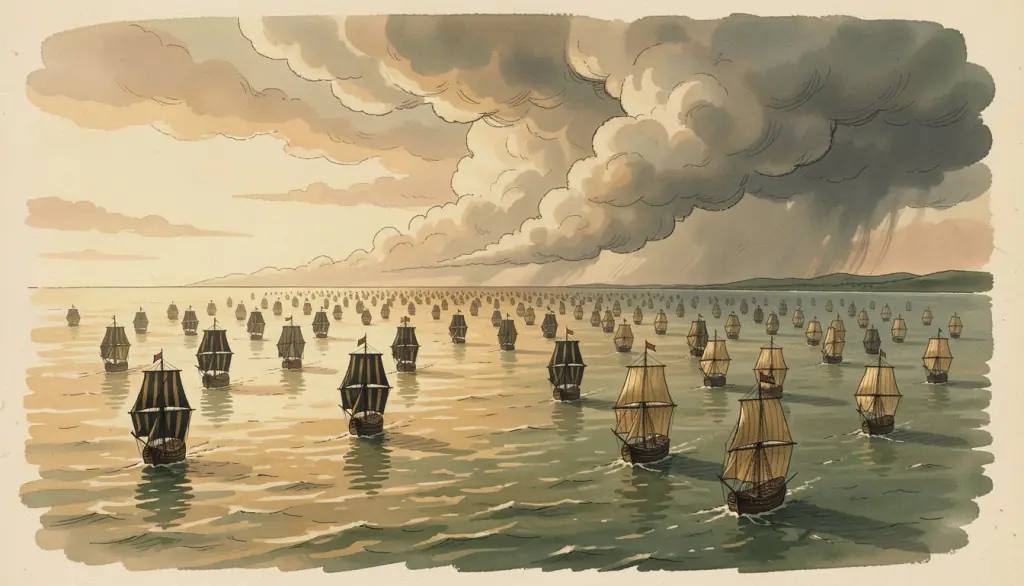
The fleet, which the "Akallabêth" compares to an archipelago of a thousand isles, was the greatest Númenor ever launched. The king's own flagship was Alcarondas, the Castle of the Sea, many-oared and many-masted, golden and sable, with his throne set upon it.
The Assault on Valinor
The "Akallabêth" tells the crossing in only a few lines. The fleet passed Tol Eressëa, and the Eldar there mourned, for the light of the setting sun was cut off by the cloud of the Númenóreans. Then the fleet reached Aman.
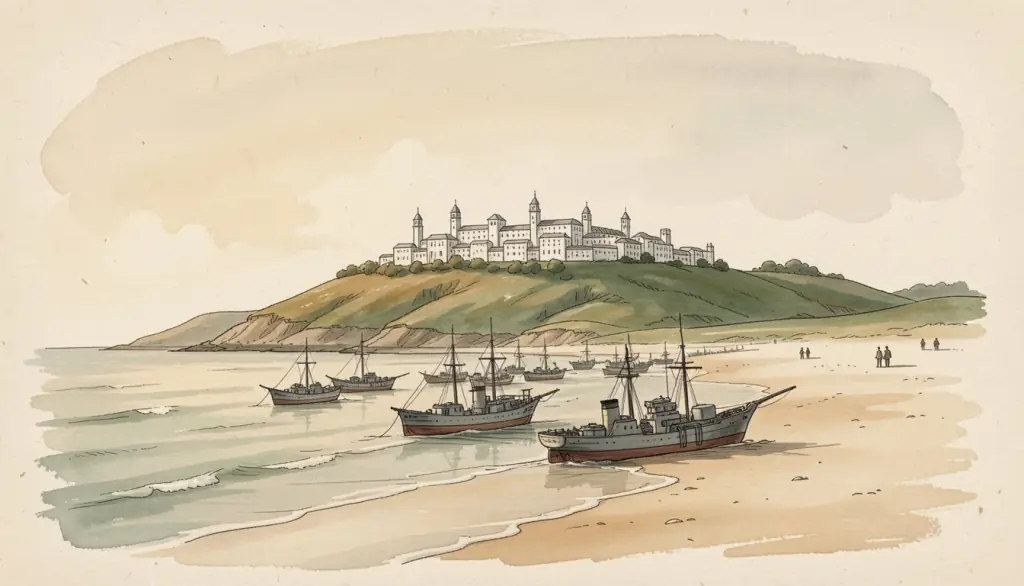
Here Tolkien gives Ar-Pharazôn one last moment of doubt. The king, facing the silent shores of the Blessed Realm, was afraid and nearly turned back. But his pride was now his master, and he went ashore. He and his host set foot on Aman and camped around Túna, the hill of Tirion, which the Elves had left empty.
That was the end. The Valar did not fight. Manwë called upon Ilúvatar, and for that time the Valar laid down their government of the world. Ilúvatar changed the fashion of the world. A great chasm opened in the sea between Númenor and the Deathless Lands, and the waters poured into it. The fleet of Ar-Pharazôn was drawn down into the abyss and drowned.
As for the king and the mortal warriors who had set foot on Aman, the "Akallabêth" says the hills fell on them and buried them. It adds, with the hedge "it is said", that they lie imprisoned in the Caves of the Forgotten until the Last Battle and the Day of Doom.
Valinor itself was taken out of the circles of the world. Aman and Eressëa were removed, and the world was made round. From then on a mortal ship sailing west would only come back round to the east. Only the Elves could still find the Straight Road to the West. Our guide to Valinor and the Undying Lands explains what changed in the shape of the world and what remained.
The Downfall of Númenor
Númenor followed its king. The "Akallabêth" describes the island tipping into the sea: a great wave rose and fell on the land, and the island went down with its towers, its temple and its people.
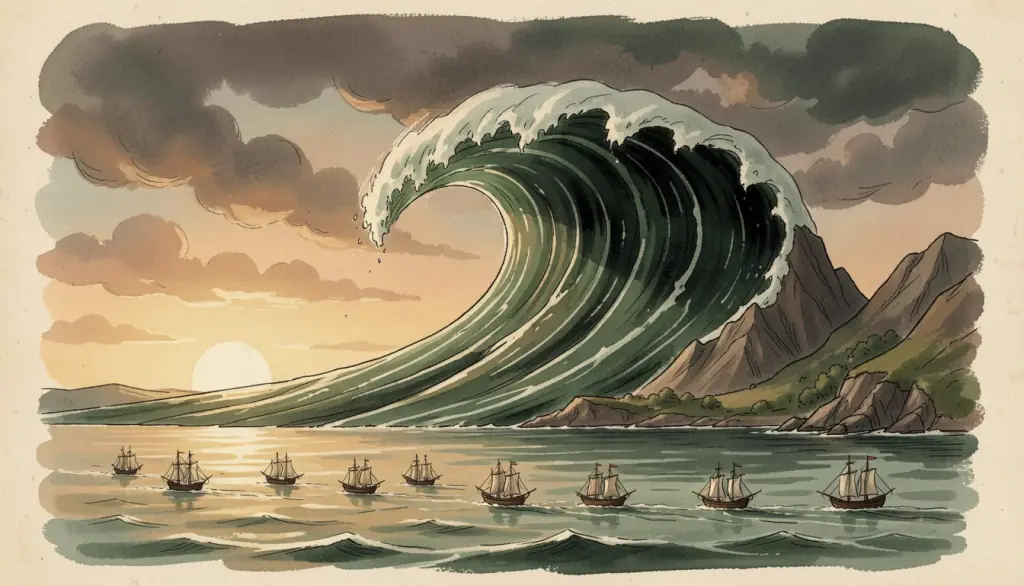
Tar-Míriel, the queen whose throne had been stolen, appears one last time. She tried to climb the Meneltarma to reach the holy place at the summit, but the wave overtook her and she was lost. The rightful queen of Númenor dies trying to reach the hallow her husband had forbidden.
Sauron was in his temple when it fell. He had expected the death of the king and the ruin of Númenor, but not the ruin of the whole land with him in it. His body was destroyed in the Downfall, and his spirit fled back to Middle-earth, to Mordor. The "Akallabêth" says he could never again take a form that seemed fair to Men. That is why the Sauron of the Third Age can no longer deceive with beauty, and why he works through the Ring, the Nazgûl and terror. Several of those Nazgûl, Tolkien tells us, had been great lords of the Númenóreans: see The Nazgûl Explained.
The Faithful survived. Elendil and his sons Isildur and Anárion escaped in nine ships, carrying the seedling of the White Tree and the palantíri, and the storm drove them to Middle-earth, where they founded Arnor and Gondor.
Tolkien's Quenya name for the whole catastrophe is Atalantë, "the Downfallen", which appears in the "Akallabêth" beside its Adûnaic equivalent Akallabêth. The resemblance to Atlantis is deliberate, as the section on how Tolkien built the story explains below.
Ar-Pharazôn's Names and Language
Ar-Pharazôn is one of the few Tolkien characters whose names were a public political act. Each one says which side of Númenor's quarrel he stood on.
| Name | Language | Meaning | Source |
|---|---|---|---|
| Pharazôn | Adûnaic | His personal name, built on pharaz "gold" | "Akallabêth"; Sauron Defeated |
| Ar-Pharazôn | Adûnaic | The royal name: ar- royal prefix, "the Golden" | "Akallabêth"; Appendix B |
| Tar-Calion | Quenya | The Elvish form of his royal name, recorded but not used | "Akallabêth" |
| Ar-Zimraphel | Adûnaic | Name forced on his wife, Míriel | "Akallabêth" |
| Zigûr | Adûnaic | The Númenóreans' name for Sauron | Sauron Defeated, "The Drowning of Anadûnê" |
| Armenelos | Quenya | His capital, the City of the Kings | "Akallabêth" |
| Meneltarma | Quenya | menel "heavens" + tarma "pillar", the Pillar of Heaven | "Akallabêth" |
| Alcarondas | Quenya | His flagship, the Castle of the Sea | "Akallabêth" |
The Golden King
Pharazôn is Adûnaic, the native language of Númenor, which grew from the speech of the Edain. The element pharaz is associated with gold in Tolkien's Adûnaic material (Sauron Defeated, "Lowdham's Report"), and the royal prefix ar- plays the same role that tar- plays in Quenya royal names. Appendix B uses the full epithet: Ar-Pharazôn the Golden.
Tar-Calion is his Quenya name. The "Akallabêth" records it as the Elven-tongue form of his royal name, following the old custom that kings had a name in each language. The custom was hollow by his time. The kings from Ar-Adûnakhôr onwards took the Adûnaic name first, and Ar-Pharazôn never used the Quenya one. Tolkien does not analyse Calion in the "Akallabêth", and we will not invent a breakdown for it here. The Quenya half survived only in the scrolls; the Adûnaic half was what the king answered to.
What Language Did Ar-Pharazôn Speak?
Adûnaic, almost certainly as his only daily language. The Elvish tongues had been forbidden since Ar-Gimilzôr, and the "Akallabêth" says the kings of this period had turned from them. Sindarin survived among the Faithful in Andúnië and Rómenna, and Quenya survived in lore and old records.
This is why The Rings of Power uses Adûnaic for its Númenórean court scenes. The show's Tolkien-language consultant is Carl F. Hostetter, as our Season 3 language preview notes, and the Númenórean scenes draw on the small Adûnaic corpus Tolkien left. That corpus is limited: most of what survives comes from names and from a short fragment of the Adûnaic Downfall story in Sauron Defeated. Anyone offering a full Adûnaic phrasebook for Ar-Pharazôn's court is offering reconstruction, not Tolkien. One irony survives on the map: his capital Armenelos, his holy mountain and his flagship all kept Quenya names, the language his own house had suppressed.
How Tolkien Built Ar-Pharazôn
Ar-Pharazôn grew out of one of Tolkien's oldest images: a great wave rising over a green land. In a 1955 letter to W. H. Auden, Tolkien described a recurring dream of the Great Wave, and said he had given it to Faramir (The Letters of J.R.R. Tolkien, Letter 163). In The Return of the King Faramir tells Éowyn of exactly that dream ("The Steward and the King"). Númenor is Tolkien's own Atlantis, and the Quenya name Atalantë makes the connection on purpose.
The story went through several versions:
- "The Fall of Númenor", Tolkien's first written version, is published in The Lost Road and Other Writings (The History of Middle-earth, vol. 5). In the early versions published there the last king is called Tar-kalion, and the story already ends in an assault on the West and the drowning of the land.
- "The Drowning of Anadûnê", in Sauron Defeated (vol. 9), retells the story from the point of view of Men, using Adûnaic names. It is the source of Zigûr for Sauron and much of what we know of the language.
- The "Akallabêth" is the mature version, published posthumously in The Silmarillion (1977), which Christopher Tolkien edited from his father's texts.
Unfinished Tales adds the genealogy "The Line of Elros" and the longer history of Númenor's earlier kings, and The Peoples of Middle-earth (vol. 12) prints Tolkien's working drafts of the Tale of Years for the Second Age. In 2022 Brian Sibley gathered the Second Age material into one volume, The Fall of Númenor, illustrated by Alan Lee.
Tolkien's own view of the theme is set out in his long 1951 letter to the publisher Milton Waldman (Letters, Letter 131). There he describes the Númenóreans' fall as a rebellion against the Gift of Men: the desire for endless life in the body, which can only end in disaster for mortals. Ar-Pharazôn is that desire in one person, given a crown and a fleet.
Books vs Films vs The Rings of Power
Peter Jackson's Films
Ar-Pharazôn does not appear in Peter Jackson's Lord of the Rings or Hobbit films. Númenor is mentioned in the trilogy, mostly through the line of Isildur and the blood of the Dúnedain, but the Downfall itself is never shown. The prologue of The Fellowship of the Ring begins with the making of the rings and the Last Alliance; everything before that is left out.
The Rings of Power, Seasons 1 and 2
Amazon's The Rings of Power is the first screen version of Ar-Pharazôn. Trystan Gravelle plays him, under the name Pharazôn. What the show has invented or changed so far:
- His position. In Season 1 Pharazôn is a councillor at the court of Míriel, played by Cynthia Addai-Robinson, who rules as Queen Regent while her father Tar-Palantir lies dying. In Tolkien, Míriel never rules: Pharazôn takes the throne the moment Tar-Palantir dies.
- His son. The show gives him a son, Kemen, played by Leon Wadham. Tolkien records no children for Ar-Pharazôn; the line of kings ends with him.
- The marriage. In the books the usurpation is a forced marriage. Through Season 2 the show did not stage that marriage. It built instead a public contest for the throne, and by the end of Season 2 Pharazôn had taken the crown and Míriel no longer ruled. The book's destination is reached by a different and much less brutal road.
- Timeline. The show compresses the Second Age. In Tolkien the Three were forged about 1590 (Appendix B), more than sixteen centuries before Ar-Pharazôn's reign.
- Sauron. In the books, Ar-Pharazôn's whole reign turns on the Umbar campaign of 3261 and the arrival of Sauron in 3262. The show's Sauron storyline through Season 2 runs mainly through Eregion and Celebrimbor, not through Ar-Pharazôn's court; see Celebrimbor and the Rings of Power.
The Rings of Power Season 3
Season 3 premiered on Prime Video on 11 November 2026 with episodes 1 to 4, with episodes 5 and 6 due on 18 November and 7 and 8 on 25 November. The season jumps five years past Season 2. Coverage of the premiere describes Elendil and his younger son Anárion, newly introduced and played by Andrew Richardson, training the Faithful's troops on Númenor's western shore ahead of an expected conflict with Pharazôn's forces (Nerdist, 11 November 2026).
We have found no reliable report, as of mid-November 2026, of how far Season 3 takes Pharazôn's own story: whether it brings Sauron to Númenor, burns the White Tree, or reaches the assault on Valinor. Anything online that says it does is speculation until the episodes air.
Book contrast. Tolkien's Númenor has no war between two armies. In the "Akallabêth" the Faithful are a small, persecuted minority who survive by hiding and preparing ships, not by fighting the king. In Tolkien the Faithful are saved not by winning but by refusing to take part.
What Each Version Gets Right
This is our judgment, not a fact claim. The show's best instinct is to take Pharazôn seriously as a politician rather than a cartoon. The book supports that: he really was popular, and he really did win the throne with support. Its biggest loss is the son. A king with an heir is building a dynasty; a king with no heir and a terror of death is building nothing but a way out. Tolkien's Ar-Pharazôn has nobody to leave Númenor to, and that is exactly why he wants not to leave it.
Why Ar-Pharazôn Matters
Ar-Pharazôn matters to readers of The Lord of the Rings even though he never appears in it, because almost every large fact of that book passes through him.
- The Dúnedain exist in Middle-earth because of him. Elendil, Isildur and the kingdoms of Arnor and Gondor are the survivors of his Downfall. Aragorn's whole inheritance is a remnant he did not mean to leave.
- Sauron's shape is his doing. The Sauron of the Third Age cannot take a fair form because his body perished in Ar-Pharazôn's sinking kingdom.
- The world is round because of him. The removal of Aman and the bending of the world are the Valar's answer to his fleet. The Straight Road, the grey ships and Frodo's final voyage all depend on that change.
He also matters as an argument. Faramir, a direct descendant of the Faithful, describes how the Númenóreans of Gondor too came to crave endless life and fill their houses with tombs (The Two Towers, "The Window on the West"). Gondor's decline is a slow repeat of Númenor's. Ar-Pharazôn is the fast, total version of a temptation that never left his people.
Our Take
Our view, stated plainly: Ar-Pharazôn is the most important human villain Tolkien wrote, and the reason is that Tolkien never lets Sauron take the blame for him.
Tolkien refuses to write an innocent king corrupted by a demon. The decline of Númenor begins centuries before Sauron arrives. The usurpation and the forced marriage happen before Sauron arrives. The campaign to humble Sauron is driven by the king's own pride in being called the true king of Men. Sauron is the most effective counsellor in Middle-earth's history, but every one of his arguments works only because it tells Ar-Pharazôn what he already wanted to hear. No ring and no spell forces the king's hand. The "Akallabêth" is the story of a man who chose.
We also think the ending is crueller and more precise than readers often notice. Ar-Pharazôn sailed West to escape death. The "Akallabêth" does not say that he died. It says that he and his warriors were buried under the hills of Aman and lie in the Caves of the Forgotten until the Last Battle. If that report is true, he got a version of what he asked for: he did not die. He was simply taken out of the world, with no Gift of Men and no ending, held in the dark until the end of time. Tolkien leaves it as "it is said", and we should respect the hedge. But the shape of it is unmistakable. The king who refused the Gift is the one mortal in the legendarium who is denied it.
That is why we would put him on any short list of characters every Tolkien reader should know, alongside Fëanor and Túrin. Fëanor shows what pride does to the Elves; Túrin shows what doom does to a single Man. Ar-Pharazôn shows what fear of death does to a whole people when they make it their king.
People Also Ask
Who is Ar-Pharazôn in Tolkien?
The last King of Númenor. He usurped the throne in Second Age 3255 by forcing Tar-Míriel to marry him, brought Sauron to Númenor, and in 3319 assailed Valinor, which caused the Downfall ("Akallabêth").
Why did Ar-Pharazôn attack Valinor?
Fear of death. Sauron told the ageing king that the Valar were withholding everlasting life from Men, and that a king so mighty could take it by force, in defiance of the Ban.
How did Ar-Pharazôn capture Sauron?
He landed at Umbar in 3261 with a host so great that Sauron's servants deserted. Sauron came and humbled himself, and the king took him to Númenor as a hostage in 3262.
Was Ar-Pharazôn married to Tar-Míriel?
Yes, against her will and against the law forbidding marriage between first cousins. She was the rightful heir; he took the sceptre and renamed her Ar-Zimraphel. She drowned in the Downfall.
Did Ar-Pharazôn die?
Not in the ordinary way. The hills of Aman fell on him and his warriors, and it is said they lie in the Caves of the Forgotten until the Last Battle.
What does Ar-Pharazôn mean?
"The Golden": Adûnaic ar- royal prefix plus pharaz "gold". His Quenya name was Tar-Calion.
Is Ar-Pharazôn in The Lord of the Rings?
Only in Appendices A and B. He is not in the main story or in Peter Jackson's films.
Who plays Pharazôn in The Rings of Power?
Trystan Gravelle. The show also gives him a son, Kemen, who does not exist in Tolkien.
Is Ar-Pharazôn related to Aragorn?
Distantly, through Elros. Aragorn descends from the Lords of Andúnië, a branch that split from the royal house long before Ar-Pharazôn, who left no heirs.
What is the difference between Ar-Pharazôn and Sauron?
Sauron is a Maia and the true enemy; Ar-Pharazôn is a mortal king who chose to take Sauron as counsellor. The pride and the fear of death were the king's own.
Learn the Language the King Banned
Ar-Pharazôn's house tried to silence the Elvish tongues, and the Faithful who kept them alive are the reason Quenya and Sindarin names like Elendil, Meneltarma and Minas Tirith still stand on the map. Our free Elvish course teaches both languages using words Tolkien actually wrote, so you can read those names the way the Faithful did.
Related Reading
- Characters of Middle-earth: Who's Who in Tolkien's World
- Tar-Míriel Explained
- Sauron Explained
- Elendil Explained
- Adûnaic: The Lost Language of Númenor
- Isildur Explained
- Men of Middle-earth: Edain, Númenor, Gondor and Rohan
- Elros and Elrond: The Half-elven Choice
- Valinor and the Undying Lands
- How Was the One Ring Made?
- The Nazgûl Explained
- Great Eagles of Middle-earth
- Rings of Power Season 3 Elvish Preview
- Languages of Middle-earth: The Complete Guide
People Also Ask
Who is Ar-Pharazôn in Tolkien?
Ar-Pharazôn the Golden is the last King of Númenor. He seized the sceptre in Second Age 3255 by forcing his cousin Tar-Míriel, the rightful heir, to marry him. He brought Sauron to Númenor as a captive, fell under his counsel, and in 3319 led a great fleet against Valinor, which ended in the Downfall of Númenor. His story is told in the Akallabêth in The Silmarillion.
Why did Ar-Pharazôn attack Valinor?
Because he feared death. As he grew old, Sauron persuaded him that the Valar were keeping everlasting life from Men and that a king as mighty as he could take it by force. The Ban of the Valar forbade the Númenóreans to sail into the West, so the assault on Valinor was both a war of conquest and an open rebellion against the Valar and Ilúvatar.
How did Ar-Pharazôn capture Sauron?
He sailed to Middle-earth with a huge armament, landed at Umbar in Second Age 3261 and summoned Sauron to come and swear fealty. Sauron's own servants fled before the Númenórean host, and Sauron came and humbled himself. Ar-Pharazôn took him back to Númenor as a hostage in 3262, and within a few years Sauron had become his chief counsellor.
Was Ar-Pharazôn married to Tar-Míriel?
Yes, against her will. Míriel was the daughter of Tar-Palantir and should have ruled as queen in her own right. Ar-Pharazôn, her first cousin, forced her to marry him, which also broke the Númenórean law forbidding marriage between kin so close, and took the sceptre himself. Her name was changed to Ar-Zimraphel. She drowned in the Downfall.
Did Ar-Pharazôn die?
The Akallabêth does not say he died in the ordinary way. When he and his warriors set foot on Aman, the hills fell on them, and it is said that they lie imprisoned in the Caves of the Forgotten until the Last Battle. His fleet was swallowed and Númenor sank beneath the sea.
What does Ar-Pharazôn mean?
It means the Golden. Ar- is the royal prefix in Adûnaic, the native language of Númenor, and pharaz is the element for gold. Appendix B of The Lord of the Rings calls him Ar-Pharazôn the Golden. His Quenya name was Tar-Calion, which he never used in practice.
Is Ar-Pharazôn in The Lord of the Rings?
Only in the appendices. Appendix A gives a short account of Númenor and its fall, and Appendix B records the key dates of his reign. He does not appear in the main story, and he is not in Peter Jackson's films. His full story is in the Akallabêth.
Who plays Pharazôn in The Rings of Power?
Trystan Gravelle plays Pharazôn in Amazon's The Rings of Power. The show introduces him as a councillor at the court of Míriel and gives him a son, Kemen, who does not exist in Tolkien. In the books Ar-Pharazôn has no recorded children.
Is Ar-Pharazôn related to Aragorn?
Distantly. Both descend from Elros, the first King of Númenor. Aragorn's line runs through Elendil and the Lords of Andúnië, a side branch of the royal house that split off long before Ar-Pharazôn. Ar-Pharazôn himself left no heirs, so no one descends from him.
What is the difference between Ar-Pharazôn and Sauron?
Sauron is a Maia, a spirit older than the world, and the true enemy. Ar-Pharazôn is a mortal Man and a king who chose to make Sauron his counsellor. Sauron supplied the lies, but the Akallabêth makes clear that the king's pride and fear of death were his own, and that the decision to sail West was his.
Related Tags
Learn Elvish Free
39 free Elvish lessons, an AI tutor, and spaced repetition review — no credit card required.
Start Learning Free