Sauron Explained: Mairon, Annatar and the Dark Lord of Mordor
Try It Yourself — Free Elvish Tools
Quick Answer: Sauron is the Dark Lord of Mordor and the maker of the One Ring. He is a Maia, a spirit who began among the people of Aulë the Smith, whose original name in Tolkien's late notes was Mairon, "the Admirable". Corrupted by Melkor, he became Morgoth's greatest servant in the First Age, deceived the Elves as Annatar in the Second, ruined Númenor, and was overthrown by the Last Alliance in Second Age 3441. In the Third Age he returned as the Necromancer of Dol Guldur and then as the Lord of Barad-dûr, and he was finally undone when the Ring was destroyed on 25 March 3019.
Sauron is the title character of The Lord of the Rings who never once walks onto the page. Readers meet his armies, his tower and his Eye, but not the person, and that absence has made him easy to flatten into a symbol: a fiery eye, a black helmet, evil with no history.
Tolkien gave him a long history. Sauron is older than the Sun and Moon, a craftsman before he was a tyrant and a servant before he was a master. This guide follows him through all three Ages, keeps the films and The Rings of Power in their own section, explains his names, and ends with our own reading, marked as interpretation.
For the master he served, see the Balrogs and dragons of Morgoth; for the ring at the centre of his story, start with How Was the One Ring Made?.
Sauron at a Glance
| Order of being | A Maia, one of the Ainur, the spirits who sang the world into being (The Silmarillion, "Valaquenta") |
| First allegiance | The Maiar of Aulë the Smith; he "remained mighty in the lore of that people" (Valaquenta) |
| Master | Melkor, called Morgoth, until Morgoth's overthrow at the end of the First Age |
| Original name | Mairon, "the Admirable", in late linguistic notes (Parma Eldalamberon 17) |
| Quenya name | Sauron, "the Abhorred" (The Silmarillion, index) |
| Sindarin name | Gorthaur, "Gorthaur the Cruel" (Valaquenta) |
| Second Age disguise | Annatar, "Lord of Gifts" ("Of the Rings of Power and the Third Age") |
| Númenórean name | Zigûr, "the Wizard", in Adûnaic ("Akallabêth") |
| Other titles | The Dark Lord, the Lord of the Rings, the Necromancer, the Lord of Barad-dûr, the Eye |
| Strongholds | Tol-in-Gaurhoth (First Age); Barad-dûr in Mordor (Second and Third Ages); Dol Guldur in Mirkwood (Third Age) |
| Great works | The One Ring; the Black Speech; Barad-dûr |
| Chief servants | The Nine Nazgûl, led by the Witch-king of Angmar |
| First appearance in print | As "the Necromancer": The Hobbit (1937), ch. 1 |
| Fate | His power unmade when the One Ring is destroyed, 25 March 3019 (Appendix B) |
| Rings of Power actor | Charlie Vickers (Seasons 1 to 3) |
Sauron Timeline
"Mae govannen" — want to actually speak Elvish?
Try It Free →Second and Third Age years come from Appendix B of The Lord of the Rings. The Elder Days have no year-count in the published text, so the first rows show order, not dates.
| Age and year | Event |
|---|---|
| Before the world | Sauron is among the Ainur; he enters Arda as a Maia of Aulë (Valaquenta) |
| Years of the Trees | Drawn to Melkor's power, he becomes his servant in secret, then openly |
| First Age, after Dagor Bragollach | Takes the tower of Minas Tirith on Tol Sirion, which becomes Tol-in-Gaurhoth, the Isle of Werewolves |
| First Age | Defeated by Lúthien and Huan; flees in the shape of a vampire to Taur-nu-Fuin ("Of Beren and Lúthien") |
| End of the First Age | After the War of Wrath he submits to Eönwë, refuses to go to Valinor for judgement, and hides in Middle-earth |
| Second Age c. 1000 | Chooses Mordor and begins building Barad-dûr |
| c. 1200 | Tries to win the Eldar; Gil-galad refuses him; the smiths of Eregion accept him |
| c. 1500 | The Elven-smiths, instructed by Sauron, begin forging the Rings of Power |
| c. 1590 | Celebrimbor completes the Three alone |
| c. 1600 | Sauron forges the One Ring in Orodruin and completes Barad-dûr; Celebrimbor perceives his designs |
| 1697 | Eregion laid waste; death of Celebrimbor |
| 1700 to 1701 | Tar-Minastir sends a fleet to Lindon; Sauron is defeated and driven out of Eriador |
| 2251 | The Ringwraiths, slaves of the Nine Rings, first appear |
| 3261 to 3262 | Ar-Pharazôn lands at Umbar; Sauron is taken to Númenor as a prisoner |
| 3262 to 3310 | Sauron seduces the King and corrupts the Númenóreans |
| 3319 | Downfall of Númenor; Sauron's fair body is destroyed |
| 3429 | Sauron attacks Gondor and takes Minas Ithil |
| 3430 to 3434 | The Last Alliance is formed; Battle of Dagorlad; siege of Barad-dûr begins |
| 3441 | Sauron overthrown by Gil-galad and Elendil, who perish; Isildur takes the One Ring |
| Third Age c. 1050 | A shadow falls on Greenwood, soon called Mirkwood |
| 2002 | Minas Ithil falls to the Nazgûl and its palantír is captured |
| 2063 | Gandalf goes to Dol Guldur; Sauron retreats into the East; the Watchful Peace begins |
| 2850 | Gandalf enters Dol Guldur and learns that its master is Sauron |
| 2941 | The White Council drives Sauron from Dol Guldur |
| 2951 | Sauron declares himself openly and begins to rebuild Barad-dûr |
| 3018 | Sauron attacks Osgiliath; the Nine ride out in search of the Ring |
| 3019, 25 March | The One Ring is destroyed; Barad-dûr falls and Sauron passes |
Who Sauron Is
Sauron is a spirit, not a man, an Elf or a demon of some separate kind. He is a Maia, one of the lesser Ainur, of the same order as Gandalf, Saruman, Melian and the Balrogs, able to take bodily shapes but not born into them.
Four facts define him:
- He was not evil from the start. The Valaquenta says that in his beginning he belonged to Aulë's people, and Elrond puts the principle plainly at his Council: nothing is evil in the beginning, and even Sauron was not so (The Fellowship of the Ring, book II, ch. 2).
- He was a servant for most of his existence. Until the end of the First Age he worked for Morgoth. The Valaquenta adds that he was less evil than his master only because for a long time he served another and not himself.
- He was a deceiver above all. Where Morgoth smashed, Sauron persuaded. His great works in the Second Age, the Rings and the fall of Númenor, were done by talking.
- He tied his strength to an object. He put much of his native power into the One Ring. That made him far stronger while he held it, and fatally vulnerable once it left him.
Every war of the Second and Third Ages is, in the end, a war about where that ring is.
Mairon the Maia: Before the Fall
The published Silmarillion tells almost nothing of Sauron before his corruption. In the Valaquenta, he is the greatest of Melkor's named servants, and "in his beginning he was of the Maiar of Aulë". Aulë is the Vala of crafts, maker of mountains and of the Dwarves, and his Maiar were smiths and builders. Barad-dûr, the Black Speech and the One Ring are all works of a master craftsman.
The name Mairon comes from Tolkien's late linguistic notes on The Lord of the Rings, published in Parma Eldalamberon 17 long after his death. There he says that Sauron's first name was Mairon, "the Admirable", and that he was called Sauron only after he joined Morgoth. The name is built on the Quenya adjective maira, "admirable, excellent". It never appears in the books Tolkien published, so it is canon in the sense of being Tolkien's own, but late and marginal.
In essays gathered in Morgoth's Ring ("Myths Transformed"), Tolkien suggested what drew this spirit to Melkor: Sauron loved order and coordination and disliked confusion and waste, and Melkor's strength seemed to promise a will that could get things done. Admiration became service, and service became complicity. These notes are exploratory and unpublished in his lifetime, but they are his.
We think this is the key to the character. Sauron did not fall because he wanted to destroy. He fell because he wanted the world arranged, and decided that whoever could arrange it fastest deserved to rule it.
Lieutenant of Morgoth: Sauron in the First Age
In the First Age Sauron is a powerful servant, not yet a lord in his own right. The Silmarillion ("Of the Ruin of Beleriand") calls him a sorcerer of dreadful power, master of shadows and of phantoms, foul in wisdom and cruel in strength, who misshaped what he touched.
When the Valar made war on Melkor before the awakening of Men and captured him, The Silmarillion ("Of the Coming of the Elves") records that they did not search out every deep place of Angband, and Sauron was not found. He survived the first defeat of his master in hiding, which is the first appearance of a pattern that runs through his whole story.
His great command came after the Dagor Bragollach, which broke the siege of Angband. The Silmarillion ("Of the Ruin of Beleriand") tells how Sauron, "whom the Sindar called Gorthaur", took Finrod Felagund's tower of Minas Tirith on the isle of Tol Sirion, filled it with wolves and werewolves, and made it Tol-in-Gaurhoth, the Isle of Werewolves.
That name is plain Sindarin. Tol is "isle", gaur is "werewolf" and hoth is "host, horde", so the name says exactly what the island had become.
Tol-in-Gaurhoth: Sauron Against Beren and Lúthien
Sauron's best-known scenes in the First Age come in the story of Beren and Lúthien, told in "Of Beren and Lúthien" in The Silmarillion and in verse in The Lay of Leithian.
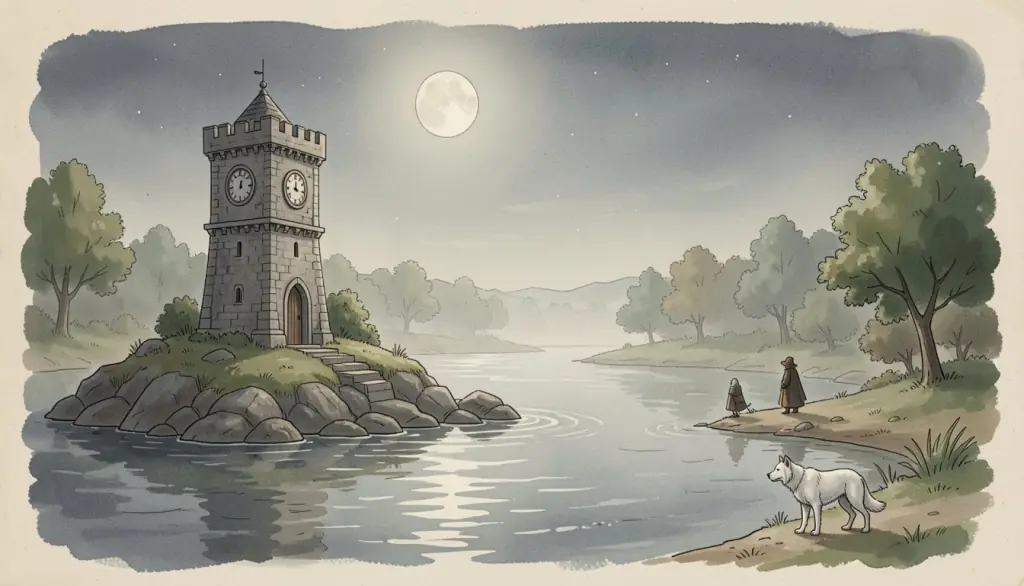
The contest of songs. Finrod Felagund and Beren, with ten companions, set out disguised as Orcs to reach Angband. Sauron, suspicious, has them brought before him on Tol-in-Gaurhoth. Finrod and Sauron then contend in songs of power, a duel fought with words and music rather than swords. Finrod sings of the Elves and of Valinor; Sauron sings of treachery and betrayal, and wins. The disguises fall away and the company is thrown into a pit, where a werewolf devours the companions one by one. Finrod dies killing the wolf sent for Beren.
Lúthien and Huan. Lúthien comes to the island with Huan, the great hound of Valinor. Sauron sends wolves against them, then Draugluin, the sire of the werewolves, and Huan kills them all. Finally Sauron takes the form of a wolf himself and attacks. Huan seizes him by the throat. Lúthien demands that he yield the tower; Sauron gives up his mastery of the isle, and is released. He flies away in the form of a vampire to Taur-nu-Fuin, the haunted forest, and Lúthien breaks down the tower's spells and frees the prisoners.
Two details matter later: Sauron is a shape-changer, and his instinct in defeat is to bargain and flee, not to die.
For the wolves and werewolves of this story, see Wargs and Wolves of Middle-earth; for the lovers themselves, Beren and Lúthien.
After the War of Wrath: The Choice Not to Return
At the end of the First Age the Host of the Valar came from the West, Thangorodrim was broken and Morgoth was cast out into the Void. Sauron's response is told at the opening of "Of the Rings of Power and the Third Age".
He put on a fair form, did obeisance to Eönwë, the herald of Manwë, and renounced all his evil deeds. The Silmarillion says some hold that this was not at first falsely done, and that Sauron truly repented, if only out of fear. But Eönwë had no authority to pardon one of his own order, and commanded him to return to Aman and receive the judgement of Manwë. Sauron was ashamed and unwilling to come back humiliated and possibly to serve a long sentence of proof. He hid himself in Middle-earth instead.
We would point to this moment as the one where Sauron becomes himself. Up to here he is a servant who could still have gone home; from here he is a lord with no one above him, and The Silmarillion says he fell back into his master's ways until he wanted to be lord of all things.
Annatar and the Rings of Power
Around Second Age 1000, according to Appendix B, Sauron chose the land of Mordor and began to build Barad-dûr. Around 1200 he set out to win the Elves.
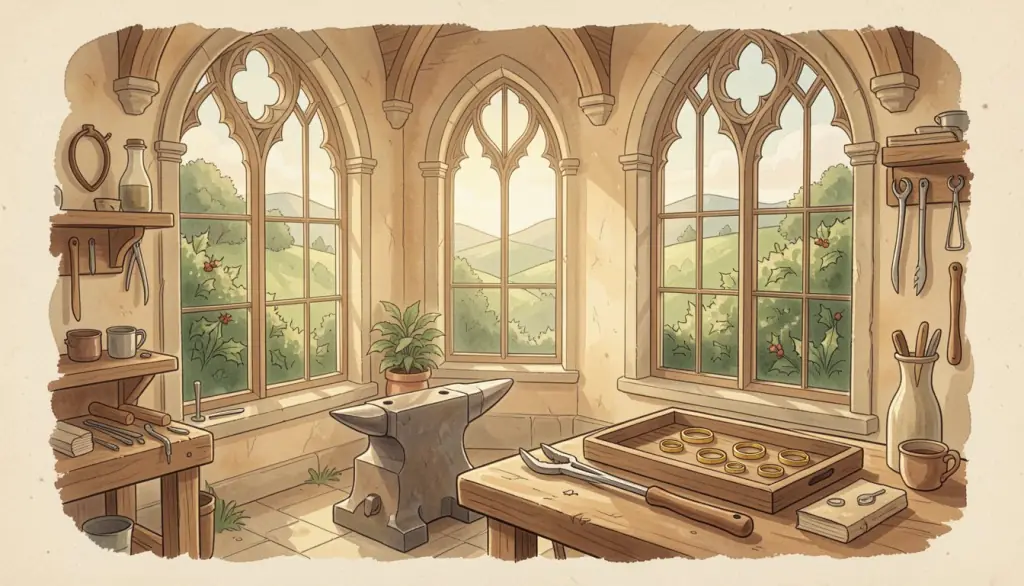
He came in a fair shape, calling himself Annatar, the Lord of Gifts, presenting himself as an emissary of the Valar who wanted to help the Elves make Middle-earth as fair as Valinor. Gil-galad and Elrond did not trust him and refused him entry to Lindon. The Noldor of Eregion, led by Celebrimbor, accepted his help, because what he offered them was what they most wanted: deeper knowledge of making.
Under his teaching the smiths made many rings from about 1500. Celebrimbor made the Three alone, around 1590, without Sauron's hand on them. Around 1600 Sauron forged the One Ring in the fires of Orodruin, putting much of his own power into it so that it could govern all rings made with the craft he had taught. When he set it on his finger, Celebrimbor perceived him, and the Elves took off their rings.
War followed. In 1697 Eregion was laid waste and Celebrimbor was killed; Unfinished Tales ("The History of Galadriel and Celeborn") adds that Sauron tortured him and carried his body as a banner. Sauron overran Eriador until in 1700 the Númenórean king Tar-Minastir sent a great fleet to Lindon, and in 1701 Sauron was driven back to Mordor.
The forging itself, the Seven and the Nine, and the Elvish names around them are set out in How Was the One Ring Made?, The Rings of Power Explained and Celebrimbor Explained. For Sauron himself, the episode shows three things:
- He did not lie about everything. He really was a master smith from Aulë's people, and the knowledge he gave the Elves was real. That is why the deception worked.
- He misjudged the Elves. The moment he put on the One, they knew him. His plan depended on the Elves wearing their rings while he wore his, and it failed on the first day.
- He gained power by losing it. The One gave him dominion over the Seven and the Nine, but it placed much of his strength outside himself. Everything that follows comes from that trade.
The Nine went to Men, who became the Nazgûl, first seen around 2251; see Nazgûl and Ringwraiths and Khamûl the Easterling.
Sauron and Númenor
The second great deception of the Second Age is told in the "Akallabêth", the account of the Downfall of Númenor in The Silmarillion.
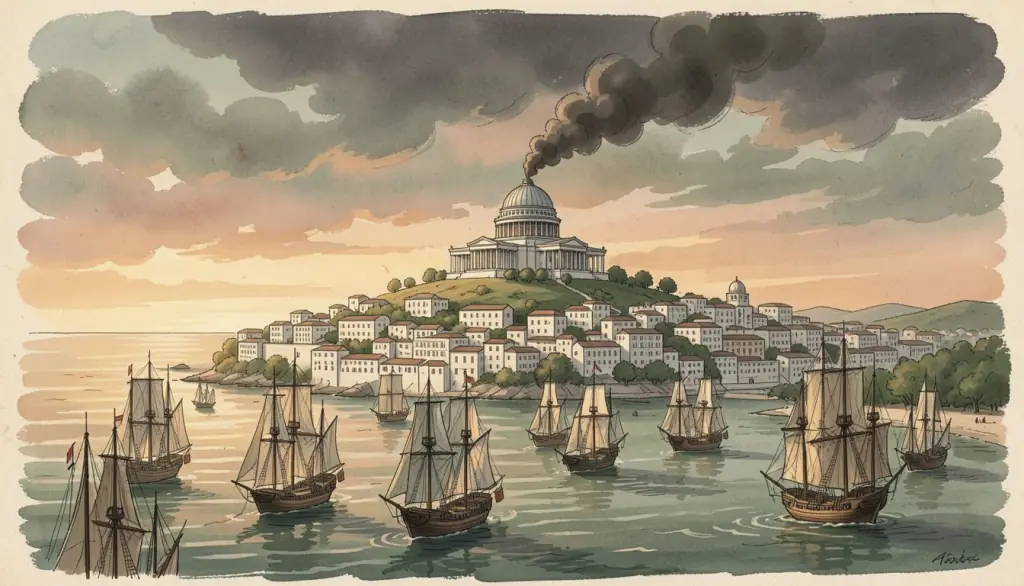
By the 33rd century of the Second Age the kings of Númenor had grown proud, envious of the Elves' immortality and hostile to the Valar. When Sauron took the title King of Men, the last king, Ar-Pharazôn the Golden, sailed to Middle-earth with an overwhelming host and landed at Umbar in 3261. Sauron's armies deserted him at the sight of it. He came down and humbled himself, and Ar-Pharazôn took him back to Númenor as a hostage.
It was exactly what Sauron wanted. Within a few years he went from prisoner to the king's chief counsellor. The "Akallabêth" tells what he did with the position:
- He taught that the Valar had lied, that there was no Eru, and that the true lord was Melkor, the Lord of the Darkness, who could give freedom and power.
- He had a great temple built in Armenelos, crowned with a dome, where human sacrifices were burned to Melkor.
- He persuaded the king to cut down Nimloth, the White Tree; Isildur saved one of its fruits at the risk of his life.
- Finally he urged Ar-Pharazôn to sail against Valinor and take immortality by force.
The fleet sailed in 3319. The Valar laid down their guardianship of the world, Eru changed the shape of Arda, and Númenor was swallowed by the sea. The "Akallabêth" says that Sauron, who had expected only the destruction of the king's host, was caught in the ruin himself. His body was destroyed, and he could never again take a form that seemed fair to Men. His spirit fled back to Middle-earth, took up the One Ring, which he had left in Mordor, and he appeared there in a shape that the "Akallabêth" describes as malice and hatred made visible.
The Númenóreans had called him Zigûr, "the Wizard", in their own language, Adûnaic. For that language, and the names of the kings he deceived, see Adûnaic, the Language of Númenor.
The Last Alliance and the First Defeat
The survivors of Númenor, the Faithful led by Elendil and his sons Isildur and Anárion, came to Middle-earth in 3320 and founded Arnor and Gondor. In 3429 Sauron attacked Gondor, took Minas Ithil and burned the White Tree that grew there; Isildur escaped with a seedling.
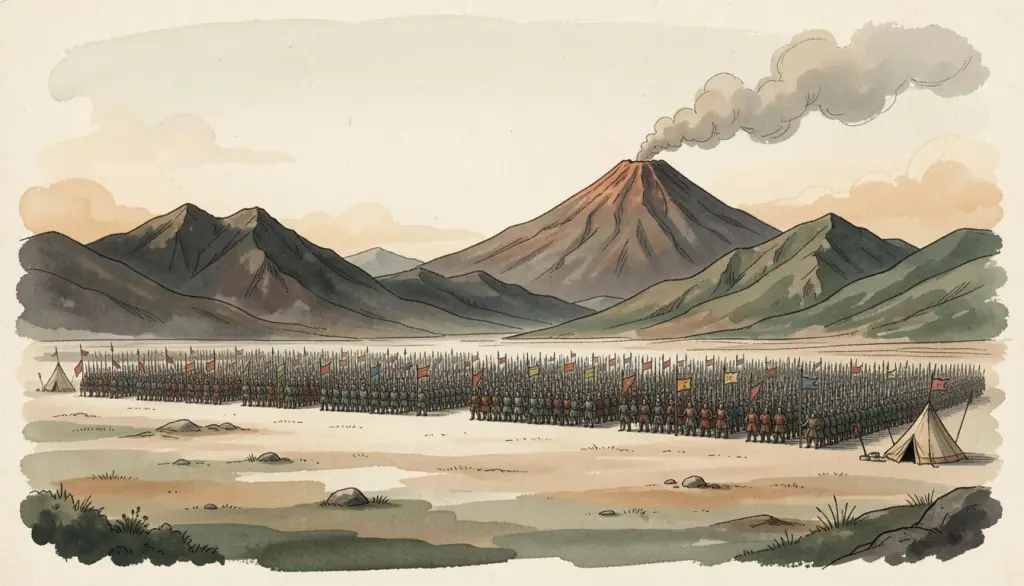
Gil-galad and Elendil answered with the Last Alliance of Elves and Men. In 3434 its host won the Battle of Dagorlad and besieged Barad-dûr for seven years; Anárion was killed in 3440. In 3441 Sauron came out and wrestled with Gil-galad and Elendil. Both were slain and Narsil broke beneath Elendil, but Sauron too was thrown down, and Isildur cut the Ring from his hand with the hilt-shard of his father's sword ("Of the Rings of Power and the Third Age").
Elrond and Círdan counselled Isildur to destroy the Ring; he kept it as weregild for his father and brother, and two years later it betrayed him at the Gladden Fields. See Isildur Explained and Gil-galad Explained.
Sauron was overthrown, not destroyed. His spirit fled into hiding, and because the Ring survived, so did the foundation of his power.
The Necromancer of Dol Guldur
For a thousand years after the Last Alliance Sauron took no visible shape. Then, around Third Age 1050, a shadow fell on Greenwood the Great, and Men began to call it Mirkwood (Appendix B). Around 1100 the Wise found that an evil power had built a stronghold at Dol Guldur in the south of the forest, and took it for one of the Nazgûl.
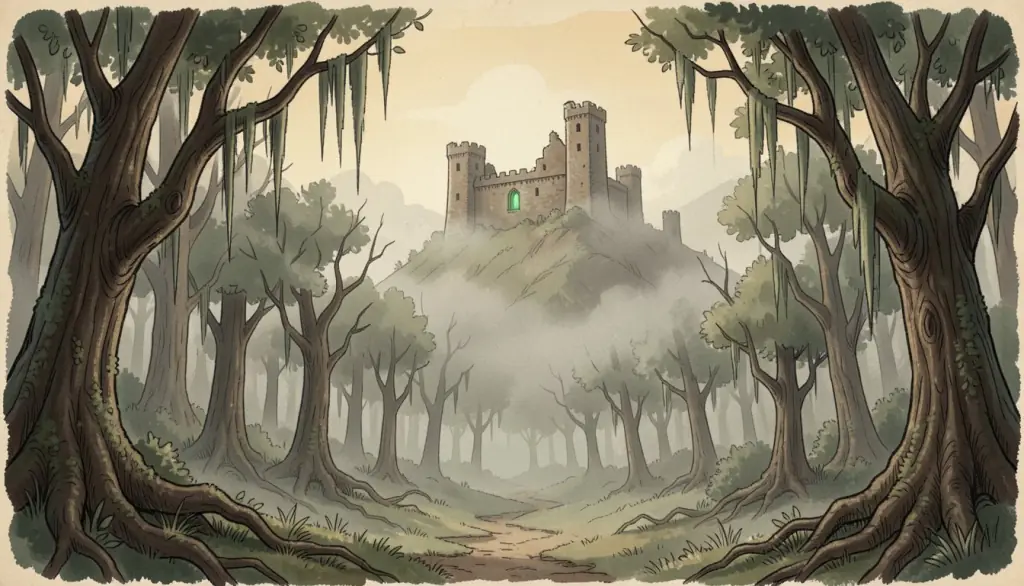
It was Sauron, rebuilding his strength as a sorcerer known simply as the Necromancer. This is the form in which he first entered Tolkien's published work. In The Hobbit (ch. 1) Gandalf found Thorin's father in the Necromancer's dungeons, and at the end of the book (ch. 19) the White Council has driven the Necromancer out of southern Mirkwood. The Hobbit never says who he is.
Appendix B fills in the rest. In 2063 Gandalf went to Dol Guldur and Sauron retreated into the East, beginning the Watchful Peace; in 2460 he returned with increased strength. In 2850 Gandalf entered the fortress in secret, found the dying Thráin and learned that its master was Sauron. Saruman overruled his call for an attack in 2851, then agreed to one in 2941, when he was already searching for the Ring himself. Sauron withdrew to Mordor, declared himself openly in 2951 and sent three of the Nazgûl to reoccupy Dol Guldur. At the Council of Elrond, Gandalf admits that he had only feigned to flee (The Fellowship of the Ring, book II, ch. 2). For what the forest suffered under his shadow, see Mirkwood and the Woodland Realm.
The Dark Lord in The Lord of the Rings
In The Lord of the Rings Sauron is everywhere and nowhere. He is felt as a pressure on every chapter, but he speaks no line in his own voice and is never described in a scene. What we learn of him comes through others.
Through Gandalf. In "The Shadow of the Past" (book I, ch. 2) Gandalf explains that Sauron has rebuilt Barad-dûr and much of his strength, but lacks the One; if he regains it, he will be stronger than before.
Through the palantíri. The Ithil-stone, captured when Minas Ithil fell in 2002, is his best tool in the Third Age. Through the Orthanc-stone he ensnares Saruman and questions Pippin ("The Palantír", The Two Towers, book III, ch. 11), and Denethor is shown only what Sauron wants him to see. Aragorn turns the trick back on him ("The Passing of the Grey Company", The Return of the King, book V, ch. 2), showing himself as Isildur's heir, and Sauron strikes at Minas Tirith before he is fully ready.
Through his limits. Gandalf's most important insight comes in "The White Rider" (The Two Towers, book III, ch. 5). Sauron weighs everything by the desire for power, so the idea that his enemies might want to destroy the Ring and have no one take his place does not enter his mind. The whole strategy of the West, sending two Hobbits into Mordor while the armies make a show at the Black Gate, depends on that blindness.
The end. On 25 March 3019, when Frodo claims the Ring at the Cracks of Doom, Sauron becomes aware of him at once and understands his folly, The Return of the King says ("Mount Doom", book VI, ch. 3). The Nazgûl are called away too late. When Gollum falls into the fire with the Ring, Barad-dûr crumbles, the Nazgûl perish, and a vast shadow rises over Mordor, reaching out a hand toward the West before a wind takes it and it passes away ("The Field of Cormallen", book VI, ch. 4). Gandalf had said in "The Last Debate" that if the Ring were destroyed, Sauron would be maimed for ever, a spirit of malice gnawing itself in the dark. That is his end.
The Eye, the Hand and the Body: What Sauron Looks Like
Because he never appears in a scene, readers often assume Sauron has no body in The Lord of the Rings. Tolkien's text says otherwise.
- The Black Hand. In "The Passage of the Marshes" (The Two Towers, book IV, ch. 2) Gollum, who was tortured in Mordor, says of Sauron: "He has only four on the Black Hand, but they are enough." The missing finger is the one Isildur cut away with the Ring.
- A physical presence. In a letter of 1963 (no. 246 in The Letters of J.R.R. Tolkien), Tolkien wrote that the form Sauron took was that of a man of more than human stature, but not gigantic, and that he was a figure to be thought of as very terrible.
- The Eye. The Eye is real in the books, but as an emblem and an experience. Orcs of Mordor bear the Red Eye on their shields. Frodo sees a great Eye in the Mirror of Galadriel, and later feels the Eye searching for him from Barad-dûr. The Eye is how Sauron's will is felt, not a description of his anatomy.
The films turned the emblem into the body, a burning eye on top of the tower. That is a fair picture of how the characters experience him, but in Tolkien he is a person behind the eye, one who can hold a seeing-stone and lose a finger to the shard of a sword.
Sauron's Allies and Enemies
| Person or group | Relation | Read more |
|---|---|---|
| Melkor (Morgoth) | His master in the First Age | Fëanor and the Silmarils |
| Lúthien and Huan | Defeat him on Tol-in-Gaurhoth | Beren and Lúthien |
| Celebrimbor | Deceived pupil, then his victim | Celebrimbor Explained |
| Gil-galad | Refuses him in Lindon; dies overthrowing him | Gil-galad Explained |
| Galadriel | Distrusts Annatar; later throws down Dol Guldur's walls | Galadriel Explained |
| Ar-Pharazôn | The Númenórean king he captures from within | Adûnaic, the Language of Númenor |
| Elendil and Isildur | Overthrow him; Isildur takes the Ring | Isildur Explained |
| The Nazgûl | Men enslaved by the Nine, his chief servants | Nazgûl and Ringwraiths |
| Saruman | A Maia of Aulë's people like him; ensnared through the palantír | Saruman and Isengard |
| Gandalf | His chief opponent in the Third Age | Gandalf and Mithrandir |
| Orcs, Uruk-hai and Olog-hai | His armies and bred servants | Orcs and Goblins |
One pairing in that table deserves attention. Unfinished Tales ("The Istari") says that Saruman too was of the people of Aulë. Two Maiar of the same craftsman's household fall, centuries apart, in the same way: from a love of skill and order to a desire to command. Saruman is the small copy, and Tolkien seems to have known it.
Sauron's Names and Their Languages
Sauron has more names than almost anyone in Tolkien, and nearly all of them were given by others; Annatar is the one he chose himself. In the Third Age, Aragorn notes in The Two Towers (book III, ch. 1) that Sauron does not permit his name to be spelt or spoken, which is why his servants bear the Eye instead.
| Name | Language | Meaning | Source |
|---|---|---|---|
| Mairon | Quenya | the Admirable; from maira "admirable, excellent" | Parma Eldalamberon 17 |
| Sauron | Quenya | the Abhorred; compare saura "foul, vile" | The Silmarillion, index; Etymologies |
| Gorthaur | Sindarin | gor "horror, dread" + thaur "abominable" | The Silmarillion, Valaquenta and Appendix |
| Annatar | Quenya | Lord of Gifts; anna "gift" | The Silmarillion, "Of the Rings of Power" |
| Zigûr | Adûnaic | the Wizard | The Silmarillion, "Akallabêth" |
| Thû | Early legendarium | his name in The Lay of Leithian | The Lays of Beleriand |
| the Necromancer | English | sorcerer of the dead | The Hobbit |
A few notes:
- Sauron. The index of The Silmarillion translates the name as "the Abhorred", and it belongs with the Quenya adjective saura, "foul, vile, cruel". It describes how others saw him, not what he was made to be.
- Gorthaur. This is the Sindarin counterpart, and it is listed in the Appendix of The Silmarillion, "Elements in Quenya and Sindarin Names", under both gor and thaur. The same gor appears in Gorgoroth, the plateau of Mordor.
- Mairon and Annatar. We find these two the most telling pair. His first name praised what he was; the name he chose for himself in disguise praised what he gave. Both are about other people's admiration. Our reading, and it is only that: Sauron never stopped wanting to be the Admirable, and Annatar was Mairon's old name rewritten as a sales pitch.
- Thû. In The Lay of Leithian the role is held by Thû the Necromancer. We give no meaning for it as his name, because Tolkien did not settle one.
The places of his realm are Sindarin and easy to read: Mordor is "Black Land" (morn "black" + dor "land"), Barad-dûr is "Dark Tower" (barad "tower" + dûr "dark"), and Orodruin is "mountain of red flame" (orod "mountain" + ruin "red flame"). If you want to see any of these names in Elvish letters, try our Tengwar name tool.
Sauron and the Black Speech
Sauron is also one of the very few characters in Tolkien who invent a language inside the story, which suits a spirit from the household of Aulë, the Vala who devised the Dwarves' tongue. Appendix F of The Lord of the Rings says he devised the Black Speech in the Dark Years, meaning it to be the language of all who served him, and failed: after his first overthrow it was forgotten by all but the Nazgûl, and in the Third Age it was spoken only in Barad-dûr and by the captains of Mordor.
The one complete sentence of it is the Ring inscription, which begins Ash nazg durbatulûk, "One Ring to rule them all". It is written in the Elvish Tengwar script, and we think that detail sums him up: the language is his own, but the letters are borrowed from the people he deceived. The orcs' name for his tower, Lugbúrz, is the Black Speech for Barad-dûr.
For every attested word, see Black Speech Words; for the inscription line by line, The One Ring Inscription Explained.
Books vs Films vs The Rings of Power
Sauron has been adapted more freely than almost any other Tolkien character, partly because the books show him so little. These are the main differences.
Peter Jackson's Lord of the Rings films (2001 to 2003)
- The prologue. The Fellowship of the Ring opens with Sauron in black armour at the Last Alliance, killing Elendil and losing the Ring to Isildur. The battle is in the books; the armoured giant on screen is the films' design. In the books Gil-galad dies wrestling Sauron alongside Elendil; the film shows only Elendil's death.
- The Eye. The films make the Eye a literal flaming eye mounted on top of Barad-dûr, with a searchlight beam in The Return of the King. In the books it is an emblem and a felt presence.
- The rings. The prologue presents all the Great Rings as Sauron's gifts. In the books the Three were made by Celebrimbor alone and Sauron never touched them, and Annatar and Eregion do not appear in the films at all.
The Hobbit films (2012 to 2014)
- The Necromancer on screen. Benedict Cumberbatch voices the Necromancer and Sauron. The book of The Hobbit never shows the Necromancer and never says who he is.
- Dol Guldur. The Battle of the Five Armies shows Galadriel, Elrond and Saruman confronting him in Dol Guldur and Galadriel driving him out. The White Council's attack of 2941 is in Appendix B, but the scene and its staging are the films' invention, as is Gandalf's capture there.
The Rings of Power (2022 to 2026)
The Rings of Power is set in the Second Age, Sauron's great age, and he is the show's central antagonist. Charlie Vickers plays him.
- Halbrand (Season 1). For the first season Sauron is disguised as Halbrand, a Man who claims to be the lost heir of the Southlands and travels with Galadriel to Númenor and then to Eregion. He is revealed in the finale. Halbrand has no source in Tolkien. Neither does the show's version of Mordor's origin, created when Orodruin erupts over the Southlands.
- Order of the rings. In Season 1 Sauron, as Halbrand, helps Celebrimbor make the Three first. In Tolkien the Three were made last of the great rings and without Sauron's hand.
- Annatar (Season 2). Season 2 brings Tolkien's disguise to the screen: Sauron returns to Eregion as Annatar, claims to be sent by the Valar, flatters Celebrimbor and guides the forging of the Seven and the Nine. Eregion falls and Celebrimbor dies by his hand. This is the closest the show comes to the books, though the timeline is heavily compressed. The season's opening scene, in which Adar and his Orcs betray Sauron, is invented; see What Does Adar Mean?.
Season 3 (premiered 11 November 2026)
Only what is confirmed: the first four episodes arrived on 11 November 2026, with episodes 5 and 6 due on 18 November and 7 and 8 on 25 November. The season opens five years after the fall of Eregion, and its announced arc, shown in the July 2026 teaser, is Sauron's forging of the One Ring. Premiere recaps report that it opens with Sauron failing at the task while the memory of Celebrimbor, played again by Charles Edwards, taunts him, an invention of the show. Our Season 3 Elvish preview lists the confirmed cast.
One difference is already clear: in Tolkien, Sauron forged the One around Second Age 1600, before Eregion fell in 1697, not after it. With half the season still to air, we will not guess how the show stages the forging.
How Tolkien Built Sauron
Sauron grew over fifty years of writing, and the layers explain why he can seem like several characters.
- 1910s and 1920s, The Book of Lost Tales and The Lay of Leithian. The villain of the Beren story is first Tevildo, Prince of Cats, then Thû the Necromancer, a lord of wolves and sorcery under Morgoth. He is a fairy-tale antagonist with no larger role.
- 1930s, The Hobbit. A Necromancer is mentioned in passing, as a reason for Gandalf's absences. Nothing connects him to the old stories yet.
- 1937 to 1955, The Lord of the Rings. Tolkien connects the Necromancer to the Ring and makes him Sauron, the Dark Lord. The Second Age history is invented to explain where the Ring came from, and Númenor's fall is tied to him.
- 1950s to 1970s, late essays and notes. Tolkien thinks about Sauron's nature: what drew him to Melkor, how a spirit can lose power by putting it into an object, whether his repentance was real. These are in Morgoth's Ring, The Peoples of Middle-earth and his linguistic papers, where the name Mairon appears.
The order matters, as with so many of Tolkien's characters. The Dark Lord of The Lord of the Rings came before most of the explanations. In our reading, that is why he works: Tolkien wrote the shadow first, then spent twenty years asking what kind of being could cast it, and his answer was not a monster but a fallen craftsman.
Tolkien's own summary, in a letter of 1956 (no. 183), is that Sauron represents as near an approach to the wholly evil will as is possible. That is true of the Dark Lord of the Third Age. The late notes show how much work went into explaining how a spirit of Aulë's household got there: Morgoth wanted to unmake the world, Sauron wanted to rule it, and he needed subjects where his master needed none.
Our Take
Our view, stated plainly: Sauron is not Tolkien's most powerful villain, but he is his most modern one, because his evil is efficient rather than wild. Morgoth wants to spoil the world out of envy. Sauron wants to run it. He is a manager of empires, a builder of towers and languages, a smith who thinks the right tool can fix anything, including the Elves' grief over a fading world and the Númenóreans' fear of death. Every time he wins, he wins by offering a solution.
That is why the most interesting choice in The Rings of Power is also its biggest risk. The show gives Sauron a sympathetic surface, a man who seems to want redemption and order. Tolkien's notes support part of that: Sauron really did love order, and his repentance after the War of Wrath may have been sincere at first. But in the books that sympathy ends when he refuses Eönwë's judgement. After that, his talk of healing Middle-earth is not a conflicted soul searching for good; it is the deception itself. Tolkien's Sauron uses his self-justifications as a weapon, not as a wound.
If you want to understand Sauron, do not start with the Eye. Read the contest of songs on Tol-in-Gaurhoth, the Annatar chapter and the "Akallabêth" in that order. You meet a singer, then a teacher, then a priest, and only at the end a Dark Lord. That each role worked on intelligent people is the warning we take from him.
People Also Ask
Who is Sauron in Lord of the Rings? Sauron is the Dark Lord of Mordor and the maker of the One Ring. He is a Maia who began as a servant of Aulë and was corrupted by Morgoth, and he is the "Lord of the Rings" of the title.
What was Sauron's original name? In Tolkien's late notes, published in Parma Eldalamberon 17, it was Mairon, "the Admirable". He was called Sauron after he joined Morgoth. The name is not in the books Tolkien published.
Is Sauron a Maia or a Vala? A Maia, of the people of Aulë the Smith (Valaquenta). Morgoth was a Vala; Sauron was a lesser spirit.
What is the difference between Sauron and Morgoth? Morgoth was the first and mightiest rebel among the Valar; Sauron was his greatest servant. Morgoth was cast out at the end of the First Age, and Sauron became the Dark Lord of the Second and Third Ages.
Is Sauron just a giant eye? No. In the books he has a body: Gollum mentions the four fingers of his Black Hand, and Tolkien described him as of more than human stature. The flaming eye on the tower is the films' image.
What does the name Sauron mean? "The Abhorred", in Quenya, related to saura "foul, vile". His Sindarin name Gorthaur combines gor "horror" and thaur "abominable".
Who is Annatar in Lord of the Rings? Annatar, "Lord of Gifts", is the fair disguise Sauron used with the Elven-smiths of Eregion, whom he taught to make the Rings of Power.
Does Sauron die at the end of The Lord of the Rings? As a spirit he cannot die like a mortal. When the Ring is destroyed on 25 March 3019 his power is unmade and his shadow blows away, leaving him a powerless spirit of malice.
Is Halbrand Sauron in the books? No. Halbrand is a disguise invented for The Rings of Power. Tolkien's only Second Age disguise for Sauron is Annatar.
Who plays Sauron in The Rings of Power? Charlie Vickers, as Halbrand in Season 1 and Annatar in Season 2. Season 3, which premiered on 11 November 2026, follows his forging of the One Ring.
Read the Names of Mordor Yourself
Almost every name in Sauron's story, from Gorthaur and Tol-in-Gaurhoth to Barad-dûr and Orodruin, is built from Sindarin or Quenya words Tolkien published. To learn the languages behind them, start with our free Elvish course, which teaches Sindarin and Quenya using words Tolkien actually wrote.
Related Reading
- Characters of Middle-earth: Who's Who in Tolkien's World
- Ar-Pharazôn Explained
- Elendil Explained
- How Was the One Ring Made? Sauron, Eregion and the Fires of Mount Doom
- The Rings of Power Explained: Elven, Dwarven and the Nine
- Celebrimbor Explained
- Nazgûl and Ringwraiths Explained
- Black Speech Words: Every Attested Word of Mordor's Tongue
- The One Ring Inscription Explained
- Adûnaic, the Language of Númenor
- Beren and Lúthien
- Wizards of Middle-earth: The Istari Explained
- Rings of Power Season 3 Elvish Preview
People Also Ask
Who is Sauron in Lord of the Rings?
Sauron is the Dark Lord of Mordor and the maker of the One Ring. He is a Maia, a spirit of the same order as Gandalf, who began as a servant of the Vala Aulë and was corrupted by Melkor (Morgoth). He is the "Lord of the Rings" of the title, and the whole story turns on his attempt to recover the Ring he lost at the end of the Second Age.
What was Sauron's original name?
In Tolkien's late linguistic notes, published in Parma Eldalamberon 17, Sauron's original name was Mairon, "the Admirable", from the Quenya word maira. He was called Sauron only after he joined Morgoth. The name Mairon is not in The Lord of the Rings or the published Silmarillion.
Is Sauron a Maia or a Vala?
A Maia. The Valaquenta says that in his beginning he was of the Maiar of Aulë, the smith of the Valar, and that he remained mighty in the lore of that people. The Valar are the greater spirits; Morgoth was one of them, Sauron was not.
What is the difference between Sauron and Morgoth?
Morgoth, first called Melkor, was the mightiest of the Valar and the first rebel; Sauron was a lesser spirit, a Maia, who became his greatest servant. Morgoth was overthrown at the end of the First Age and thrust out of the world. Sauron survived him and became the Dark Lord of the Second and Third Ages.
Is Sauron just a giant eye?
No. In the books Sauron has a physical form: Gollum says he has only four fingers on his Black Hand, and Tolkien described him in a letter as a figure of more than human stature but not gigantic. The Eye is his emblem and the way others feel his will. The flaming eye on top of Barad-dûr is a choice of Peter Jackson's films.
What does the name Sauron mean?
Sauron is a Quenya name meaning "the Abhorred", as the index of The Silmarillion translates it. It is related to the Quenya adjective saura, "foul, vile". His Sindarin name Gorthaur combines gor "horror, dread" and thaur "abominable".
Who is Annatar in Lord of the Rings?
Annatar, "Lord of Gifts", is the fair disguise Sauron wore in the Second Age when he came to the Elves of Eregion. As Annatar he taught Celebrimbor and the Elven-smiths the craft of making Rings of Power, then forged the One Ring in secret to rule them all.
Does Sauron die at the end of The Lord of the Rings?
Sauron cannot die in the way mortals do, because he is a spirit. When the One Ring is destroyed on 25 March 3019, his power is unmade and his shadow is blown away to the east. Gandalf had foretold that without the Ring he would be reduced to a spirit of malice, never able to rise again.
Is Halbrand Sauron in the books?
No. Halbrand is a disguise invented for The Rings of Power. In Tolkien, Sauron's only Second Age disguise is Annatar, and he never travels with Galadriel or poses as a lost king of the Southlands.
Who plays Sauron in The Rings of Power?
Charlie Vickers plays Sauron as Halbrand in Season 1 and as Annatar in Season 2. Season 3, which premiered on 11 November 2026, centres on Sauron's attempt to forge the One Ring, with episodes 5 to 8 due on 18 and 25 November.