Elendil Explained: The Tall King Who Escaped the Fall of Númenor
Try It Yourself — Free Elvish Tools
Quick Answer: Elendil the Tall is a Man of Númenor, the son of Amandil, last Lord of Andúnië, and the leader of the Faithful who stayed loyal to the Elves and the Valar. When Númenor was drowned in Second Age 3319 he escaped with his sons Isildur and Anárion in nine ships, founded the kingdoms of Arnor and Gondor, and ruled them as High King. In 3441 he and Gil-galad overthrew Sauron at the end of the Last Alliance and both died; his broken sword Narsil was later reforged as Andúril. His Quenya name means "Elf-friend" or "star-lover".
Elendil is the hinge of Tolkien's history of Men. Before him there is Númenor, a kingdom of Men raised above all others and then destroyed by its own pride. After him there are Arnor and Gondor, the two exiled kingdoms whose long decline and partial return make up the background of The Lord of the Rings. Every claim Aragorn makes, from his sword to his crown, is a claim to be Elendil's heir.
Yet he is a quiet figure on the page. He has no chapter of his own, almost no lines of dialogue, and his greatest deeds are told in a few paragraphs of the "Akallabêth" and the appendices. This guide gathers what Tolkien actually wrote about him, from the persecuted house at Rómenna to the slopes of Mount Doom, separates the films and The Rings of Power from the books, and ends with our own reading of why such a sparsely drawn man carries so much weight.
For his son's story, including the Ring and the Gladden Fields, see Isildur Explained. For the peoples he belonged to and ruled, start with Men of Middle-earth.
Elendil at a Glance
| People | Man of Númenor, one of the Dúnedain; of the Faithful, also called the Elendili or Elf-friends (The Silmarillion, "Akallabêth") |
| Titles | Elendil the Tall; Elendil the Faithful; High King of Arnor and Gondor (LotR, Appendix A) |
| Name | Quenya: elen + -ndil, "Elf-friend" or "star-lover" |
| Adûnaic name | Nimruzîr, found only in Tolkien's drafts (Sauron Defeated) |
| Father | Amandil, last Lord of Andúnië |
| Mother | Not recorded by Tolkien |
| Spouse | Not named or described by Tolkien |
| Children | Isildur (born SA 3209) and Anárion (born SA 3219), per Unfinished Tales |
| Descent | From Elros, first King of Númenor, through Silmariën and the Lords of Andúnië |
| Realm | Arnor, with Gondor under his sons; High King of both from SA 3320 |
| Capital | Annúminas, by Lake Nenuial in the North |
| Sword | Narsil, made by Telchar of Nogrod; reforged as Andúril (The Two Towers, book III, ch. 6) |
| Emblems | Seven stars; the Elendilmir, a white gem worn on the brow (Unfinished Tales) |
| Death | SA 3441, fighting Sauron beside Gil-galad on Orodruin |
| Heir | Isildur, then Isildur's son Valandil in Arnor; Aragorn is his heir at the end of the Third Age |
| Film actor | Peter McKenzie (The Fellowship of the Ring, 2001, prologue) |
| Rings of Power actor | Lloyd Owen (Seasons 1 to 3) |
Elendil Timeline
"Mae govannen" — want to actually speak Elvish?
Try It Free →The dated rows come from the Tale of Years in Appendix B of The Lord of the Rings. Birth years for his sons come from Unfinished Tales. Tolkien's published works give no birth year for Elendil himself, and the "Akallabêth" gives no exact year for Amandil's voyage, so those rows show order rather than dates.
| Age and year | Event |
|---|---|
| SA 32 | The Edain reach Númenor; Elros becomes its first king (Appendix B) |
| SA, early centuries | Silmariën, daughter of the fourth king Tar-Elendil, bears Valandil, first Lord of Andúnië (Unfinished Tales, "The Line of Elros") |
| SA, late centuries | Under Ar-Gimilzôr the Faithful are persecuted and moved from the west of the island to the east (The Silmarillion, "Akallabêth") |
| SA 3209 | Isildur born (Unfinished Tales) |
| SA 3219 | Anárion born (Unfinished Tales) |
| SA 3255 | Ar-Pharazôn seizes the sceptre of Númenor |
| SA 3262 | Sauron is brought to Númenor as a prisoner and soon becomes the king's counsellor |
| SA 3310 | Ar-Pharazôn begins building the Great Armament |
| SA, after 3310 | Amandil sails secretly into the West and is never heard of again; Elendil prepares ships at Rómenna ("Akallabêth") |
| SA 3319 | Ar-Pharazôn assails Valinor; Downfall of Númenor; Elendil and his sons escape in nine ships |
| SA 3320 | Foundation of the Realms in Exile, Arnor and Gondor; the Stones are divided; Sauron returns to Mordor |
| SA 3429 | Sauron attacks Gondor and takes Minas Ithil; Isildur escapes north to Elendil |
| SA 3430 | The Last Alliance of Elves and Men is formed |
| SA 3434 | The host of the Alliance crosses the Misty Mountains; Battle of Dagorlad; siege of Barad-dûr begins |
| SA 3440 | Anárion slain before Barad-dûr |
| SA 3441 | Sauron overthrown by Elendil and Gil-galad, who perish; Isildur takes the One Ring; the Second Age ends |
| TA 2 | Isildur killed at the Gladden Fields; Valandil, in Rivendell, becomes king of Arnor |
| TA 3019 | Aragorn, Elendil's heir, is crowned and speaks Elendil's words (The Return of the King, book VI, ch. 5) |
Two cautions on sources. The genealogy through Silmariën and the sons' birth years come from essays published after Tolkien's death in Unfinished Tales. The core story of the Faithful, the escape and the Last Alliance is in The Silmarillion ("Akallabêth" and "Of the Rings of Power and the Third Age") and in the appendices, which Tolkien published himself.
Who Elendil Is
Elendil is a nobleman of Númenor of the house of Andúnië, royal by blood but never ruling. Three facts define him:
- He is one of the Faithful. In Númenor's last centuries most of its people turned against the Elves and resented the Ban of the Valar that kept them from sailing West. A minority, the Faithful, kept the old friendship and the old loyalties. Elendil and his father led them.
- He survives the end of a world. When Ar-Pharazôn attacked Valinor and Númenor was swallowed by the sea, Elendil's nine ships were among the very few that escaped.
- He founds the kingdoms the rest of the story depends on. Arnor in the north and Gondor in the south were both his, and every later king of either realm traced his claim to Elendil.
Family and Lineage
Tolkien records Elendil's line upward in some detail, because it carries the royal blood of Elros, and downward because it carries the crowns of Arnor and Gondor. The women of the house are mostly absent.
| Person | Relation | Read more |
|---|---|---|
| Elros Tar-Minyatur | Distant ancestor; Elrond's twin and first King of Númenor | Elros and Elrond: The Half-elven Choice |
| Silmariën | Ancestress; daughter of the fourth king, Tar-Elendil, through whom the Lords of Andúnië descend | This post, "The House of Andúnië" |
| Amandil | Father; last Lord of Andúnië and leader of the Faithful | This post, "Amandil's Voyage" |
| Elendil's mother | Not recorded | |
| Elendil's wife | Not named or described | This post, "Books vs Films vs The Rings of Power" |
| Isildur | Elder son; co-founder of Gondor, cut the Ring from Sauron | Isildur Explained |
| Anárion | Younger son; co-founder of Gondor, killed at Barad-dûr | Isildur Explained |
| Valandil | Grandson; Isildur's youngest son, raised in Rivendell, king of Arnor | |
| Meneldil | Grandson; Anárion's son, king of Gondor after Isildur | |
| Gil-galad | Ally; High King of the Noldor, died beside him | Gil-galad Explained |
| Elrond | Herald of Gil-galad in the Last Alliance and kin through Elros | Elrond Explained |
| Ar-Pharazôn | Last King of Númenor; friend of Amandil in youth | Adûnaic: The Lost Language of Númenor |
| Aragorn | Heir at the end of the Third Age | Aragorn's Elvish Names |
Notice the gap at the centre. Tolkien gives us Elendil's father, his sons, his grandsons and his remote ancestors, but nothing about his mother or his wife. The Númenórean records he imagined, written by and for a royal line counted through its heirs, simply do not mention them. Any name for Elendil's wife in a family tree is an invention.
The House of Andúnië
Elendil's family took its name from Andúnië, a haven on the west coast of Númenor. The name is Quenya and means "sunset", the same word that gives Andúril its andú- (see our Andúril meaning post). It was the port that faced Eressëa and the Undying Lands, and in the early Second Age the Elves of Eressëa sailed there freely.
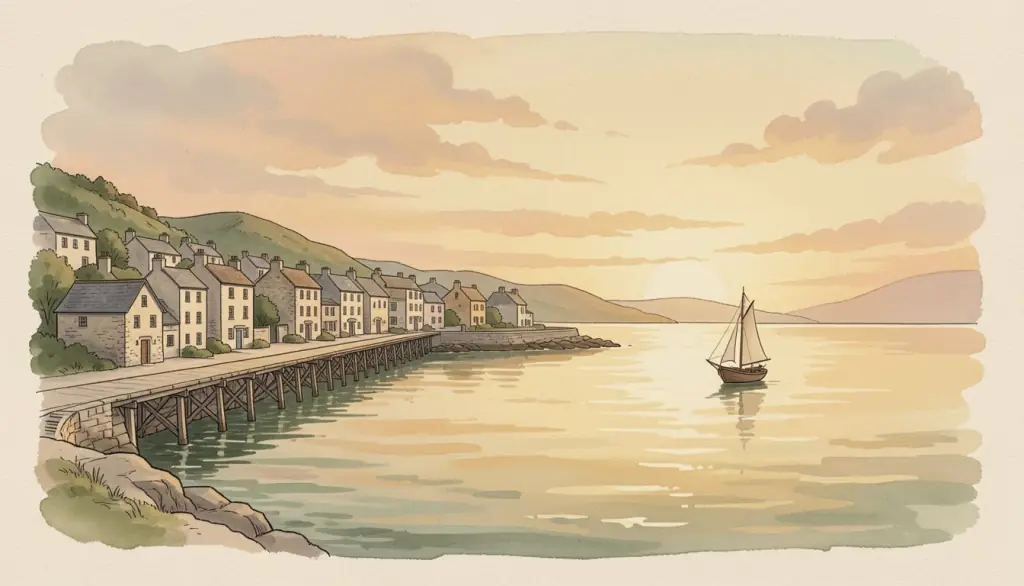
The house began with a princess. Unfinished Tales ("The Line of Elros") explains that Silmariën, the eldest child of the fourth king, Tar-Elendil, could not inherit the sceptre under the law of that time, which passed it to the eldest son. Her son Valandil was made the first Lord of Andúnië instead. His line kept their royal descent and a seat on the king's council, but never the crown. The "Akallabêth" adds that the Lords of Andúnië were of the line of Elros through Silmariën and were held in honour even by the later, hostile kings.
The family history also explains why the name Elendil appears twice in this family. The fourth king was Tar-Elendil, and his descendant three thousand years later bore the same name. They are different men.
Over the centuries the family's coast became a frontier. As the kings grew jealous of the Elves, Andúnië's open friendship with Eressëa became suspect. According to the "Akallabêth", under Ar-Gimilzôr the Faithful were watched, their use of the Elvish tongues forbidden, and many of them were moved from the west of the island to the east, where they could not easily meet the ships from the West. By Amandil's time the house lived at Rómenna, a harbour on the east coast. That forced move turned out to be what saved them.
The Faithful and the Shadow on Númenor
To understand Elendil, you have to understand what being "Faithful" meant in Númenor's last years.
The Númenóreans had been given long life, a land of their own and the friendship of the Eldar, on one condition: they must not sail west out of sight of their own shores, toward the Undying Lands. The kings took Adûnaic titles in place of Quenya ones, stopped the Elvish tongues, and treated the Elves who still visited as spies. For the language politics of this period, our Adûnaic guide has the details: choosing a Quenya or an Adûnaic name had become a statement of loyalty.
The Faithful were the people who refused to make that turn. The "Akallabêth" calls them the Elendili, the Elf-friends. They kept the old languages, received the Elves when they could, and remained loyal to the Valar; they were a dwindling minority, not rebels in arms. After the repentant Tar-Palantir, his nephew Pharazôn seized the throne in 3255.
Then Sauron arrived. Ar-Pharazôn sailed to Middle-earth with such force that Sauron came down and submitted, and was taken back to Númenor as a prisoner in 3262 (Appendix B). Within a few years he was the king's chief counsellor. The "Akallabêth" describes the result: a temple raised in Armenelos, the White Tree cut down, and the Faithful hunted, some of them sacrificed in the temple fires. Amandil, who had been the king's friend in youth, was removed from the king's favour, and Sauron hated him above all.
Amandil's Voyage and the Nine Ships
The decisive turn in Elendil's life is his father's last act.
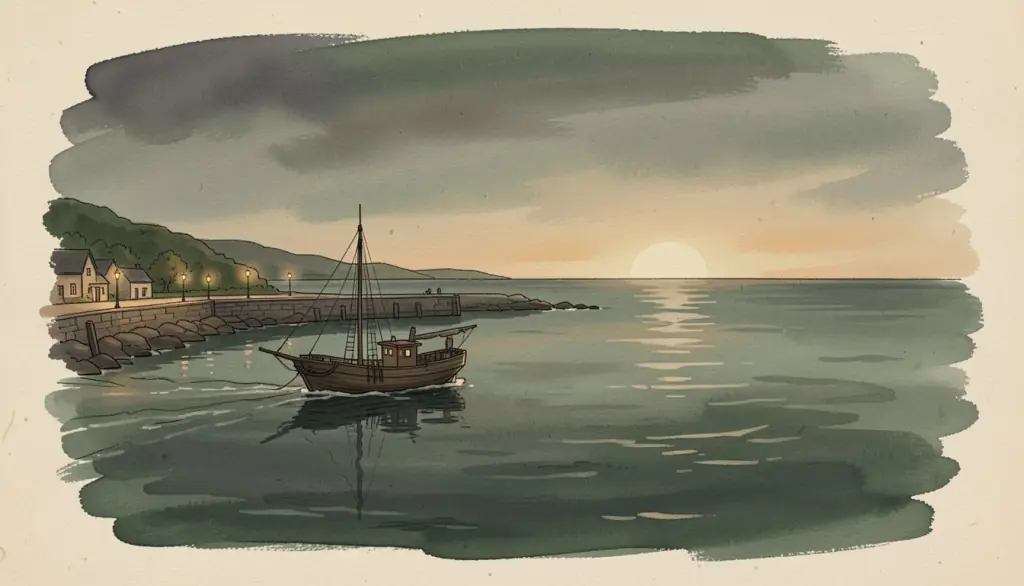
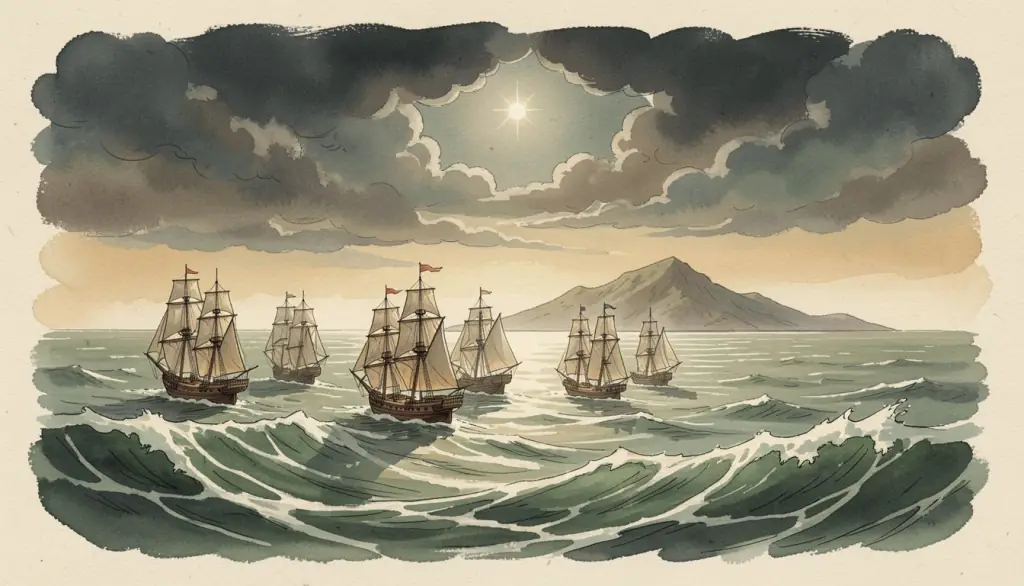
When Ar-Pharazôn began building the Great Armament to make war on the Valar, Amandil decided to do what Eärendil had done long before: sail into the West and plead for mercy for Men. The "Akallabêth" says he told only his son. He instructed Elendil to gather ships in secret at Rómenna, to load them with the Faithful and with whatever they held most dear, and to keep apart from the king's fleet, waiting off the east coast for whatever came. Then Amandil sailed out by night, turned west, and was never heard of again.
Elendil obeyed. His sons were already with him in the preparations; Isildur had earlier risked his life to save a fruit of Nimloth, the White Tree of Númenor, before Sauron had it burned (the full episode is in Isildur Explained). So when the Armament sailed in 3319, the Faithful of Rómenna were aboard ships of their own, lying off the eastern shore.
What happened next is told briefly. Ar-Pharazôn set foot on the shores of Aman; the Valar called on Ilúvatar; the world was changed and Númenor went down into the sea. A great wind and wave drove Elendil's ships east. The "Akallabêth" gives their number exactly: nine ships, four of them Elendil's, three Isildur's and two Anárion's.
Tolkien records the cargo with care, because the rest of the history grows from it. Elendil carried the seven palantíri, the seeing-stones, which The Silmarillion ("Of the Rings of Power and the Third Age") says the Eldar had given to Amandil. Isildur carried the seedling of the White Tree. Among the treasures of the house was also the sword Narsil. Whatever else was lost, Elendil brought the means of sight, the line of the Tree and the sword of the kings.
Arnor, Gondor and the Realms in Exile
The storm separated the family. The "Akallabêth" says Elendil was cast up in Lindon, where Gil-galad received him in friendship, while Isildur and Anárion were carried south and came up the Great River, the Anduin.
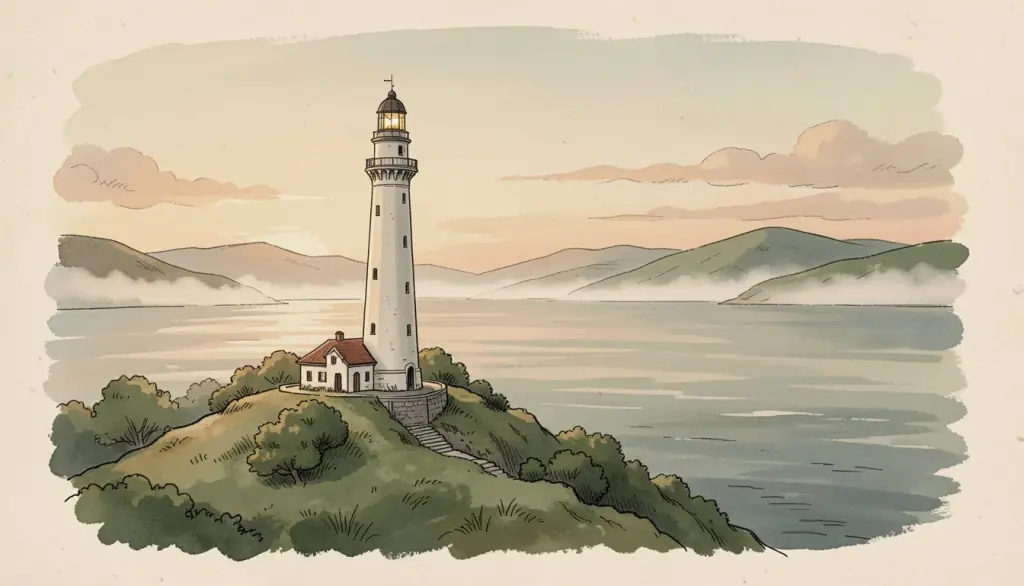
From those landings came the two Realms in Exile, founded in 3320 according to Appendix B:
- Arnor, the northern kingdom, ruled directly by Elendil. Its name is Sindarin and means "Royal Land". He built his chief city at Annúminas, "Tower of the West", on the shore of Lake Nenuial, and later Fornost and other strongholds grew up across Eriador.
- Gondor, the southern kingdom, ruled jointly by Isildur and Anárion. Its name is Sindarin for "Stone-land". Isildur held Minas Ithil, the Tower of the Moon, Anárion Minas Anor, the Tower of the Sun, and between them stood Osgiliath with the throne they shared.
Elendil was High King over both. Appendix A presents Gondor's first rulers as his sons under his authority, and the two lines were meant to stay one realm in spirit. They did not; the division between North and South, and the later failure of the northern line, is the long political background of The Lord of the Rings. But at the start, there was one king and one house.
The palantíri were divided to bind the realms together. Gandalf explains the arrangement in The Two Towers (book III, ch. 11, "The Palantír"), and The Silmarillion adds details. Elendil kept three in the North: at Annúminas, on Amon Sûl, and in the tower of Elostirion in the Tower Hills. His sons took four to the South: Minas Ithil, Minas Anor, Osgiliath and Orthanc. The stone in Elostirion was different from the others. It looked only West, over the sea, and the record says Elendil would go there to gaze back toward the vanished island, and it was said that he could sometimes see, far away, the tower of Avallónë on Eressëa.
The Words on the Shore
The only words of Elendil that survive in The Lord of the Rings come through Aragorn. At his coronation before Minas Tirith (The Return of the King, book VI, ch. 5, "The Steward and the King"), Aragorn lifts the crown and speaks in Quenya. The text tells us these were the words Elendil spoke when he came up out of the sea on the wings of the wind:
Et Eärello Endorenna utúlien. Sinome maruvan ar Hildinyar tenn' Ambar-metta!
Tolkien's own translation opens with "Out of the Great Sea to Middle-earth I am come", and continues with a promise that he and his heirs will abide there until the ending of the world.
The sentence is worth reading word by word, because every piece of it is attested:
| Quenya | Meaning |
|---|---|
| et | out of |
| Eärello | from the Great Sea (Eär "sea" with the ablative ending) |
| Endorenna | to Middle-earth (Endor with the allative ending) |
| utúlien | I have come |
| sinome | in this place, here |
| maruvan | I will abide |
| ar | and |
| Hildinyar | my heirs |
| tenn' | until (tenna) |
| Ambar-metta | the ending of the world (ambar "world") |
It is a short speech and a complete political programme. It claims the land, names the heirs, and sets no end date. When Aragorn repeats it three thousand years later, the promise is formally kept: an heir of Elendil is standing in Middle-earth and taking up the crown. For more Quenya of this kind with pronunciation, see Quenya Phrases with Pronunciation.
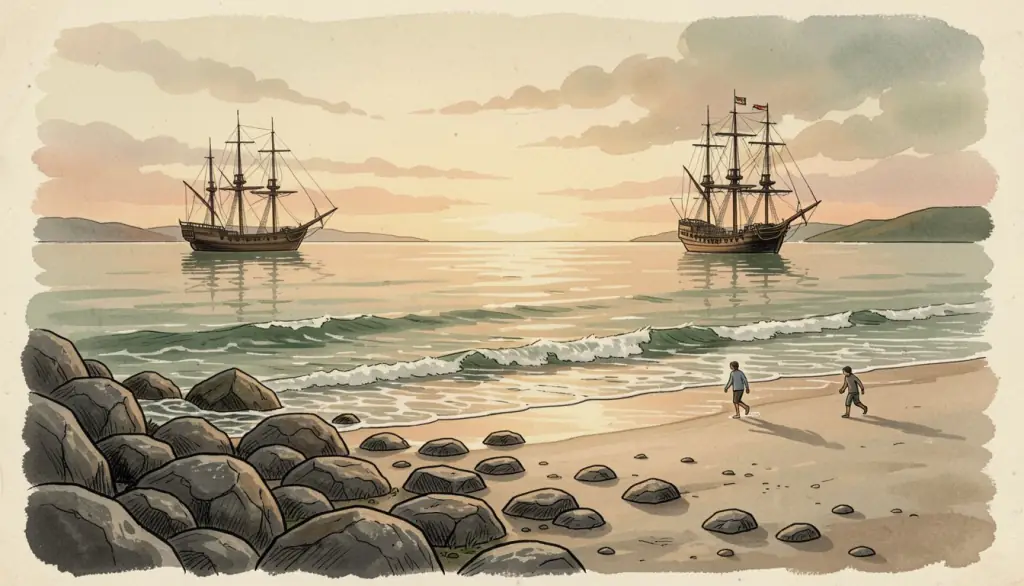
Elendil the Tall: The Man Himself
Tolkien describes Elendil's appearance hardly at all, but the epithet "the Tall" stuck to him in every account.
A late note on Númenórean measures, printed in Unfinished Tales ("The Disaster of the Gladden Fields", in the appendix on linear measures), uses Elendil as its example of exceptional stature, and the figures it gives work out at nearly eight feet. Treat that with care. It comes from an unfinished essay of Tolkien's last years, written partly to puzzle out practical questions, and it is not repeated in The Lord of the Rings. What the published book does give is the general picture: the Númenóreans of the old blood were taller and longer-lived than other Men, and Elendil was remembered as tall even among them.
Several objects carry his memory in the books:
- Narsil. His sword, which The Two Towers (book III, ch. 6, "The King of the Golden Hall") says was first made by Telchar, the Dwarf-smith of Nogrod. It broke beneath him when he fell, and its shards became the heirloom of the North. Its reforging as Andúril is told in Andúril Meaning.
- The seven stars. The emblem of his house. They appear on the blade of the reforged sword and on the banner Arwen makes for Aragorn, together with the White Tree and the crown.
- The Elendilmir. A white gem worn on the brow by the kings of Arnor, called the Star of Elendil. Unfinished Tales records that the original was lost with Isildur at the Gladden Fields, that a replacement was made for Valandil, and that the original was found again in Orthanc in the Fourth Age.
- Amon Sûl. The hill later called Weathertop. In The Fellowship of the Ring (book I, ch. 11, "A Knife in the Dark"), Aragorn tells the hobbits that Elendil was said to have stood there watching for Gil-galad's coming in the days of the Last Alliance.
The Last Alliance
Sauron survived the Downfall. His body was destroyed with Númenor, but his spirit fled back to Mordor, and Appendix B records his return in 3320, the same year Arnor and Gondor were founded. For a century he rebuilt his strength. Then, in 3429, he struck Gondor, the nearer of the two realms, took Minas Ithil and burned the White Tree that grew there. Isildur escaped with a seedling and went north to his father, while Anárion held Osgiliath and Minas Anor.
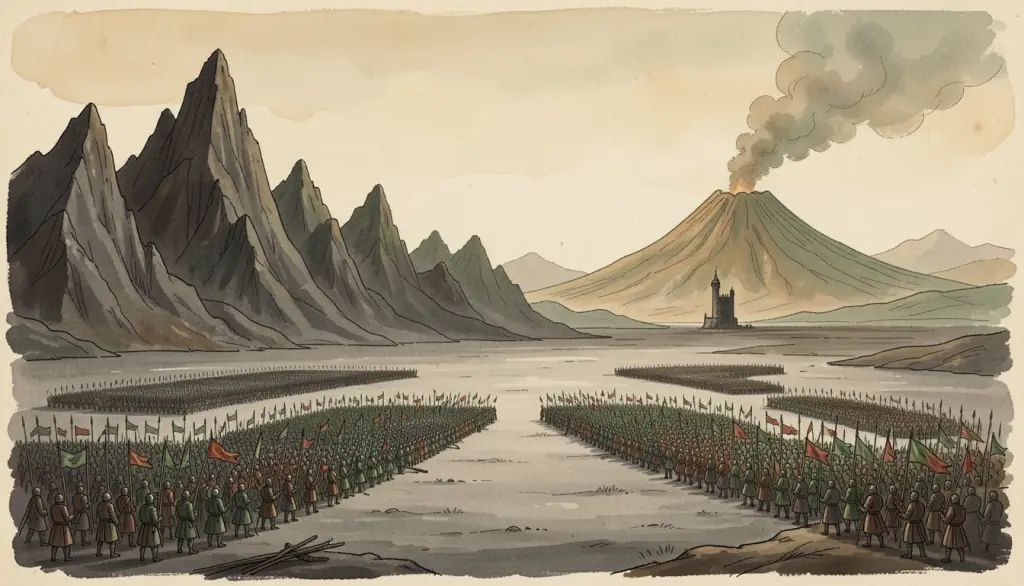
Elendil's answer was not to defend his own borders but to go to war. In 3430 he and Gil-galad formed the Last Alliance of Elves and Men. The Silmarillion ("Of the Rings of Power and the Third Age") describes the gathering of the hosts at Imladris and the march south and east. In 3434 the Alliance crossed the Misty Mountains, defeated Sauron's army on the plain of Dagorlad before the gates of Mordor, and laid siege to Barad-dûr.
The siege lasted seven years. In 3440 Anárion was killed by a stone cast from the Dark Tower. Then Sauron came out himself. On the slopes of Orodruin he fought Gil-galad and Elendil, and both were slain. Narsil broke under Elendil as he fell, and Isildur took the hilt-shard and cut the Ring from Sauron's hand. The Second Age ended.
Elrond, who was there as Gil-galad's herald, retells it at the Council (The Fellowship of the Ring, book II, ch. 2). For how the Elves experienced the same war, see Gil-galad Explained; for what Isildur did next, and why, see Isildur Explained.
Notice how this war completes Elendil's life. He had escaped Númenor because his father went west to fight Sauron's corruption by appeal; he died because he went east to fight Sauron by force. Father and son both gave their lives to undo the same evil, by the only means each had.
After Elendil: The Heirs
Elendil's death split his inheritance, and the rest of the Third Age is in part the history of that split.
In the South. Isildur set Anárion's son Meneldil over Gondor and planted a seedling of the White Tree in Minas Anor in memory of his brother. Unfinished Tales ("Cirion and Eorl") adds that Isildur made a hallowed place in Elendil's memory on a hill in what became Gondor's northern march, where much later Cirion and Eorl swore the oath that founded the friendship of Gondor and Rohan. Gondor's kings came from Anárion's line until it failed in TA 2050, after which the Stewards ruled.
In the North. Isildur set out for Arnor and died at the Gladden Fields in TA 2. His youngest son Valandil, who had been fostered in Rivendell, became king. The northern kingdom later split into three, Arthedain, Cardolan and Rhudaur, and the last of them fell to the Witch-king of Angmar in 1974. Isildur's heirs survived as the Chieftains of the Dúnedain, keeping the shards of Narsil and the ring of Barahir in Rivendell. Appendix A counts Aragorn as the thirty-ninth heir of Isildur.
The reunion. When Aragorn is crowned in 3019, the two halves of Elendil's inheritance join again for the first time since the Second Age: an heir of Isildur holds the crown of Gondor, wears the reforged sword, flies the seven stars and speaks the words from the shore. Our guide to the appendices shows where to find each of these lines in the book.
It is a striking fact that Elendil's real legacy in The Lord of the Rings is mostly symbolic. Faramir's men, before eating, stand in silence facing west "toward Númenor that was" (The Two Towers, book IV, ch. 5). The custom is not named after Elendil, but it is his gesture, the same one he made in the tower of Elostirion.
Elendil's Name and Language
Elendil is Quenya, and like most of his family's names it was a deliberate choice in a kingdom where Quenya names had become a sign of loyalty to the Elves.
The name has two parts:
- elen, "star". It is the word in Frodo's greeting Elen síla lúmenn' omentielvo, "a star shines on the hour of our meeting". The Elves were the "people of the stars", having woken under starlight, and in names el- and elen can point to the Elves as well as to the stars themselves.
- -ndil, an ending that The Silmarillion's appendix of name elements explains as devotion or disinterested love, found in Amandil, Elendil and Mardil, and in Eärendil, "devoted to the sea".
So the name reads naturally two ways: "Elf-friend" and "star-lover". The first is the sense that fits his history best, since the Faithful were called Elendili, the Elf-friends, in the "Akallabêth"; Elendil is quite literally the singular of his party's name. The second is not wrong, and some sites give it alone. We prefer to keep both, because Tolkien built the word so that both are present.
His father's name works the same way. Amandil puts -ndil on Aman, the Blessed Realm in the West: devoted to Aman, which is exactly what Amandil proved by sailing there. The sons complete a set. Isildur contains Isil, the Moon, and Anárion contains Anar, the Sun; the father is the star. The house of Andúnië named itself after the lights of the sky that the Valar made, at the moment when the king of Númenor was making war on the Valar.
Two more names belong here:
| Name | Language | Meaning | Source |
|---|---|---|---|
| Elendil | Quenya | Elf-friend, star-lover | The Silmarillion, Appendix (el, elen; -ndil) |
| Amandil | Quenya | devoted to Aman | The Silmarillion, Appendix (-ndil) |
| Elendili | Quenya | the Elf-friends, the Faithful | The Silmarillion, "Akallabêth" |
| Andúnië | Quenya | sunset, the western haven | The Silmarillion, Appendix |
| Arnor | Sindarin | Royal Land | The Silmarillion, index |
| Gondor | Sindarin | Stone-land | LotR |
| Annúminas | Sindarin | Tower of the West | The Silmarillion, index |
| Nimruzîr | Adûnaic | Elendil's Adûnaic name, containing nimir "Elf" | Sauron Defeated |
Nimruzîr deserves a note. It appears only in Sauron Defeated (The History of Middle-earth, vol. 9), in the Adûnaic material connected with The Notion Club Papers. It shows Tolkien imagining the same name in Númenor's native tongue, with nimir "Elf" doing the work that elen does in Quenya. It was never used in a book Tolkien published, so we treat it as draft evidence, not as a name Elendil was called in the canon. For the Adûnaic side in full, see our Adûnaic guide.
If you want to see Elendil written in Tengwar, our Tengwar name tool will transcribe it, and What Is the Elvish Word for King? covers the royal vocabulary of his kingdoms, from aran to Tar-.
Books vs Films vs The Rings of Power
Elendil has been on screen twice, briefly in Peter Jackson's films and at length in The Rings of Power. Both versions change him.
Peter Jackson's Lord of the Rings
In the prologue of The Fellowship of the Ring (2001), Peter McKenzie plays Elendil in the battle on the slopes of Mount Doom. The outline matches the books: the Last Alliance, Sauron among the armies, Elendil's death, Narsil breaking, Isildur taking up the shard. A few things are the film's:
- How he dies. The film shows Sauron striking Elendil down alone. In the books Elendil and Gil-galad fight Sauron together and both die; the film keeps Gil-galad's presence but not the shared duel.
- The scale of the battle. The prologue merges Dagorlad and the siege of Barad-dûr into one battle on the mountain. The books separate them by seven years.
- What we never see. Númenor, the escape and the founding of the kingdoms are absent. The films use Elendil only as the start of the Ring's story.
The Rings of Power, Seasons 1 and 2
Lloyd Owen has played Elendil since Season 1. The show keeps his loyalty to the old ways and his sons, but builds a very different man around them.
- A sea-captain. The series makes Elendil a ship's captain in Númenor's service who finds Galadriel at sea and brings her to the island. In the books he is a nobleman of a persecuted house, not an officer of the crown.
- A daughter. The show gives him a daughter, Eärien. She does not exist in Tolkien, who records only two sons.
- A widower's grief. The series gives him a dead wife as part of his backstory. Tolkien says nothing about her at all.
- The expedition to Middle-earth. Season 1 sends Elendil with Queen Regent Míriel and a Númenórean force to the Southlands before the Downfall. No such expedition exists in the books; Elendil first sets foot in Middle-earth when the wave carries him there.
The Rings of Power, Season 3
Season 3 premiered on Prime Video on 11 November 2026 with episodes 1 to 4, with episodes 5 and 6 due on 18 November and 7 and 8 on 25 November. What has been reported about Elendil so far:
- Anárion appears. Andrew Richardson plays Elendil's younger son, introduced training the Faithful's soldiers with his father on Númenor's western shore, ahead of an expected conflict with Pharazôn's forces (Nerdist, 11 November 2026).
- Eärien's death. The show's invented daughter dies in episode 2, leaving Elendil with the two sons Tolkien gave him (Nerdist, 11 November 2026).
- A time jump. The season opens some years after the events of Season 2, as our Season 3 preview sets out.
Against the books. In the "Akallabêth" there is no armed confrontation between the Faithful and the king. The Faithful are a minority under persecution, some of them sacrificed in Sauron's temple, and Elendil's family survives by obedience and secrecy: ships readied at Rómenna, apart from the king's fleet, waiting. Their courage is the courage of endurance, not of a rebel army. Any battle between Elendil and Pharazôn's soldiers is the show's own story. We will update this section as the season finishes, but we will not report rumours as plot.
How Tolkien Built Elendil
Elendil is older in Tolkien's imagination than most of the characters he now stands behind, and his history explains why he feels at once essential and thin.
- 1936 to 1937, The Lost Road. Tolkien began a time-travel novel in which a modern father and son relive the history of a father and son in Númenor. The Númenórean pair were Elendil and his son Herendil, living under the shadow of Sauron's influence on the king. Tolkien abandoned the book after a few chapters, but Númenor and Elendil were born there, before The Lord of the Rings was begun. The text is in The Lost Road and Other Writings (The History of Middle-earth, vol. 5).
- 1940s, The Lord of the Rings. Elendil becomes the ancestor behind the story: the broken sword, the heir in the wilderness, the king's return. He is barely a character, but the whole plot of Aragorn depends on him.
- Mid-1940s, The Notion Club Papers. Tolkien returned to the father-and-son dream of Númenor and worked out Adûnaic, where Elendil's name appears as Nimruzîr (Sauron Defeated).
- 1950s onward, the "Akallabêth" and the appendices. Tolkien wrote the history of the Faithful, Amandil's voyage and the nine ships, and set the dates in the Tale of Years. The "Akallabêth" was published in The Silmarillion in 1977.
- Late 1960s and 1970s, essays in Unfinished Tales. Tolkien filled in the genealogy through Silmariën, the sons' birth years, the Elendilmir and the measure of Elendil's height.
The order tells us something. In The Lost Road, Elendil is a father whose son is drawn toward the king's side and must be won back. That family tension never made it into the published story, where the house is united and simply loyal. Our reading, and it is only that: once Elendil became the ancestor of Aragorn, Tolkien needed him to be a fixed point, and fixed points do not get inner conflicts. The doubting, argumentative Elendil of the 1930s drafts was traded for the steadfast founder of the 1950s.
Why Elendil Matters
Elendil matters in two ways.
He is the proof that the Downfall had survivors worth having. Númenor's story is a tragedy of pride, and it could easily end in pure loss. Elendil's ships turn it into a story of exile instead: the best of Númenor, its friendship with the Elves, its language, its White Tree and its seeing-stones, reach Middle-earth. Everything good that the Dúnedain do afterwards is inherited from what fit in nine ships.
He sets the terms of legitimacy. In The Lord of the Rings, being "of the line of Elendil" is the test for kingship, and Tolkien makes Denethor, Boromir and the Stewards measure themselves against it. The question of whether a Ranger from the North can be king of Gondor is a question about Elendil's inheritance. Without him, Aragorn is merely a capable man; with him, Aragorn is a promise being kept.
Our Take
Our view, stated plainly: Elendil is the most important character in Tolkien whom almost nobody can describe, and that is by design. Ask a reader what Galadriel is like, or Isildur, and they can tell you. Ask what Elendil is like and they will tell you what he did: he escaped, he founded, he died, he left a sword. Tolkien gives him emblems rather than a personality, the seven stars, the Elendilmir, the West-looking stone, because his role is to be the standard against which others are judged.
We think that is a strength, not a weakness, of the books, and it is why we are wary of how The Rings of Power handles him. The show needs Elendil to be a character with conflicts: a grieving widower, a captain torn between duty and doubt, a father losing a daughter, a leader of soldiers. Each choice is defensible as television. But they move him toward an ordinary hero, and the books' Elendil is not ordinary. His greatness is that he did the right thing before it was dramatic: he kept faith for decades in a hostile kingdom, loaded his ships on his father's word, and took them away from a fleet that was about to make war on heaven.
The detail we would put at the centre of any account of him is the stone at Elostirion. A practical king does not keep a seeing-stone that only looks at the sea. Elendil did, for more than a century, and went there to look at a country that no longer existed. Tolkien built the house of Elendil out of longing for the West, and that longing outlasts the kingdom: it is still there in Faramir's silence before meals, and in the words Aragorn speaks as he takes the crown. Elendil's legacy is not Arnor, which fell, but the habit of looking west.
People Also Ask
Who is Elendil in Lord of the Rings?
Elendil is a Man of Númenor, son of Amandil and leader of the Faithful, who escaped the Downfall in Second Age 3319, founded Arnor and Gondor, and died fighting Sauron with Gil-galad in 3441. He is Isildur's father and Aragorn's ancestor.
What does the name Elendil mean?
It is Quenya, from elen and -ndil "devoted to, friend". It reads as "Elf-friend", like the Elendili of Númenor, and also as "star-lover", since elen means "star".
How did Elendil die?
At the end of the siege of Barad-dûr in 3441, Sauron fought Elendil and Gil-galad on Orodruin and both were slain. Narsil broke beneath Elendil, and Isildur used the hilt-shard to cut the Ring from Sauron's hand.
Who were Elendil's sons?
Isildur, born in Second Age 3209, and Anárion, born in 3219, according to Unfinished Tales. They ruled Gondor jointly under their father. Anárion died in the siege of Barad-dûr in 3440.
Why is Elendil called the Tall?
He was remembered as unusually tall even among Númenóreans. A late note in Unfinished Tales works his height out at nearly eight feet, but that figure is from an unfinished essay, not The Lord of the Rings.
How is Elendil related to Aragorn?
Aragorn descends from him through Isildur, Valandil, the kings of Arnor and Arthedain and the Chieftains of the Dúnedain. Appendix A counts Aragorn as the thirty-ninth heir of Isildur.
Is Elendil related to Elrond?
Yes, distantly. Elendil descends from Elros, Elrond's twin and the first King of Númenor, through Silmariën and the Lords of Andúnië.
What did Elendil bring from Númenor?
The seven palantíri, which the Eldar had given to his father Amandil, and with Isildur a seedling of the White Tree. He kept three stones in the North and gave four to his sons in Gondor.
Who plays Elendil in The Rings of Power?
Lloyd Owen. The show makes him a sea-captain and gives him an invented daughter, Eärien. In Season 3 he is reported training the Faithful's soldiers with Anárion, a conflict that has no counterpart in the books.
Was Elendil a king of Númenor?
No. He was the son of the last Lord of Andúnië, a noble house of royal descent. He became a king only in Middle-earth, as High King of Arnor and Gondor.
Read Elendil's Words in Quenya
Elendil's speech on the shore, Et Eärello Endorenna utúlien, is one of the longest Quenya sentences in The Lord of the Rings, and every word in it is Tolkien's own. Our free Elvish course teaches Quenya and Sindarin from attested words like elen, Isil and Anar, so you can read the names of Elendil's house without a dictionary.
Related Reading
- Characters of Middle-earth: Who's Who in Tolkien's World
- Ar-Pharazôn Explained
- Tar-Míriel Explained
- Sauron Explained
- Isildur Explained: The Man Who Took the One Ring
- Men of Middle-earth
- Gil-galad: The Last High King of the Noldor Explained
- Adûnaic: The Lost Language of Númenor
- Andúril Meaning: The Flame of the West
- Aragorn's Elvish Names and Meanings
- Elros and Elrond: The Half-elven Choice
- Elrond Explained
- The Lord of the Rings Appendices Guide
- Rings of Power Season 3 Elvish Preview
People Also Ask
Who is Elendil in Lord of the Rings?
Elendil is a Man of Númenor, the son of Amandil and the leader of the Faithful who escaped the Downfall of Númenor in Second Age 3319. He founded the kingdoms of Arnor and Gondor, ruled as their High King, and died fighting Sauron with Gil-galad at the end of the Second Age. He is Isildur's father and Aragorn's ancestor.
What does the name Elendil mean?
It is Quenya, built from elen and the ending -ndil, "devoted to, friend". It is usually read as "Elf-friend", which matches the Elendili, the Elf-friends of Númenor, and it can also be read as "star-lover", since elen also means "star". The Silmarillion's appendix of name elements explains both parts.
How did Elendil die?
At the end of the Siege of Barad-dûr in Second Age 3441, Sauron came out and fought Elendil and Gil-galad on the slopes of Orodruin. Both were slain, and Elendil's sword Narsil broke beneath him as he fell. Isildur then used the hilt-shard to cut the One Ring from Sauron's hand.
Who were Elendil's sons?
Isildur, the elder, and Anárion, the younger. Unfinished Tales gives their births as Second Age 3209 and 3219. They founded Gondor together under their father's high kingship, while Elendil ruled Arnor in the north. Anárion was killed in the siege of Barad-dûr in 3440.
Why is Elendil called the Tall?
He was remembered as exceptionally tall even among the Númenóreans. A note on Númenórean measures in Unfinished Tales works his height out at nearly eight feet, though the figure comes from a late, unfinished essay rather than from The Lord of the Rings itself.
How is Elendil related to Aragorn?
Aragorn is his direct descendant through Isildur, Isildur's youngest son Valandil, the kings of Arnor and Arthedain, and the Chieftains of the Dúnedain. Appendix A counts Aragorn as the thirty-ninth heir of Isildur. Aragorn's coronation words are a quotation of what Elendil said on landing in Middle-earth.
Is Elendil related to Elrond?
Yes, distantly. Elendil descends from Elros, Elrond's twin brother and the first King of Númenor, through Silmariën and the Lords of Andúnië. That makes Elrond a great-uncle of his house across more than three thousand years.
What did Elendil bring from Númenor?
His ships carried the seven palantíri, the seeing-stones that the Eldar had given to his father Amandil, and Isildur carried a seedling of the White Tree. Elendil kept three stones in the North, at Annúminas, Amon Sûl and the Tower Hills, and gave four to his sons in Gondor.
Who plays Elendil in The Rings of Power?
Lloyd Owen. The show makes him a sea-captain of Númenor and gives him an invented daughter, Eärien. In Season 3, which premiered on 11 November 2026, he is reported training the Faithful's soldiers with Anárion, a conflict with Pharazôn's forces that has no counterpart in the books.
Was Elendil a king of Númenor?
No. He was never king of Númenor; he was the son of the last Lord of Andúnië, a noble house descended from the royal line. He became a king only in Middle-earth, as the first High King of Arnor and Gondor.