Durin Explained: Durin the Deathless and the Line of Durin
Try It Yourself — Free Elvish Tools
Quick Answer: Durin the Deathless is the eldest of the Seven Fathers of the Dwarves and the forefather of the kings of the Longbeards, the house called Durin's Folk. He woke alone, founded Khazad-dûm above the lake Kheled-zâram, and lived so long he was called the Deathless. After his death the Dwarves believed he was reborn five times in his line, as Durin II to Durin VI. In Third Age 1980 a Balrog, afterwards called Durin's Bane, killed Durin VI and drove his people from Moria. Their royal line runs on through the kings of Erebor to Thorin Oakenshield and Dáin Ironfoot (LotR, Appendix A).
Durin is the name every Dwarf in The Hobbit and The Lord of the Rings swears by, sings about and measures himself against, yet he never appears on the page. He is a founder from the Elder Days, a tomb in Khazad-dûm, a crown of stars in a mountain lake, and a name that keeps coming back. Tolkien built him as something rare in his work: a single person whose people treat him as alive across thousands of years, because each time a king is born in his likeness they call him Durin again.
That makes Durin both a character and a dynasty. This guide follows both. It sets out what the books say about Durin the Deathless, the belief in his return, the Durins Tolkien actually tells us about, the Balrog named for one of them, and the royal line of the Longbeards down to the last kings of Erebor, with a family table from Appendix A. Film and television material has its own section, and our own reading is marked as interpretation.
For the Dwarves as a whole people, from Aulë's making to their crafts and grudges, read our Dwarves of Middle-earth guide. For their secret language, see the Khuzdul guide. This page is about one name and the house that carried it.
Durin at a Glance
| People | Dwarf; eldest of the Seven Fathers (The Silmarillion, ch. 2; LotR, Appendix A) |
| Titles | Durin the Deathless; forefather of the Longbeards; in the Doors inscription, Lord of Moria (of a later Durin) |
| House | Durin's Folk, the Longbeards, one of the seven houses of the Dwarves |
| Woke | Alone; Tolkien's late essay places his awakening at Mount Gundabad (The Peoples of Middle-earth, "Of Dwarves and Men") |
| Founded | Khazad-dûm, in the caves above Kheled-zâram in Azanulbizar, the Dimrill Dale (Appendix A) |
| Died | Before the Elder Days ended; buried in Khazad-dûm (Appendix A) |
| Later Durins | Five heirs named Durin, held to be his return (Durin II to VI), and a foretold Durin VII and Last (Appendix A) |
| Durin's Bane | The Balrog that killed Durin VI in Third Age 1980 (Appendices A and B) |
| Famous objects | The Doors of Durin (West-gate of Moria); Durin's Crown, the stars seen in Kheled-zâram; the Dwarf-ring of his house |
| Name | An outer name; his true Khuzdul name was never revealed (Appendix F) |
| In The Hobbit | Durin's Day and the moon-letters, ch. 3, "A Short Rest" |
| In The Rings of Power | Durin III (Peter Mullan) and Durin IV (Owain Arthur), Seasons 1 and 2 |
Durin Timeline
"Mae govannen" — want to actually speak Elvish?
Try It Free →First Age events have no dates in Tolkien. Second Age and Third Age years come from Appendices A and B of The Lord of the Rings; the Durins between Durin I and Durin VI are known only by number.
| Age and year | Event |
|---|---|
| Before the Elves wake | Aulë makes the Seven Fathers; Ilúvatar adopts them and lays them to sleep (The Silmarillion, ch. 2) |
| Elder Days | Durin wakes alone and comes to Azanulbizar; he sees a crown of stars in Kheled-zâram and begins Khazad-dûm (Appendix A; The Fellowship of the Ring, book II, ch. 4) |
| Elder Days | Durin dies and is buried in Khazad-dûm (Appendix A) |
| First Age, end | Nogrod and Belegost are ruined; many of their people and much lore come to Khazad-dûm (Appendix A) |
| Second Age, c. 750 onward | The Noldor settle Eregion; friendship with Khazad-dûm; Narvi and Celebrimbor make the West-gate (Appendix B; The Silmarillion, "Of the Rings of Power") |
| Second Age | Durin III receives the ring of his house; his people said it came from the Elven-smiths (Appendix A) |
| Second Age 1697 | Eregion is laid waste; the doors of Moria are shut (Appendix B) |
| Third Age 1980 | Dwarves delving for mithril rouse a Balrog; Durin VI is slain (Appendices A, B) |
| Third Age 1981 | Náin I is slain; Durin's Folk flee Moria (Appendix B) |
| Third Age 1999 | Thráin I founds the Kingdom under the Mountain at Erebor and finds the Arkenstone (Appendices A, B) |
| Third Age 2589 | Dáin I and his son Frór are killed by a cold-drake (Appendices A, B) |
| Third Age 2770 | Smaug takes Erebor; Thrór, Thráin II and Thorin escape (Appendix B) |
| Third Age 2790 | Thrór is murdered by the Orc Azog in Moria (Appendix A) |
| Third Age 2793 to 2799 | War of the Dwarves and Orcs, ending at the Battle of Azanulbizar; Dáin Ironfoot kills Azog (Appendices A, B) |
| Third Age 2845 | Thráin II is imprisoned in Dol Guldur and the last of the Seven is taken from him (Appendix B) |
| Third Age 2941 | Quest of Erebor; Smaug dies; Battle of Five Armies; Thorin, Fíli and Kíli fall; Dáin II becomes King under the Mountain (Appendix B) |
| Third Age 2989 to 2994 | Balin's colony in Moria rises and is destroyed (Appendix B) |
| Third Age 3019, March | Battle of Dale; Dáin II falls before the Gate of Erebor; Thorin III Stonehelm succeeds (Appendices A, B) |
| Fourth Age | The family tree ends with Durin VII and Last (Appendix A) |
Who Durin Is
Durin is the eldest of the Seven Fathers of the Dwarves. The Silmarillion ("Of Aulë and Yavanna") tells how Aulë made the Seven in secret, impatient for the Children of Ilúvatar, and how Ilúvatar accepted them but set them to sleep until after the Elves had woken. Appendix A of The Lord of the Rings picks up the thread: Durin is the name the Dwarves used for the eldest of the Seven and "the ancestor of all the kings of the Longbeards."
Three facts carry most of what Tolkien says about him. He woke alone: the other Fathers were laid to rest in pairs, and Tolkien's late essay "Of Dwarves and Men" places Durin's solitary waking at Mount Gundabad in the north of the Misty Mountains. He founded Khazad-dûm, in the caves above Kheled-zâram (Appendix A). And he came back: he died before the Elder Days were over, but the Dwarves held that he returned in his line.
Everything else about the Dwarves of The Hobbit and The Lord of the Rings flows from that third point. Thorin, Balin, Dáin and Gimli are not just descendants of an ancestor; in their own understanding they belong to the house of a king who is never quite gone. That house, the Longbeards, was one of seven, and the only one that matters to The Lord of the Rings. The other houses and Aulë's making of the Seven are covered in our Dwarves of Middle-earth guide.
The Waking of Durin and the Founding of Khazad-dûm
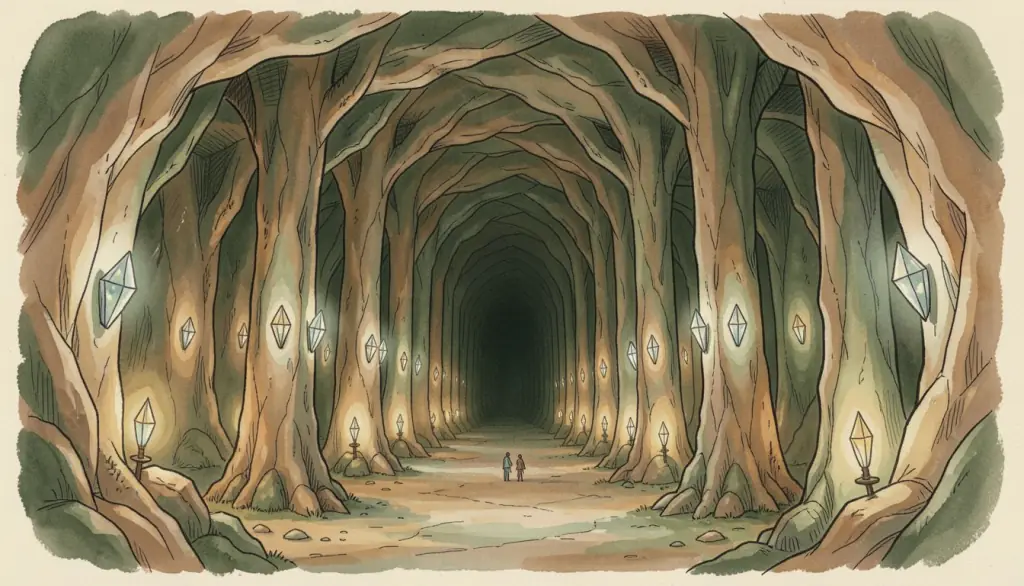
The fullest account of Durin's beginning is not prose but a song. In "A Journey in the Dark" (The Fellowship of the Ring, book II, ch. 4), Gimli chants the Song of Durin in the dark of Moria. It opens with "The world was young, the mountains green," and follows Durin as he wakes and walks alone, naming the nameless hills and drinking from wells no one had tasted.
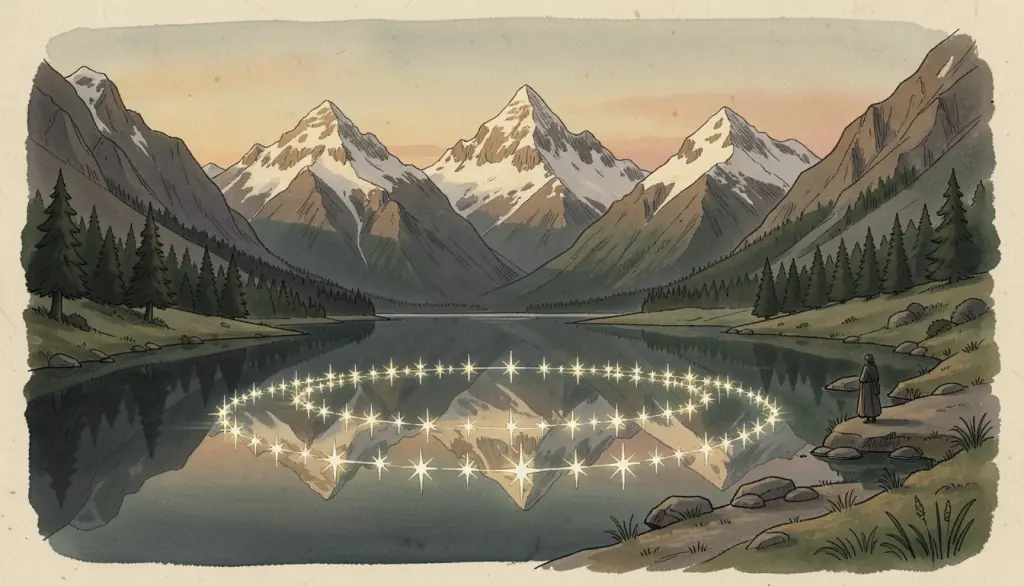
The song's central image is a lake. Durin stoops over the still water of Kheled-zâram, the Mirrormere, and sees his reflection crowned with stars, as if a crown were set upon his head. He takes it as a sign. Above that lake, in the eastern valley the Elves called the Dimrill Dale and the Dwarves Azanulbizar, he begins to delve.
The song then praises the mansion he began, its pillared halls and lamps of crystal, before it turns: the world is grey, the halls are dark, and Durin's crown lies in the lake, waiting. The last couplet is the heart of everything Tolkien wrote about him: the crown lies in deep water "Till Durin wakes again from sleep."
The Mirrormere is not only in the song. In "The Ring Goes South" (book II, ch. 3) Gimli names the waters of Kheled-zâram and the springs of Kibil-nâla as places he longs to see. In "Lothlórien" (book II, ch. 6), after the Fellowship escapes Moria, Gimli insists on looking into the lake. He sees the stars of Durin's Crown in the water, though it is daytime, speaks a farewell, bows and turns away. For a Dwarf of Durin's Folk, that glance is a pilgrimage.
Appendix A adds the plain history: after the ruin of Nogrod and Belegost at the end of the First Age, many of their people came to Khazad-dûm, and in the Second Age it reached the height of its wealth and splendour.
Durin the Deathless: Why the Dwarves Believed He Returned
Appendix A explains the title in a few sentences. Durin lived so long that he was known far and wide as Durin the Deathless. Yet he died before the Elder Days had passed, and his tomb was in Khazad-dûm. Five times an heir was born in his house so like his Forefather that he received the name Durin, and the Dwarves held him to be the Deathless who returned. Appendix A adds, drily, that they have many strange tales and beliefs about themselves and their fate. Tolkien's late essay "Of Dwarves and Men" (about 1969, published in The Peoples of Middle-earth) takes the belief further, but it is unpublished-draft material: Tolkien thinking aloud about Dwarvish belief, not a rule of his world.
Keep apart what the Dwarves believed and what Tolkien's narrator asserts. The Dwarves held that the king named Durin was the Father returned; the narrator reports only the likeness of the heirs and never says the soul of Durin I lived again in Durin VI. That gap is deliberate. When Gimli speaks of Durin waking again, he is speaking the creed of his house, and Tolkien lets the creed stand without confirming or denying it, as he lets Men speak of the Gift of Ilúvatar.
The Doors of Durin and the Friendship with Eregion
The best-known object bearing Durin's name was not made by Durin I. The West-gate of Khazad-dûm, the Doors of Durin, belongs to the Second Age, when the Noldor of Eregion lived just west of the mountains and the two peoples became friends. The Silmarillion ("Of the Rings of Power and the Third Age") records the friendship between the smiths of Eregion and the Dwarves of Khazad-dûm.
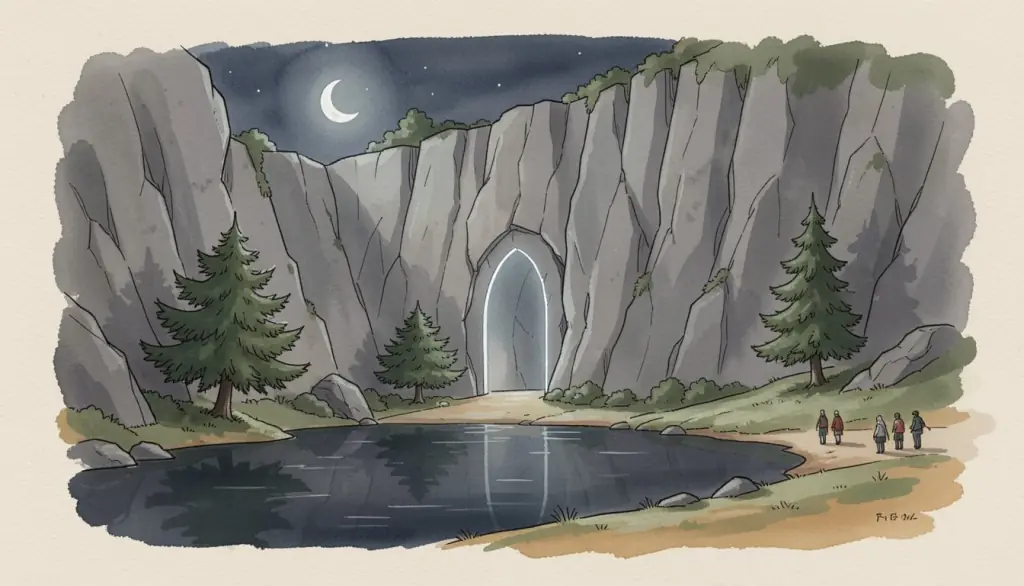
In "A Journey in the Dark" Gandalf reveals the inscription in the moonlight. Its first line is Sindarin:
Ennyn Durin Aran Moria: pedo mellon a minno.
Gandalf translates it as "The Doors of Durin, Lord of Moria. Speak, friend, and enter." The second line names the makers: Narvi the Dwarf made the doors, and Celebrimbor of Hollin drew the signs. The Durin of the inscription is the king of that age, not the first Father. Tolkien does not say which number he bore, but Durin III is the king Appendix A places in the time of the Elven-smiths.
The puzzle Gandalf faces is famous: the password is the very word in the inscription, mellon, "friend." We treat that scene and its grammar in detail in Speak, Friend, and Enter in Elvish and What Does Mellon Mean?; Celebrimbor's side of the friendship is in Celebrimbor and the Rings of Power.
What matters for Durin's story is what the doors say about his house: a Dwarf king, secretive about his own tongue, let his gate carry Elvish letters, an Elvish language and an invitation to friends. It is an open door in someone else's words.
Durin III and the Ring of Durin's House
Durin III is the only one of the middle Durins with a deed attached. Appendix A records the tradition of Durin's line that their ring of the Seven was given to Durin III, King of Khazad-dûm, by the Elven-smiths themselves, and not by Sauron. The general account in The Silmarillion has Sauron giving out the Seven. Tolkien reports the Dwarves' claim without settling it, and our guide to the Rings of Power sets the two accounts side by side.
Appendix A also explains what the Seven did to Dwarves. Sauron could not make them into shadows or bend their wills; the only power the rings had over their owners was to kindle a greed for gold and precious things. The ring of Durin's house passed down the royal line for more than three thousand years. Thrór gave it to his son Thráin II before he went to Moria, and it was taken from Thráin in the dungeons of Dol Guldur in Third Age 2845, the last of the Seven to be recovered by Sauron.
When Sauron laid Eregion waste in Second Age 1697, the doors of Moria were shut (Appendix B), and Khazad-dûm endured. Its fall, when it came, came from below.
Durin's Bane and the Fall of Moria
Appendix A gives the story in a short paragraph. In the Third Age the Dwarves of Khazad-dûm delved deep beneath Barazinbar for mithril, the metal beyond price, and they woke something that had lain hidden at the roots of the mountains since the end of the First Age, having fled from Thangorodrim: a Balrog of Morgoth. Appendix B dates it to 1980. Durin VI was slain by it, and the year after his son Náin I. The Dwarves fled. They named the creature Durin's Bane.
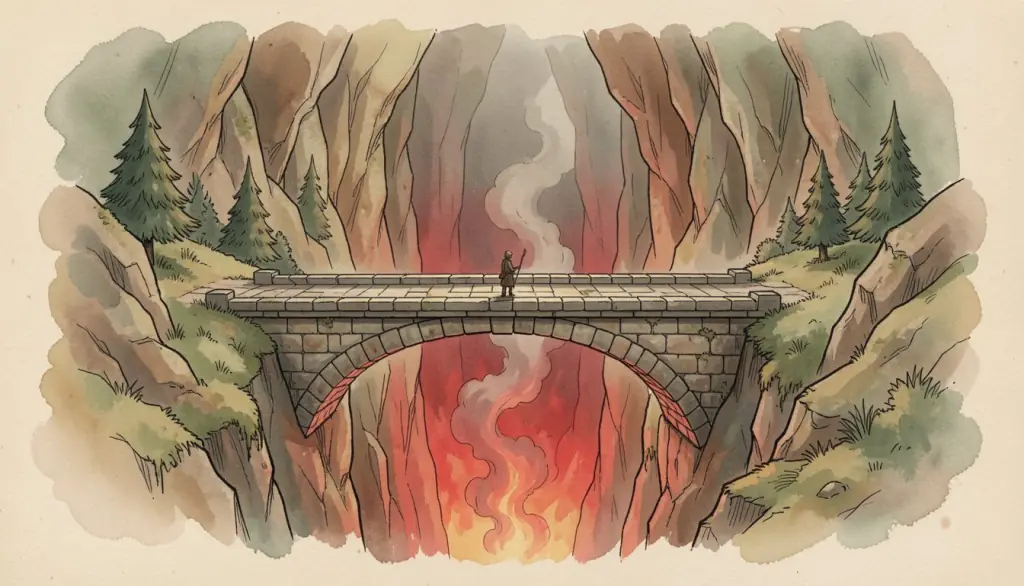
The irony is exact: the king who bore the Father's name presided over the loss of the Father's mansion, his tomb and the lake of his crown.
The name reaches the main text in "The Bridge of Khazad-dûm" (The Fellowship of the Ring, book II, ch. 5). When the dark shape comes to the bridge, Legolas cries out that a Balrog has come, and Gimli cries "Durin's Bane!" and lets his axe fall. Gandalf holds the bridge and falls with it. For the creature and its kind, see our guide to the Balrogs of Middle-earth; for Gandalf, Gandalf and Mithrandir.
We read the naming as one of Tolkien's most telling small choices: the Dwarves called the Balrog not by what it was but by what it had done to them, a wound in their royal line.
The Line of Durin: From Moria to Erebor
After Moria, Durin's Folk became wanderers who kept building kingdoms and losing them. Appendix A, "Durin's Folk," follows them reign by reign; the dates are in the timeline above, so here are the turning points.
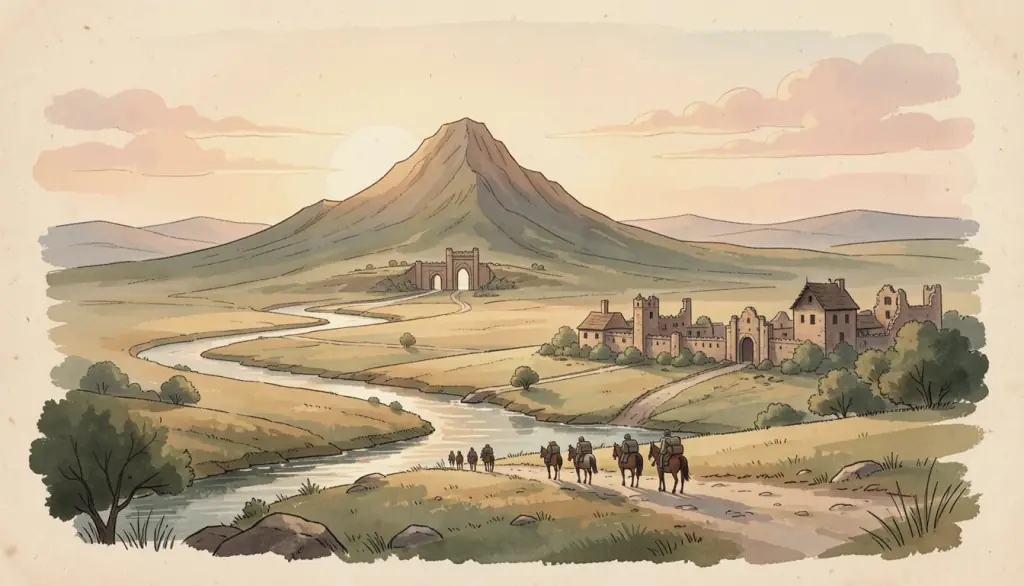
Erebor and the Grey Mountains. Thráin I, son of Náin I, founded the Kingdom under the Mountain in 1999 and found the Arkenstone there. His son Thorin I took many of the people north to the rich Grey Mountains, until a cold-drake slew King Dáin I and his son Frór at the doors of their hall in 2589 (see Dragons of Middle-earth). Dáin's heir Thrór led the people back to Erebor, while his brother Grór founded a realm in the Iron Hills. Then in 2770 Smaug came, and Thrór, Thráin II and the young Thorin escaped with little but their lives.
Thrór and Azog. In 2790 old Thrór, poor and perhaps unbalanced by age and misfortune, went with one companion to the East-gate of Moria. Azog the Orc killed him, branded his name on the severed head in Dwarf-runes and threw the body out to the crows. That outrage started the War of the Dwarves and Orcs.
Azanulbizar. The war ended in 2799 before the East-gate, in the valley where Durin first saw his crown. Náin of the Iron Hills was slain by Azog, and his son Dáin, a lad of thirty-two by Dwarvish reckoning, killed Azog in turn. Thráin II lost an eye. Thorin, his shield broken, fought with an oak-branch and was named Oakenshield. Then came the moment Appendix A treats as decisive. Dáin had looked through the gate and seen what waited in the dark. Durin's Bane was still there, he told Thráin, and Durin's Folk could not go back. The victors burned their dead and went away.
Exile and the Quest. Thráin II and Thorin settled as smiths in the Blue Mountains. Thráin set out for Erebor in 2841, was taken to Dol Guldur, and lost the last ring of the Seven there; Gandalf found him dying in 2850 and received the map and key (Unfinished Tales, "The Quest of Erebor"). In 2941 Thorin led the Quest of Erebor that The Hobbit tells. Smaug died, Thorin was mortally wounded in the Battle of Five Armies, and Fíli and Kíli fell defending him. Their cousin Dáin II Ironfoot became King under the Mountain.
The end of the Third Age. Balin's colony in Moria rose and was destroyed between 2989 and 2994, leaving the Book of Mazarbul beside his tomb. Dáin held Erebor until March 3019, when he fell before its gate defending the body of King Brand of Dale, and his son Thorin III Stonehelm succeeded him. The line had lost Khazad-dûm, the Grey Mountains, Erebor once and its ring, and still it had a king.
The Line of Durin: A Family Table
The table follows the family tree of Durin's Folk in Appendix A of The Lord of the Rings. Dates are Third Age years of birth and death as Tolkien gives them. A dash means the tree gives no death date.
| Dwarf | Relation | Born | Died | Notes |
|---|---|---|---|---|
| Durin VI | King of Khazad-dûm | 1731 | 1980 | Slain by Durin's Bane |
| Náin I | Son of Durin VI | 1832 | 1981 | Slain by the Balrog; Moria abandoned |
| Thráin I | Son of Náin I | 1934 | 2190 | Founds Erebor (1999); finds the Arkenstone |
| Thorin I | Son of Thráin I | 2035 | 2289 | Moves to the Grey Mountains |
| Glóin | Son of Thorin I | 2136 | 2385 | |
| Óin | Son of Glóin | 2238 | 2488 | |
| Náin II | Son of Óin | 2338 | 2585 | |
| Dáin I | Son of Náin II | 2440 | 2589 | Killed with his son Frór by a cold-drake |
| Borin | Younger son of Náin II | 2450 | 2711 | Ancestor of Balin, Dwalin, Glóin and Gimli |
| Thrór | Son of Dáin I | 2542 | 2790 | King under the Mountain; murdered by Azog |
| Frór | Son of Dáin I | 2552 | 2589 | Killed with his father |
| Grór | Son of Dáin I | 2563 | 2805 | Founds the realm in the Iron Hills |
| Thráin II | Son of Thrór | 2644 | 2850 | Loses the last ring; dies in Dol Guldur |
| Náin | Son of Grór | 2665 | 2799 | Slain by Azog at Azanulbizar |
| Thorin II Oakenshield | Son of Thráin II | 2746 | 2941 | King in exile; leads the Quest of Erebor |
| Frerin | Son of Thráin II | 2751 | 2799 | Slain at Azanulbizar |
| Dís | Daughter of Thráin II | 2760 | – | The only Dwarf-woman named in the histories |
| Dáin II Ironfoot | Son of Náin | 2767 | 3019 | Kills Azog; King under the Mountain from 2941 |
| Fíli | Son of Dís | 2859 | 2941 | Falls defending Thorin |
| Kíli | Son of Dís | 2864 | 2941 | Falls defending Thorin |
| Thorin III Stonehelm | Son of Dáin II | 2866 | – | King under the Mountain from 3019 |
| Durin VII and Last | Descendant of Thorin III | – | – | Closes the tree; Tolkien tells no story of him |
The cadet branch through Borin produced the Dwarves most readers know best. Borin's son Farin had two sons, Fundin and Gróin. Fundin was the father of Balin and Dwalin; Gróin was the father of Óin and Glóin; and Glóin was the father of Gimli. So the Dwarf of the Fellowship is, in our reckoning from the tree, a third cousin once removed of both Thorin and Dáin II, and a member of the royal house without a claim to its throne.
Appendix A adds that Dís is the only Dwarf-woman named in these histories and that Dwarf-women were few, perhaps no more than a third of the people. That single sentence matters later, when the television series gives Durin's house a wife Tolkien never wrote.
Durin's Day and the Hobbit
Durin enters Tolkien's published work through a calendar. In The Hobbit, ch. 3 ("A Short Rest"), Elrond finds moon-letters on Thrór's map saying that the setting sun on Durin's Day will shine upon the key-hole of the secret door. Thorin explains that the Dwarves' New Year begins on the first day of the last moon of autumn, and that they still call it Durin's Day when the last moon of autumn and the sun are in the sky together. In ch. 11, "On the Doorstep," that last light finds the key-hole. It is the only Dwarvish festival Tolkien names, and in our reading it suits a people who believe their king returns when the time is right to mark their year by a sign that returns only when the sky allows.
Durin's Names and Language
Durin's name is the most important clue Tolkien left about how Dwarves treat names. Appendix F, "Of Other Races," explains that the Dwarves spoke the languages of Men among whom they lived but kept their own tongue, Khuzdul, as a secret. They used names from the languages of Men in public, and their true or inner names they revealed to no one of another race, not even on their tombs.
So "Durin" is an outer name. As Tolkien explained in his notes, the names of Durin's Folk in the books come from the language of the Men of the North, which he represented with Old Norse. Durin himself, like Thráin, Thrór, Thorin, Dáin, Náin, Fíli and Kíli, is taken from the list of dwarf-names in the Old Norse poem Völuspá. Tolkien gave no meaning for the name in his legendarium, and what it meant in Norse is uncertain. Durin's own Khuzdul name is unknown.
The places of his story have names in three languages, and keeping them straight is useful:
| Name | Language | Meaning or notes | Source |
|---|---|---|---|
| Khazad-dûm | Khuzdul | Mansion of the Khazâd, the Dwarves' own name for their people | LotR, Appendix F |
| Hadhodrond | Sindarin | Elvish name for Khazad-dûm | The Silmarillion, Index |
| Moria | Sindarin | Black Chasm; later name for Khazad-dûm | The Silmarillion, Index; LotR |
| Kheled-zâram | Khuzdul | Mirrormere, the lake of Durin's Crown | LotR, book II |
| Azanulbizar | Khuzdul | Dimrill Dale, the valley before the East-gate | LotR, book II and Appendix A |
| Kibil-nâla | Khuzdul | Silverlode, the river flowing from the dale | LotR, book II, ch. 3 |
| Barazinbar | Khuzdul | Redhorn (Caradhras), beneath which the mithril lay | LotR, book II |
| Ennyn Durin | Sindarin | Doors of Durin | LotR, book II, ch. 4 |
| mellon | Sindarin | friend, the password | LotR, book II, ch. 4 |
The Dwarves' battle-cry, Baruk Khazâd! Khazâd ai-mênu! ("Axes of the Dwarves! The Dwarves are upon you!"), is shouted by Gimli at Helm's Deep, and Appendix F supplies its translation. It is the longest Khuzdul sentence in the main text. Everything that is known of the language, and what The Rings of Power has added on top, is collected in our Khuzdul guide; for the runes the Dwarves used, see Cirth and the Angerthas.
Notice what is missing from the table: there is no Elvish epithet for Durin himself, and no Elvish or Khuzdul word for "the Deathless" in Tolkien's texts. Online lists that offer one are inventing it.
Durin in the Peter Jackson Films
No Durin appears in Peter Jackson's six films, but his house dominates them. In The Fellowship of the Ring (2001) the Doors, Balin's tomb and the Balrog all appear; Frodo, not Gandalf, solves the riddle of the doors, and Gimli's Song of Durin is left out.
The Hobbit trilogy (2012 to 2014) gives the Line of Durin its biggest screen treatment, with significant inventions. These are film choices, not book lore:
- Azog survives Azanulbizar. In Appendix A, Dáin kills Azog in 2799. The films keep Azog alive as Thorin's pursuer and have him kill Thorin at the end. In the book, Azog's son Bolg leads the goblins at the Battle of Five Armies, and Thorin falls in the battle itself, not in a duel.
- The prologue. Thrór's court and a Thranduil scene at Erebor have no basis in Tolkien; see Thranduil Explained.
- Thráin in Dol Guldur. The extended edition of The Desolation of Smaug has Gandalf find Thráin in Dol Guldur during the quest. In Tolkien, Gandalf found him dying ninety-one years earlier, in 2850.
- Thorin's gold-sickness. The films build it into a long arc. The book gives Thorin's pride and greed over the Arkenstone, but not the hallucinatory treatment.
- Dáin. Billy Connolly's Dáin rides a war-boar. The book gives Dáin no such mount.
- Fíli and Kíli. Both die defending Thorin in the book; the films change the circumstances and add Kíli's romance with Tauriel, a character created for the films.
The films' Elvish and their dwarf-speech come from David Salo, not from Tolkien. Our post on Elvish in The Hobbit Films covers the lines.
Durin in The Rings of Power
The Rings of Power on Prime Video is set in the Second Age and makes the house of Durin one of its central storylines. Peter Mullan plays King Durin III; Owain Arthur plays his son, Prince Durin IV; Sophia Nomvete plays Princess Disa, Durin IV's wife. Season 2 added Narvi, played by Kevin Eldon.
From Tolkien the show takes a King Durin III who receives one of the Seven, the friendship with Eregion, Narvi as maker of the doors, and mithril and a Balrog under the mountain. What it invents:
- Prince Durin IV as a character. Tolkien gives no story, dates or personality for any Durin IV. His friendship with Elrond is the show's creation; in the books, Elrond's documented Second Age role is herald of Gil-galad and founder of Imladris (see Elrond Explained).
- Disa. Tolkien names exactly one Dwarf-woman, Dís, a Third Age princess. Disa is new.
- The timing of the Balrog. In Tolkien the Balrog wakes in Third Age 1980, under Durin VI. The show brings it into the Second Age, generations before Tolkien's date.
- Mithril's origin and purpose. The show ties mithril to a legend about Elvish survival and the light of a Silmaril. That legend is not in Tolkien.
- The show's Khuzdul. Most of Durin and Disa's Dwarvish is newly built language, not Tolkien's; see the Khuzdul guide.
Season 3 (2026)
Season 3 premiered on Prime Video on 11 November 2026 with four episodes, with episodes 5 and 6 due on 18 November and the last two on 25 November. Prime Video's announcement and the July 2026 Comic-Con teaser confirm that the season opens five years after the fall of Eregion and shows Sauron forging the One Ring. Two Dwarf-related additions are confirmed: Eddie Marsan as Thráin, a new Dwarf of Durin's line created for the show (Tolkien's Thráin I and II live in the Third Age), and the Balrog, voiced by Simon Pegg, which means the show's Balrog speaks, something Tolkien never shows. For what else is confirmed, see our Rings of Power Season 3 preview.
What the show gets right, in our view: the sense of Khazad-dûm as a living kingdom at its height, a king named Durin wearing a ring of uncertain origin, and the Dwarves' love of their own deep places. What it changes most: it makes the Durins into a father and son with private quarrels, where Tolkien made Durin a single name worn by a line. Tolkien's drama is not between two Durins but between every Durin and the one who came first.
How Tolkien Built Durin
Durin was assembled across forty years, and the order explains a great deal.
- 1930s, The Hobbit. Durin is a name in a calendar and a lineage. Thorin is "son of Thráin son of Thrór," and Durin's Day opens the secret door. The names come straight from Völuspá, along with Gandalf's own name, which is in the same list.
- 1940s and 1950s, The Lord of the Rings. Moria needed a history, and Durin became its founder. Gimli's song gave him a waking, a lake and a crown. Durin's Bane gave the Fellowship's darkest chapter its name. Appendix A then turned the Hobbit names into a numbered dynasty, with six Durins and the promise of a seventh, and explained the numbering by the belief in rebirth.
- Later texts. The Silmarillion (published 1977) gave the Seven Fathers their making by Aulë; the late essay "Of Dwarves and Men" (about 1969, published 1996) placed Durin's waking at Gundabad and thought further about the Fathers' return.
The pattern is the same as with so much in Tolkien: a name chosen for its sound and its Norse source came first, and a history was later built to explain it. In our reading, the numbered Durins are a brilliant solution to a practical problem. Tolkien had taken a whole list of dwarf-names from a poem, and he needed them to belong to one family across thousands of years. Making one of them recur, and making the recurrence an article of faith, turned a list into a dynasty with a soul.
Why Durin Matters
Durin gives the Dwarves continuity through a person rather than a place or a law. The Elves keep their past in their own long memories; Durin's Folk keep it in a name that keeps returning to the throne. That is why the loss of Khazad-dûm is more than the loss of a mine: it is the loss of the Father's tomb, under a king who bore the Father's name. And it is why Durin's Folk, after winning a battle in Durin's own valley, still cannot go home. The last line of Gimli's song holds all of this together: one day Durin will wake, and the crown in the lake will be worn again.
Our Take
Our view, stated plainly: the hero of the Line of Durin is not Thorin Oakenshield but Dáin Ironfoot, because he is the one Durin's heir who looked at the family's greatest loss and refused to chase it.
Look at the line through Appendix A. Thrór, carrying the house's ring, goes back to Moria alone and is murdered. Thráin II, carrying the same ring, goes back toward Erebor and ends in Dol Guldur. Thorin, carrying the claim, goes back to Erebor and dies over the Arkenstone. Balin goes back to Moria and dies there. Each one is pulled toward a lost hall, and each one is destroyed by it.
Dáin is different. At thirty-two, standing in the valley where Durin first saw his crown, after killing the Orc who had murdered his king, he looks through the East-gate and says no. Durin's Bane is still inside, and Durin's Folk cannot return until something greater than them comes. He is right. Something greater does come, a wizard who breaks the Balrog on the mountain-top, and only after that does the Dwarvish claim to Moria become thinkable. Dáin then rules Erebor wisely for decades, will not give Sauron's messenger the answer he wants, and dies as an old king defending an ally's body at his own gate.
The Durin myth is a story of return. Tolkien, we think, tells it with a warning attached: the return comes in its own time, like Durin's Day, and the heirs who try to force it are the ones the story breaks. The king who waits is the one who keeps the line alive long enough for the seventh Durin to be born.
People Also Ask
Who is Durin in Lord of the Rings?
Durin, called the Deathless, is the eldest of the Seven Fathers of the Dwarves and ancestor of the kings of the Longbeards. He founded Khazad-dûm above the lake Kheled-zâram, died before the Elder Days ended and was buried there, but the Dwarves believed he returned in his line.
What is Durin's Bane?
The Balrog that woke beneath Khazad-dûm in Third Age 1980 when the Dwarves mined deep for mithril. It killed Durin VI and then Náin I, and Durin's Folk fled Moria. Gandalf fights it on the Bridge of Khazad-dûm.
Why is Durin called the Deathless?
He lived so long that he was known far and wide by that name, Appendix A says. Five times afterwards an heir was born so like him that he was named Durin, and the Dwarves held that he was the Deathless returning.
How many Durins are there?
Seven: Durin the Deathless, five later kings named Durin (II to VI), and Durin VII and Last at the end of the Appendix A family tree. Tolkien tells a story only for Durin I, Durin III and Durin VI.
Is Thorin Oakenshield a descendant of Durin?
Yes. Thorin II is the son of Thráin II and grandson of Thrór, and Appendix A traces the line back through Thráin I to Náin I and Durin VI. He was the heir of Durin until he died in 2941.
Is Gimli of Durin's line?
He belongs to Durin's Folk and to a cadet branch of the royal house, descended from Borin, younger son of King Náin II. He is a distant cousin of Thorin and Dáin, not an heir.
What are the Doors of Durin?
The West-gate of Khazad-dûm, made in the Second Age by Narvi with letters by Celebrimbor. The Sindarin inscription reads Ennyn Durin Aran Moria: pedo mellon a minno, "The Doors of Durin, Lord of Moria. Speak, friend, and enter."
What is Durin's Day?
The Dwarves' New Year, the first day of the last moon of autumn; they call it Durin's Day when that moon and the sun are in the sky together. In The Hobbit, its last light reveals the secret door of Erebor.
Who is Durin in The Rings of Power?
The show has King Durin III (Peter Mullan) and Prince Durin IV (Owain Arthur), with Durin IV's wife Disa (Sophia Nomvete). Durin III and his ring come from Appendix A; Durin IV's story and Disa are inventions of the show.
What does the name Durin mean?
Tolkien gave no meaning. It is a dwarf-name from the Old Norse Völuspá, used in his world as an outer name; Durin's true Khuzdul name was never revealed.
Read the Doors of Durin in Their Own Language
The one sentence carved on Durin's gate is Sindarin, the Elvish of Middle-earth: pedo mellon a minno. If you want to read it, and the rest of the Elvish around the Dwarves' story, start with our free Elvish course, which teaches Sindarin and Quenya from words Tolkien actually wrote. To see a name written in the Elvish letters Celebrimbor drew on the doors, try our Tengwar name tool.
Related Reading
- Characters of Middle-earth: Who's Who in Tolkien's World
- Sauron Explained
- Dwarves of Middle-earth: Aulë, Durin's Folk, Moria and Erebor
- Khuzdul: The Secret Language of the Dwarves
- Balrogs of Middle-earth
- The Rings of Power Explained: Elven, Dwarven and the Nine
- Celebrimbor and the Rings of Power
- Speak, Friend, and Enter in Elvish
- Dragons of Middle-earth
- Cirth and the Angerthas: The Runes of Middle-earth
- Rings of Power Season 3: Elvish Preview
People Also Ask
Who is Durin in Lord of the Rings?
Durin, called the Deathless, is the eldest of the Seven Fathers of the Dwarves and the ancestor of the kings of the Longbeards, the house later known as Durin's Folk. He founded Khazad-dûm, later called Moria, in caves above the lake Kheled-zâram. He died before the end of the Elder Days and was buried in Khazad-dûm, but the Dwarves believed he returned in his line.
What is Durin's Bane?
Durin's Bane is the name the Dwarves gave to the Balrog that woke beneath Khazad-dûm in Third Age 1980, when the Dwarves were mining deep for mithril. It killed King Durin VI and, the next year, his son Náin I, and Durin's Folk fled Moria. Gandalf fights it on the Bridge of Khazad-dûm in The Fellowship of the Ring.
Why is Durin called the Deathless?
Appendix A of The Lord of the Rings says Durin lived so long that he was known far and wide as Durin the Deathless. He did die before the Elder Days ended, but five times an heir was born in his house so like him that he was given the name Durin, and the Dwarves held that he was the Deathless one returning.
How many Durins are there?
Seven. Durin the Deathless, then five later kings named Durin (Durin II to Durin VI) whom the Dwarves believed to be his return, and a seventh, Durin VII and Last, who closes the family tree in Appendix A. Tolkien tells a story only for Durin I, Durin III (who held a Dwarf-ring) and Durin VI (killed by the Balrog).
Is Thorin Oakenshield a descendant of Durin?
Yes. Thorin II Oakenshield is the son of Thráin II and grandson of Thrór, King under the Mountain, and Appendix A traces his line back through Thráin I, who founded Erebor, to Náin I and Durin VI of Khazad-dûm. He was the heir of Durin until he died after the Battle of Five Armies in Third Age 2941.
Is Gimli of Durin's line?
Gimli belongs to Durin's Folk and to a cadet branch of the royal house. His father Glóin was a son of Gróin, son of Farin, son of Borin, who was the younger son of King Náin II. So Gimli is a distant cousin of Thorin and Dáin, not an heir to the throne.
What are the Doors of Durin?
The Doors of Durin are the West-gate of Khazad-dûm, made in the Second Age by the Dwarf Narvi with letters drawn by Celebrimbor of Eregion. Their Sindarin inscription reads Ennyn Durin Aran Moria, pedo mellon a minno, which Tolkien translates as the Doors of Durin, Lord of Moria, speak, friend, and enter. The Durin meant is the king of that time.
What is Durin's Day?
In The Hobbit, Thorin explains that the Dwarves' New Year begins on the first day of the last moon of autumn, and that they still call it Durin's Day when the last moon of autumn and the sun are in the sky together. The secret door of Erebor could only be found by the last light of Durin's Day.
Who is Durin in The Rings of Power?
The Rings of Power has two Durins: King Durin III, played by Peter Mullan, and his son Prince Durin IV, played by Owain Arthur, with Durin IV's wife Disa played by Sophia Nomvete. Tolkien does name Durin III as the king who received a Dwarf-ring, but Prince Durin IV's story, his friendship with Elrond and Disa are inventions of the show.
What does the name Durin mean?
Tolkien gave no meaning. Durin is one of the dwarf names he took from the Old Norse poem Völuspá, and in Appendix F he explains that the names Dwarves use openly are outer names from the languages of Men. Their true names in Khuzdul were never revealed, not even on their tombs.
Related Tags
Learn Elvish Free
39 free Elvish lessons, an AI tutor, and spaced repetition review — no credit card required.
Start Learning Free