Tar-Míriel Explained: The Rightful Queen of Númenor in the Books and Rings of Power
Try It Yourself — Free Elvish Tools
Quick Answer: Tar-Míriel is the daughter and only child of Tar-Palantir, the last king of Númenor to turn back toward the Valar. Under Númenor's law she was the rightful heir and should have become its fourth Ruling Queen. Instead her first cousin Pharazôn married her against her will, which the law itself forbade, seized the sceptre as Ar-Pharazôn and renamed her Ar-Zimraphel. She drowned at the Downfall while climbing the holy mountain, the Meneltarma (The Silmarillion, "Akallabêth"). The Rings of Power's Queen Regent Míriel is a loose reinvention.
Tar-Míriel is one of the most important people in Tolkien's Second Age and one of the least described. Everything turns on her: the throne of Númenor was hers by law, and the man who took it from her led the island to its ruin. Yet Tolkien gives her perhaps a dozen sentences. She has no recorded speech, no described face, no opinions on the page. She is introduced as an heir, married as a prize, renamed as a statement of policy, and lost in the last paragraphs of the fall.
That silence is the main fact about her, and this guide treats it honestly. We set out exactly what Tolkien says and what he leaves blank, and we build the rest from context that is in the books: Númenor's law of succession, her father's reign, the split between the King's Men and the Faithful, and the meaning of the mountain she ran toward. Where we interpret, we say so. The Rings of Power has made her a major character, so we also separate the books' Míriel from the show's, carefully.
For the wider people she belonged to, start with Men of Middle-earth. For the language war that runs through her names, see Adûnaic: The Lost Language of Númenor.
Tar-Míriel at a Glance
| People | Númenórean, of the royal house descended from Elros Tar-Minyatur, brother of Elrond |
| Quenya name | Míriel; as rightful heir, Tar-Míriel (The Silmarillion, "Akallabêth") |
| Adûnaic name | Ar-Zimraphel, imposed by Ar-Pharazôn after the marriage ("Akallabêth") |
| Father | Tar-Palantir, born Inziladûn, king of Númenor |
| Mother | Not named in the published texts |
| Siblings | None; the "Akallabêth" says her father had no son |
| Husband | Ar-Pharazôn the Golden (Quenya Tar-Calion), her first cousin, married against her will |
| Children | None recorded |
| Rightful title | Ruling Queen of Númenor, under the law of succession made by Tar-Aldarion (Unfinished Tales, "The Line of Elros") |
| Actual position | Queen consort of a usurping king, from SA 3255 to the Downfall |
| Home | Armenelos, the King's city of Númenor |
| Death | SA 3319, overtaken by the sea on the slopes of the Meneltarma |
| Main source | The Silmarillion, "Akallabêth"; genealogy in Unfinished Tales |
| On screen | Cynthia Addai-Robinson as Queen Regent Míriel in The Rings of Power; absent from Peter Jackson's films |
Tar-Míriel Timeline
"Mae govannen" — want to actually speak Elvish?
Try It Free →Second Age dates come from Appendix B of The Lord of the Rings. Tolkien gives no birth year for Míriel in the published texts, and the "Akallabêth" gives no date for the marriage other than placing it at her father's death, so the rows that concern her directly are tied to the events around her.
| Age and year | Event |
|---|---|
| SA 32 | The Edain reach Númenor; Elros becomes its first king (Appendix B) |
| SA 1075 | Tar-Ancalimë becomes the first Ruling Queen, under the law her father Tar-Aldarion made (Appendix B; Unfinished Tales) |
| SA 2251 | Tar-Atanamir takes the sceptre; the rebellion and division of the Númenóreans begins (Appendix B) |
| SA 2899 | Ar-Adûnakhôr takes the sceptre, the first king to take his royal name in Adûnaic (Appendix B; "Akallabêth") |
| Late Second Age | Ar-Gimilzôr persecutes the Faithful and forbids the Eldarin tongues; his elder son Inziladûn later succeeds him as Tar-Palantir ("Akallabêth") |
| Reign of Tar-Palantir | Míriel is born, his only child; Gimilkhâd, the king's brother, leads the King's Men, and Pharazôn wins fame in wars in Middle-earth ("Akallabêth") |
| SA 3255 | Tar-Palantir dies. Pharazôn weds Míriel against her will and seizes the sceptre as Ar-Pharazôn (Appendix B; "Akallabêth") |
| SA 3261 | Ar-Pharazôn sails to Middle-earth and lands at Umbar (Appendix B) |
| SA 3262 | Sauron is brought to Númenor as a prisoner and begins to corrupt the king (Appendix B) |
| SA 3262 to 3310 | Sauron's temple rises in Armenelos; the Faithful are persecuted ("Akallabêth") |
| SA 3310 | Ar-Pharazôn begins building the Great Armament (Appendix B) |
| SA 3319 | Ar-Pharazôn assails Valinor. Downfall of Númenor; Míriel is overtaken by the sea on the Meneltarma. Elendil and his sons escape (Appendix B; "Akallabêth") |
If you see a birth year or age for Míriel online, check its source: the published chronology gives neither.
Family and Lineage
Míriel's family is a small, tight knot of kinship, and the knot is the whole point of her story. Every person in this table is descended from Elros.
| Person | Relation to Míriel | Notes |
|---|---|---|
| Elros Tar-Minyatur | Distant ancestor | First king of Númenor, twin of Elrond; see Elros and Elrond |
| Ar-Gimilzôr | Grandfather | King hostile to the Faithful, who forbade the Elvish tongues ("Akallabêth") |
| Inzilbêth | Grandmother | Queen of Ar-Gimilzôr, of the house of the Lords of Andúnië and secretly of the Faithful ("Akallabêth") |
| Tar-Palantir (Inziladûn) | Father | Elder son of Gimilzôr; the repentant king |
| Gimilkhâd | Uncle | Younger son of Gimilzôr; leader of the King's Men |
| Pharazôn | First cousin and husband | Son of Gimilkhâd; seizes the sceptre as Ar-Pharazôn |
| Amandil | Kinsman of the line of Andúnië | Last Lord of Andúnië, once dear to Pharazôn in youth, leader of the Faithful |
| Elendil | Kinsman of the line of Andúnië | Son of Amandil; escapes the Downfall; see Isildur Explained |
The split that tore Númenor apart runs straight through her family: a Faithful grandmother, a persecuting grandfather, a repentant father and a rebellious uncle. And because the Lords of Andúnië also descend from Elros, the blood of Elros outlives Míriel through Elendil and the kings of Gondor and Arnor, down to Aragorn.
Who Tar-Míriel Is
In one sentence: Tar-Míriel is the woman to whom the sceptre of Númenor belonged when the kingdom made its final choice, and from whom it was taken.
She enters the "Akallabêth" in a single line about her father, reappears when he dies and the rule should have come to her "by right and the law of the Númenóreans," and is then not mentioned again until the sea comes.
It is easy to read this as Tolkien neglecting her. We think he used her as the hinge of the story without giving her a voice in it. Her legal right is what makes Ar-Pharazôn a usurper rather than a lawful king going wrong, and her death on the holy mountain is the last image of the old Númenor before it vanishes.
What Tolkien Actually Tells Us
Because so much has been written about Míriel online, and because a television series has given her a whole biography, it helps to list the published facts plainly. This is everything the "Akallabêth" and Unfinished Tales establish about her, with nothing added:
- She was Tar-Palantir's daughter and his only child. He had no son.
- She was named in Quenya. The "Akallabêth" makes a point of it: her father gave her a name "in the Elvish tongue," which mattered in a kingdom where Elvish had recently been forbidden.
- She was the rightful heir. The rule should have passed to her by right and by law.
- She was married against her will. Pharazôn forced the marriage.
- The marriage broke Númenor's law of kinship, which forbade marriage between those more nearly related than second cousins, even in the royal house.
- Pharazôn took the sceptre in his own name and renamed her Ar-Zimraphel.
- She died in the Downfall. As the wave came she climbed toward the hallow on the Meneltarma, but the waters overtook her.
And here is what Tolkien does not tell us, so that nobody mistakes reconstruction for canon:
- Her mother's name, her date of birth, or her age.
- What she looked like.
- A single word she spoke.
- Whether she resisted Pharazôn beyond the fact that the marriage was unwilling.
- What she thought of Sauron, the temple, or the human sacrifices made there.
- Whether she considered herself one of the Faithful.
- Whether she had any contact with Amandil and Elendil in the last years.
- Whether she and Pharazôn had children. None are recorded, and the royal line is treated as ending with them.
Everything beyond the first list is interpretation. Some of it is strongly suggested by the text, and we will say where. None of it is stated.
The Law of Succession in Númenor
To understand what was taken from Míriel, you need the law she was owed. Its story is in Unfinished Tales, in "Aldarion and Erendis" and "The Line of Elros."
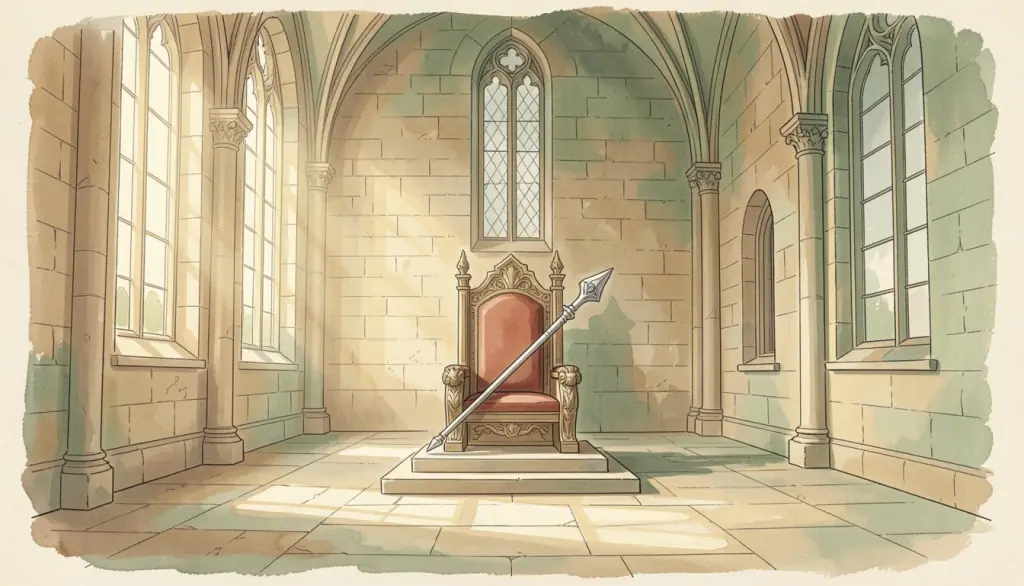
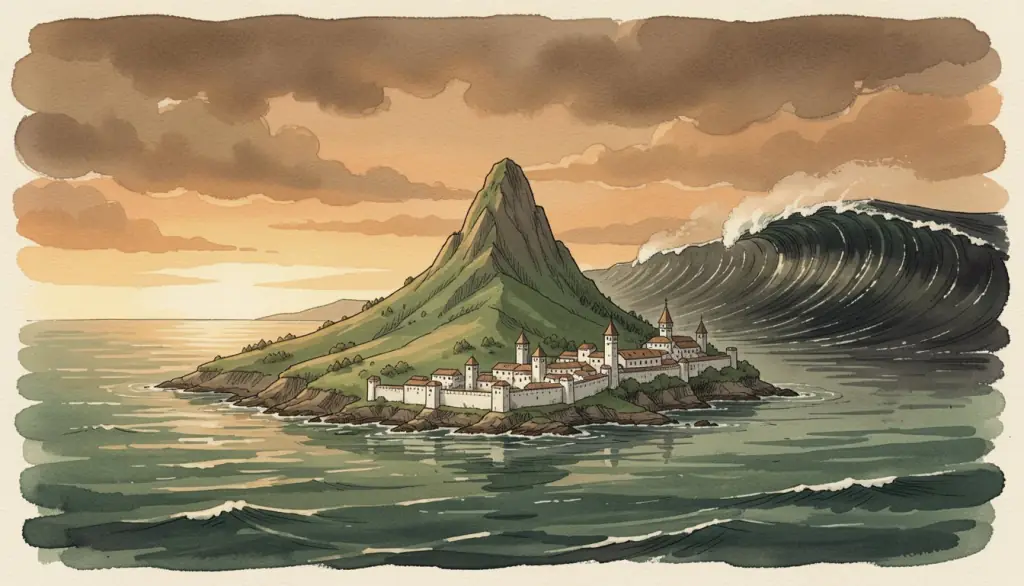
For its first thousand years Númenor passed the sceptre from a king to his eldest son. Tar-Aldarion, the sixth king, the great mariner whose marriage to Erendis broke down over his voyages, had only one child: a daughter, Ancalimë. Aldarion changed the law so that the eldest child of the king, whether son or daughter, should inherit. In SA 1075, according to Appendix B, Tar-Ancalimë became the first Ruling Queen of Númenor.
Two more queens ruled before Míriel's time, and their stories show both the strength of the law and its weak point:
| Ruling Queen | What the sources say | What it shows |
|---|---|---|
| Tar-Ancalimë | First Ruling Queen; her accession required Aldarion's change to the law (Unfinished Tales) | A woman could hold the sceptre in her own right |
| Tar-Telperiën | Ruled long and never married; the sceptre passed to her nephew Tar-Minastir ("The Line of Elros") | A queen did not need a husband to reign |
| Tar-Vanimeldë | Left the rule largely to her husband Herucalmo, who after her death seized the sceptre as Tar-Anducal, withholding it from their son; he is not counted in the line of kings ("The Line of Elros") | A royal husband could usurp, and Númenor's own record refused to legitimise it |
Míriel would have been the fourth. The law that should have crowned her had already worked three times, and on the Vanimeldë precedent the usurpation of a royal spouse was something the chroniclers of Númenor knew how to name. That is why the "Akallabêth" is so clear that the rule should have passed to Míriel "by right." Tolkien's narrator is not describing a disputed claim. He is describing a theft.
Our reading of this, marked as such: Tolkien built a kingdom in which women could rule, then let the decisive succession of its history be decided by a man who married the heir to take her throne. Whatever we make of that, it is not an accident of a casual paragraph. The legal background was worked out in some of his most detailed writing on Númenor, and the "Akallabêth" leans on it.
Her Father: Tar-Palantir the Far-sighted
Míriel cannot be separated from her father, because his reign is the reason her name and her right matter.
By the late Second Age the kings of Númenor had long since turned against the Valar and the Elves. From Ar-Adûnakhôr onward they took their royal names in Adûnaic, the native tongue of the Men of the West, instead of Quenya. Ar-Gimilzôr, Míriel's grandfather, went furthest: the "Akallabêth" says he forbade the Eldarin tongues and persecuted the Faithful, those who still loved the Elves and honoured the Valar.
His wife Inzilbêth, however, came of the house of the Lords of Andúnië, the western lords who led the Faithful, and she was secretly of their mind. Their elder son Inziladûn took after her. When he came to the throne he took a royal name in Quenya again, Tar-Palantir, because, in the words of the "Akallabêth," he was "farsighted both in eye and in mind."
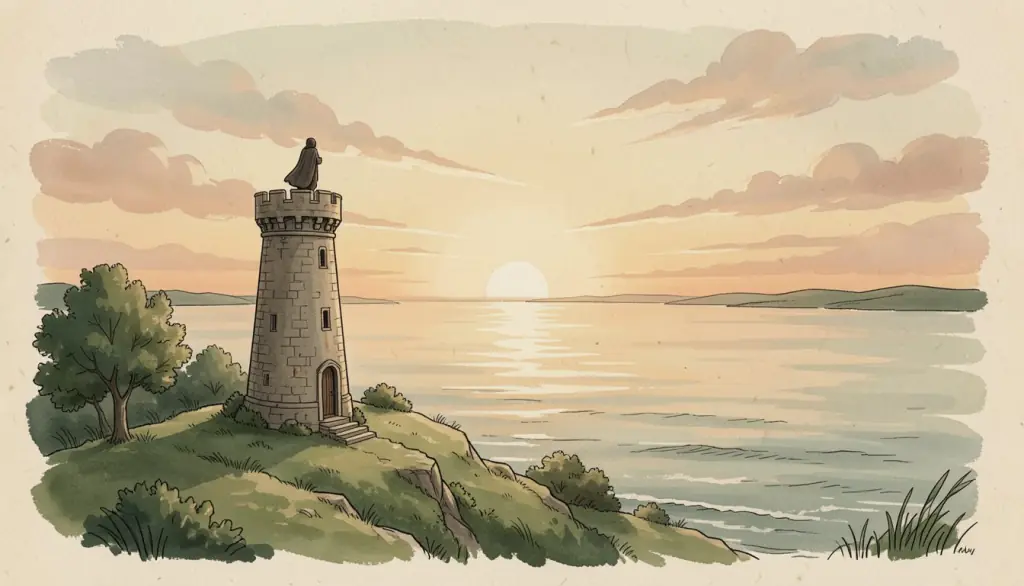
He tried to turn the kingdom back. He tended the White Tree, Nimloth, which his father had neglected, and he foretold that when the Tree perished the line of the kings would end with it. He went up the Meneltarma again at the appointed seasons to the hallow of Eru. The "Akallabêth" also says that he would climb the old tower of King Minastir on the hill of Oromet, near Andúnië, and look westward over the sea, hoping perhaps to see some sail coming from the Undying Lands. None came.
His reform failed. The King's Men, led by his own younger brother Gimilkhâd, opposed him openly, and the people were divided. Tar-Palantir died with his kingdom still split, leaving one child.
For Míriel this means three things. She was born into the only royal household in generations that took the Elvish heritage seriously. Her Quenya name was a deliberate choice by a father who had just restored Quenya royal names. And her succession was the test of whether his turning back would last beyond his own life. Pharazôn's answer was to marry her and erase both her claim and her name.
The King's Men and the Faithful
Míriel lived at the climax of a division that had been growing for more than a thousand years.
The Númenóreans had been given their island by the Valar, along with long life, but with one restriction: the Ban of the Valar forbade them to sail west out of sight of their own shores, toward the Undying Lands. Over time many came to resent it, and to envy the Elves their deathlessness. The "Akallabêth" traces how this envy turned into a party, called the King's Men, who rejected the Valar and the Elvish tongues, against a minority who kept the old friendship. The Elves called these the Elendili, the Elf-friends; in the histories they are the Faithful. For the full story of the Ban and the lands it guarded, see Valinor and the Undying Lands.
By Tar-Palantir's reign the two sides were roughly these:
| The King's Men | The Faithful | |
|---|---|---|
| Leaders in Míriel's time | Gimilkhâd, then his son Pharazôn | Amandil, Lord of Andúnië, and his son Elendil |
| Attitude to the Valar | Resentful of the Ban, seeking to escape death | Loyal, accepting the Gift of Men |
| Language of royal names | Adûnaic, with the prefix Ar- | Quenya, with the prefix Tar- |
| Attitude to Middle-earth | Lordship, tribute and fortresses | Friendship with the Elves of Middle-earth |
| Fate | Drowned in the Downfall or lost in Aman | Escaped in nine ships to found Arnor and Gondor |
The table makes the importance of names obvious. In Númenor, choosing a language for a royal name was a political act. Tar-Palantir's Quenya name announced a policy. When Pharazôn married Míriel he did two things with names: he took an Adûnaic royal name himself, and he gave her one. The Quenya name her father had chosen for her was set aside in the kingdom's official use.
Where Míriel herself stood, Tolkien does not say. By birth, name and her father's hopes she was the continuation of the Faithful turn in the royal house, and Pharazôn had every political reason to absorb her rather than leave her free as a rallying point.
The Forced Marriage and the Usurpation
Pharazôn had made his name abroad. The "Akallabêth" describes him as a great captain who led the Númenóreans in their wars in Middle-earth and came home rich and admired. When his father Gimilkhâd died, the leadership of the King's Men passed to him, and the people's hearts turned toward him. When Tar-Palantir died in SA 3255, Pharazôn was ready.
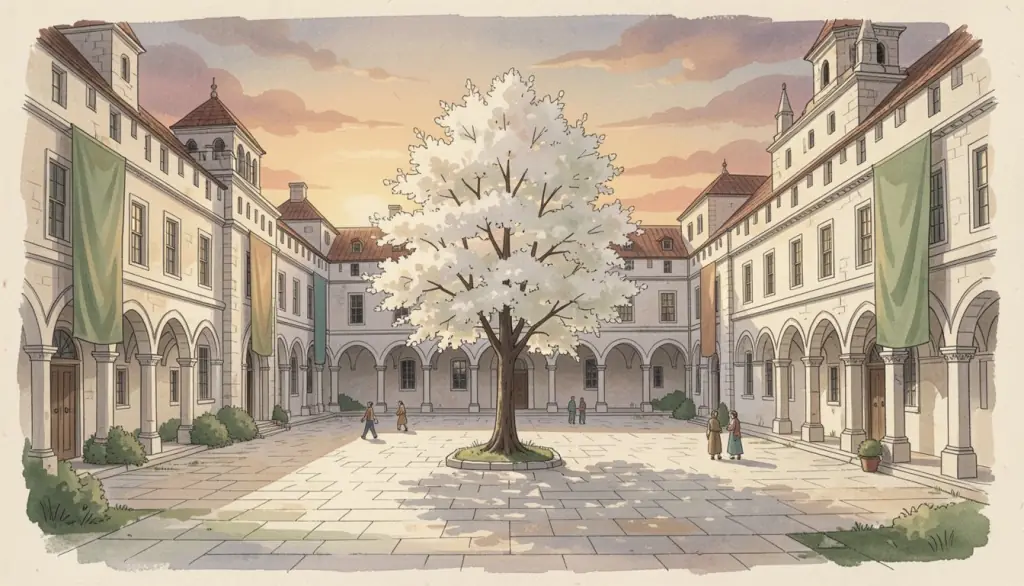
The "Akallabêth" condemns what he did in unusually direct language, and it is worth reading the structure of its judgement. It says Pharazôn wedded Míriel against her will, "doing evil in this," and then adds that it was evil "also" because the laws of Númenor did not permit marriage between kin closer than cousins in the second degree, even in the royal house. Míriel and Pharazôn were first cousins: their fathers were brothers. The marriage was therefore both a coercion of a woman and a breach of the kingdom's law.
Then comes the political act the marriage was designed for. Pharazôn seized the sceptre into his own hands and took the royal name Ar-Pharazôn, the Golden, in Quenya Tar-Calion. He changed his wife's name to Ar-Zimraphel.
Several points are worth drawing out.
He did not simply kill or imprison her. Our reading: a rightful heir who is dead or imprisoned remains a claim, while one married to the usurper becomes his legitimacy. By making her his queen he made her right part of his.
He took the sceptre "into his own hands." That phrase matters against the background of Tar-Vanimeldë and Herucalmo. A ruling queen's husband who seizes the rule is, in Númenor's own records, an usurper. Pharazôn did exactly what Herucalmo had done, only before rather than after his wife could reign.
The renaming is part of the crime. Changing Míriel to Ar-Zimraphel was not cosmetic. It placed her inside the Adûnaic, King's Men tradition that her father had repudiated. Tolkien gives the new name and no explanation, but the meaning of the act is clear from everything the "Akallabêth" says about names.
Nobody stopped him. The "Akallabêth" records no resistance on Míriel's behalf. The law was on her side, and the law did nothing.
Queen in Name: The Years of Sauron
For sixty-four years, from 3255 to 3319, Míriel was queen of Númenor in the sense that she was the king's wife. The "Akallabêth" says nothing of her in all that time, and these were the worst years in the island's history.
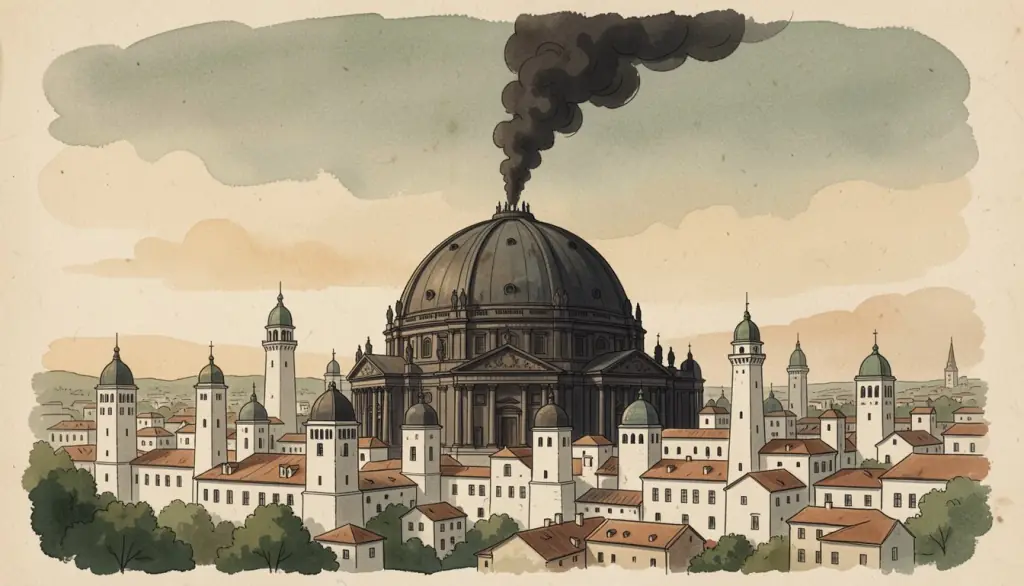
Ar-Pharazôn's pride turned on Sauron, who had taken the title of King of Men in Middle-earth. In 3261 the king sailed with a great fleet and landed at Umbar, and the sheer power of Númenor made Sauron's own servants desert him. Sauron came down and humbled himself, and Ar-Pharazôn took him back to Númenor as a hostage in 3262. Within a few years the prisoner was the king's chief counsellor.
What followed, as the "Akallabêth" tells it, is the corruption of the kingdom from the top. Sauron taught that the Valar had lied to keep Men from the gift of everlasting life, and that the true lord was Morgoth, the Dark. A great domed temple was raised in Armenelos. Nimloth, the White Tree, was cut down and burned on its altar, as Tar-Palantir had feared. Men, and especially the Faithful, were sacrificed there. The Meneltarma, where the kings had prayed to Eru, was forsaken. Isildur's rescue of a fruit of the White Tree belongs to these years; we tell that story in Isildur Explained.
Where was the queen? The text does not say. It does not show her in the temple, in the council, or among the Faithful who fled to Rómenna. We do not know whether she was kept close or kept away, whether she spoke against Sauron or held her peace.
We are going to resist filling that gap with a story, because it is the most important thing to get right about her. What we can do is point out what the silence means in the narrative. The "Akallabêth" is told from the point of view of the Faithful who escaped, through Elendil's line. It records what they saw and suffered, and the deeds of the king who persecuted them. A queen inside the palace, neither a persecutor nor visibly one of them, simply falls out of a history written by the survivors. Her absence tells us about the source as much as about her.
The Downfall and the Meneltarma
In 3310 Ar-Pharazôn, old and afraid of death, began building the Great Armament. In 3319 he broke the Ban of the Valar and sailed into the West to make war on the Undying Lands. When he set foot on the shore of Aman, the Valar laid down their guardianship of the world and called on Eru. The world was changed. A great chasm opened in the sea, the fleet was swallowed, and Ar-Pharazôn and his army were buried under falling hills. Númenor itself was thrown down into the abyss.
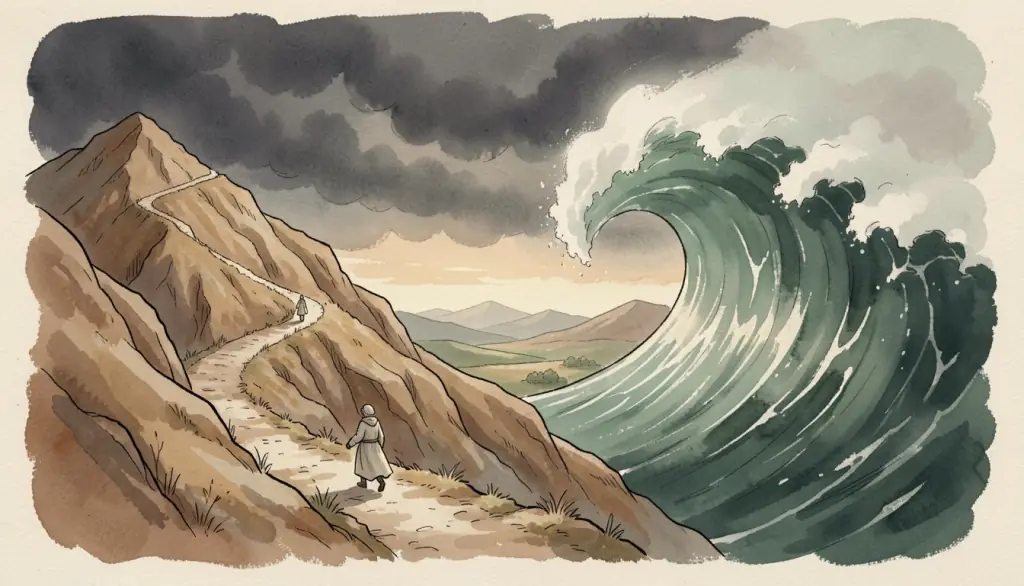
It is in this moment, with the island going under, that Míriel appears for the last time. The "Akallabêth" says that Tar-Míriel the Queen fled up the steep ways of the Meneltarma toward the hallow, but too late; the waters overtook her, and "her cry was lost in the roaring of the wind."
To see why this matters, you need to know what the Meneltarma was. It was the Pillar of Heaven, the mountain in the centre of the island. Unfinished Tales, in "A Description of the Island of Númenor," describes its summit as a hallow to Eru Ilúvatar, open to the sky, with no building and no image. There the king spoke three prayers each year on behalf of the people: the Erukyermë, the prayer to Eru, in spring; the Erulaitalë, the praise of Eru, at midsummer; and the Eruhantalë, the thanksgiving to Eru, in autumn. Under Sauron it had been abandoned.
So when the world breaks, the queen does not run to the temple of Morgoth, the centre of the kingdom her husband built. She runs to the one place in Númenor dedicated to the One, the place her father climbed and her husband deserted. Tolkien does not tell us why. But he places her there, and hers is one of the very few individual deaths the account of the Downfall stops to describe.
Two details deserve notice.
The narrator calls her Tar-Míriel. Throughout the marriage the "Akallabêth" uses the Adûnaic name Pharazôn gave her only when it reports the renaming. At her death it calls her by her Quenya royal style, Tar-Míriel the Queen. Our reading: the narrative restores to her, at the last, the name and the title that were taken. It is the only place in the story where she is called what she was by right.
The mountain is the end of the "Akallabêth" itself. The chapter closes by saying that some of the Exiles believed the summit of the Meneltarma was not drowned forever but rose again above the waves as a lonely island, and that a mariner might one day find it. The place where Míriel died becomes the place the survivors' hope clings to. Whatever Tolkien intended, the queen who failed to reach the hallow and the hallow that may have survived are bound together at the end of the tale.
For the name of the Downfall itself in Quenya and Adûnaic, Atalantë and Akallabêth, see the language section below and our Adûnaic guide.
Her Names: Míriel, Tar-Míriel and Ar-Zimraphel
Tar-Míriel has three names, and each records a moment in her story.
Míriel. This is her personal name, given by her father "in the Elvish tongue." It is Quenya. Most readers connect it with Quenya mírë, "jewel, gem, precious thing," which is well attested (LotR, "Namárië"; the Etymologies). We have not found a place where Tolkien explicitly glossed the queen's name, so treat "jewel-daughter" and similar translations as readings rather than quotations. The same name belongs to another figure in Tolkien: Míriel, the first wife of Finwë and the mother of Fëanor, whose story is told in Fëanor and the Silmarils. The two are unrelated, though a Númenórean king who loved Elvish lore could well have chosen a name with an old Noldorin echo.
Tar-Míriel. The prefix Tar- is the Quenya royal prefix used for the kings and ruling queens of Númenor. Elvish tar- is associated with height and honour, and Quenya tári means "queen" (The Peoples of Middle-earth; Eldamo). Tar-Míriel is the royal style she was owed as Ruling Queen, and it is the style the "Akallabêth" uses at her death.
Ar-Zimraphel. The Adûnaic name Pharazôn imposed. Ar- is the Adûnaic royal prefix, the counterpart of Tar- (see the table of royal names in our Adûnaic guide). Tolkien did not publish a meaning for Zimraphel, and we will not invent one.
Words from her world, with sources:
| Word or name | Language | Meaning | Source |
|---|---|---|---|
| mírë | Quenya | jewel, gem, precious thing | LotR; Etymologies |
| tári | Quenya | queen | The Peoples of Middle-earth; Parma Eldalamberon 17 |
| Númenor | Quenya | Land of the West (númen "west") | The Silmarillion |
| Meneltarma | Quenya | Pillar of Heaven (menel "heavens" + tarma "pillar") | The Silmarillion; Unfinished Tales |
| palantír | Quenya | far-seer, that which looks far away | LotR; Unfinished Tales |
| Atalantë | Quenya | the Downfallen, the Downfall | The Silmarillion, "Akallabêth" |
| Akallabêth | Adûnaic | the Downfallen | The Silmarillion, "Akallabêth" |
| Ar- | Adûnaic | royal prefix | "Akallabêth"; Unfinished Tales |
| Ar-Pharazôn / Tar-Calion | Adûnaic / Quenya | the Golden | "Akallabêth" |
| Erukyermë, Erulaitalë, Eruhantalë | Quenya | prayer to Eru, praise of Eru, thanksgiving to Eru | Unfinished Tales |
A small spelling point that confuses many readers: her father's royal name is printed Tar-Palantir in The Silmarillion, while the seeing-stones are palantír, plural palantíri. The name and the noun share their meaning, "far-sighted, far-seeing," and Tolkien explains the name in exactly those terms.
If you want to see Míriel or any of these names written in Elvish letters, try our Tengwar name tool.
Books vs Films vs The Rings of Power
Peter Jackson's films
Míriel does not appear in Jackson's Lord of the Rings or Hobbit films, which are set in the Third Age. Númenor is mentioned in the films only in passing, through Aragorn's ancestry and the blood of Westernesse.
The Rings of Power, Seasons 1 and 2
Amazon's The Rings of Power made Míriel one of its central characters. Cynthia Addai-Robinson plays her, with Trystan Gravelle as Pharazôn. The show keeps her rank, her father and her rival, and changes almost everything else. These are the main differences, stated as show inventions rather than book lore:
- Queen Regent. The show's Míriel rules Númenor as Queen Regent while her father is still alive. In Tolkien there is no regency: she was to inherit at Tar-Palantir's death, and Pharazôn seized the sceptre at that very moment.
- Visions and the palantír. The show gives her a palantír and visions of the great wave. In the books the seeing-stones of Númenor were a gift of the Eldar to the Lords of Andúnië (Unfinished Tales, "The Palantíri"), not a royal possession, and Elendil's family carried them away in the escape.
- The voyage to Middle-earth. The show sends Míriel to Middle-earth at the head of a Númenórean expedition, alongside Galadriel, to aid the Southlands. Tolkien's Míriel never leaves the island, and the Galadriel of the books never visits Númenor in the Second Age. For the real Galadriel, see Galadriel Explained.
- Her sight. The show has her lose her sight after the eruption of Orodruin in the Southlands. There is nothing like this in Tolkien.
- Pharazôn as rival, not husband. The show's Pharazôn is a political rival and courtier with a son, Kemen, who is an invention of the series. The show has not made him Míriel's husband, which removes the forced marriage that is the centre of her book story.
- The usurpation. Season 2 moves Pharazôn onto the throne while Míriel is still alive. The direction matches the books, but the book usurpation happens through the marriage.
The Rings of Power, Season 3
Season 3 premiered on Prime Video on 11 November 2026 with episodes 1 to 4, with episodes 5 and 6 due on 18 November and 7 and 8 on 25 November. The season opens five years after the fall of Eregion. The list of new and returning characters that Prime Video announced, summarised in our Season 3 Elvish preview, does not single out Míriel. Coverage of the early episodes (Nerdist, 11 November 2026) describes Elendil and Anárion training the Faithful's troops on Númenor's western shore ahead of a conflict with Pharazôn's forces. We are not going to describe Míriel's Season 3 storyline beyond that until it is confirmed on screen; anything else online about it should be treated as speculation.
What the show gets right, and what it loses
What it gets right, in our view: it treats Míriel as the legitimate centre of Númenor's crisis, it puts her between the Faithful and the King's Men, and it understands that her fate and the island's are the same fate. Those three things are faithful to the "Akallabêth," even when the plot is not.
What it loses: the forced marriage. In Tolkien, the usurpation is an act done to her body and her name, condemned by Númenor's own law. The show turns it into a contest of court politics between two adults, which gives Míriel far more agency than the books do, and makes her a more conventional heroine. That is a defensible choice for television, but it gives up the specific horror Tolkien wrote: a rightful queen who never gets to act, because the first move of the new reign is to take her.
How Tolkien Built Tar-Míriel
Míriel exists in a handful of sentences, but those sentences sit on top of an enormous amount of background Tolkien wrote about Númenor. The way the layers fit tells us how to read her.
- The fall story. The drowning of a western island, Tolkien's own Atlantis, was one of his oldest ideas; the "Akallabêth" grew out of earlier versions published after his death in The Lost Road and Sauron Defeated. Its centre is always the king who defies the gods.
- The law and the genealogy. "Aldarion and Erendis" and "The Line of Elros" (Unfinished Tales) work out the change in the law that let daughters rule, the Ruling Queens, the usurpation of Herucalmo and the pattern of Tar- and Ar- names.
- The "Akallabêth" as published. Tolkien uses those structures with great economy. A reader who knows the law, the names and the factions can see exactly what is being done to Míriel in four sentences.
The economy is deliberate in tone too. The "Akallabêth" is written as a history kept by the survivors, close in style to an annal. It names few individuals and quotes few speeches. Apart from the king buried with his host in Aman, the only individual death in the Downfall it pauses over is Míriel's.
Why Tar-Míriel Matters
Tar-Míriel matters for three reasons, each larger than her few lines.
She makes the usurpation legible. Without her, Ar-Pharazôn would be a lawful king who goes bad, like several before him. Because the throne was hers, he begins his reign as a criminal by the standards of his own kingdom. The Downfall is not only a sin against the Valar; it is the end of a reign founded on breaking Númenor's own law.
She is the last of the line of Elros in Númenor. The royal house founded by Elrond's brother ends with her and her husband. The line continues only through the Lords of Andúnië, to Elendil, Isildur and finally Aragorn. When Aragorn is crowned at the end of The Return of the King, he is restoring a kingship whose last lawful holder in Númenor never got to hold it.
She is the clearest example of a silence in Tolkien. Tolkien built a legal system that let women rule Númenor, then wrote its most important succession as a woman being married and renamed. Whether that is a limit of his interests or a portrait of laws failing when a people stop caring about them, Míriel is the place to ask the question.
Our Take
Our view, stated plainly: Tar-Míriel is the most consequential character in Tolkien who never does anything, and that is not a flaw in the writing but the whole meaning of her role. The "Akallabêth" is a story about a people who chose power over law and death-fear over faith. The proof of that choice is not Sauron's temple, which comes later, but the first act of the new reign: the lawful heir is coerced into marriage, renamed, and made to disappear inside her husband's crown, and nobody in the kingdom lifts a hand. Númenor's fall starts there, years before the fleet sails.
We also think the single detail Tolkien grants her, the flight up the Meneltarma, is the most quietly moving moment in the chapter. It is the only action she is given, and it is a choice. In the last minutes of the world she knew, the queen whose name had been taken ran to the place her father had kept and her husband had abandoned, and the narrator, for the first time since the marriage, called her Tar-Míriel. We do not know what she believed. We know where she went.
The show's Míriel, a capable ruler with a plot of her own, is fine television. The book's Míriel is sharper and sadder: a queen owed everything and allowed nothing. If you read only one passage about her, read the paragraph of the "Akallabêth" about Tar-Palantir's death and the marriage, then skip to the Downfall. The gap between those two pages is her life, and Tolkien left it empty on purpose.
People Also Ask
Who is Tar-Míriel in Tolkien?
Tar-Míriel is the only child of Tar-Palantir, the king of Númenor who repented of his fathers' rebellion against the Valar. By Númenor's law she was his heir and should have been the fourth Ruling Queen, but her cousin Pharazôn married her against her will and took the sceptre as Ar-Pharazôn. She drowned in the Downfall. Her story is in the "Akallabêth."
Who was Tar-Míriel's father?
Tar-Palantir, born Inziladûn, who took a Quenya royal name again, honoured the White Tree and the old rites, and was "farsighted both in eye and in mind." He had no son, so his daughter was his heir.
Was Tar-Míriel ever Ruling Queen of Númenor?
No. The law made by Tar-Aldarion gave the sceptre to the king's eldest child, son or daughter, so she was the rightful heir. Pharazôn forced her into marriage and seized the sceptre in his own name; she was queen only as his consort.
Why was Tar-Míriel's marriage to Ar-Pharazôn unlawful?
It was against her will, and Númenor's laws forbade marriage between kin closer than second cousins, even in the royal house. Míriel and Pharazôn were first cousins, the children of the brothers Tar-Palantir and Gimilkhâd.
What does Ar-Zimraphel mean?
It is the Adûnaic name Ar-Pharazôn gave her. Ar- is the Adûnaic royal prefix, but Tolkien never published a meaning for Zimraphel, so online translations are guesses.
What happened to Tar-Míriel at the Downfall?
She fled up the Meneltarma toward the hallow of Eru at its summit, but the waters overtook her, and her cry was lost in the roaring of the wind.
Did Tar-Míriel and Ar-Pharazôn have children?
Tolkien records none. The royal line of Elros in Númenor ended with them; it survived through the Lords of Andúnië, Elendil and his sons.
Was Tar-Míriel one of the Faithful?
Tolkien never says. Her father's turn back to the Valar, her Quenya name and her flight to the hallow of Eru all point that way, but her beliefs are never stated.
Is Queen Regent Míriel in The Rings of Power the same as Tar-Míriel?
She is based on her but heavily changed: the regency, the palantír visions, the voyage to Middle-earth with Galadriel and the absence of the forced marriage are all inventions of the show.
Who plays Míriel in The Rings of Power?
Cynthia Addai-Robinson, opposite Trystan Gravelle as Pharazôn. She does not appear in Peter Jackson's films.
Learn the Language of Númenor's Faithful
Tar-Míriel's own name, her father's royal title and the name of the holy mountain she climbed are all Quenya, the language the Faithful of Númenor kept alive when their kings abandoned it. To learn it from words Tolkien actually wrote, start with our free Elvish course, which teaches Quenya and Sindarin side by side.
Related Reading
- Characters of Middle-earth: Who's Who in Tolkien's World
- Ar-Pharazôn Explained
- Elendil Explained
- Adûnaic: The Lost Language of Númenor
- Men of Middle-earth
- Isildur Explained
- Elros and Elrond: The Half-elven Choice
- Valinor and the Undying Lands
- Galadriel Explained
- Fëanor and the Silmarils
- Rings of Power Season 3 Elvish Preview
- The Lord of the Rings Appendices Guide
People Also Ask
Who is Tar-Míriel in Tolkien?
Tar-Míriel is the only child of Tar-Palantir, the king of Númenor who repented of his fathers' rebellion against the Valar. By the law of Númenor she was his heir and should have become the fourth Ruling Queen. Instead her cousin Pharazôn married her against her will and took the sceptre himself as Ar-Pharazôn. She drowned in the Downfall of Númenor. Her story is told in the "Akallabêth" in The Silmarillion.
Who was Tar-Míriel's father?
Her father was Tar-Palantir, born Inziladûn, who took a Quenya royal name again after generations of kings with Adûnaic names. He honoured the White Tree and the old rites, and Tolkien says he was far-sighted in eye and in mind. He had no son, so his daughter was his heir.
Was Tar-Míriel ever Ruling Queen of Númenor?
No. Since the time of Tar-Aldarion the law of Númenor gave the sceptre to the king's eldest child, son or daughter, so Míriel was the rightful heir. When her father died, Pharazôn forced her into marriage and seized the sceptre in his own name. She was queen only as his consort, never as a ruler in her own right.
Why was Tar-Míriel's marriage to Ar-Pharazôn unlawful?
The Akallabêth calls it evil twice over. It was against her will, and the laws of Númenor did not allow marriage between kin closer than second cousins, even in the royal house. Míriel and Pharazôn were first cousins: her father Tar-Palantir and his father Gimilkhâd were brothers.
What does Ar-Zimraphel mean?
Ar-Zimraphel is the Adûnaic name Ar-Pharazôn gave his queen in place of her Quenya name. Ar- is the Adûnaic royal prefix, the counterpart of Quenya Tar-. Tolkien did not publish a meaning for Zimraphel, so any translation you see online is a guess.
What happened to Tar-Míriel at the Downfall?
When the great wave came, she fled up the steep paths of the Meneltarma, the holy mountain where the kings had prayed to Eru, toward the hallow at the summit. She was too late. The waters overtook her, and the Akallabêth says her cry was lost in the roaring of the wind.
Did Tar-Míriel and Ar-Pharazôn have children?
Tolkien records no children of the marriage. The royal line of Elros in Númenor ended with them, and the heirs of Elros who survived the Downfall were Elendil and his sons, descended through the Lords of Andúnië.
Was Tar-Míriel one of the Faithful?
Tolkien never says so. Her father was the king who turned back toward the Valar, she was named in Quenya, and at the end she ran to the hallow of Eru rather than to the temple of Morgoth. Those details point toward the old faith, but the text never states her beliefs, and it records nothing she said or did during the years of Sauron.
Is Queen Regent Míriel in The Rings of Power the same as Tar-Míriel?
She is based on her, but heavily changed. The show makes Míriel a Queen Regent ruling while her father is still alive, gives her visions of the coming wave through a palantír, sends her to Middle-earth with Galadriel, and does not make Pharazôn her husband. None of that is in Tolkien, whose Míriel never leaves Númenor and never rules.
Who plays Míriel in The Rings of Power?
Cynthia Addai-Robinson plays Queen Regent Míriel in The Rings of Power, opposite Trystan Gravelle as Pharazôn. The character does not appear in Peter Jackson's films, which are set in the Third Age.
Related Tags
Learn Elvish Free
39 free Elvish lessons, an AI tutor, and spaced repetition review — no credit card required.
Start Learning Free