Bilbo Baggins Explained: The Hobbit Who Found the Ring, in the Books and Films
Try It Yourself — Free Elvish Tools
Quick Answer: Bilbo Baggins is the hobbit at the centre of The Hobbit. Born in the Shire in Third Age 2890, son of Bungo Baggins and Belladonna Took, he goes with Thorin's company as their burglar in 2941, finds the One Ring under the Misty Mountains, talks with Smaug, and gives away the Arkenstone to stop a war. In The Lord of the Rings he celebrates his eleventy-first birthday, leaves the Ring to Frodo, retires to Rivendell to write his Translations from the Elvish, and in 3021, at 131, sails West from the Grey Havens.
Bilbo Baggins is the reason anyone reads Tolkien. The Hobbit opens with his front door, and The Lord of the Rings opens with his birthday party. Between those two scenes he goes from a comfortable bachelor who dislikes adventures to the first person in three thousand years to give up the One Ring of his own free will.
He is also, inside the story, its author: his diary becomes the Red Book of Westmarch, and his old age is spent translating Elvish lore. This guide follows him from Bag End to the Grey Havens using the books first (The Hobbit, The Lord of the Rings with its Prologue and Appendices, and "The Quest of Erebor" in Unfinished Tales), keeps film and television in their own section, and marks our own readings as such.
For his people in general, see our guide to the Hobbits of Middle-earth. For the riddles in the dark, line by line, see The Hobbit Riddle Game Explained.
Bilbo Baggins at a Glance
| People | Hobbit of the Shire, of mixed Baggins and Took descent |
| Born | 22 September, Third Age 2890 (Shire Reckoning 1290), Appendix B and The Fellowship of the Ring, Book I, ch. 1 |
| Parents | Bungo Baggins and Belladonna Took (The Hobbit, ch. 1) |
| Grandfather | Gerontius, the Old Took, on his mother's side |
| Home | Bag End, Hobbiton, built by his father under the Hill |
| Heir | Frodo Baggins, adopted when Bilbo was ninety-nine |
| Titles and nicknames | Burglar (The Hobbit, ch. 2); elf-friend (named so by the Elvenking, The Hobbit, ch. 18); "Mad Baggins" in Shire gossip; Ring-bearer |
| Riddling names | Clue-finder, web-cutter, stinging fly, Barrel-rider, Ringwinner, Luckwearer, which he gives Smaug (The Hobbit, ch. 12) |
| Sword | Sting, an Elvish knife from the trolls' lair, named after his fight with the spiders (The Hobbit, ch. 8) |
| A shirt of mithril rings, a gift from Thorin (The Hobbit, ch. 13), later given to Frodo | |
| Writings | His diary, later the Red Book of Westmarch; Translations from the Elvish in three volumes; many poems and songs |
| Fate | Sails West from the Grey Havens on 29 September 3021, aged 131 (Appendix B) |
| Film actors | Martin Freeman (young Bilbo, The Hobbit trilogy); Ian Holm (old Bilbo, both trilogies) |
| Rings of Power | Not in the show, which is set thousands of years before his birth |
Bilbo Baggins Timeline
"Mae govannen" — want to actually speak Elvish?
Try It Free →Dates are Third Age years from Appendix B of The Lord of the Rings, unless another source is named. The Shire Reckoning year is the Third Age year minus 1600.
| Age and year | Event |
|---|---|
| Third Age 2890 | Bilbo is born in the Shire, on 22 September |
| Third Age 2941 | Gandalf meets Thorin at Bree and plans the quest (Unfinished Tales, "The Quest of Erebor"); the unexpected party at Bag End |
| Third Age 2941 | Bilbo finds the Ring under the Misty Mountains and wins the riddle game against Gollum |
| Third Age 2941 | Mirkwood, the spiders and the Elvenking's halls; the escape in barrels; Smaug is slain at Lake-town; the Battle of Five Armies |
| Third Age 2942 | Bilbo returns to the Shire with the Ring, to find his goods being auctioned |
| Third Age 2968 | Frodo is born |
| About Third Age 2989 | Bilbo, at ninety-nine, adopts Frodo and brings him to Bag End (The Fellowship of the Ring, Book I, ch. 1, "twelve years" before the party) |
| Third Age 3001, 22 September | The farewell party on Bilbo's 111th birthday; he leaves the Ring to Frodo and departs |
| Third Age 3018, October | Frodo arrives in Rivendell wounded; Bilbo attends the Council of Elrond on 25 October |
| Third Age 3018, December | Bilbo gives Frodo Sting and the mithril coat before the Fellowship leaves |
| Third Age 3019, autumn | The hobbits visit him on their way home; he gives Frodo his books of lore (The Return of the King, Book VI, ch. 6) |
| Third Age 3021, 29 September | Bilbo sails from the Grey Havens with Frodo and the Keepers of the Three Rings |
The year of Frodo's adoption is worked out from "A Long-expected Party", not listed in Appendix B.
Family, Friends and Rivals
Bilbo has no wife or children. Everything he leaves behind goes to Frodo.
| Person | Relation | Read more |
|---|---|---|
| Bungo Baggins | Father; built Bag End | This post |
| Belladonna Took | Mother; daughter of the Old Took | This post |
| Gerontius, the Old Took | Maternal grandfather, famous for his long life and his parties | This post, "Sailing West" |
| Frodo Baggins | Cousin, adopted heir, next Ring-bearer | Frodo Baggins Explained |
| Lobelia and Otho Sackville-Baggins | Relatives who long hoped to inherit Bag End | This post, "The Return Home" |
| Gandalf | Old friend of the Took family; recruits him as a burglar | Gandalf and Mithrandir |
| Thorin Oakenshield | Leader of the company; friend, then enemy, then reconciled at his death | Durin and the Line of Durin |
| Balin | The Dwarf most friendly to him; visits Bag End years later | Dwarves of Middle-earth |
| Gollum | Former owner of the Ring; opponent in the riddle game | The Hobbit Riddle Game Explained |
| Elrond | Host at Rivendell in 2941 and for Bilbo's last twenty years in Middle-earth | Elrond Explained |
| The Elvenking (Thranduil) | Jailer of the Dwarves, later names Bilbo elf-friend | Thranduil Explained |
| Bard | Slayer of Smaug, receives the Arkenstone from Bilbo | Dragons of Middle-earth |
| Aragorn | Friend in Rivendell, whom Bilbo calls "the Dúnadan" | Aragorn's Elvish Names |
Three facts define Bilbo: he is half Took, and The Hobbit builds itself on the tension between his stay-at-home Baggins side and his adventurous Took side; he found the One Ring and, unlike Gollum, gave it up; and he is a writer. With Frodo the books are precise: "A Long-expected Party" makes him Bilbo's first and second cousin, once removed either way, whom Bilbo raised at Bag End from the age of twenty-one and with whom he shared a birthday.
The Unexpected Party: Why Gandalf Chose Bilbo
The Hobbit begins with Gandalf scratching a mark on Bilbo's green door and thirteen Dwarves arriving for tea (ch. 1, "An Unexpected Party"). The mark, they say, means a burglar wants a good job. Bilbo, who has done nothing of the kind, is talked into a contract that promises him one fourteenth of the profits (ch. 2). He also makes the number of the company fourteen, avoiding an unlucky thirteen.
In The Hobbit Gandalf's choice looks like a whim. Tolkien later explained it. In "The Quest of Erebor", published in Unfinished Tales, Gandalf tells the story from his side. He had met Thorin by chance at Bree in 2941 and was worried that Smaug might be used by Sauron, who was then returning to power. Retaking Erebor would remove that danger. The Dwarves needed someone to go where they could not, and Gandalf wanted a hobbit, partly because of their stealth and partly because of something he had seen in Bilbo years before, when Bilbo was a young hobbit eager for news of the outside world.
Appendix A ("Durin's Folk") tells it briefly too. Together the two texts turn the comic tea party into strategy: the first move in the campaign that ends with Sauron's fall.
There and Back Again: The Journey in The Hobbit
The trolls. On the road east, Bilbo tries to pick a troll's pocket and is caught (ch. 2). The company is saved when Gandalf keeps the three trolls arguing until dawn turns them to stone. In their lair the company finds Elvish swords, and Bilbo takes a long knife that will become Sting. For the creatures themselves, see Trolls of Middle-earth.
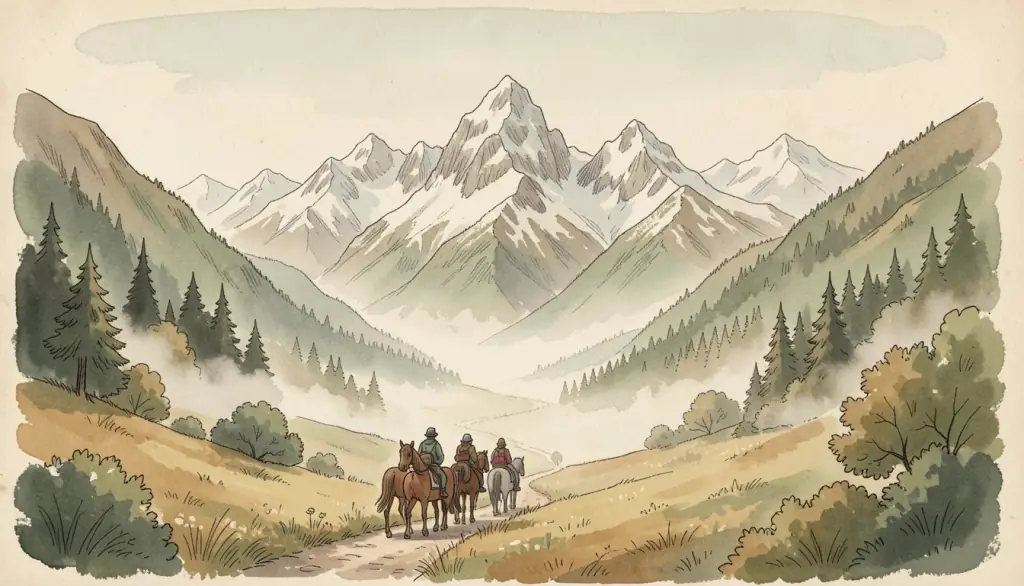
Rivendell. At the Last Homely House, Elrond reads the moon-letters on Thror's map on Midsummer's Eve and identifies the swords from the troll-hoard (ch. 3). This is Bilbo's first meeting with the Elves of Rivendell, where he will one day live.
Under the Misty Mountains. Goblins seize the company in a mountain pass. In the confusion Bilbo is knocked out, wakes alone in the dark, and finds a ring on the tunnel floor (ch. 4 and 5). This is the most important accident in Tolkien, and it has its own section below.
The eagles and Beorn. Rescued from goblins and wolves by the Great Eagles, the company shelters with the skin-changer Beorn (ch. 6 and 7).
Mirkwood. Gandalf leaves them at the forest's edge. In Mirkwood the Dwarves are caught by spiders, and Bilbo, using the Ring and his knife, frees them alone (ch. 8, "Flies and Spiders"). Having killed a spider by himself in the dark, he names his blade Sting. Tolkien says he felt a different person afterwards, fiercer and bolder. The spiders have their own guide in Giant Spiders of Middle-earth.
The Elvenking's halls. The Wood-elves capture the Dwarves. Bilbo lives invisible in the halls for weeks, then steals the keys and sends the company down the Forest River in empty barrels (ch. 9, "Barrels out of Bond"). It is the first plan in the book that is entirely his.
By Lake-town, leadership has quietly passed to the burglar. Thorin still commands, but the Dwarves now turn to Bilbo when things go wrong.
Finding the Ring and the Two Versions of the Gollum Chapter
In chapter 5, "Riddles in the Dark", Bilbo crawls through a goblin tunnel and pockets a ring "almost without thinking". At an underground lake he meets Gollum, wins a riddle game with a question that is not really a riddle, "What have I got in my pocket?", and escapes by discovering that the ring makes him invisible. Every riddle is covered in The Hobbit Riddle Game Explained. What matters here is that the chapter exists in two versions.
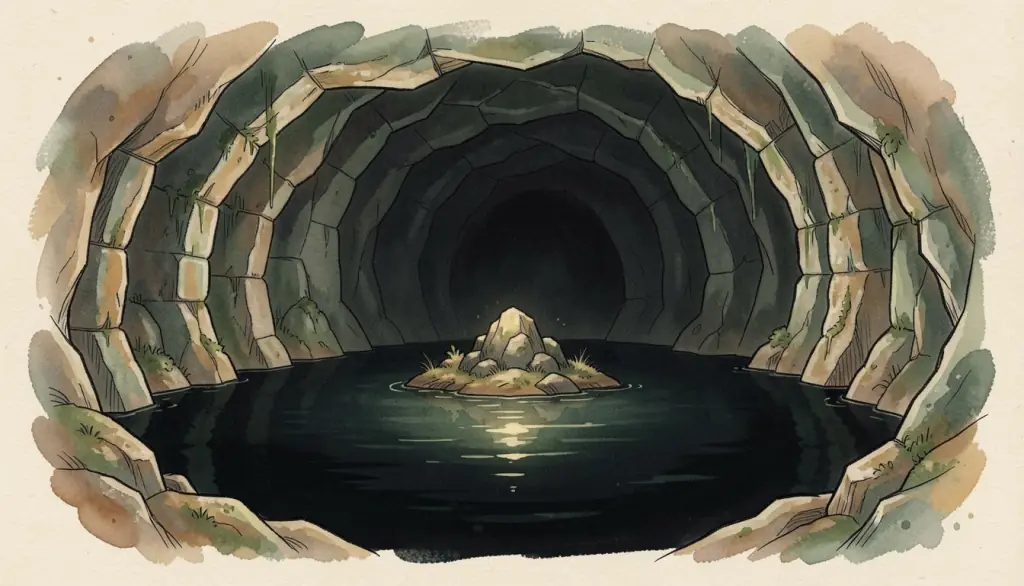
The 1937 first edition. Gollum stakes the ring as a present; unable to find it, he apologises and honestly shows Bilbo the way out.
The 1951 second edition. By then Tolkien was deep into The Lord of the Rings, and the trinket had become the One Ring. He rewrote the chapter. Gollum now promises only to show the way out. When he loses, he goes to his island to fetch his "birthday present", finds it gone, guesses what is in Bilbo's pocket, and hunts him through the tunnels in a fury. Bilbo, invisible, has the chance to kill him in a narrow passage and does not. He feels pity, and leaps over Gollum's head instead.
Then Tolkien did something clever. The Prologue to The Lord of the Rings ("Of the Finding of the Ring") explains that the first version was the story Bilbo told the Dwarves, and wrote in his diary, because he wanted a better claim to the ring than "I found it". Gandalf never believed it. The true story was written later, and the Prologue says some copies of the Red Book kept the false one. The discrepancy between the two editions becomes evidence inside the fiction: the Ring had already started to work on Bilbo, and its first effect was to make an honest hobbit lie about it.
This is why Gandalf, in "The Shadow of the Past" (The Fellowship of the Ring, Book I, ch. 2), dwells on Bilbo's mercy in the tunnel. Bilbo began his ownership with pity, he says, and so took little harm and escaped in the end; and the pity of Bilbo may rule the fate of many. At Mount Doom it does: the creature Bilbo spared is the one who destroys the Ring. For how the Ring itself was made, see How Was the One Ring Made?.
Smaug: The Conversation in the Mountain
The company reaches the Lonely Mountain and finds the secret door. Then the Dwarves send the burglar in alone (ch. 12, "Inside Information"). This is the moment of real courage in the book. Tolkien says that going on down the tunnel, before he ever saw the dragon, was the bravest thing Bilbo did.
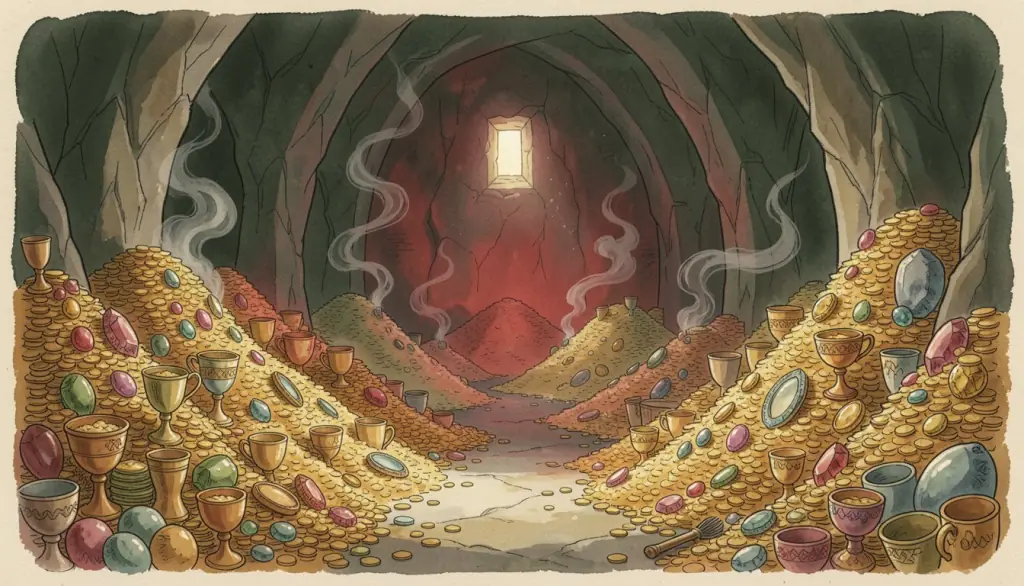
On his first visit he steals a two-handled cup while Smaug sleeps. On his second, Smaug is awake, and Bilbo, invisible, refuses to give his name and answers in riddles: he is the clue-finder, the web-cutter, the stinging fly; he comes from the end of a bag; he is the friend of bears and the guest of eagles; he is Ringwinner, Luckwearer and Barrel-rider. The Hobbit text explains why: dragons love riddling talk, and it is dangerous to tell them anything plainly.
Smaug is cleverer, and plants a doubt that the Dwarves will cheat Bilbo of his share. But Bilbo flatters him into showing off his jewelled belly and sees a bare patch on the left breast. Back with the Dwarves he describes it; an old thrush listens and carries the news to Bard the Bowman at Lake-town. When Smaug attacks the town, Bard aims his black arrow at the hollow in the dragon's breast and kills him (ch. 14, "Fire and Water"). Bilbo is not there. He did not slay the dragon; he found the way it could be slain. Smaug's wider history, and Tolkien's other dragons, are in Dragons of Middle-earth.
The Arkenstone: Bilbo's Hardest Choice
With Smaug dead, the Men of Lake-town and the Elvenking's host come to the Mountain to claim a share of the hoard, to pay for the ruined town and for old debts. Thorin refuses everything and fortifies the gate. Dáin is marching from the Iron Hills. A battle between Dwarves, Men and Elves is days away.
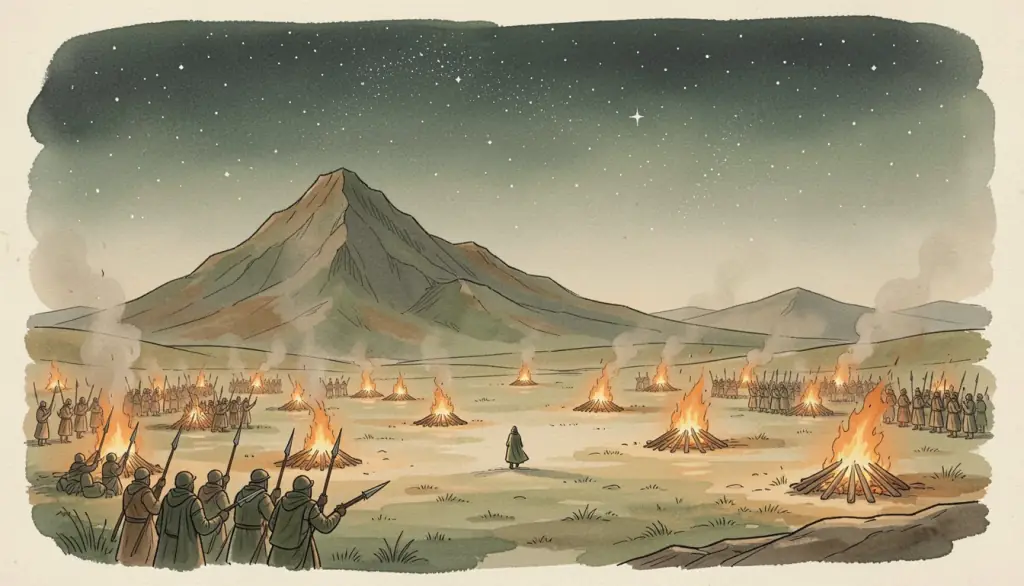
Bilbo holds a secret. Exploring the hoard, he had found the Arkenstone of Thrain, the Heart of the Mountain, the jewel Thorin wanted above everything else, and he had pocketed it (ch. 13). Now, in chapter 16, "A Thief in the Night", he slips out of the Mountain at night, walks into the camp of the besiegers, and gives the Arkenstone to Bard and the Elvenking, so that they can bargain with Thorin for a fair settlement. Then he goes back.
Nobody makes him do it. He knows he will be found out, and he returns to face Thorin anyway rather than leave his friends. The Elvenking, and an old man in the camp who turns out to be Gandalf, both see what it costs him.
Thorin, when he learns, is so furious that he nearly throws Bilbo from the wall (ch. 17). Then the goblins and wargs arrive, and the Battle of Five Armies makes the quarrel irrelevant. Thorin is mortally wounded. In chapter 18, "The Return Journey", he asks for Bilbo, takes back his angry words, and praises the hobbit's love of food, cheer and song over hoarded gold. The Arkenstone is laid on Thorin's breast in his tomb.
In our reading, the episode shows what the Ring had not changed: carrying the most corrupting object in the world, Bilbo's great act is to give away the most precious thing he has ever held.
The Return Home and Sixty Years at Bag End
Bilbo takes only two small chests of treasure, one of silver and one of gold, as much as a pony could carry. On the way home the Elvenking names him elf-friend, and at Rivendell he rests in the Last Homely House once more. He reaches the Shire in 2942 to find that he has been "presumed dead", and that his furniture is being sold at auction (The Hobbit, ch. 19, "The Last Stage"). The Sackville-Bagginses are measuring his rooms. He buys back much of his own furniture, and he never quite convinces his relatives that he is alive. His reputation, Tolkien says, was lost for good.
The book ends with Gandalf and Balin visiting him some years later, and Gandalf reminding him that his adventures were not managed by mere luck. Bilbo, he says, is only quite a little fellow in a wide world after all. Bilbo laughs and hands him the tobacco jar.
For sixty years nothing seems to happen. Bilbo is rich, eccentric and popular with younger hobbits. But the Ring is in his pocket the whole time, and he does not seem to age: at ninety he looks much as he did at fifty, and the Shire calls it unnatural.
The Eleventy-first Birthday
The Lord of the Rings opens on 22 September 3001 (The Fellowship of the Ring, Book I, ch. 1, "A Long-expected Party"). Bilbo is turning 111, "eleventy-one", and Frodo is turning 33, the hobbit age of coming of age. Bilbo gives a great party in the Party Field, with presents for everyone, as hobbits give gifts on their own birthdays, and fireworks by Gandalf.
His speech is a masterpiece of mischief. He tells the guests that he likes less than half of them half as well as they deserve, announces his departure, slips on the Ring and vanishes, with a flash of light added by Gandalf to make it look like a trick. The 144 guests at the main table, "one gross", are left blinking.
Back at Bag End, the real drama happens. Bilbo had planned to leave everything to Frodo, including the Ring. But when Gandalf reminds him, he hesitates, calls it "my precious", and grows angry. For the first time we see the Ring's grip in full. He tells Gandalf that he feels thin and stretched, "like butter that has been scraped over too much bread". Gandalf, for once, stands up to his full height and drops his mild manner. Bilbo gives way, puts the Ring in an envelope on the mantelpiece, and walks out of the door singing his walking song, The Road goes ever on and on.
Gandalf later says nobody before Bilbo had given up the Ring of his own accord. That is the real climax of his story, and it comes in the first chapter of the sequel. He had already started calling it "my precious", Gollum's word; Gandalf explains in "The Shadow of the Past" that a mortal who keeps a Great Ring does not gain more life but merely continues, until every minute is a weariness.
Rivendell: The Old Hobbit Among the Elves
After leaving the Shire, Bilbo settles in Rivendell, Elrond's house in the valley of Imladris, and stays there for twenty years. When Frodo arrives, wounded, in October 3018, he finds Bilbo in a little room, older, more frail, and very happy to see him (The Fellowship of the Ring, Book II, ch. 1, "Many Meetings").
That chapter contains two scenes that matter.
The shadow. Bilbo asks to see the Ring again. Frodo takes it out reluctantly, and for a moment a shadow falls between them: Frodo sees Bilbo as a small wrinkled creature with grasping hands, and wants to strike him. Bilbo sees the change in Frodo's face, understands, and apologises. He knows now what the Ring is, and what it did to him.
The Hall of Fire. In the evening Bilbo chants his long poem about Eärendil the Mariner, which he composed himself. Aragorn, whom Bilbo calls "the Dúnadan", had insisted on putting a green stone in it. The Elves then sing the Sindarin hymn A Elbereth Gilthoniel. Our guide Elbereth Meaning explains that hymn and its words.
At the Council of Elrond on 25 October (Book II, ch. 2), Bilbo tells his true Ring story in full for the first time in public. He reveals that he wrote the verse All that is gold does not glitter about Aragorn long ago. And when the question is who will carry the Ring to Mordor, Bilbo, at 128, offers to go himself. Gandalf gently tells him that his part is done. Frodo then volunteers.
Before the Fellowship leaves, Bilbo gives Frodo Sting and the mithril coat that Thorin had given him in Erebor (Book II, ch. 3, "The Ring Goes South"). The coat saves Frodo's life in Moria. Bilbo's gifts travel the whole length of the quest he could not make. For the valley itself, its names and its history, see Rivendell Explained.
Bilbo the Translator: Elvish, the Red Book and the Elder Days
Bilbo is the only Hobbit in Tolkien who becomes a scholar of Elvish, and Tolkien built the fiction of his books around that fact.
The diary. Bilbo's account of his journey is the first part of the Red Book of Westmarch. In "The Grey Havens" (The Return of the King, Book VI, ch. 9) Frodo shows Sam its title page, which lists Bilbo's discarded titles: My Diary. My Unexpected Journey. There and Back Again. And What Happened After. Frodo then finishes it with the story of the Ring.
The translations. When the hobbits pass back through Rivendell in the autumn of 3019, Bilbo gives Frodo three books of lore bound in red, labelled Translations from the Elvish, by B.B. (The Return of the King, Book VI, ch. 6, "Many Partings"). The Prologue's "Note on the Shire Records" describes them as a work of great skill and learning, made from all the sources available to him in Rivendell, living and written. Inside Tolkien's fiction, these volumes are where the legends of the Elder Days come from. In other words, Bilbo is the fictional translator behind much of what we now read in The Silmarillion.
The language. Bilbo's Rivendell poems are in his own tongue, but they are steeped in Elvish material: Eärendil, Elbereth, the Silmarils, the West. A hobbit who had begun the Third Age's most famous adventure afraid of the unexpected ends it as a learned writer on the oldest stories of the Elves. If you want the background behind those names, see Fëanor and the Silmarils.
We think this is a quiet joke: Tolkien the philologist gives his own job to his hobbit, who sits in Rivendell turning Elvish into English and getting distracted by poetry.
Bilbo's Names and the Language Around Him
Bilbo has no Elvish name in Tolkien. The Elves do not rename him the way they rename Gandalf or Aragorn. But there is a good deal of language around him.
Bilbo and Baggins. These are English forms. Appendix F, "On Translation", explains that Tolkien rendered the hobbits' real Westron names into English equivalents, and that in Westron masculine hobbit names commonly ended in -a, which he changed to -o in his English. So "Bilbo" is a translation of a name we never see in the original. In Tolkien's notes for translators (Nomenclature of The Lord of the Rings), Baggins is meant to recall "bag", a joke that Bilbo himself makes to Smaug when he says he comes from the end of a bag. Bag End means what it says in English, a dead end, and Tolkien enjoyed setting it against the Sackville-Bagginses' pretensions. For the Common Speech behind these names, see Westron: The Common Speech.
What the Elves call hobbits. The Sindarin word is perian, "halfling", plural periannath. At the Field of Cormallen the host cries Cuio i Pheriain anann!, "long live the halflings", in a mutated form of the same word (The Return of the King, Book VI, ch. 4).
Elf-friend. The Elvenking names Bilbo elf-friend at the end of The Hobbit. Tolkien's Quenya name with that meaning is Elendil, borne by the founder of Gondor and Arnor (The Silmarillion, "Akallabêth"), and the Sindarin word for "friend" is mellon, the password of the Doors of Durin.
| Word | Meaning | Source |
|---|---|---|
| perian | halfling, hobbit (Sindarin) | LotR |
| periannath | halflings, the hobbits as a people | LotR |
| Cuio i Pheriain anann! | long live the halflings | LotR, Book VI, ch. 4 |
| mellon | friend (Sindarin) | LotR, Book II, ch. 4 |
| Elendil | Elf-friend (Quenya name) | The Silmarillion, "Akallabêth" |
| Imladris | Rivendell, "deep dell of the cleft" | LotR |
| Eärendil | the Mariner of Bilbo's song; "sea-lover" | The Silmarillion |
| Dúnadan | Man of the West, Bilbo's name for Aragorn | LotR |
Do not trust any online "Elvish name for Bilbo". Tolkien never gave one, and invented ones are fan work. If you want to see his name in Elvish letters, our Tengwar name tool writes it in Tengwar, which is transcription, not translation. For the word mellon, see What Does Mellon Mean?.
Sailing West: The Last Journey
When the hobbits come back through Rivendell after the war, Bilbo is very old and sleepy. In "Many Partings" he asks Frodo what became of his ring, is told it is gone, says what a pity it is that he cannot see it again, and then corrects himself as a silly old hobbit. It is a gentle scene, and it shows the last thread of the Ring's hold breaking.
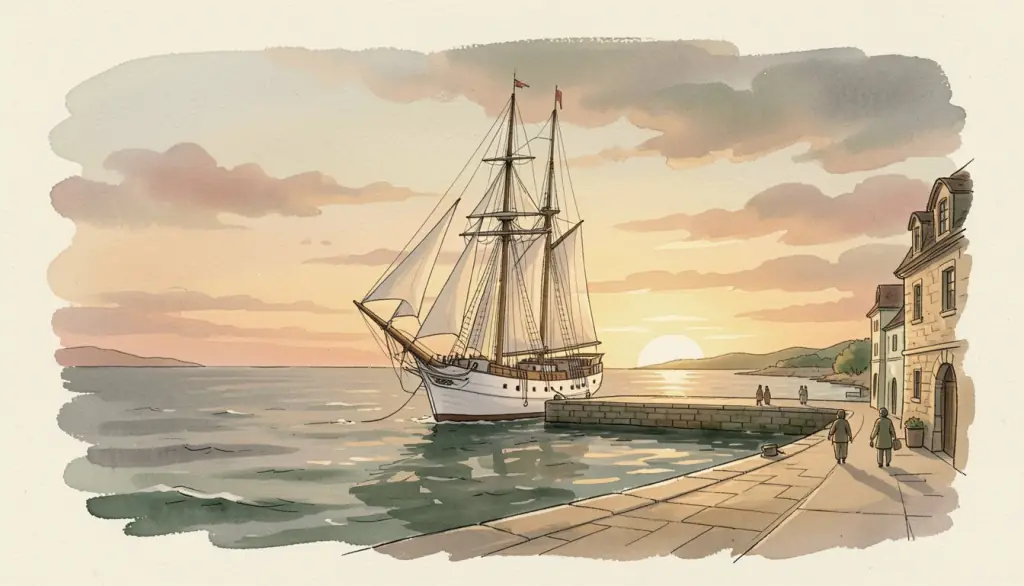
Two years later, in September 3021, Bilbo leaves Rivendell with Elrond and Galadriel. Frodo and Sam meet them in the Shire woods, and the company rides to the Grey Havens, where Gandalf is waiting. On 29 September Bilbo sails over the Sea with Frodo and the Keepers of the Three Rings (The Return of the King, Book VI, ch. 9; Appendix B). He has just turned 131, older than the Old Took ever was, the longest-lived hobbit on record.
Why can a hobbit sail into the West at all? Tolkien explained in his letters (for example Letter 154) that this was a special grace for the Ring-bearers: a passage to heal them, if that could be done, before they died. It did not make them immortal. Bilbo goes to the West as a mortal and will end as one, but in peace. The haven itself has its own guide in The Grey Havens: Mithlond, and what lies beyond it in Valinor and the Undying Lands.
Bilbo in the Films and The Rings of Power
Bilbo is one of the few characters to appear in both of Peter Jackson's trilogies. Ian Holm plays the old Bilbo in The Lord of the Rings (2001 to 2003) and returns briefly in The Hobbit; Martin Freeman plays the young Bilbo in The Hobbit trilogy (2012 to 2014). Before that, the 1977 Rankin/Bass animated Hobbit gave him the voice of Orson Bean.
The films keep the main beats, from the unexpected party to the Arkenstone and Thorin's deathbed, but these are film choices, not Tolkien:
- Azog. The Hobbit films make Azog the Defiler Thorin's pursuer. In Appendix A, Azog was killed by Dáin at the Battle of Azanulbizar in Third Age 2799, long before Bilbo was born.
- Saving Thorin. In An Unexpected Journey Bilbo charges an orc to defend Thorin. That fight is not in the book.
- Tauriel and Legolas. Neither has any part in the book of The Hobbit; Tauriel is a film creation. See our guide to Elvish in the Hobbit films.
- The forges. The Dwarves' fight with Smaug in the forges of Erebor, and the molten gold, is invented. In the book Smaug simply leaves the Mountain to attack Lake-town.
- The shadow in Rivendell. In The Fellowship of the Ring film, Bilbo lunges at the Ring with a monstrous face. In the book it is something Frodo sees, a vision rather than an attack.
- Seventeen years. The book puts seventeen years between the party and Frodo's departure. The film makes it feel like weeks.
In our view the films get the comedy, the riddles and Ian Holm's frailty right, but give young Bilbo action-hero moments when the book's point is that his heroism is moral, not martial.
The Rings of Power
The Rings of Power is set in the Second Age, thousands of years before Bilbo's birth, so he cannot appear in it and has not. The show's Harfoot characters, including Nori Brandyfoot and Poppy Proudfellow, are inventions of the series. In the books the Harfoots are one of the three ancestral breeds of hobbits named in the Prologue, but Tolkien tells no stories about them in that Age. Season 3 premiered on Prime Video on 11 November 2026; nothing announced for it involves Bilbo, and anything online suggesting otherwise is speculation. For what the season does contain, see our Rings of Power Season 3 Elvish preview.
How Tolkien Built Bilbo
Bilbo was made in layers, and each layer changed the earlier ones.
- Early 1930s, The Hobbit drafts. The famous first sentence about a hobbit in a hole came first, and Bilbo Baggins came with it. In the early drafts, published by John D. Rateliff in The History of The Hobbit (2007), other names were still in flux: the dragon was Pryftan, and the wizard was called Bladorthin. Bilbo was already Bilbo.
- 1937, the first edition. A children's book with a comic narrator, in which the ring is a useful magic object and Gollum is honest.
- Late 1930s, The Lord of the Rings begins. Tolkien's first drafts of the sequel, published in The Return of the Shadow (The History of Middle-earth, vol. 6), made Bilbo the hero again, then gave the role to his heir, first called Bingo and only later Frodo. Bilbo stayed as the old man who starts everything.
- 1951, the revised Hobbit. The Gollum chapter is rewritten to fit the One Ring, and the Prologue of The Lord of the Rings explains the change as Bilbo's lie.
- 1954 to 1955, The Lord of the Rings. Bilbo's party, his struggle to give up the Ring, his life in Rivendell, his translations and his voyage West.
- Later writing, Unfinished Tales. "The Quest of Erebor" explains why Gandalf picked him.
Tolkien did not undo the early Bilbo. He absorbed him, giving the cosy hero of a children's book a role in Sauron's defeat after the fact, and even made his own revision part of the story.
Our Take
Our view, stated plainly: Bilbo's greatest moment is not the dragon, the spiders or the riddles. It is the night he walks out of the Mountain with the Arkenstone. Everyone remembers the riddles and the conversation with Smaug, because they are clever. But the Arkenstone scene is the only one where Bilbo chooses, with full knowledge, to lose something he wants and to be hated for it, in order to save other people. That is the same choice Frodo will make on a much larger scale, and Tolkien shows it first in a children's book.
We also think the 1951 revision is the best rewrite Tolkien ever made, and not mainly because it fixed a plot problem. By turning the old version into Bilbo's lie, he made the Ring's first victim a respectable, kindly, slightly vain hobbit, not a monster. The Ring did not make Bilbo evil. It made him a little dishonest, a little possessive, a little stretched. That is far more frightening than Gollum, because it is recognisable.
Finally, we think readers underrate the old Bilbo in Rivendell. He is not a retired hero waiting to die. He is a translator, poet and historian at work, surrounded by Elves, writing the books that the rest of the story depends on. The hobbit who hated adventures ends as the keeper of the oldest stories in the world. That is the real There and Back Again.
People Also Ask
Who is Bilbo Baggins?
Bilbo Baggins is the hobbit hero of The Hobbit. Born in the Shire in Third Age 2890, the son of Bungo Baggins and Belladonna Took, he joins Thorin's company as its burglar in 2941, finds the One Ring, talks with Smaug and gives away the Arkenstone to try to stop a war. Sixty years later he leaves the Ring to Frodo, retires to Rivendell and finally sails West.
How old is Bilbo in The Hobbit and The Lord of the Rings?
About fifty when the Dwarves arrive in 2941. He turns 111 at his farewell party on 22 September 3001, and he is 131 when he sails from the Grey Havens in 3021, older than any hobbit before him.
How did Bilbo find the One Ring?
Lost in the goblin tunnels under the Misty Mountains, he finds a small ring on the floor and pockets it. Only afterwards does he meet Gollum, win the riddle game and learn that the ring makes him invisible. Nobody knew for decades that it was the One Ring.
Why are there two versions of the Gollum chapter in The Hobbit?
In the 1937 edition Gollum wagers the ring and honestly shows Bilbo the way out. For the 1951 edition Tolkien rewrote the chapter to fit the One Ring, and the Prologue to The Lord of the Rings explains the first version as a lie Bilbo told the Dwarves.
Who were Bilbo's parents?
Bungo Baggins, who built Bag End, and Belladonna Took, a daughter of the Old Took. The Hobbit uses the mix to explain his split between comfort and adventure.
How is Bilbo related to Frodo?
Frodo was his first and second cousin, once removed either way. Bilbo adopted him as his heir at ninety-nine and left him Bag End and the Ring in 3001.
Did Bilbo kill Smaug?
No. Bard killed Smaug at Lake-town. Bilbo found the bare patch in the dragon's armour, and a thrush carried the news to Bard.
Why did Bilbo give away the Arkenstone?
To stop a war. Thorin had refused to share the treasure, so Bilbo gave the Arkenstone to Bard and the Elvenking as a bargaining piece, then went back to face Thorin's anger.
Did Bilbo go to the Undying Lands?
Yes. He sailed from the Grey Havens on 29 September 3021 with Frodo, Gandalf, Elrond and Galadriel. Tolkien's letters describe this as a healing for the Ring-bearers, not a grant of immortality.
Did Bilbo speak Elvish?
He learned a good deal of it in Rivendell, where he made three volumes of Translations from the Elvish and gave them to Frodo. The fiction presents them as a source for the legends of the Elder Days.
Learn the Elvish Bilbo Studied in Rivendell
Bilbo spent his last twenty years in Middle-earth among the Elves, learning their tongues and turning their lore into his own language. You can start where he did. Our free Elvish course teaches Sindarin and Quenya with words Tolkien actually wrote, from mellon to periannath, and our Tengwar name tool writes your own name in Elvish letters.
Related Reading
- Characters of Middle-earth: Who's Who in Tolkien's World
- Hobbits of Middle-earth
- The Hobbit Riddle Game Explained
- Thranduil Explained: The Elvenking of Mirkwood
- Durin and the Line of Durin
- Elvish in The Hobbit Films: Thranduil, Tauriel and Every Line Translated
- Dragons of Middle-earth
- Rivendell Explained
- The Grey Havens: Mithlond
- Frodo Baggins Explained
- Samwise Gamgee Explained
- Gimli Explained
- Boromir Explained
- Frodo's Elvish Name
People Also Ask
Who is Bilbo Baggins?
Bilbo Baggins is the hobbit hero of The Hobbit. Born in the Shire in Third Age 2890, the son of Bungo Baggins and Belladonna Took, he joins Thorin's company as its burglar in 2941, finds the One Ring under the Misty Mountains, talks with the dragon Smaug and gives away the Arkenstone to try to stop a war. Sixty years later he leaves the Ring to his heir Frodo, retires to Rivendell and finally sails West.
How old is Bilbo in The Hobbit and The Lord of the Rings?
The Hobbit says he was about fifty when Gandalf and the Dwarves arrived in 2941. He turns 111 at his farewell party on 22 September 3001, which opens The Lord of the Rings, and he is 131 when he sails from the Grey Havens in 3021, older than any hobbit before him.
How did Bilbo find the One Ring?
Lost in the goblin tunnels under the Misty Mountains, he puts his hand on a small ring lying on the floor and pockets it almost without thinking. Only afterwards does he meet Gollum, win the riddle game, and discover that the ring makes him invisible. Neither he nor Gandalf knew for decades that it was the One Ring.
Why are there two versions of the Gollum chapter in The Hobbit?
In the 1937 first edition Gollum wagers the ring as a present and, unable to find it, honestly shows Bilbo the way out. For the 1951 edition Tolkien rewrote the chapter so that Gollum is a desperate, murderous creature who has lost his Precious. The Prologue to The Lord of the Rings explains the first version as a lie Bilbo told the Dwarves, a sign of the Ring's hold on him.
Who were Bilbo's parents?
His father was Bungo Baggins, who built Bag End, and his mother was Belladonna Took, one of the daughters of the Old Took. The Hobbit uses that mix to explain Bilbo: Baggins respectability on one side and an inherited Tookish taste for adventure on the other.
How is Bilbo related to Frodo?
The Lord of the Rings says Frodo was Bilbo's first and second cousin, once removed either way. Bilbo adopted him as his heir at the age of ninety-nine, brought him to live at Bag End, and left him the house and the Ring at the party of 3001.
Did Bilbo kill Smaug?
No. Bard the Bowman killed Smaug at Lake-town. Bilbo's part was to notice the bare patch in the dragon's jewelled armour while talking with him inside the Lonely Mountain. A thrush overheard Bilbo describing it to the Dwarves and carried the news to Bard.
Why did Bilbo give away the Arkenstone?
Thorin had refused to share the treasure with the Men of Lake-town and the Elves, and war was close. Bilbo took the Arkenstone, which he had found in the hoard, and secretly gave it to Bard and the Elvenking as a bargaining piece to force a settlement. It cost him Thorin's friendship until Thorin's deathbed.
Did Bilbo go to the Undying Lands?
Yes. On 29 September 3021 he sailed from the Grey Havens with Frodo, Gandalf, Elrond and Galadriel. Tolkien allowed the Ring-bearers this as a healing, and in his letters he explained that it did not make them immortal; as mortals they would still die in the West in the end.
Did Bilbo speak Elvish?
He learned a good deal of it. In Rivendell he made the three volumes of Translations from the Elvish, which he gave to Frodo and which the fiction presents as a source for the legends of the Elder Days. He was also composing verse there, including his song of Eärendil, sung in the Hall of Fire.