Frodo Baggins Explained: The Ring-bearer in the Books and Films
Try It Yourself — Free Elvish Tools
Quick Answer: Frodo Baggins is the hobbit who inherits the One Ring from his cousin Bilbo and carries it from Bag End to Mount Doom. Born in Third Age 2968, he leaves the Shire in 3018, is stabbed with a Morgul-knife at Weathertop, takes the Ring on alone with Sam after the Fellowship breaks, and reaches the Crack of Doom on 25 March 3019. There he claims the Ring, and it is destroyed only when Gollum bites it from his hand and falls into the fire. Never healed, he sails West from the Grey Havens in 3021.
Frodo Baggins is the hero of The Lord of the Rings, and he is an odd one. He wins no battle and kills no famous enemy. In the last chapter of his quest he does not do the thing he set out to do. Within two years of coming home he leaves Middle-earth for good. Tolkien built his central character around endurance, mercy and loss rather than victory, and he defended that choice in his letters for the rest of his life.
This guide follows the books from the Shire to the Grey Havens, keeps the films and The Rings of Power in their own section, and marks our own reading as interpretation. For the race he belongs to, see Hobbits of Middle-earth. For his names in the Shire's language and in Elvish, see Frodo's Elvish Name and Meaning.
Frodo Baggins at a Glance
| People | Hobbit of the Shire, of the Baggins family, with Brandybuck and Took blood (LotR, Appendix C) |
| Born | 22 September, Third Age 2968 (Shire Reckoning 1368) (Appendix B) |
| Parents | Drogo Baggins and Primula Brandybuck, drowned on the Brandywine (The Fellowship of the Ring, book I, ch. 1) |
| Guardian and heir of | Bilbo Baggins, who adopted him and left him Bag End and the Ring |
| Titles and names | The Ring-bearer; Mr. Underhill (his alias at Bree); Elf-friend (Gildor); Frodo of the Nine Fingers (Cormallen) |
| Westron name | Maura Labingi (The Peoples of Middle-earth, "The Appendix on Languages") |
| Weapons and gear | Sting and the mithril coat, gifts of Bilbo; the Phial of Galadriel; Arwen's white gem |
| Wounds | Morgul-knife at Weathertop; Shelob's sting; the loss of a finger at Mount Doom |
| Ring-bearer | From 3001 (Bilbo's party) to 25 March 3019 |
| Fate | Sails West from the Grey Havens on 29 September 3021 with Bilbo and the Keepers of the Three Rings |
| Spouse and children | None |
| Film actor | Elijah Wood (The Lord of the Rings trilogy, 2001 to 2003; a framing scene in An Unexpected Journey, 2012) |
| Rings of Power | Does not appear; the show is set in the Second Age |
Frodo Baggins Timeline
"Mae govannen" — want to actually speak Elvish?
Try It Free →All dates are Third Age (TA) and come from Appendix B of The Lord of the Rings unless marked otherwise. Shire Reckoning (SR) is TA minus 1600.
| Age and year | Event |
|---|---|
| TA 2968, 22 September | Frodo is born, son of Drogo Baggins and Primula Brandybuck |
| TA 2980 (SR 1380) | Drogo and Primula drown; Frodo grows up at Brandy Hall (Appendix C dates) |
| Before 3001 | Bilbo adopts Frodo as his heir and brings him to Bag End |
| TA 3001, 22 September | Bilbo's farewell party; Frodo, now 33 and of age, inherits Bag End and the Ring |
| TA 3018, April | Gandalf returns to Bag End and tells Frodo what the Ring is |
| TA 3018, 23 September | Frodo leaves Bag End by night with Sam and Pippin; Black Riders in the Shire |
| TA 3018, 6 October | Night attack on Weathertop; Frodo is stabbed with a Morgul-knife |
| TA 3018, 20 October | Escape over the Ford of Bruinen; Frodo reaches Rivendell |
| TA 3018, 25 October | The Council of Elrond; Frodo offers to take the Ring to Mordor |
| TA 3019, January | Moria; Frodo's mithril coat turns an orc-chieftain's spear; Gandalf falls |
| TA 3019, 17 January to 16 February | The Fellowship in Lothlórien; Frodo looks in the Mirror of Galadriel |
| TA 3019, 26 February | Breaking of the Fellowship at Amon Hen; Frodo and Sam go on alone |
| TA 3019, late February | Frodo and Sam capture Gollum in the Emyn Muil and take him as guide |
| TA 3019, 7 March | Faramir takes Frodo to Henneth Annûn |
| TA 3019, 12 and 13 March | Gollum leads Frodo into Shelob's Lair; Frodo is stung and captured by the orcs of Cirith Ungol |
| TA 3019, 25 March | Frodo and Sam reach the Sammath Naur; the Ring is destroyed |
| TA 3019, 8 April | The Ring-bearers are honoured on the Field of Cormallen |
| TA 3019, 3 November | Battle of Bywater; Saruman is killed at Bag End |
| TA 3021, 29 September | Frodo sails from the Grey Havens with Bilbo, Gandalf, Elrond and Galadriel |
The text does not fix the year Bilbo adopted Frodo, so that row shows order, not a date.
Who Frodo Baggins Is
Frodo is a well-off, well-read gentlehobbit, curious about the world beyond the Brandywine. Three facts define him.
- He is Bilbo's heir by choice, not birth. Bilbo adopts him and leaves him Bag End and, at Gandalf's insistence, the Ring.
- He chooses the burden twice. Once to carry it out of the Shire, and again at the Council of Elrond, when no one has asked him to take it to Mordor.
- He is changed past repair. The quest costs him a finger and leaves wounds that never close.
Family and Relationships
| Person | Relation | Read more |
|---|---|---|
| Drogo Baggins and Primula Brandybuck | Parents, drowned on the Brandywine | This post, "The Shire" |
| Bilbo Baggins | Elder cousin, guardian and benefactor; earlier bearer of the Ring | Bilbo Baggins Explained |
| Samwise Gamgee | Gardener, servant and closest friend; companion to the end | Samwise Gamgee Explained |
| Meriadoc Brandybuck (Merry) | Cousin on his mother's side; member of the Fellowship | Hobbits of Middle-earth |
| Peregrin Took (Pippin) | Younger cousin; member of the Fellowship | Hobbits of Middle-earth |
| Gandalf | Mentor and guide | Gandalf and Mithrandir |
| Aragorn | Guide from Bree to Amon Hen | Aragorn's Elvish Names |
| Boromir | Companion who tries to take the Ring at Amon Hen | Boromir Explained |
| Elrond | Heals his wound and hosts the Council | Elrond Explained |
| Galadriel | Gives him the Phial; he offers her the Ring | Galadriel Explained |
| Arwen | Gives him her white gem and her place on the ship | Arwen Explained |
| Gollum (Sméagol) | Former owner of the Ring; guide, enemy and unwitting saviour | This post, "Did Frodo Fail?" |
The family links run through Appendix C; the Gaffer's line that Frodo is Bilbo's first and second cousin, once removed either way, is a joke about tangled Shire genealogy.
The Shire: Bag End, Bilbo and an Inheritance
Frodo's parents drowned in a boating accident on the Brandywine, a story the gossips at the Ivy Bush still chew over (The Fellowship of the Ring, book I, ch. 1). He grew up in Brandy Hall in Buckland until Bilbo took him in.
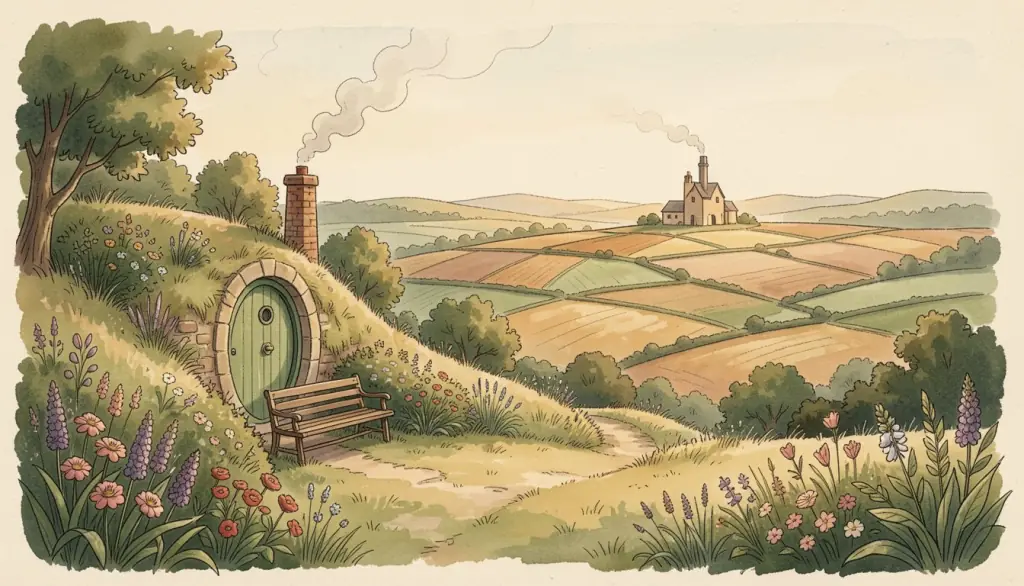
Bilbo's adoption gave Frodo Bag End, the maps and the Elvish lore. On 22 September 3001, their shared birthday, Bilbo gave his farewell party, put on the Ring and vanished. Gandalf made him leave the Ring behind, and it passed to Frodo in an envelope on the mantelpiece.
For seventeen years nothing happened. That gap is one of the most important things about Frodo in the book and the first thing the films removed. Then, in April 3018, Gandalf returns and throws it into the fire to reveal its inscription.
In "The Shadow of the Past" (book I, ch. 2) Frodo learns what he holds: the One Ring of Sauron, which Gollum held and lost and Bilbo found. For the story of how the Ring was forged, see How Was the One Ring Made?. Frodo wishes it had never come to him, and Gandalf's answer is the moral spine of the book: what times we live in is not for us to decide, only what to do with the time that is given us. Frodo also wishes Bilbo had killed Gollum, and Gandalf answers that it was pity that stayed his hand, and that pity may rule the fate of many. Both lines come back at the end.
The Shadow of the Past and the Road to Rivendell
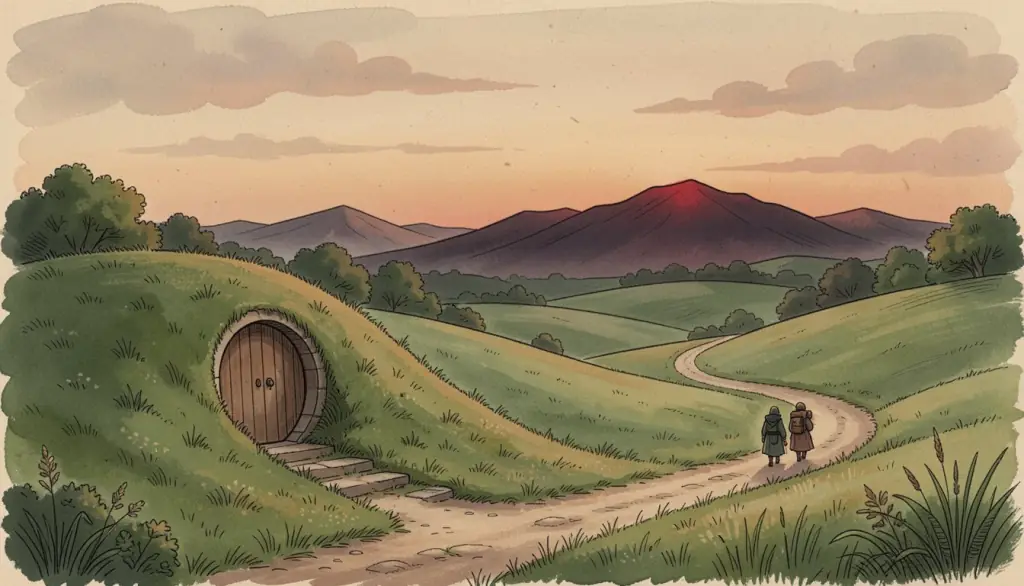
Frodo leaves Bag End on the night of 23 September 3018, the day after his fiftieth birthday. He has sold the house to Lobelia Sackville-Baggins and given out that he is retiring to Crickhollow in Buckland. Sam goes with him, having been caught listening under the window, and Pippin comes along for the walk.
The journey to Rivendell is the first test of what kind of hero he is. He is hunted by Black Riders within a day of leaving. He meets Gildor Inglorion's company of Elves in the Woody End and greets them in Quenya, which surprises them, and Gildor names him Elf-friend (book I, ch. 3). In Buckland he discovers that Merry, Pippin, Sam and Fatty Bolger have known about the Ring for months: he has been protecting his friends by deceiving them, and they have been protecting him by deceiving him back.
In Tom Bombadil's house Frodo puts on the Ring, and Tom can still see him; when Tom puts it on, he does not vanish (book I, ch. 7). On the Barrow-downs a wight takes them, and Frodo, alone of the four awake, is tempted to put on the Ring and flee. He does not. He hacks at the wight's arm with a short sword and calls Tom with the rhyme he was taught (book I, ch. 8). It is the first time Frodo chooses to stay rather than save himself, and Tolkien uses the scene to speak of a seed of courage hidden in even the most timid hobbit.
At the Prancing Pony in Bree, travelling as Mr. Underhill, he slips off a table while singing, the Ring finds his finger, and he vanishes in front of a crowded common-room (book I, ch. 9). That night he meets Strider.
Weathertop and the Morgul-Knife
On 6 October 3018 the hobbits and Strider camp in a dell below Weathertop, the ancient hill of Amon Sûl. Five Ringwraiths come up out of the dark. Frodo, under the pressure of their will, puts on the Ring and sees them as they are: tall, grey, with a king among them carrying a long knife. He throws himself at the king's feet, cries "O Elbereth! Gilthoniel!" and strikes at him, and feels a pain like poisoned ice pierce his left shoulder (The Fellowship of the Ring, book I, ch. 11).
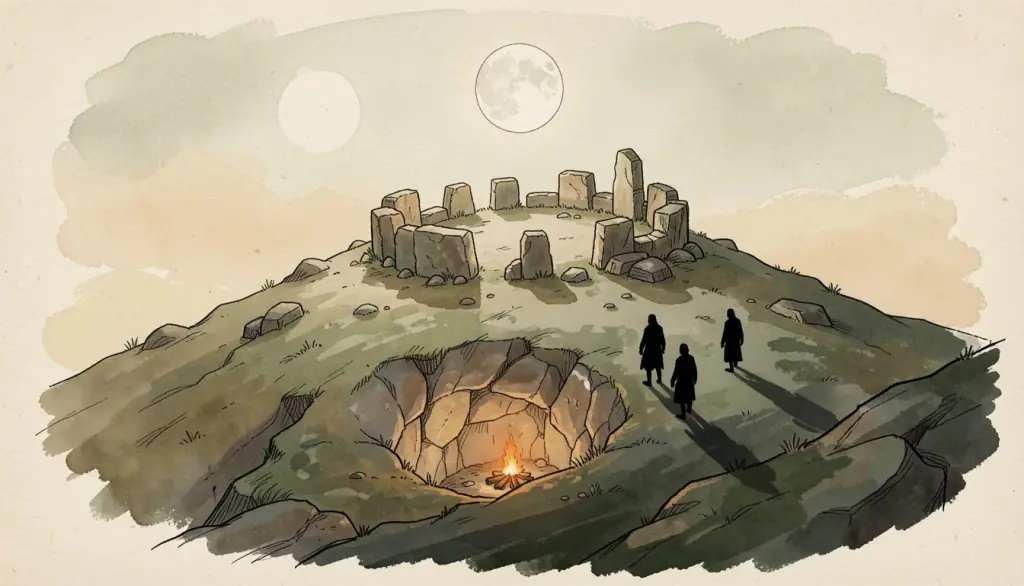
The blade was a Morgul-knife, and a splinter of it stayed in the wound, working toward his heart. Gandalf later explains in Rivendell that the splinter was meant to make Frodo a wraith under the Dark Lord's dominion (book II, ch. 1). For the Nine and their lord, see The Nazgûl Explained and The Witch-king of Angmar. Strider also says that the name of Elbereth was more deadly to the attacker than Frodo's blade. For what that name is and why a hobbit knew it, see Elbereth Meaning.
Over the next two weeks Frodo fades: the cold spreads down his arm and the world turns grey. Glorfindel of Rivendell finds them on the road, puts Frodo on his horse Asfaloth and sends him ahead. At the Ford of Bruinen on 20 October Frodo, barely conscious, crosses, turns on the far bank and defies the Nine: "By Elbereth and Lúthien the Fair, you shall have neither the Ring nor me!" (book I, ch. 12). The river rises in a flood with shapes of white horses and sweeps them away.
In Rivendell Elrond removes a splinter of the blade deeply buried in the shoulder (book II, ch. 1). Frodo wakes on 24 October. Gandalf notices that he now looks a little transparent.
Rivendell and the Choice at the Council
The Council of Elrond on 25 October (book II, ch. 2) is the hinge of the first volume. One by one the great of Middle-earth are ruled out as bearers: Elves, Wizards, Men.
Then Frodo speaks. He will take the Ring, though he does not know the way. Elrond's reply is that the task is appointed for him, and that if he does not find a way, no one will. The decisive act of the Council is a small person volunteering, with no promise of success.
Bilbo gives Frodo two gifts before he leaves: Sting, the Elven blade from The Hobbit, and the mithril coat from the dragon-hoard of Erebor (book II, ch. 3). Earlier, on the night of their reunion, Bilbo had asked to see the Ring again (book II, ch. 1), and Frodo sees a shadow fall between them: for a moment his beloved cousin looks like a grasping creature. Tolkien repeats the scene, more darkly, with Sam in the Tower of Cirith Ungol.
The Fellowship of Nine leaves Rivendell on 25 December 3018. For the Elves of the house where the quest began, see Rivendell Explained.
Moria, Lothlórien and the Mirror
In Moria Frodo is struck by an orc-chieftain's spear in the Chamber of Mazarbul and should have died. The mithril coat stops the point, and he is left with a bruise (book II, ch. 5). Then Gandalf falls on the Bridge of Khazad-dûm.
In Lothlórien Frodo, as a Ring-bearer, can see Galadriel's ring Nenya on her finger (book II, ch. 7). In her Mirror he sees the Eye of Sauron searching for him. Then he offers her the One Ring freely, and she refuses it, choosing to diminish and go into the West. The strong, he learns, cannot take this burden from him. Galadriel gives him the Phial with the light of Eärendil's star, which will save him in Shelob's Lair. For her side of the scene, see Galadriel Explained and Lothlórien Explained.
Amon Hen: Breaking the Fellowship
Above the falls of Rauros the Fellowship must choose between Mordor and Minas Tirith, and Frodo asks for an hour alone. Boromir follows him, argues for using the Ring, and finally tries to seize it. Frodo puts on the Ring and flees (The Fellowship of the Ring, book II, ch. 10).
Invisible, he climbs to the Seat of Seeing on Amon Hen, the Hill of Sight, and sees war breaking out across Middle-earth and the Eye searching for him. Between the Eye and a voice telling him to take the Ring off, he has one free moment, and he takes it off himself. Gandalf later reveals that the voice was his.
Frodo decides to go alone, seeing that the Ring will corrupt the Fellowship from within. Sam splashes after his boat and nearly drowns, and Frodo takes him. Tolkien makes the point quietly: Frodo is right that he cannot be helped by the strong, and wrong that he can do it alone.
Gollum, Faramir and the Road to Cirith Ungol
In the Emyn Muil Frodo and Sam catch Gollum, who has followed them since Moria. Frodo, remembering Gandalf's words, does not kill him. Instead he makes Gollum swear by the Precious to serve him, and takes him as guide (The Two Towers, book IV, ch. 1). For weeks Sméagol, the creature he once was, comes to the surface; Frodo, carrying the same burden, understands him better than Sam can.
Gollum leads them through the Dead Marshes and south toward Cirith Ungol. In Ithilien they are taken by Faramir, Boromir's brother (book IV, ch. 5). Faramir learns what Frodo carries and refuses it. Then comes the Forbidden Pool (book IV, ch. 6): to save Gollum's life, Frodo coaxes him into the hands of Faramir's men. To Gollum it is betrayal, and it tips him back toward treachery.
The most painful moment comes on the Stairs of Cirith Ungol (book IV, ch. 8). Gollum, returning from Shelob, finds the hobbits asleep and touches Frodo's knee in something close to love; Sam wakes, calls him a sneak, and the moment passes. In Letter 246 Tolkien called this perhaps the most tragic moment in the tale, the place where Gollum's repentance was nearest and was lost.
In Shelob's Lair Frodo holds up the Phial and cries "Aiya Eärendil Elenion Ancalima!" (book IV, ch. 9), hail Eärendil, brightest of stars, not knowing what he said, as if another voice spoke through him. He cuts Shelob's web with Sting, runs ahead, and is stung from behind. Sam, believing him dead, takes the Ring, then learns that his master is only paralysed and has been carried to the Tower. For Shelob and her kind, see Giant Spiders of Middle-earth.
Mount Doom and the Crack of Doom
Sam rescues Frodo from the Tower on 14 March 3019 (The Return of the King, book VI, ch. 1). When Sam gives back the Ring, Frodo snatches it and calls him a thief, then comes to himself in tears: the Rivendell scene with Bilbo again, only worse.
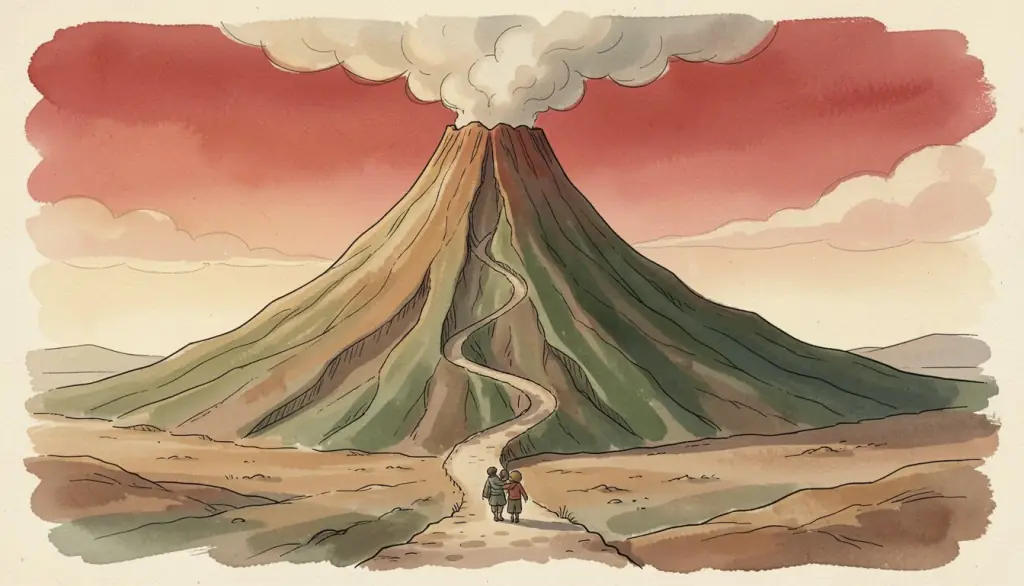
The crossing of Mordor takes eleven days, and the Ring grows heavier until Frodo sees it as a wheel of fire before his eyes. On the last slopes of Orodruin, the Mountain of Fire, Frodo can no longer walk, and Sam carries him. Gollum attacks them, and Frodo, standing over him for a moment like a figure robed in white with a wheel of fire at its breast, says "Begone, and trouble me no more!" and warns that if Gollum touches him again he will be cast into the Fire of Doom (book VI, ch. 3). Sam, having carried the Ring himself, cannot kill Gollum either.
Then Frodo enters the Sammath Naur, the Chambers of Fire, and stands at the edge of the Crack of Doom. In a voice clearer and more powerful than Sam has ever heard from him, he says: "I do not choose now to do what I came to do." He claims the Ring as his own and puts it on.
Gollum leaps on the invisible hobbit and bites off the finger with the Ring. Dancing on the edge with his prize, he steps too far and falls into the fire with it. The Ring is destroyed, Barad-dûr falls, and the Nazgûl perish. Frodo, maimed and himself again, says that without Gollum he could not have destroyed the Ring, and forgives him. Gwaihir and the Eagles carry Frodo and Sam out of the burning mountain (book VI, ch. 4). For the Eagles' part, see Great Eagles of Middle-earth.
Did Frodo Fail? What Tolkien's Letters Say
His fullest account is in Letter 246 (to Eileen Elgar, 1963) in The Letters of J.R.R. Tolkien. There he says he did not think Frodo's was a moral failure. At the fire where the Ring was made its pressure reached its maximum, and he thought it impossible for anyone to resist it, certainly after long possession and months of torment. In letters of 1956, Letter 191 among them, Tolkien remarks that very few readers had noticed Frodo's failure, and calls it a very important point.
The important part is what saved the quest. In Tolkien's reading it was the pity Bilbo and Frodo had shown Gollum: because he was spared, he was there at the end, and his own desire carried the Ring into the fire, as Gandalf had foreseen. In the same letter Tolkien wondered whether a truly repentant Gollum might have taken the Ring at the end and then sacrificed himself with it; the loss of that chance is Gollum's tragedy.
Our reading of this, marked as interpretation: Tolkien was writing as a Catholic about the limits of the will. The will alone does not win against absolute evil; a long chain of mercy does, each act of which looked foolish at the time. Frodo's greatness is that he got there at all, and that his mercy was real. The failure is part of the design, not a flaw in it.
Cormallen and the Return
On 8 April 3019 the Ring-bearers are honoured on the Field of Cormallen (The Return of the King, book VI, ch. 4). The host greets them in Westron and then in Sindarin: Cuio i Pheriain anann! Aglar'ni Pheriannath! The English just before it is "Long live the Halflings! Praise them with great praise!" Periain and Periannath are plurals of perian, halfling. A minstrel sings of Frodo of the Nine Fingers and the Ring of Doom, and Frodo and Sam weep.
After Aragorn's crowning, Arwen gives him a white gem on a chain for when memory of the darkness troubles him, and tells him he may go into the West in her stead if his hurts still grieve him (book VI, ch. 6). In Rivendell he finds Bilbo very old and sleepy, and Bilbo, unable to finish his book, gives Frodo his notes and papers to carry on.
On the road home, at the Ford of Bruinen on 6 October, the anniversary of Weathertop, Frodo's shoulder aches and the world darkens for him. Gandalf says some wounds cannot be wholly cured, and Frodo fears his is one, and that there is no real going back (book VI, ch. 7).
The Scouring of the Shire
The hobbits come home to find Saruman, as "Sharkey," ruling the Shire through ruffians (The Return of the King, book VI, ch. 8). Merry and Pippin raise the hobbits, and the Battle of Bywater is fought on 3 November 3019.
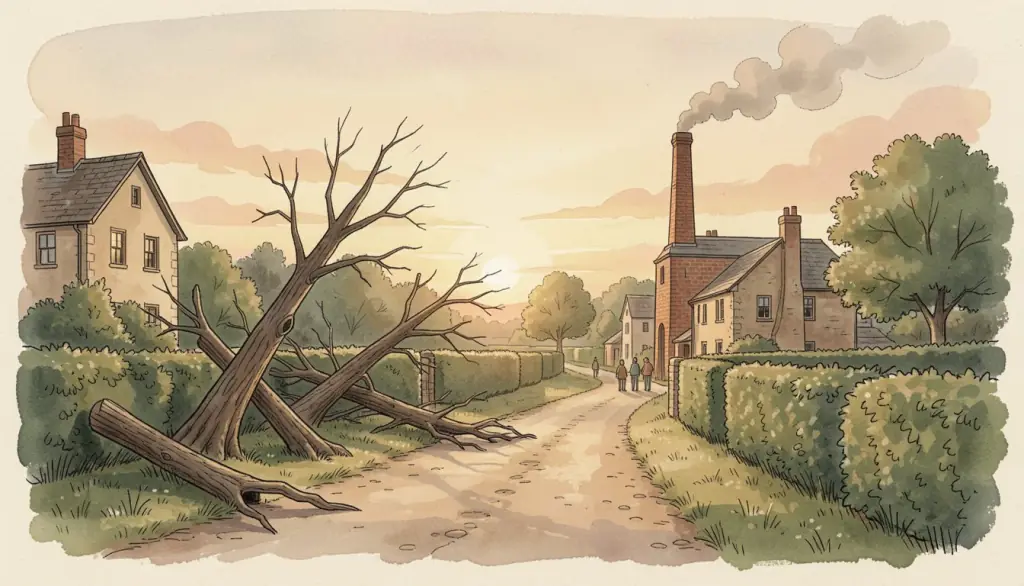
Frodo does not draw his sword. His concern is to stop hobbits killing anyone who can be spared. When the hobbits confront Saruman at Bag End, Saruman stabs at Frodo, and the knife breaks on the hidden mithril. Frodo forbids the hobbits to kill him: Saruman was once great, and might yet be healed. Saruman, humiliated, says that Frodo has grown. Moments later Wormtongue kills Saruman, and the archers shoot Wormtongue.
His mercy to Saruman repeats his mercy to Gollum, now with full knowledge of the cost. The Shire does not understand him: Frodo drops quietly out of its doings, and Sam is pained to see how little honour he has in his own country, while Merry and Pippin become the local heroes.
Lobelia, released from the Lockholes, gives Bag End back to Frodo. For Saruman's own story, see Saruman and Isengard.
The Grey Havens: Why Frodo Leaves
Sam marries Rose Cotton in the spring of 1420 by Shire Reckoning, and they move into Bag End with Frodo. On 13 March 1420, the anniversary of Shelob's sting, Farmer Cotton finds Frodo ill, clutching the white gem. When Sam's first child is born on 25 March 1421, the anniversary of the Ring's destruction, Frodo suggests the name Elanor, after the small golden star-flower of Lórien (The Return of the King, book VI, ch. 9).
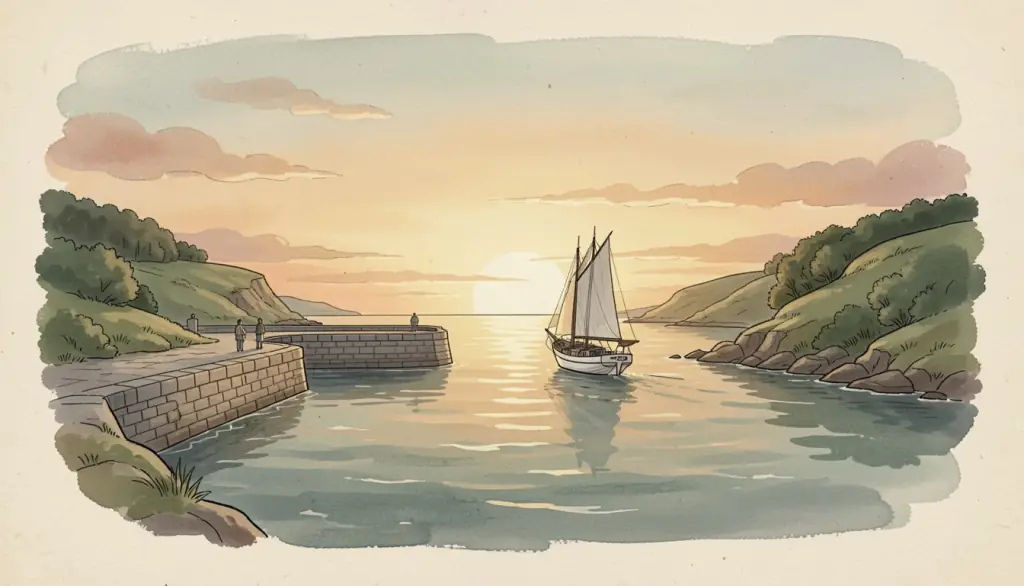
In September 1421 Frodo rides out with Sam and meets the last riding of the Elves, with Elrond, Galadriel and Bilbo, in the Woody End. On 29 September Frodo, Bilbo, Gandalf and the Keepers of the Three Rings take ship into the West (Appendix B).
Frodo tells Sam that he tried to save the Shire, and it has been saved, but not for him. Sam, he says, cannot always be torn in two; he has a family and a long life to live. Frodo leaves him Bag End and the Red Book to finish. The last thing in the narrative is Sam coming home to Rose and Elanor and saying "Well, I'm back."
Tolkien's letters explain the departure. In Letter 246 he describes Frodo as sent, or allowed, to pass over Sea to be healed, if that could be done, before he died. It was a grace, not a gift of immortality: Frodo remained mortal. For where he went, see The Grey Havens and Valinor and the Undying Lands. Appendix B adds that Sam, last of the Ring-bearers, was believed to have sailed after Rose's death in Fourth Age 61.
Frodo's Names and Languages
Frodo Baggins. In the frame of the book, English names are Tolkien's renderings of Westron originals. Frodo's Westron name, set out in the drafts published in The Peoples of Middle-earth ("The Appendix on Languages"), is Maura Labingi. Tolkien chose Frodo because it is a genuine old Germanic name and recalls Old English fród, wise by experience. We cover the Westron forms and the etymology in detail in Frodo's Elvish Name and Meaning; for the Common Speech itself see Westron: The Common Speech.
His Elvish name: Daur. At the Field of Cormallen the host hails the Ring-bearers in Sindarin as Daur a Berhael, Conin en Annûn, "Frodo and Sam, princes of the west", so Frodo's Sindarin name in the book is Daur. The "Iorhael" that circulates online is also Tolkien's, but in the unused epilogue (Sauron Defeated) it names Sam's son Frodo Gardner. The Elves also call him Elf-friend (Gildor) and, collectively with the other hobbits, Periannath.
Titles. Ring-bearer; Mr. Underhill at Bree; Frodo of the Nine Fingers in the Cormallen song.
The Elvish he speaks or hears, all from the published text:
| Words | Meaning | Where |
|---|---|---|
| Elen síla lúmenn' omentielvo | A star shines on the hour of our meeting (Quenya) | Frodo to Gildor, The Fellowship of the Ring, book I, ch. 3 |
| O Elbereth! Gilthoniel! | Invocation of Varda, Star-queen and Star-kindler (Sindarin) | Weathertop, book I, ch. 11 |
| Aiya Eärendil Elenion Ancalima | Hail Eärendil, brightest of stars (Quenya) | Shelob's Lair, The Two Towers, book IV, ch. 9 |
| Cuio i Pheriain anann! Aglar'ni Pheriannath! | Long live the Halflings! Glory to the Halflings! (Sindarin) | Cormallen, The Return of the King, book VI, ch. 4 |
| perian, pl. periannath | halfling, hobbit (Sindarin) | The Return of the King, book VI, ch. 4 |
| elanor | the sun-star flower of Lórien, Sam's daughter's name | Book VI, ch. 9 |
Our reading: at the worst moments of his journey Elvish words come to Frodo unbidden, and Tolkien uses them as a kind of grace. For more lines like these, see Fellowship of the Ring Elvish phrases.
Frodo in the Books vs the Films vs The Rings of Power
Elijah Wood plays Frodo in Peter Jackson's trilogy. The films keep the outline of his journey but change a good deal. These are film choices, not book lore:
- No seventeen-year gap. The films move straight from the party to the departure; the book Frodo holds the Ring for seventeen years and leaves at fifty, looking younger.
- Bombadil and the Barrow-downs. Omitted, with Frodo's first act of courage.
- The Ford. Arwen carries Frodo to the Ford on her horse. In the book he rides Glorfindel's horse alone and defies the Nine himself.
- Moria. A cave-troll's spear strikes Frodo in the film; in the book it is an orc-chieftain.
- Osgiliath. Faramir takes Frodo to Osgiliath, where a Nazgûl nearly finds him. In the book Faramir lets the hobbits go from Henneth Annûn.
- Sam sent away. On the Stairs of Cirith Ungol, Gollum turns Frodo against Sam and Frodo sends him home. This is a film invention; in the book Sam never leaves him.
- The Crack of Doom. Frodo goes over the edge with Gollum and hangs there. In the book Gollum, after biting off the finger, falls alone while dancing at the brink.
- The Scouring of the Shire. Omitted. It removes Frodo's mercy to Saruman.
What the films get right, in our view: the weight of the Ring, the growing grey distance in Frodo's face, and the scene at the Havens. What they get wrong: by cutting the Barrow-downs, the Ford and the Scouring, they remove the three places where Frodo acts with authority. The book Frodo is worn out in body by the end, but never passive in will.
The Rings of Power
The Rings of Power is set in the Second Age, thousands of years before Frodo's birth in Third Age 2968. Frodo cannot appear in it. Its Harfoots, among them Nori Brandyfoot and Poppy Proudfellow, are the show's own invented early hobbits, not Tolkien characters. Season 3 premiered on Prime Video on 11 November 2026; nothing announced about it involves Frodo. For what the season does feature, see our Rings of Power Season 3 preview.
How Tolkien Built Frodo
Frodo was not planned. When Tolkien began a sequel to The Hobbit in December 1937, his new hero was Bilbo's son, then his nephew, and was called Bingo; the drafts are published in The Return of the Shadow. Only as the Ring grew from a magic trinket into Sauron's Ruling Ring did the story darken, and the hero was renamed Frodo during the rewriting.
Three layers are visible in the finished character.
- The Hobbit layer. The comfortable bachelor of the first chapters, still close to Bilbo.
- The quest layer. The Ring-bearer who chooses the burden and is slowly hollowed out.
- The aftermath layer. The wounded hobbit who comes home a stranger, will not kill, and leaves. Tolkien defended this layer hardest.
Tolkien was a veteran of the Somme, and many readers have compared Frodo's return to the experience of soldiers home from the First World War: decorated by strangers, unrecognised by neighbours, unable to explain what they had seen. Tolkien warned against reading the book as allegory, so this is a comparison, not a key; but the text plainly knows that a hero can be broken by the act that saves his people.
Our Take
Our view, stated plainly: Frodo is the bravest character in Tolkien precisely because he fails at the last step. A hero who threw the Ring in would be admirable and forgettable. A hero who crossed Mordor on will alone, reached the edge, could not do it, and knew it afterwards, is harder and truer. Tolkien built his whole story so that the decisive acts are Frodo's earlier mercies, not his final strength, and we think that is the most original idea in modern fantasy.
We also think film-only readers underrate him. The book Frodo grows into the role of judge: he decides Gollum's fate, Saruman's fate, and the fate of surrendering ruffians at Bywater, and each time he chooses to spare. Sam is the loyal heart of the quest, and rightly loved, but Frodo is its conscience. Read the Scouring of the Shire after the Crack of Doom and you see the whole character: the hobbit who could not let the Ring go is the same hobbit who lets every enemy go, and the second is the reason the first did not end the world.
People Also Ask
Who is Frodo Baggins?
Frodo Baggins is the hobbit who inherits the One Ring from his cousin Bilbo and carries it from Bag End to Mount Doom in The Lord of the Rings. He reaches the Crack of Doom in March 3019 of the Third Age and sails West from the Grey Havens in 3021.
How old is Frodo in The Lord of the Rings?
Born on 22 September 2968 of the Third Age, Frodo turns 33 at Bilbo's party in 3001 and is 50 when he leaves Bag End in 3018, though the Ring keeps him looking younger. He is 53 when he sails West.
Did Frodo fail to destroy the Ring?
At the Crack of Doom Frodo claimed the Ring and put it on; it was destroyed only when Gollum bit it off and fell into the fire. In Letter 246 Tolkien argued this was not a moral failure: no one could have resisted the Ring there, and earlier mercy to Gollum saved the quest.
How did Frodo lose his finger?
Gollum bit it off. When Frodo put on the Ring at the Sammath Naur, Gollum attacked him, bit off the finger that wore it, and then fell into the fire with the Ring. At Cormallen Frodo is sung as Frodo of the Nine Fingers.
Why did Frodo leave Middle-earth?
His wounds never healed: the Morgul-knife, Shelob's sting and the burden of the Ring. He told Sam the Shire had been saved, but not for him. As a Ring-bearer he was allowed to sail West from the Grey Havens on 29 September 3021, for healing.
What happened to Frodo at Weathertop?
On 6 October 3018 five Ringwraiths attacked the camp. Frodo put on the Ring, cried out to Elbereth and was stabbed in the left shoulder by the Witch-king's Morgul-knife. Elrond removed a splinter of the blade in Rivendell, but the wound troubled him for life.
Who are Frodo's parents?
Drogo Baggins and Primula Brandybuck, who drowned in a boating accident on the Brandywine when Frodo was a child. He grew up at Brandy Hall until Bilbo adopted him and brought him to Bag End.
What is Frodo's real name?
In Tolkien's fiction Frodo Baggins is a translation of the Westron Maura Labingi, given in The Peoples of Middle-earth. Frodo recalls Old English fród, wise by experience. In Sindarin he is Daur, hailed at Cormallen as Daur a Berhael, Frodo and Sam; Iorhael, often quoted online, is Tolkien's name for Sam's son Frodo Gardner.
What Elvish does Frodo speak in the book?
He greets Gildor in Quenya with Elen síla lúmenn' omentielvo, a star shines on the hour of our meeting. He cries O Elbereth! Gilthoniel! at Weathertop and Aiya Eärendil Elenion Ancalima in Shelob's Lair.
Is Frodo in The Rings of Power?
No. The show is set in the Second Age, thousands of years before Frodo's birth in Third Age 2968. Its Harfoots, such as Nori Brandyfoot, are invented early hobbits, and nothing announced for Season 3 involves Frodo.
Learn the Elvish Frodo Spoke
Frodo's first words to an Elf in the book are Quenya, and his cry at Weathertop is Sindarin. To learn the two languages behind them, start with our free Elvish course, which teaches Quenya and Sindarin using words Tolkien actually wrote. To see Frodo's name in Elvish letters, try our Tengwar name tool.
Related Reading
People Also Ask
Who is Frodo Baggins?
Frodo Baggins is the hobbit who inherits the One Ring from his cousin Bilbo and carries it from Bag End to Mount Doom in The Lord of the Rings. He reaches the Crack of Doom in March 3019 of the Third Age and sails West from the Grey Havens in 3021.
How old is Frodo in The Lord of the Rings?
Born on 22 September 2968 of the Third Age, Frodo turns 33 at Bilbo's party in 3001 and is 50 when he leaves Bag End in 3018, though the Ring keeps him looking younger. He is 53 when he sails West.
Did Frodo fail to destroy the Ring?
At the Crack of Doom Frodo claimed the Ring and put it on; it was destroyed only when Gollum bit it off and fell into the fire. In Letter 246 Tolkien argued this was not a moral failure: no one could have resisted the Ring there, and earlier mercy to Gollum saved the quest.
How did Frodo lose his finger?
Gollum bit it off. When Frodo put on the Ring at the Sammath Naur, Gollum attacked him, bit off the finger that wore it, and then fell into the fire with the Ring. At Cormallen Frodo is sung as Frodo of the Nine Fingers.
Why did Frodo leave Middle-earth?
His wounds never healed: the Morgul-knife, Shelob's sting and the burden of the Ring. He told Sam the Shire had been saved, but not for him. As a Ring-bearer he was allowed to sail West from the Grey Havens on 29 September 3021, for healing.
What happened to Frodo at Weathertop?
On 6 October 3018 five Ringwraiths attacked the camp. Frodo put on the Ring, cried out to Elbereth and was stabbed in the left shoulder by the Witch-king's Morgul-knife. Elrond removed a splinter of the blade in Rivendell, but the wound troubled him for life.
Who are Frodo's parents?
Drogo Baggins and Primula Brandybuck, who drowned in a boating accident on the Brandywine when Frodo was a child. He grew up at Brandy Hall until Bilbo adopted him and brought him to Bag End.
What is Frodo's real name?
In Tolkien's fiction Frodo Baggins is a translation of the Westron Maura Labingi, given in The Peoples of Middle-earth. Frodo recalls Old English fród, wise by experience. In Sindarin he is Daur, hailed at Cormallen as Daur a Berhael, Frodo and Sam; Iorhael, often quoted online, is Tolkien's name for Sam's son Frodo Gardner.
What Elvish does Frodo speak in the book?
He greets Gildor in Quenya with Elen síla lúmenn' omentielvo, a star shines on the hour of our meeting. He cries O Elbereth! Gilthoniel! at Weathertop and Aiya Eärendil Elenion Ancalima in Shelob's Lair.
Is Frodo in The Rings of Power?
No. The show is set in the Second Age, thousands of years before Frodo's birth in Third Age 2968. Its Harfoots, such as Nori Brandyfoot, are invented early hobbits, and nothing announced for Season 3 involves Frodo.